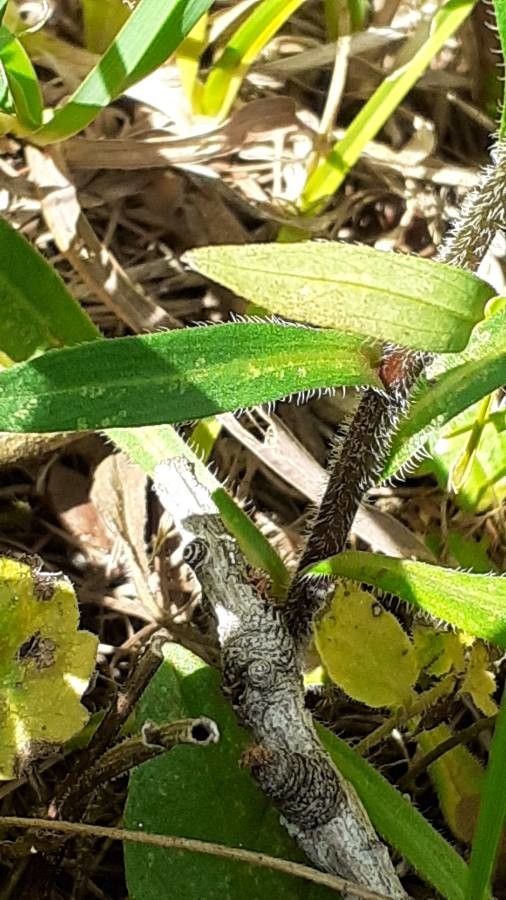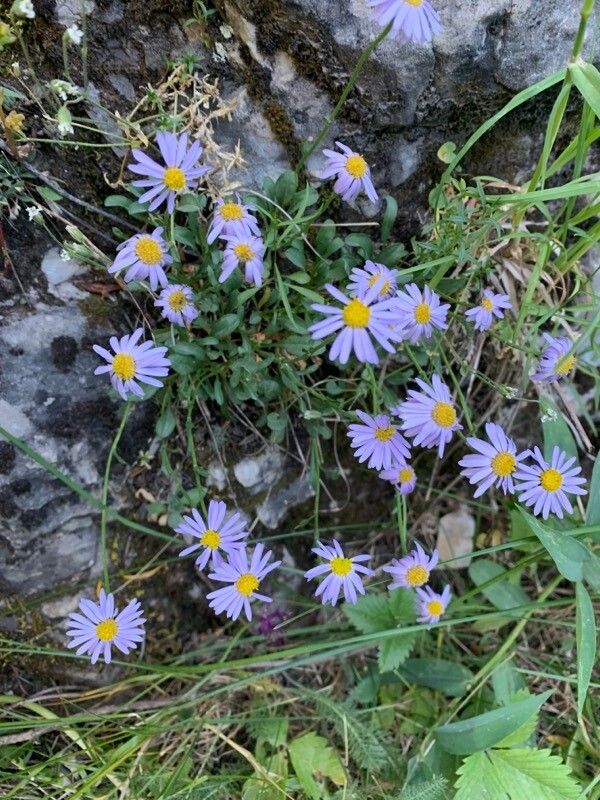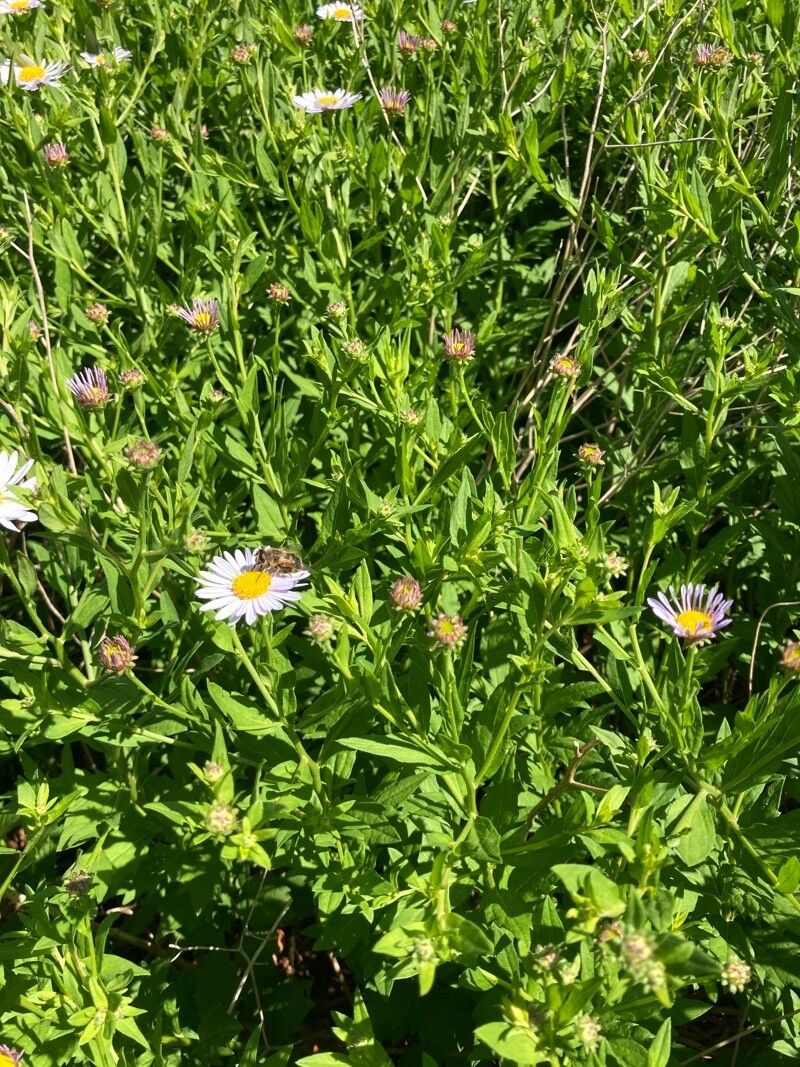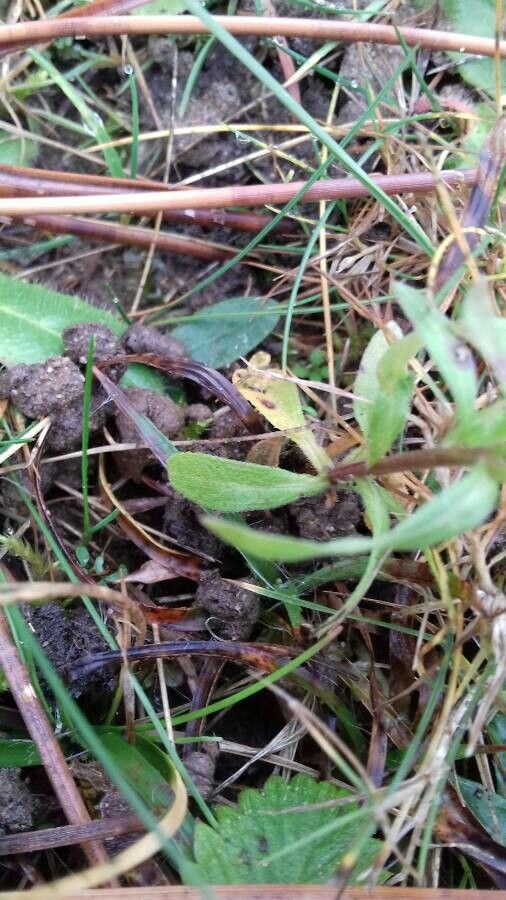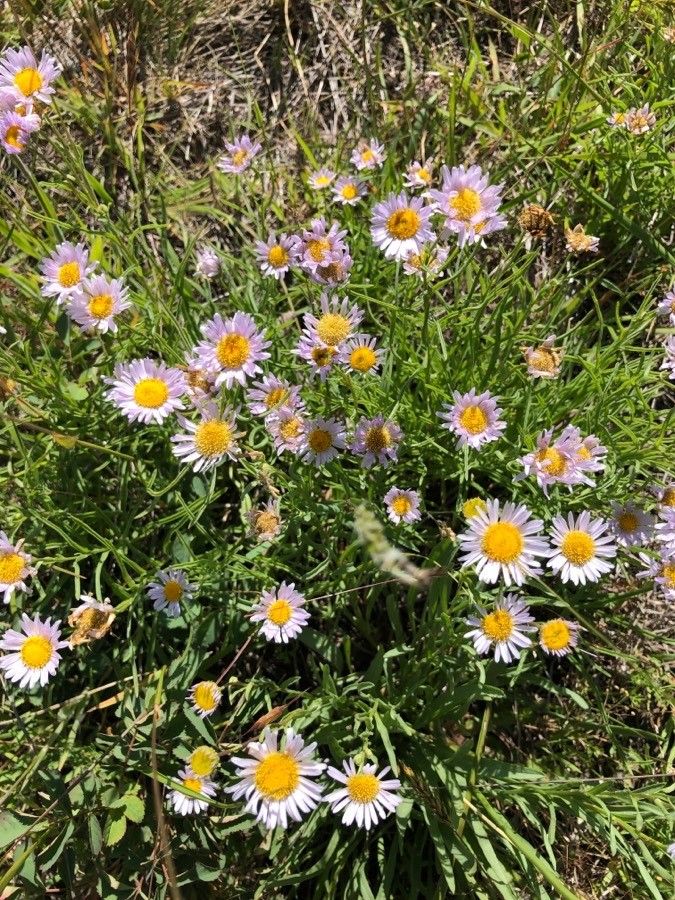
Erigeron decumbens is a species of flowering plant in the family Asteraceae known by the common name Willamette fleabane. It is native to Oregon and California in the United States. The taxonomy of the plant varies by author. It may be treated as a species with two varieties, the Californian variety var. robustior and the rare and endangered Oregon variety, var. decumbens. Alternately, the rare var. decumbens may be the only variety included within the species description and so named Erigeron decumbens, with var. robustior separated and named Erigeron robustior.The Oregon plant, var. decumbens or alternately Erigeron decumbens, is a federally listed endangered species of the United States. There are 28 occurrences growing in increasingly rare prairie habitat in the Willamette Valley.The plant is a perennial herb growing up to about half a meter long, and erect or decumbent in form. The Oregon plant is colonial with a branching caudex sending up several stems, and is severely threatened. The inflorescence may contain many flower heads with white or blue-tinged ray florets that may dry pinkish. The California plant is not colonial and the caudex branches little or not at all. The inflorescence contains no more than 3 heads. The florets are white or pink-tinged.
Leafy fleabane is fairly resistant to disease and typically not prone to illnesses. Still, it can be affected by pests and diseases present in its environment, though these problems are generally mild. Regarding care, it has moderate maintenance needs. It should be pruned on a regular basis to keep a neat appearance and promote healthy growth. Applying fertilizer can also encourage more flowering. Leafy fleabane is appropriate for anyone with outdoor space, such as a garden or patio, and does not demand extensive gardening experience. When cultivated indoors, it may need extra care.
How to keep Erigeron Decumbens.
Light
Leafy fleabane is a perennial herbaceous plant that prefers sunny locations and is native to open habitats, commonly occurring in meadows and grasslands. It favors full sun but can also tolerate partial sunlight.
Temperature
Leafy fleabane can tolerate a wide span of temperatures, but its range may still be restricted by specific combinations of moisture and heat. It performs best in warm summer conditions with adequate rainfall or watering. Extended periods of cloudy, rainy weather, as well as prolonged high temperatures, increase the likelihood of Leafy fleabane dying. In winter, providing protection from the cold can enhance the plant's survival.
Fertilizer
The best time to fertilize a Leafy fleabane is in early spring, when it is coming out of dormancy and starting active growth. Fertilization supplies essential nutrients for healthy development. Although Leafy fleabane has fairly low fertilizer requirements, an annual application can improve its survival and encourage stronger, longer-lasting flowers.
Pruning
The Willamette fleabane is a low-growing plant known for its delicate flowers. Pruning in early spring encourages denser foliage and promotes more abundant blooms. Additionally, removing dead stems improves air circulation. Pruning at the right time helps control the plant's spread and prevents overcrowding, which in turn enhances the plant's growth and longevity.
Botanical profile.
- Plant Type
- Herb
- Life Cycle
- Perennial
- Genus
- Erigeron
- Family
- Asteraceae
- Hardiness Zone
- 5-9
- Mature Height
- 0.1 m to 1.07 m
- Mature Spread
- 30 cm to 61 cm
- Leaf Color
- Green, Dark Green
- Leaf Type
- Semi-evergreen
- Flower Color
- White, Yellow
- Flower Size
- 1.02 cm to 1.52 cm
- Bloom Time
- Late spring, Early summer, Mid summer
- Planting Time
- Spring, Summer, Autumn
- Harvest Time
- Mid summer, Late summer, Early fall
- Native Area
- Mexico