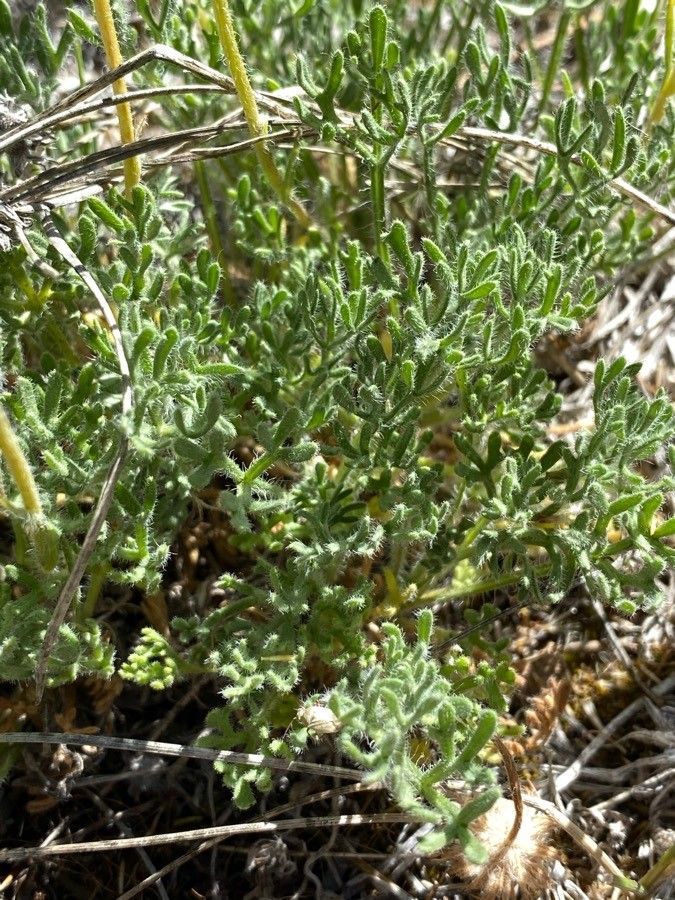
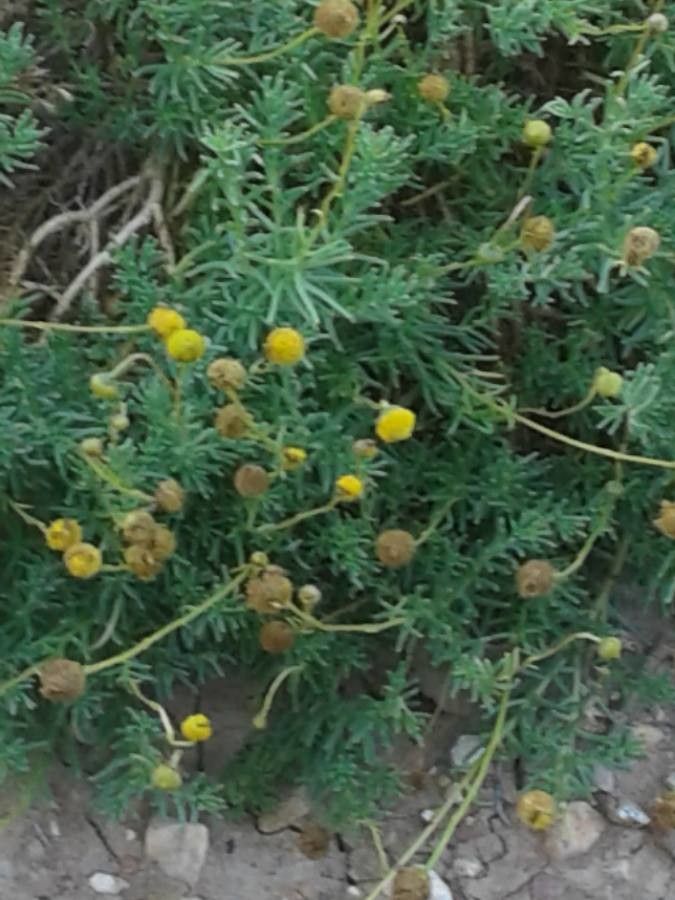
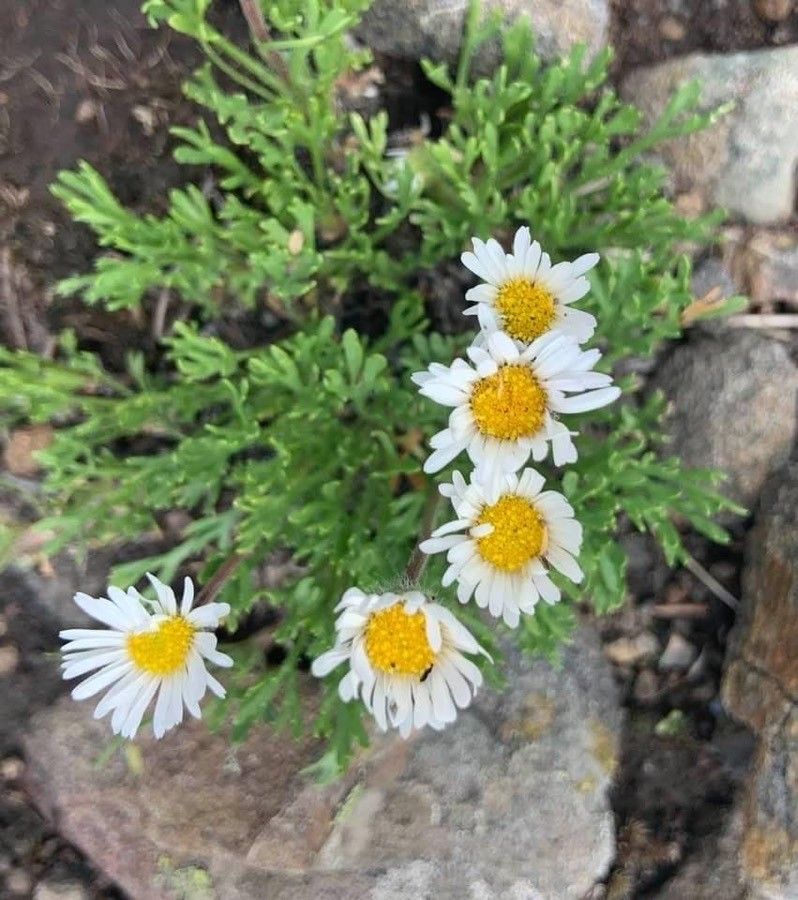
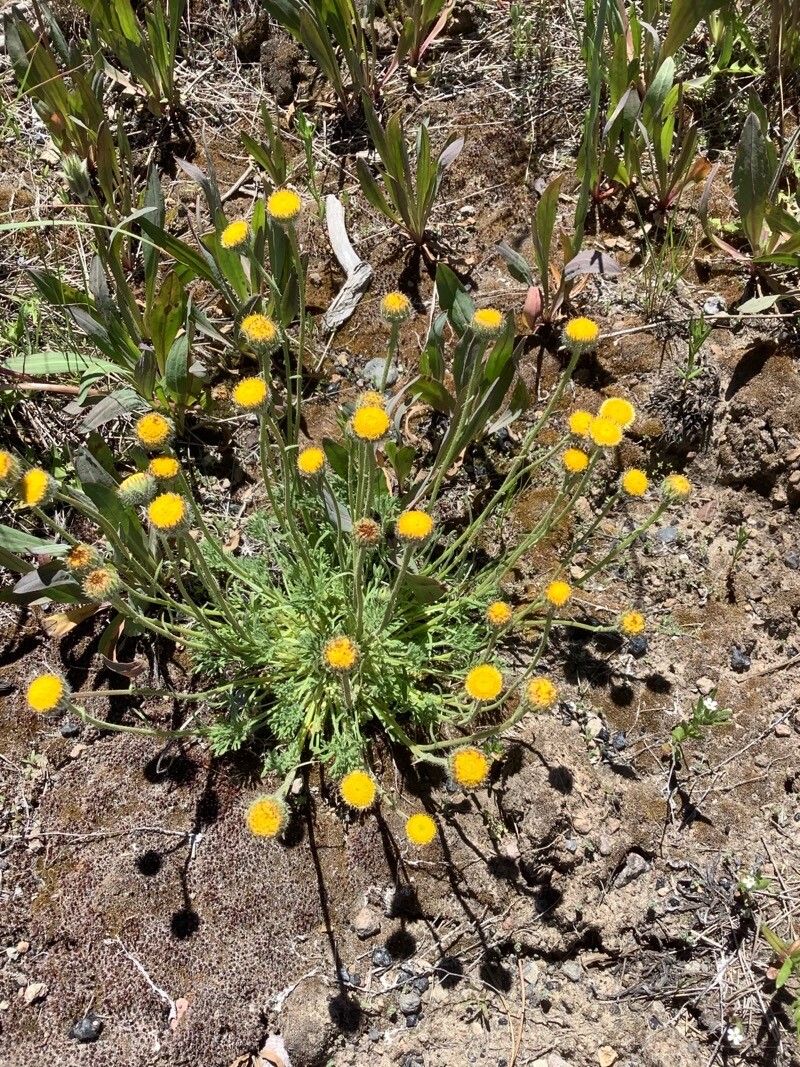
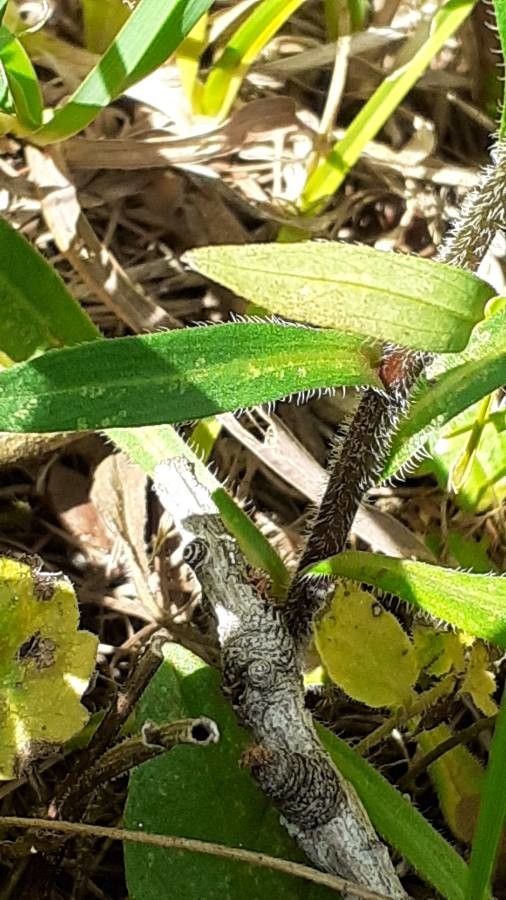
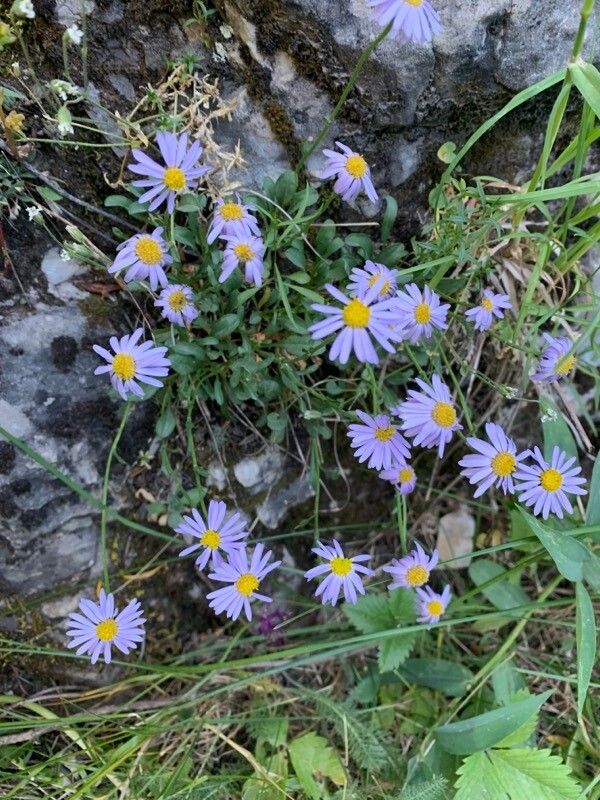
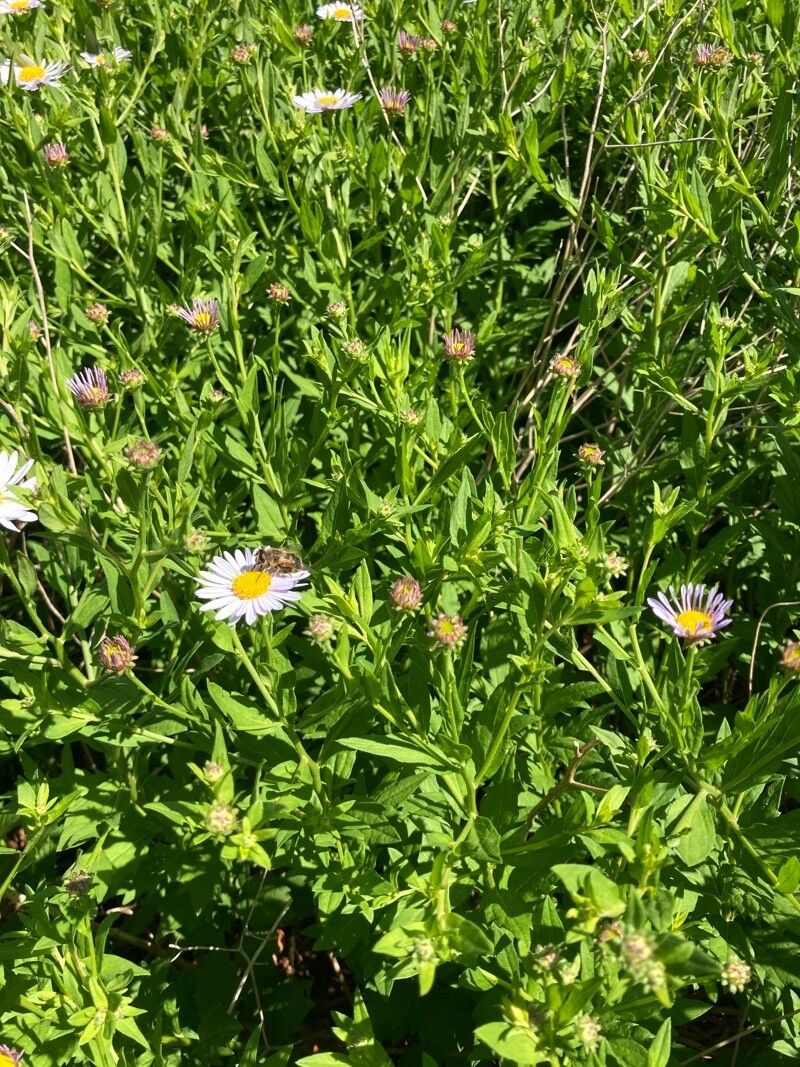
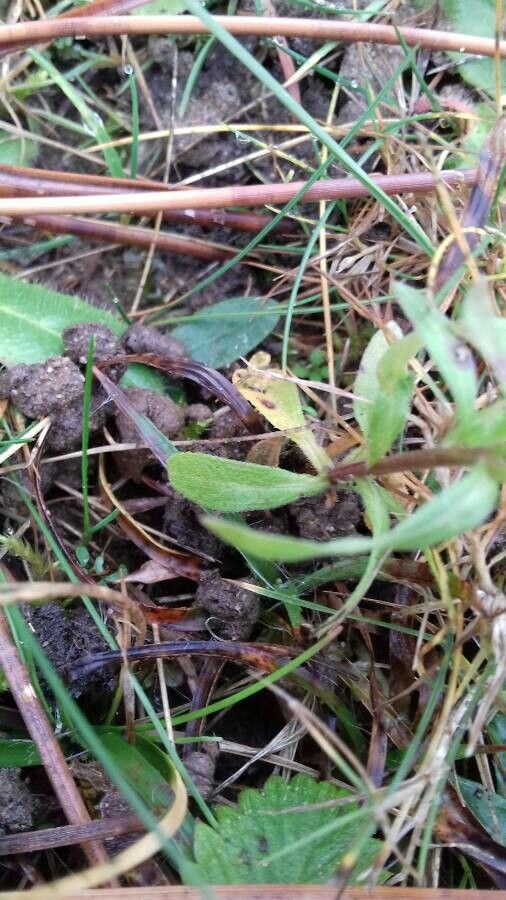
Erigeron compositus is an Arctic and alpine species of fleabane in the family Asteraceae. Common names include dwarf mountain fleabane, cutleaf daisy, and trifid mountain fleabane.Erigeron compositus has been found in the Russian Far East (Wrangel Island and Chukotka), Alaska, Greenland, much of Canada (all three Arctic territories plus British Columbia, all three Prairie Provinces, Quebec, Newfoundland, and Nova Scotia), and the Western United States (from the Pacific Coast as far east as the Dakotas, Colorado, and New Mexico).Erigeron compositus is perennial herb rarely more than 25 cm (10 in) tall, with a thick growth of basal leaves, the tips of which are divided. The plant produces a taproot and spreads by means of horizontal underground rhizomes. There is generally only one flower head per stem, each head with 20–60 white, pink or blue ray florets; these are sometimes small and easily mistaken for disc florets. Genuine disc florets are yellow and in the center of the head.
Dwarf mountain fleabane shows strong disease resistance and typically does not suffer from illnesses. However, it can be vulnerable to pests and diseases present in its environment. These infections are usually mild. Regarding care, this plant requires moderate maintenance. It should be pruned regularly to maintain a tidy appearance and healthy growth. Fertilizing can also help encourage flowering. Dwarf mountain fleabane is suitable for anyone with outdoor space, such as a garden or patio, and does not demand extensive gardening experience. It may need extra care when grown indoors.
How to keep Erigeron Compositus.
Light
Dwarf mountain fleabane is a sun-loving, perennial herbaceous plant native to open habitats and commonly found in meadows and grasslands. It prefers full sun but can also tolerate partial sun.
Water
Dwarf mountain fleabane is well-suited for dry environments due to its excellent drought tolerance, needing only minimal water to thrive. It is an ideal choice for low-maintenance gardens, requiring just weekly watering. Being a deciduous plant, it conserves water during its winter dormancy, showcasing its resilience and suitability for outdoor cultivation.
Fertilizer
For Dwarf mountain fleabane, the primary time to apply fertilizer is in early spring when the flowers are forming. The appropriate fertilizer promotes better blooms and helps Dwarf mountain fleabane produce attractive flowers. Fertilizing in early spring ensures excellent flowering during the season and supplies energy for dormant growth phases.
Pruning
Dwarf mountain fleabane benefits from pruning throughout the spring, from the early to late months. To encourage growth and flowering, remove any dead stems. Light trimming helps maintain both the plant's shape and vigor, which in turn boosts its aesthetic appeal and blooming potential. For the best results, consult reliable horticultural sources to learn precise pruning techniques.
Botanical profile.
- Plant Type
- Herb
- Life Cycle
- Perennial
- Genus
- Erigeron
- Family
- Asteraceae
- Hardiness Zone
- 3-8
- Mature Height
- 10 cm to 25 cm
- Mature Spread
- 20 cm
- Leaf Color
- Green, Dark Green
- Leaf Type
- Deciduous
- Flower Color
- White, Yellow
- Flower Size
- 2.54 cm
- Bloom Time
- Mid spring, Late spring, Early summer
- Planting Time
- Spring, Summer, Autumn
- Harvest Time
- Summer
- Native Area
- Russia, Denmark
Other names.
Reader questions.
What are the sunlight requirements for Dwarf mountain fleabane?
Dwarf mountain fleabane (Erigeron compositus) thrives in various sunlight conditions but prefers specific amounts to flourish optimally. For 'Full sun' exposure, it requires above 6 hours of sunlight a day, ideal for those spots in your garden that receive direct sunlight most of the day. In cases of 'Partial sun,' about 3-6 hours of sunlight a day is sufficient, suitable for areas that enjoy a mix of light and shade. It's important to observe the movement of sunlight through your garden to identify spots that offer the perfect balance of light and shade, ensuring the happiness and health of your Dwarf mountain fleabane plants.