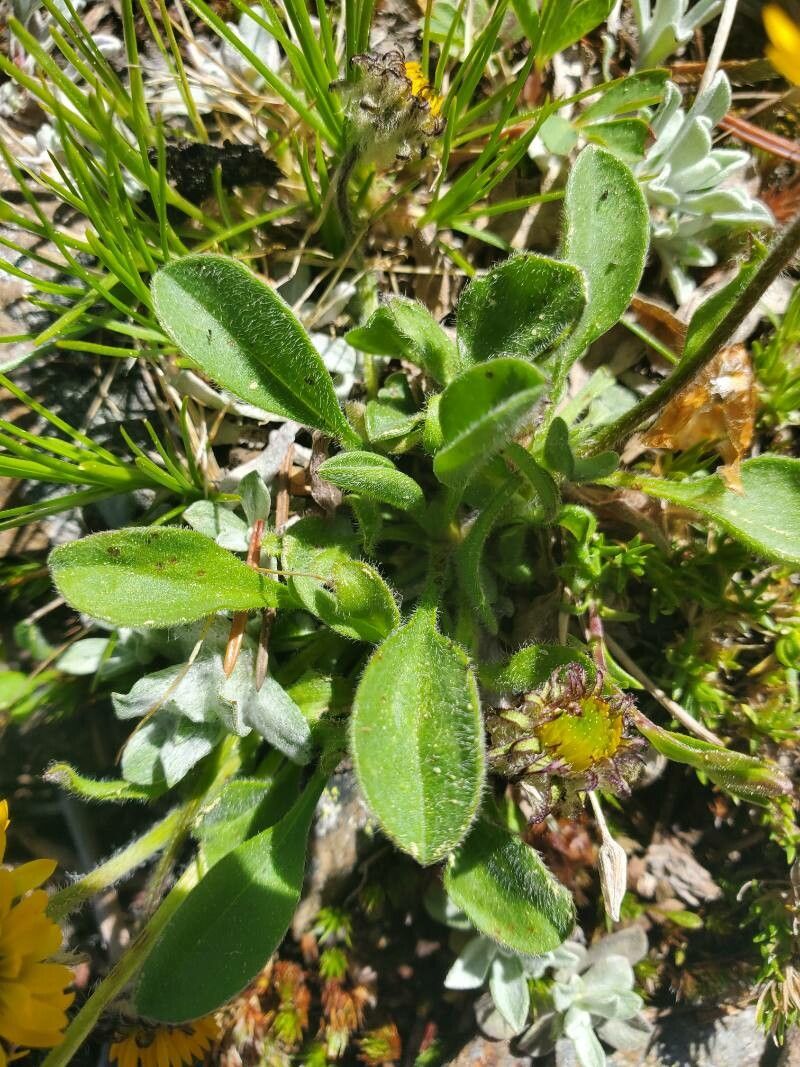
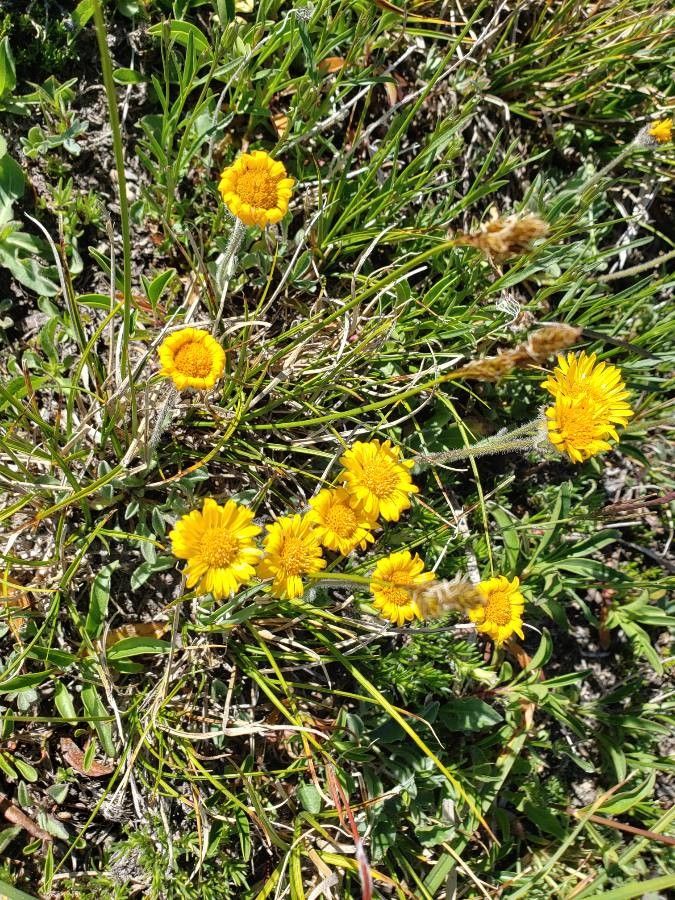
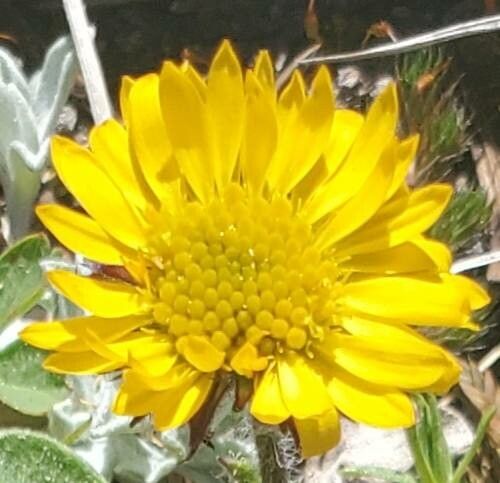
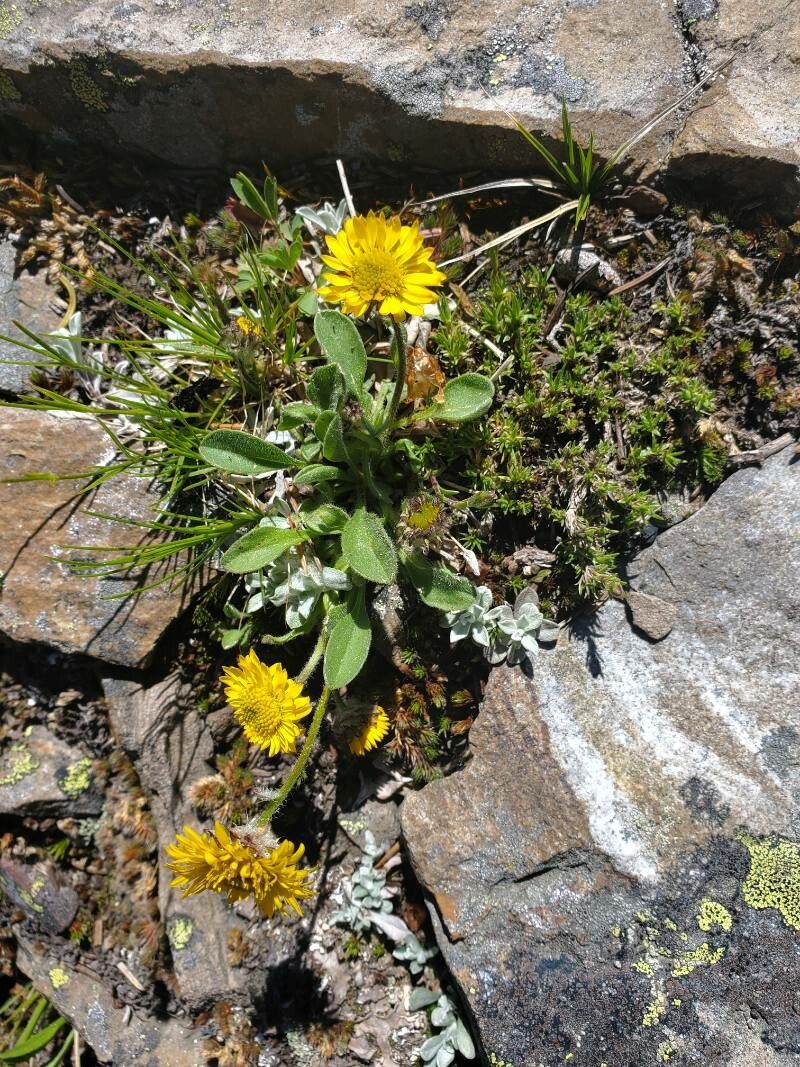
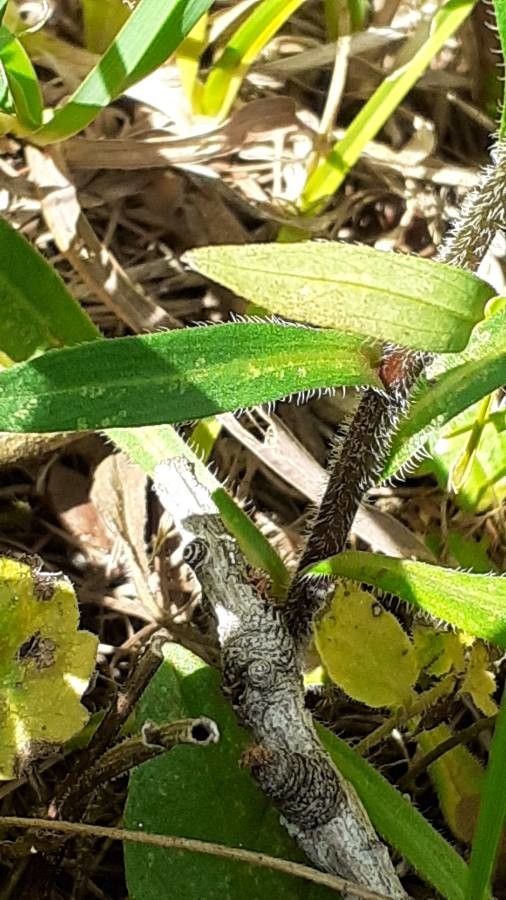
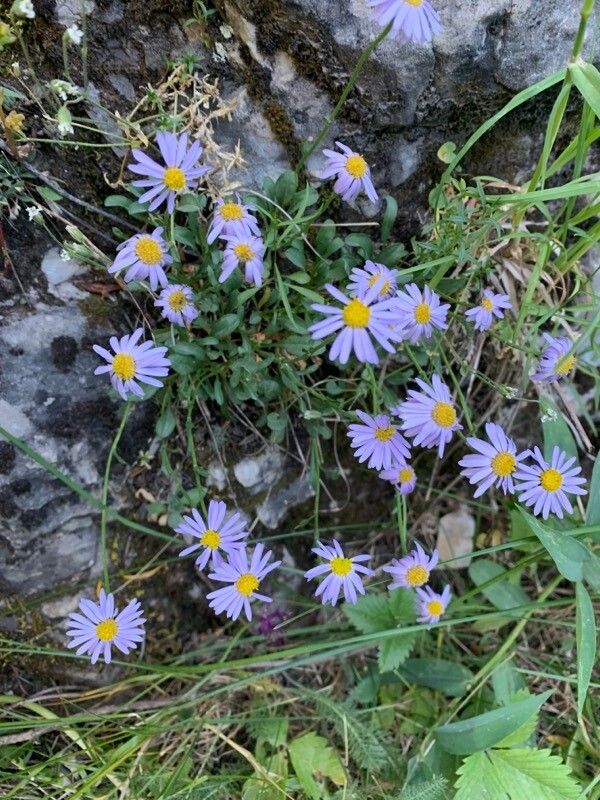
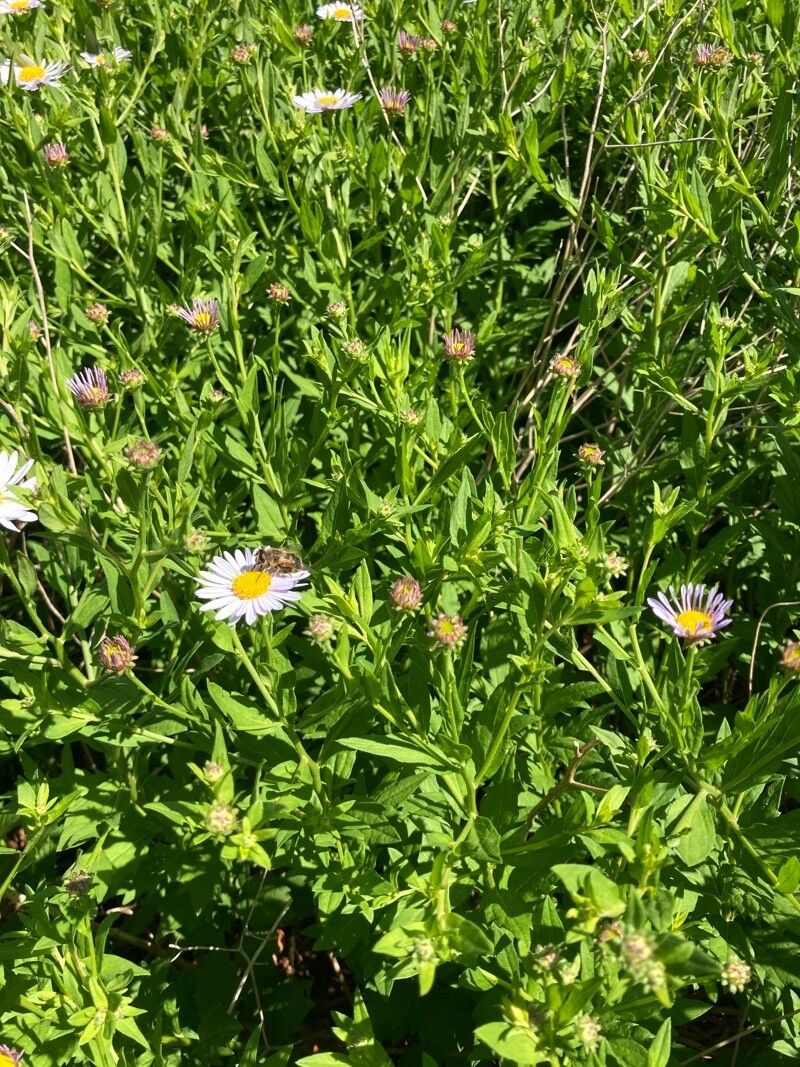
Erigeron aureus, the Alpine yellow fleabane, is a species of flowering plant in the family Asteraceae, native to the Cascades and Rocky Mountains of northwestern North America (Alberta, British Columbia, Washington).Erigeron aureus is a very small, short-lived herbaceous perennial growing to 10 cm (4 in), rarely 20 cm (8 in) tall. It has tufts of hairy grey-green leaves with large solitary yellow daisy-like flower heads to 2.5 cm (0.98 in) wide, appearing in summer.The specific epithet aureus means "golden yellow".In nature it inhabits ridges, crevices and rocky slopes, and is suitable for cultivation in a rockery, wall or similar sunny, well-drained site. In the UK it thrives in the warmer western and southern coastal areas, though it is listed as hardy down to −10 °C (14 °F). The cultivar 'Canary Bird', longer-lived than wild populations of the species, has gained the Royal Horticultural Society's Award of Garden Merit.
Alpine yellow fleabane is fairly disease-resistant and typically does not suffer from many illnesses. That said, it can be vulnerable to pests and diseases present in its environment. Such infections are generally minor. Regarding care, this plant needs moderate attention. Regular pruning is necessary to maintain a neat appearance and encourage healthy growth. Applying fertilizer can also help promote flowering. Alpine yellow fleabane is suitable for anyone with outdoor space, such as a garden or patio, and does not require extensive care experience. It may need more attention when grown indoors.
How to keep Erigeron Aureus.
Light
Alpine yellow fleabane is a sun-loving, herbaceous perennial that comes from open habitats and commonly thrives in meadows and grasslands. It prefers full sun but can also tolerate partial sun conditions.
Water
Alpine yellow fleabane thrives in environments with moderate moisture, preferring a balance between wet and dry conditions. It needs weekly watering and, as a flowering plant, has adapted to retain water. This adaptation helps produce vibrant blooms throughout its growth cycle.
Fertilizer
The best time to fertilize an Alpine yellow fleabane is in early spring, as it comes out of dormancy and starts active growth. Fertilization supplies essential nutrients for healthy development. Although Alpine yellow fleabane has fairly low fertilizer requirements, applying fertilizer annually can improve its survival and encourage better, longer-lasting flowers.
Pruning
To keep Alpine yellow fleabane healthy and looking its best, start with early spring pruning to remove dead foliage, which encourages new growth. Thin out crowded areas to enhance air circulation and reduce the risk of disease. Regularly deadhead the flowers to extend the blooming period. Proper pruning not only increases the plant's vigor but also helps maintain a compact shape, improving both its overall health and appearance.
Botanical profile.
- Plant Type
- Herb
- Life Cycle
- Perennial
- Genus
- Erigeron
- Family
- Asteraceae
- Hardiness Zone
- 3-8
- Mature Height
- 5 cm to 15 cm
- Mature Spread
- 20 cm
- Leaf Color
- Green
- Leaf Type
- Semi-evergreen
- Flower Color
- Gold, Yellow
- Flower Size
- 2.03 cm to 3.05 cm
- Bloom Time
- Late spring, Early summer, Mid summer
- Planting Time
- Spring, Summer, Autumn
- Harvest Time
- Mid summer, Late summer
Other names.