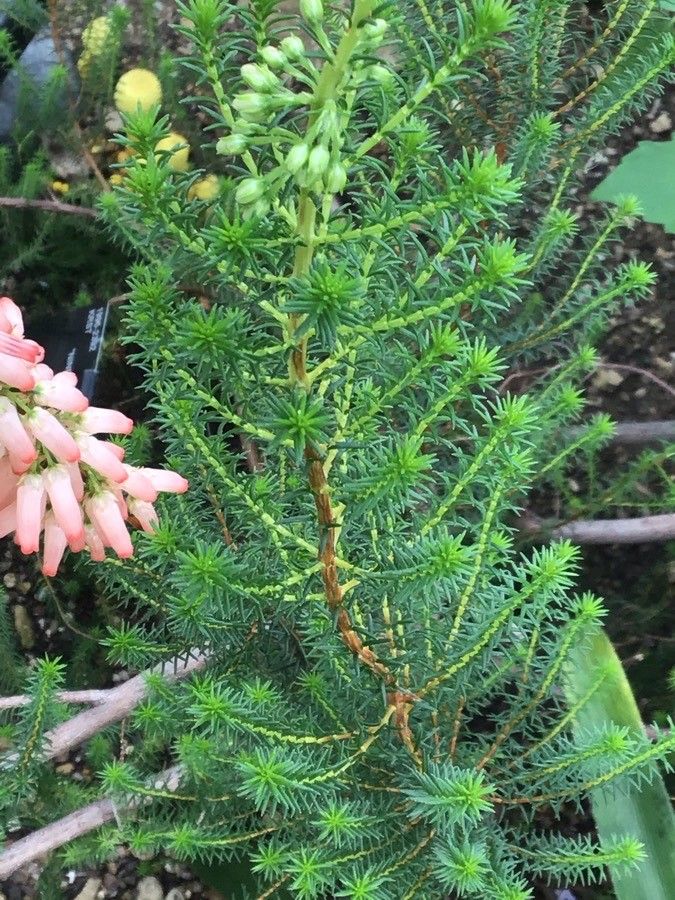
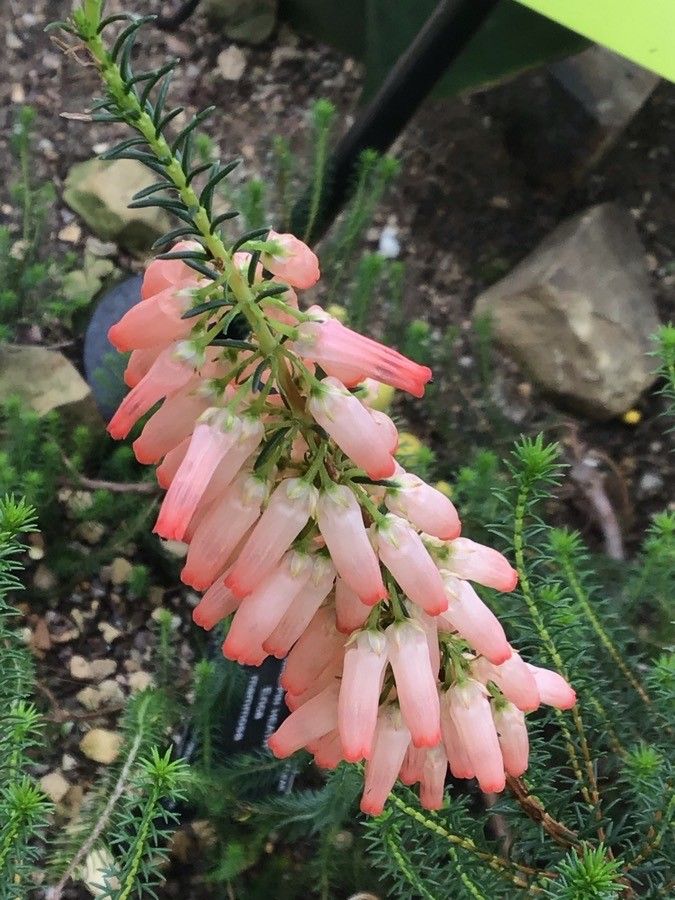
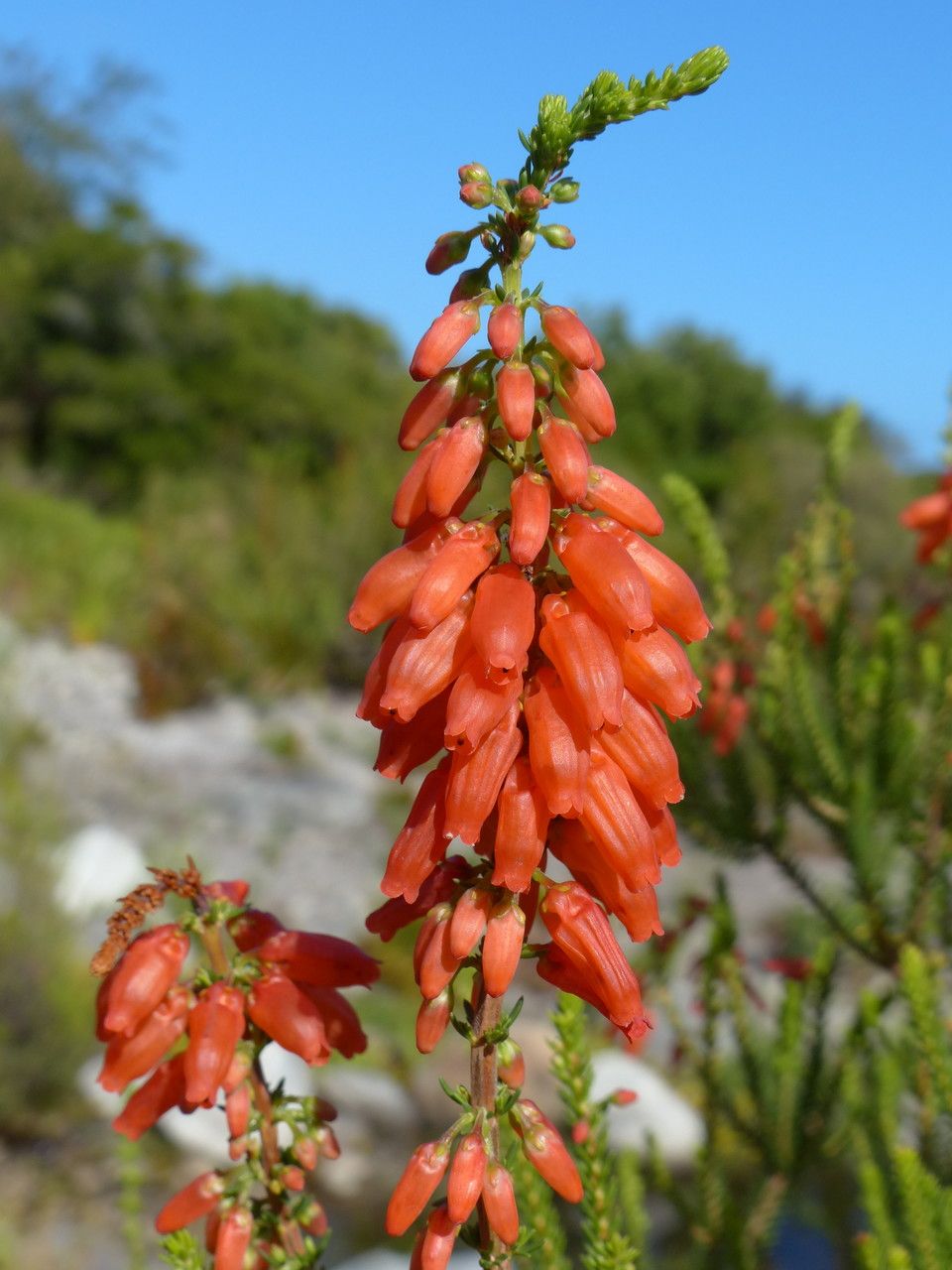
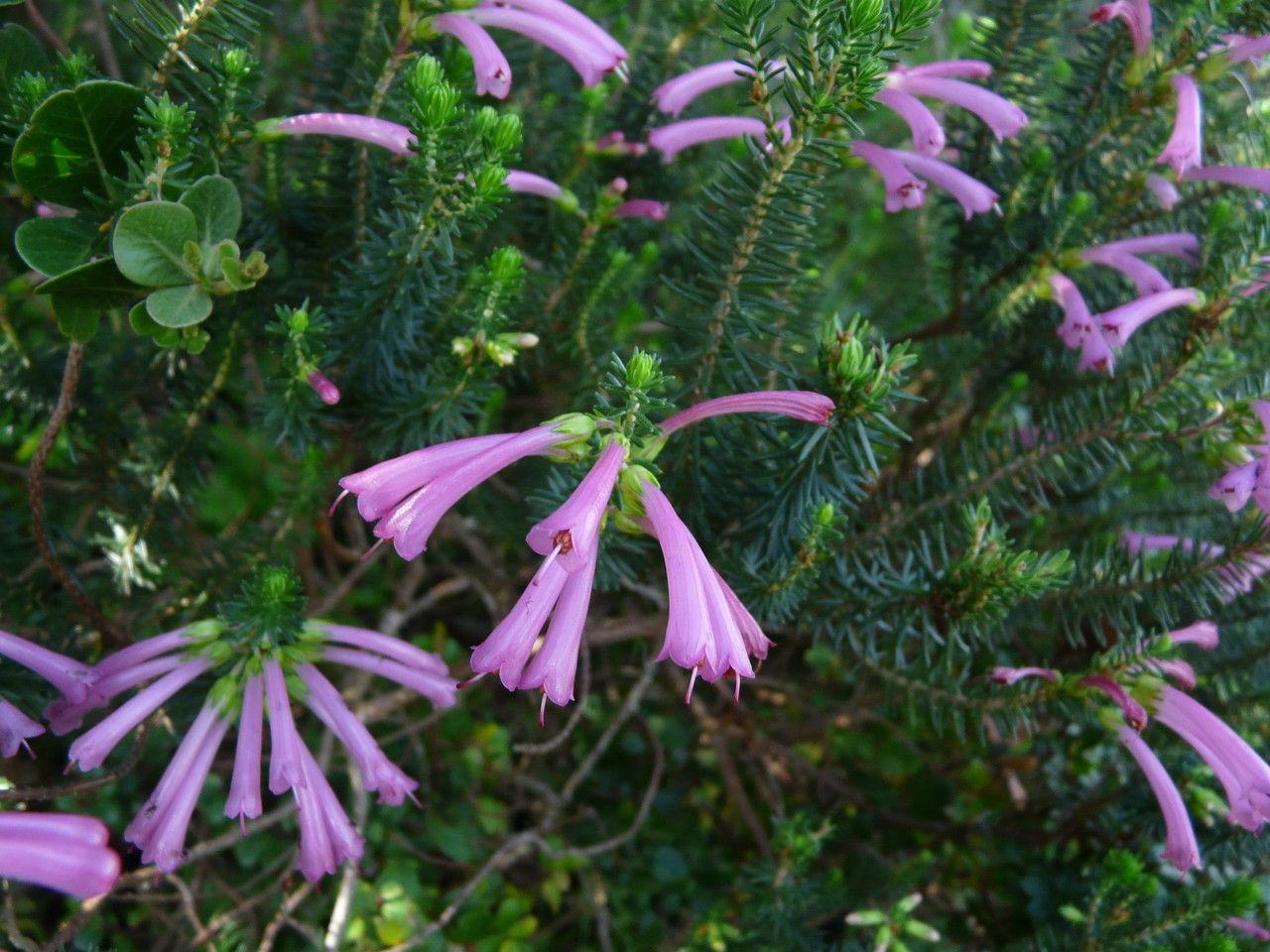
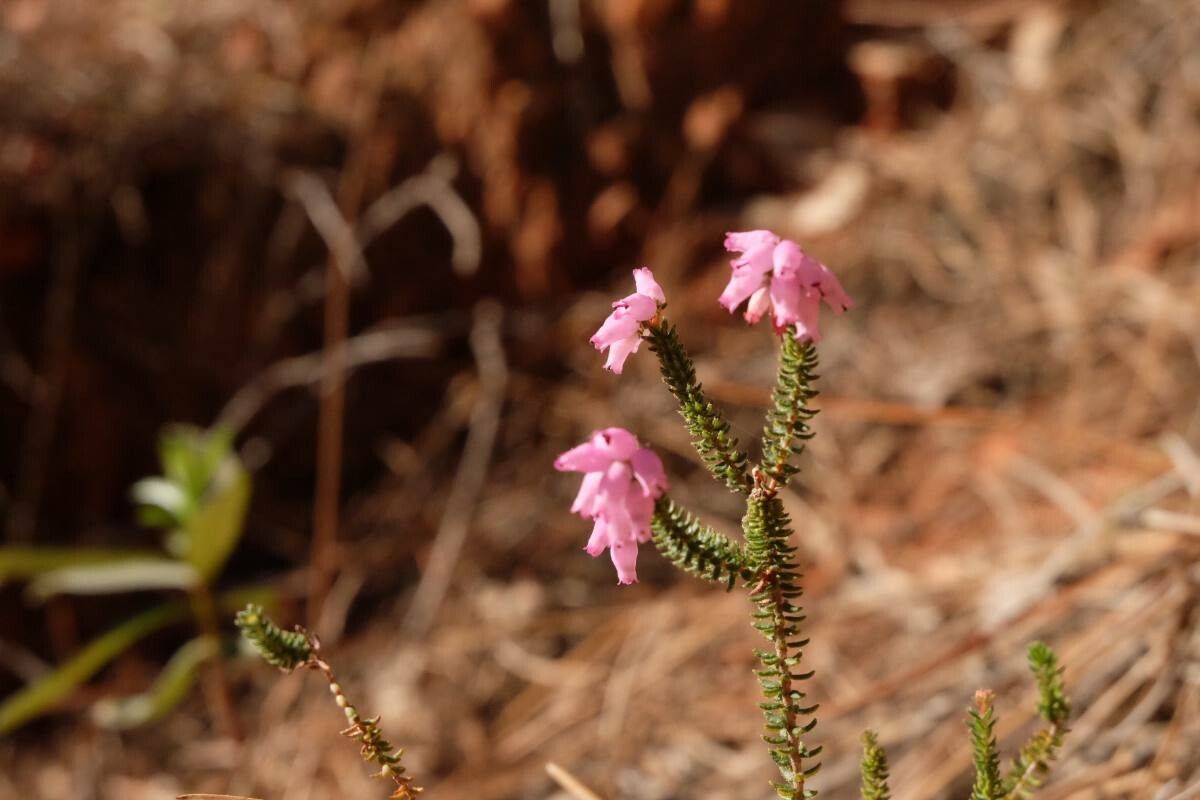
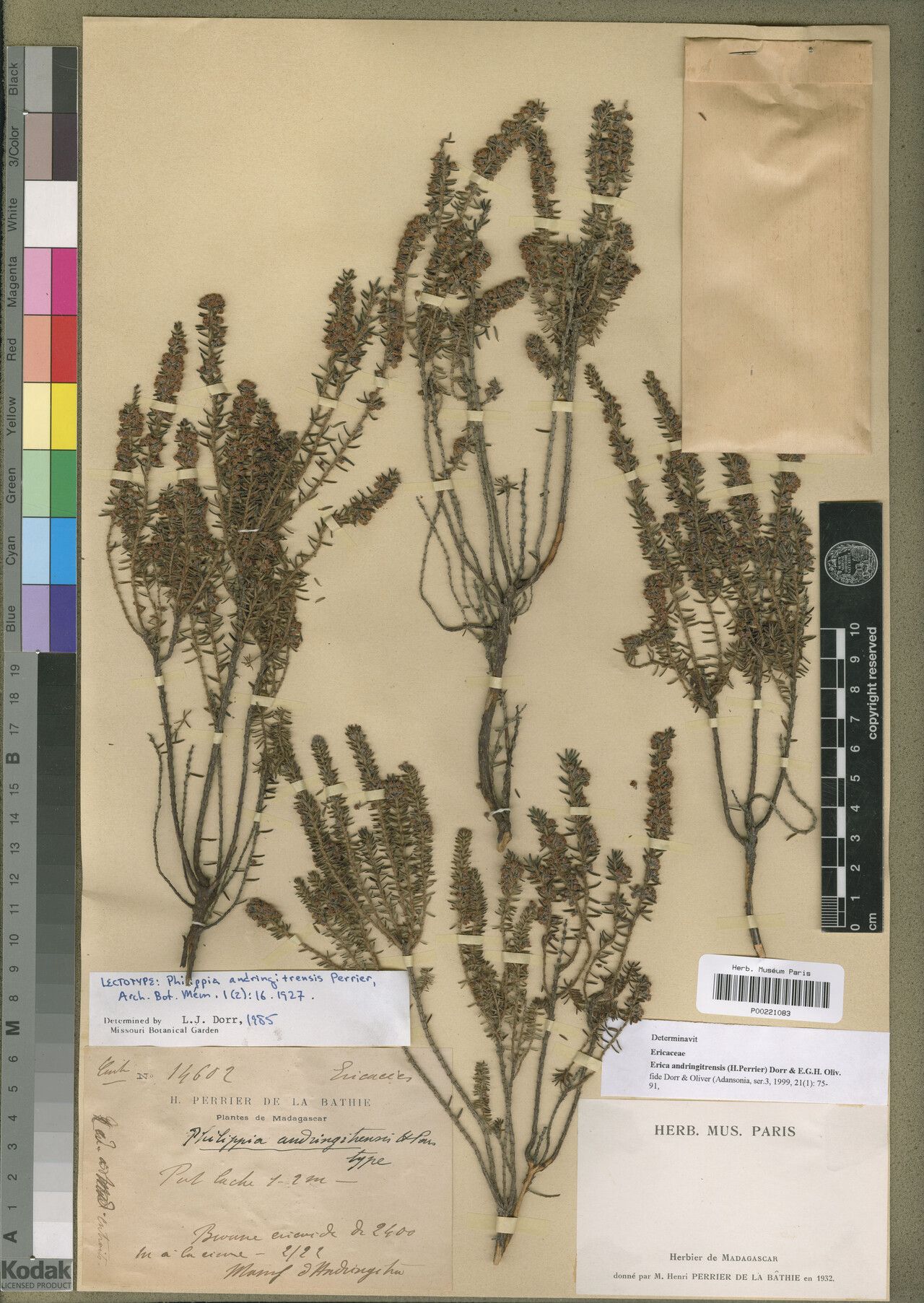
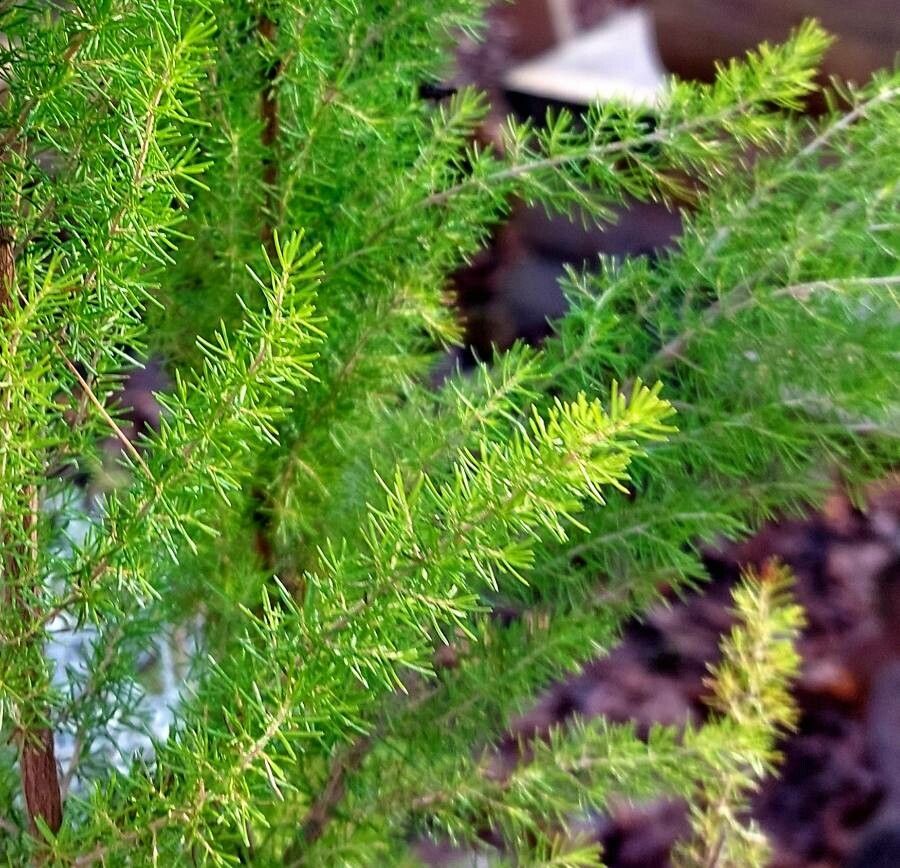
Erica Mammosa: A Beautiful and Useful Evergreen Shrub Erica mammosa, commonly known as "breast heath" or "mammary heath," is a small evergreen shrub that belongs to the Ericaceae family. Native to South Africa, it thrives in rocky areas and on mountain slopes. The plant typically has a compact, bushy growth habit and can reach up to 1 meter in height. The leaves of Erica mammosa are small, needle-like, and arranged in whorls around the stem. Its bell-shaped flowers, which have five petals, come in shades of pink, purple, or white. These flowers bloom from late winter through early spring, adding a splash of color to the landscape. With its attractive flowers and foliage, Erica mammosa can be grown as an ornamental shrub. It prefers well-drained soil with an acidic pH level between 4 and 6.5 and requires full sun exposure for optimal growth. In addition to its ornamental value, breast heath has been traditionally used by indigenous people of South Africa for medicinal purposes. It has been employed in treating respiratory infections, stomach ailments, and skin conditions such as eczema and psoriasis. In conclusion, Erica mammosa is a beautiful evergreen shrub native to South Africa. Its striking appearance and traditional medicinal uses make it a valuable plant in both gardens and natural medicine.
Nine-pin heath is disease-resistant and typically not susceptible to illnesses. As for maintenance, this plant is fairly low-maintenance. When grown outdoors it needs little watering, and larger plants usually do not require pruning. Smaller plants, however, should be pruned after they finish blooming. Nine-pin heath is appropriate for anyone with an outdoor area, such as a garden or deck, and does not demand much experience in plant care.
How to keep Erica Mammosa.
Light
Nine-pin heath comes from open habitats, such as sunny meadows and forest margins, which provide abundant light. It thrives in Full Sun but can also tolerate Partial Sun, adapting well to different sunlight conditions.
Water
Nine-pin heath flourishes in conditions of balanced humidity, preferring consistent moisture but tolerating occasional periods of dryness. To keep the plant healthy, water it once every 1-2 weeks. As an evergreen, it retains water effectively, making it an ideal choice for indoor settings where humidity levels can be controlled.
Temperature
Nine-pin heath adapts well to temperature, tolerating higher heat and wider temperature fluctuations. During hot periods, care should be taken with watering and suitable shade should be provided to avoid sunburn. Conversely, Nine-pin heath is not very tolerant of cold; although it endures some chill, excessively low temperatures can cause frost damage.
Fertilizer
The timing of fertilization is important for Nine-pin heath. Apply fertilizer beginning in early spring and repeat monthly through early summer. Fertilizer encourages attractive blooms and supplies energy during both dormant and active growth phases.
Pruning
Nine-pin heath is a shrub with needle-like foliage and bright flowers. To promote growth, remove dead branches, and prevent legginess, it's best to prune in early spring after the last frost. Make sure to use sterilized tools when pruning to prevent the spread of disease. This will help encourage a fuller shape and healthy blooms.
Botanical profile.
- Plant Type
- Shrub
- Life Cycle
- Perennial
- Genus
- Erica
- Family
- Ericaceae
- Hardiness Zone
- 8-10
- Mature Height
- 0.61 m to 1.22 m
- Mature Spread
- 30 cm to 61 cm
- Leaf Color
- Green
- Leaf Type
- Evergreen
- Flower Color
- White, Red, Green, Orange, Pink
- Flower Size
- 1.02 cm to 2.03 cm
- Bloom Time
- Late summer, Early fall, Mid fall
- Planting Time
- Spring, Summer, Autumn
- Harvest Time
- Late fall, Early winter, Mid winter
- Native Area
- South Africa
Other names.
Reader questions.
What are the sunlight requirements for Nine-pin Heath (Erica mammosa)?
Nine-pin Heath (Erica mammosa) requires varying amounts of sunlight depending on the specific needs. For full sun, the plant should receive above 6 hours of sunlight daily, which is essential for its optimal growth and bloom. If you are aiming for partial sun, about 3-6 hours of sunlight would suffice. It's important to observe how sunlight moves through your garden throughout the day. This observation will help you choose spots that ensure a perfect balance of light and shade, contributing to the happiness and health of your Nine-pin Heath.
What is the Nine-pin heath?
Nine-pin heath, known botanically as Erica mammosa, is a plant species. Unfortunately, there's no detailed information provided on its characteristics, essentials, or symptoms when dealing with this particular plant.