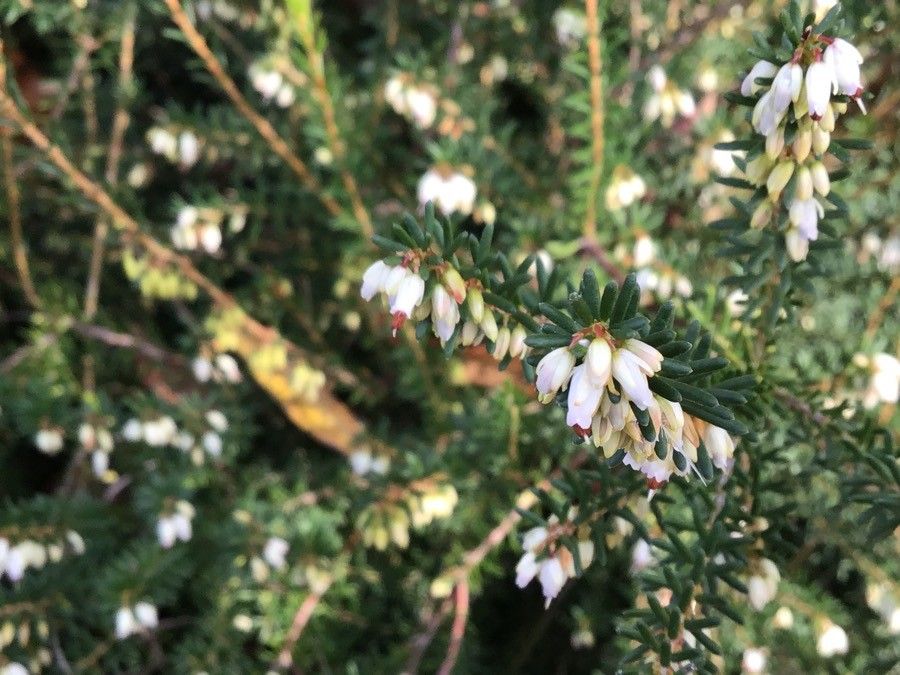
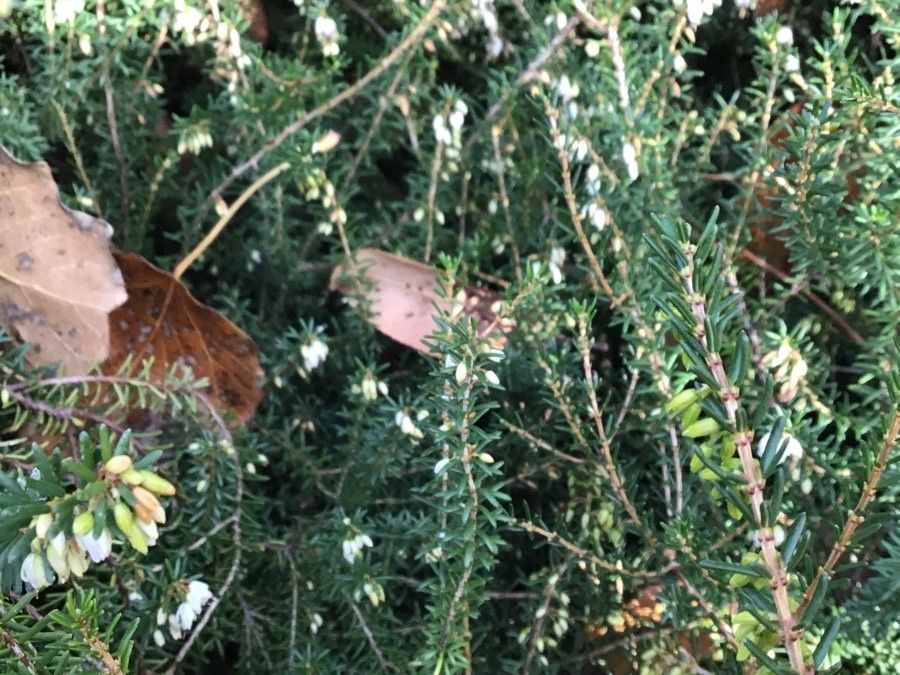
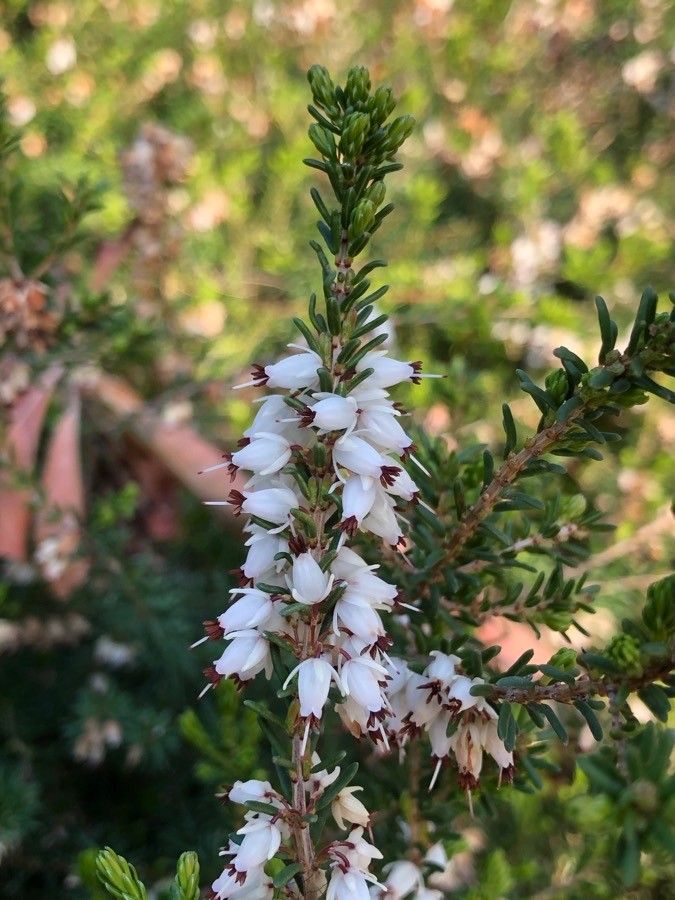
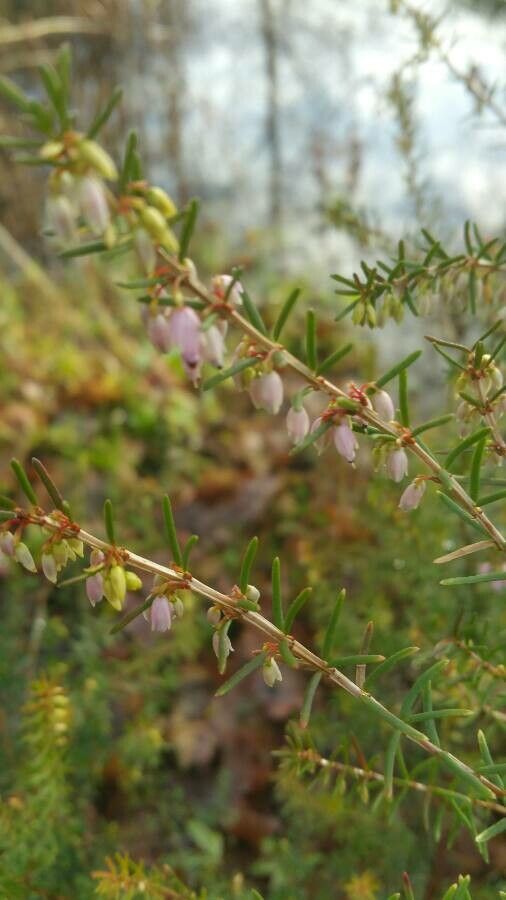
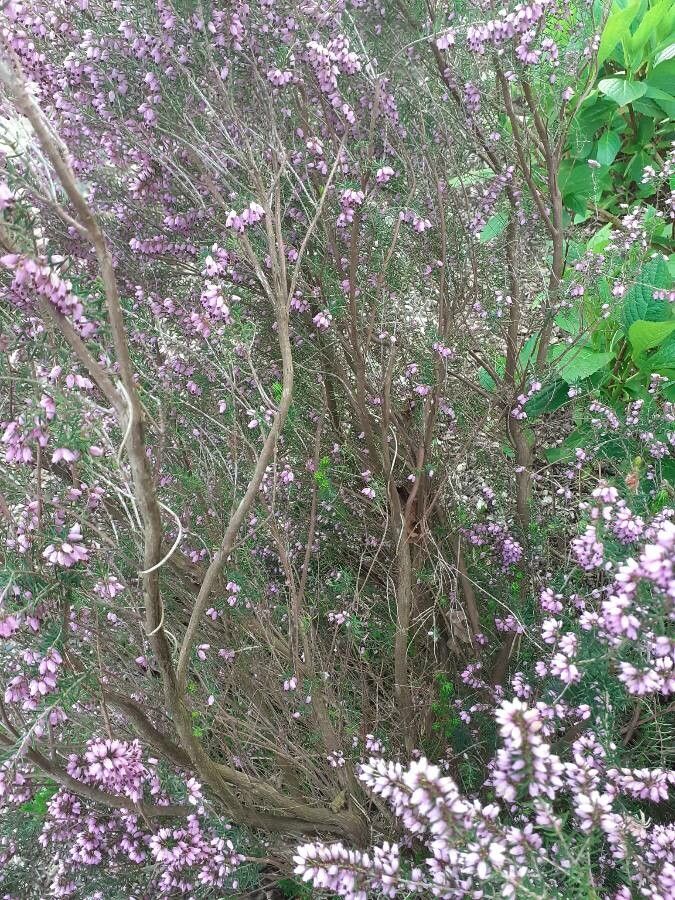
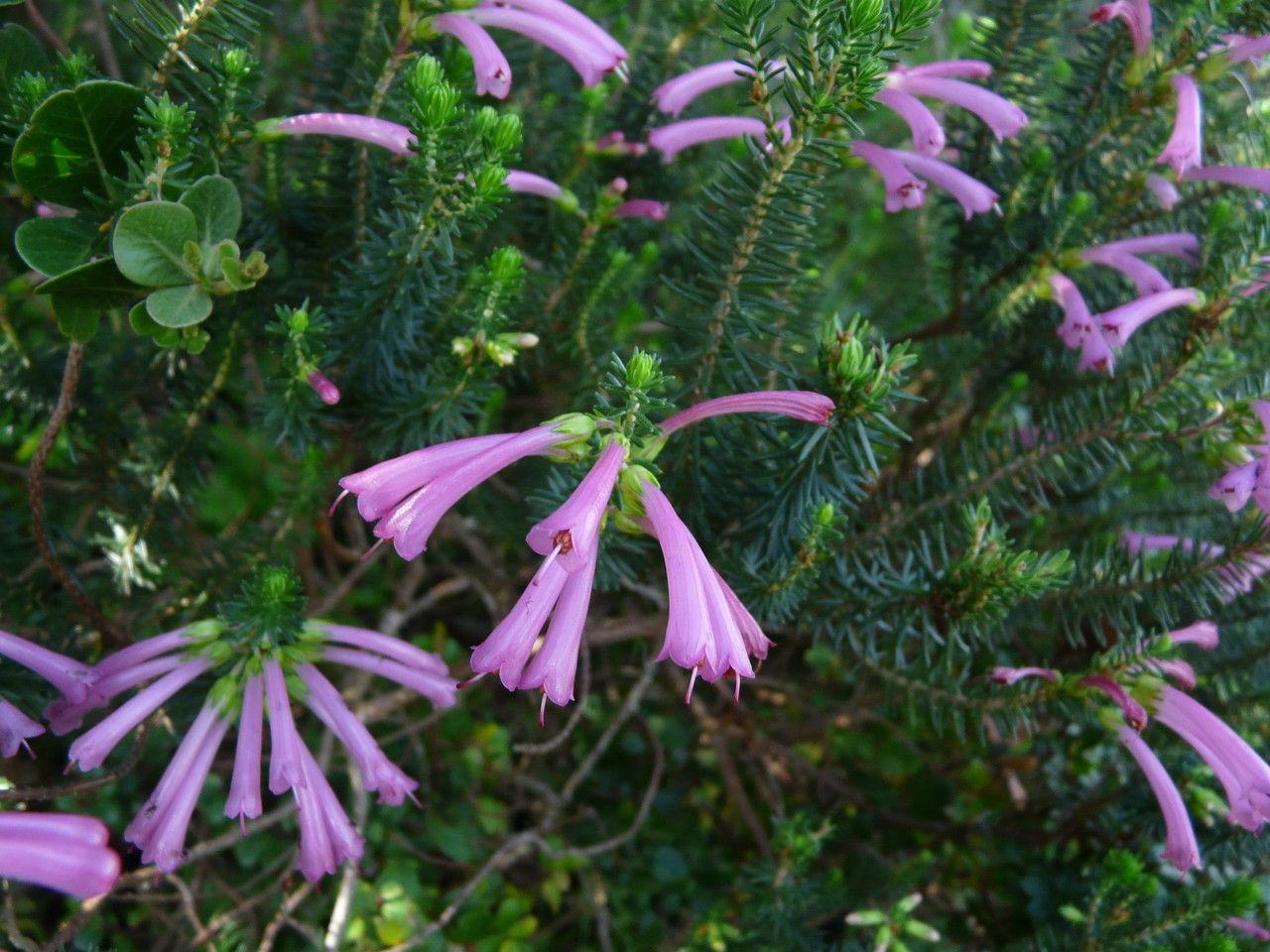
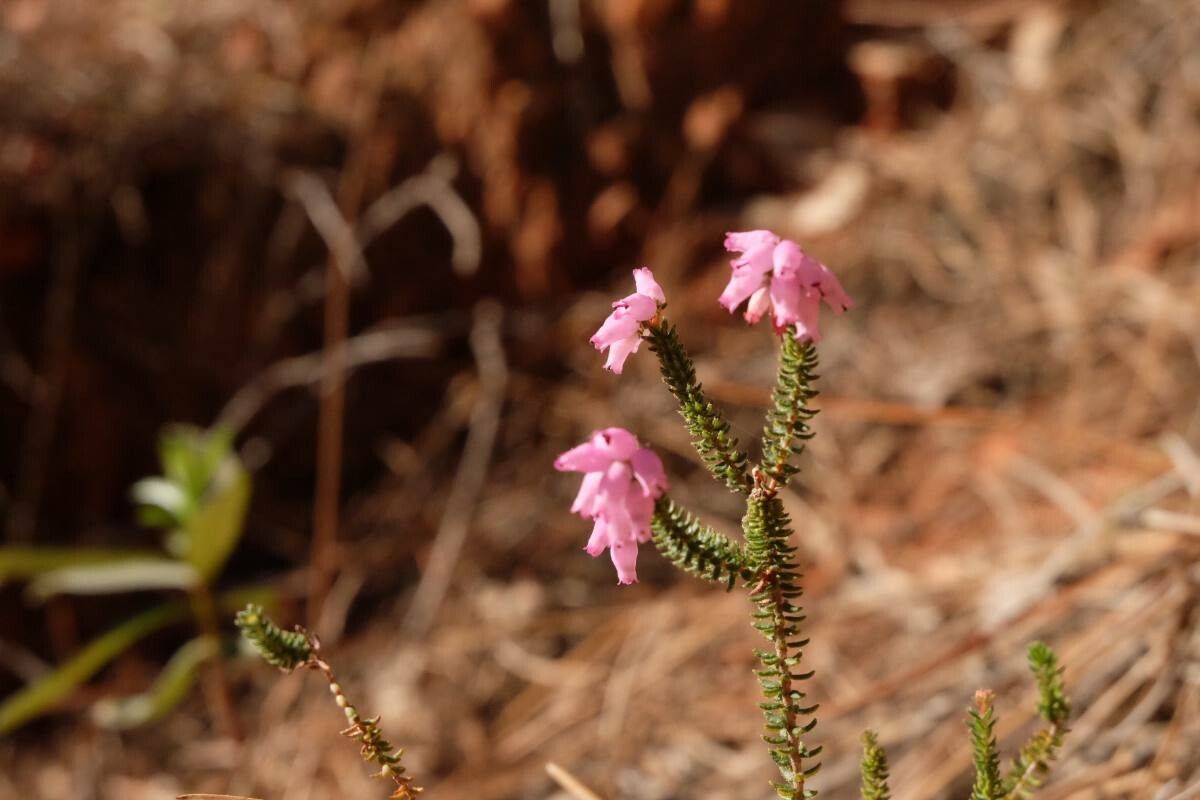
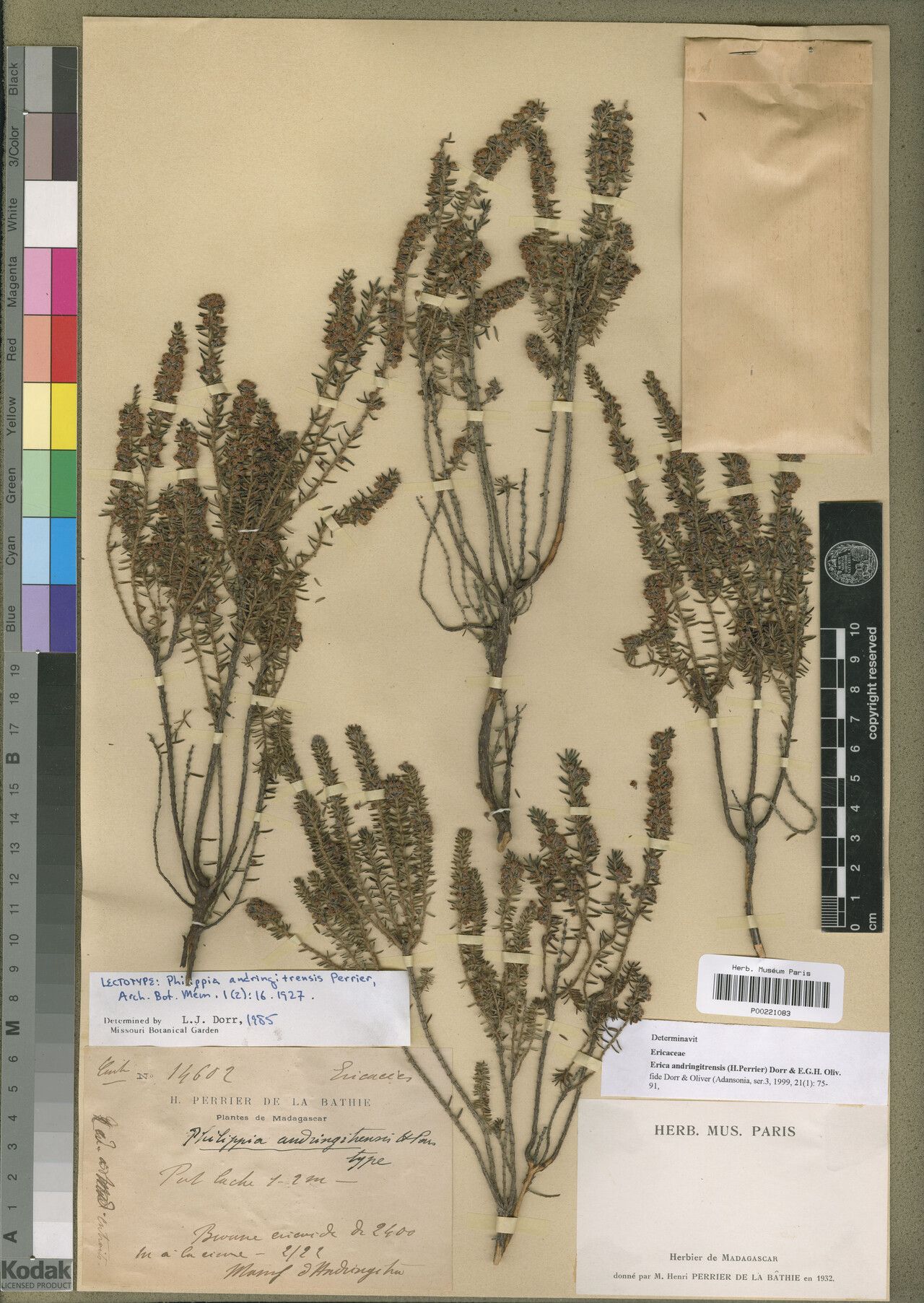
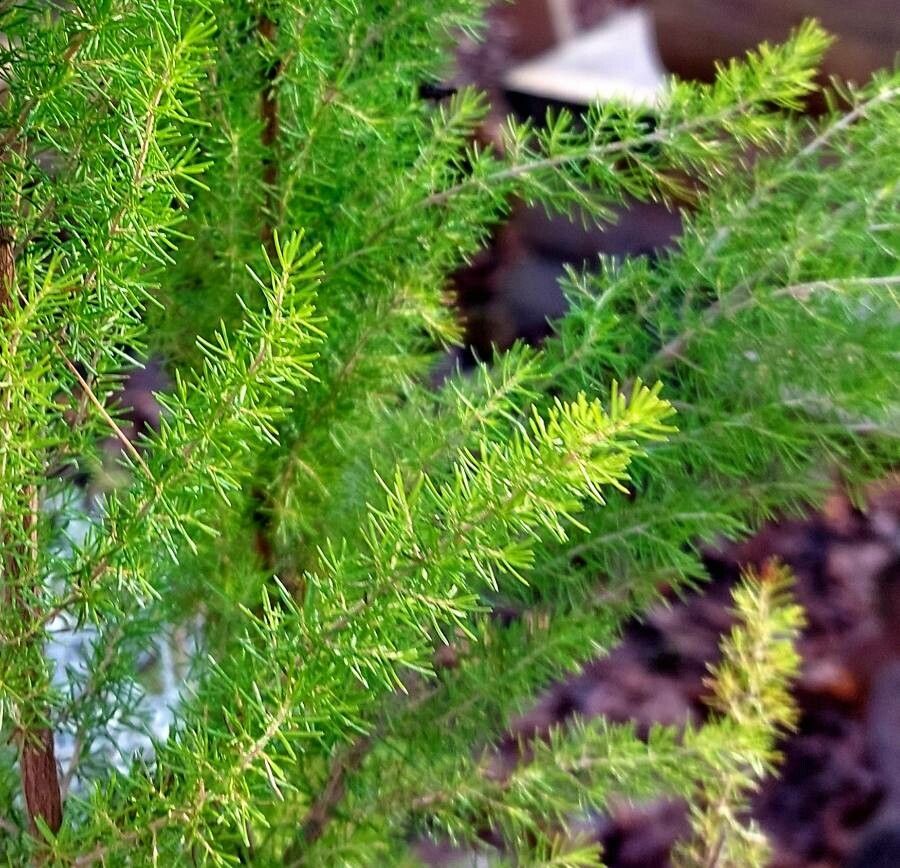
Erica erigena, the Irish heath, is a species of flowering plant in the family Ericaceae, native to cliffs and heathland in Ireland, southwestern France, Spain, Portugal and Tangier. It is a compact evergreen shrub growing to 75 cm (30 in), with somewhat brittle foliage and deep pink honey-scented flowers in winter and spring. Its appearance in the far west of Ireland, separated from the main Mediterranean populations, suggests a garden escape.In cultivation, it is often seen as groundcover amongst dwarf conifers. Like others of its kind, it is a calcifuge, preferring an open sunny site with well-drained acid soil. Numerous cultivars have been developed for garden use, of which the following have gained the Royal Horticultural Society's Award of Garden Merit: Erica erigena 'Irish Dusk' Erica erigena f. alba 'W.T. Rackliff' (white-flowered)
Irish heath is well resistant to disease and is generally not susceptible to illnesses. As for care, this plant is fairly low-maintenance. When grown outdoors it needs only minimal watering, and larger plants typically do not require pruning. Smaller plants, however, should be pruned after they finish blooming. Irish heath is suitable for anyone with an outdoor space, like a garden or deck, and does not demand a great deal of care experience.
How to keep Erica Erigena.
Light
Irish heath naturally occurs in habitats like forest understories or rocky areas, where it grows in natural shade. It prefers partial sun but can also tolerate full sun or full shade, demonstrating its versatile and hardy nature.
Water
Irish heath flourishes in well-drained soils and requires moderate watering, ideally every 1 to 2 weeks. Native to temperate climates, it needs balanced moisture levels. As an evergreen, Irish heath retains its leaves throughout the year, making a consistent water supply necessary, even during colder months.
Temperature
Irish heath shows strong adaptability to a range of climates, from hot summers to cold winters. Nevertheless, it has a preferred temperature range for growth. If temperatures rise too high, the plant is susceptible to heat and humidity stress, which can lead to its death. In areas where temperatures approach the lower limit of its cold tolerance, it is important to use insulation measures to protect the plant.
Fertilizer
Timing is important for fertilizing Irish heath. Apply fertilizer in early spring and then once a month through early summer. Fertilizer encourages attractive blooms and supplies energy both during dormancy and active growth.
Pruning
Irish heath benefits from pruning from early to late winter, with a focus on removing dead or damaged branches to encourage healthy growth and maintain shape. Light pruning helps stimulate blooming, while heavy cuts should be avoided. Be sure to use clean tools to prevent disease, and practice patience for achieving optimal beauty and longevity.
Botanical profile.
- Plant Type
- Shrub
- Life Cycle
- Perennial
- Genus
- Erica
- Family
- Ericaceae
- Hardiness Zone
- 7-9
- Mature Height
- 30 cm to 61 cm
- Mature Spread
- 30 cm to 61 cm
- Leaf Color
- Green
- Leaf Type
- Evergreen
- Flower Color
- Pink
- Flower Size
- 0.51 cm to 0.76 cm
- Bloom Time
- Late winter, Early spring, Mid spring
- Planting Time
- Spring, Summer, Autumn
- Harvest Time
- Late spring, Early summer, Mid summer
- Native Area
- Portugal, Spain, Ireland, Morocco, France
Other names.
Reader questions.
What are the sun requirements for Irish heath (Erica erigena)?
Irish heath (Erica erigena) flourishes under specific sunlight conditions. For optimal growth, it requires 'full sun', which means the plant should receive above 6 hours of sunlight daily. Alternatively, it can also thrive under 'partial sun', needing about 3-6 hours of sunlight each day. It's important to observe the movement of sunlight through your garden carefully to ensure that you place your Irish heath in a location that offers just the right balance of light and shade, thus ensuring the plant's well-being.
What is the botanical name of the Irish heath?
The botanical name of the Irish heath is Erica erigena.