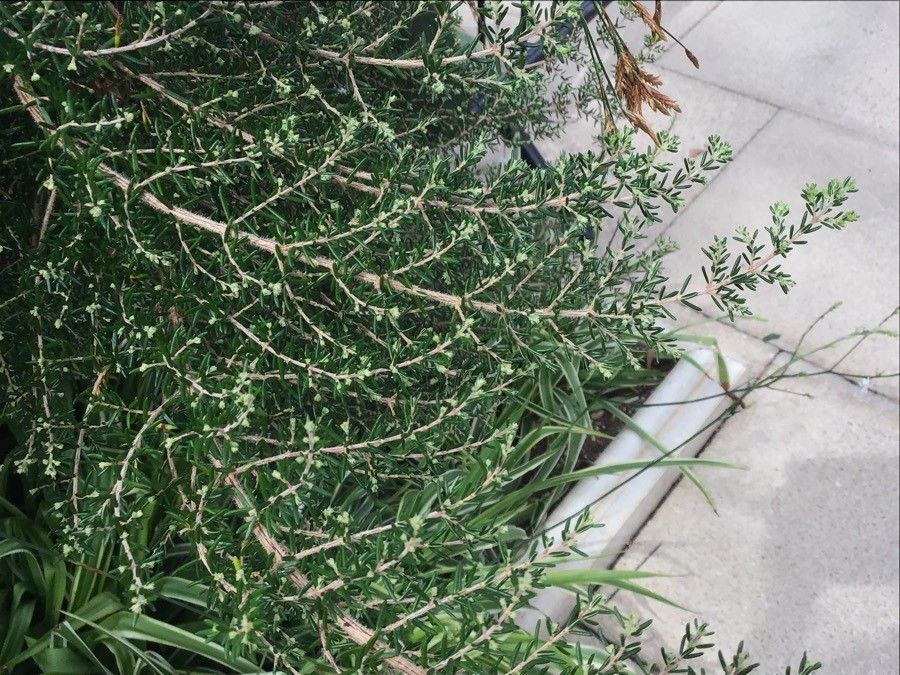
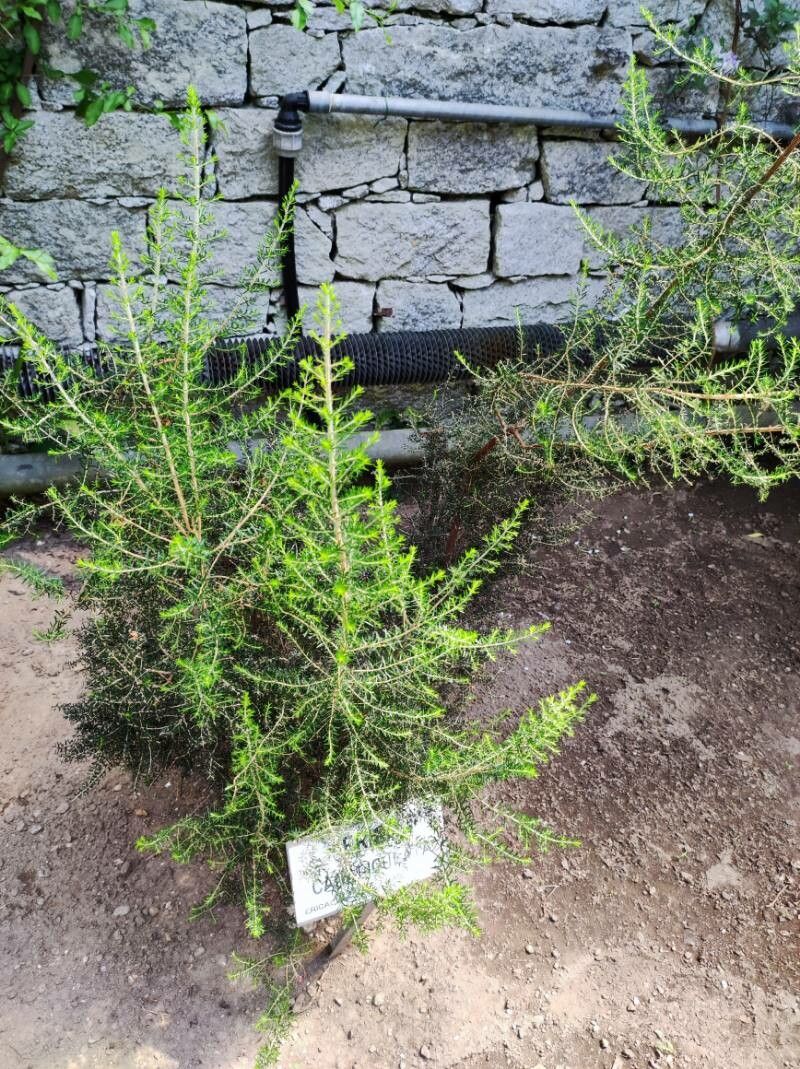
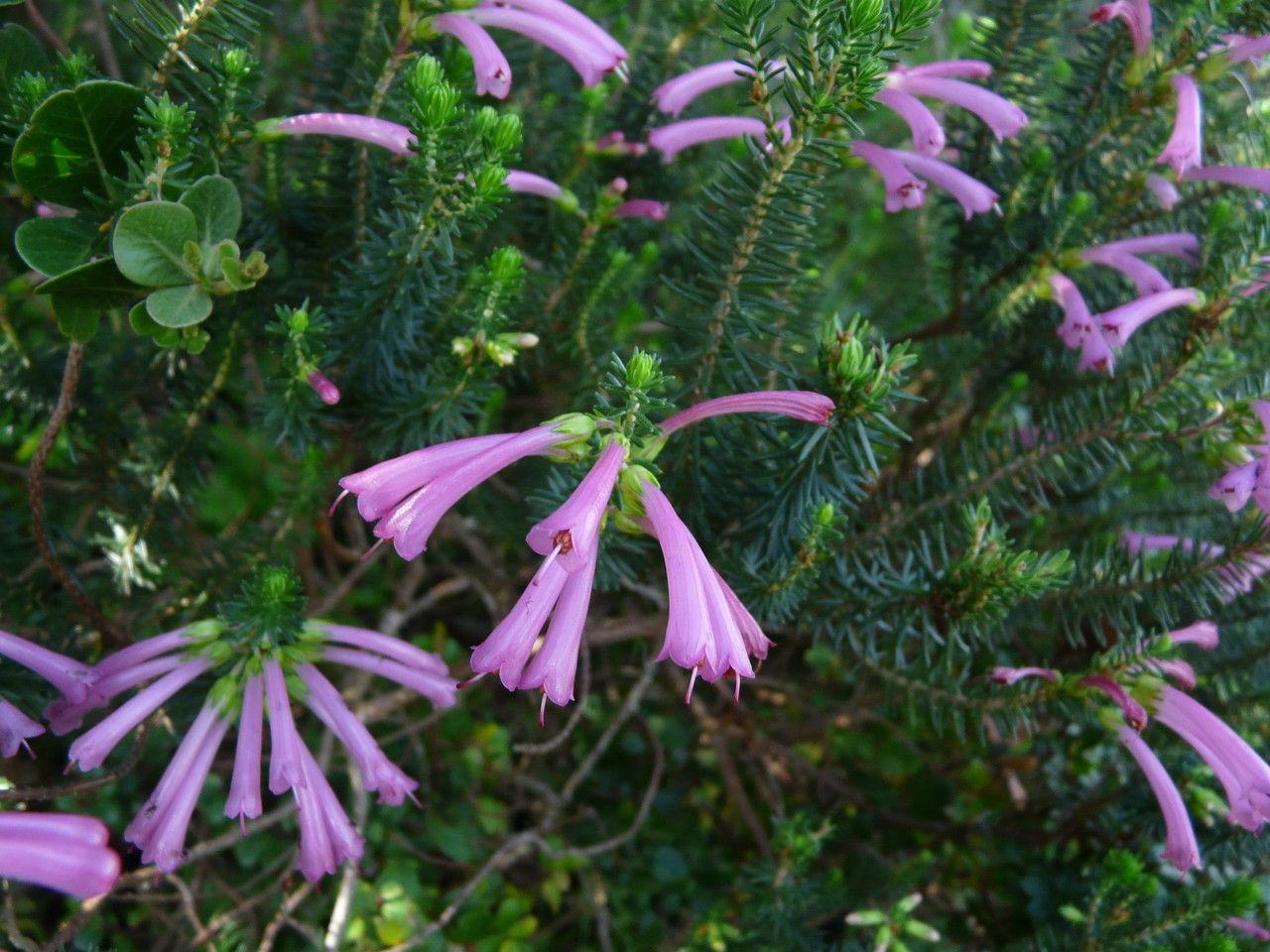
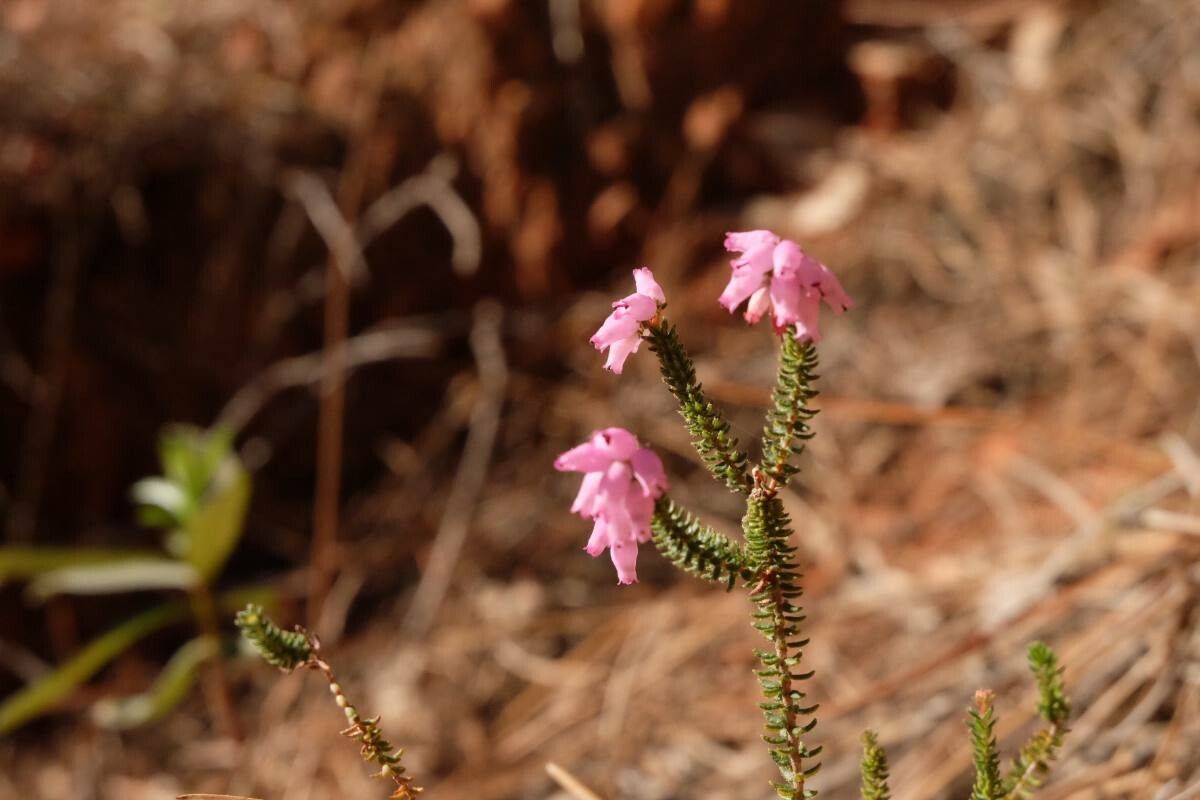
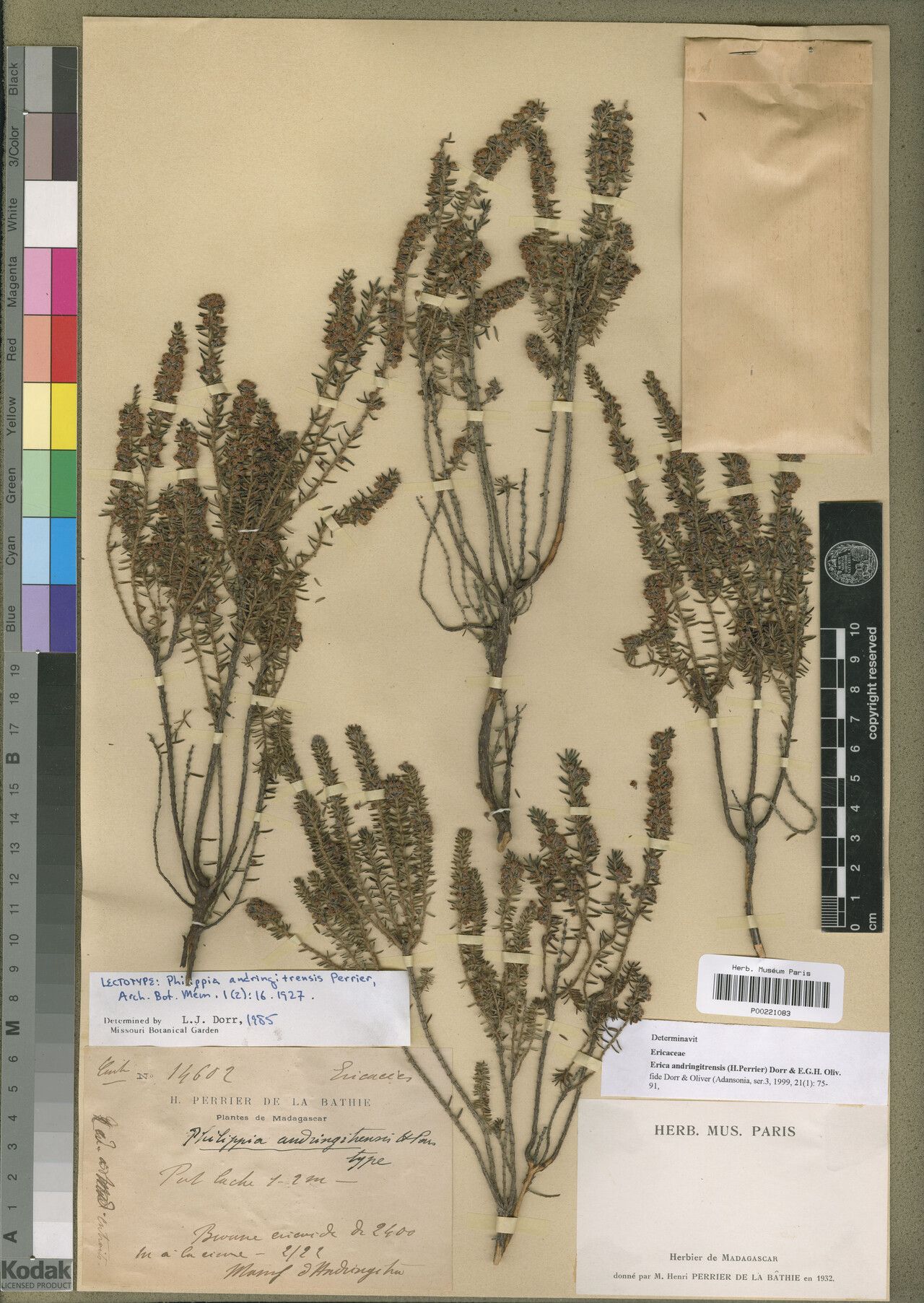
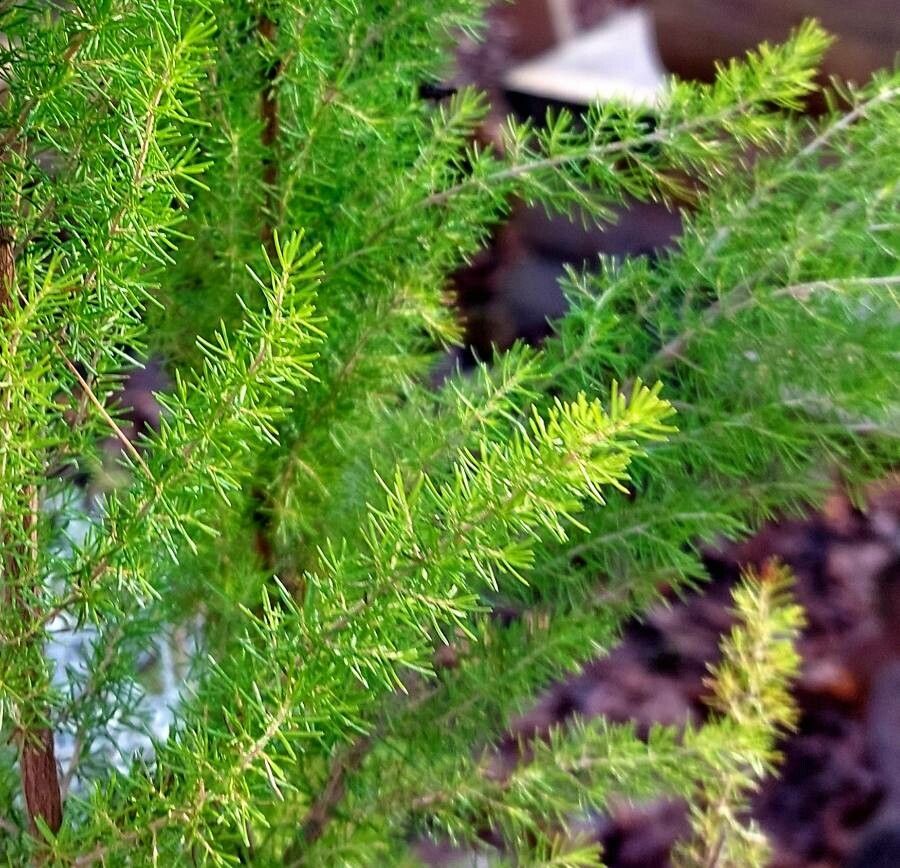
Erica canaliculata, the channelled heath or hairy grey heather, is a species of flowering plant in the family Ericaceae. The species is native to the East and West Capes of South Africa and naturalised in South Australia. It is an erect evergreen shrub, sometimes described as a tree heath (a term also applied to E. arborea and E. lusitanica). It grows to 2 m (6 ft 7 in), with tiny dark green leaves and large sprays of pink or white flowers with prominent brown anthers in winter and spring.The Latin specific epithet canaliculata means “with channeled or grooved leaves”.Not fully hardy, in frost-prone areas it requires some protection. It has gained the Royal Horticultural Society's Award of Garden Merit.
Christmas heather is resistant to disease and is generally not prone to illnesses. Regarding care, this plant is fairly low-maintenance. When grown outdoors it needs little watering, and larger specimens typically do not require pruning. Smaller plants, however, should be pruned after they have finished blooming. Christmas heather is appropriate for anyone with an outdoor area, such as a garden or deck, and does not require extensive care experience.
How to keep Erica Canaliculata.
Light
Christmas heather shows a strong preference for abundant sunlight and grows best when exposed to plenty of light. It can also tolerate moderate amounts of sun. Its native habitat is well-lit, reflecting this sunlight preference. Too much shade can impede its growth, while excessive sun can cause damage.
Water
Christmas heather thrives in well-drained soil and benefits from occasional watering. Once established, it becomes drought-tolerant and only requires watering every two weeks. This plant is usually grown outdoors and does well in temperate climates with natural seasonal rainfall. A balance of dry and humid conditions is ideal for its optimal growth.
Temperature
Christmas heather originally comes from areas where temperatures range from 68 to 95 °F (20 to 35 ℃). It grows best in that warmer range, so seasonal adjustments in care may be necessary to preserve those conditions.
Fertilizer
Timing is critical when fertilizing Christmas heather. Begin in early spring and apply fertilizer monthly up until early summer. Fertilizer promotes beautiful blooms and supplies energy during both dormant and active growth stages.
Pruning
Christmas heather is known for its vibrant pink flowers and evergreen leaves. To encourage bushier growth and more blooms while maintaining plant health, perform light pruning in late spring. Avoid heavy pruning, as it can hinder growth. Always use sanitized tools to minimize the risk of disease, which helps preserve both the plant's appearance and longevity.
Botanical profile.
- Plant Type
- Shrub
- Life Cycle
- Perennial
- Genus
- Erica
- Family
- Ericaceae
- Hardiness Zone
- 9-10
- Mature Height
- 3.96 m
- Mature Spread
- 1.52 m
- Leaf Color
- Green
- Leaf Type
- Evergreen
- Flower Color
- Pink, White
- Flower Size
- 0.25 cm to 0.51 cm
- Bloom Time
- Winter, Early spring, Mid spring
- Planting Time
- Spring, Autumn
- Harvest Time
- Spring
- Native Area
- South Africa
Other names.
Reader questions.
What are the sunlight requirements for Christmas heather?
Christmas heather, or Erica canaliculata, thrives best when it receives an abundant amount of sunlight, showing a strong preference for well-lit environments that mimic its native habitat. The plant requires full sun, defined as more than 6 hours of sunlight daily, but can also tolerate partial sun, which involves about 3-6 hours of sunlight. It's crucial to ensure the plant does not receive too much shade as this can hinder its growth, and conversely, excessive direct sunlight can also cause damage. Observing the movement of sunlight through your garden and selecting locations that offer a balanced exposure to light and shade will support the health and happiness of your plants.
What is the ideal temperature range for Christmas heather?
Christmas heather, known botanically as Erica canaliculata, thrives in temperatures ranging from 68 to 95 °F (20 to 35 °C). Originating from regions with these warmer climates, the plant is able to tolerate some cold but does best within its ideal temperature range. To ensure the plant's health, it may be necessary to make seasonal adjustments in care to maintain the optimal temperatures.
How can artificial lighting be used for Christmas heather indoors?
When natural sunlight is insufficient, especially during winter or in less sunny spaces, artificial lighting can compensate, promoting healthier, faster growth for Christmas heather. LED lights are recommended due to their ability to be customized to specific plant needs, offering the required wavelengths of light. Full sun plants should have 30-50W/sq ft of artificial light, while partial sun plants need 20-30W/sq ft, and full shade plants require 10-20W/sq ft. The light source should be placed 12-36 inches above the plant to mimic natural sunlight conditions, and the duration of exposure should range from 8-12 hours per day to match the natural daylight hours specific to the plant species.
How does Christmas heather react to temperatures below 0°C, and what measures should be taken?
Christmas heather has a moderate tolerance to cold and can generally withstand temperatures above 0°C without needing extra protection. However, if temperatures are expected to drop below freezing, it is crucial to employ temporary measures to shield the plant from the cold. Wrapping the plant in plastic film, fabric, or other insulating materials can help. These protective coverings should be removed as soon as temperatures rise to avoid any potential damage or overheating.
What are the symptoms of insufficient light for Christmas heather?
Insufficient light can cause several noticeable symptoms in Christmas heather, including smaller new leaves compared to older ones, leggy or sparse growth leading to a thin and stretched-out appearance, early leaf drop as a resource-conservation measure, delayed or halted growth indicating entry into survival mode, and pale or irregularly colored new leaves suggesting a lack of chlorophyll and essential nutrients. Light deficiency can also lead to chlorosis, where leaves turn yellow due to chlorophyll breakdown; sunscald, characterized by pale, bleached, or necrotic patches on plant tissue; leaf curling as a defense mechanism against excessive sunlight; wilting due to increased water loss; and leaf scorching, evident through brown, dry, and crispy leaf edges or patches.
What are the symptoms of cold and heat stress in Christmas heather, and how can they be addressed?
When exposed to temperatures below -5°C, Christmas heather may exhibit symptoms such as drooping leaves, which is an indication of moderate cold stress. Severely affected plants might witness wilting and subsequent leaf fall. To counteract frost damage, damaged parts should be trimmed, and the plant should be wrapped with insulating materials or provided with a wind barrier for protection against cold winds. During hot conditions, especially above 41°C, leaves may lighten in color, show signs of dryness, curling, and the plant becomes prone to sunburn. It's advised to trim sunburned parts, relocate the plant to a shaded area or use a shade cloth, and ensure the soil remains moist by watering during cooler times of the day.
What solutions are available for Christmas heather exposed to insufficient light?
To address insufficient light exposure for Christmas heather, gradually moving the plants to a sunnier location to receive at least 6 hours of direct sunlight daily is advisable. Using a south-facing window and keeping curtains open during the day can maximize sunlight exposure. If the plant is large or not easily movable, consider providing additional light with artificial means such as keeping a desk or ceiling lamp on for at least 8 hours daily, or investing in professional plant grow lights. Outdoor plants should be moved gradually to avoid sunburn. Pruning branches and leaves of trees that obstruct sunlight or transplanting smaller plants to a sunnier location with good drainage are also effective strategies. It's important to note that parts of the plant affected by insufficient light may not recover, but new growth should be healthy with improved light conditions.