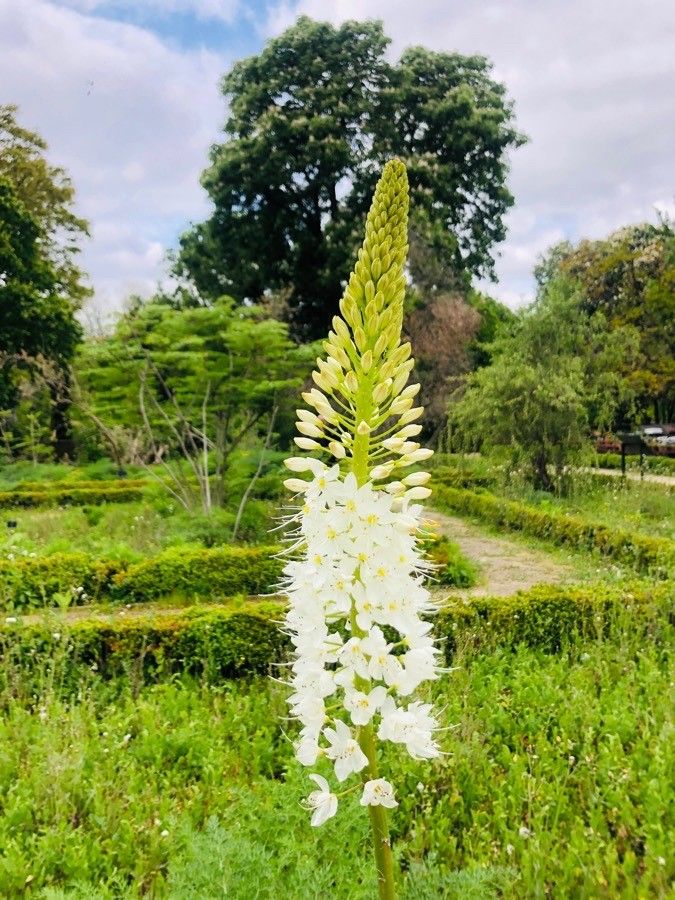
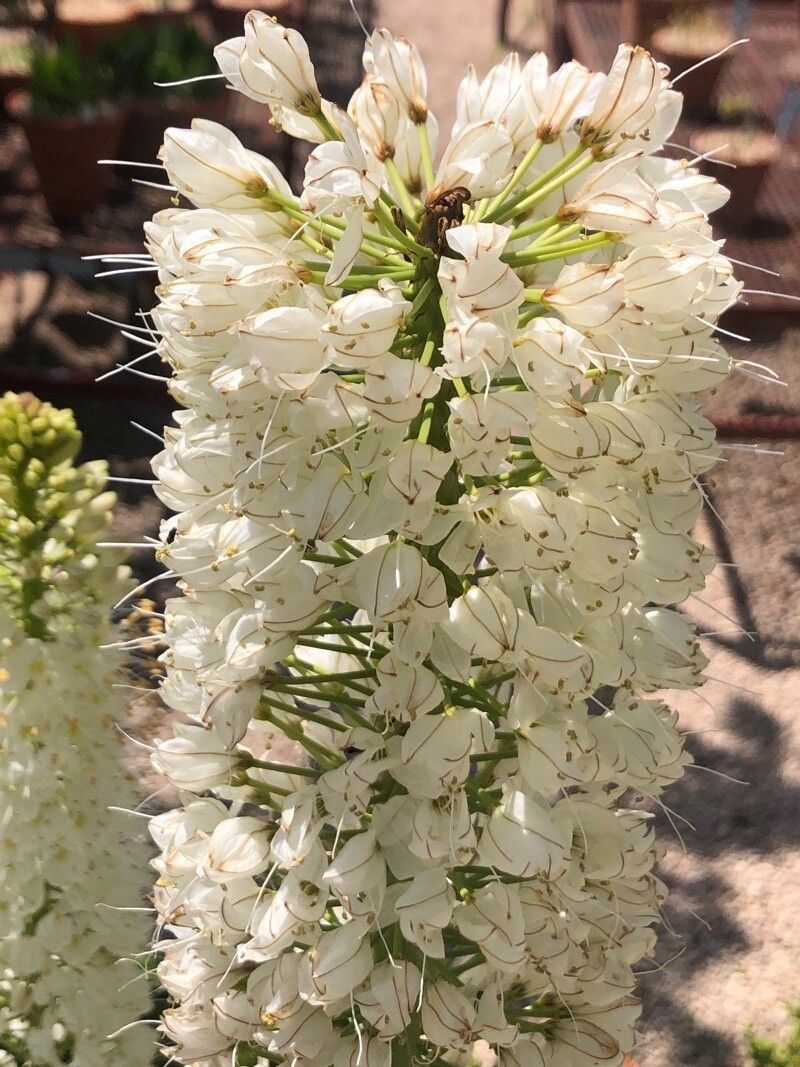
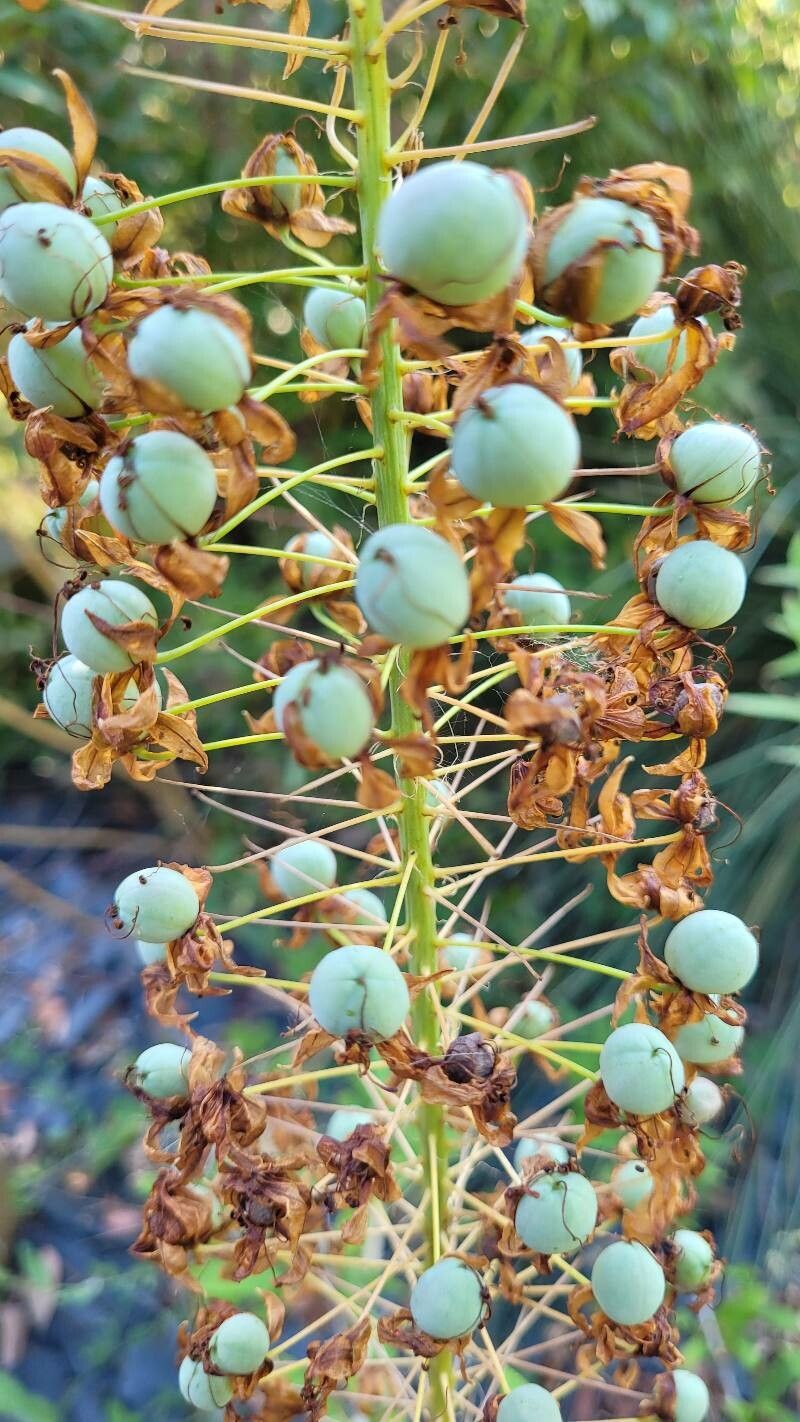
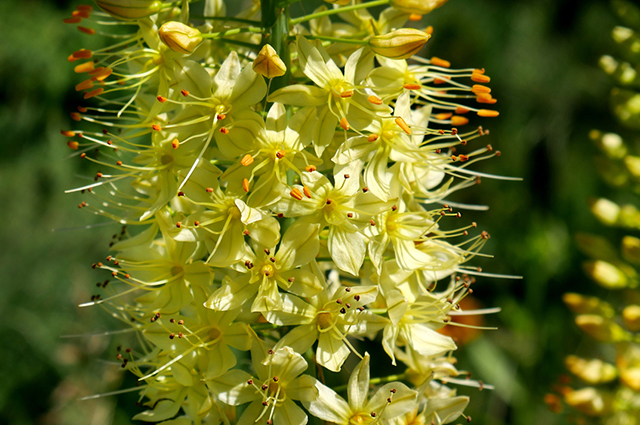
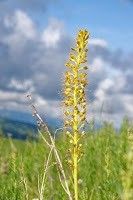
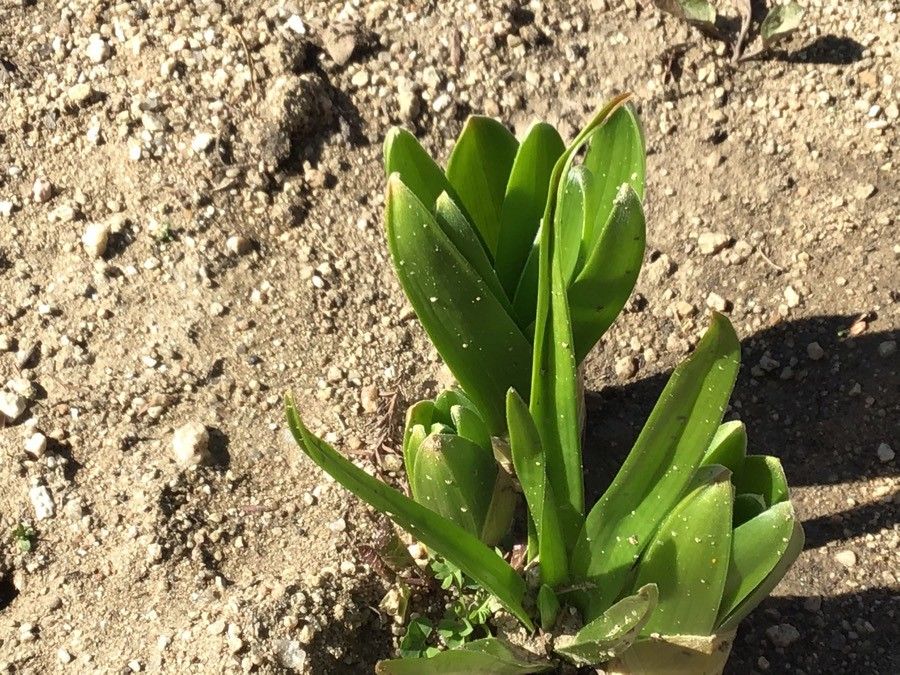
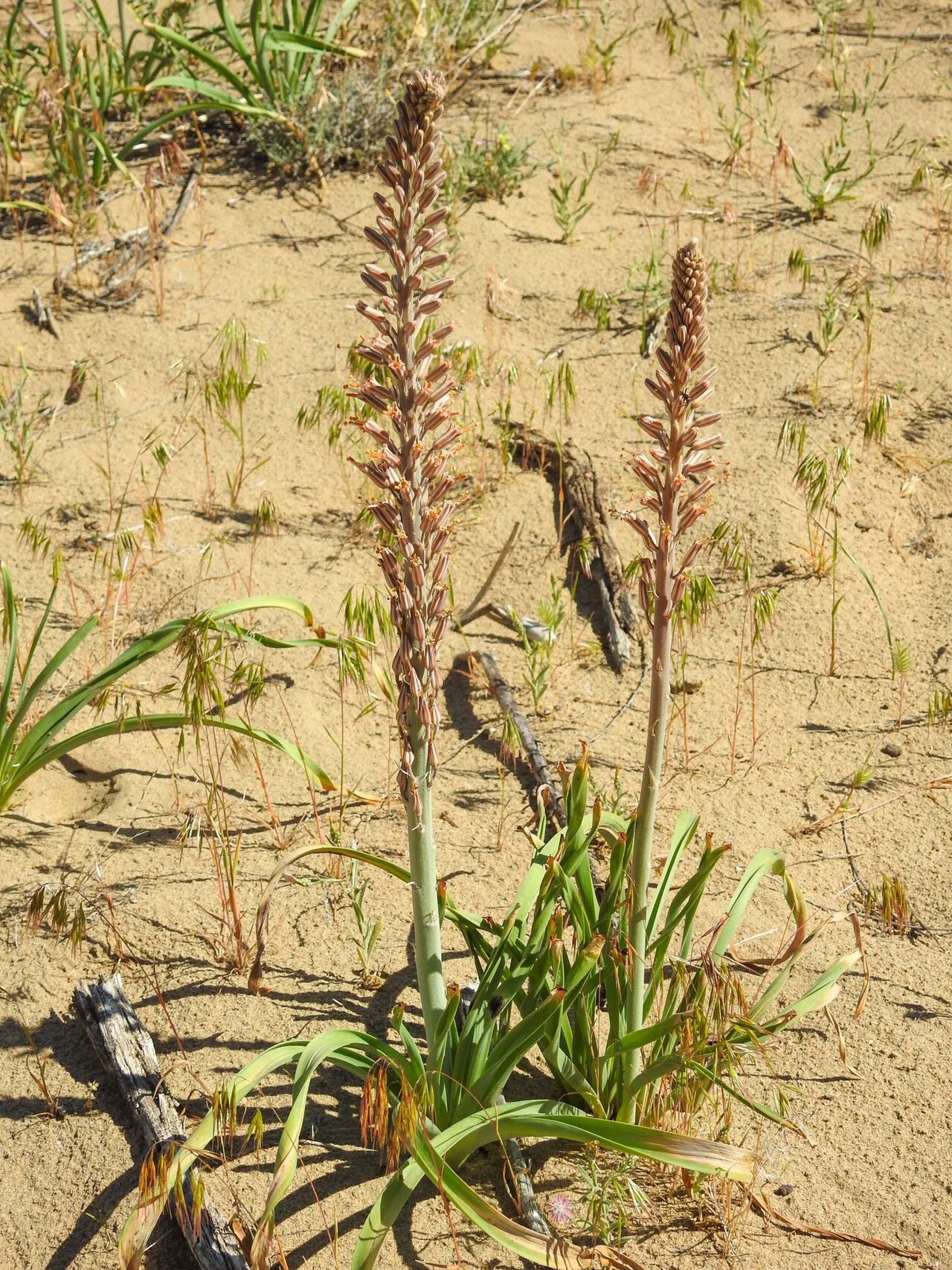
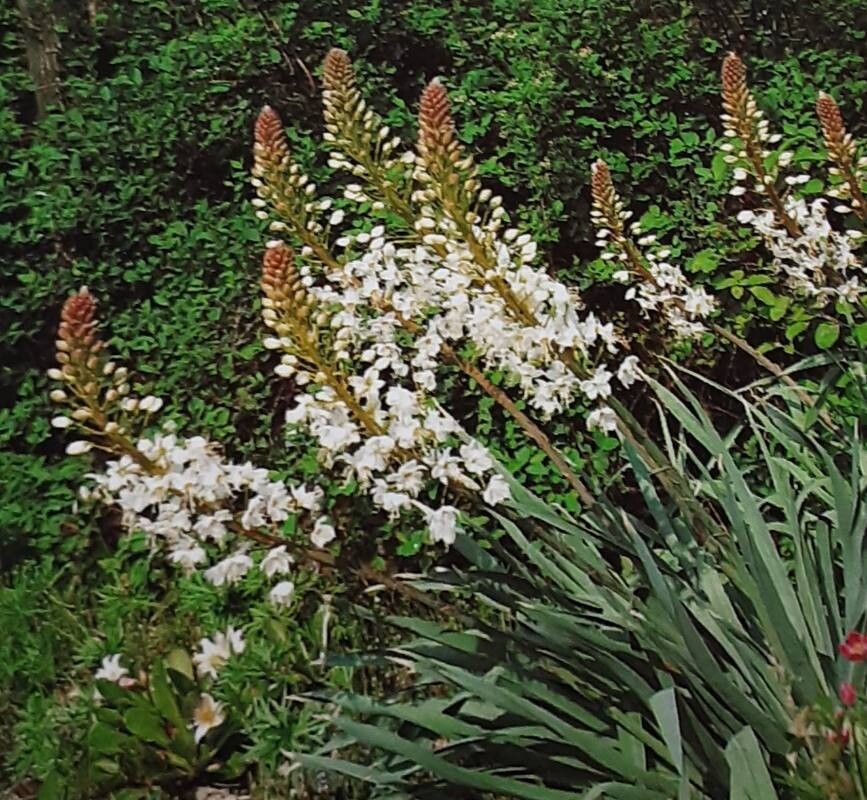
Eremurus robustus, the foxtail lily or giant desert candle, is a species of flowering plant in the asphodel family, native to the Tien Shan and Pamir Mountains in central Asia that is often used as an ornamental plant. It is a very tall, narrow plant with a stem 6–10 ft (1.8–3.0 m) high, and leaves as long as 48 in (120 cm) and 4 in (10 cm) wide, the widest in its genus. The deciduous leaves can vary from a bright green to a bluish-green in color. The inflorescence grows to 4 ft (1.2 m) in length and is covered with many deep to pale pink or white flowers, 4 cm (1.6 in) across. At the base of the flower is a brown blotch with a green keel. The lower flowers have long pedicels, with shorter ones higher up. The flowers, as many as 700 to 800 of them, bloom in June. By the time of flowering, the leaves will usually have already shrivelled. The Latin specific epithet robustus means “sturdy, growing strongly”.The plant was introduced from Central Asia to Europe and North America in 1874 and is popular in gardens. However some may find the plant to be too tall for normal gardens. It prefers sandy, well-drained soil and full sun. In cultivation in the UK this plant has gained the Royal Horticultural Society’s Award of Garden Merit.
Foxtail lily is fairly disease-resistant and generally not prone to illnesses. However, it can be affected by pests and diseases present in its surroundings. These problems are usually mild. For care, this plant needs moderate maintenance. It should be pruned regularly to keep a tidy appearance and support healthy growth. Fertilizing can also help encourage flowering. Foxtail lily is suitable for people with outdoor spaces like a garden or patio and does not demand much gardening experience. It may need more attention when grown indoors.
How to keep Eremurus Robustus.
Light
Foxtail lily does best in places with plenty of sunlight that resemble its native habitat. While it prefers sun, it does not need specific light conditions to survive. Consistent, uninterrupted sunshine helps promote healthy growth, especially during key growth stages. However, too little or too much light can slow its development and may lead to unthrifty growth.
Water
Foxtail lily, native to arid regions, thrives with minimal moisture and demonstrates exceptional drought tolerance. It requires weekly watering, with an occasional deep soak during its active growing season. The plant flourishes in well-draining soil, which mimics the infrequent heavy rains of its natural habitat.
Temperature
Foxtail lily is native to habitats with temperatures ranging from 41 to 95 °F (5 to 35 ℃). The plant prefers moderate warmth and has a considerable tolerance for colder seasons.
Fertilizer
The best time to fertilize a Foxtail lily is in early spring, as it comes out of dormancy and begins active growth. Applying fertilizer supplies essential nutrients needed for healthy development. Although the Foxtail lily has relatively low fertilizer requirements, an annual application can improve its survival and encourage better, longer-lasting flowers.
Pruning
Foxtail lily features tall flower spikes and lush foliage. To promote healthy growth and improve bloom quality, prune in early to late spring to remove any dead leaves and spent stalks. Additionally, thinning overcrowded areas helps improve airflow. Be sure to use clean tools to prevent infection, as recommended by reputable horticultural sources.
Toxicity
All parts of the foxtail lily are poisonous to people, livestock, and pets, especially cats.
Further reading →
The toxicity and danger assessments provided are for reference only. We do not assure their accuracy, so it's crucial not to depend on them. Seek professional advice when necessary for accurate guidance.
Botanical profile.
- Plant Type
- Herb
- Life Cycle
- Perennial
- Genus
- Eremurus
- Family
- Asphodelaceae
- Hardiness Zone
- 5-9
- Mature Height
- 1.52 m to 3.05 m
- Mature Spread
- 49 cm
- Leaf Color
- Green, Blue, Gray
- Leaf Type
- Deciduous
- Flower Color
- Pink, White
- Flower Size
- 5.08 cm to 6.35 cm
- Bloom Time
- Late spring, Early summer
- Planting Time
- Spring, Summer, Autumn
- Harvest Time
- Mid summer, Late summer
- Native Area
- Uzbekistan, Tajikistan, Kazakhstan, Kyrgyzstan
Other names.
Reader questions.
What are the sunlight requirements for a Foxtail lily?
Foxtail lily requires more than 6 hours of sunlight daily to thrive. It's crucial to monitor the movement of sunlight through your garden to find the ideal balance of light and shade for your plants. This ensures they are happy and healthy. Remember, Foxtail lily grows best in full sun, resembling its native habitat, but it doesn't demand specific light conditions beyond consistent and ample sunshine during its key growth phases. However, too little or too much light can impede its growth.
What are the basic necessities for growing Foxtail Lily?
Foxtail Lily (Eremurus robustus) thrives in environments where the temperature ranges from 41 to 95 °F (5 to 35 °C), indicating a preference for moderate warmth while being considerably tolerant of cold seasons. It has a strong resistance to cold, and special frost protection measures are not generally required during winter. However, in extreme cases where winter temperatures are expected to fall below -25°C, precautions should be taken such as covering the plant with soil or straw. Additionally, it's advisable to water the plant generously before the first freeze of autumn to ensure the soil is moist and freezes over, helping to protect the plant from drought and water scarcity throughout the winter and early spring.
How does artificial lighting support plant growth indoors?
Indoor plants, including Foxtail lily, benefit significantly from artificial lighting, especially when natural sunlight is insufficient. This is often the case in winter or in spaces that don't get much sunlight. Adequate artificial light ensures optimal growth, with LED lights being a popular choice due to their ability to provide specific wavelengths needed by plants. For proper growth, full sun plants require 30-50W/sq ft of light, partial sun plants need 20-30W/sq ft, and full shade plants should have 10-20W/sq ft. The light source should be placed 12-36 inches above the plant, mimicking natural sunlight as closely as possible, and most plants will need about 8-12 hours of light per day.
How does the Foxtail Lily react to low temperatures?
The Foxtail Lily is cold-tolerant and flourishes best when temperatures remain above 5°C. During winter, it is essential to keep the temperature above -20°C. If temperatures drop below -25°C, while there might not be any noticeable damage during winter, there could be a negative impact on the sprouting process, possibly leading to reduced sprouting or even a lack of sprouting in the spring. If this occurs, any parts of the plant that have failed to sprout by spring should be removed.
What symptoms indicate a Foxtail lily is receiving inadequate light?
When a Foxtail lily does not receive enough light, several signs may appear, including smaller new leaves, leggy or sparse growth, faster leaf drop, stalled growth, and the development of lighter-colored or chlorotic leaves. Excess sunlight can cause symptoms like sunscald, leaf curling, wilting, and leaf scorching, indicating that the light exposure is too intense. These signs help identify whether your plant is struggling due to too little or too much sunlight.
What should be done if the Foxtail Lily is exposed to high temperatures?
In the summer months, it is crucial to ensure that the temperature around the Foxtail Lily does not exceed 35°C. If temperatures reach beyond 38°C, the plant's leaves might lighten in color, become prone to curling, susceptible to sunburn, and in severe cases, the plant might wilt and dry out completely. To mitigate these issues, trim away the sunburned and dried parts of the plant. It is also recommended to move the plant to a shaded area during the midday and afternoon sun or use a shade cloth to protect it. Additionally, ensure the soil remains moist by watering the plant in the morning and evening.
What solutions can remedy light deficiency for Foxtail lilies?
Addressing light deficiency in Foxtail lilies involves gradual adjustments to ensure they receive at least 6 hours of direct sunlight daily. Indoors, this may mean moving the plant to a sunnier location, such as a south-facing window, and considering artificial lighting solutions like desk or ceiling lamps for at least 8 hours a day or investing in plant grow lights. Outdoors, it's about gradually relocating your plants to sunnier spots to prevent sunburn, while also reducing obstructions like overhanging branches. Transplanting smaller plants during their dormant period to locations with better sunlight and drainage can also be effective. These strategies help adapt your plant to ideal lighting conditions, promoting new, healthy growth.