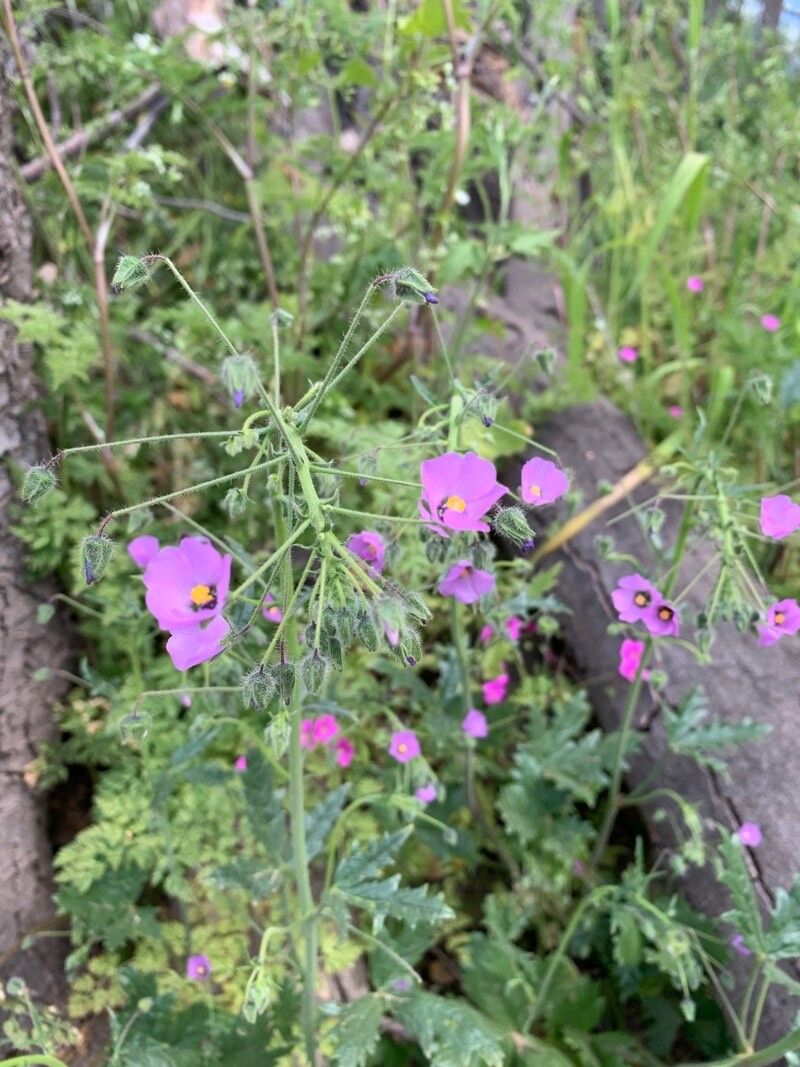
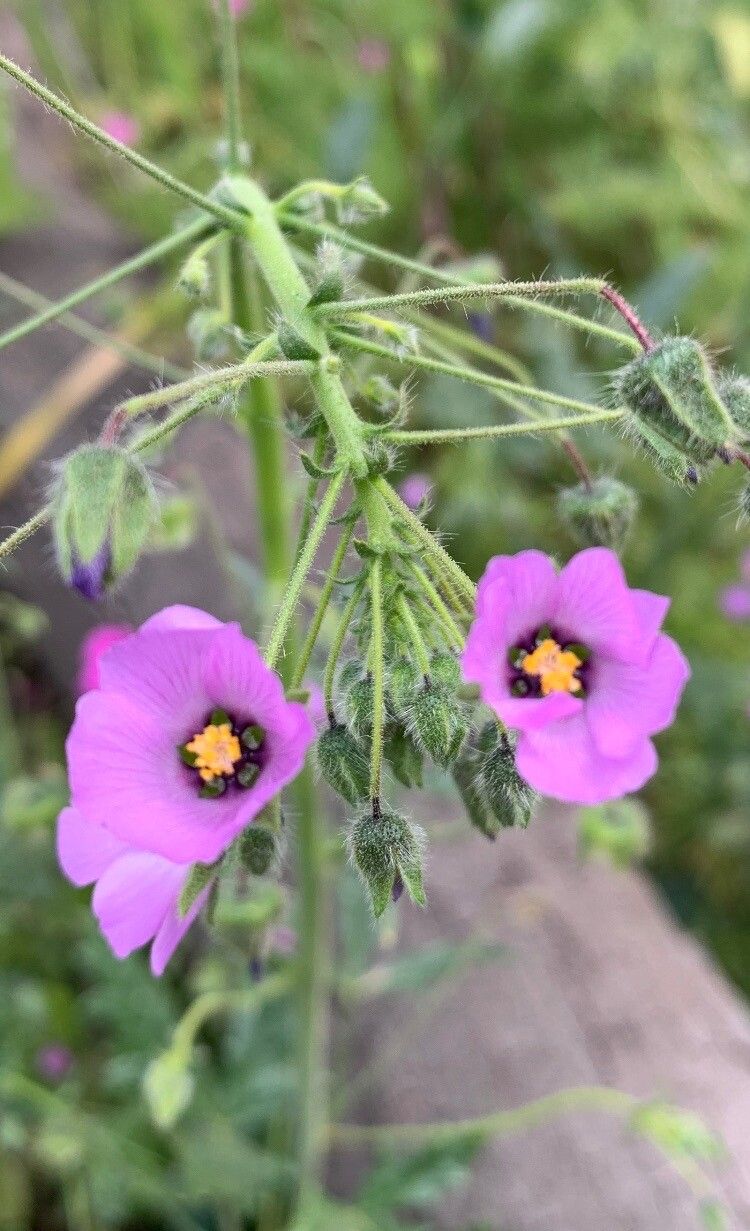
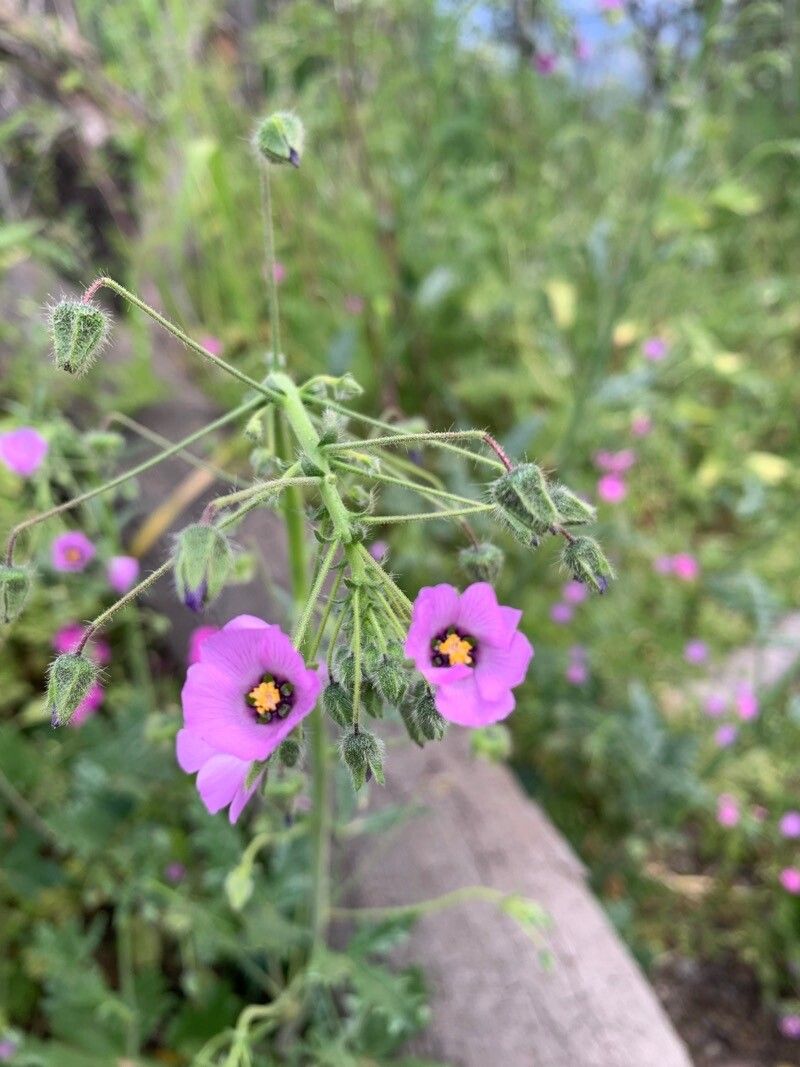
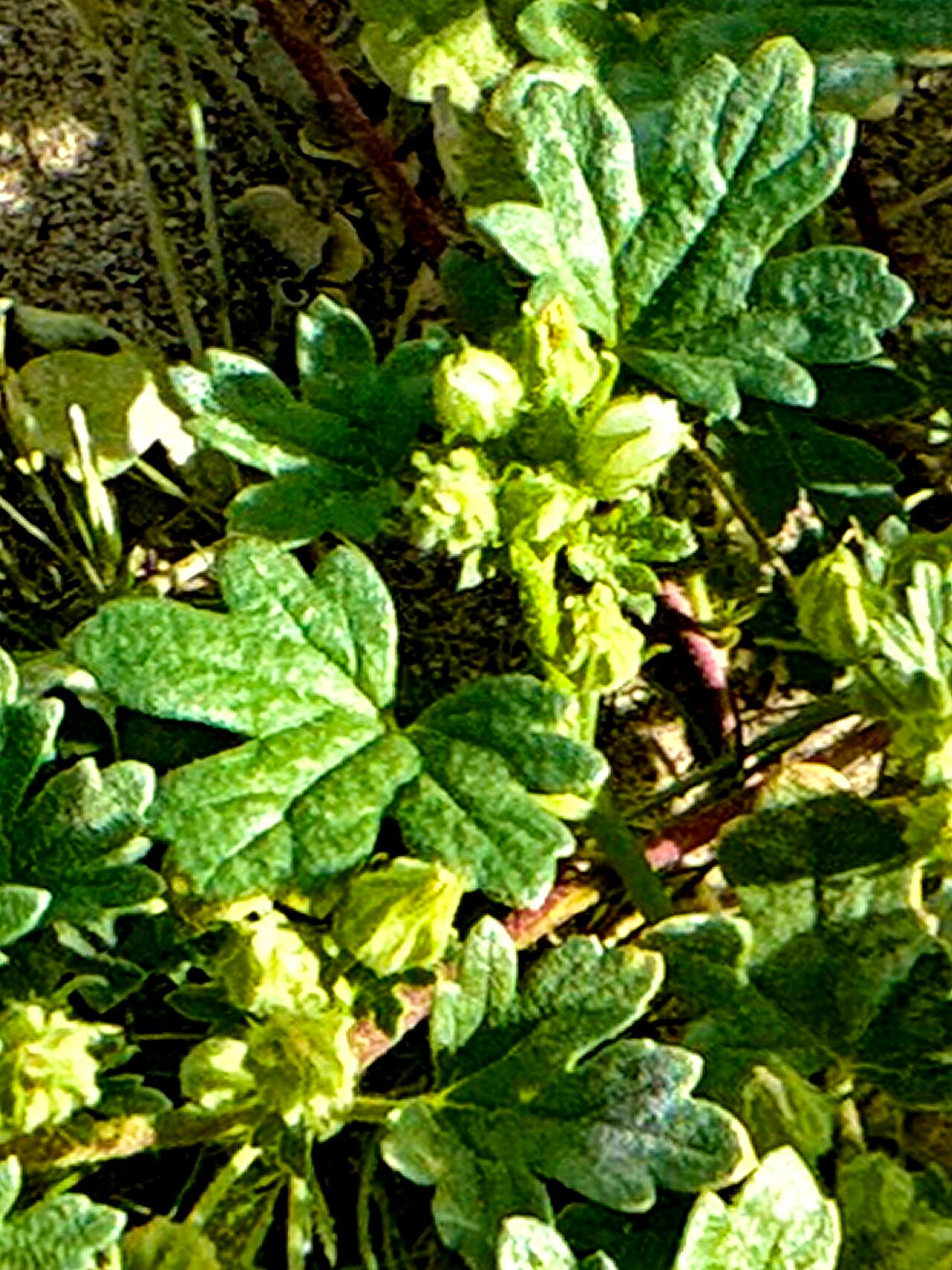
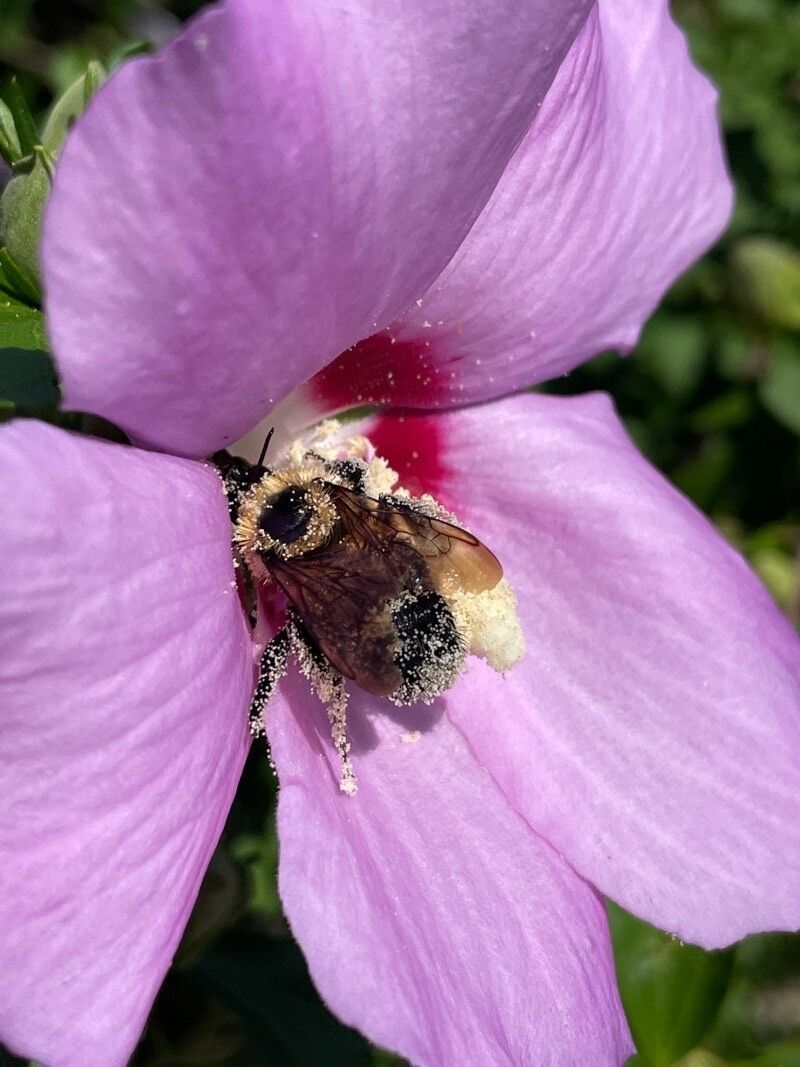
Eremalche rotundifolia, the desert five-spot, is a flowering plant in the family Malvaceae, native to the Mojave Desert and Colorado Desert in the Southwestern United States. Thisa dicot and annual herb is found in scrublands, desert flats, washes and open stony areas between 50 and 1,500 m in elevation. It can be found in Anza-Borrego Desert State Park and in Death Valley National Park in southern California. It can also be found in Nevada and Utah. Generally this wildflower is only found between March and May.
Desert fivespot shows good resistance to disease and is generally not prone to them. Still, it can be vulnerable to pests and diseases present in its environment. Such infections are usually not serious. Regarding care, this plant needs moderate maintenance. It should be pruned regularly to retain a neat appearance and support healthy growth. Fertilizing can also help encourage flowering. Desert fivespot is appropriate for anyone with outdoor space, like a garden or patio, and does not demand extensive care experience. It may need more attention if grown indoors.
How to keep Eremalche Rotundifolia.
Light
Desert fivespot flourishes under intense, uninterrupted sunlight typical of its native, unobstructed open habitat. This solar exposure supports its healthy growth and functioning, enabling efficient photosynthesis. At the various stages of development, a similar light intensity is preferred. Both excessive and insufficient sunlight can be damaging, producing effects like wilting or inhibited growth.
Water
The desert fivespot, a plant native to arid regions, is highly drought-tolerant and can thrive with very little water. While it requires weekly watering, it's important to avoid overwatering. To prevent root rot, it does best in well-draining soil, which reflects its natural adaptation to dry environments.
Temperature
Desert fivespot is a plant native to habitats where temperatures typically range from 68 to 100 °F (20 to 38 ℃). It prefers this temperature span, and in colder seasons it's recommended to raise the ambient temperature to replicate those conditions.
Fertilizer
When most of the Desert fivespot's blooms have opened to full size, resume fertilizing. At the time the blooms are at peak output, apply fertilizer every three to four weeks, as the weather allows. Then, once the Desert fivespot begins producing fewer new blooms, stop fertilizing; there is no need to fertilize when the plant can no longer produce more blooms.
Pruning
The desert fivespot is known for its striking, cup-shaped blooms. To maintain the health and appearance of this plant, it's important to prune it from early to late spring. During pruning, focus on removing dead stems and thinning out crowded areas to improve air circulation. Regular pruning promotes fuller growth and reduces the risk of disease. Always use clean, sharp tools, and adjust your pruning practices according to the plant's growth cycle for the best results.
Botanical profile.
- Plant Type
- Herb
- Life Cycle
- Annual
- Genus
- Eremalche
- Family
- Malvaceae
- Hardiness Zone
- 1-12
- Mature Height
- 76 cm to 91 cm
- Mature Spread
- 30 cm to 61 cm
- Leaf Color
- Green, Light Green
- Leaf Type
- Semi-evergreen
- Flower Color
- Pink
- Flower Size
- 5.08 cm
- Bloom Time
- Early spring, Mid spring
- Planting Time
- Spring, Autumn
- Harvest Time
- Late spring, Early summer
- Native Area
- Mexico
Other names.
Reader questions.
What are the sunlight requirements for Desert Fivespot?
Desert Fivespot (Eremalche rotundifolia) requires full sun, meaning it needs above 6 hours of sunlight daily to thrive. This plant's natural habitat is in intense, unabated sunlight, which is critical for its optimal growth and photosynthesis. It's important to watch how sunlight moves through your garden to find locations that offer a balance of light and shade suitable for the plant, ensuring its happiness and health.
What is the ideal temperature range for Desert Fivespot?
Desert Fivespot thrives in temperatures ranging from 68 to 100°F (20 to 38°C). This range is optimal for its growth, and during colder seasons, it's advised to increase the ambient temperature to simulate these conditions. The plant has strong cold resistance, hence special frost protection measures are not typically necessary, but precautions should be taken if temperatures are expected to drop below -45°C.
How does artificial lighting support plant growth indoors?
When natural sunlight is insufficient, especially in winter or in less sunny spaces, artificial lighting provides a vital solution for supporting indoor plant growth. For optimal growth, indoor Desert Fivespot plants require adequate lighting. LED lights are recommended due to their ability to be customized for providing specific wavelengths needed by plants. Full sun plants should receive 30-50W/sq ft, partial sun plants 20-30W/sq ft, and full shade plants 10-20W/sq ft of artificial light. The light source should be placed 12-36 inches above the plant, simulating natural sunlight conditions, and the duration should mirror the plant's natural daylight hours, typically 8-12 hours per day.
How can you protect Desert Fivespot in extremely cold weather?
In regions where winter temperatures are anticipated to fall below -45°C, providing cold protection for Desert Fivespot is crucial. This can be done by covering the plant with materials like soil or straw to insulate it from the extreme cold. It is also recommended to water the plant abundantly before the first freeze of autumn. This ensures that the soil remains moist and enters a frozen state, which helps prevent drought and water scarcity for the plant during winter and early spring.
What are the symptoms of inadequate light in Desert Fivespot?
When Desert Fivespot is grown with insufficient light, it may exhibit several symptoms indicating light deficiency. These include smaller new leaves, leggy or sparse growth, faster leaf drop, slower or no new growth, pale new leaves indicating a lack of chlorophyll, chlorosis (leaves turning yellow), sunscald on leaves, leaf curling as a protective measure against excessive sunlight, wilting due to loss of turgor pressure, and leaf scorching, characterized by brown, dry edges on leaves. These symptoms highlight the plant's struggle in inadequate lighting conditions.
What are the symptoms of and solutions for Desert Fivespot exposed to low temperatures?
Desert Fivespot is cold-tolerant and best thrives when temperatures remain above 20°C, ideally kept above 0°C during winter. Exposure to temperatures below -45°C might not show immediate changes, but it could lead to decreased sprouting or even a lack of sprouting in spring. The solution for spring includes removing any parts of the plant that have failed to sprout, promoting healthy growth for the rest of the season.
How can you mitigate light deficiency problems for Desert Fivespot?
To mitigate light deficiency in Desert Fivespot, gradual adjustments towards optimal lighting conditions are recommended. For indoor plants, gradually moving the plant to a sunnier spot, such as a south-facing window, or using artificial light sources like desk or ceiling lamps for at least 8 hours a day can help. For outdoor plants, gradually transition them to sunnier spots to avoid sunburn. If the plant has been significantly affected by low light, while the damaged parts may not recover, new growth will emerge healthy with improved light exposure. Additionally, minimizing obstructions by pruning trees or transplanting smaller plants during their dormant period to locations with better sunlight and drainage can enhance light availability.
What should you do if Desert Fivespot experiences high temperatures?
In high temperatures, specifically when it exceeds 38°C and especially above 43°C, the leaves of Desert Fivespot can become lighter, prone to curling, susceptible to sunburn, and, in severe cases, the plant might wilt and dry out. To mitigate this, trim away the sunburned and dried-up parts, move the plant to a shaded location or provide shade with a cloth, and ensure the soil is kept moist by watering in the morning and evening.
What is the botanic name of Desert Fivespot?
The botanic name of Desert Fivespot is Eremalche rotundifolia. This name helps to accurately identify the plant among botanists and in the scientific community.