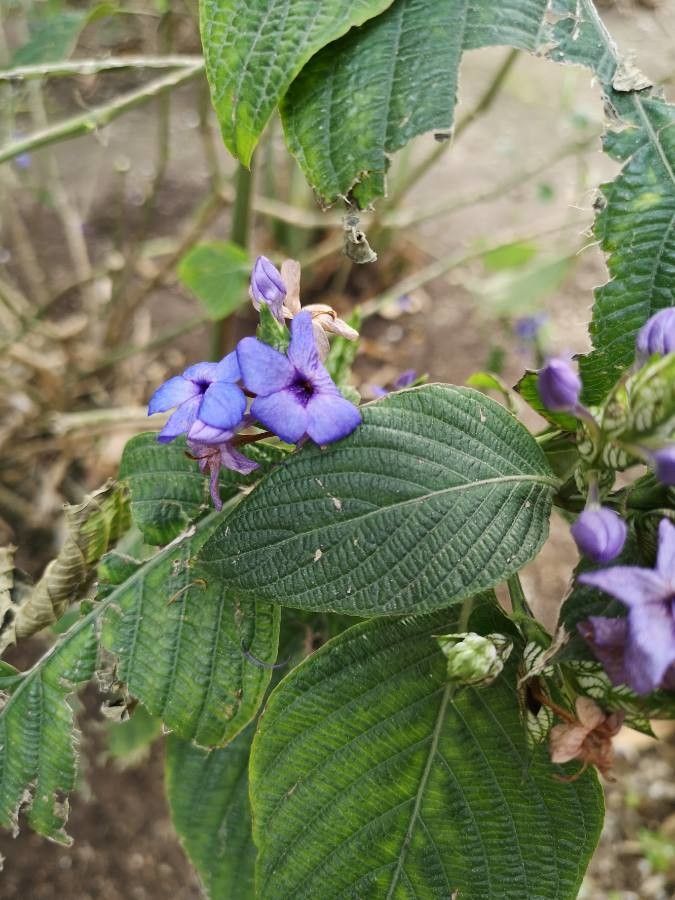
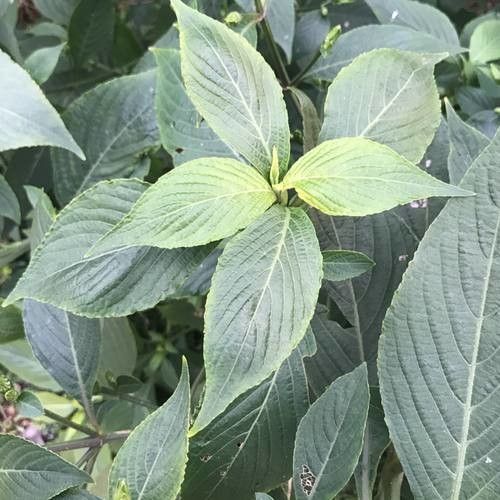
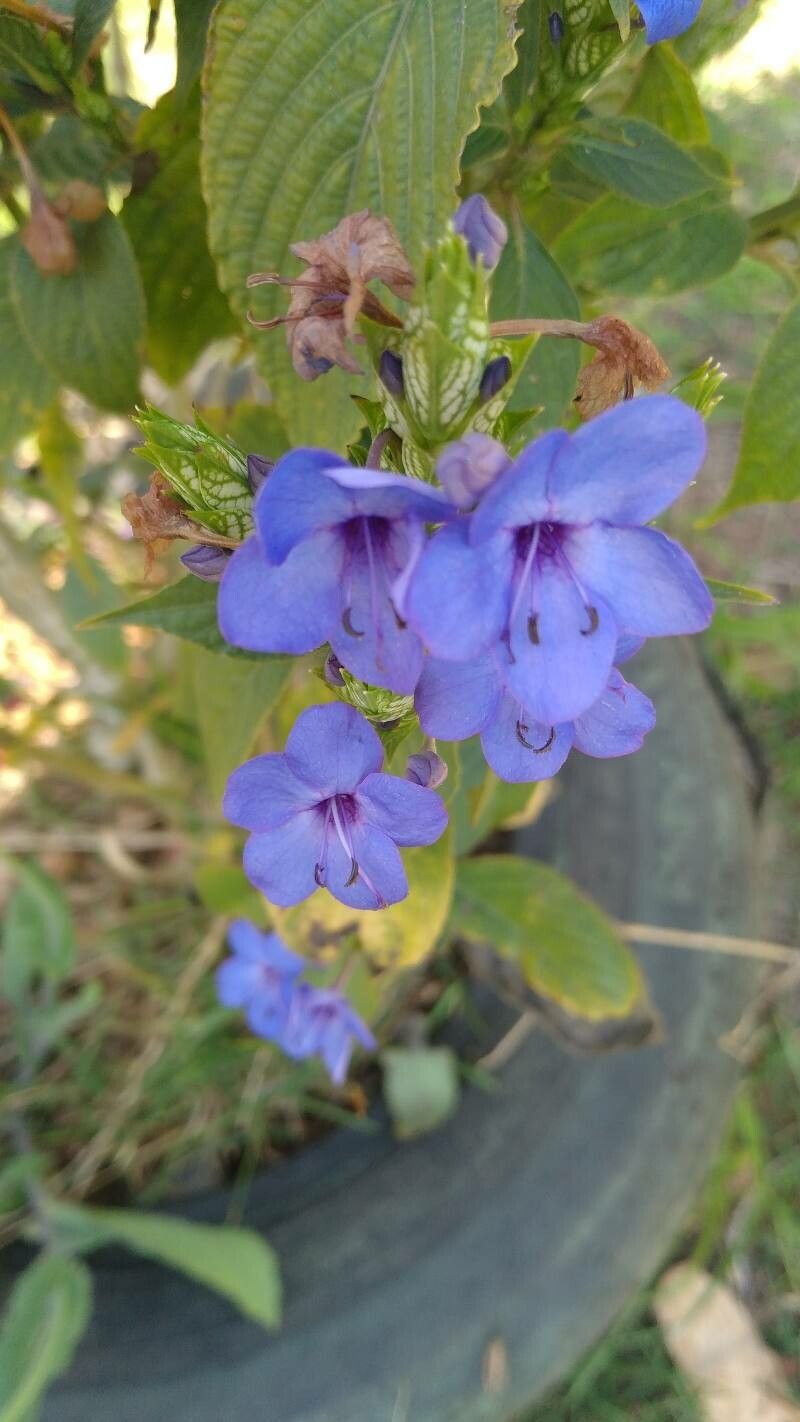
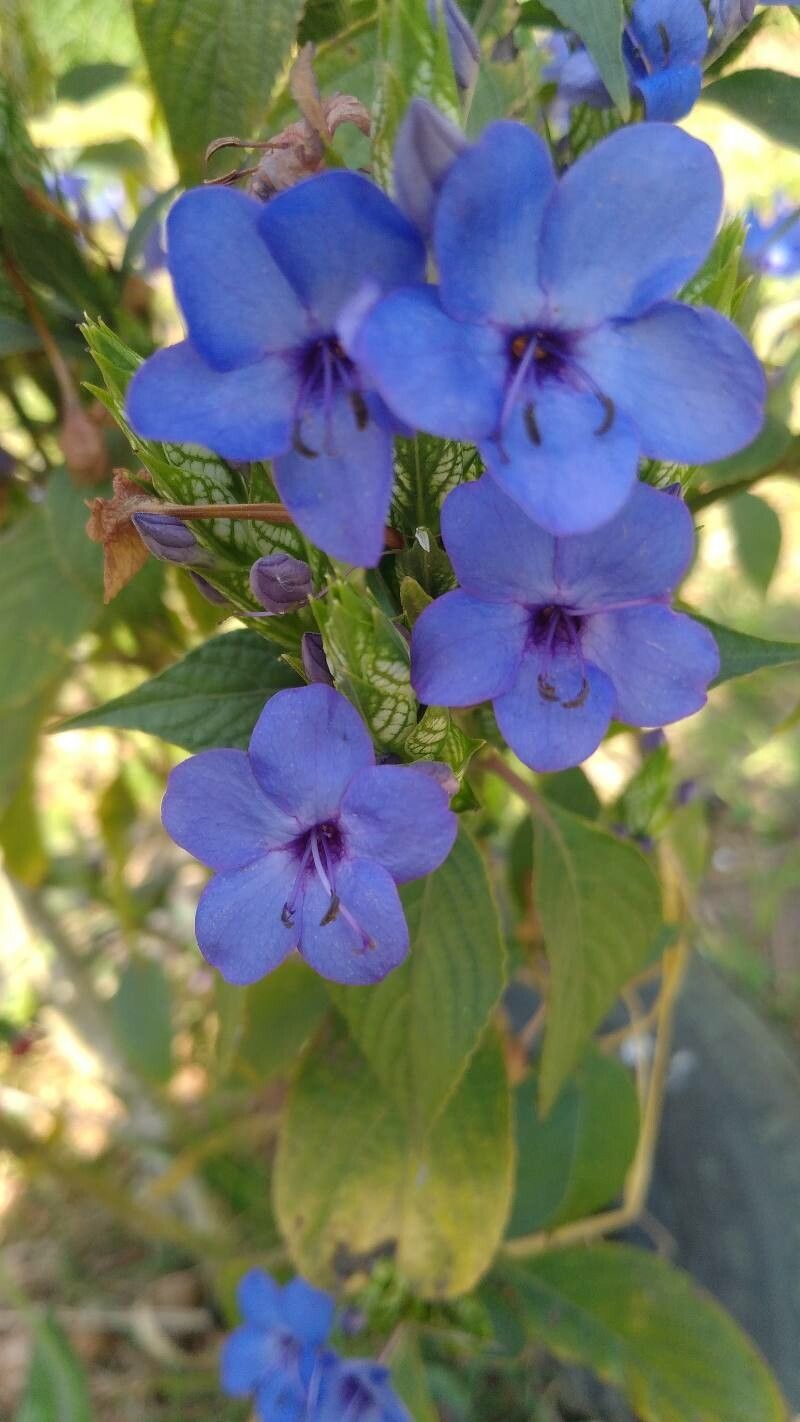
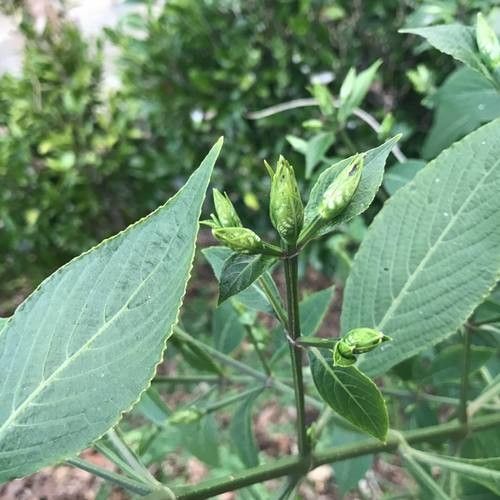
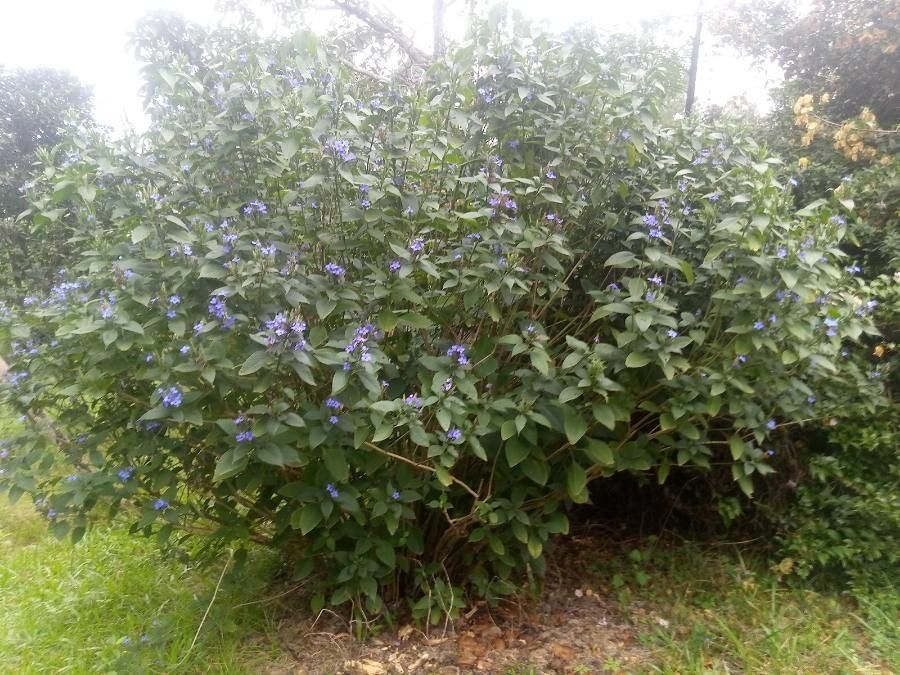
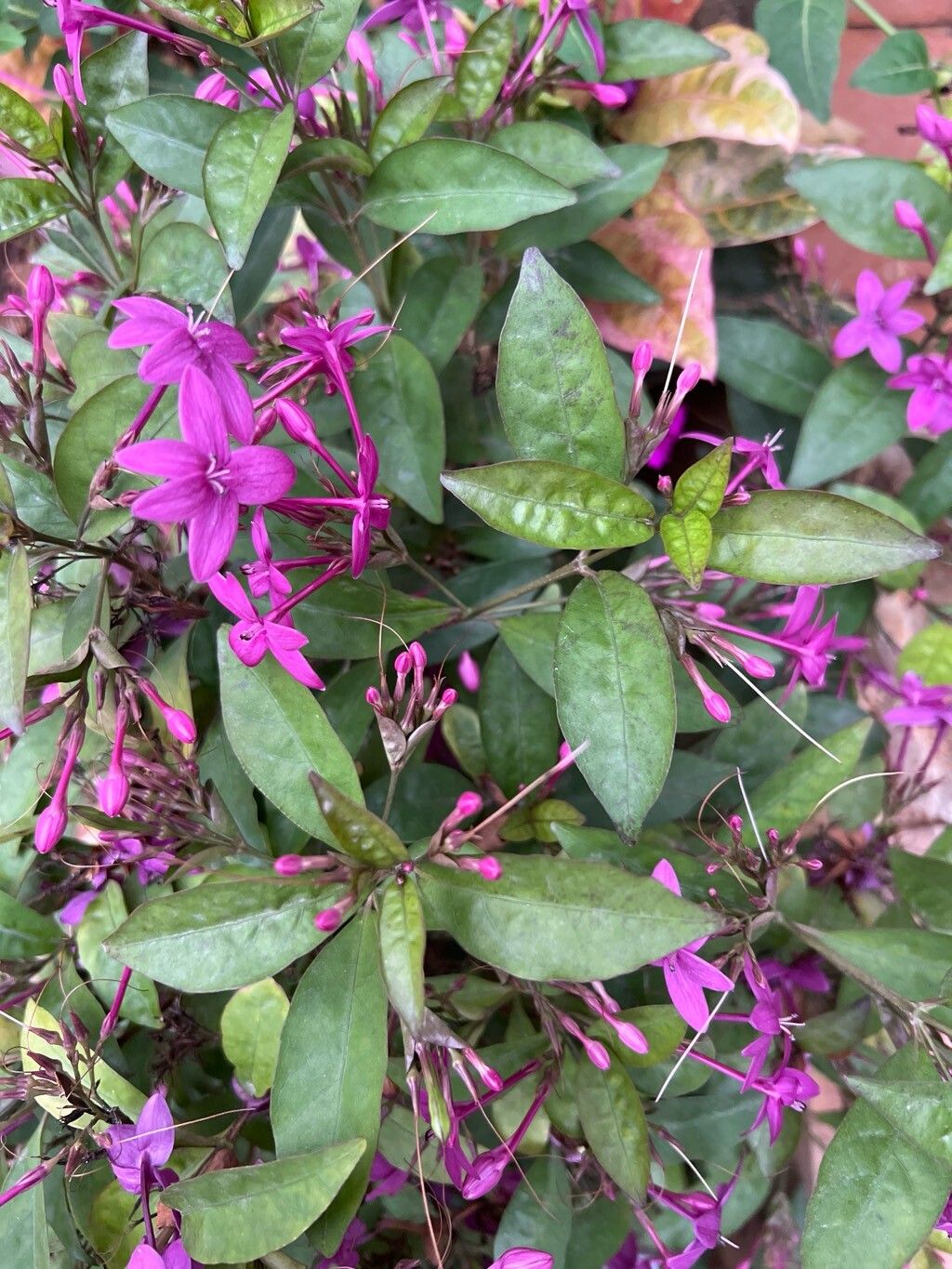
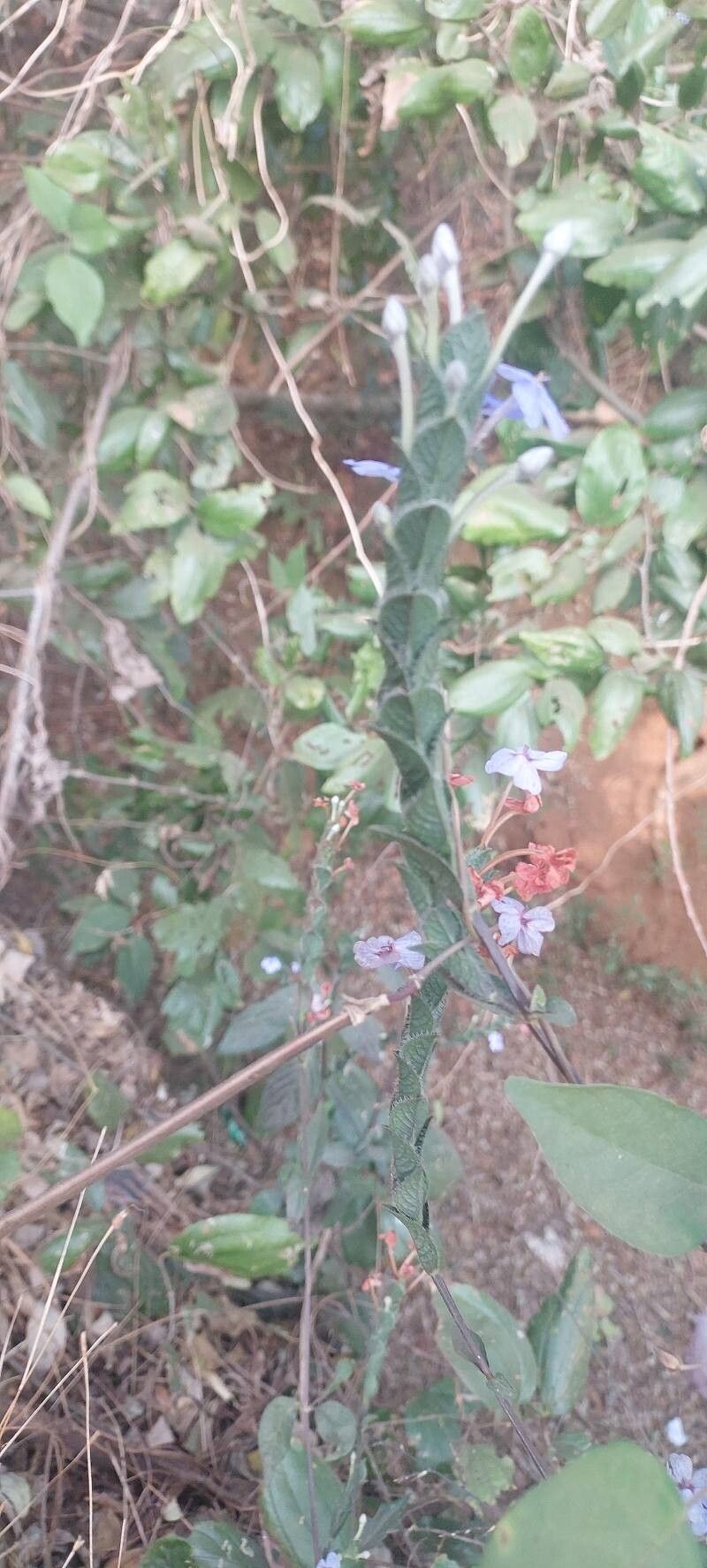
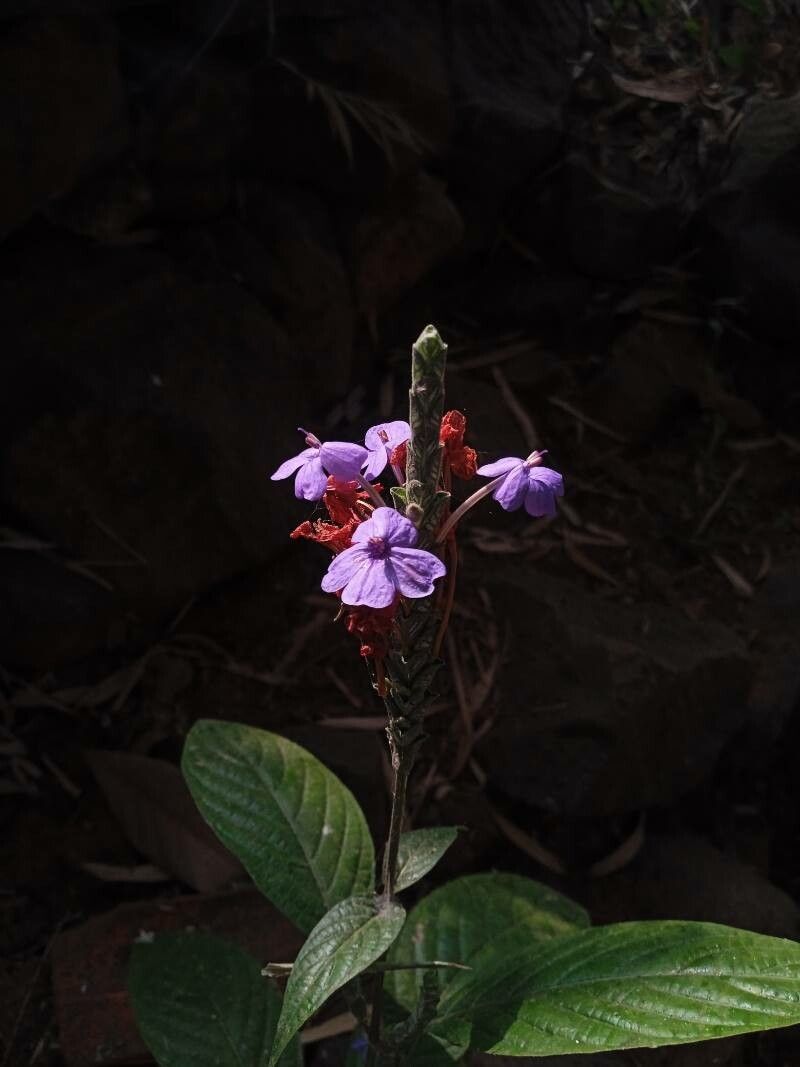
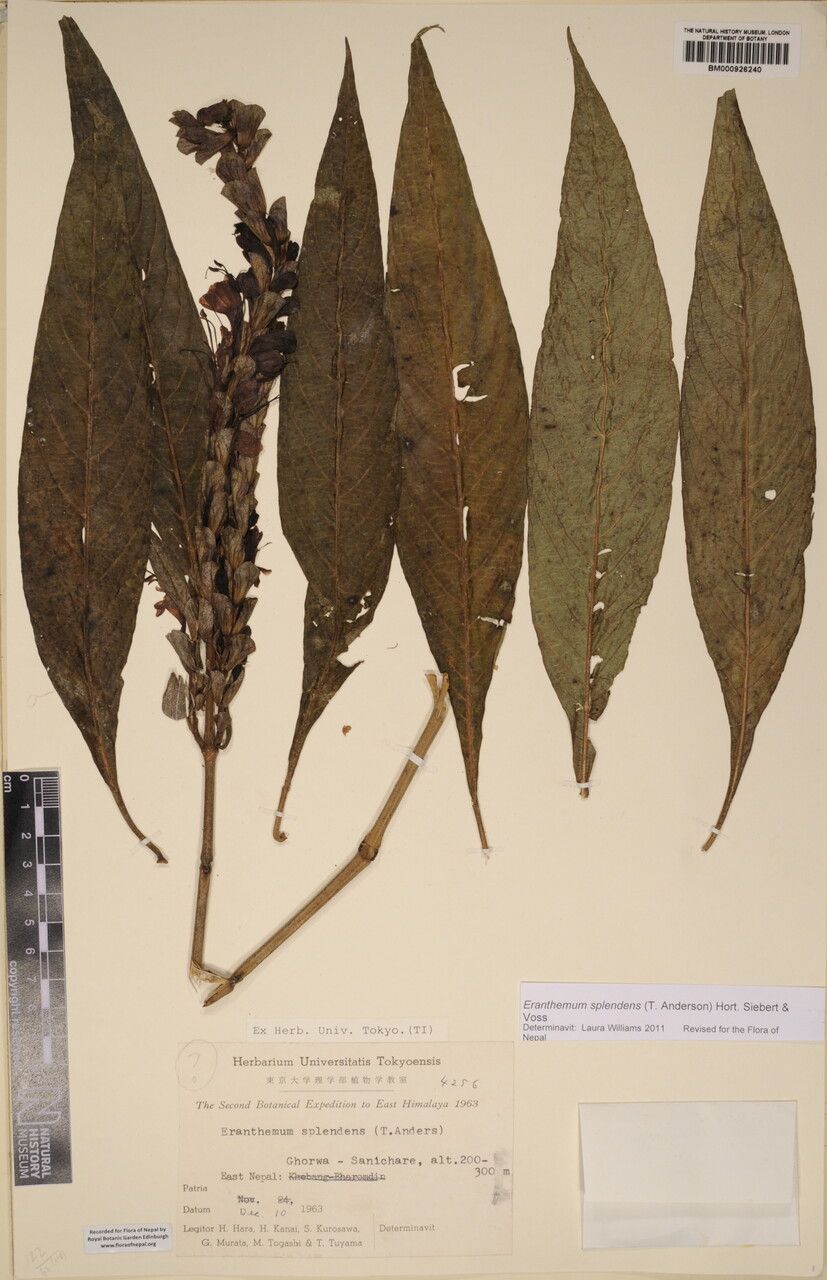
Eranthemum pulchellum, commonly known as Blue Sage or Porcelain Flower, is a tropical evergreen shrub from the Acanthaceae family. Native to Southeast Asia and India, this plant can grow up to 1.5 meters tall. It features glossy green, ovate leaves that reach up to 10 cm in length. The vivid blue, tubular-shaped flowers provide a striking contrast against the lush green foliage. Eranthemum pulchellum thrives in warm temperatures ranging from 18 to 27°C and requires moderate watering in well-draining soil. It can be cultivated both indoors and outdoors in tropical regions. The plant also possesses medicinal properties; it's traditionally used to treat various ailments such as fever, coughs, colds, and headaches. Its leaves contain alkaloids with anti-inflammatory properties, making them useful for conditions related to inflammation. Overall, Eranthemum pulchellum is an excellent ornamental plant, boasting attractive blue flowers and glossy green leaves, while also offering medicinal benefits. It's a wonderful addition to any garden or home decor collection.
Blue-sage is resistant to disease and typically does not suffer from illnesses. Care-wise, this plant is fairly low maintenance. When grown outdoors it needs little watering, and larger plants usually do not require pruning. Smaller plants, however, should be trimmed after they finish blooming. Blue-saget is suitable for anyone with an outdoor area, such as a garden or deck, and does not demand much care experience.
How to keep Eranthemum Pulchellum.
Light
Blue-sage does best in places with plenty of daylight. This encourages its healthy growth and development. It can also tolerate moderate sunlight. Too much sun can be harmful, while too little light can impede its growth. Its native growing conditions reflect an adaptation to abundant sun.
Water
Blue-sage is native to tropical regions and thrives in humid environments. While it can withstand moderate drought, it requires weekly watering. As an evergreen plant, it benefits from consistent moisture, making it ideal for indoor cultivation where hydration can be easily managed.
Temperature
Blue-sage is naturally suited to a temperate climate and prefers temperatures between 68 and 100 °F (20 to 38 °C). Temperatures outside this range can stress the plant, so adjustments to indoor temperatures during seasonal changes may be necessary.
Fertilizer
The best time to fertilize a Blue-sage is in early spring, as it breaks dormancy. This supports overall growth and encourages flower development. Fertilizing improves foliage, stems, and branches, and promotes flowers that are larger, more vibrant, and longer-lasting. It assists in moving nutrients from the roots to the blooms and enhances the plant's health and resistance to disease.
Pruning
Trim blue sage in late spring, cutting back one-third of its height to encourage bushier growth and more vibrant blooms. Remove any dead or damaged stems to promote the plant's health, and maintain regular pruning to manage its size. Always use clean, sharp tools to prevent the spread of disease.
Pot & Repot
To minimize stress, repot blue sage every 2-3 years during the spring. Select a pot that is slightly larger to prevent the roots from becoming cramped. After repotting, place the plant in bright, indirect light and maintain consistent moisture to aid its recovery. Blue sage flourishes with attentive care in a well-managed environment.
Botanical profile.
- Plant Type
- Shrub
- Life Cycle
- Perennial
- Genus
- Eranthemum
- Family
- Acanthaceae
- Hardiness Zone
- 10-11
- Mature Height
- 0.61 m to 1.52 m
- Mature Spread
- 1.22 m
- Leaf Color
- Green
- Leaf Type
- Evergreen
- Flower Color
- Blue, Purple
- Flower Size
- 2.54 cm to 5.08 cm
- Bloom Time
- Winter
- Planting Time
- Spring, Autumn
- Harvest Time
- Late winter, Early spring, Mid spring
- Native Area
- Nepal, Sri Lanka, India, Vietnam, Myanmar, Bhutan, Bangladesh, Pakistan, Laos, Thailand, China
Other names.
Reader questions.
How should I water my Blue-sage plant?
Your Blue-sage plant is not particular about how you water it, so you can use any common watering tool like cans, hoses, or cups. Regardless of the tool, apply the water directly to the soil and ensure all areas are evenly moistened to provide water to the entire root system. Filtered water is better than tap water as tap water can have harmful particles. It's also best to use water at room temperature or slightly warmer since hot or cold water might shock the plant. But overall, the Blue-sage is generally adaptable to different types of water.
Why should I add fertilizer to my Blue-sage plant?
Fertilization plays a crucial role in enhancing the overall health and well-being of a Blue-sage. Adequate energy and nutrients support the growth of healthy foliage, sturdy stems, and branches. Moreover, gardeners find the flowers of Blue-sage particularly valuable. Fortunately, fertilization also promotes the production of large, vibrant, and long-lasting flowers. The reason for this is that the right fertilizer facilitates the efficient transfer of fuel from the plant's roots to its flowers through its stems. Additionally, proper fertilization ensures the overall health of the Blue-sage, making it more resilient against diseases.
What are the sun requirements for Blue-sage?
Blue-sage thrives in environments with ample exposure to daylight, requiring above 6 hours of sunlight for full sun conditions and about 3-6 hours for partial sun conditions. Optimal growth and development of Blue-sage are observed in areas with significant daylight exposure, although it can also survive moderate sun exposure. Excessive sun can cause damage to the plant, while insufficient sunlight can hinder its growth. It's important to watch how sunlight moves through your garden to choose locations that provide a good balance of light and shade, ensuring the plants' well-being.
What is the preferred temperature range for Blue-sage?
Blue-sage thrives in a temperate climate, preferring temperatures between 68 to 100 °F (20 to 38 °C). It is crucial to adjust indoor temperatures accordingly through the changing seasons to prevent stress on the plant. Because Blue-sage is extremely heat-loving, any exposure to cold temperatures can be harmful. It is advisable to bring Blue-sage plants indoors during autumn and place them near a bright window, ensuring they are not too close to heaters to avoid damage. Keeping the temperature above 20°C during winter supports the plant's growth, while temperatures nearing 5°C can be detrimental.
What should I do if I give my Blue-sage plant too much water or too little water?
Outdoor plants, especially newly planted ones or seedlings, are susceptible to not being watered enough. Make sure to water adequately for a few months while the tree is small or newly planted. Once the roots are established, Blue-sage plants can rely on rain most of the time. When Blue-sage is in pots, overwatering is more common. If you accidentally overwater your Blue-sage, take immediate action to rectify the situation. Stop watering the plant right away to minimize the effects of overwatering. Then, remove the plant from its pot to check the roots. If you find no signs of root rot, you can put the plant back in the container. But if you do see signs of root rot, trim the affected roots and consider using a fungicide to prevent further damage. Finally, repot the Blue-sage in well-draining soil. In the case of underwatered Blue-sage, simply water the plant more frequently. Underwatering is generally easy to fix. If you notice the plant's leaves drooping, drying out, or falling off, and they recover quickly after watering, adjust your watering frequency.
When should I fertilize my Blue-sage plant?
To properly fertilize a Blue-sage plant, the best time is early spring when it starts to come out of dormancy and prepares to bloom. This helps provide the necessary energy for growth and flower development. However, it's also beneficial to give a smaller feeding during the fall. Some gardeners prefer to fertilize when planting, but it's not always required.
How can artificial lighting be used for Blue-sage growing indoors?
Indoor Blue-sage plants require adequate lighting for optimal growth, especially when natural sunlight is insufficient. Artificial lights, such as LED lights, are recommended because they can be customized to provide specific wavelengths that your plants need. For full sun plants like Blue-sage, 30-50W/sq ft of artificial light is needed, whereas partial sun plants need 20-30W/sq ft. The light source should be placed 12-36 inches above the plant to mimic natural sunlight conditions, and the light duration should mimic natural daylight hours, generally between 8-12 hours per day.
How does low temperature affect Blue-sage and what are the solutions?
Blue-sage is not tolerant to low temperatures and thrives best when the temperature is above 20°C, requiring it to be kept above 5°C during winter. Exposure to temperatures below 1°C may result in the leaves lightening in color. Following frost damage, the leaf color may turn brown or black, followed by wilting and drooping symptoms. To address frost damage, trim off the damaged parts and move the plant indoors to a warm environment for protection. Place the plant near a south-facing window for adequate sunlight, while avoiding proximity to heaters or air conditioning vents to prevent air dryness.
How frequently do I need to water my Blue-sage plant?
Most plants can grow naturally outdoors with rainfall, but if your area lacks rainfall, you should water them every two weeks in the spring and fall. In the summer, more frequent watering is needed, while in winter, when growth slows down, water sparingly or not at all. Young or newly planted Blue-sage plants should be watered more frequently to help them establish. For potted plants like Blue-sage, there are two main methods for determining watering frequency. One way is to follow a set schedule, such as watering once a week or every other week. However, this may not always be effective as it doesn't consider the specific conditions of your growing environment. Watering frequency can also vary depending on the season. For example, a set schedule may not be enough during the high water needs of summer. An alternative approach is to base watering on soil moisture. It's generally best to wait until the top two to four inches of soil have completely dried out before giving more water.
When should I not add fertilizer to my Blue-sage plant?
During the winter, Blue-sage plants are in a dormant phase and do not require fertilization. Fertilizing them during this time can lead to negative results from overfertilization. The best times to feed a Blue-sage are in early spring and fall. Therefore, for most of spring and summer, fertilization is unnecessary. Additionally, it is advisable to avoid feeding the plant if it is experiencing extreme heat or dry conditions.
What are the symptoms of light deficiency in Blue-sage?
Symptoms of light deficiency in Blue-sage include small leaves, leggy or sparse growth, faster leaf drop, slower or no new growth, and lighter-colored new leaves. These signs indicate the plant is not receiving enough light, leading it to enter survival mode where growth is halted or delayed. Additionally, excessive sunlight can cause chlorosis (leaves turning yellow), sunscald, leaf curling, wilting, and leaf scorching, indicating damage to the plant's leaves or stems and affecting its overall health.
What should be done if Blue-sage experiences high temperatures?
During summer, it is important to ensure that Blue-sage's environment does not exceed 38°C. Temperatures above 43°C can cause the leaves to lighten and the plant to become more susceptible to sunburn. If sunburn occurs, trim the sunburned and dried-up parts of the plant. Move the plant to a shaded area, particularly shielded from the midday and afternoon sun. Additionally, watering the plant in the morning and evening will help keep the soil moist and support the plant's health in high temperatures.