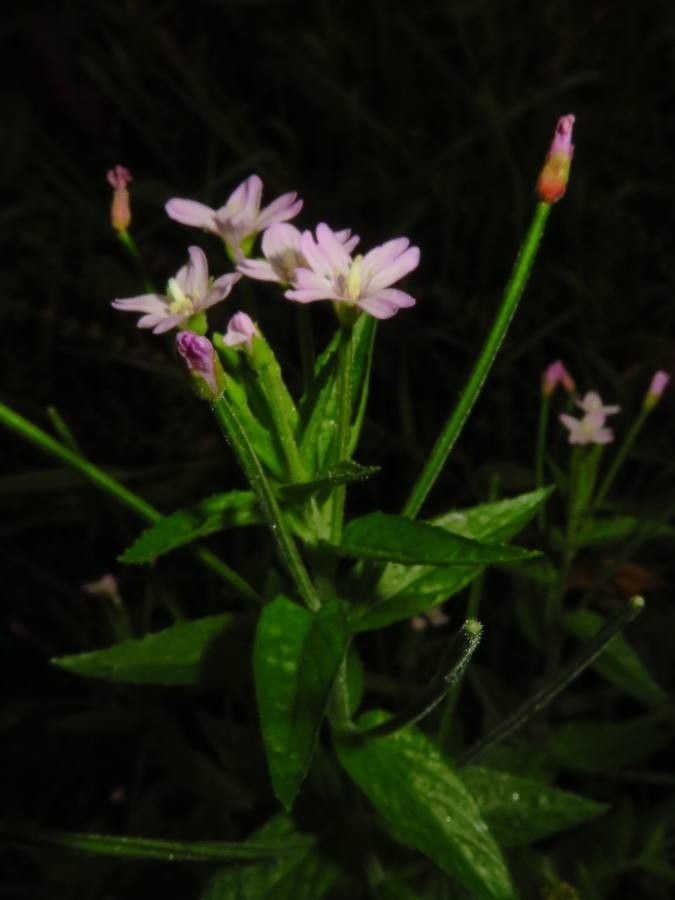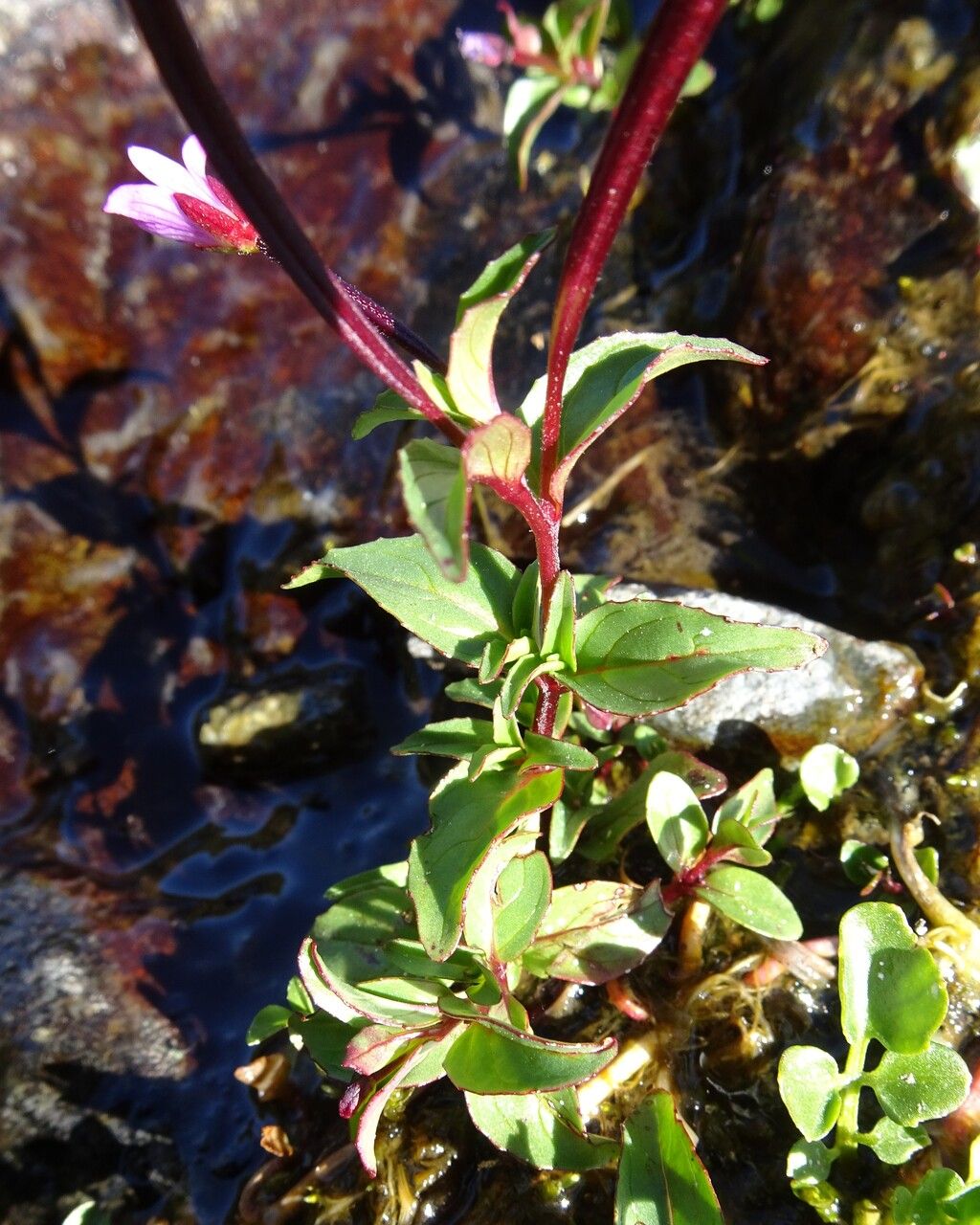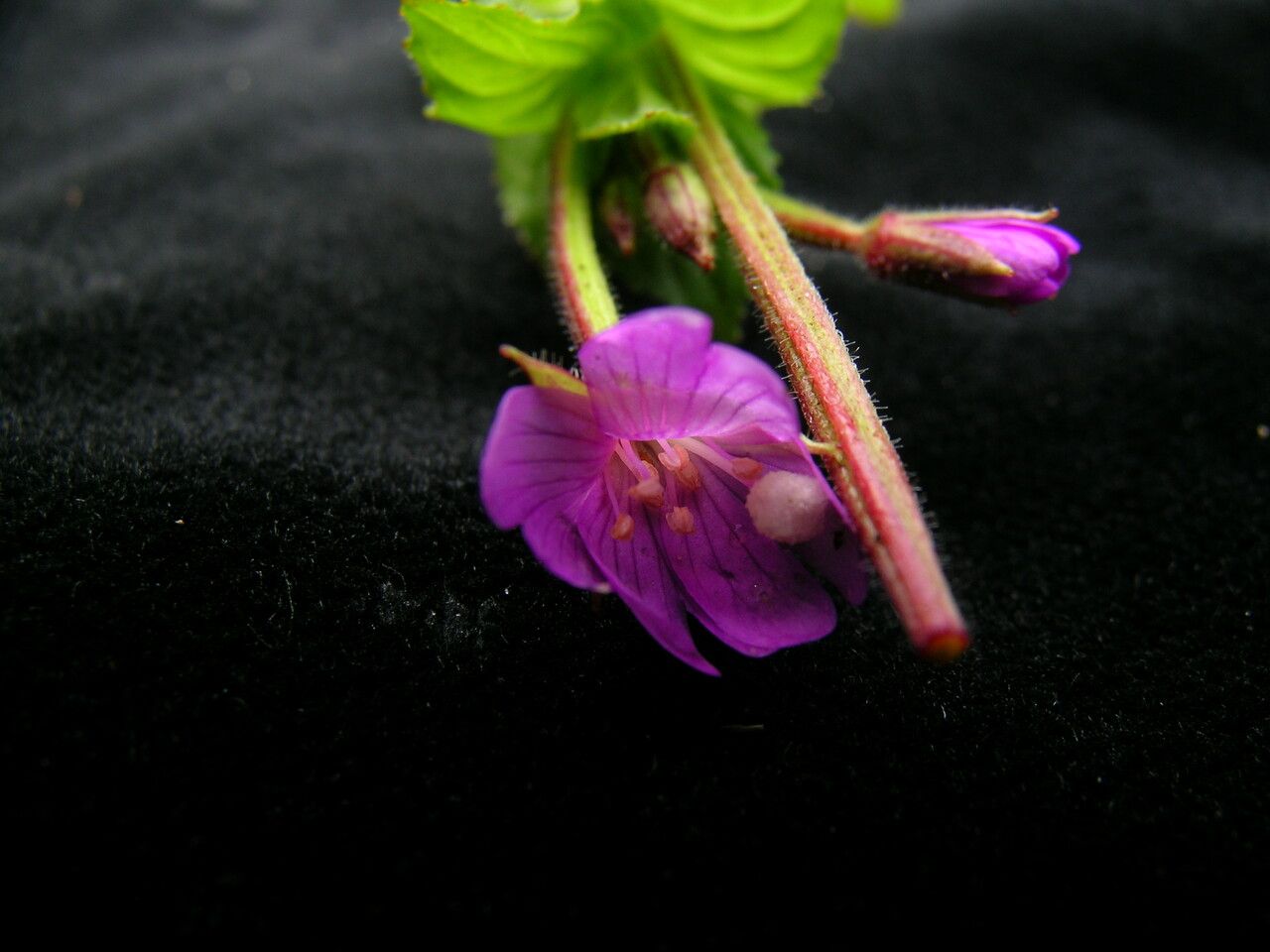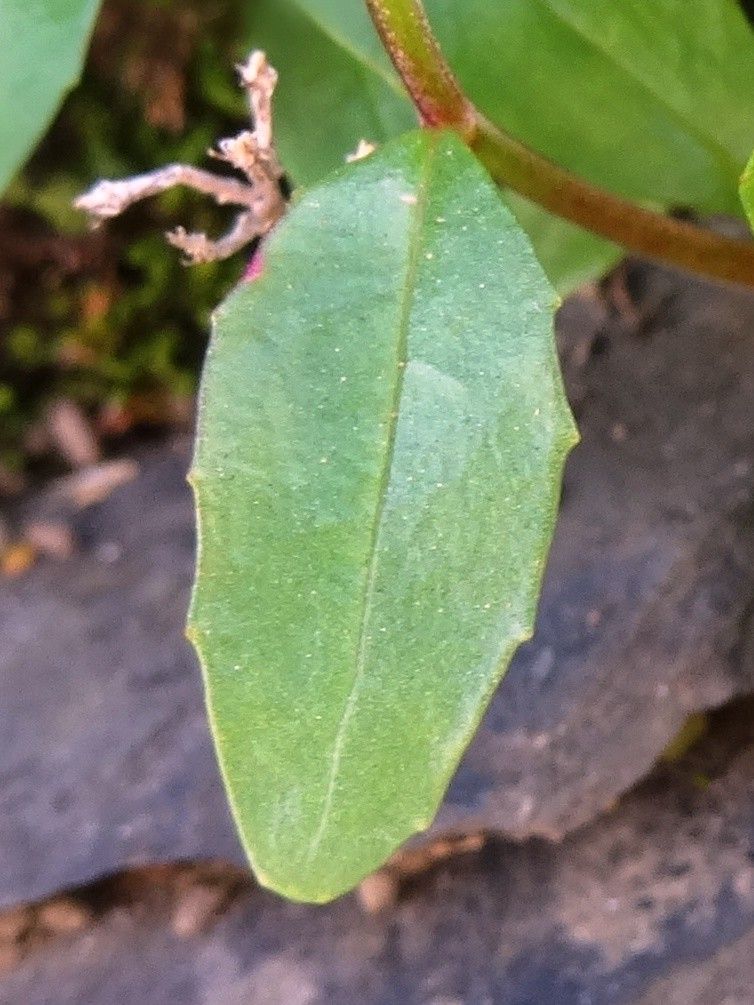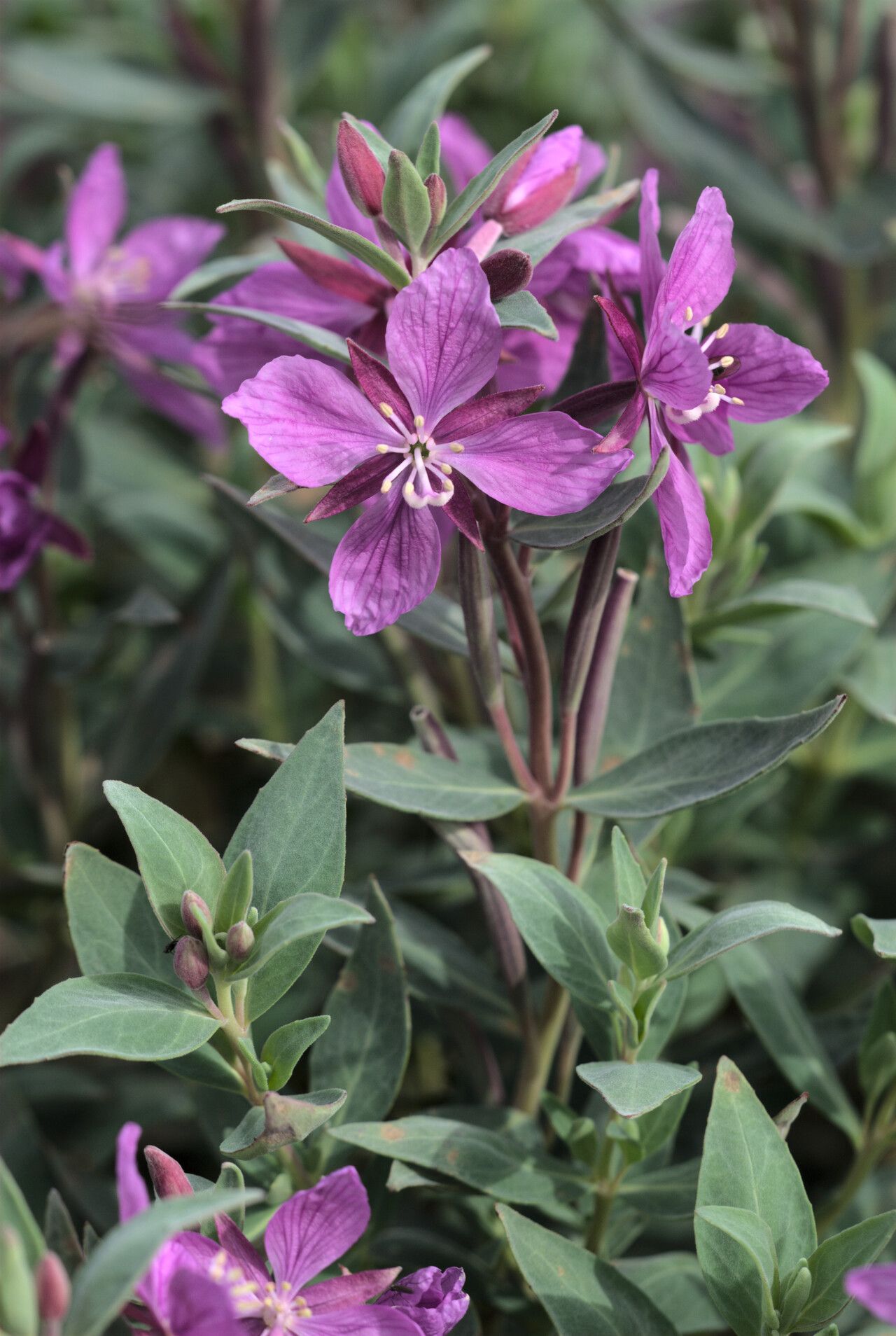
Chamaenerion latifolium (formerly Epilobium latifolium, also called Chamerion latifolium) is a species of flowering plant in the evening primrose family known by the English common names dwarf fireweed and river beauty willowherb. It has a circumboreal distribution, appearing throughout the northern regions of the Northern Hemisphere, including subarctic and Arctic areas such as snowmelt-flooded gravel bars and talus, in a wide range of elevations. This is a perennial herb growing in clumps of leaves variable in size, shape, and texture above a woody caudex. The leaves are 1 to 10 centimeters long, lance-shaped to oval, pointed or rounded at the tips, and hairy to hairless and waxy. The inflorescence is a rough-haired raceme of nodding flowers with bright to deep pink, and occasionally white, petals up to 3 centimeters long. Behind the opened petals are pointed sepals. The fruit is an elongated capsule which may exceed 10 centimeters in length. This arctic plant provides valuable nutrition for the Inuit, who eat the leaves raw, boiled with fat, or steeped in water for tea, the flowers and fruits raw, and as a salad with meals of seal and walrus blubber. The leaves and shoots are edible, tasting much like spinach, and is also known in the Canadian tundra as River Beauty.It is the national flower of Greenland with the Greenlandic name niviarsiaq ("young girl").
Dwarf fireweed is fairly disease-resistant and typically does not suffer from illnesses. However, it can be affected by pests and diseases found in its environment. Such problems are usually not severe. Regarding care, this plant has moderate maintenance needs. It should be pruned regularly to preserve a neat appearance and support healthy growth. Fertilizing can also encourage flowering. Dwarf fireweed is well suited to anyone with outdoor space like a garden or patio and does not demand extensive gardening experience. It may need extra attention when grown indoors.
How to keep Epilobium Latifolium.
Light
Dwarf fireweed prospers with plentiful sunlight, though it can tolerate moderate light. This hardiness reflects its original habitat, which provides abundant sun. Too little or too much light can impede its growth and result in stunted development.
Water
Dwarf fireweed flourishes in alpine and arctic tundra environments, preferring moist soil but showing some tolerance to occasional drought. To maintain consistent moisture, it's best to water it weekly. As an outdoor plant, dwarf fireweed adjusts its growth based on seasonal rainfall, demonstrating resilience in the face of changing water availability.
Fertilizer
For Dwarf fireweed, the primary time to fertilize is in early spring when the flowers are forming. Using the appropriate fertilizer promotes better blooms and helps Dwarf fireweed produce attractive flowers. Fertilizing in early spring ensures excellent flowers throughout the season and supplies energy for dormant phases of growth.
Pruning
Dwarf fireweed is a resilient perennial plant, celebrated for its vibrant flowers and adaptability. The best time to prune it is from early to late spring. During this period, focus on removing dead stems and shaping the plant. Pruning in this way promotes better growth, encourages more blooms, and improves airflow, resulting in a healthier and more attractive plant.
Botanical profile.
- Plant Type
- Herb
- Life Cycle
- Perennial
- Genus
- Epilobium
- Family
- Onagraceae
- Hardiness Zone
- 3-5
- Mature Height
- 5 cm to 40 cm
- Mature Spread
- 61 cm
- Leaf Color
- Green, Blue, White, Bronze
- Leaf Type
- Deciduous
- Flower Color
- Pink
- Flower Size
- 2.03 cm to 4.06 cm
- Bloom Time
- Early summer, Mid summer
- Planting Time
- Autumn
- Harvest Time
- Mid summer
Other names.
Reader questions.
How should I water my Dwarf fireweed to keep it healthy?
To properly water the Dwarf fireweed, it is recommended to use filtered water that is at room temperature. Tap water may contain harmful particles, so filtering it is a better option. Since the Dwarf fireweed is accustomed to warm environments, using cold water can be shocking for it. It is also important to avoid overhead watering as it can lead to issues with the foliage. Instead, you should simply saturate the soil with the filtered room temperature water until it is completely soaked. This helps the roots stay moist and enables them to spread through the soil and absorb the necessary nutrients.
What are the sunlight requirements for Dwarf Fireweed (Epilobium latifolium)?
Dwarf Fireweed requires full sun exposure for optimal growth, defined as more than 6 hours of direct sunlight per day. It can also tolerate partial sun, which is about 3-6 hours of sunlight. However, it's essential to monitor the movement of sunlight in your garden carefully to ensure that the plants receive the right balance of light and shade, maintaining their health and vigor.
What is the botanical name of Dwarf fireweed?
The botanical name of Dwarf fireweed is Epilobium latifolium. This plant is known for its distinctive features, although specific details such as essential aspects and symptoms arising from its interaction or usage were not provided. Nonetheless, understanding its botanical identity can be a good starting point for further exploration into its characteristics and potential uses.
What should I do if I give my Dwarf fireweed too much or too little water?
Overwatering and underwatering can harm the health of your Dwarf fireweed, but overwatering is more commonly seen. Too much water can cause wilting, yellowing leaves, and diseases like root rot, mold, and mildew that can be fatal. Underwatering is less common due to the plant's ability to withstand drought, but it can still occur, resulting in brittle, brown leaves. It is crucial to recognize signs of overwatering early to prevent irreversible damage. If signs are noticed, reduce watering and check the soil's drainage. Replace poorly draining soil with loose, well-draining potting mix. If signs of underwatering are evident, increase watering until the signs subside.
How does Dwarf Fireweed adapt to different lighting conditions?
Dwarf Fireweed thrives under abundant sunlight but can manage with moderate sunlight as well. This adaptability reflects its natural habitat, which typically offers ample sunlight. However, inadequate or excessive sunlight can impede growth, leading to stunted development. For indoor plants where natural light is insufficient, especially during winter or in less sunny areas, artificial lighting can be utilized to support growth. LED lights are advisable as they can be tailored to provide specific wavelengths needed by plants. The intensity of artificial light required varies depending on the plant's sunlight needs: 30-50W/sq ft for full sun plants, 20-30W/sq ft for partial sun plants, and 10-20W/sq ft for full shade plants.
How often do I need to give water to my Dwarf fireweed?
If your Dwarf fireweed is in a pot, the best way to determine if it needs water is to check the soil. Stick your finger into the soil and if the top two to three inches are dry, it's time to water. The same method can be used if you are growing Dwarf fireweed outdoors in the ground. When the first few inches of soil have dried out, it's time to water. Typically, you will need to water this plant about once a week in the spring and early fall. However, during extremely hot weather, you may need to water it twice or more per week. Keep in mind that mature Dwarf fireweed plants have a good ability to withstand drought.
What are the symptoms of insufficient sunlight in Dwarf Fireweed?
Symptoms of insufficient sunlight in Dwarf Fireweed include smaller new leaves, leggy or sparse growth, faster leaf drop, slower or halted new growth, and lighter-colored new leaves. Additionally, chlorosis, or the loss of leaf green color, and leaf curling may occur under excessive sunlight. Sunscald, which leads to damaged tissues, wilting from water loss, and leaf scorching characterized by crispy leaf edges, are also signs of inadequate or excessive sunlight exposure.
How much water does my Dwarf fireweed plant need?
To properly water your Dwarf fireweed, make sure you give it an adequate amount of water. When the top two to three inches of soil are dry, it's time to water. Give the plant a deep watering, making sure to saturate the soil completely. You'll know you've watered enough when you see excess water flowing out of the pot's drainage holes. If there's no excess water draining, you probably didn't give enough water. However, be careful not to let water accumulate in the soil, as this can be harmful to the plant. Additionally, if you notice that water isn't draining well, it could be a sign of poorly draining soil, which is not good for the plant's health. Lastly, if the plant is outside, about 1 inch of rain per week should be sufficient.
How can you address the sunlight needs of Dwarf Fireweed both indoors and outdoors?
To support its growth indoors, you should gradually increase its sunlight exposure to at least 6 hours daily, utilizing a south-facing window for natural light or artificial grow lights if necessary. Outdoors, acclimate the plant to sunnier spots gradually to avoid sunburn. Removing obstructions like tree branches can also improve sunlight accessibility. For ground-planted Dwarf Fireweed, transplanting during dormant periods to a sunnier location with good drainage can significantly benefit the plant. Remember, parts of the plant that have already been damaged by insufficient sunlight might not recover, but new growth post-adjustment will be healthy.
How do I water my Dwarf fireweed at different stages of growth?
The water needs of Dwarf fireweed can vary depending on its growth stages. In the first few years of its life or after being transplanted, it requires more water than usual. During these stages, the plant focuses on developing new roots, which need extra moisture for optimal growth. As Dwarf fireweed matures, its water requirements decrease. However, during the blooming period, when flowers are developing, it may need additional water to support the increased moisture demand.
What is the best way to water my Dwarf fireweed throughout the year?
The Dwarf fireweed has different water needs depending on the season. In the hottest months of the year, particularly during summer, this plant requires the most water. Depending on how quickly the soil dries out, you may need to water it more than once a week. On the other hand, during the winter, the plant goes into a dormant phase and requires less water. In fact, you may not need to water it at all during this time. If you choose to water it during winter, avoid doing so more than once a month to prevent the plant from getting sick.
How is watering my Dwarf fireweed different when it's inside versus outside?
The Dwarf fireweed is commonly grown indoors by gardeners who live in non-temperate and non-tropical regions. It's important for these gardeners to be aware that soil in a container may dry out faster than ground soil. Additionally, factors such as air conditioning units can further contribute to the need for more frequent watering compared to if the plant was grown outside. If the Dwarf fireweed is planted outdoors and regularly receives rainfall, it may not need much additional watering. However, if the plant is grown indoors, relying on rainwater to hydrate the soil is not an option, and it will need to be watered more often.