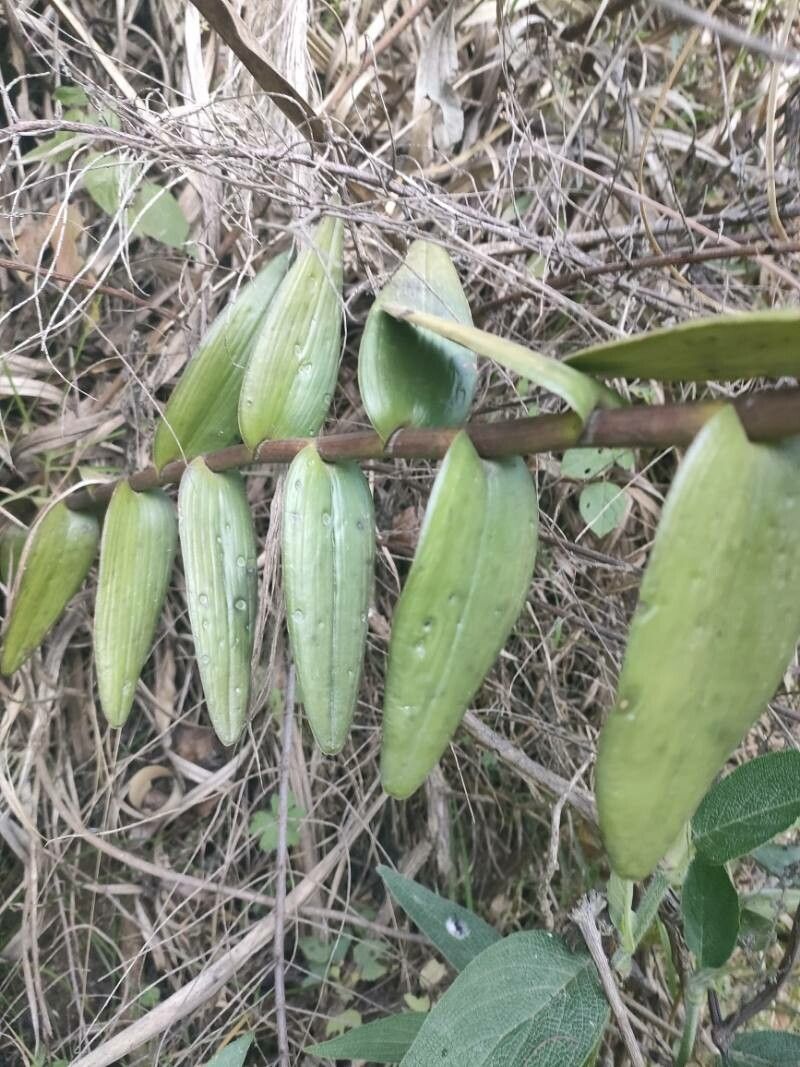
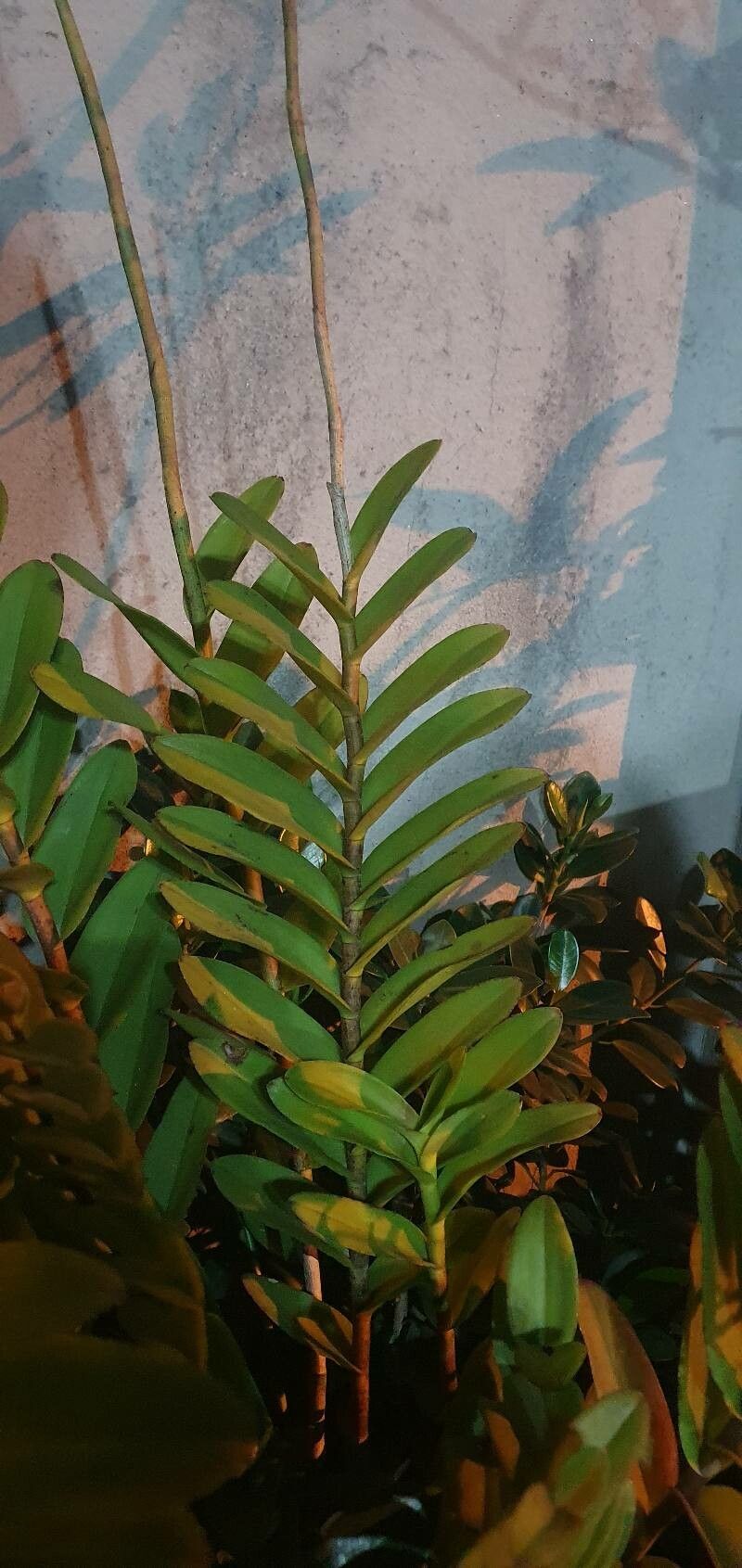
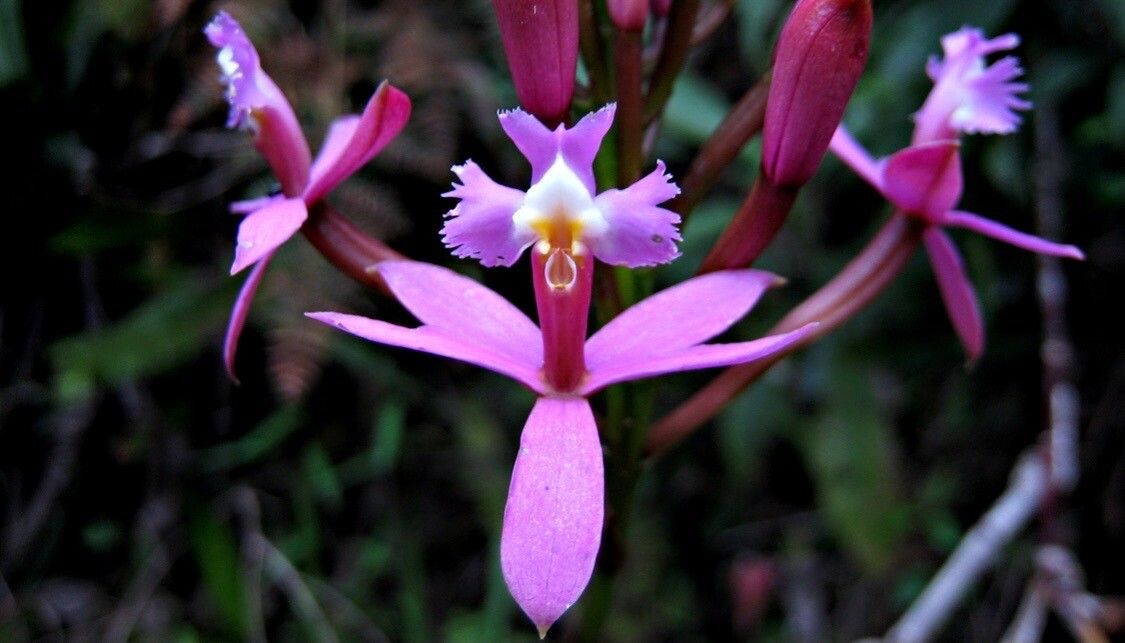
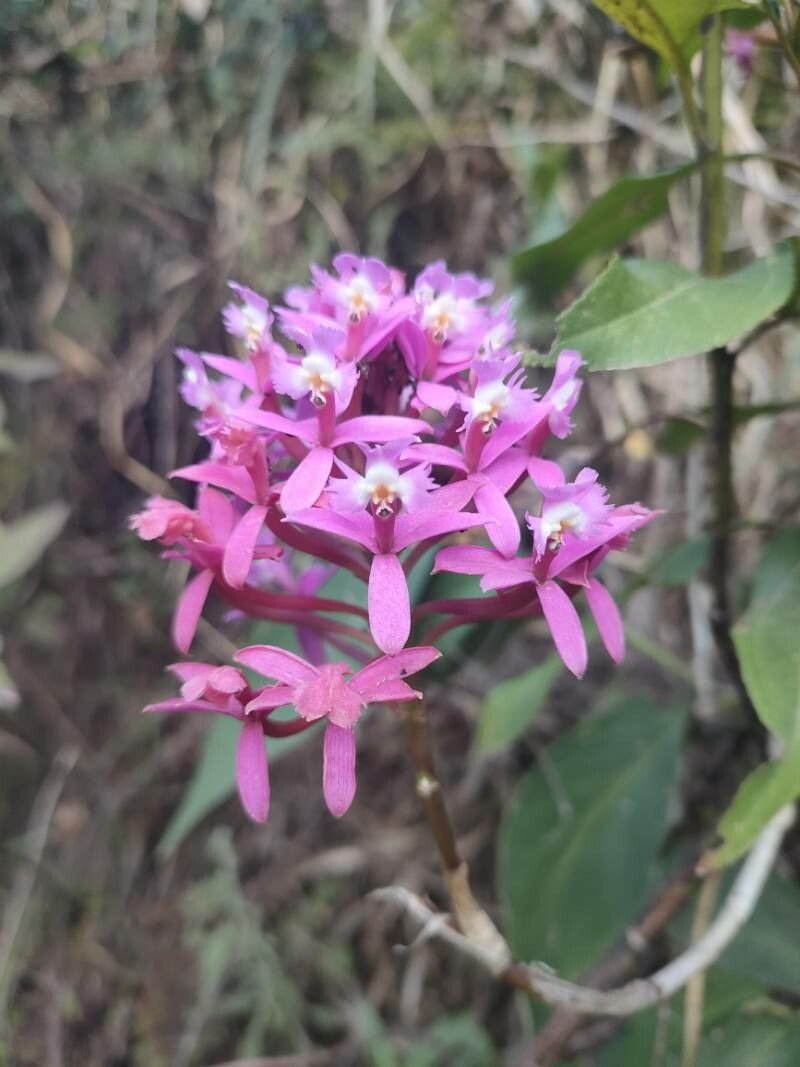
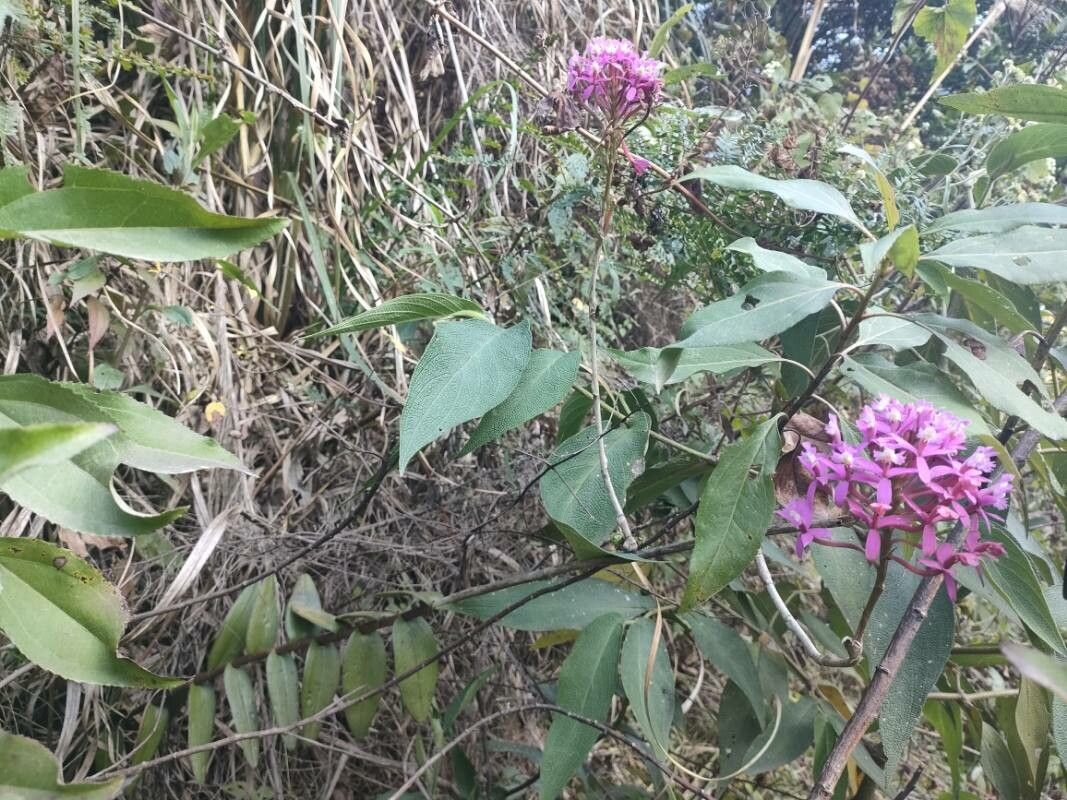
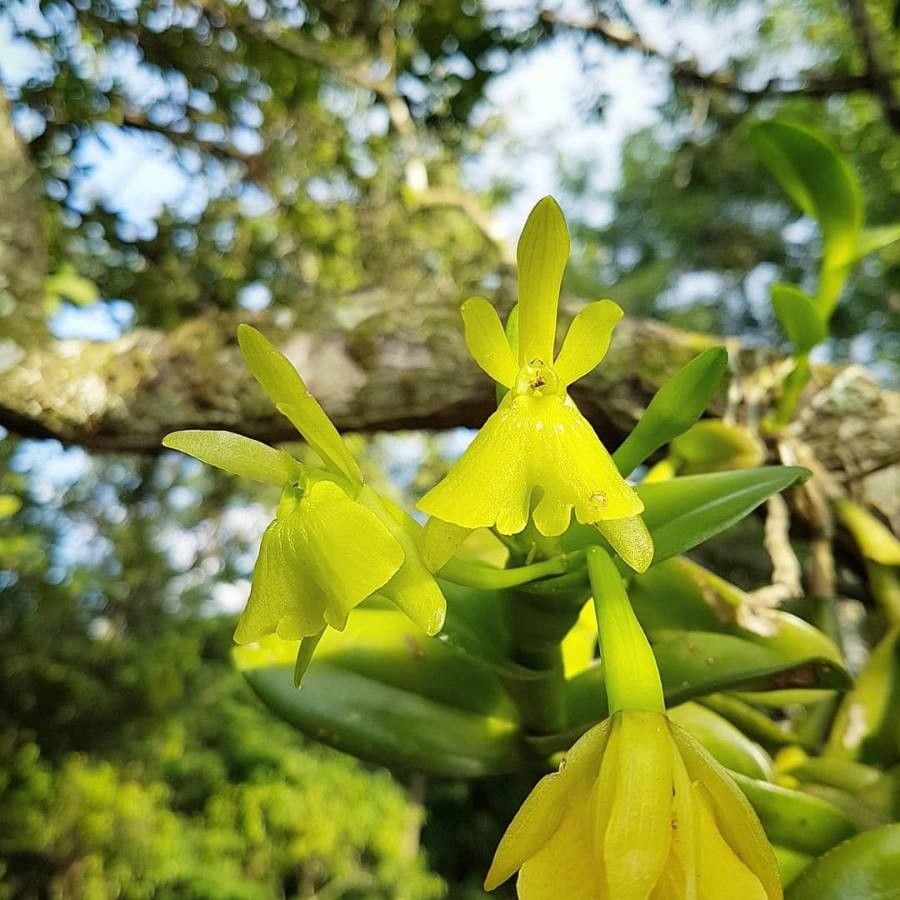
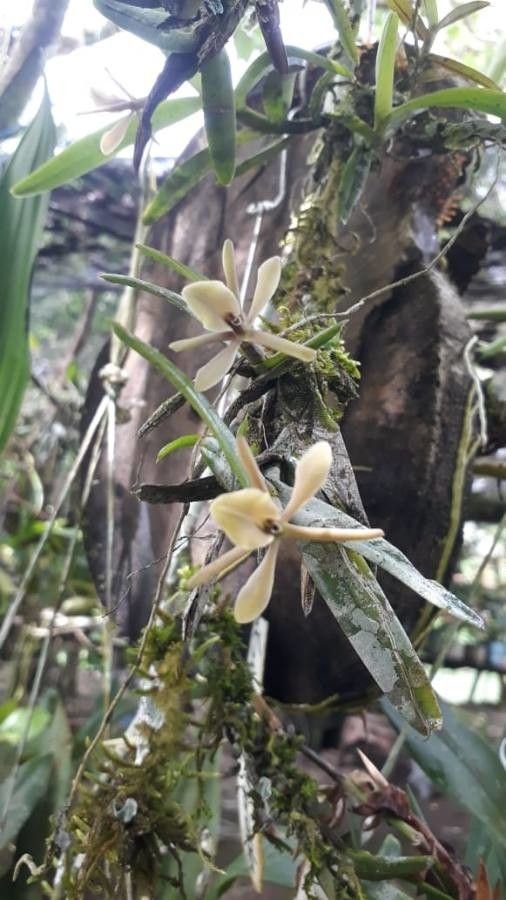
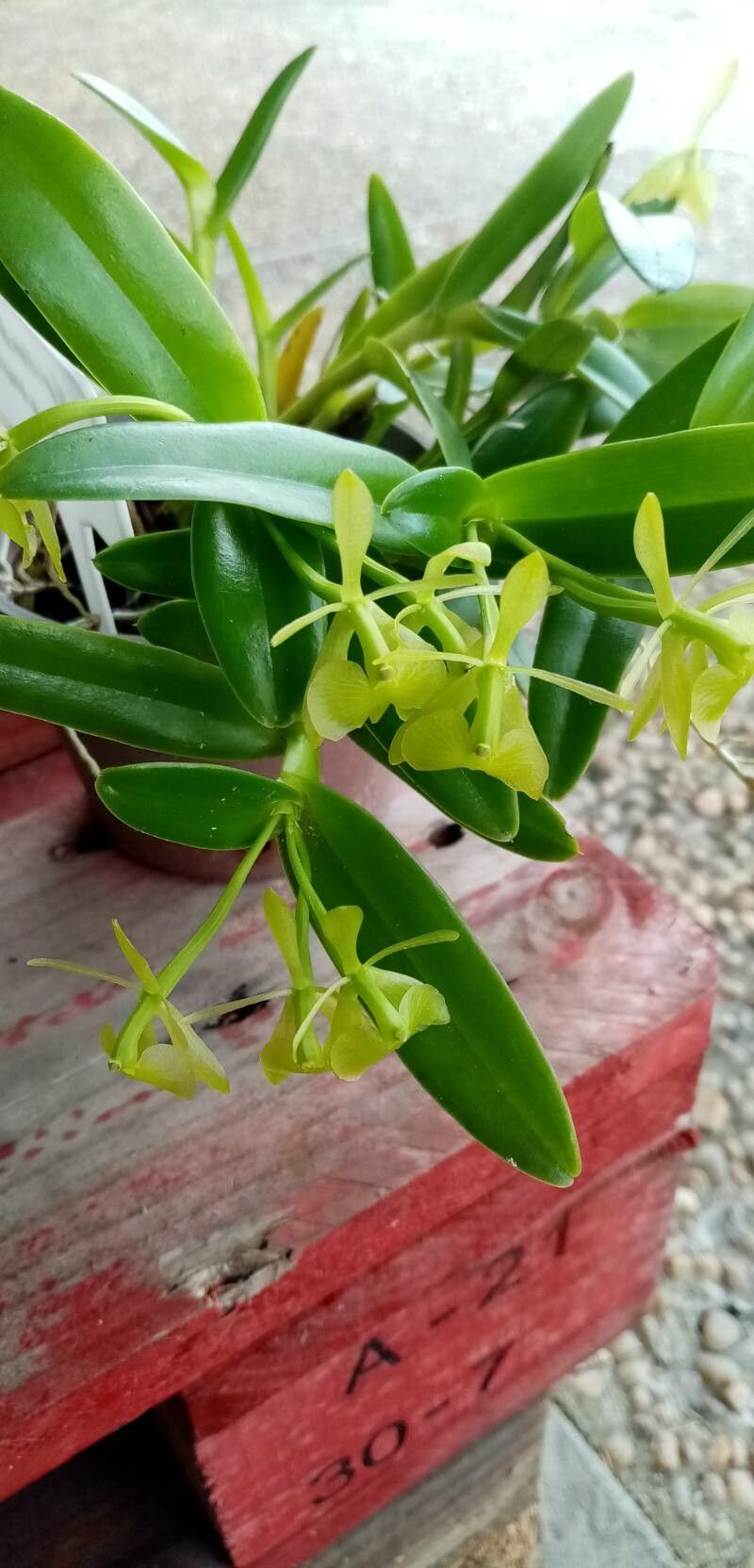
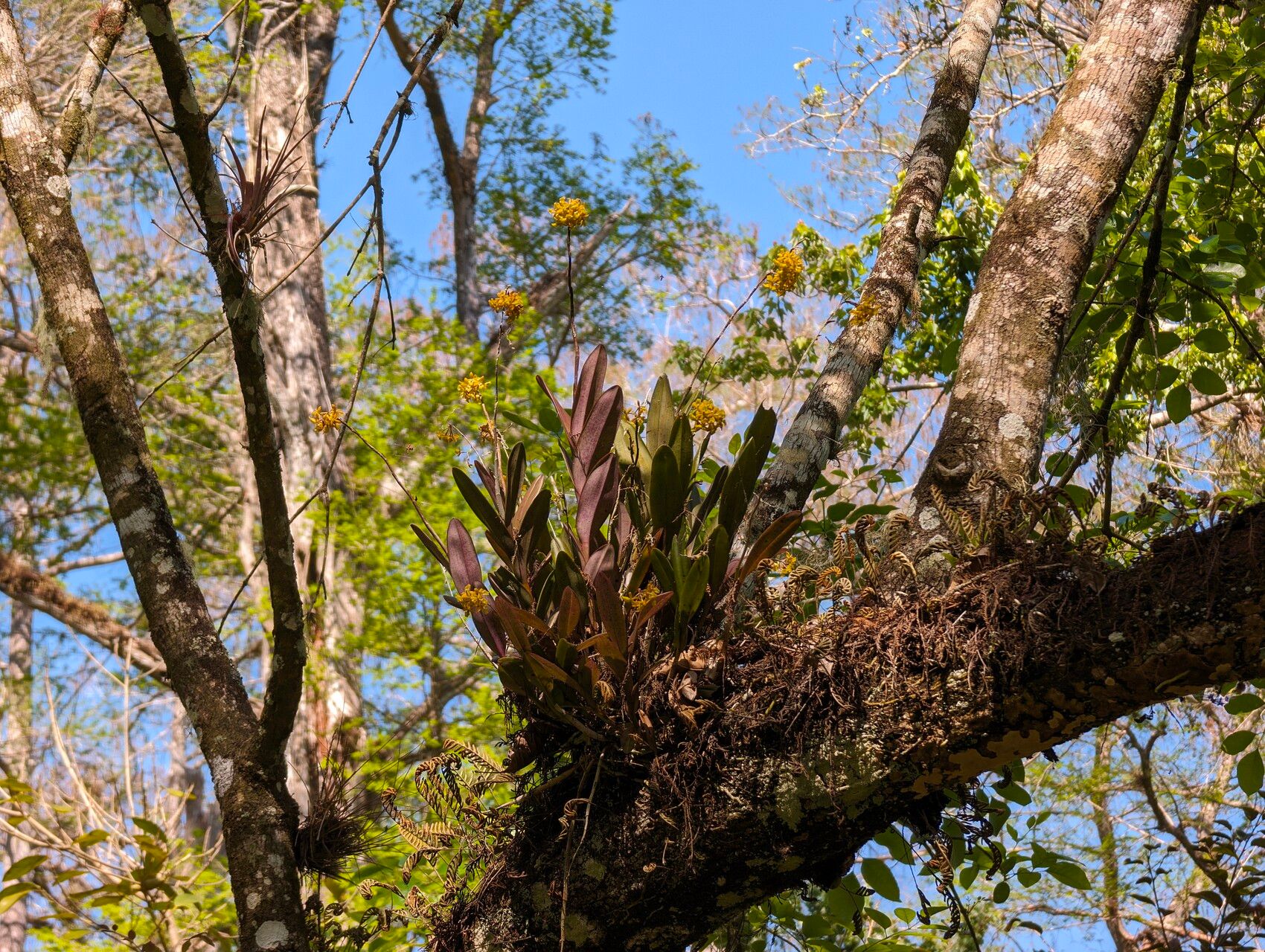
Epidendrum secundum, one of the crucifix orchids, is a poorly understood reed stemmed species, which Dressler (1989) describes as "the Epidendrum secundum complex." According to Dressler, there are dozens of varieties, some of which appear to deserve species rank. Arditti and Ghani note that E. secundum has the distinction of bearing the longest seeds known in the Orchidaceae, 6.0 mm long. By comparison, the seeds of E. ibaguense (another crucifix orchid) are only 2.9 mm long. Like the other members of E. subg. Amphiglottium, E. secundum is a sympodial plant which has thin stems covered from the base with imbricating sheaths which are leaf bearing above, a terminal inflorescence covered at its base with thin imbricating sheaths, and flowers with the lip adnate to the column to its apex. The flowers are non-resupinate (unlike E. ibaguense and E. radicans), can come in shades of lilac, red, orange, or yellow, and feature a notable callus on the fringed trilobate lip. The plant is rather cool-growing and can tolerate a light frost.
The Lopsided star orchid is generally resistant to disease and tends to have relatively few insect pests. Its care is considered difficult because it requires high humidity alongside good ventilation and minimal harmful pathogens. Too much watering can result in root rot. Although anyone can grow the Lopsided star orchid, keeping it healthy and getting it to flower again takes more growing experience.
How to keep Epidendrum Secundum.
Light
Lopsided star orchid grows best when exposed to the full strength of the sun's rays, though it can tolerate spots where sunlight is partly blocked. In its natural habitat it takes in ample solar energy, promoting healthy growth. Excessive shade may stunt its development, while too much exposure can induce stress.
Water
The lopsided star orchid thrives in environments with high humidity and consistent moisture, but it can tolerate short dry periods. Water the plant every 1-2 weeks, being careful not to overwater. During drier months, mist the orchid to promote growth. Often grown indoors for its ornamental beauty, this orchid does best in conditions that mimic its tropical rainforest origins.
Temperature
Lopsided star orchid is suited to warmer climates, originating from habitats where temperatures range from 68 to 95 °F (20 to 35 ℃). It flourishes in these warm conditions, and care should be taken to adjust its surroundings accordingly as the seasons change.
Fertilizer
Proper fertilization is essential for the Lopsided star orchid's health and appearance. Fertilize the Lopsided star orchid in summer, repeating the application monthly throughout the season. Nutrients provide the fuel for growth and help maintain the plant's components. Fertilization improves the Lopsided star orchid's flower display, ensuring the best blooms.
Pruning
The lopsided star orchid benefits from pruning in early spring or late winter, which encourages growth and flowering. To maintain the plant's shape, remove any damaged stems and trim back the plant after it has bloomed. Be careful not to prune too heavily, as this can stress the plant. With proper care and pruning, you can improve air circulation and enhance the plant's appearance, both of which contribute to the overall health of the orchid.
Pot & Repot
When repotting Lopsided star orchid, select a slightly larger pot with good drainage, preferably a clear orchid pot. Use a well-draining, orchid-specific potting mix that includes bark or moss. Gently clean the roots and remove any that are dead or rotting. Repot after flowering, usually in spring or fall, water thoroughly, and place the plant in bright, indirect light. Avoid disturbing the roots once it has been repotted.
Botanical profile.
- Plant Type
- Herb
- Life Cycle
- Perennial
- Genus
- Epidendrum
- Family
- Orchidaceae
- Hardiness Zone
- 10
- Mature Height
- 49 cm
- Mature Spread
- 49 cm
- Leaf Color
- Dark Green
- Leaf Type
- Evergreen
- Flower Color
- Pink, Lavender
- Flower Size
- 2.03 cm to 3.05 cm
- Bloom Time
- All year round
- Planting Time
- Spring, Summer, Autumn
- Harvest Time
- All year round
- Native Area
- Honduras, Bolivia, Venezuela, Peru, Guyana, Brazil, Ecuador
Other names.
Reader questions.
What are the sunlight requirements for the Lopsided Star Orchid?
The Lopsided Star Orchid thrives in full sun, requiring above 6 hours of sunlight each day, though it can also endure in partial sun, with about 3-6 hours of sunlight. Its growth is fueled by ample solar energy in its natural habitat, but too much shade can stunt its growth, and excessive exposure may cause stress. Observing how sunlight moves through your garden and choosing spots that offer a balance of light and shade are crucial for ensuring the plant's happiness.
What is the ideal temperature range for growing a Lopsided star orchid?
The Lopsided star orchid, known botanically as Epidendrum secundum, thrives in warm climates, specifically in temperature ranges from 68 to 95 °F (20 to 35 °C). Originating from such warm environments, it is crucial to ensure that the orchid is kept within this temperature range for optimal growth. As a tropical plant, particular attention should be paid during the winter months. If the temperature drops below 5°C, it is recommended to transfer the Lopsided star orchid indoors to maintain a temperature above 20°C. A south-facing window is an ideal location to provide ample sunlight, and using a humidifier or regularly misting the plant will help in maintaining the necessary humidity levels.
How does artificial lighting benefit indoor plants like the Lopsided Star Orchid?
Indoor plants, including the Lopsided Star Orchid, require adequate lighting for optimal growth, especially when natural sunlight is insufficient, like in winter or less sunny spaces. Artificial lights, such as LED lights which can be customized to provide specific wavelengths, are a vital solution. For full sun plants, 30-50W per square foot of artificial light is needed, partial sun plants require 20-30W per square foot, and full shade plants need 10-20W per square foot. The light source should be placed 12-36 inches above the plant, mimicking the length of natural daylight hours, which is typically 8-12 hours per day for most plants.
How should I care for my Lopsided star orchid during winter?
During winter, if you are cultivating a Lopsided star orchid and the minimum temperature threatens to drop below 5°C, it's recommended to bring the plant indoors to protect it from the cold. Keeping indoor temperatures steady above 20°C will be beneficial for the orchid. Placing it near a south-facing window ensures it receives enough sunlight, which is vital for its well-being during the colder months. Additionally, it is essential to maintain proper humidity levels around the orchid, either by regularly misting it or using a humidifier. For those who must overwinter their orchids outdoors, make sure to position them in a sheltered spot that gets sunlight and consider wrapping them with plastic film or fabric, or setting up a temporary greenhouse for extra protection.
What symptoms indicate a Lopsided Star Orchid is getting insufficient light?
Symptoms of light deficiency in the Lopsided Star Orchid include smaller new leaves compared to mature ones, leggy or sparse growth, faster leaf drop, slower or no new growth, and lighter-colored new leaves. Conditions like chlorosis, where leaves lose their green color, sunscald, leaf curling, wilting due to overexposure to sunlight, and leaf scorching characterized by brown, dry, and crispy leaf edges, also indicate issues with light exposure.
What symptoms indicate my Lopsided star orchid is experiencing temperature stress, and how can I address them?
Symptoms of temperature stress in a Lopsided star orchid differ based on whether the plant is exposed to high or low temperatures. For low temperatures, symptoms include extensive water-soaked necrosis, wilting, and drooping of the leaves, particularly when the temperature falls below 1°C, indicating that the plant does not tolerate cold well and thrives above 20°C. To address this, trim off the frostbitten areas and move the plant to a warmer indoor environment, ideally near a south-facing window to ensure ample sunlight. Avoid placing the plant near heating or cooling vents to prevent air dryness. For heat stress, which is evident when temperatures rise above 35°C and can be severe above 41°C, symptoms include halted growth, wilting leaves, susceptibility to root rot, and potential sunburn. Addressing this involves trimming away the sunburned areas, relocating the plant to a shaded area during peak sun hours, and ensuring the plant, as well as the environment, remains moist by watering in the morning and evening.
What are the solutions for a Lopsided Star Orchid suffering from light deficiency?
To address light deficiency in a Lopsided Star Orchid, it's advisable to gradually move the plant to a sunnier location, ensuring it receives at least 6 hours of direct sunlight daily. A south-facing window is ideal for maximum sunlight exposure. Artificial lighting, such as a desk or ceiling lamp or professional plant grow lights, can provide additional light for at least 8 hours daily. For outdoor plants, it's essential to avoid sudden changes in light intensity to prevent sunburn. Reducing obstructions like pruning trees or transplanting smaller plants during their dormant period can also increase sunlight exposure.