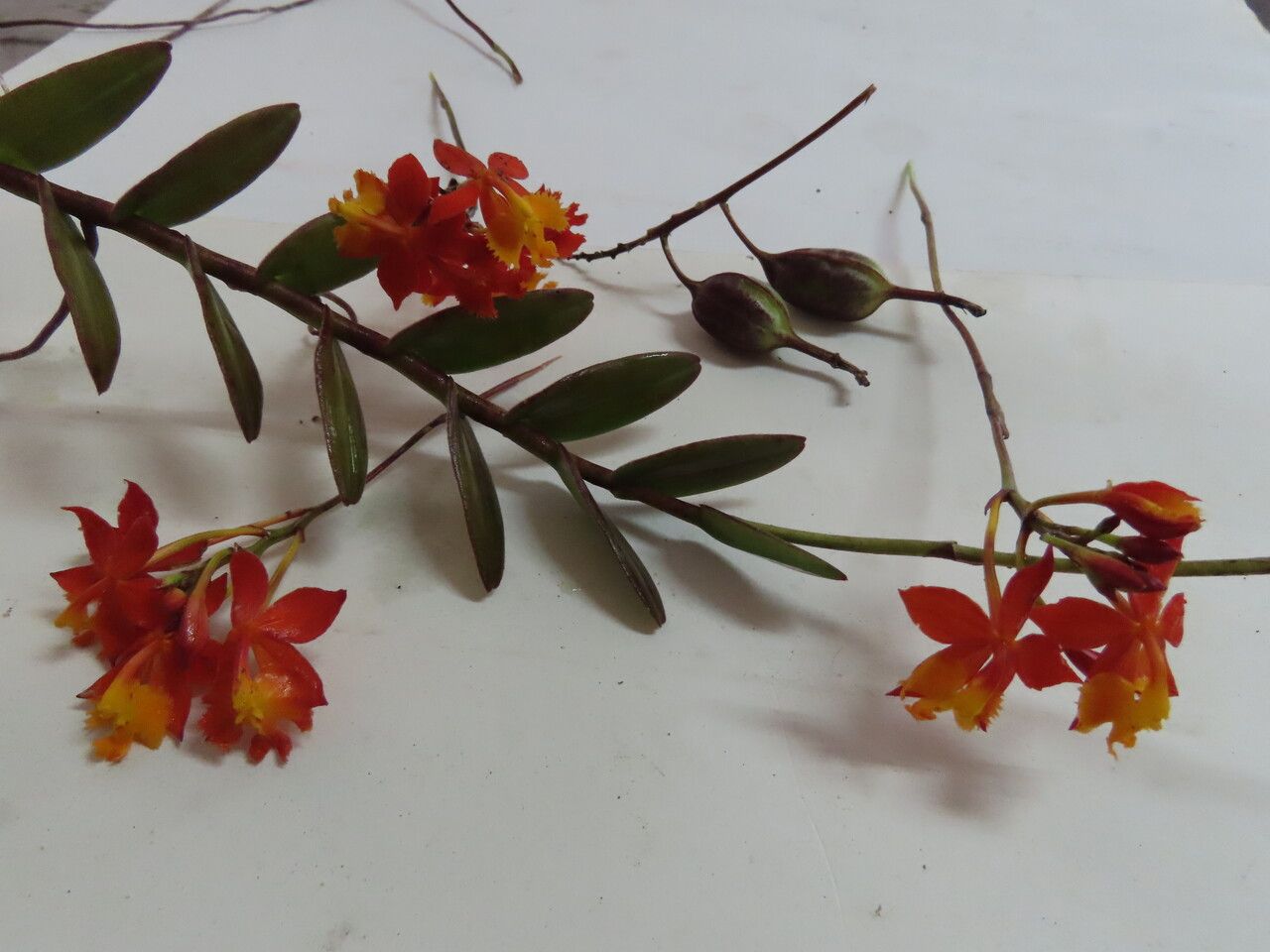
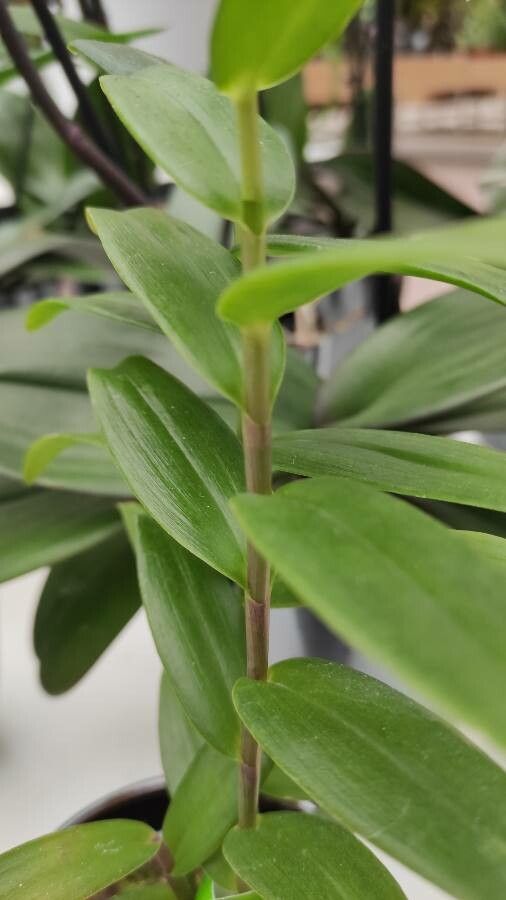
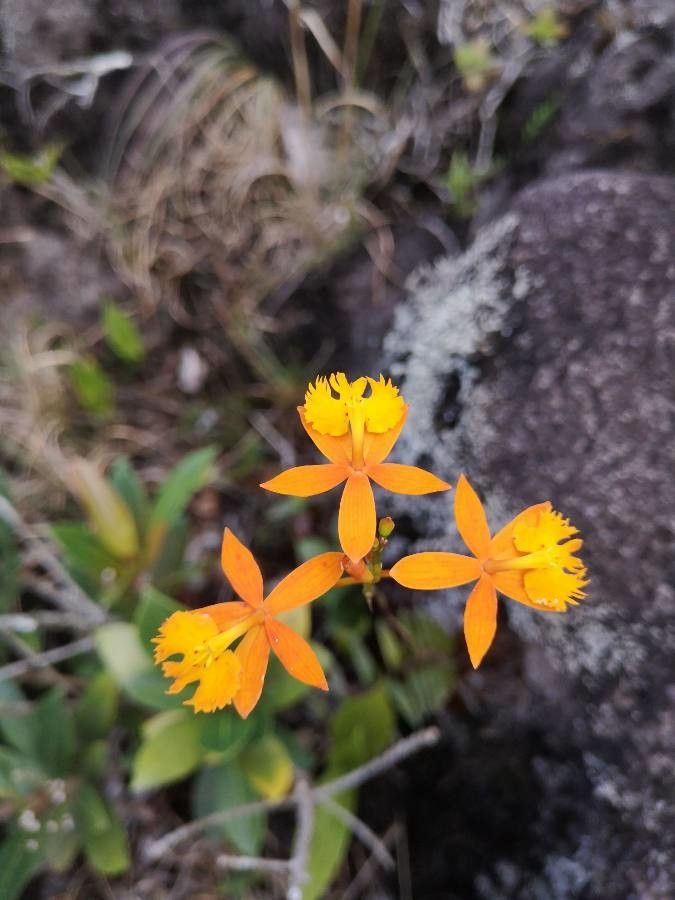
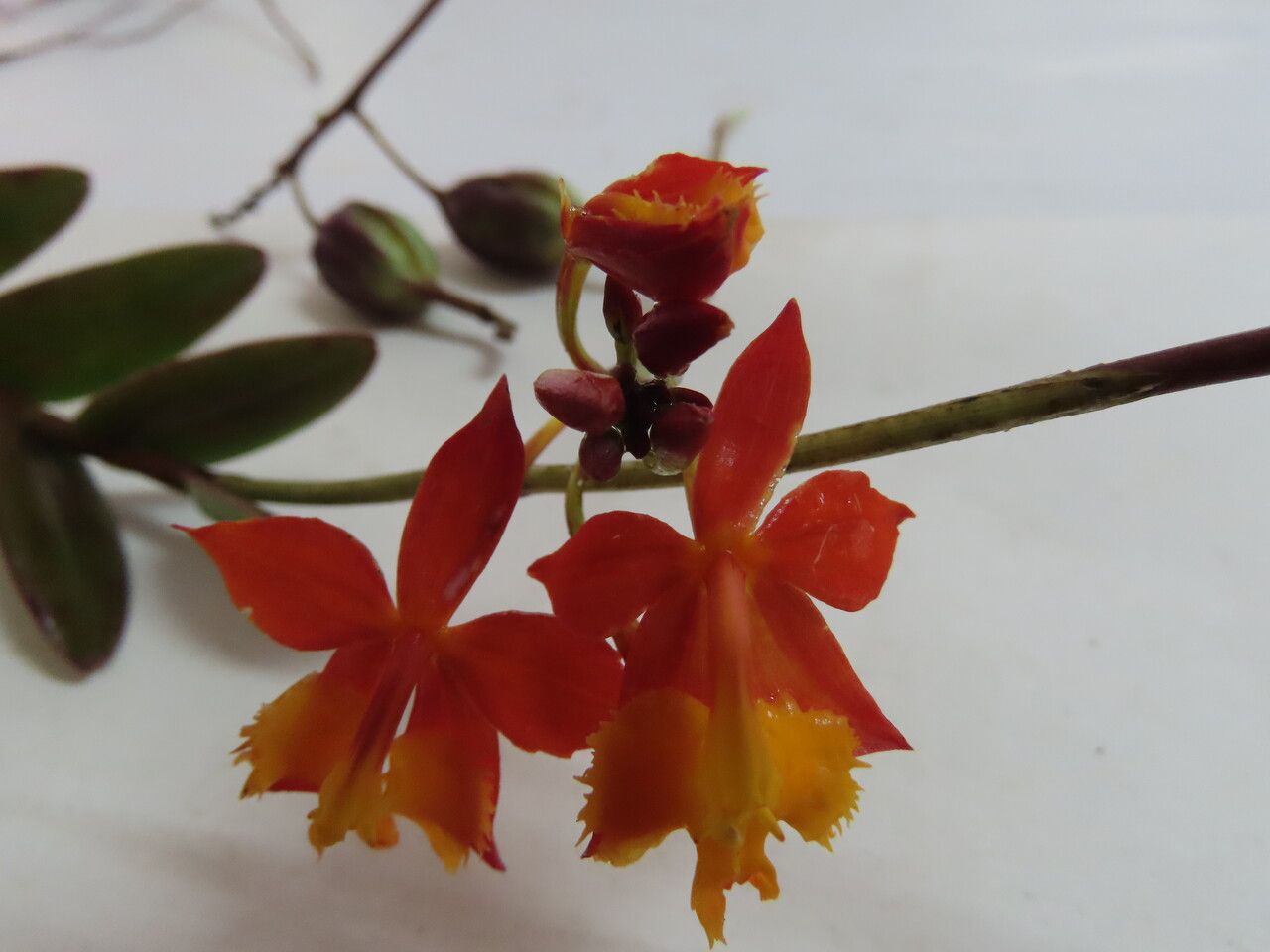
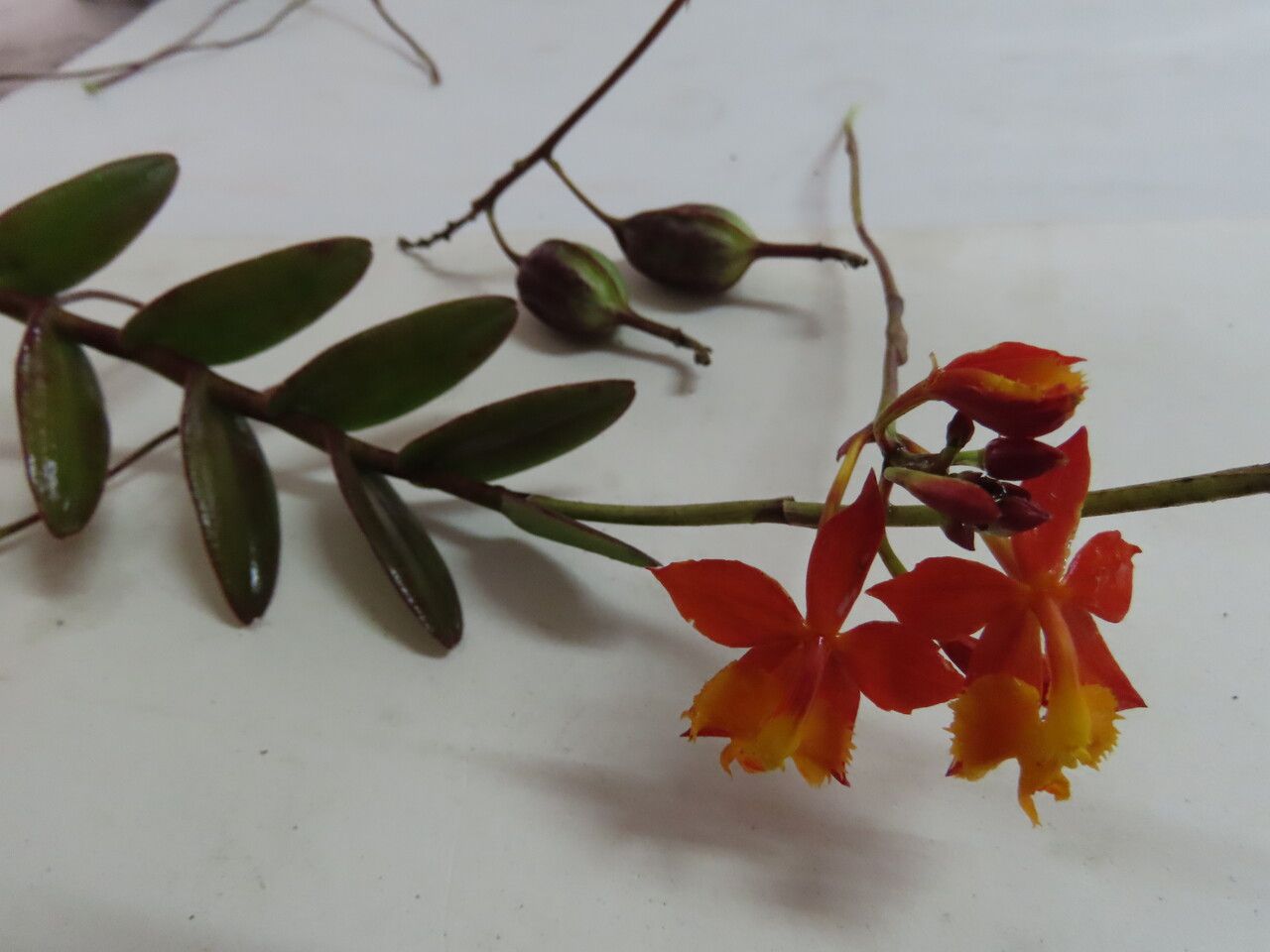
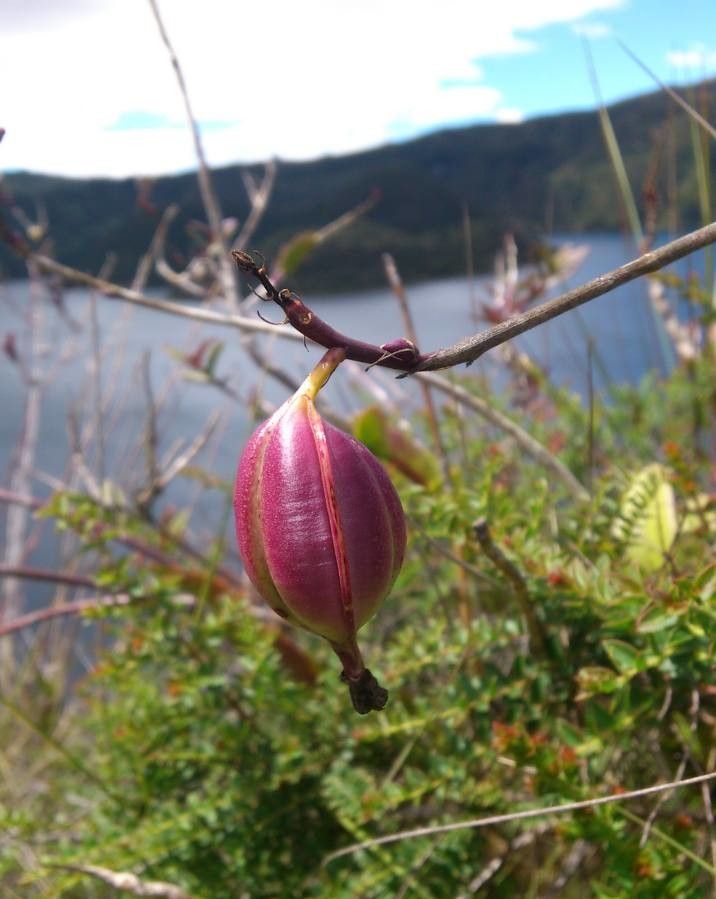
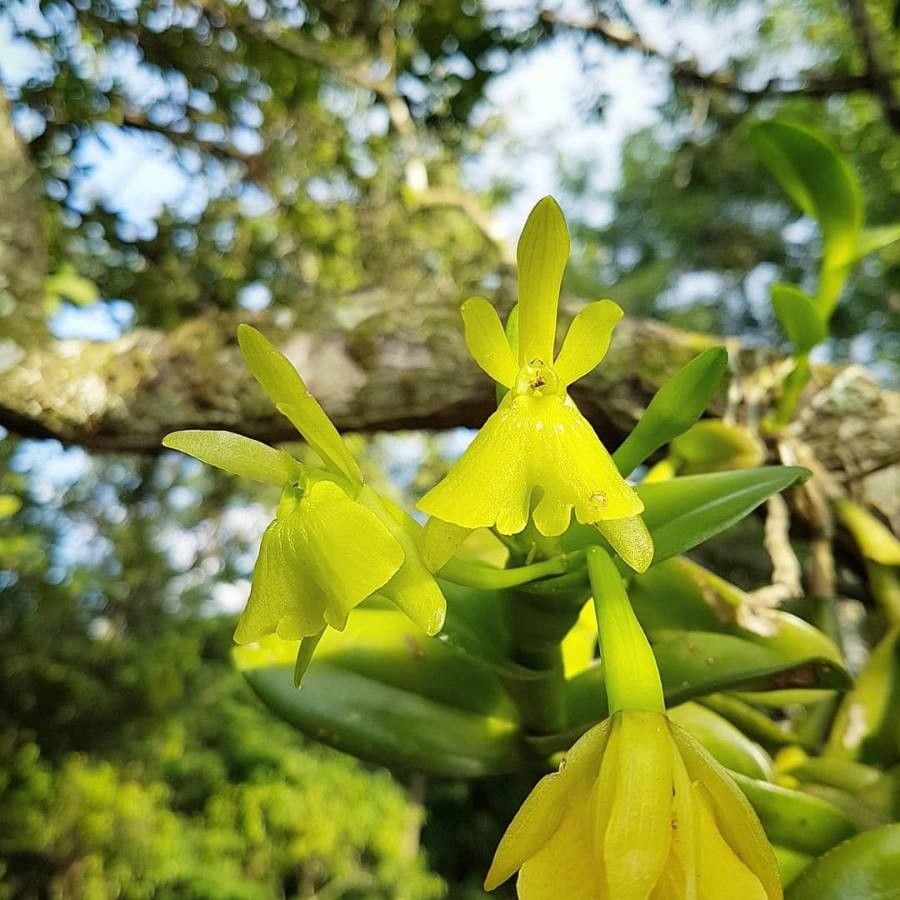
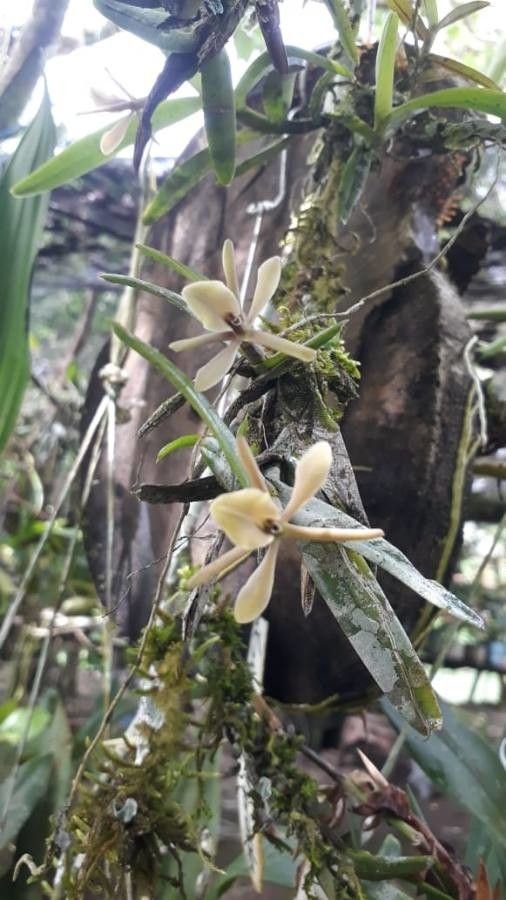
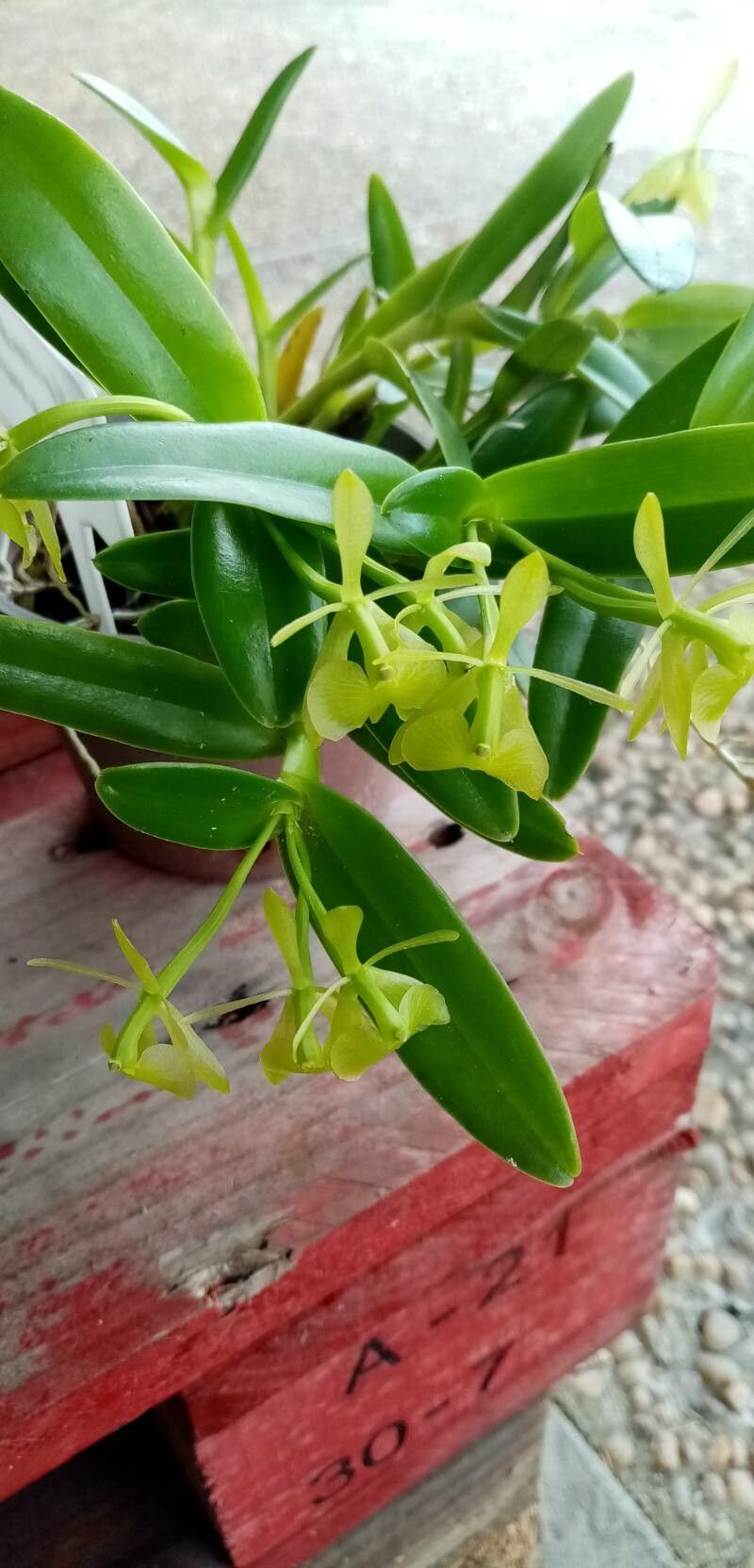
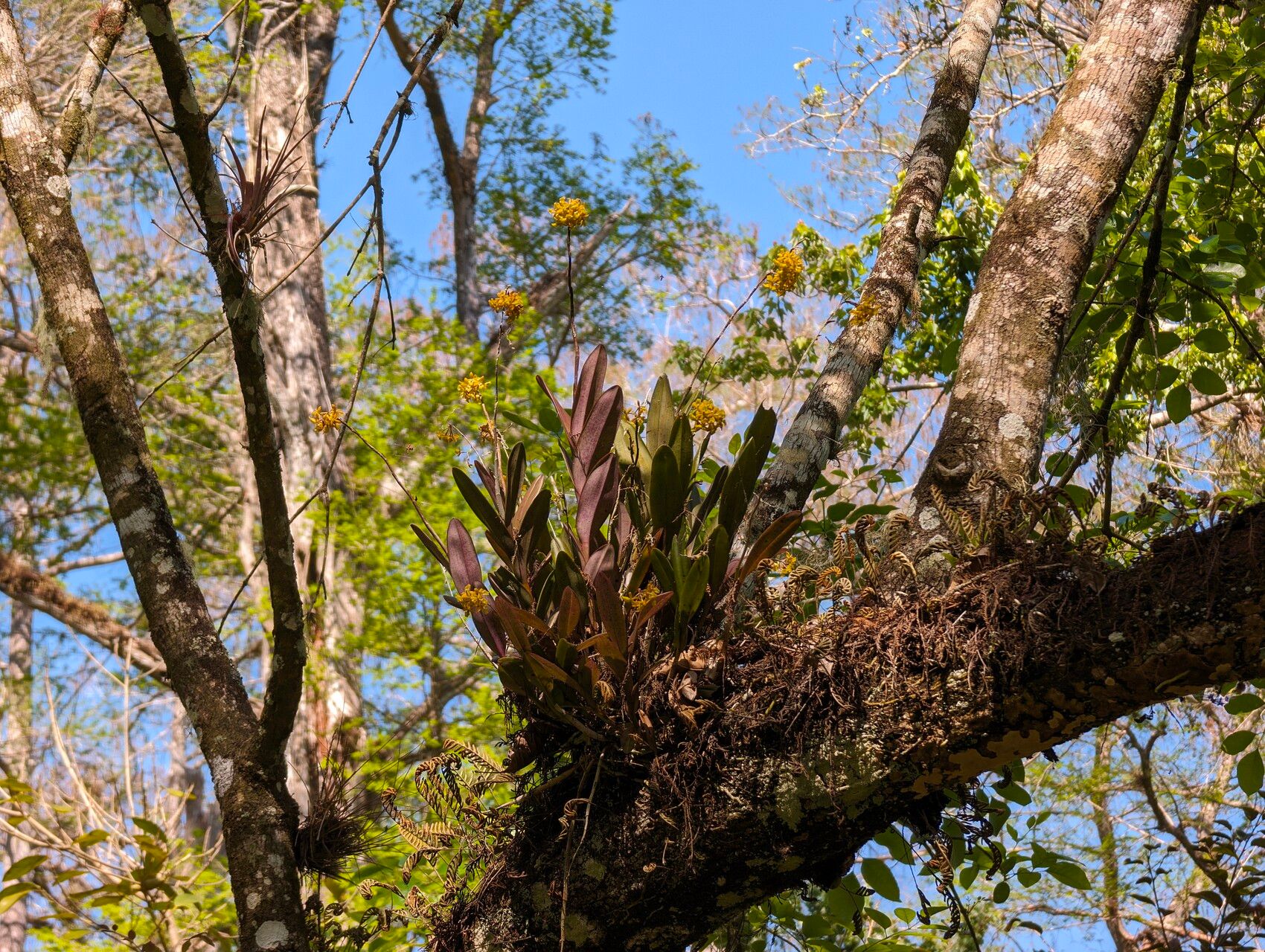
Epidendrum radicans is a species of orchid. Common names include ground-rooting epidendrum, fire-star orchid, rainbow orchid, and reed-stem epidendrum. It is a common roadside weed at middle elevations in Central America. It is a crucifix orchid, often confused with many other members of the section Schistochila, including E. calanthe, E. cinnabarinum, E. denticulatum, E. erectum, E. fulgens, E. ibaguense, E. imatophyllum, E. incisum, E. schomburgkii, E. secundum, and E. xanthinum, among others. The diagnostic characteristic of E. radicans is its tendency to sprout roots all along the length of the stem; other crucifix orchids only produce roots near the base. Additionally, E. radicans flowers are resupinate, unlike the members of the Epidendrum secundum complex, E. fulgens, and many other crucifix orchids. E. radicans also differs from E. secundum by bearing no nectar in the flower.
Fire-Star Orchid: The common name of the fire-star orchid is easy to understand—simply look at the flower. Its blossoms are a vibrant, flame-like orange with a star-like shape and pattern.
The Fire-star orchid typically shows strong disease resistance and attracts relatively few insect pests. Its care is considered challenging because it needs high humidity along with good air circulation and an environment with few harmful pathogens. Too much watering can cause root rot. Although anyone can grow the Fire-star orchid, keeping it healthy and getting it to bloom again requires more growing experience.
How to keep Epidendrum Radicans.
Light
Fire-star orchid grows best with plentiful sunlight, which supports healthy development. It tolerates lower light levels, but heavy shade can reduce its vigor and flowering. Native to bright habitats, both too much and too little light can affect its well-being.
Water
The fire-star orchid, native to tropical climates, thrives in high humidity and consistent moisture. It does well in areas with heavy rainfall and has a moderate tolerance for drought. To mimic its natural habitat, weekly watering is essential for maintaining its health. Although it is typically grown outdoors, the fire-star orchid benefits greatly from ample rainfall during the growing season to ensure vibrant flowering.
Temperature
Fire-star orchids grow naturally in tropical and subtropical regions with temperatures between 20 and 38 ℃ (68 to 100.4 ℉). They prefer warm conditions and high humidity. In winter they can tolerate cooler temperatures, but do not allow the temperature to drop below 15 ℃ (59 ℉) for prolonged periods. In summer, providing some shade helps protect them from direct sunlight and excessively high heat.
Fertilizer
Fire-star orchid needs the most fertilizer during its active growth period, which occurs mainly in spring, summer, and early fall. Fertilization supplies essential nutrients that the soil may lack, encouraging healthy root and stem growth and the attractive foliage that is a key characteristic of this plant.
Pruning
The Fire-star orchid is a bright and colorful epiphytic orchid known for its beautiful blooms and aerial roots. To encourage growth, it's best to prune the plant in early to late spring. During pruning, cut back any dead stems and faded flowers. Make sure to use clean tools to maintain the plant's health and improve its blooming potential.
Pot & Repot
When repotting a Fire-star orchid, pick a slightly larger pot with good drainage, ideally a clear orchid pot. Use an orchid-specific, well-draining mix that includes bark or moss. Gently clean the roots and trim any that are dead or rotting. Repot after flowering, typically in spring or fall, water thoroughly, and place the plant in bright, indirect light. Once repotted, avoid disturbing the roots.
Botanical profile.
- Plant Type
- Herb
- Life Cycle
- Perennial
- Genus
- Epidendrum
- Family
- Orchidaceae
- Hardiness Zone
- 10-12
- Mature Height
- 1.52 m
- Mature Spread
- 25 cm
- Leaf Color
- Green
- Leaf Type
- Evergreen
- Flower Color
- Gold
- Flower Size
- 2.03 cm to 3.05 cm
- Bloom Time
- All year round
- Planting Time
- Spring
- Harvest Time
- All year round
- Native Area
- Colombia, Honduras, Mexico, Guatemala, El Salvador, Nicaragua, Costa Rica, Panama
Other names.
Reader questions.
What should I do if I give too much or too little water to my Fire-star orchid?
If you notice your Fire-star orchid's leaves looking limp and shriveled, it may be a sign of overwatering. It's important to check the roots, as healthy roots are silvery green, green, or white and feel firm to the touch. Overwatered roots will appear mushy, limp, and brown or black. To rescue an overwatered orchid, remove any rotted roots and repot them in a new growing medium. Avoid overwatering to prevent root rot, as it may be difficult to save the plant once it sets in. The symptoms of underwatering in a Fire-star orchid are similar to those of overwatering. Check the moisture level of the growing medium with your finger or a moisture meter. If needed, increase the frequency of watering. Examine the roots to determine if they are underwatered – they will look crisp, brown, and brittle instead of pliable and green. If some healthy roots remain, you can revive the orchid by trimming off any dried or dead root pieces, repotting the plant, and watering thoroughly. Within a week or two, the leaves should begin to firm up and look healthy. If the leaves are too damaged, you can remove them to make way for new growth.
Why should I give food to my Fire-star orchid?
In order for plants to grow, they need nutrients from the soil. This includes the Fire-star orchid. However, there's no guarantee that the soil where your plants grow will have all the nutrients they need. That's where fertilization and soil amendments come in. These measures help ensure that your garden plants not only have the basic nutrients they require, but also the specific nutrients they need. The Fire-star orchid, for example, requires fertilizer to support the healthy development of its roots and stems throughout the growing season. Fertilization also plays a crucial role in helping this plant produce beautiful leaves, which are its main feature for decoration.
What kind of sunlight does the Fire-star orchid need to grow best?
The Fire-star orchid is a stunning plant that boasts long-lasting, beautiful blooms if it is given adequate humidity and sunlight. When these plants are exposed to the right amount of sun, their blooms will endure for extended periods and thrive, while their leaves stretch outward. Healthy orchids will exhibit a vibrant greenish-yellow hue in their leaves, and owners will surely admire the abundance of flowers that these orchids produce under optimal sunlight conditions.
What are the ideal growing conditions for a fire-star orchid?
Fire-star orchids thrive in tropical and subtropical regions with ideal temperatures ranging from 20 to 38°C (68 to 100.4°F). They prefer environments that are warm and have high humidity. During winter, it's crucial to ensure the temperature does not fall below 15°C (59°F) for extended periods. In summer, providing some shade can protect the orchids from direct sunlight and excessively high temperatures. If the temperature drops below 5°C (41°F), bringing the orchid indoors is recommended. Keeping indoor temperatures above 20°C (68°F), choosing a location near a south-facing window for ample sunlight, and maintaining high humidity through misting or using a humidifier are beneficial. For orchids that need to overwinter outdoors, positioning them in a sheltered spot that receives sunlight and setting up a temporary greenhouse or using protective materials like plastic film or fabric can help.
How often do I need to water my Fire-star orchid?
To successfully water your Fire-star orchid, keep in mind that it should be watered when the potting mix is mostly dry, but not completely dry. The watering frequency may vary based on the environmental conditions. In summer, you'll typically water it once or twice a week, while in winter, it can be as infrequent as once every 2 weeks.
When should I fertilize my Fire-star orchid?
A Fire-star orchid requires the most fertilizer during its active growth phase, which usually occurs in spring, summer, and early fall. In winter, you should feed it every two to four weeks until fall. Then, gradually decrease the fertilization rate until you stop completely in preparation for winter, when the orchid's growth slows down.
What kind of sunlight does the Fire-star orchid need?
The Fire-star orchid grows best in sunlight and requires at least six hours of sun each day. There are also other types of Epiphytic Orchids that can tolerate different levels of sunlight. While some orchids can handle the intense afternoon sun, others prefer to be in the shade throughout the day.
What should I do if my fire-star orchid is exposed to low temperatures?
Fire-star orchids are sensitive to low temperatures and require warmth to thrive, preferring temperatures above 20°C (68°F). Exposure to temperatures below 5°C (41°F) during winter should be avoided. If the temperature falls below 1°C (33.8°F), the orchid's leaves might show signs of extensive water-soaked necrosis, wilting, and drooping. To manage this, trim off any frostbitten areas and move the orchid to a warm environment indoors immediately. It’s best to place the plant near a south-facing window to ensure it receives enough sunlight. However, avoid placing the plant too close to heaters or air conditioning vents as this can cause excessive dryness in the air.
How can I water a Fire-star orchid?
The Fire-star orchid is a unique plant that does not grow in soil like most plants. To grow a healthy Fire-star orchid, it's important to choose the right growing medium. Regardless of the medium used, the container must have good drainage. Fire-star orchid pots are designed specifically for this purpose, with a chunky potting mix and ample ventilation. These pots are tall and narrow, ensuring that air circulates around the roots, not just the edges. One popular medium for Fire-star orchids is bark, which is sourced from fir trees and drains well. Since these orchids naturally grow on bark, it makes sense to use a similar substrate indoors. However, bark dries out quickly, so watering needs to be done more frequently. Another common medium is sphagnum moss, which is lightweight, cheap, and convenient for nurseries. However, it can be tricky to use for those who are not experienced with orchids. Sphagnum moss is highly absorbent and can hold too much water near the roots, leading to root rot. If using sphagnum moss, be very careful with watering to avoid this issue. To water the Fire-star orchid, it is best to do it from below to prevent splashing water on leaves, stems, and flowers. Simply place the pot in a container of water and allow the roots to soak for 10-15 minutes. Stop when the surface of the moss is wet. Afterward, make sure to thoroughly drain the excess water before putting the orchid back in its usual spot.
When is the best time to not fertilize my Fire-star orchid?
For most of the year, including spring, summer, and most of fall, it is important to regularly feed your Fire-star orchid. However, if you notice that your orchid has received too much fertilizer or has been fertilized incorrectly, causing issues like fertilizer burn, you should address these problems before continuing with regular feeding. The only exception to fertilizing your Fire-star orchid is during winter. If you keep the plant indoors in a cold winter area, it will go into a dormant phase. Feeding the plant during this phase is unnecessary and can actually lead to fertilizer burn.
Can the sun harm the Fire-star orchid? How can I keep the Fire-star orchid safe from the sun and heat?
The fire-star orchid can withstand the sun's harmful effects if it receives ample humidity. On the other hand, some Epiphytic Orchids need shade and good airflow to prevent their leaves and flowers from overheating. To safeguard orchids from heat damage, gardeners should provide them with 40 to 70% humidity. Additionally, if an orchid is exposed to hot weather, misting the leaves can help keep them cooler.
How do I care for my fire-star orchid during high temperatures?
In the summer months when temperatures can soar, it's important to ensure the fire-star orchid is not exposed to temperatures above 38°C (100.4°F). High temperatures exceeding 43°C (109.4°F) can halt the plant's growth and lead to wilting leaves. The orchid becomes more prone to root rot and may suffer sunburn if left in direct sunlight. To mitigate these issues, trim away any sunburned or dried-up parts of the plant. Move the orchid to a spot that offers shade during the intense midday and afternoon sun, and water the plant in the morning and evening to help maintain moisture for both the plant and its surroundings.