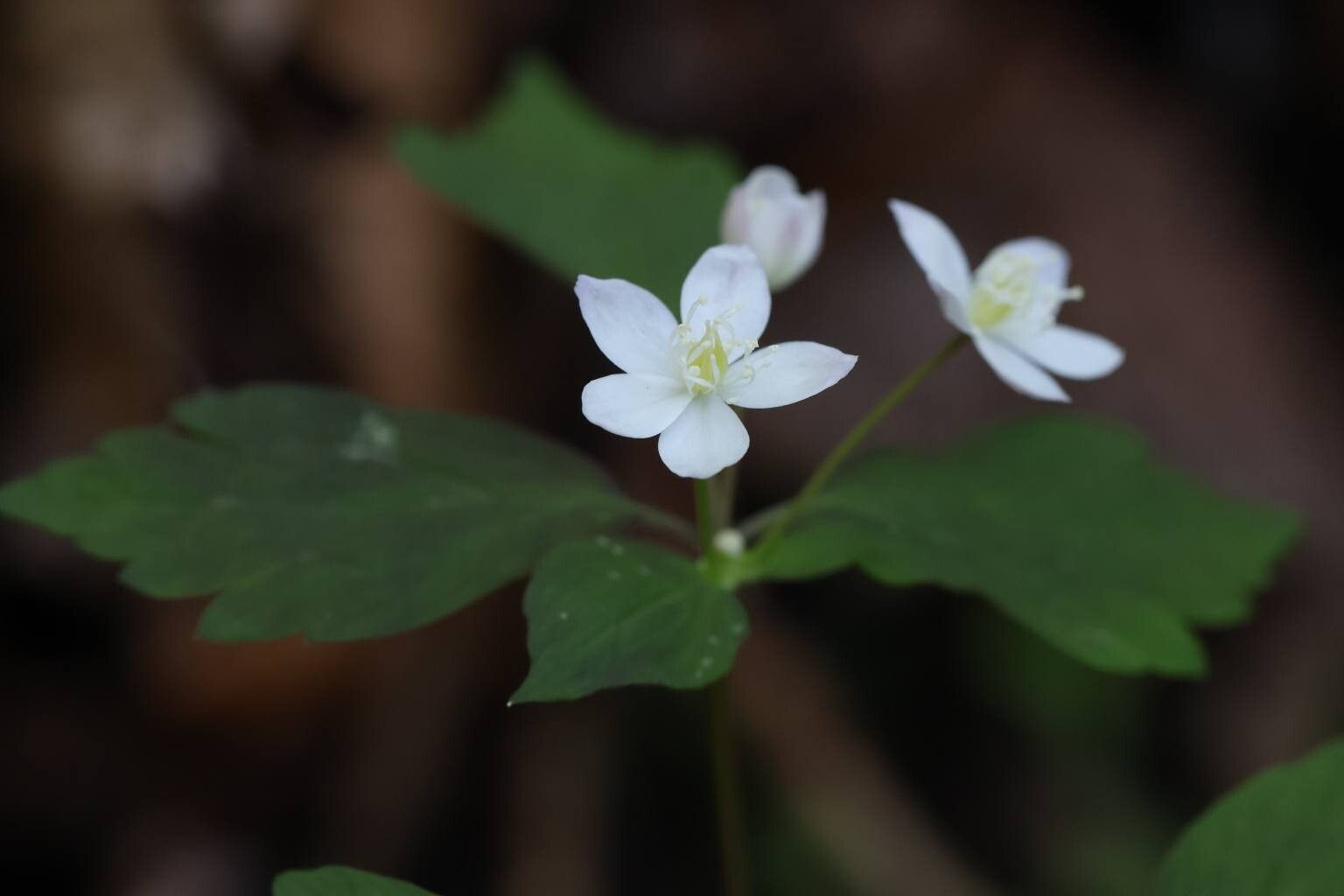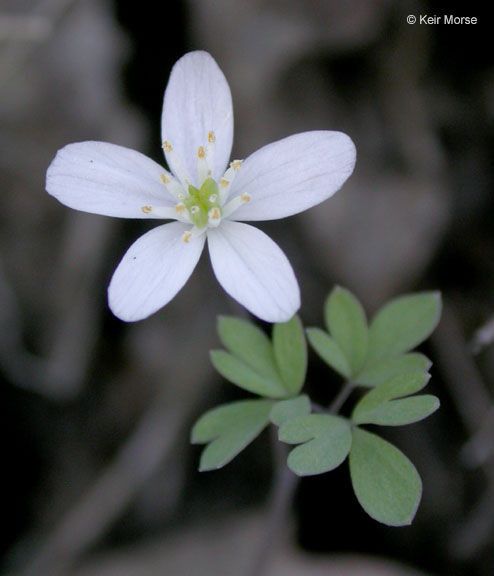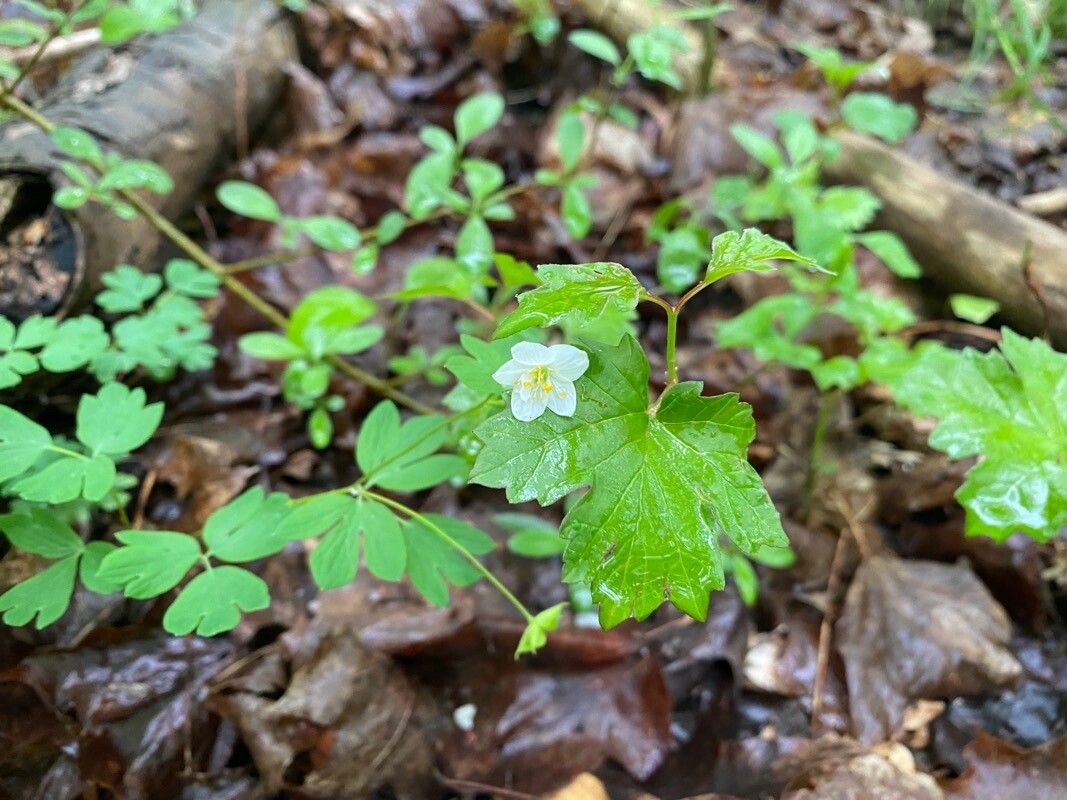
Enemion biternatum (syn. Isopyrum biternatum), commonly known as the false rue-anemone, is a spring ephemeral native to moist deciduous woodland in the eastern United States and extreme southern Ontario.
Eastern false rue anemone is fairly disease-resistant and typically does not suffer from many illnesses. Still, it can be vulnerable to pests and diseases present in its environment. Such infections are generally minor. Regarding care, this plant needs a moderate level of attention. Regular pruning is necessary to keep it looking good and to support healthy growth. Applying fertilizer can also encourage blooming. Eastern false rue anemone is appropriate for anyone who has outdoor space, like a garden or patio, and does not demand extensive plant-care experience. It may need more attention if cultivated indoors.
How to keep Enemion Biternatum.
Light
Eastern false rue anemone grows best with some sunlight and can tolerate conditions of no light. Native to rich woodlands with filtered or dappled light, it becomes stunted if given either too much or too little sun. Its light requirements do not change with its growth stage.
Water
The eastern false rue anemone, which comes from deciduous forests, thrives in environments with consistent moisture and prefers soil that is kept evenly moist. Water the plant every 1 to 2 weeks, and apply mulch to help retain moisture and mimic the leaf litter found in its natural habitat.
Temperature
Eastern false rue anemone is native to regions with a temperate climate, preferring temperatures between 32 and 90°F (0 to 32°C). Seasonal changes in temperature may be necessary for this plant to thrive.
Fertilizer
For Eastern false rue anemone, the primary time to fertilize is in early spring when the flowers are beginning to form. The appropriate fertilizer promotes better blooms and helps Eastern false rue anemone produce attractive flowers. Fertilizing in early spring ensures strong flowers throughout the season and provides energy for dormant growth phases.
Pruning
The Eastern false rue anemone is a delicate perennial plant known for its white, cup-shaped flowers and finely divided leaves. To care for this plant, prune it in early to late spring after the last frost. Remove any dead stems, but avoid heavy pruning to preserve its airy appearance. Be sure to use clean, sharp tools for accurate trimming.
Botanical profile.
- Plant Type
- Herb
- Life Cycle
- Perennial
- Genus
- Enemion
- Family
- Ranunculaceae
- Hardiness Zone
- 3-8
- Mature Height
- 30 cm to 91 cm
- Mature Spread
- 15 cm
- Leaf Color
- Green, Dark Green
- Leaf Type
- Deciduous
- Flower Color
- White
- Flower Size
- 2.54 cm
- Bloom Time
- Early spring, Mid spring
- Planting Time
- Spring
- Harvest Time
- Late spring, Early summer
Other names.
Reader questions.
What are the sunlight requirements for Eastern false rue anemone?
The Eastern false rue anemone requires partial sun, entailing about 3 to 6 hours of sunlight daily. Observing how sunlight moves through your garden can help you choose spots that offer a balance of light and shade, ensuring the well-being of your plants. This plant originates from rich woodland settings where it thrives under filtered sunlight. Exposing it to too much sunlight or keeping it in full shade can inhibit its growth. It's crucial to monitor the light conditions and adjust the plant's location as needed to meet its sunlight requirements.
What climate conditions are essential for Eastern false rue anemone to thrive?
Eastern false rue anemone, botanically known as Enemion biternatum, thrives in moderate climates, with optimal temperatures ranging from 32 to 90°F (0 to 32°C). This plant requires seasonal temperature adjustments to flourish. It possesses a strong resistance to cold, reducing the need for special frost protection measures over the winter. However, in extremely low temperatures below the plant's growth limit, it's crucial to provide additional cold protection by covering it with soil or straw. It's also advisable to water the plant abundantly before the first freeze in autumn to ensure the soil remains moist and enters a frozen state, thereby mitigating drought and water scarcity during the colder months and early spring.
How can I use artificial lighting for my indoor Eastern false rue anemone plants?
Indoor Eastern false rue anemone plants can benefit from artificial lighting, particularly when natural sunlight is insufficient, such as in winter or less sunny locations. You should choose the appropriate type of artificial light, such as LED lights, which can be customized to provide specific wavelengths needed by your plants. Consider these guidelines: full sun plants require 30-50W/sq ft, partial sun plants need 20-30W/sq ft, and full shade plants need 10-20W/sq ft of artificial light. Place the light source 12-36 inches above the plant to mimic natural sunlight and keep it turned on for 8-12 hours per day, depending on the specific needs of your plant species.
How does Eastern false rue anemone handle low temperatures?
Eastern false rue anemone is well-adapted to cold environments, flourishing best in temperatures above its minimum suitable growth threshold. Throughout the winter, it's essential to maintain temperatures above its tolerable growing minimum. Falling below this limit, particularly during winter, doesn't typically result in noticeable changes immediately. However, it may lead to a reduced sprouting rate or even a complete lack of sprouting as spring arrives. The recommended solution for any parts of the plant that fail to sprout in spring is simple removal.
What are the signs of insufficient light in Eastern false rue anemone?
Insufficient light in Eastern false rue anemone leads to several symptoms, including smaller new leaves, leggy or sparse growth, faster leaf drop, and slower or halted new growth. These conditions result in a thin, stretched-out appearance, and the plant may look weak. Leaves may also show lighter colors, or chlorosis, a condition where leaves lose their green color and turn yellow, indicating a lack of chlorophyll and essential nutrients. Excessive sunlight can cause sunscald, leaf curling, wilting, and leaf scorching, leading to damage on the plant tissues. Monitoring these symptoms can help in adjusting the plant's exposure to light.
What should I do if my Eastern false rue anemone is exposed to high temperatures?
During the summer, it's important to ensure that the Eastern false rue anemone remains below its maximum suitable growing temperature. Exposure to temperatures above its tolerable growing maximum can cause the leaves to lighten in color, become prone to curling, and susceptible to sunburn. In extreme cases, this may lead to the plant wilting and drying out entirely. To mitigate these issues, trim away any sunburned or dried parts of the plant. Moving the plant to a shaded location, or using a shade cloth to protect it during the midday and afternoon sun, can be beneficial. Ensuring the soil stays moist through watering in the morning and evening is also critical.
How can I adjust the lighting conditions for my Eastern false rue anemone?
To optimize growth for an Eastern false rue anemone, gradually shift the plant to sunnier spots each week until it receives the recommended 3-6 hours of direct sunlight daily, allowing for gradual adaptation. For indoor plants that are large or not easily movable, consider using artificial light. Keeping a desk or ceiling lamp on for at least 8 hours daily, or investing in professional plant grow lights, can provide ample light. Outdoors, move your plants gradually to sunnier locations to avoid sunburn. Minimizing obstructions, such as pruning tree branches, and transplanting smaller plants to locations with ample sunlight and good drainage during their dormant period can also improve light exposure. Note that parts of the plant affected by insufficient sunlight may not recover, but new growth after increasing light exposure will be healthy.