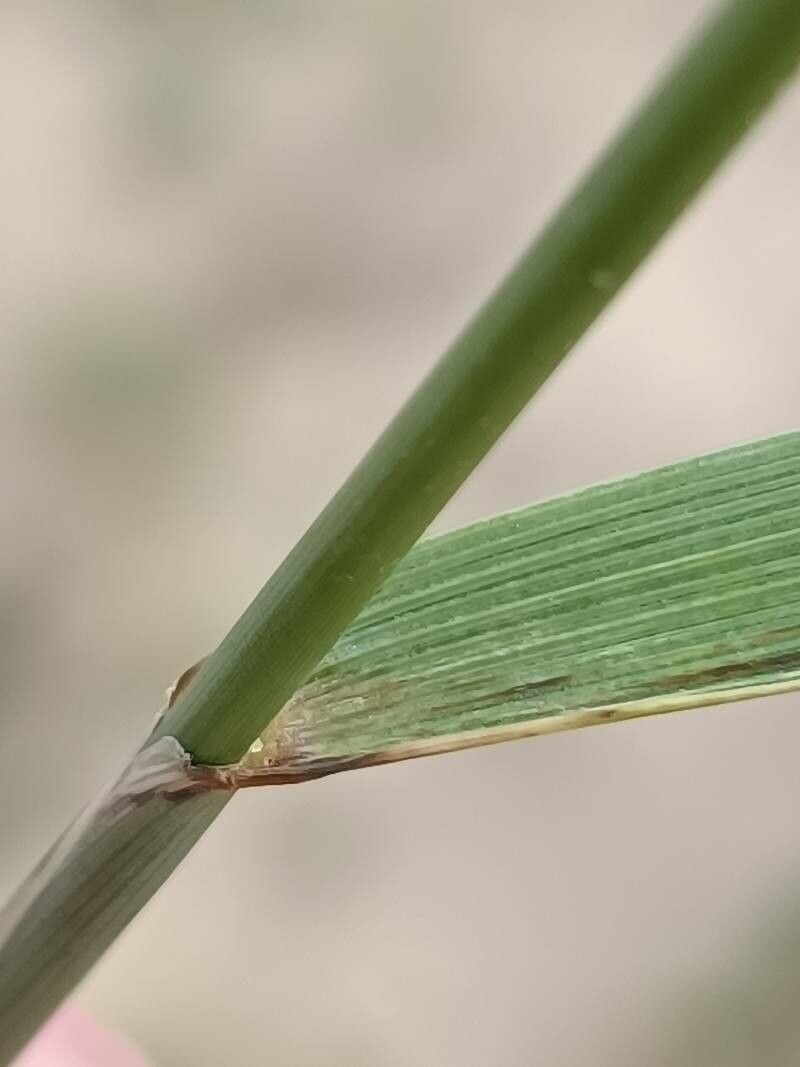
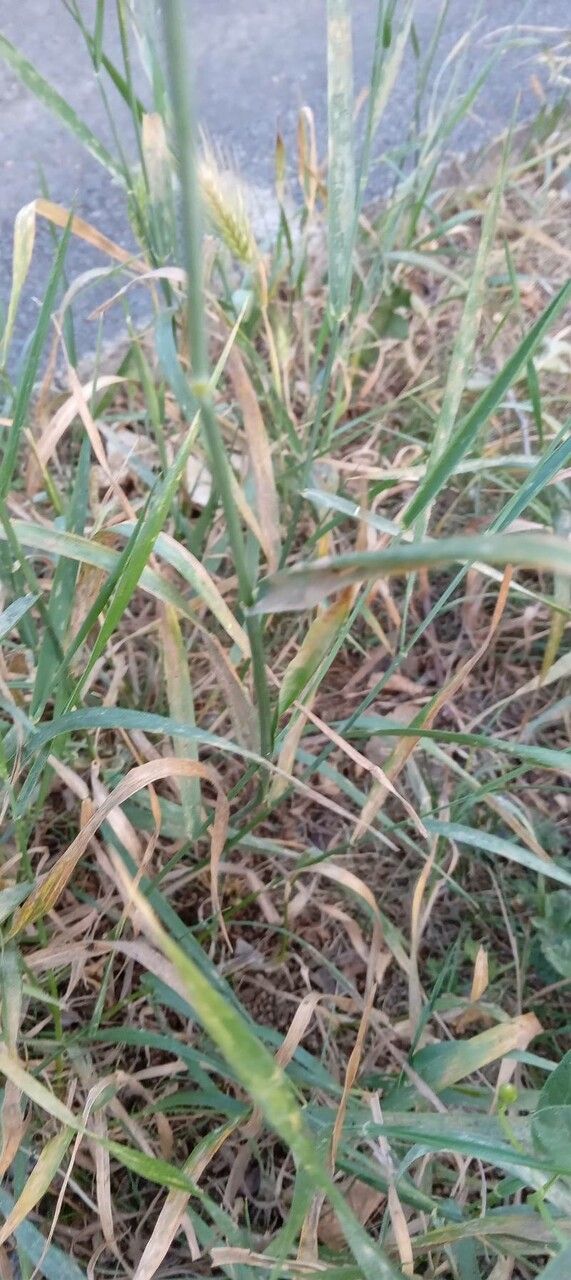
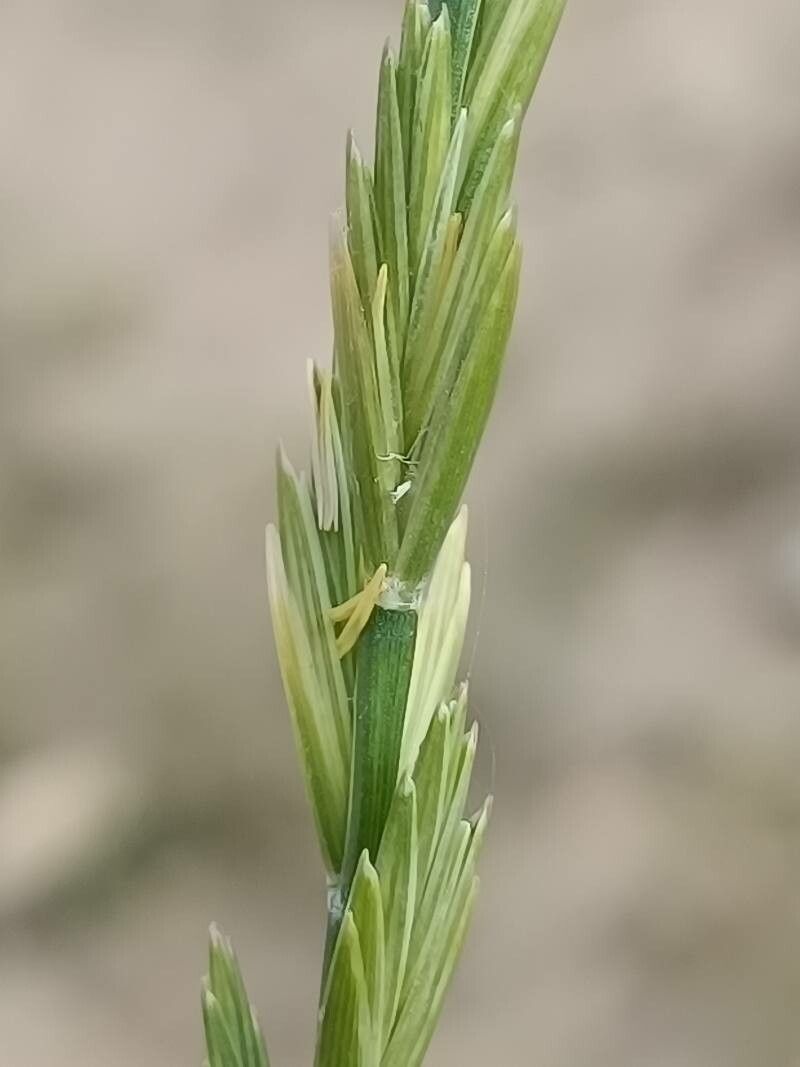
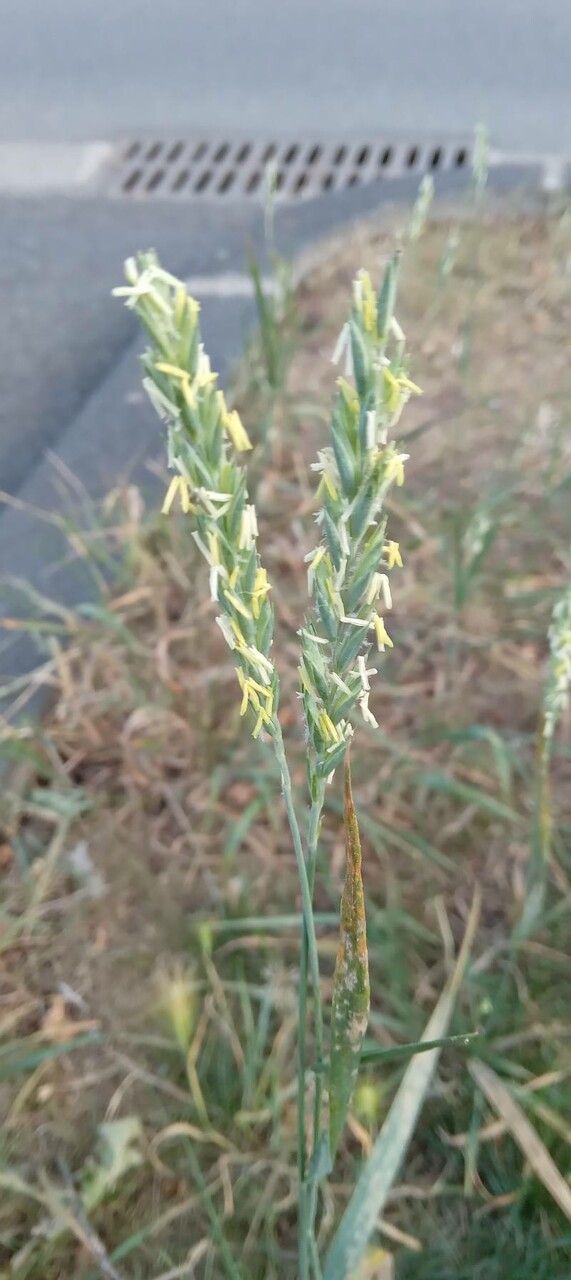
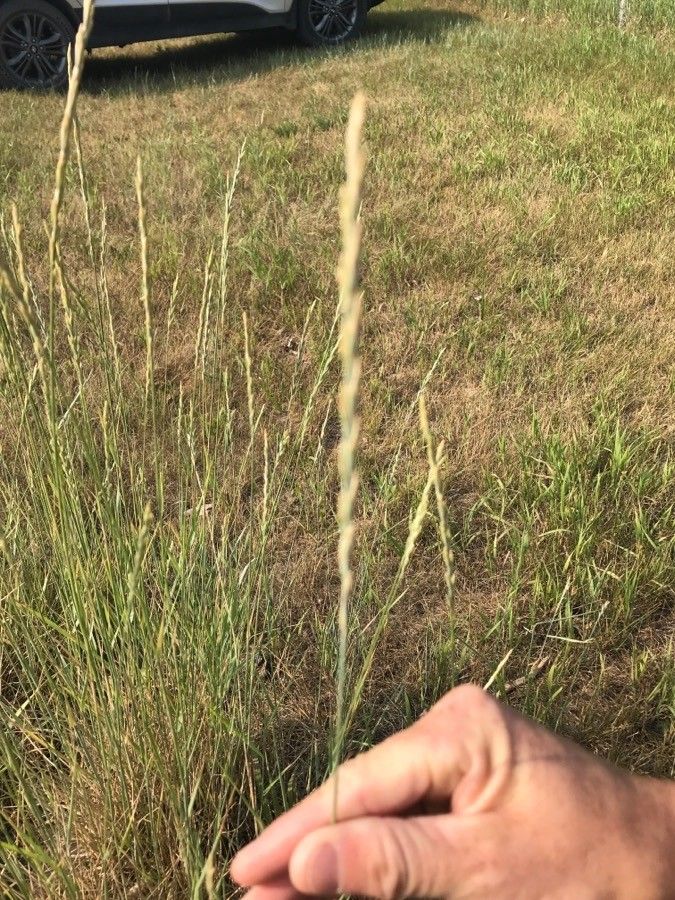
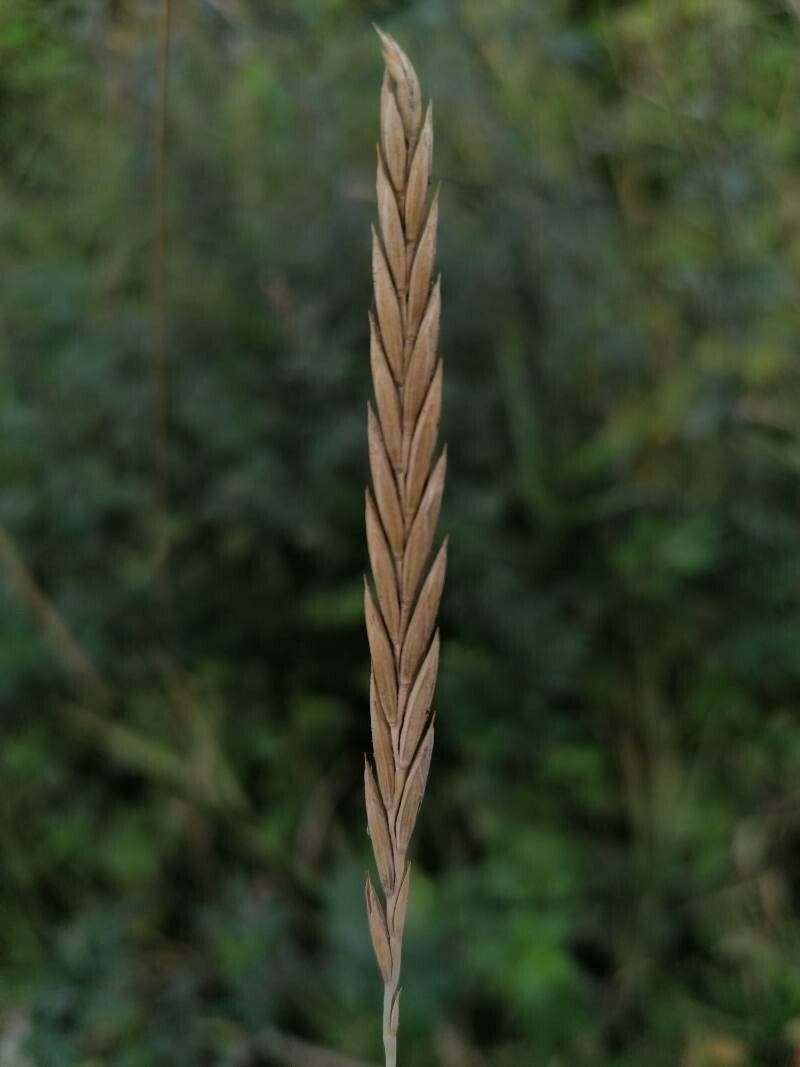
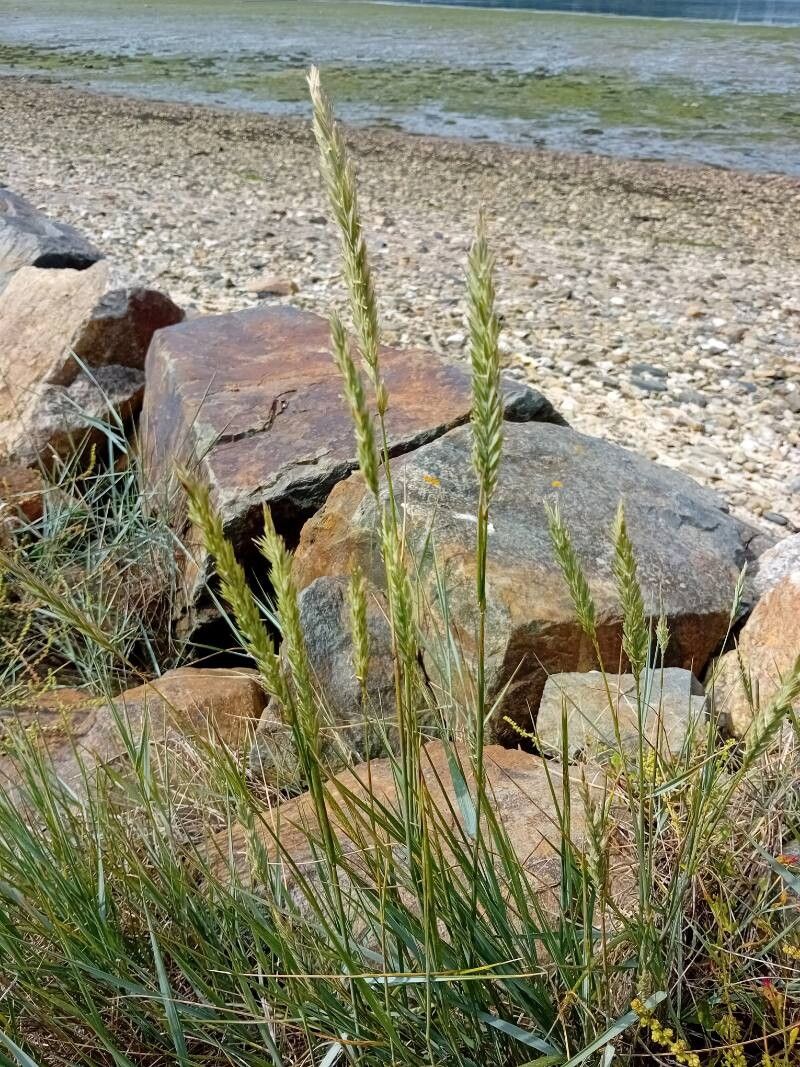
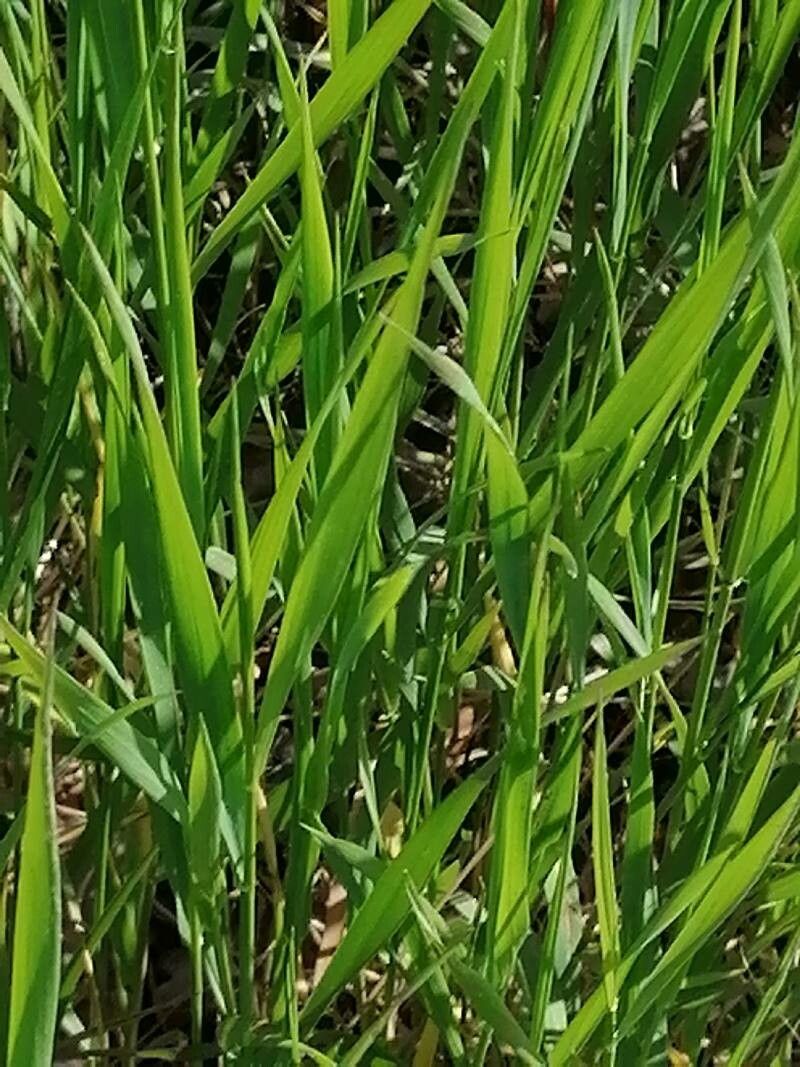
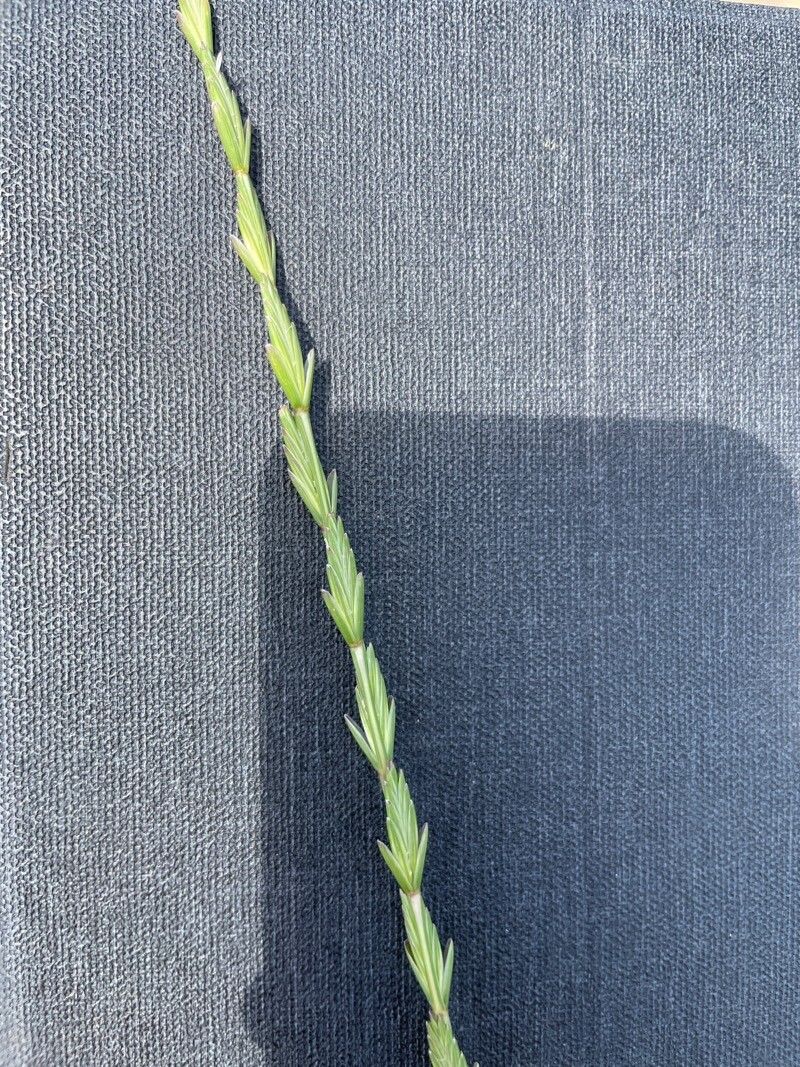
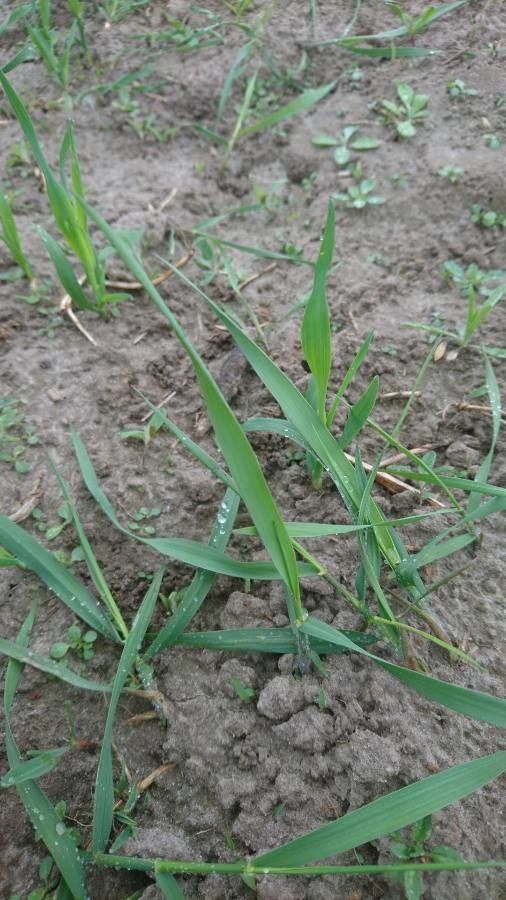
Elytrigia repens, commonly known as couch grass or quackgrass, is a perennial grass species within the Poaceae family. Native to Europe and Asia, it has been introduced and naturalized in many regions globally. This plant is characterized by a creeping rhizome system that enables rapid spread and the formation of dense vegetation mats. Couch grass can grow up to 1 meter tall, featuring long, narrow leaves that are rough on both sides. The flowers are arranged in spikelets on tall stems that emerge from the plant's base, blooming from May to August. This plant thrives in disturbed areas such as roadsides, fields, gardens, and waste sites, where its aggressive growth habit allows it to outcompete other vegetation. It is also commonly found along riverbanks and in other wet areas. Historically, couch grass has been used medicinally for its anti-inflammatory properties, which are beneficial in treating conditions like arthritis and gout. However, it is also considered an invasive species due to its rapid spread and competitive advantage over native plants. Overall, Elytrigia repens is a fascinating yet problematic species. While it offers medicinal benefits, it poses significant ecological challenges when introduced into environments outside its natural range.
Quack grass is resistant to many diseases and usually does not fall victim to them. Regarding care, this plant is fairly low-maintenance. When grown outside it needs little watering, and bigger plants typically do not have to be pruned. Smaller plants, however, should be pruned after they finish flowering. Quack grasst is suitable for anyone with an outdoor area, like a garden or deck, and does not need extensive care experience.
How to keep Elytrigia Repens.
Light
Quack grass grows best when it gets plentiful sunlight each day, though it can tolerate situations with lower light levels. Sunlight promotes its vigorous growth. This tendency may be explained by an inherited trait from its native habitat. Too much or too little light can hinder optimal growth.
Temperature
Quack grass does well in temperatures of 41 to 90°F (5 to 32℃) and prefers conditions similar to its native habitat. It can handle seasonal temperature changes, but avoid extremes for optimal growth.
Fertilizer
Quack grass needs extra nutrients to encourage healthy new growth. In spring, spreading compost around the plant’s base can effectively supply the nutrition it requires. Fertilizing supports vigorous growth and helps the plant resist diseases and pests.
Botanical profile.
- Plant Type
- Grass
- Life Cycle
- Perennial
- Genus
- Elytrigia
- Family
- Poaceae
- Hardiness Zone
- 4-8
- Mature Height
- 0.52 m to 1.07 m
- Mature Spread
- 91 cm
- Leaf Color
- Green
- Leaf Type
- Deciduous
- Flower Color
- Green, Yellow
- Flower Size
- 0.76 cm to 1.52 cm
- Bloom Time
- Early summer, Mid summer
- Planting Time
- Spring, Summer
- Harvest Time
- Mid summer, Late summer
Other names.