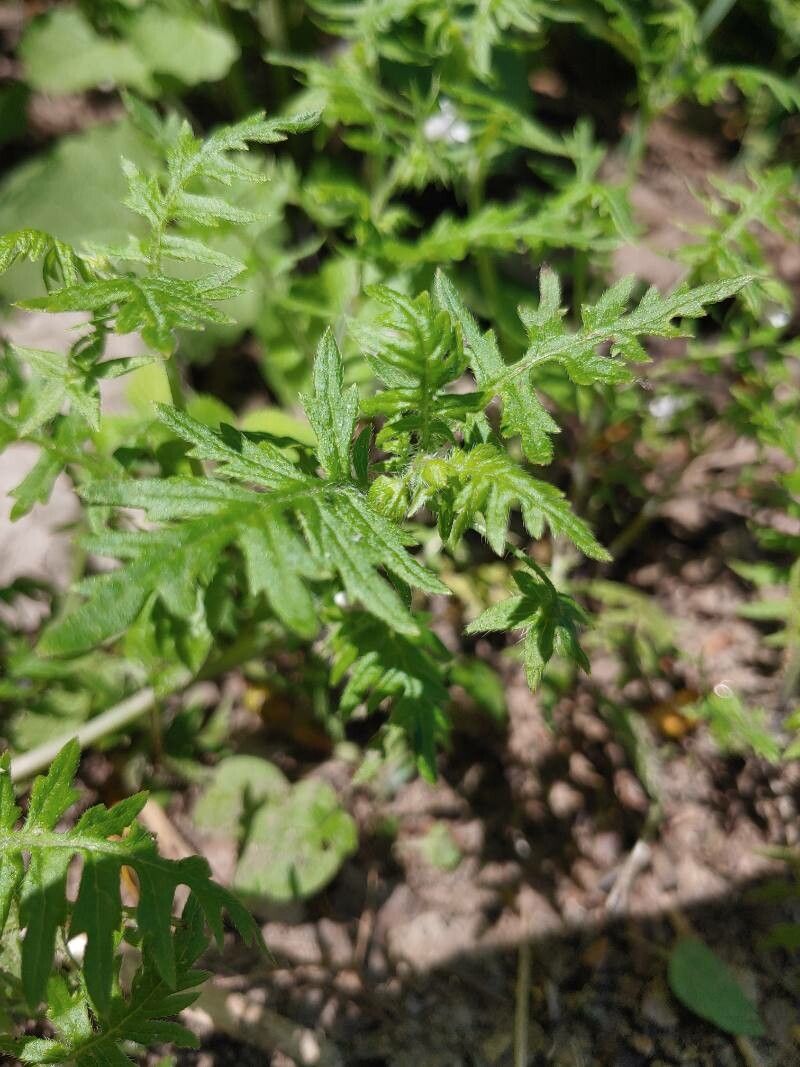
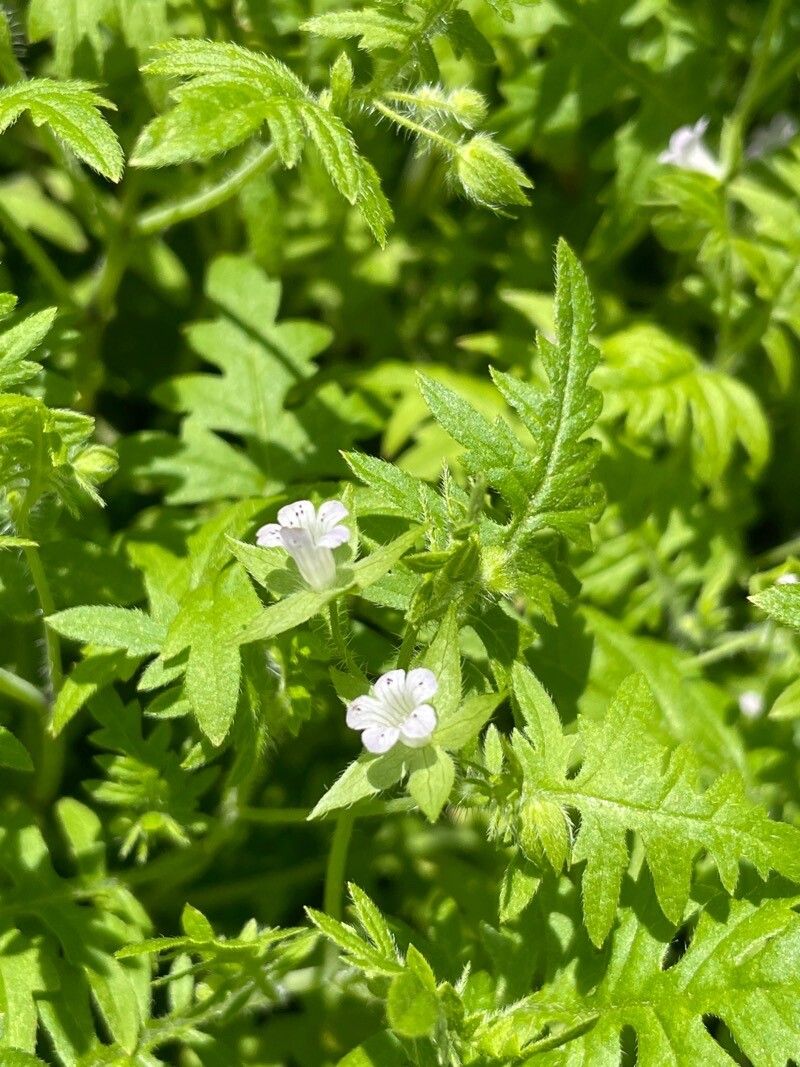
Ellisia is a genus of flowering plants in the forget-me-not family (Boraginaceae), containing the sole species Ellisia nyctelea. It is native to North America, where it is also known as Aunt Lucy, false baby blue eyes, and waterpod. The genus was named in honor of British naturalist John Ellis, a contemporary of, and correspondent to, Carl Linnaeus. It was published and described by Linnaeus, in his book Species Plantarum ed.2 on page 1662 in 1763.
Aunt lucy has strong resistance to disease and is generally unlikely to suffer from illnesses. However, it can be vulnerable to pests and diseases present in its environment. These infections are usually mild. Regarding care, this plant requires moderate maintenance. It should be pruned regularly to keep a good appearance and support healthy growth. Fertilizing can also encourage flowering. Aunt lucy is appropriate for anyone with outdoor space, such as a garden or patio, and does not need extensive care experience. It may need more attention when cultivated indoors.
How to keep Ellisia Nyctelea.
Light
Aunt lucy comes from bright, open environments and flourishes in full sun. It can tolerate partial sun but prefers direct sunlight for optimal growth. This annual and biennial plant is recognized for its sun-loving nature.
Water
Aunt Lucy thrives in consistently moist environments, requiring evenly moist soil and weekly watering. Transitioning between watering sessions helps maintain optimal hydration. Typically grown indoors, Aunt Lucy prefers indirect sunlight in well-lit areas to achieve the right balance of moisture and light for its health.
Temperature
Aunt lucy originates from areas with mild temperatures. It prefers a temperature range of 68 to 95 °F (20 to 35 °C). Seasonal adjustments may be necessary to maintain that temperature, ensuring optimal growth.
Fertilizer
Aunt lucy benefits from regular, diluted applications of fertilizer to encourage healthy leaf development. You should fertilize Aunt lucy roughly once a month throughout the summer. Nitrogen is important for foliage, and supplying nitrogen-rich sources helps Aunt lucy thrive.
Pruning
Aunt Lucy is a small annual herb featuring lobed leaves and tubular flowers. To promote growth, it's best to prune the plant in early spring. This involves removing dead foliage and thinning out overcrowded areas to improve air circulation. Using sharp tools to make clean cuts helps minimize plant stress, encourages blooming, and prevents disease.
Botanical profile.
- Plant Type
- Herb
- Life Cycle
- Annual
- Genus
- Ellisia
- Family
- Boraginaceae
- Hardiness Zone
- 4
- Mature Height
- 10 cm to 40 cm
- Mature Spread
- 30 cm
- Leaf Color
- Green, Light Green
- Leaf Type
- Semi-evergreen
- Flower Color
- White
- Flower Size
- 0.76 cm
- Bloom Time
- Late spring, Early summer
- Planting Time
- Spring, Summer
- Harvest Time
- Early summer, Mid summer
Other names.
Reader questions.
How should I water Aunt Lucy?
To water Aunt Lucy, there are a few different tools you can use, such as a garden hose with a spray nozzle or a watering can. Aunt Lucy is not too picky about the type of water it receives, so you can use rainwater, tap water, or filtered water. It's best to avoid watering this plant from above, as it can harm the leaves and flowers and potentially cause disease. Instead, a drip irrigation system is often recommended as it delivers water evenly and directly to the soil. For Aunt Lucy grown in a container, you can follow a similar watering method but adjust the tools you use. Simply use a cup, watering can, or tap water to directly water the soil.
How many hours of sunlight does Aunt Lucy need each day to grow healthy?
To ensure healthy growth and survival of the plants, it is important to provide them with 6 to 8 hours of sunlight every day. Ideally, they should receive more morning light, particularly during the summer season. Aunt Lucy, in particular, thrives when exposed to full sun and benefits from as much sunlight as possible. Increased light exposure enables these species to produce more food, display stunning blooms, and improve their overall chances of survival.
What is the best temperature for Aunt Lucy?
To help Aunt Lucy thrive, it's best to keep her in a temperature range of 65~75℉(18~25℃). Although she can tolerate higher and lower temperatures, it's ideal to stay within a few degrees of this range. If it's not possible to maintain this exact range, she will still continue to grow, but outside of it, her growth may slow down or be hindered. The upper range to avoid is 75~85℉(25~30℃) as Aunt Lucy prefers cooler environments. Temperatures exceeding 85℉(30℃) could even cause her to die. On the lower end, she can withstand temperatures as low as 5℉(-15℃).
What should I do if I give Aunt Lucy too much or too little water?
To help Aunt Lucy bounce back from underwatering, simply water her more frequently when you notice that she's dry. Preventing overwatering is crucial, as it can lead to serious problems if not caught in time. Overwatered Aunt Lucy can develop diseases that can cause her to decline and eventually die. To avoid this, select a sunny spot with well-drained soil to help dry out the excess water. If Aunt Lucy is in a pot and has been overwatered, consider repotting her in a container with better drainage or more suitable soil. When repotting, make sure to use loose soil and a pot that allows excess water to drain efficiently.
What kind of sunlight does Aunt Lucy need?
The Aunt Lucy plant thrives in full sunlight. To ensure even sun exposure, it's important not to overcrowd the plants. Avoid depriving the leaves of sunlight. If planting in pots, prioritize placing herbaceous flowers in windows with direct sun and ensure they get full sunlight throughout the year. Aunt Lucy plants do not do well in partial or filtered light, as this can lead to weak stems and unhealthy flowers. It is best to always keep Aunt Lucy plants exposed to the sun.
Does Aunt Lucy need different temperatures for different stages of growth?
To keep Aunt Lucy healthy, it's important to maintain a temperature range of 65~75℉(18~25℃) in the growing space. It's best to stay on the cooler side of this range, but be careful not to go below -5℉(-20℃) as extremely cold temperatures can affect Aunt Lucy's growth. While extremely hot temperatures have more severe consequences, excessively high temperatures during the budding stage could prevent Aunt Lucy from flowering.
How frequently do I need to water Aunt Lucy?
Aunt Lucy needs regular watering throughout the growing season. In the spring, water once per week. As the season progresses and it gets warmer, increase watering to two to three times per week. However, be careful not to overwater, as it can harm Aunt Lucy. Regardless of how often you water, make sure the soil remains moist but not wet. When watering Aunt Lucy in a pot, remember that the soil can dry out faster. Generally, water a potted Aunt Lucy a few times per week, compared to just once per week for an in-ground plant.
Can sunlight harm plants? How can we keep Aunt Lucy safe from sun and heat damage?
When the temperature goes above 90℉(32℃), it can harm Aunt Lucy plants, especially if they are under the sun for many hours. It's best to provide some shade in the afternoon during summer to protect them. Remember that summer sunlight is stronger and lasts 50% longer compared to winter sunlight. If Aunt Lucy is overly stressed by sunlight, make sure to keep them well-hydrated. Water them when the top 2 inches of soil are dry and consider bringing them indoors if it's too hot outside, especially if they are planted in containers. It's normal for the leaves to wilt during the day, but they usually recover at night. However, if Aunt Lucy's leaves are still droopy, it means the plant is losing water quickly and needs watering.
Here are three tips to help you control Aunt Lucy's temperature.
Here are some tips for growing Aunt Lucy plants indoors: Tip #1: Choose the coldest room of your home for Aunt Lucy - Find the room in your house that is less exposed to the harsh heat of the sun during the day. - Ensure that this room still receives a good amount of sunlight. - While avoiding the hottest part of the day, make sure Aunt Lucy gets some sunlight for healthy growth. Tip #2: Avoid excessive heat to prevent flowering issues - Aunt Lucy's growing season (spring and early summer) can sometimes come with high temperatures. - These temperature fluctuations can negatively affect Aunt Lucy's growth, causing buds to turn into non-flowering ones. - Maintain a temperature range of 65~75℉(18~25℃) to allow Aunt Lucy to flower properly. Tip #3: Protect Aunt Lucy from frost damage - Aunt Lucy can tolerate lower temperatures as low as -5℉(-20℃), but frost can be harmful. - In late fall or winter, be cautious of exposing Aunt Lucy to significant frost. - Signs of frost damage include wilting, discoloration, and eventually browning or blackening of affected parts. - If any parts turn these colors, they cannot be saved and should be pruned to keep the plant alive.
How much water does Aunt Lucy need?
Determining how much water to give to your Aunt Lucy can be done in a few different ways. Some gardeners prefer to assess the moisture in the soil by feeling it, and suggest watering until the first six inches of soil feel moist. Another approach is to use a specific measurement, such as giving Aunt Lucy approximately two gallons of water per week, adjusted for temperature and soil dryness. However, following strict guidelines like this can result in overwatering if your plant needs less water. If you are growing Aunt Lucy in a container, you'll need to use a different method. In this case, you should water until all layers of dry soil are moistened, which can be tested by inserting a finger into the soil. Alternatively, watering until you observe a slight trickle of excess water emerging from the drainage holes of the pot also indicates proper hydration.
Should I make sure Aunt Lucy doesn't get too much sun?
The Aunt Lucy plant enjoys the sun and is actually heliotropic. To ensure their exposure to sunlight, it is recommended to plant them in south-facing gardens where they can be in the sun from morning to afternoon. However, it is important to note that some species of Aunt Lucy may suffer from sunburn, so it is advisable to protect them from the intense afternoon and midday sun by providing shade from a tree or a wall. Growing Aunt Lucy in shady areas is not possible as the larger flowers require a significant amount of energy to grow and produce. Therefore, it is essential to provide adequate lighting conditions by placing them in an area with full sun for optimal results.
Does Aunt Lucy require different temperatures for different seasons?
To maintain optimal growing conditions for your plants throughout the year, it is crucial to regulate the temperature of your growing area. If you reside in an area with harsh winters or very hot summers, it may be advisable to keep your plants indoors. By doing so, you can create a cool room where Aunt Lucy can thrive. However, if you do choose to keep your plants outside, it is essential to closely monitor the temperature. In regions with scorching summers, make sure the temperature does not exceed 85℉ (30℃) as this can quickly dehydrate and damage Aunt Lucy, leading to their eventual demise.