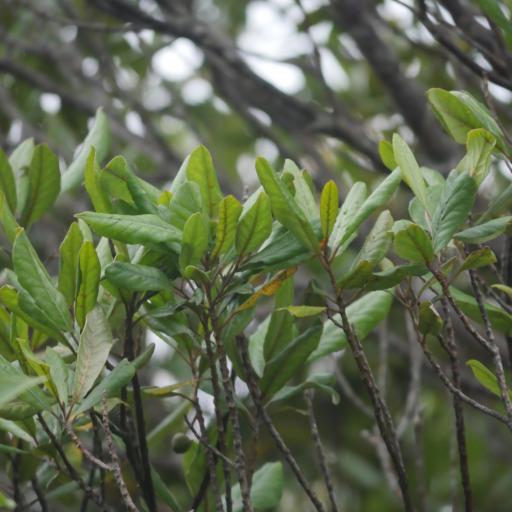
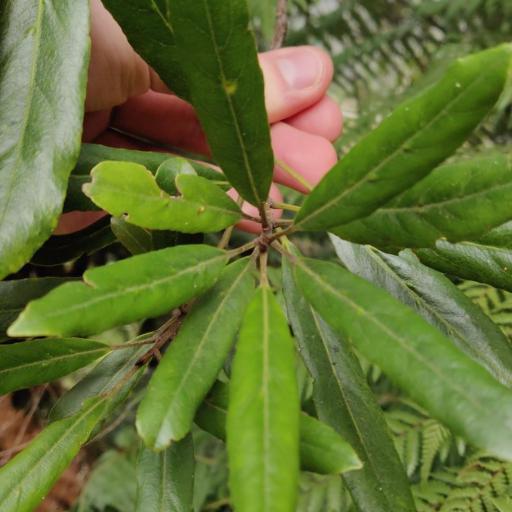
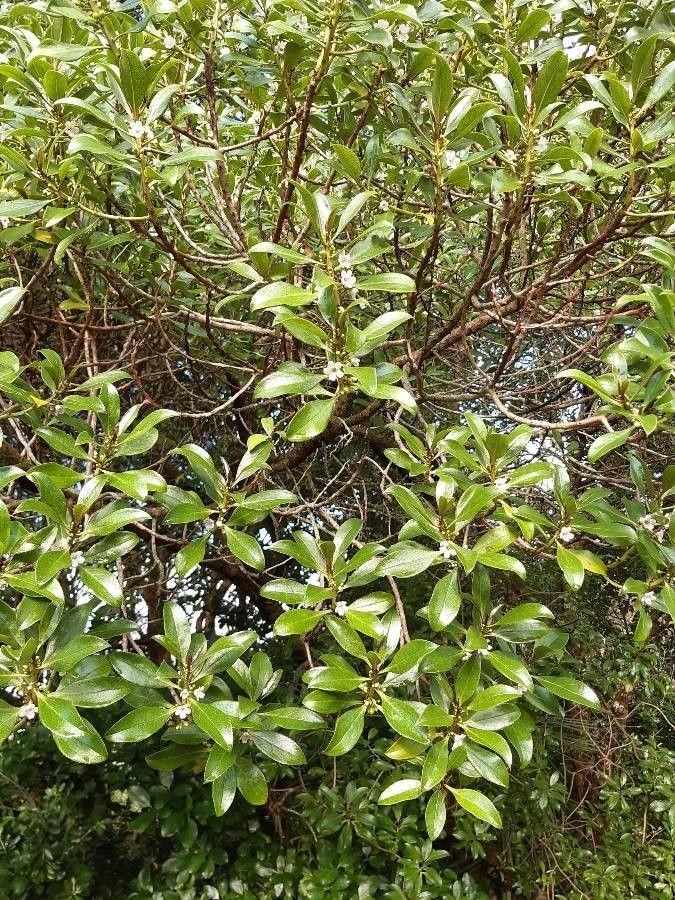
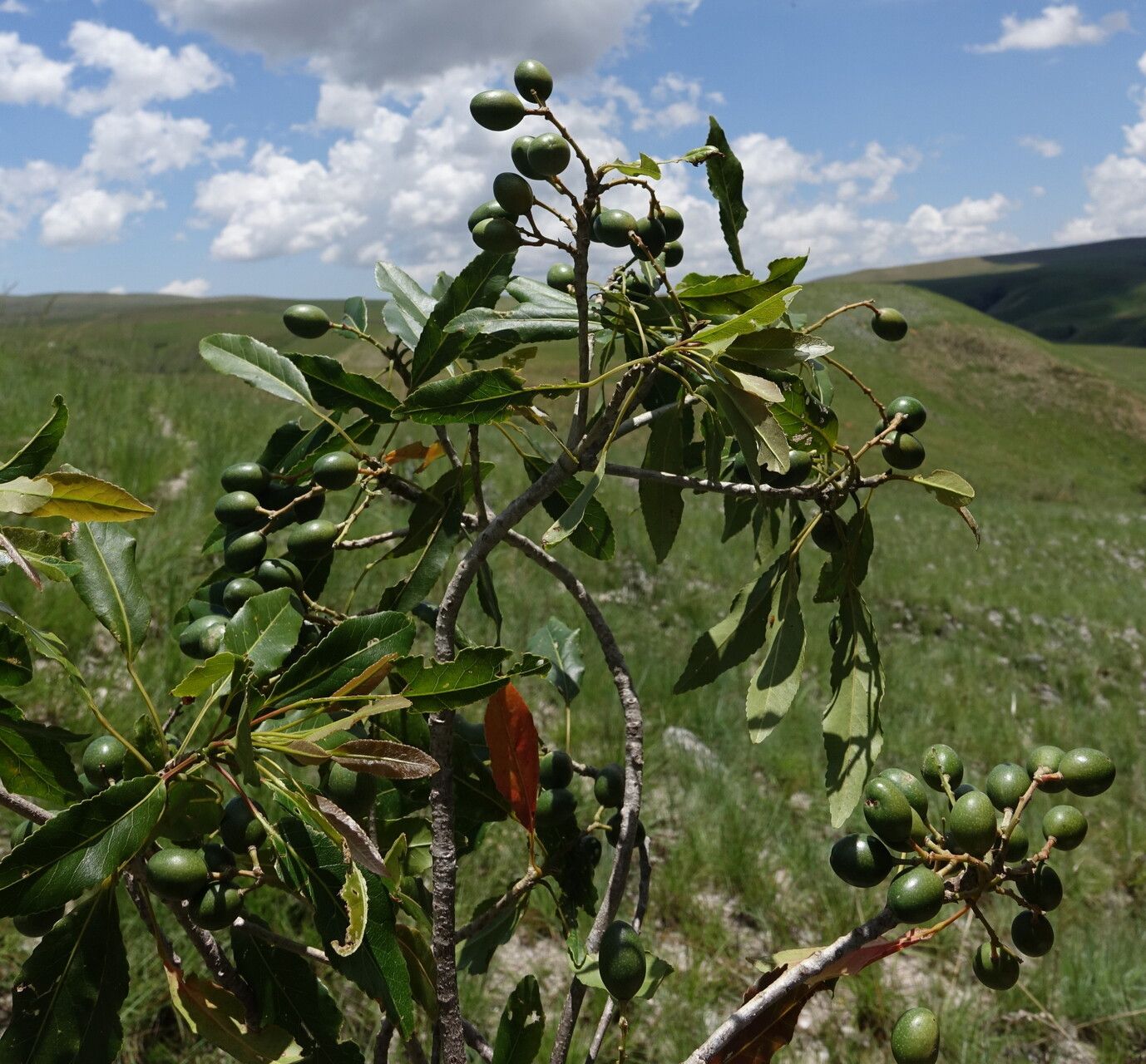
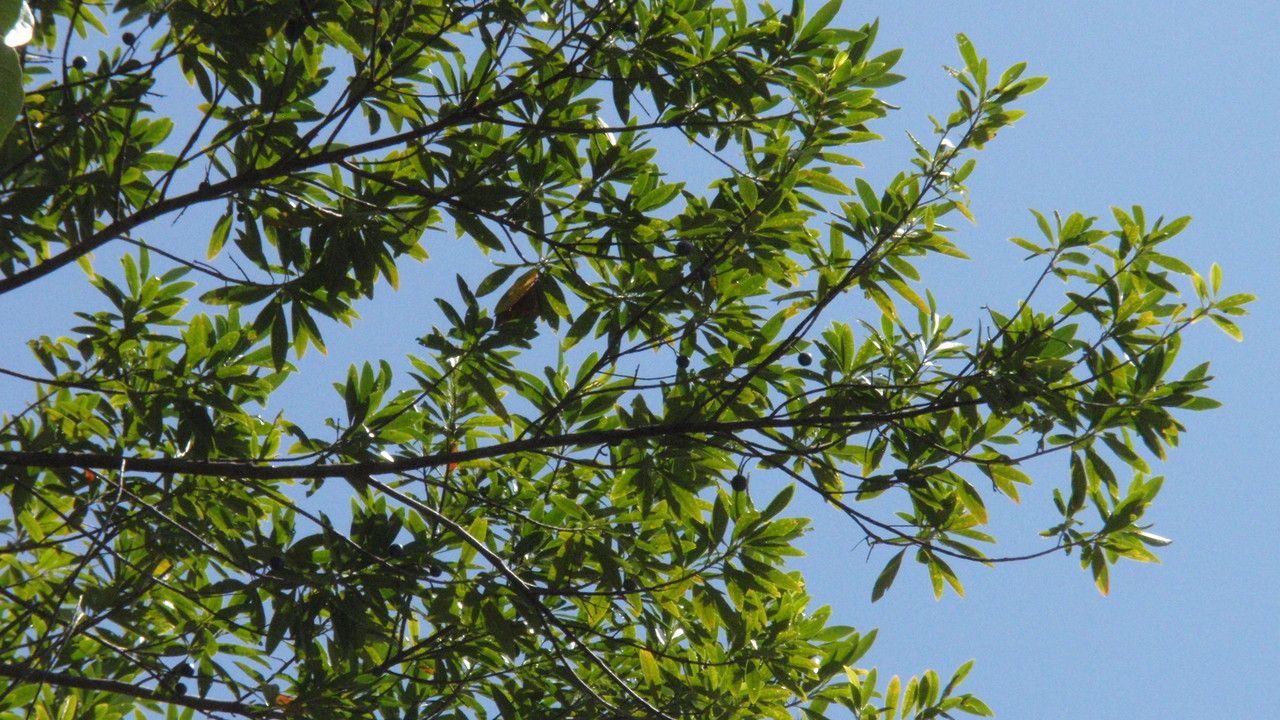
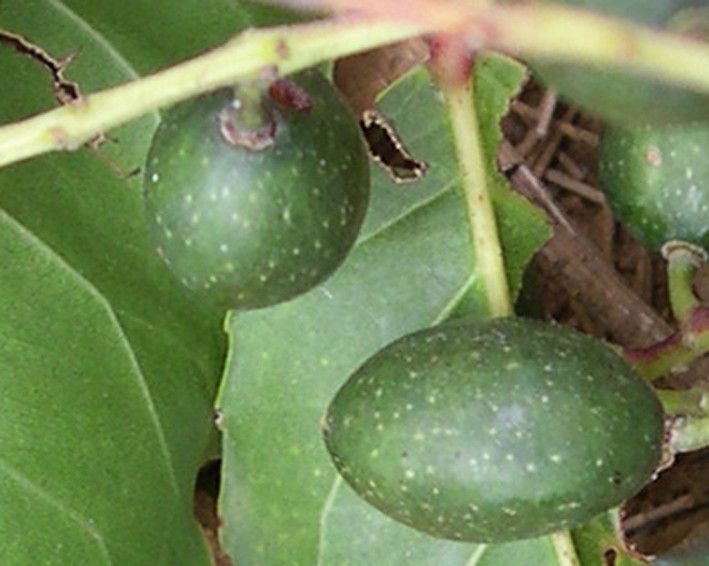
Elaeocarpus dentatus, commonly known as hinau (Maori: hīnau), is a native lowland forest tree of New Zealand. Other names in Māori for the tree are hangehange, pōkākā and whīnau. A member of the family Elaeocarpaceae, it is found on both the North and South Islands of New Zealand, but not on Stewart Island. The leaves are dark green, with a toothed edge. On the underside of the leaf small domatia are present. Clusters of small white flowers are produced in spring, and in late summer the flowers form into a fleshy fruit. It was officially first recorded for science by botanists Joseph Banks and Daniel Solander on 5 November 1769.
Hinau is highly resistant to disease and is usually not susceptible to illnesses. In terms of maintenance, this plant is fairly low-maintenance. When grown outdoors it needs only light watering, and larger specimens typically do not require pruning. Smaller plants, however, should be trimmed after they have finished blooming. Hinaut is well suited to anyone with an outdoor area, such as a garden or a deck, and does not demand extensive care experience.
How to keep Elaeocarpus Dentatus.
Light
Hinau needs a substantial amount of sunlight during the day. It can do well in places where sunlight isn't constant, but it grows best with abundant sun. Its original growing environment received plenty of sun exposure. If it gets either less or more than the right amount of sunshine, the plant can show stunted growth or develop health problems.
Temperature
Hinau is highly adaptable to a range of climatic conditions, from very hot summers to cold winters. Nevertheless, it has an optimal temperature range for growth. If temperatures become too high, the plant is vulnerable to heat and humidity stress, which can cause it to die. In areas where temperatures approach the lower limit of its cold tolerance, insulating measures should be taken to protect the plant.
Fertilizer
The timing of fertilizing hinau is important. Apply fertilizer in early spring and then monthly up to early summer. Fertilizer encourages attractive blooms and supplies energy during both dormant and active growth stages.
Botanical profile.
- Plant Type
- Tree
- Life Cycle
- Perennial
- Genus
- Elaeocarpus
- Family
- Elaeocarpaceae
- Hardiness Zone
- 9-11
- Mature Height
- 14.94 m to 20.12 m
- Mature Spread
- 4.88 m to 7.92 m
- Leaf Color
- Dark Green, Forest Green
- Leaf Type
- Evergreen
- Flower Color
- White
- Flower Size
- 0.76 cm to 1.02 cm
- Bloom Time
- Late fall, Early winter, Mid winter
- Planting Time
- Spring, Summer, Autumn
- Harvest Time
- Spring, Early summer
- Native Area
- New Zealand
Other names.