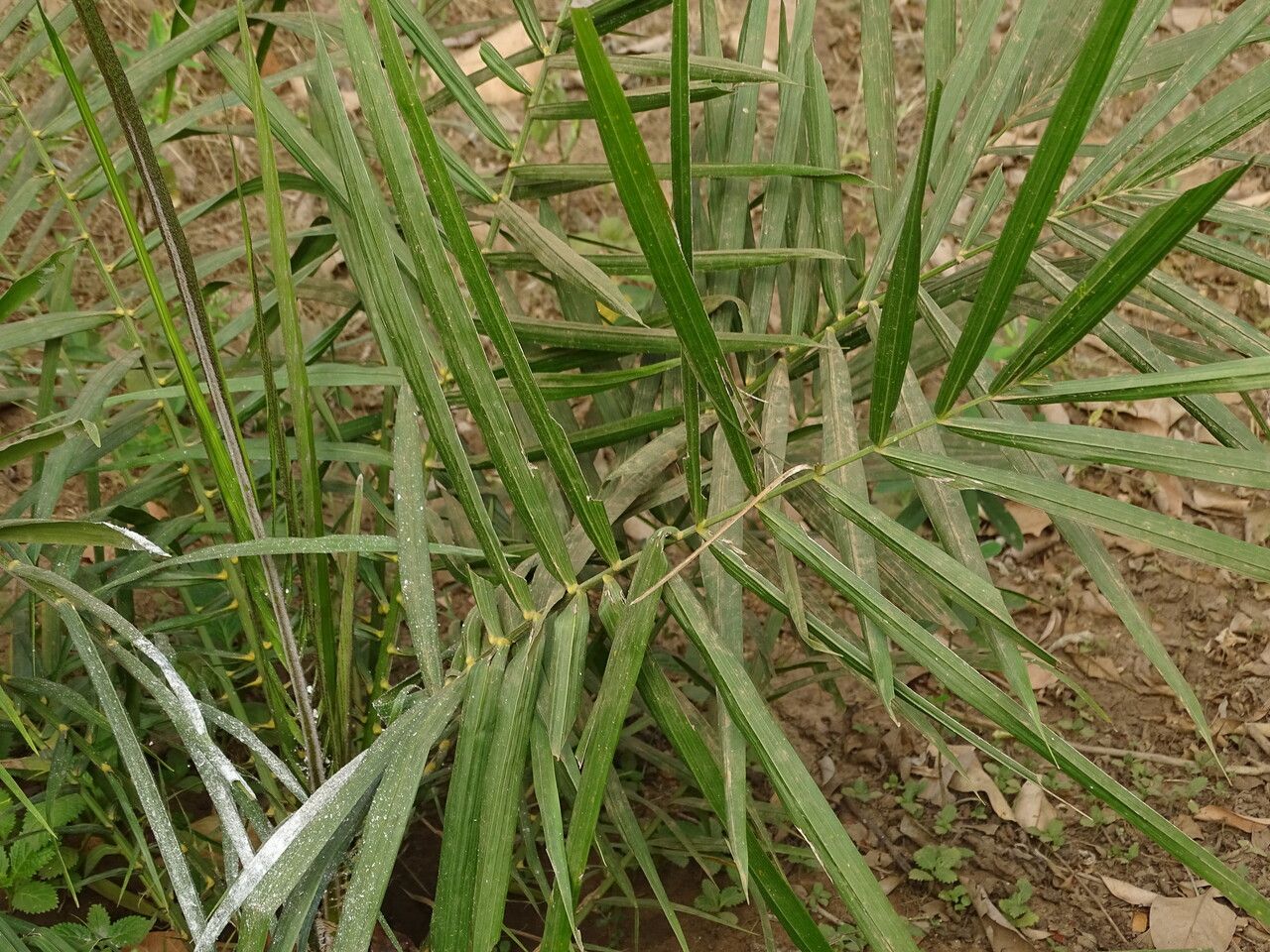
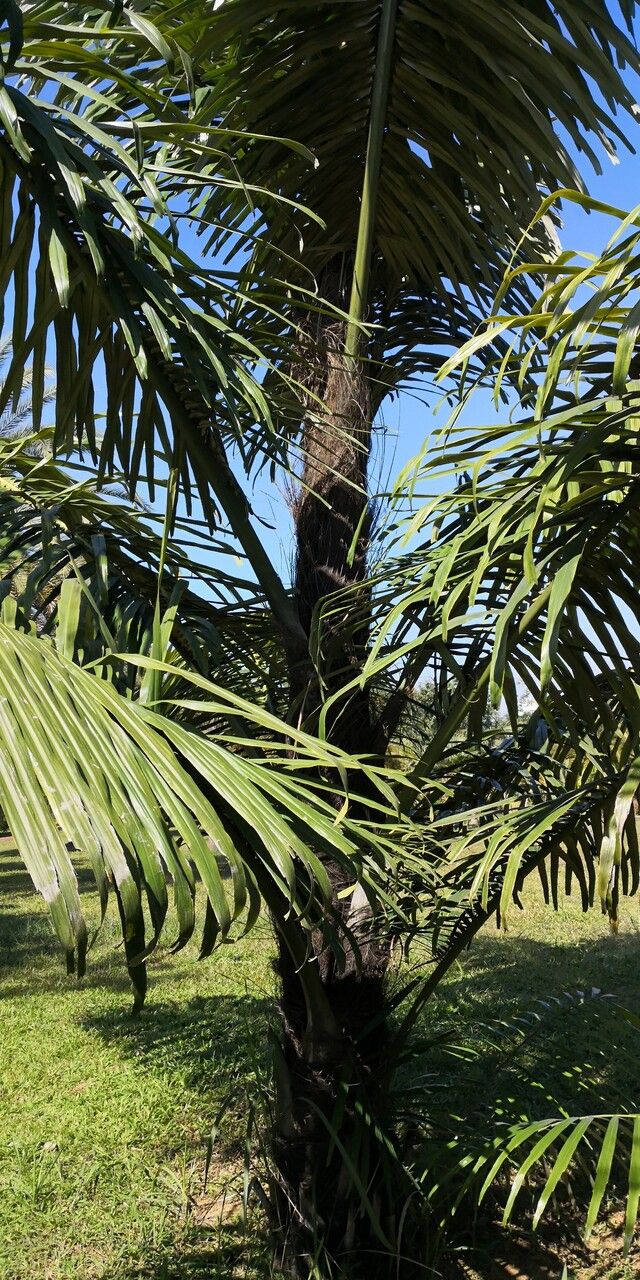
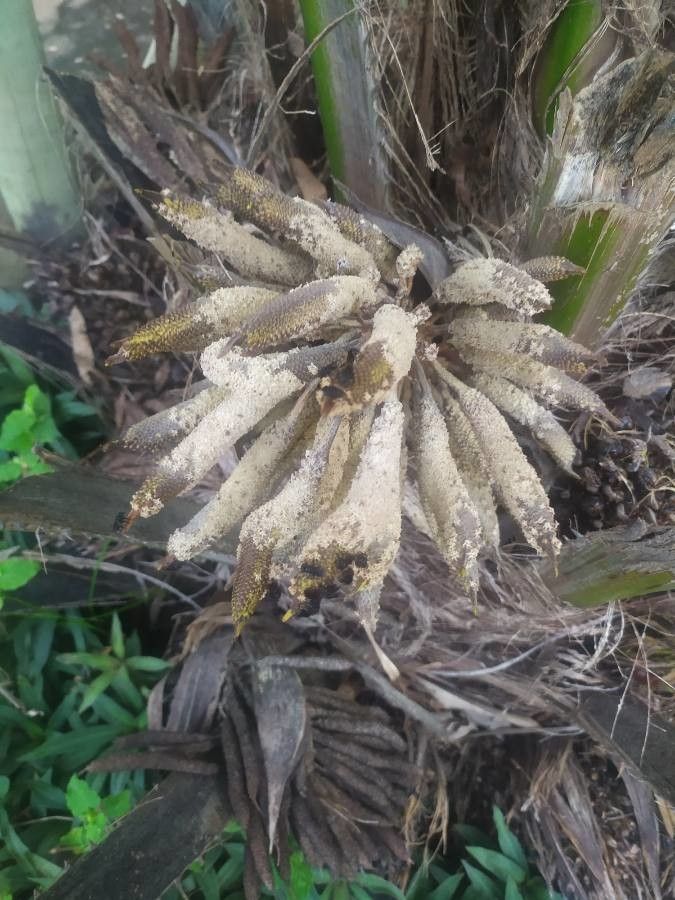
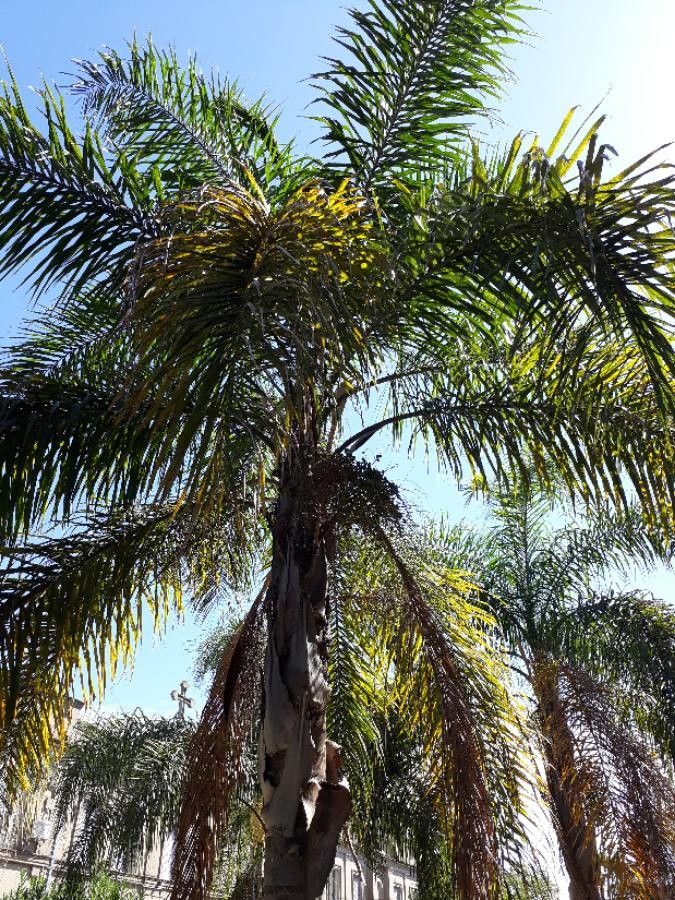
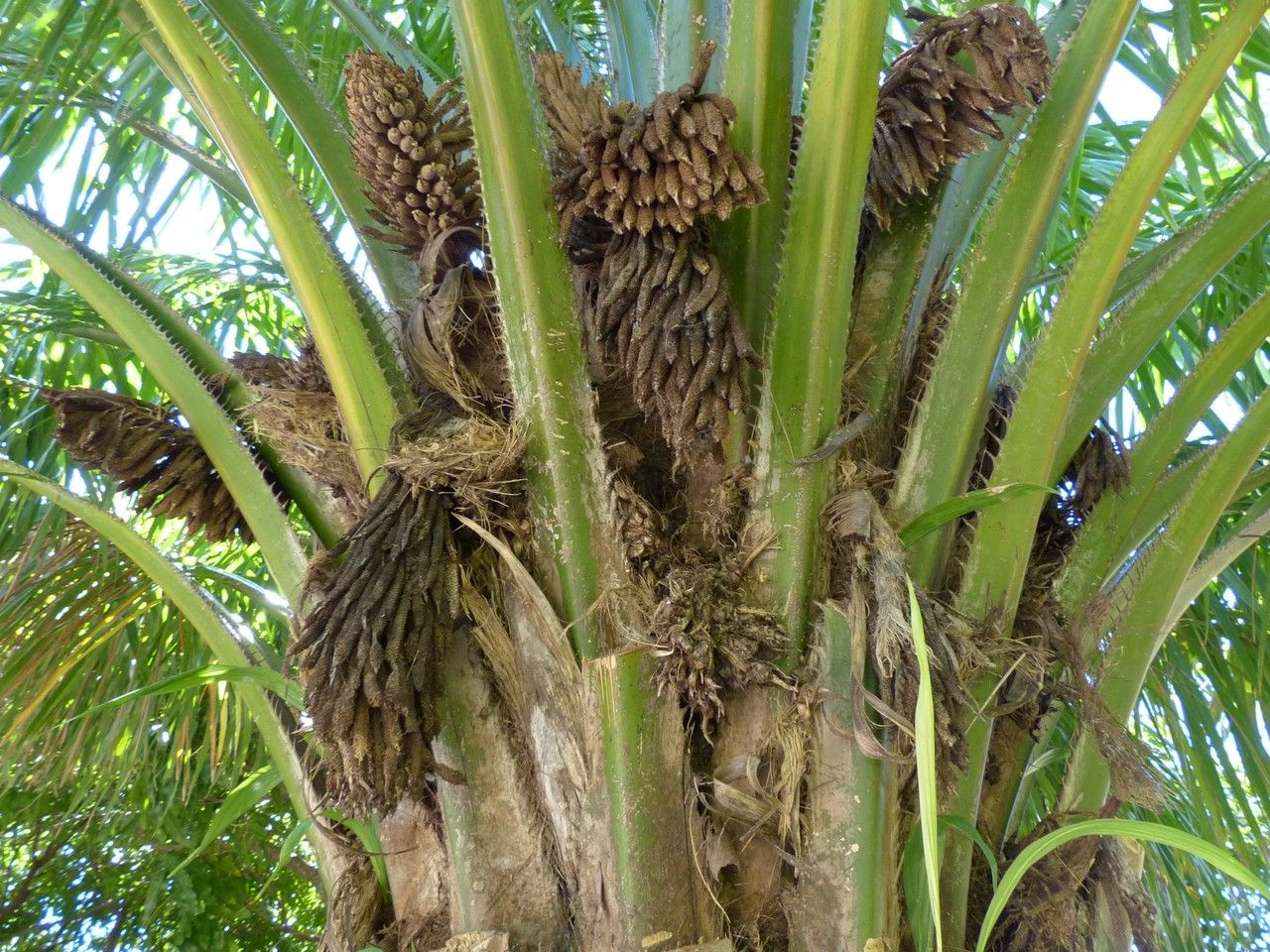
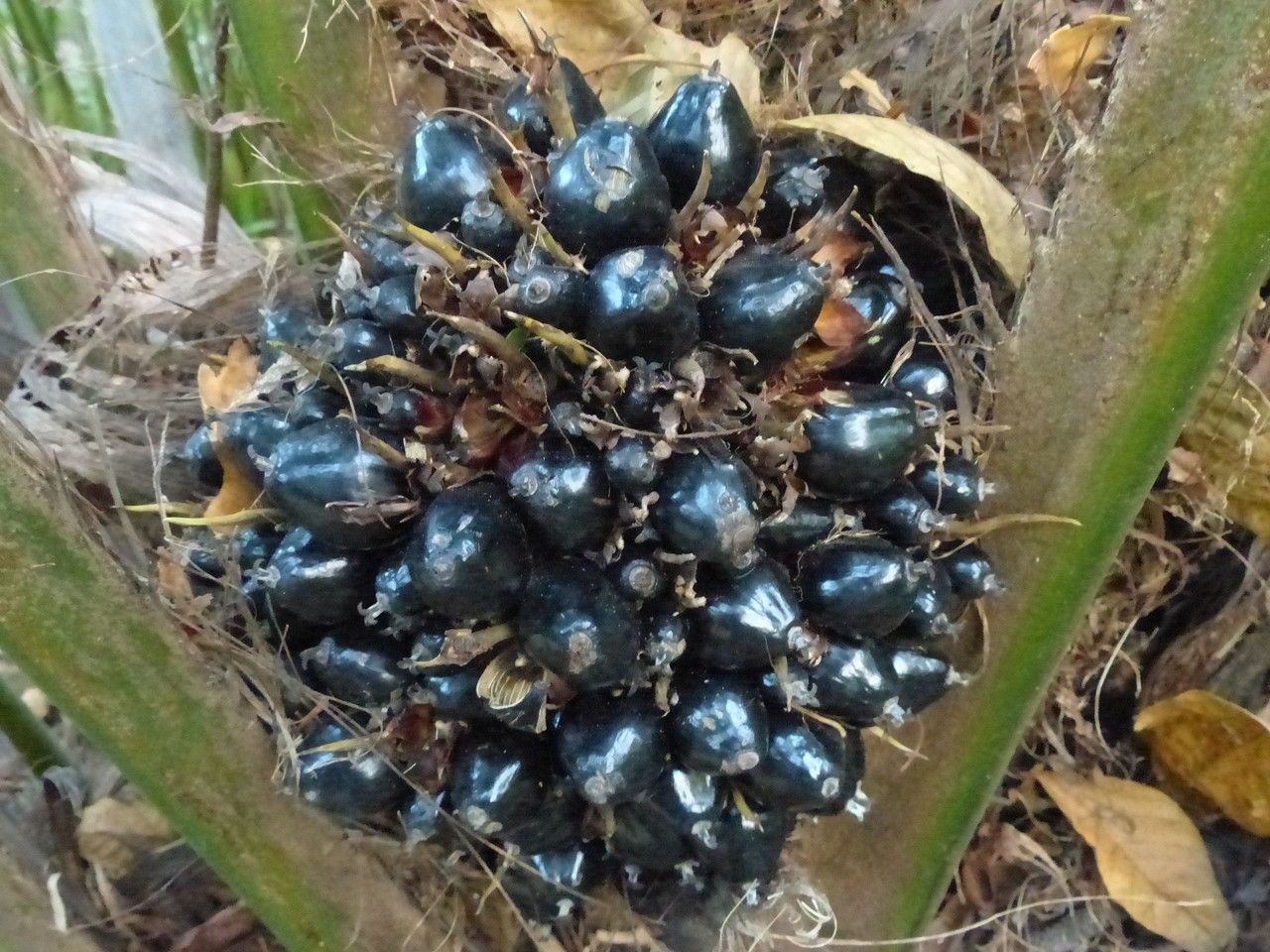
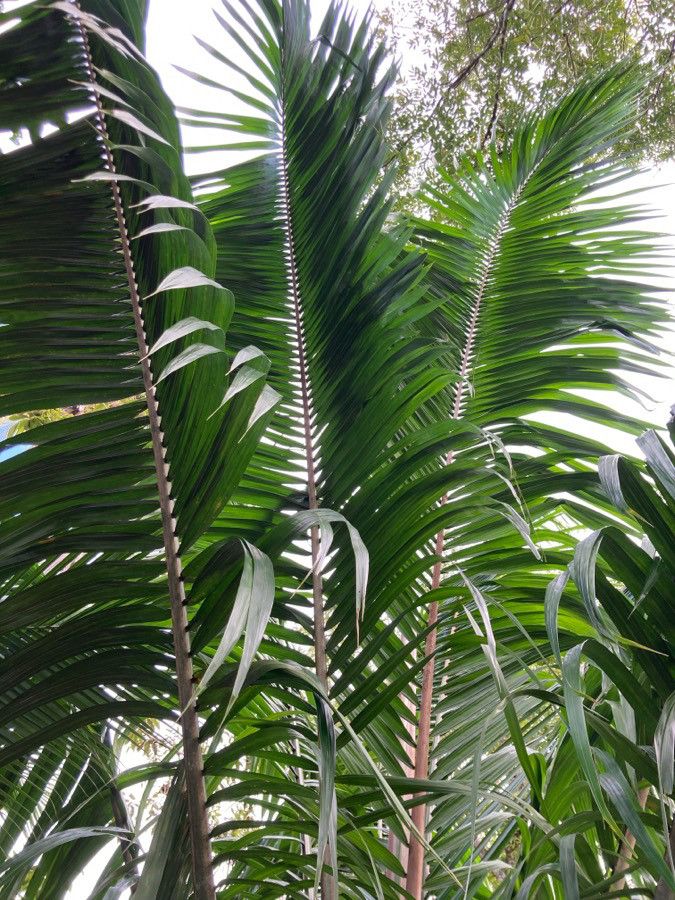
Elaeis guineensis is a species of palm commonly just called oil palm but also sometimes African oil palm or macaw-fat. It is the principal source of palm oil. It is native to west and southwest Africa, specifically the area between Angola and the Gambia; the species name, guineensis, refers to the name for the area, Guinea, and not the modern country now bearing that name. The species is also now naturalised in Madagascar, Sri Lanka, Malaysia, Indonesia, Central America, Cambodia, the West Indies, and several islands in the Indian and Pacific Oceans. The closely related American oil palm Elaeis oleifera and a more distantly related palm, Attalea maripa, are also used to produce palm oil. E. guineensis was domesticated in West Africa along the south-facing Atlantic coast. There is insufficient documentation and as of 2009 insufficient research to make any guesses as to when this occurred. Human use of oil palms may date as far back as 5,000 years in Egypt; in the late 1800s, archaeologists discovered palm oil in a tomb at Abydos dating back to 3000 BCE.The first Western person to describe it and bring back seeds was the French naturalist Michel Adanson.Oil palms can produce much more oil per unit of land area than most other oil-producing plants (about nine times more than soy and 4.5 times more than rapeseed).
The African oil palm has strong disease resistance and is generally not susceptible to illnesses. Regarding care, this plant is relatively low-maintenance. When grown outdoors it needs little watering, and larger specimens usually do not require pruning. However, smaller plants should be pruned after they have bloomed. The African oil palm is suitable for anyone with outdoor space, such as a garden or a deck, and does not require much experience in plant care.
How to keep Elaeis Guineensis.
Light
The African oil palm does best in locations that receive plenty of sunlight throughout the day. Insufficient light can impede its healthy development, whereas too much light rarely causes damage. Originating from sunny habitats, the African oil palm does not need adjustments to light exposure at different stages of its growth.
Water
Originating from the rainforests of West Africa, the African oil palm thrives in humid conditions and requires consistent moisture. It should be watered every two weeks, allowing for brief periods of drought. Being an evergreen, the African oil palm needs stable humidity levels to maintain its vitality throughout the year.
Humidity
This plant will thrive in moderate humidity, which is probably the level in your home. However, misting it a few times a week can be very beneficial. Make sure the room has good ventilation.
Temperature
The African oil palm originates from tropical regions and grows best in temperatures of 68 to 100.4 °F (20 to 38 ℃). For optimal growth, seasonal adjustments can include supplying extra warmth or moving it to a warmer location during cooler months.
Fertilizer
Prefer organic fertilizers (such as fish emulsion or compost) rather than chemical ones for African oil palm. Give young plants increased nitrogen and phosphorus in spring. Work compost or fertilizer into the soil either before or after planting. For mature plants, apply a balanced fertilizer or one targeted to specific deficiencies in spring. Nutrient shortages lead to small leaves, short branches, yellow or bronze foliage, sour fruits, early fruit drop, and splitting.
Pruning
To promote the health and yield of African oil palms, conduct strategic pruning in early spring. Focus on removing dead or damaged fronds to enhance the plant's vitality. When trimming, be cautious to avoid damaging the trunk or causing stress from over-pruning. Use clean, sharp tools to prevent infection and improve growth by increasing light and air circulation around the plant.
Botanical profile.
- Plant Type
- Tree
- Life Cycle
- Perennial
- Genus
- Elaeis
- Family
- Arecaceae
- Hardiness Zone
- 10-12
- Mature Height
- 20.12 m
- Mature Spread
- 4.88 m
- Leaf Color
- Green
- Leaf Type
- Evergreen
- Flower Color
- Yellow
- Flower Size
- 1.02 cm
- Bloom Time
- All year round
- Planting Time
- Winter, Spring
- Harvest Time
- All year round
- Native Area
- Burkina Faso, Malawi, Angola, Sudan, Rwanda, Nigeria, Guinea, Gabon, Guinea-Bissau, Kenya, Uganda, Zimbabwe, Benin, Central African Republic, Chad, Sierra Leone, Cameroon, Liberia, Burundi, Togo, Ghana, Senegal, Côte d'Ivoire, Gambia, Congo (DRC), Congo
Other names.
Reader questions.
How should I water my African oil palm?
Your African oil palm is not particular about how you water it. You can use a variety of common watering tools, such as watering cans, hoses, or cups, to moisten the soil. Make sure to apply the water directly to the soil and evenly moisten all areas to provide water for the entire root system. It is recommended to use filtered water to avoid harmful particles found in tap water. Using water at room temperature or slightly above is best, as very cold or hot water can be a bit shocking to the African oil palm. However, this plant usually responds well to any kind of water you give it.
Why should I put fertilizer on my African oil palm?
African oil palm requires regular fertilization mainly because its showy leaves require a significant amount of energy for their production and maintenance. The challenge lies in the fact that the plant needs to allocate enough energy not only for the leaves but also for the growth of its stems, branches, roots, and other vital structures. If fertilization is neglected, two likely outcomes may occur. Firstly, the leaves will lose their natural color and texture, appearing unhealthy and diminishing the plant's ornamental appeal. Additionally, the overall growth of the African oil palm may slow down, or it may produce weak growth susceptible to breakage.
What are the sunlight requirements for an African oil palm?
The African oil palm requires full sun, meaning it needs above 6 hours of sunlight daily to thrive well. It's crucial to observe how sunlight moves through your garden to pick spots that offer a balance of light and shade, ensuring the plants receive sufficient sunlight without the risk of excessive exposure. Native to sunny environments, the african oil palm does not necessitate changes in sunlight exposure at different growth stages, and it's rare for excessive light to cause harm.
What is the native climate for African oil palm and how should it be cared for throughout the seasons?
The African oil palm, scientifically known as Elaeis guineensis, thrives in native tropical climates, preferring temperatures that range between 68°F (20°C) and 100.4°F (38°C) for optimal growth. Due to its preference for warmth, it is crucial to provide additional warmth or relocate it to a warmer environment during the cooler months to maintain its health. In the autumn, it's advisable to move outdoor-grown African oil palms indoors, placing them near a bright window yet at a safe distance from heaters to prevent damage from the heat. To foster growth, keeping indoor temperatures above 20°C during the winter is beneficial. Exposing the plant to temperatures nearing 5°C can be harmful.
What should I do if I give my African oil palm too much water or too little water?
Outdoor plants, especially newly planted ones or seedlings, are prone to not being watered enough. It's important to remember to water them adequately for the first few months, especially when the tree is small or recently planted. This is because once the roots are established, African oil palms can rely on rain for most of their moisture. When African oil palms are planted in pots, overwatering is more likely to occur. If you accidentally overwater your African oil palm, there are steps you can take to fix the situation. Firstly, stop watering the plant immediately to minimize the effects of overwatering. Then, remove the African oil palm from its pot to inspect its roots. If you find that none of the roots have developed root rot, it's okay to put the plant back in its container. However, if you notice signs of root rot, trim away any affected roots and consider applying a fungicide to prevent further damage. Lastly, repot the African oil palm in well-draining soil. In the case of underwatering, simply water the African oil palm more frequently. Underwatering is usually easy to fix as the plant's leaves will droop, dry out, and fall off. With sufficient watering, the leaves will quickly regain their fullness. It's crucial to adjust your watering frequency as soon as you notice underwatering.
When should I fertilize my African oil palm for the best results?
To ensure the healthy growth of your African oil palm, there's no need to set a fixed feeding schedule. Instead, it is sufficient to occasionally fertilize your plant by applying fertilizer while watering it. Additionally, during the growing season, it is important to provide an adequate amount of water. Feeding the plant once every two to three weeks should be maintained throughout the period when new growth is being produced.
How can artificial lighting support African oil palm growth indoors?
Indoor African oil palms require adequate lighting for optimal growth, especially when natural sunlight is insufficient, such as in winter or less sunny spaces. Artificial lights, like LED lights that can be customized to provide specific light wavelengths, are essential. For full sun plants, 30-50W/sq ft of artificial light is needed, 20-30W/sq ft for partial sun plants, and 10-20W/sq ft for full shade plants. The artificial light source should be placed 12-36 inches above the plant, mimicking natural sunlight for 8-12 hours per day to promote faster, healthier growth.
What happens to African oil palm when temperatures fall too low and how can it be protected?
African oil palm is sensitive to low temperatures and thrives best when the temperature is maintained above 20°C. During winter, ensuring the temperature stays above 5°C is crucial. Exposure to temperatures below 1°C may cause the leaves to lighten in color, which after frost damage, can progressively turn brown or black. The plant may exhibit symptoms like wilting and drooping as a result of cold exposure. To protect the plant from low temperatures, it is recommended to trim off the frost-damaged parts and immediately relocate it to a warmer indoor setting. Placing the plant near a south-facing window can ensure it receives sufficient sunlight, and it's important to keep it away from heaters or air conditioning vents to avoid air dryness.
How frequently do I need to water my African oil palm tree?
Most outdoor plants can rely on rainfall for their water needs. If you live in an area with low rainfall, you should water your plants every 2 weeks in the spring and fall. In the summer, you will need to water them more frequently. In the winter, when plant growth slows down and they require less water, you can water them less often or not at all. However, if you have a young or newly planted African oil palm, it is important to water it more frequently to help it establish and grow. When it comes to potted plants, there are two ways to determine watering frequency for African oil palm. The first method is to follow a set schedule, watering the plant once a week or once every other week. However, this may not always be effective as it doesn't take into account the specific conditions of your plant's environment. Another approach is to monitor the moisture in the soil. Wait until the top two to four inches of soil, about one-third to one-half the depth of the pots, have completely dried out before watering again. This method ensures that you are giving the plant water when it actually needs it, especially during times of increased water requirements such as summer.
When is not a good time to add fertilizer to my African oil palm?
For most of the year, you can stick to a regular fertilization schedule for your African oil palm. This applies to the growing seasons of spring, summer, and early fall. However, it's important to note that during the winter, you should not fertilize this plant. During the winter, the African oil palm enters a dormant phase with little to no new growth. This means it requires less energy overall, making fertilization unnecessary at that time.
What are the common symptoms of inadequate sunlight in African oil palms?
When exposed to low light, African oil palms may exhibit symptoms such as smaller new leaves, leggy or sparse growth, faster leaf drop, halted growth, and lighter-colored new leaves. Other symptoms include chlorosis (leaves turning yellow due to a breakdown of chlorophyll), sunscald (damage from intense sunlight), leaf curling (a defense mechanism to minimize water loss), wilting (loss of turgor pressure), and leaf scorching (brown, dry patches on leaves due to excessive sunlight). These symptoms highlight the plant's struggle under insufficient or excessive light conditions.
How does high temperature affect African oil palm and what measures should be taken?
During summer, it's crucial to ensure African oil palm is not exposed to temperatures above 38°C, as exposure to temperatures exceeding 43°C can cause the leaves to lighten and increase susceptibility to sunburn. To manage high temperature effects, trim the sunburned and dried parts of the plant. Relocating the plant to an area that offers shade during the intense midday and afternoon sun will help. It's also advisable to water the plant in the morning and evening to maintain soil moisture, thus aiding in cooling the plant and preventing damage from high temperatures.