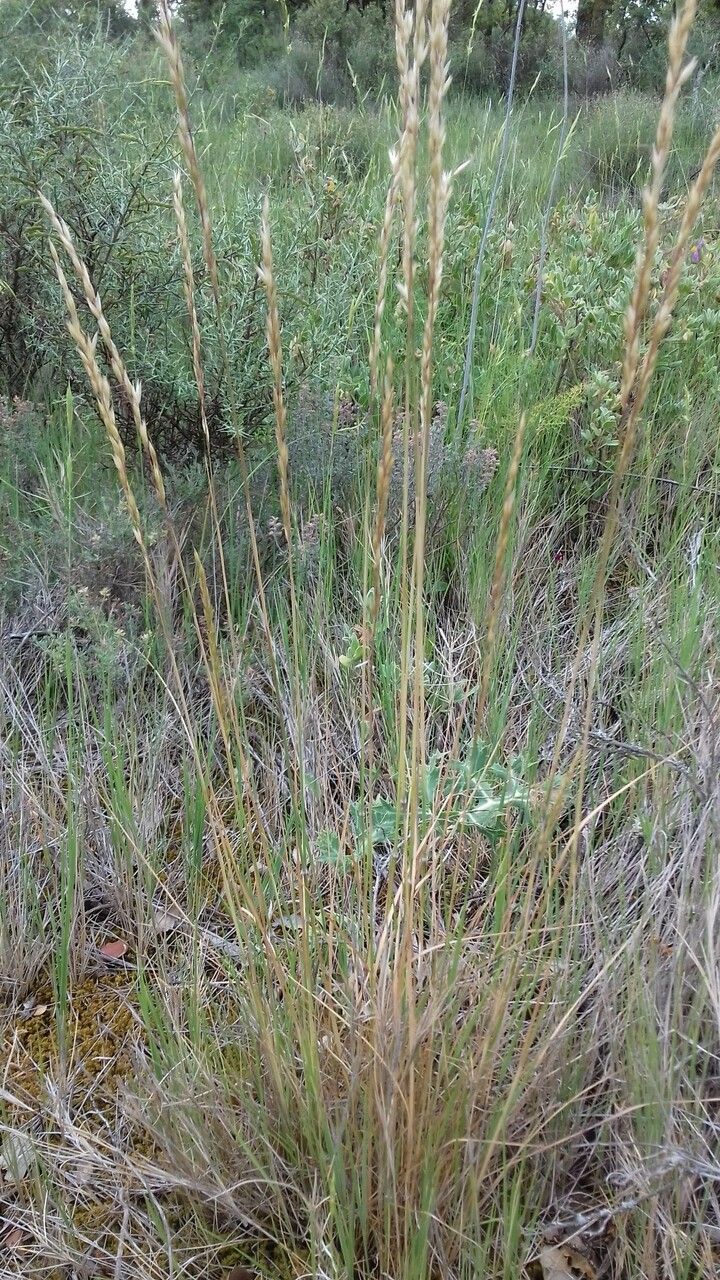
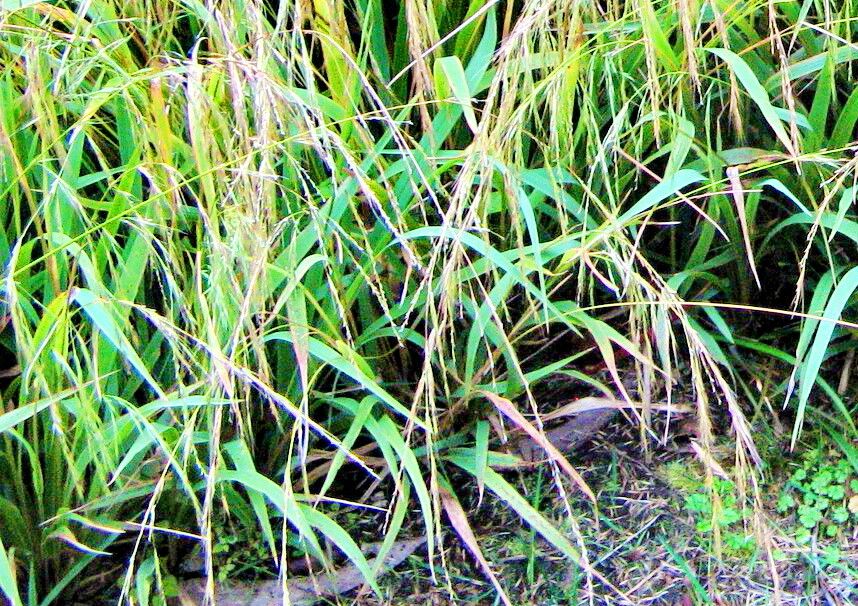
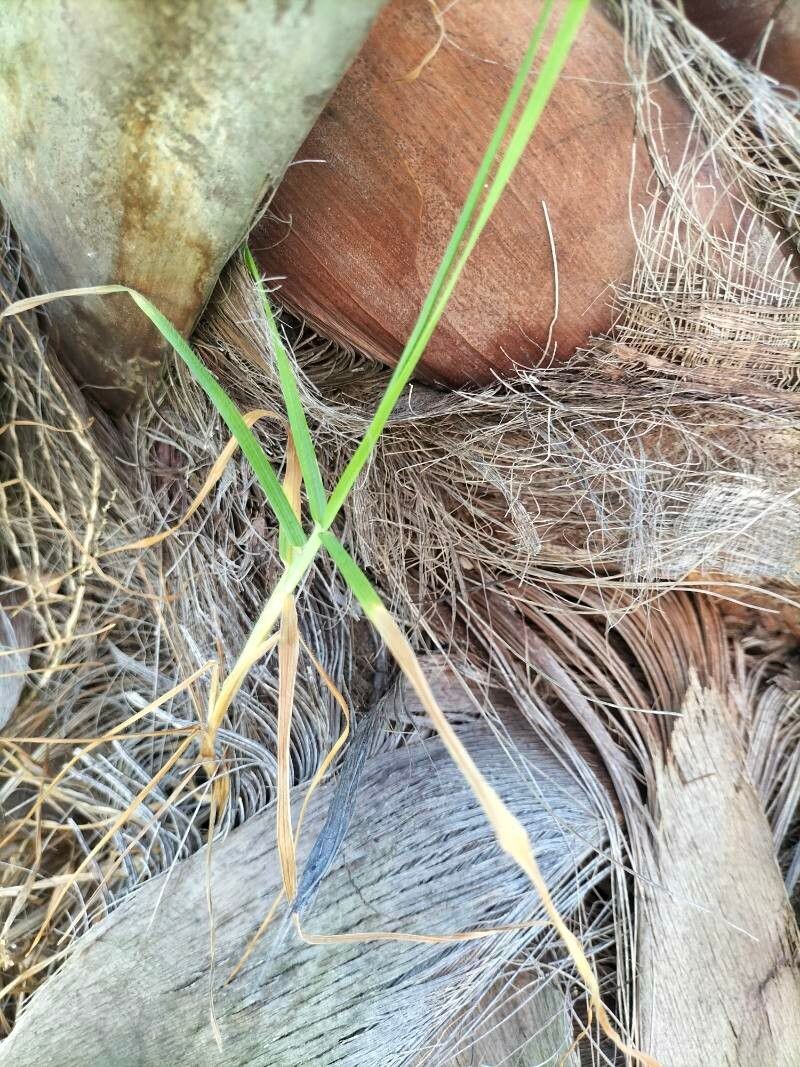
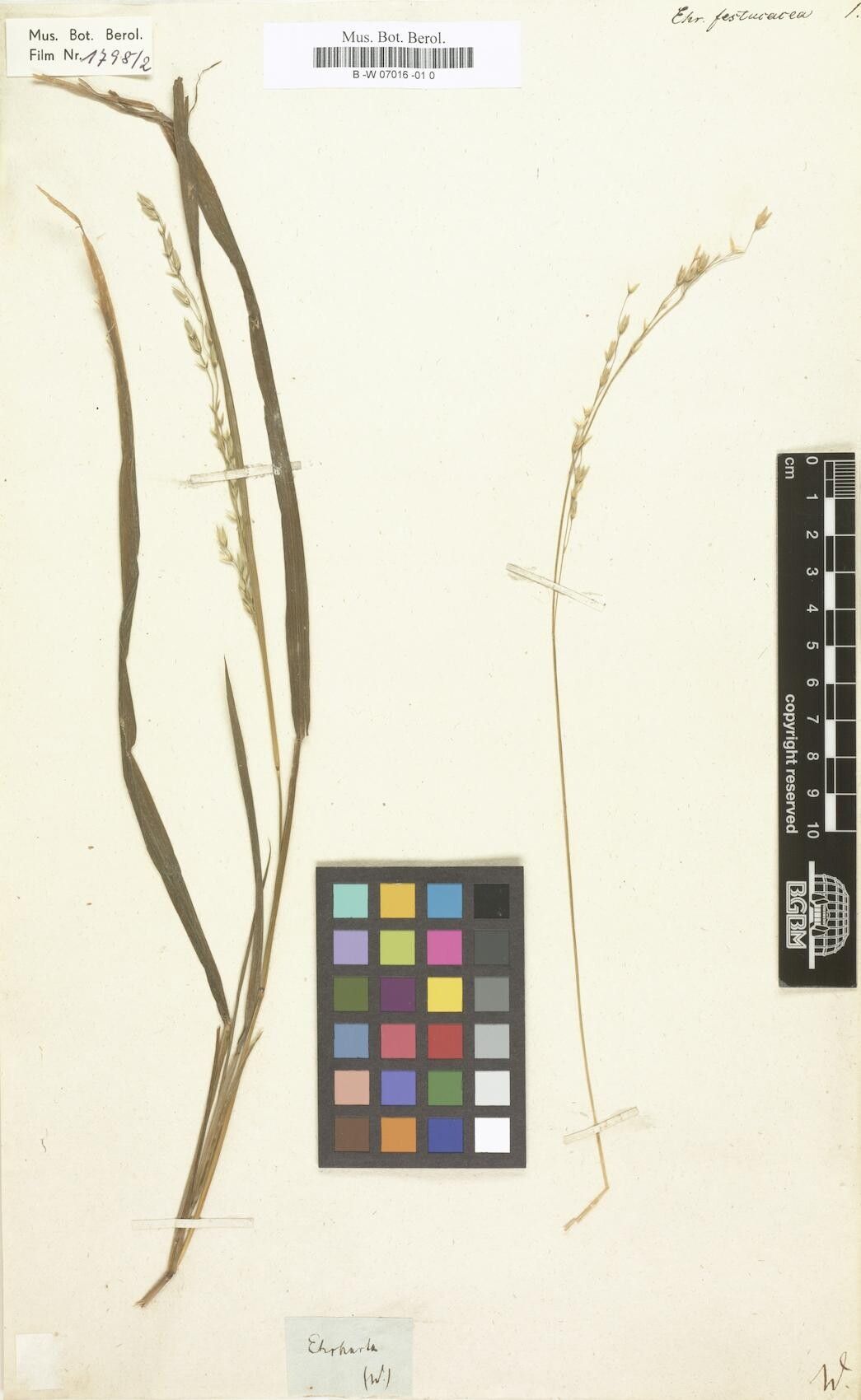
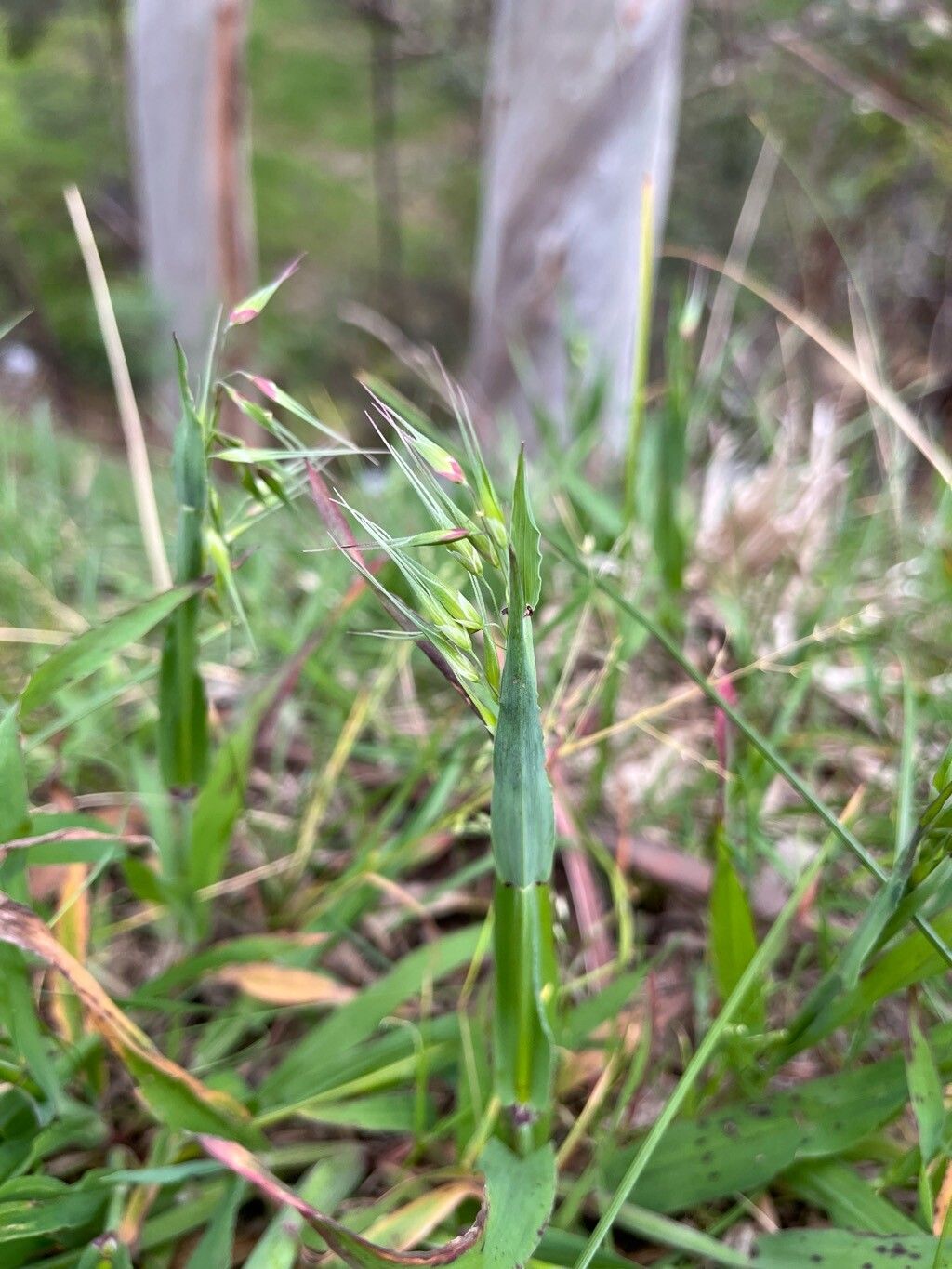
Ehrharta calycina, commonly known as veldt grass or panic veldt grass, is a perennial grass species native to South Africa. This highly invasive plant has spread to various parts of the world, including Australia and the United States. The plant can grow up to 1.5 meters tall and features long, narrow green leaves.
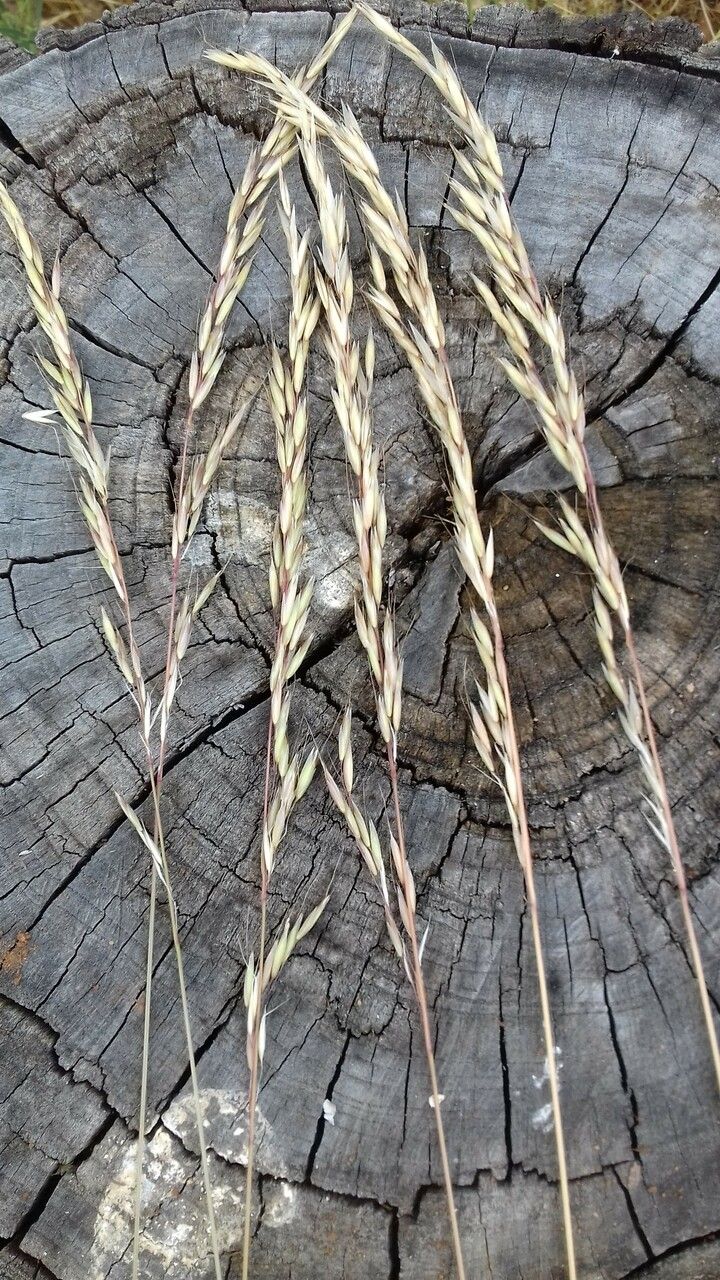
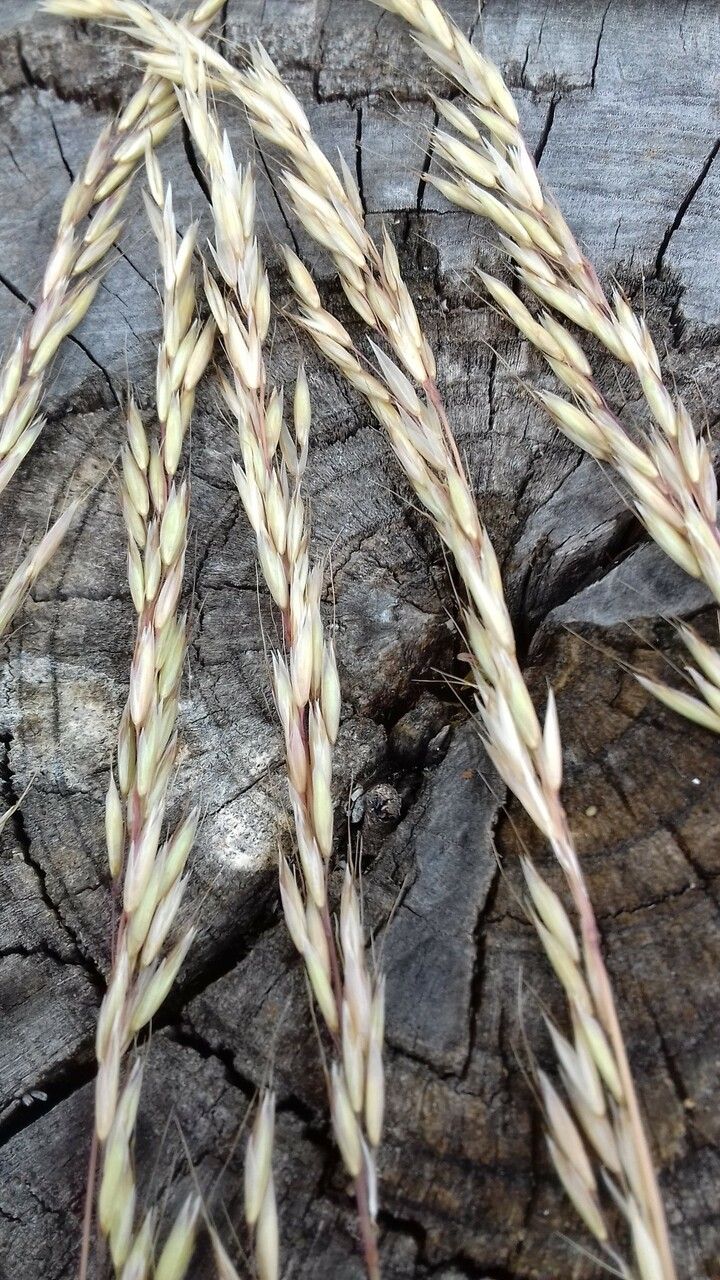
The flowers of Ehrharta calycina are small and inconspicuous, with spikelets arranged in dense clusters at the ends of long stems. The seeds are tiny and easily dispersed by wind or animals.
Ehrharta calycina is notorious for its ability to outcompete native vegetation, forming dense monocultures that reduce biodiversity. It also poses a threat to agriculture by reducing crop yields and interfering with grazing land for livestock.
Many countries have made efforts to control the spread of Ehrharta calycina through various methods such as herbicides, manual removal, grazing management practices, or biological control agents like insects or fungi.
Overall, Ehrharta calycina is considered an invasive species due to its negative impact on ecosystems where it has been introduced outside its native range.
Perennial Veldtgrass is resistant to disease and is generally not susceptible to illnesses. In terms of care, this plant is fairly low-maintenance. When grown outdoors it needs little watering, and larger specimens typically do not need pruning. Smaller plants, however, should be pruned after they finish blooming. Perennial Veldtgrass is appropriate for anyone with outdoor space, such as a garden or deck, and does not require extensive experience in plant care.
How to keep Ehrharta Calycina.
Light
Perennial Veldtgrass is a perennial herbaceous plant that favors sunny conditions and originates from open habitats, commonly occurring in meadows and grasslands. It prefers full sun but can also tolerate partial sun.
Water
Perennial Veldtgrass thrives in the regular rainfall and moderate humidity of its native South Africa. It needs balanced weekly watering because it does not tolerate drought well. As an evergreen grass, it requires consistent moisture throughout the year, even during the colder months, to stay healthy and vibrant.
Temperature
Perennial Veldtgrass can tolerate a wide range of temperatures, yet its distribution may still be limited by various combinations of water and heat. It performs best in warm summer climates with sufficient rainfall or watering. Extended periods of cloudy, rainy weather or sustained high temperatures can raise the likelihood of Perennial Veldtgrass dying. In winter, appropriate protection from cold can increase the plant's survival rate.
Fertilizer
Perennial Veldtgrass needs extra nutrients to encourage healthy new growth. In spring, placing compost around the base of the plant can effectively supply the necessary nutrition it requires. Fertilizing helps support vigorous growth and assists the plant in resisting diseases and pests.
Pruning
To help Perennial Veldtgrass flourish, start by pruning in early spring. This involves removing dead stems and controlling its growth. Regular trimming not only curbs its invasive spread but also boosts its resilience to pests and keeps it looking attractive. Be sure to sanitize your tools both before and after pruning to prevent infections.
Botanical profile.
- Plant Type
- Grass
- Life Cycle
- Perennial
- Genus
- Ehrharta
- Family
- Poaceae
- Hardiness Zone
- 8-11
- Mature Height
- 30 cm to 91 cm
- Mature Spread
- 20 cm to 49 cm
- Leaf Color
- Light Green, Pale Green
- Leaf Type
- Evergreen
- Flower Color
- Purple, Green
- Flower Size
- 0.51 cm to 1.02 cm
- Bloom Time
- Mid spring, Late spring, Early summer
- Planting Time
- Spring, Autumn
- Harvest Time
- Summer
- Native Area
- South Africa, Namibia, Lesotho
Other names.
Reader questions.
What are the sunlight requirements for Perennial Veldtgrass?
Perennial Veldtgrass, scientifically known as Ehrharta calycina, thrives best in full sunlight conditions, requiring more than 6 hours of sunlight daily. It can also tolerate partial sun, needing about 3-6 hours of sunlight. When planning where to plant Veldtgrass in your garden, it's important to observe the movement of sunlight to find spots that ensure plants receive the appropriate balance of light and shade to flourish.
What are the essentials for growing Perennial Veldtgrass successfully?
To ensure the successful growth of Perennial Veldtgrass, it's essential to understand it is a sun-loving perennial herb that originates from open habitats such as meadows and grasslands. It prefers full sun but can also tolerate partial sun conditions. For indoor plants or during seasons with inadequate natural sunlight, artificial lighting can be a vital solution. LED lights are recommended as they can be tailored to provide specific wavelengths required by the plant, with full sun plants needing 30-50W/sq ft, partial sun plants 20-30W/sq ft, and full shade plants 10-20W/sq ft of artificial light. The lighting should be placed 12-36 inches above the plant for 8-12 hours per day to mimic natural sunlight conditions.
What are the symptoms of incorrect lighting for Perennial Veldtgrass?
When Perennial Veldtgrass is exposed to inadequate lighting, several symptoms may arise, including smaller than usual new leaves, leggy or sparse growth, accelerated leaf drop, slower or halted new growth, and the development of lighter-colored or yellow leaves (chlorosis). Intense sunlight exposure can cause symptoms like sunscald, which is damage to leaves or stems, curled or twisted leaves as a defense against excessive sunlight, wilting due to increased water loss, and leaf scorching characterized by brown, dry, and crispy edges on leaves.
How can I address lighting issues for Perennial Veldtgrass?
To address lighting issues for Perennial Veldtgrass, start by gradually acclimating your plant to the correct amount of sunlight, ideally moving it to a location with at least 6 hours of direct sunlight daily. For indoor plants or those difficult to move, supplement sunlight with artificial light, using a desk or ceiling lamp for at least 8 hours daily, or invest in professional grow lights. For outdoor planting, move your plants to a sunnier spot gradually to prevent sunburn. If sunlight is obstructed, consider pruning nearby foliage or moving the plant to a better-lit location. Remember, plants affected by insufficient sunlight may not fully recover, but new growth should be healthy once proper light levels are maintained.