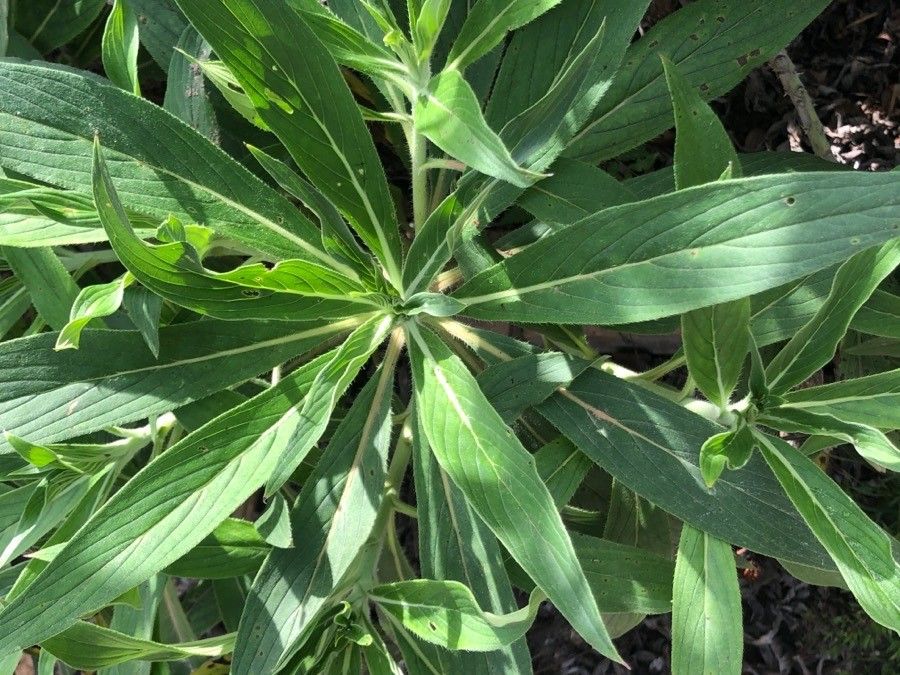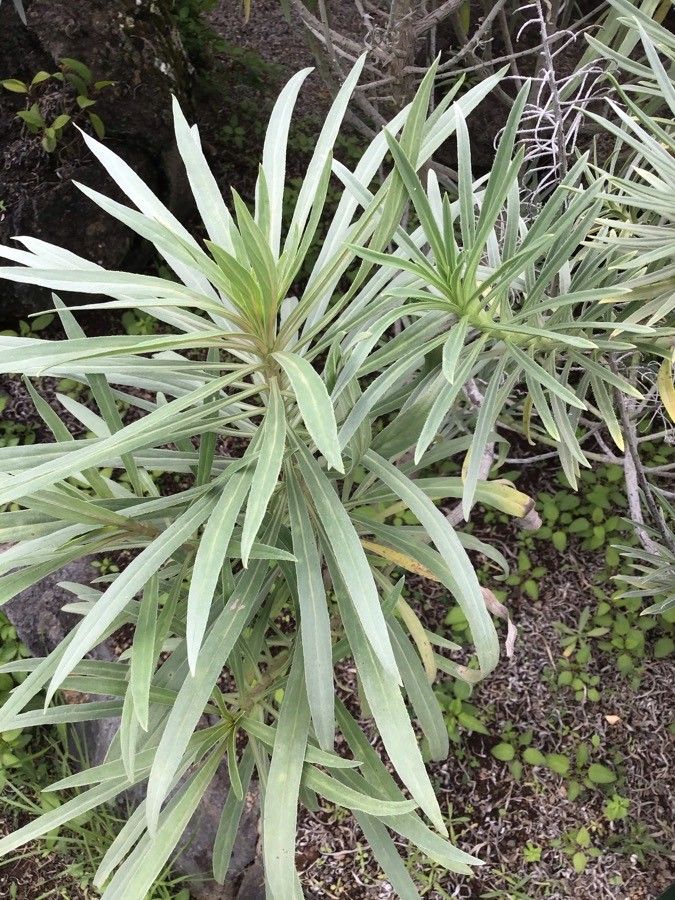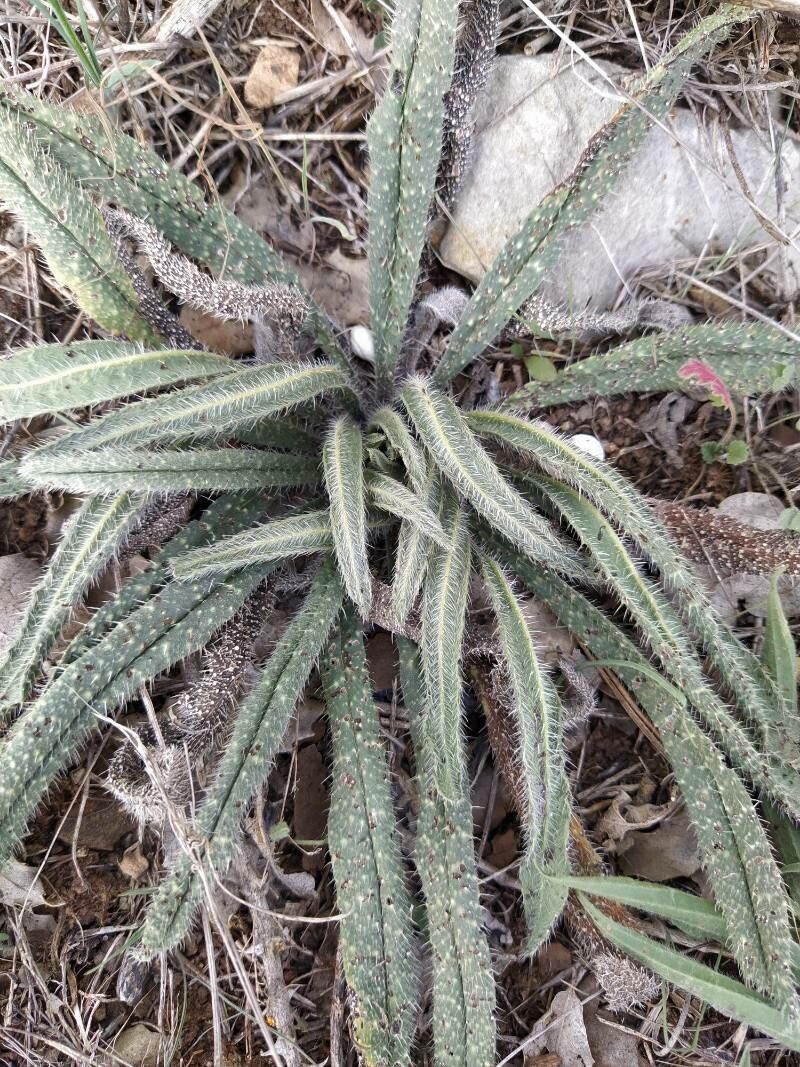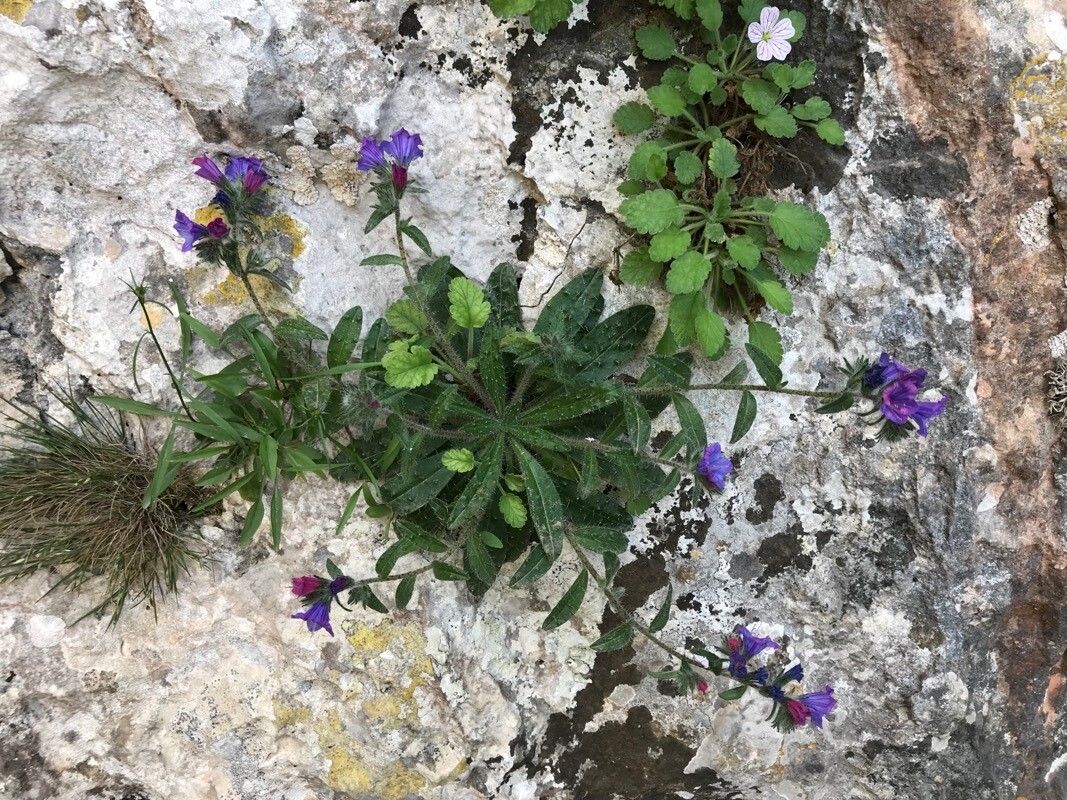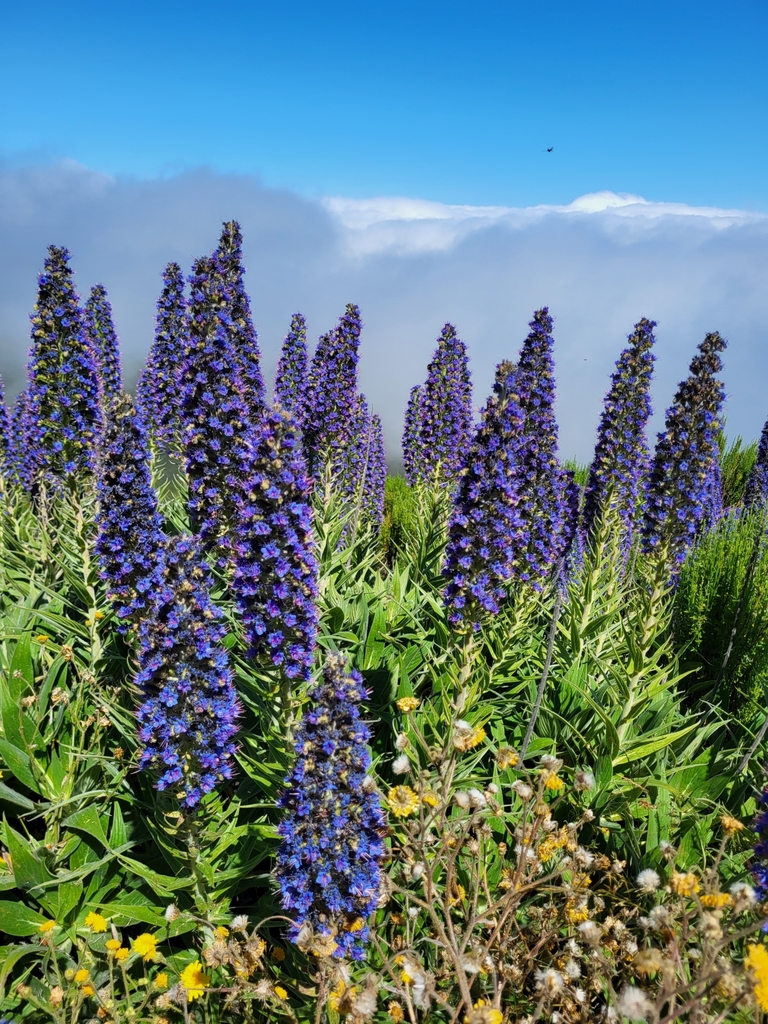
Echium candicans, commonly known as Pride of Madeira, is a stunning evergreen shrub native to the island of Madeira in Portugal. It belongs to the Boraginaceae family and can grow up to 6 feet tall and 8 feet wide. This plant boasts large, gray-green leaves covered in soft hairs and tall spikes of blue-purple flowers that bloom from late spring through summer.
Pride of Madeira thrives in full sun and well-draining soil. While it is drought-tolerant once established, it benefits from occasional watering during prolonged dry spells. The plant can be propagated through seeds or cuttings.
Echium candicans attracts bees, butterflies, and hummingbirds with its nectar-rich flowers, making it an excellent addition to any pollinator garden or landscape design. It also serves as an eye-catching focal point in mixed borders or as a standalone specimen plant.
Emerging from the chaparral, the flowers are arranged in two rows, creating a spiraling cone shape. These flowers are bisexual, meaning they contain both male and female reproductive structures, allowing them to produce seeds after the blossoms fade. As each plant possesses both reproductive structures, these flowers are considered perfect; they can bloom and produce fruit or seeds without needing another plant of the opposite sex. FUN FACT · FROM THE LIBRARY
Overall, Echium candicans is a beautiful ornamental shrub that adds color and interest to any garden while providing essential habitat for pollinators.
Pride of Madeira is a plant known for its striking appearance. It features broad leaves and woody stems covered with rough foliage. The plant is particularly notable for its large flower clusters, which are adorned with blue blooms and vibrant red stamens. As its name suggests, the Pride of Madeira originates from Madeira Island, where it is commonly found.
Pride of Madeira has good disease resistance and is generally resistant to disease. However, it can be affected by pests and diseases present in its environment. These infections are typically mild. Regarding care, this plant needs moderate maintenance. It should be pruned regularly to keep an attractive appearance and support healthy growth. Fertilizing can also encourage flowering. Pride of Madeira is appropriate for anyone with outdoor space, such as a garden or patio, and does not require extensive care experience. It may need additional attention when cultivated indoors.
How to keep Echium Candicans.
Light
Pride of Madeira does best with uninterrupted sun exposure, which promotes healthy development. It also tolerates moderate sunlight, an adaptability inherited from its original habitat that was not restricted to a particular region. Too little sun can cause growth problems, while too much light may lead to burn damage.
Water
The Pride of Madeira thrives in well-drained soil with moderate moisture, particularly in subtropical climates. Once the plant is established, it becomes drought-tolerant and only requires watering once a week. Typically grown outdoors, it flourishes in coastal regions where it can withstand saline conditions and benefits from the presence of sea mists.
Temperature
In its natural habitat, pride of Madeira does best in warm conditions, preferring temperatures between 20 and 38 ℃ (68 to 100.4 ℉). While it favors a warm climate, it can tolerate cooler temperatures down to 5 ℃ (41 ℉) if appropriate measures are taken. In colder months, it is advisable to move pride of Madeira indoors or provide shelter to prevent frost damage.
Fertilizer
Proper fertilization is essential for the health and appearance of Pride of Madeira. Fertilize the plant in summer, repeating the treatment each month throughout the season. Nutrients supply energy for growth and help maintain the plant’s parts. Fertilization improves Pride of Madeira’s floral display, ensuring the best possible blooms.
Pruning
The Pride of Madeira is known for its vibrant blue flowers and rapid growth. To maintain the plant's health and enhance its flowering, it is best to prune it from late winter to early spring. During this time, remove any dead branches and lightly trim back any excess growth. After the plant blooms, be sure to clear away the spent flowers. This will encourage new growth and help prevent the plant from becoming invasive, ensuring an attractive display.
Pot & Repot
When repotting Pride of Madeira, select a pot 1-2 inches (2.5–5.1 cm) larger with ample drainage. Use a well-draining potting mix. Repot in spring or fall, making sure the root ball is slightly lower than the rim of the flower pot. Water thoroughly after repotting and place in a warm spot with indirect sunlight.
Botanical profile.
- Plant Type
- Herb
- Life Cycle
- Perennial, Annual, Biennial
- Genus
- Echium
- Family
- Boraginaceae
- Hardiness Zone
- 9-11
- Mature Height
- 1.52 m to 2.44 m
- Mature Spread
- 1.83 m to 3.05 m
- Leaf Color
- Green, Gray, Silver
- Leaf Type
- Evergreen
- Flower Color
- Blue, Purple
- Flower Size
- 1.27 cm
- Bloom Time
- Mid spring, Late spring, Early summer, Mid summer
- Planting Time
- Spring
- Harvest Time
- Early summer, Mid summer
- Native Area
- Canary Islands
Other names.
Reader questions.
How should I water my Pride of Madeira plant for the best results?
To effectively water the Pride of Madeira, it's recommended to use filtered water at room temperature. Filtered water is preferable because tap water may contain harmful particles. The plant is accustomed to warm environments, so using cold water might be a shock to its system. It's best to avoid overhead watering, as it could cause issues with the foliage. Instead, pour the filtered room temperature water onto the soil until it becomes completely saturated. This method benefits the plant by moistening the roots and aiding in nutrient absorption as they continue to spread and gather necessary nutrients within the soil.
Why do I have to put fertilizer on my Pride of Madeira plant?
Fertilizer and soil nutrients are essential for the healthy growth of your Pride of Madeira plant. They provide the fuel that the plant needs to develop new material and maintain its existing components. Fertilization is particularly important for this plant to ensure the best display of its flowers, which are its main attraction. Therefore, most gardeners will want to do everything they can to ensure the flowers appear in their best form. Fertilization is a reliable way to help your Pride of Madeira produce the best possible blooms.
What are the sunlight requirements for Pride of Madeira?
Pride of Madeira requires full sun exposure of above 6 hours of sunlight daily to flourish and can also manage well in partial sun, receiving about 3-6 hours of sunlight. It's crucial to observe the way sunlight moves through your garden to find the optimal spots that offer a perfect balance of light and shade, ensuring the plants' well-being. Insufficient sun exposure may result in growth issues, while too much direct sunlight can cause burn damage to the plant.
What are the ideal growing conditions for Pride of Madeira?
Pride of Madeira, or Echium candicans, flourishes in warm climates with temperatures ranging from 20 to 38°C (68 to 100.4°F). It has a preference for warm environments but can also withstand cooler temperatures down to 5°C (41°F) with the right care. When temperatures start dropping, especially in autumn and cooler seasons, it's advisable to bring the plant indoors or provide some form of shelter to protect it against frost damage. Keeping Pride of Madeira in conditions that match its natural growth environment ensures healthy growth and vitality.
What do I do if I give my Pride of madeira plant too much or too little water?
Both overwatering and underwatering can harm the health of your Pride of madeira, but overwatering is more common. Overwatering can cause wilting and yellowing of the stems and leaves, as well as diseases like root rot, mold, and mildew that can be fatal to your plant. While underwatering is less likely, it can still happen, resulting in brittle and brown leaves. It's important to identify signs of overwatering early, as some diseases may not be fixable if you wait too long. If you notice these signs, reduce your watering schedule and check the soil drainage. If the soil doesn't drain well, replace it with a loose and well-draining potting mix. If you see signs of underwatering, simply water more regularly until the signs improve.
When should I fertilize my Pride of Madeira plant?
The Pride of Madeira plant goes through two main phases each year. The first phase is the dormant phase, which happens during winter and involves minimal new growth. The second phase is the active growth phase, occurring in spring and fall, when fertilization is most important. It's generally recommended to start fertilizing your Pride of Madeira in spring and continue once a month throughout spring and most of summer. As fall approaches, you can gradually reduce the amount of fertilization.
How does artificial lighting benefit indoor plants like Pride of Madeira?
Indoor plants, including Pride of Madeira, require adequate lighting for optimal growth, especially in conditions where natural sunlight is insufficient, such as during winter or in less sunny spaces. Artificial lights, such as LED lights, can provide a vital solution by offering the necessary wavelengths of light needed for the plants. Full sun plants need 30-50W per square foot of artificial light, partial sun plants need 20-30W per square foot, and full shade plants need 10-20W per square foot. The light source should be placed 12-36 inches above the plant to mimic natural sunlight and should be on for 8-12 hours per day to simulate the natural daylight hours.
How should you care for Pride of Madeira in low temperatures?
Pride of Madeira does best in warm conditions and struggles with low temperatures. During winter, it's important to keep it above a certain minimum temperature to prevent harm. If the plant experiences temperatures below its growth limit, its leaves may change color, turning lighter and eventually brown or black after frost damage, accompanied by wilting and drooping. To mitigate frost damage, trim off the affected parts and move the plant to a warmer location indoors, ideally near a south-facing window for ample sunlight, while avoiding direct heat sources like heaters to prevent air dryness.
How frequently should I water my Pride of Madeira plant?
If your Pride of Madeira plant is in a pot, the best way to determine if it needs water is to stick your finger into the soil. If the top two to three inches of soil feel dry, it's time to water the plant. If you have the plant outdoors in the ground, you can use the same method to check the soil. Once the top few inches of soil have dried out, it's time to water. In the spring and early fall, you'll likely need to water about once a week using this method. In extremely hot weather, you may need to increase watering to twice a week or more. However, fully grown and well-established Pride of Madeira plants can endure drought and don't require as much water.
When should I not put fertilizer on my Pride of Madeira plant?
If you want to help your Pride of Madeira plant grow, it's important to provide the right nutrients without causing root burn. During the spring and summer, when the plant is actively growing, it requires extra nutrients. However, in the fall and winter, when the plant goes into dormancy, it's best to avoid fertilizing.
What are common symptoms of insufficient sunlight in Pride of Madeira?
Common symptoms indicating insufficient sunlight in Pride of Madeira include smaller than usual new leaves, leggy or sparse growth, faster leaf drop, and slower or halted new growth. These signs suggest that the plant may be in survival mode due to poor light conditions. Additionally, symptoms like lighter-colored new leaves and conditions such as chlorosis (yellowing leaves), sunscald, leaf curling, wilting, and leaf scorching can occur due to excessive sunlight exposure or abrupt changes in light conditions.
How does high temperature affect Pride of Madeira and how can you mitigate it?
Pride of Madeira should be kept below a maximum acceptable temperature during the summer to avoid stress from excessive heat. Exceeding this temperature threshold can lighten the leaf color and increase the likelihood of sunburn. To care for a plant that's been exposed to overly high temperatures, trim away the sunburned and dried parts. Then, relocate the plant to a shaded area, especially during the intense midday and afternoon sun. Ensuring the plant is watered in the morning and evening will help keep the soil adequately moist, thus reducing heat stress.