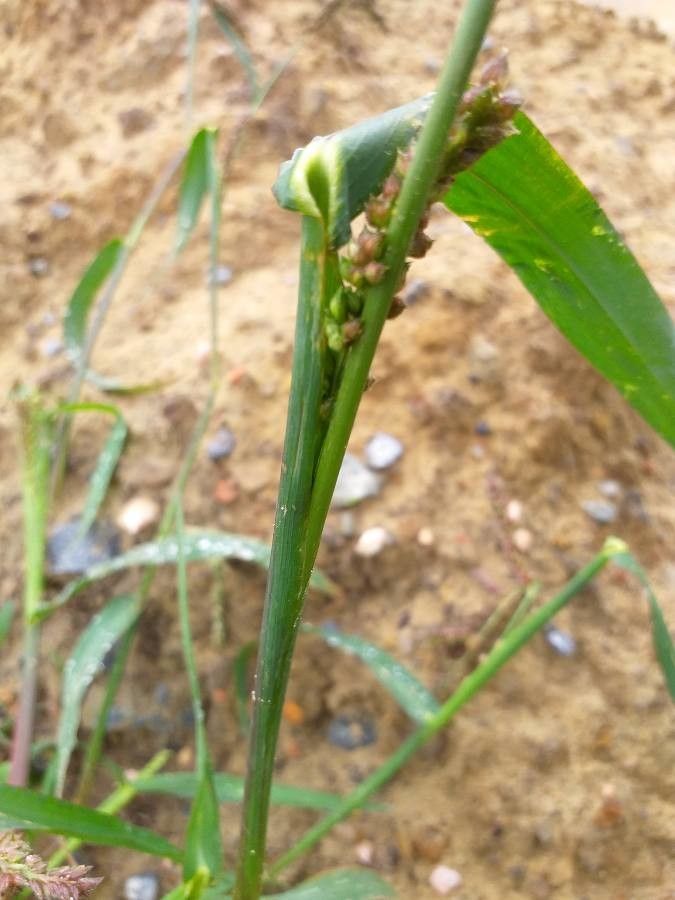
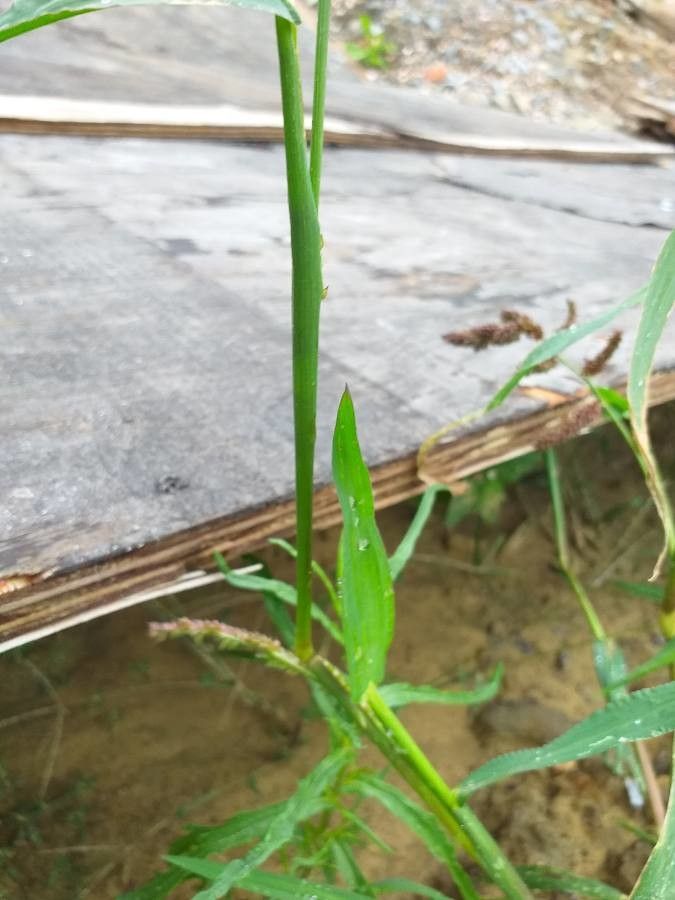
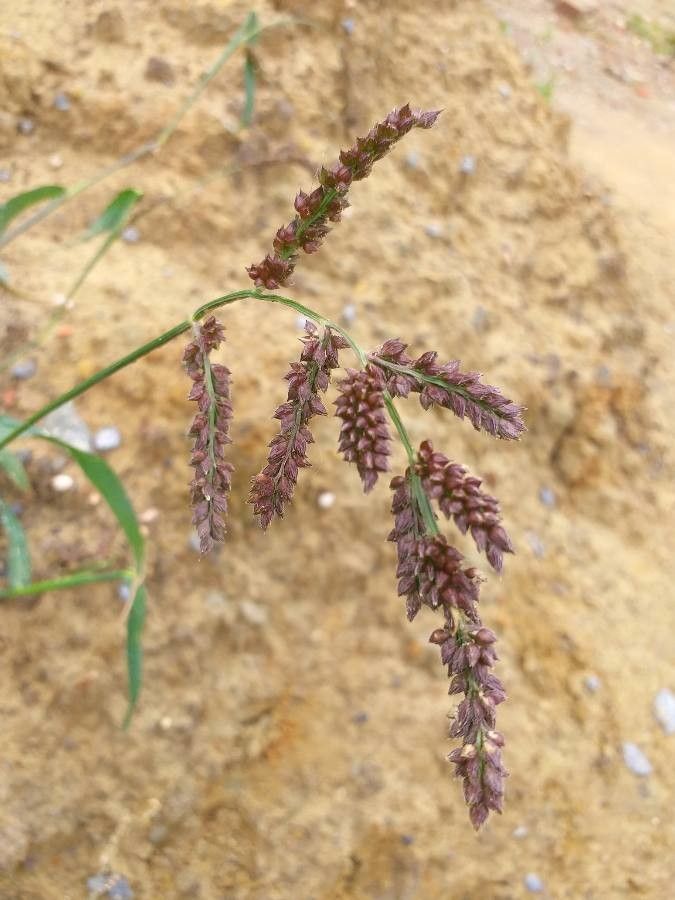
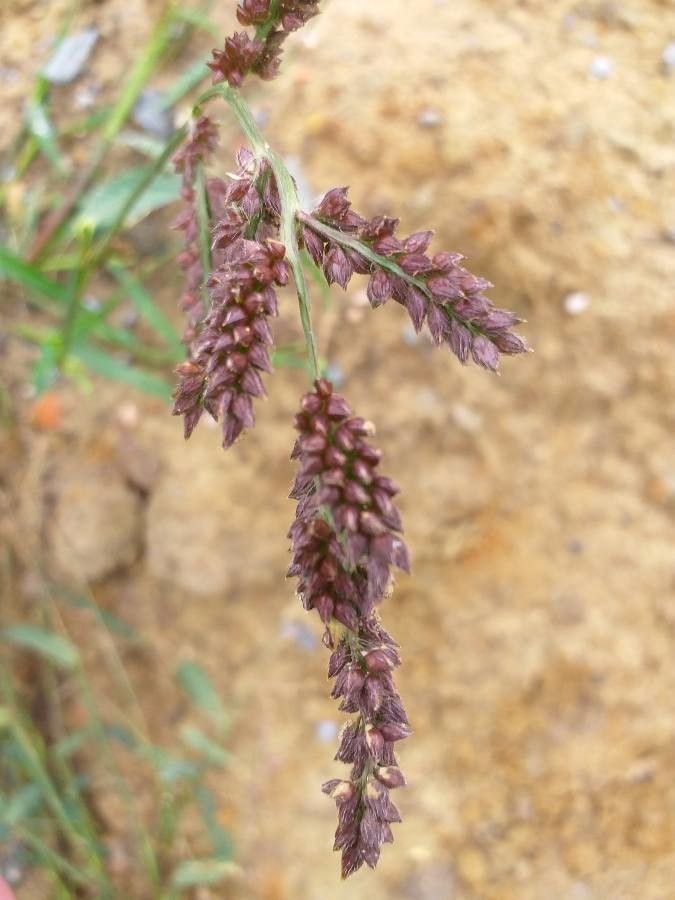
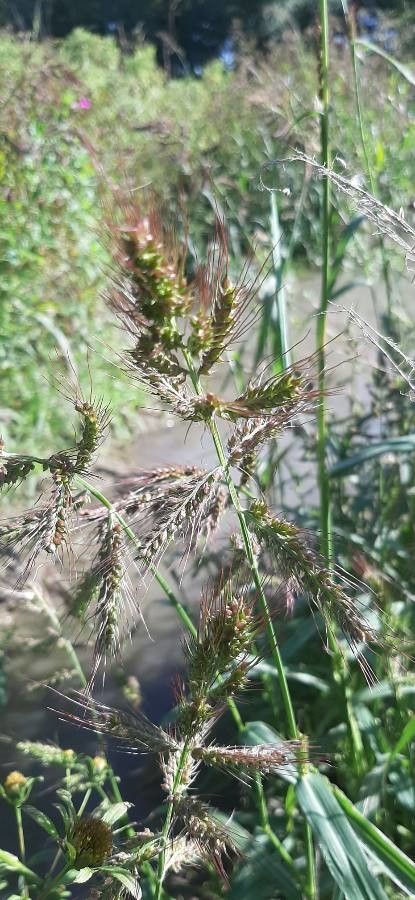
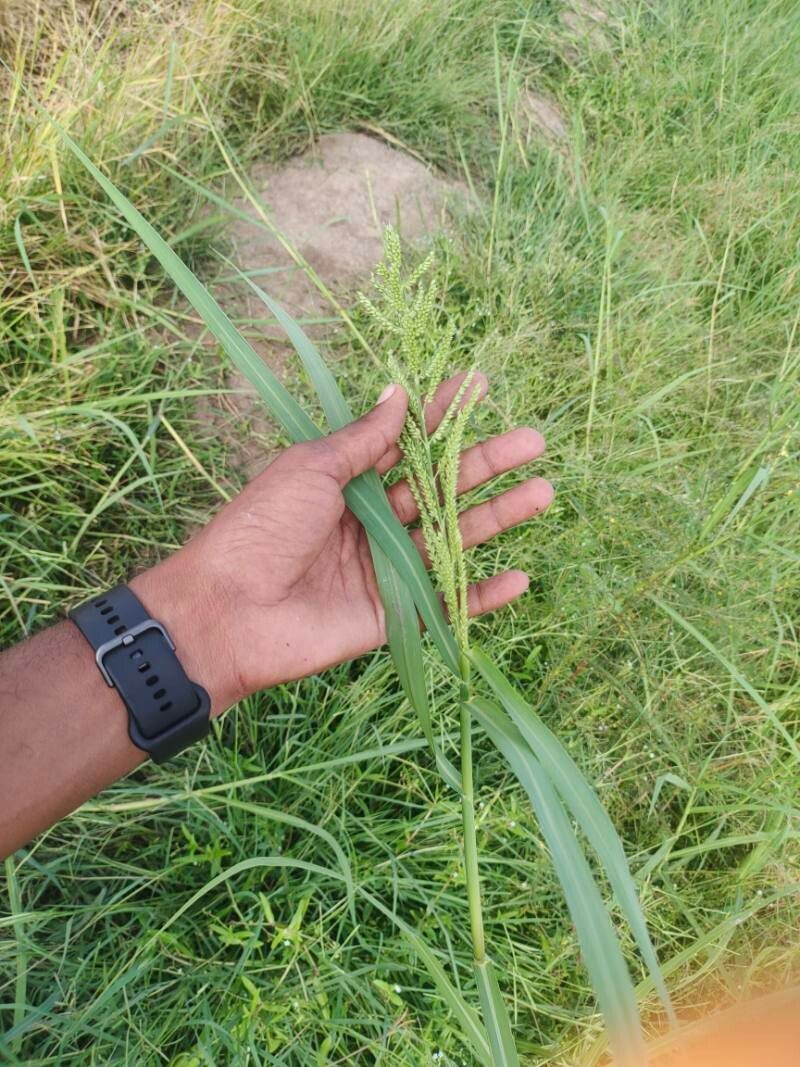
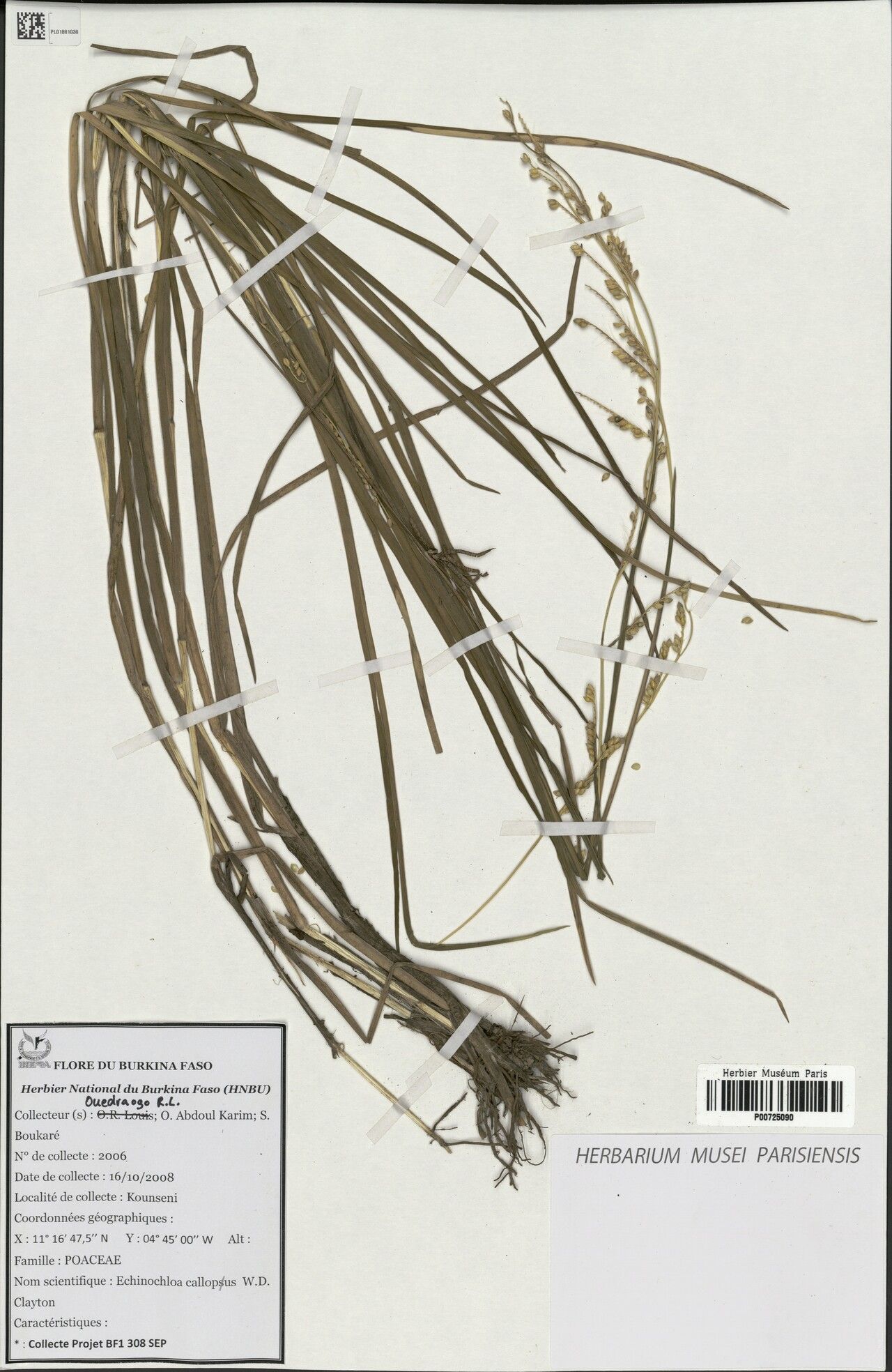
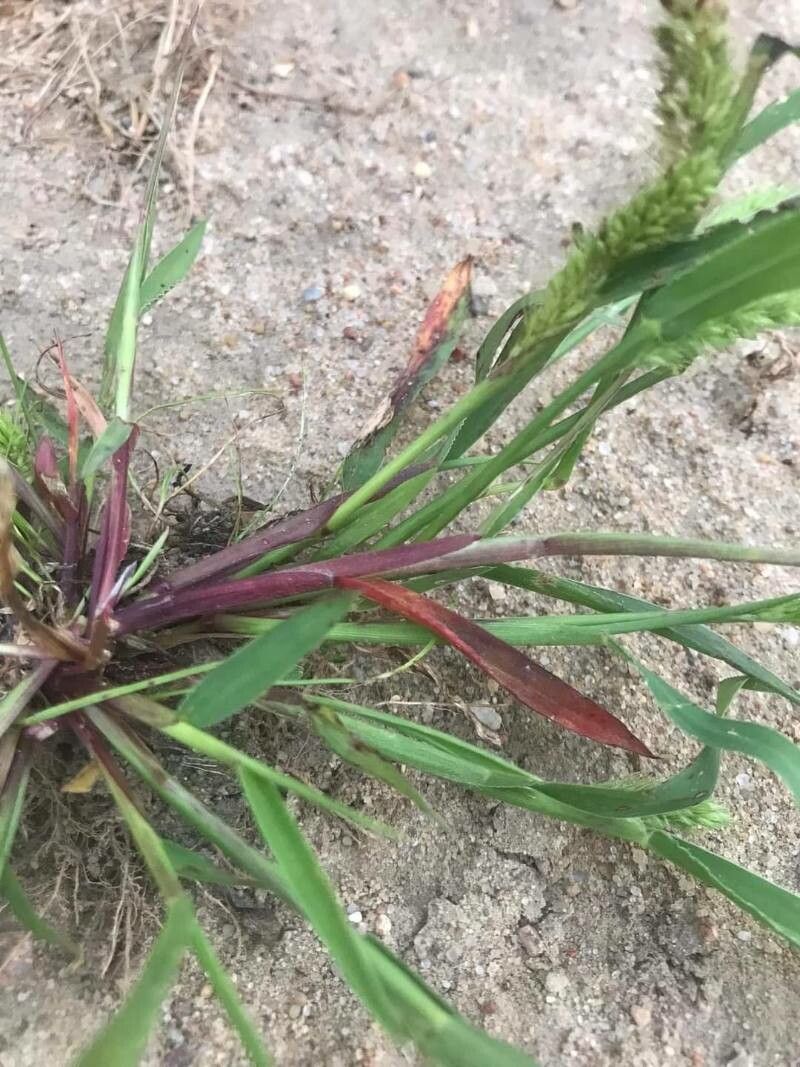
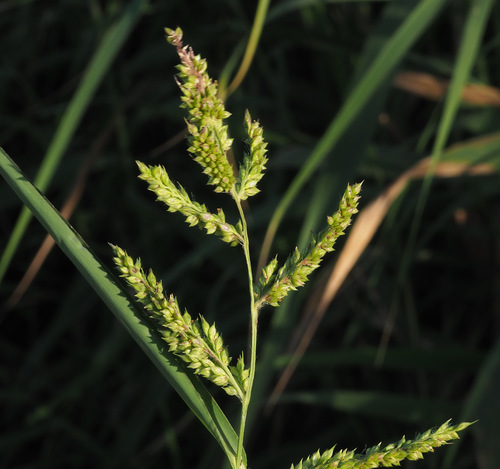
Echinochloa muricata, commonly known as rough barnyard grass, is an annual grass species in the Poaceae family. Native to the tropical and subtropical regions of Asia and Africa, it has now spread to other parts of the world. This plant can grow up to 1 meter tall and has a rough texture due to its hairy leaves.
The leaves of Echinochloa muricata are long, narrow, and pointed with a prominent midrib. Its inflorescence consists of spikelets arranged in clusters along the stem. Each spikelet contains several small flowers that produce seeds.
Echinochloa muricata thrives in moist soils such as those found in marshes, swamps, rice paddies, or along riverbanks. It can also grow in drier areas with adequate rainfall or irrigation. In some regions, it is considered an invasive species due to its ability to outcompete native plants for resources.
The plant has several uses, such as forage for livestock and wildlife feed. It is also an important food source for birds during migration periods. In traditional medicine practices across Asia and Africa, it has been used to treat various ailments, including fever reduction; however, scientific evidence supporting these claims remains limited.
Despite its invasive nature in some areas, Echinochloa muricata plays an important ecological role and has practical uses. Thus, it remains a valuable plant species, whether it grows naturally or has been introduced by humans over time.
Muricate barnyard-grass has strong resistance to disease and is generally not susceptible to illnesses. In terms of care, this plant is fairly low-maintenance. Planted outdoors, it needs little watering, and mature plants typically do not require pruning. However, smaller plants should be trimmed after they have finished blooming. Muricate barnyard-grass is suitable for anyone with an outdoor area, such as a garden or deck, and does not demand extensive care experience.
How to keep Echinochloa Muricata.
Light
Muricate barnyard-grass comes from bright, open habitats where it does best in full sun. It will tolerate some shade but favors direct sunlight for optimal growth. This annual or biennial plant is noted for its sun-loving nature.
Temperature
Muricate barnyard-grass can tolerate a wide span of temperatures, though its distribution may still be restricted by different combinations of moisture and heat. It performs best in warm summer climates with sufficient rainfall or irrigation. Long periods of cloudy, rainy weather or sustained high temperatures increase the risk of the grass dying. In winter, shielding it from cold can boost its survival rate.
Pruning
Muricate barnyard-grass grows robustly and stands upright. To promote healthy growth and better air circulation, prune it from early to late spring. Remove any dead stems and thin out excessive growth to minimize the risk of disease and pests. Make sure to use clean tools to prevent the spread of disease.
Botanical profile.
- Plant Type
- Grass
- Life Cycle
- Annual
- Genus
- Echinochloa
- Family
- Poaceae
- Hardiness Zone
- 5-10
- Mature Height
- 0.61 m to 1.52 m
- Mature Spread
- 30 cm to 61 cm
- Leaf Color
- Green, Dark Green
- Leaf Type
- Deciduous
- Flower Size
- 0.20 cm to 0.25 cm
- Bloom Time
- Mid summer, Late summer, Early fall
- Planting Time
- Spring, Summer, Autumn
- Harvest Time
- Early fall, Mid fall
- Native Area
- Mexico
Other names.