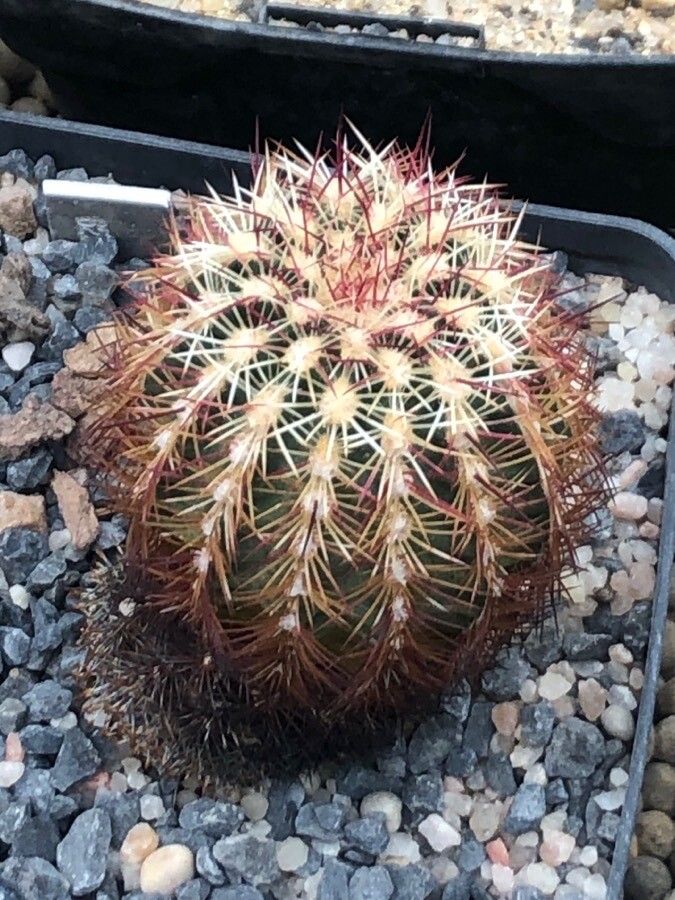
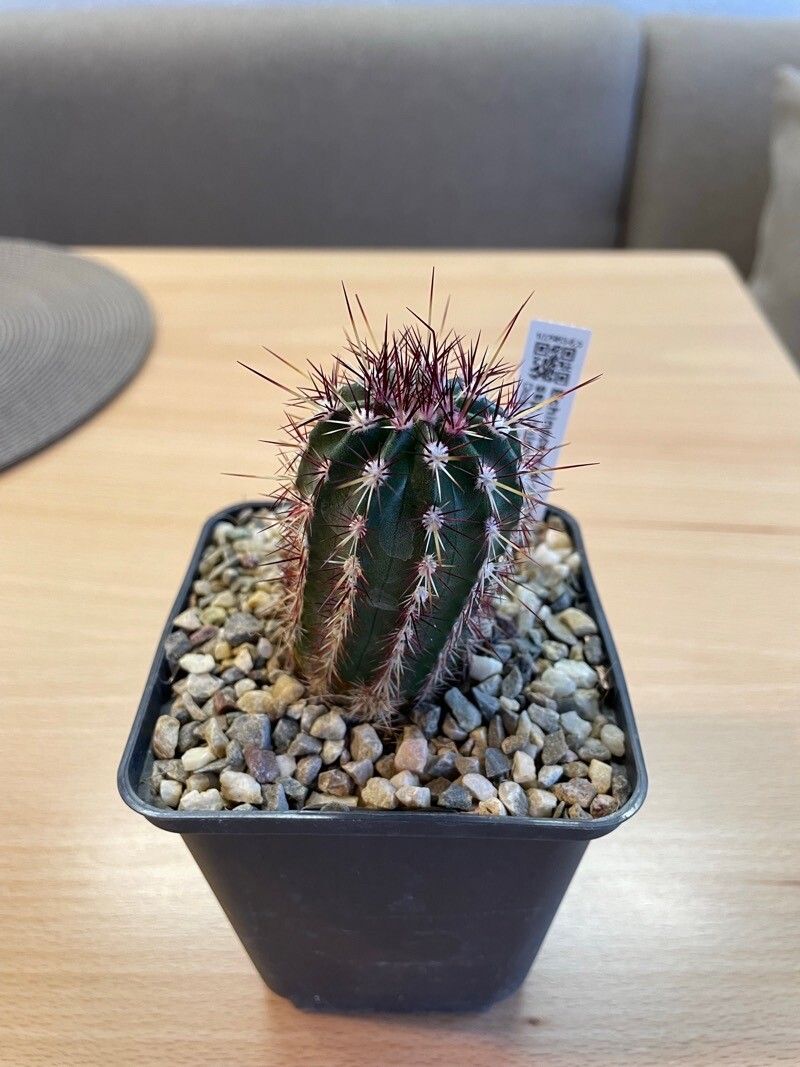
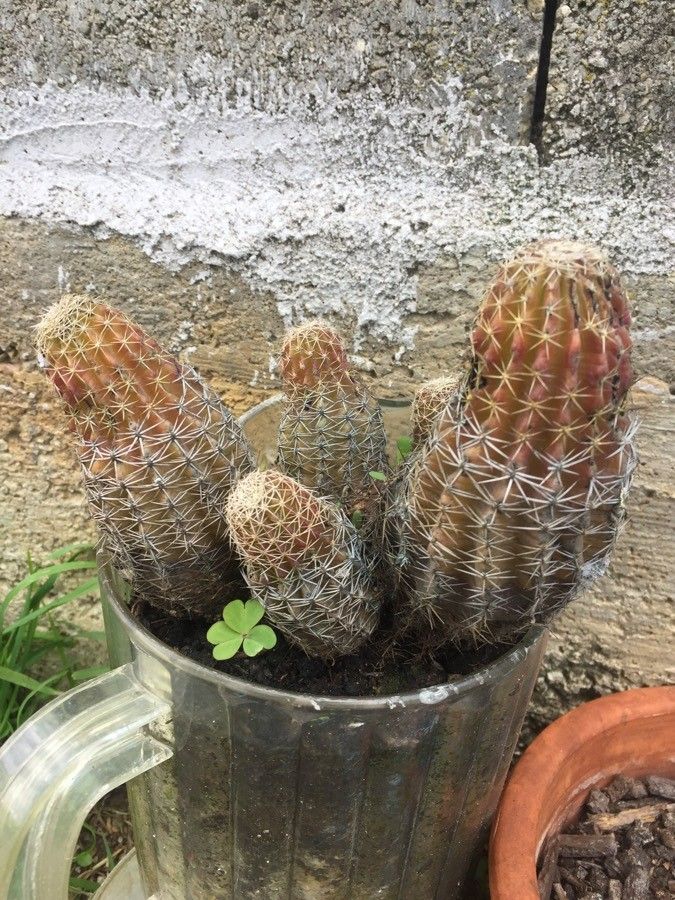
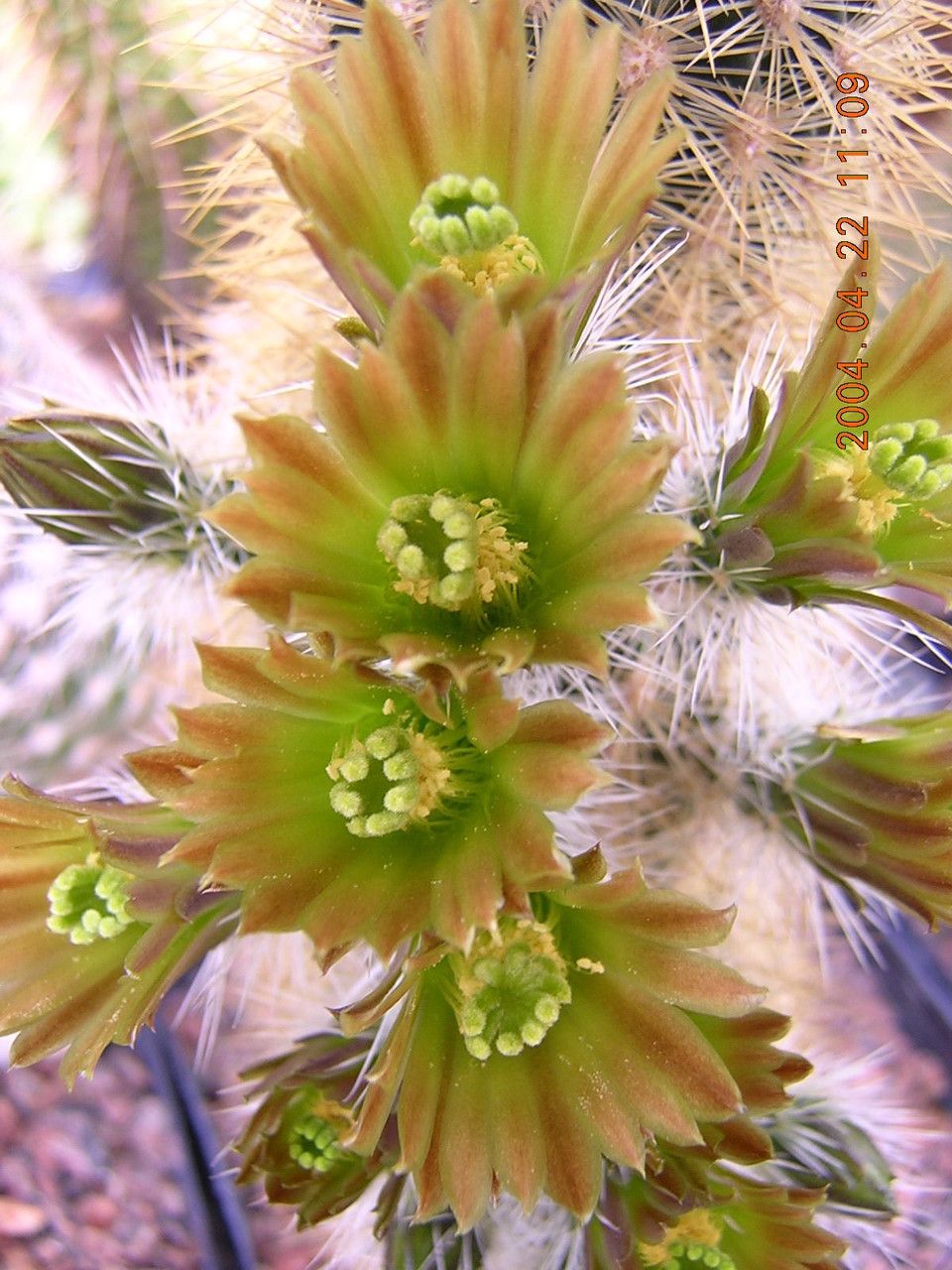
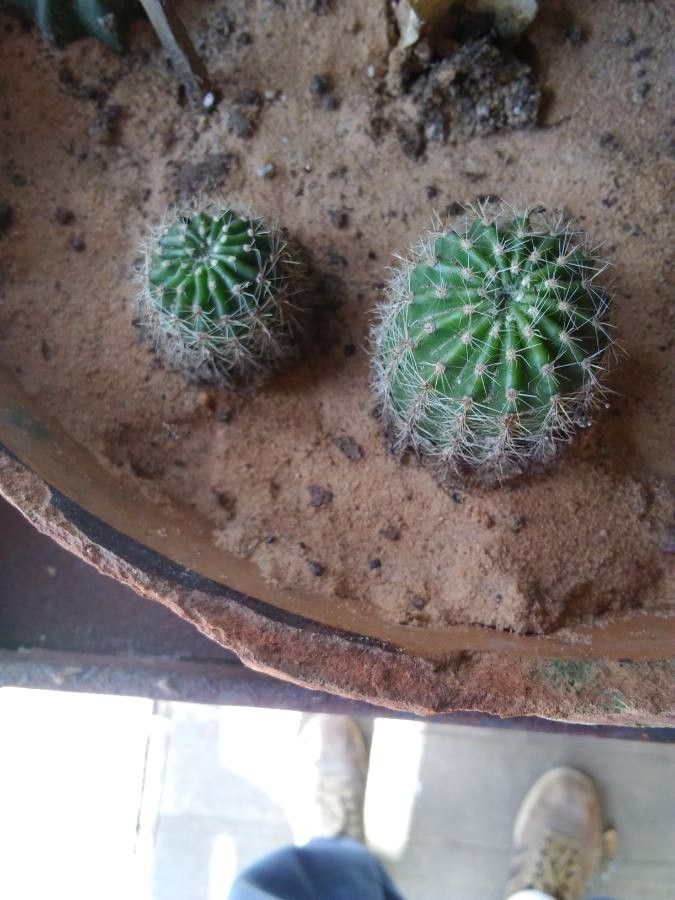
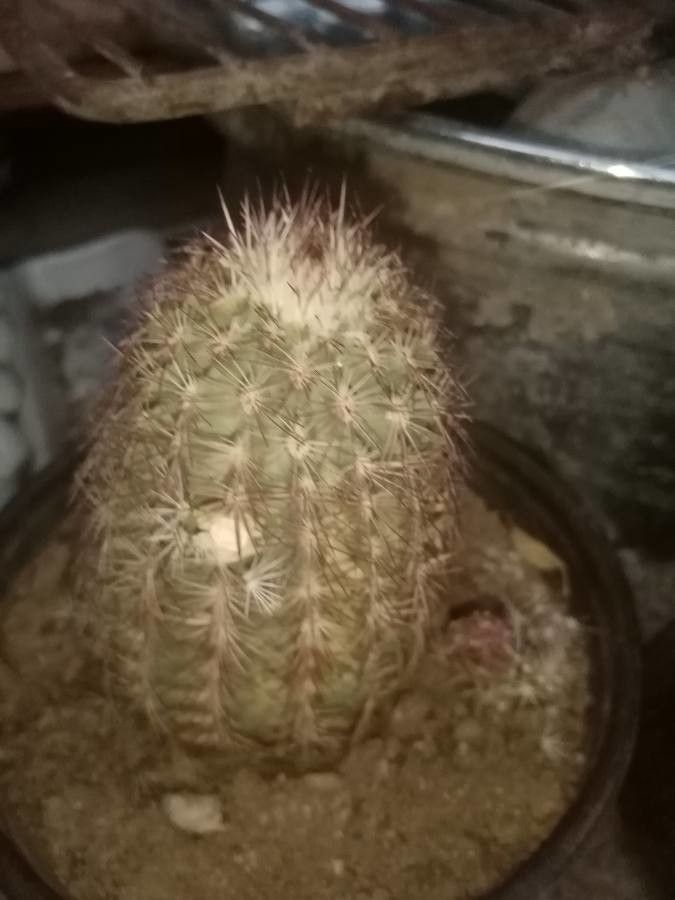
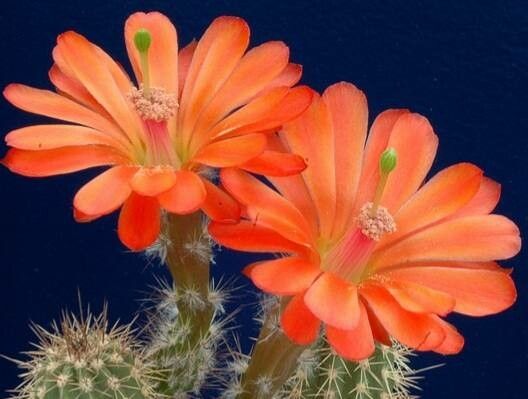
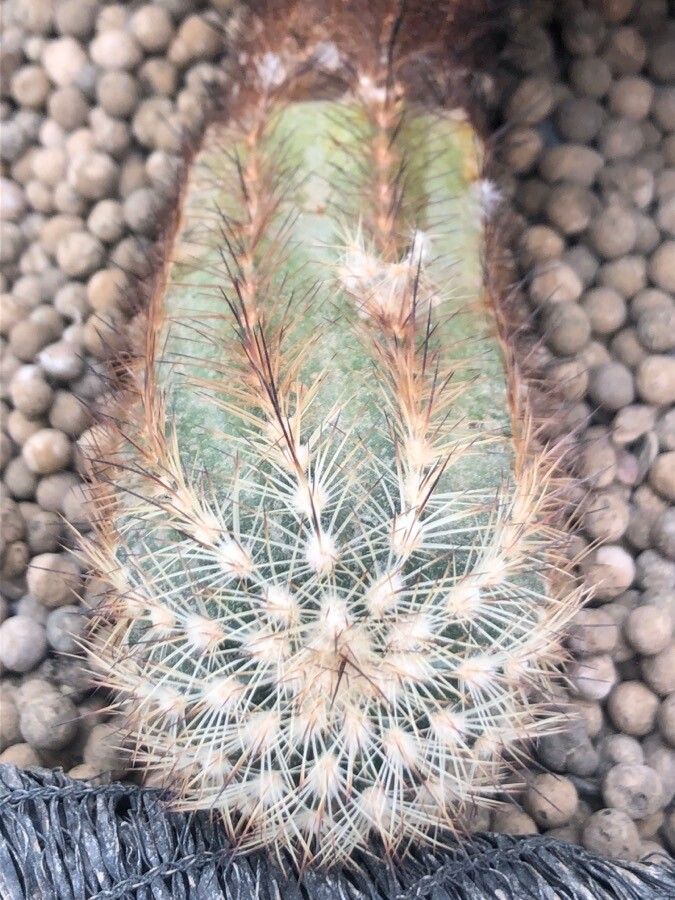
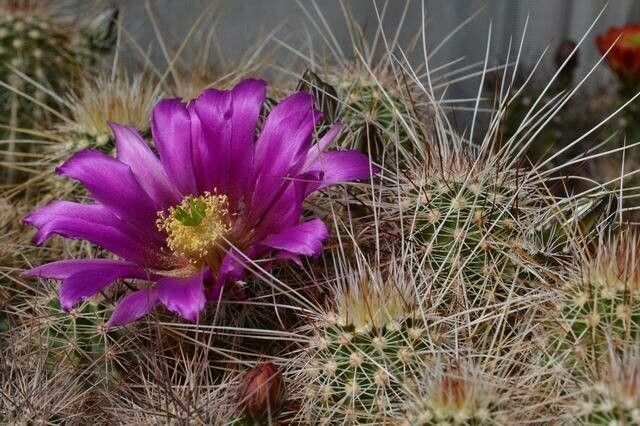
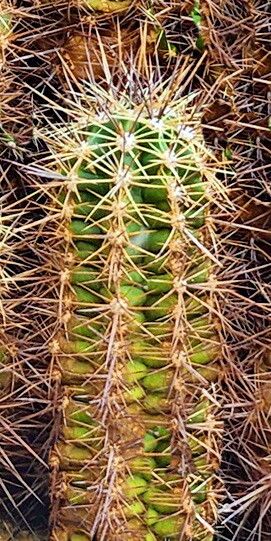
Echinocereus viridiflorus is a species of cactus known by the common names nylon hedgehog cactus, green pitaya, and small-flowered hedgehog cactus. It is native to the central and south-central United States and northern Mexico, where it can be found in varied habitat types, including desert scrub, woodlands, dry grasslands, and short-grass prairie.This cactus has a small spherical or cylindrical stem 3 centimeters to over 30 centimeters tall and up to 9 centimeters wide. It is mostly unbranched but it may occur in squat clusters of several branches. The body of the plant is ridged and lined with many areoles bearing spines. The spines may be red, yellow, white, purplish, or bicolored, sometimes with darker tips. The flower is up to 3 centimeters long and has tepals in shades of yellowish, brownish, greenish, or occasionally red, with darker reddish midstripes. The tepals are thin at the tips.The taxonomy of the species is uncertain, with authors recognizing several varieties which are sometimes treated as separate species. One variety, var. davisii (sometimes called Echinocereus davisii), Davis' green pitaya, is federally listed as an endangered species. This taxon is very small, reaching no more than 3 centimeters tall. It becomes smaller when water is scarce, withdrawing under the ground, sometimes leaving just some spines sticking out. It has yellow-green flowers. This rare variety is endemic to Brewster County, Texas, where it grows in beds of Selaginella in rocky soils of novaculite origin. There was only one population known as of 1984, and it probably will not expand its range because it is limited to a specific mineral substrate.
The Nylon hedgehog cactus is fairly resistant to disease and, under normal care, does not become ill easily. That said, it can be vulnerable to mealybugs; these pests may cause some damage but typically do not pose a serious threat. Regarding care, the Nylon hedgehog cactus is drought-tolerant and does not need frequent watering. It can endure extended intervals without water and requires little fertilizer. However, if light is inadequate and the plant is overwatered, it is highly prone to root rot. In general, the Nylon hedgehog cactus is a good choice for people who prefer low-maintenance plants, though it's important to meet its basic needs. It is especially appropriate for those who are away for long periods and might forget to water regularly.
How to keep Echinocereus Viridiflorus.
Light
Originating from arid areas, the Nylon hedgehog cactus flourishes in full sun, as its native habitat features intense sunlight and very little shade. It can also tolerate partial sun, providing some flexibility in its growth.
Water
The nylon hedgehog cactus is drought-tolerant and requires thorough watering only when the soil becomes dry. During the growing seasons, from spring to fall, water it once or twice a week. In winter, reduce the frequency of watering. It's best to use rainwater or distilled water to prevent soil compaction caused by tap water. Be careful not to splash water on the stem to avoid rot.
Temperature
Nylon hedgehog cactus thrives in warm conditions and needs higher temperatures during the growing season to encourage growth and metabolic activity. It prefers abundant sunlight, appropriate moisture levels, and good ventilation. However, it is vulnerable to damage from excessively low temperatures and from overwatering. It's important to maintain a balance and avoid both excessively high temperatures and overly dry conditions.
Fertilizer
For the Nylon hedgehog cactus, light applications of fertilizer once or twice a year during the growing season are enough. Do not fertilize in winter or in summer when it is dormant. Cut back on fertilizer for plants that have been repotted and wait a couple of months after repotting before you begin feeding. Fertilizing promotes healthy growth and helps produce blooms.
Pruning
The Nylon Hedgehog Cactus is characterized by its vibrant green flowers and spiny exterior. To promote growth and maintain its shape, prune the cactus in early spring by removing any damaged pads. This practice improves airflow and enhances the plant's appearance. Be sure to use sharp, sterilized tools and wear protective gloves to safely handle the cactus's spines.
Toxicity
These hedgehog cactus have no known harmful effects, but their spines may be extremely sharp and hazardous for pets and children.
Further reading →
The toxicity and danger assessments provided are for reference only. We do not assure their accuracy, so it's crucial not to depend on them. Seek professional advice when necessary for accurate guidance.
Botanical profile.
- Plant Type
- Succulent
- Life Cycle
- Perennial
- Genus
- Echinocereus
- Family
- Cactaceae
- Hardiness Zone
- 4-9
- Mature Height
- 0 cm to 30 cm
- Mature Spread
- 5 cm to 10 cm
- Leaf Color
- Green, Dark Green
- Leaf Type
- Evergreen
- Flower Size
- 2.03 cm to 3.05 cm
- Bloom Time
- Mid spring, Late spring
- Planting Time
- Spring
- Harvest Time
- Early summer, Mid summer
- Native Area
- North America, Central America
Other names.
Reader questions.
What is the Nylon hedgehog cactus?
The Nylon hedgehog cactus, scientifically known as Echinocereus viridiflorus, is a species of cactus. There is no specific information provided about its essentials or symptoms related to its care or environment.