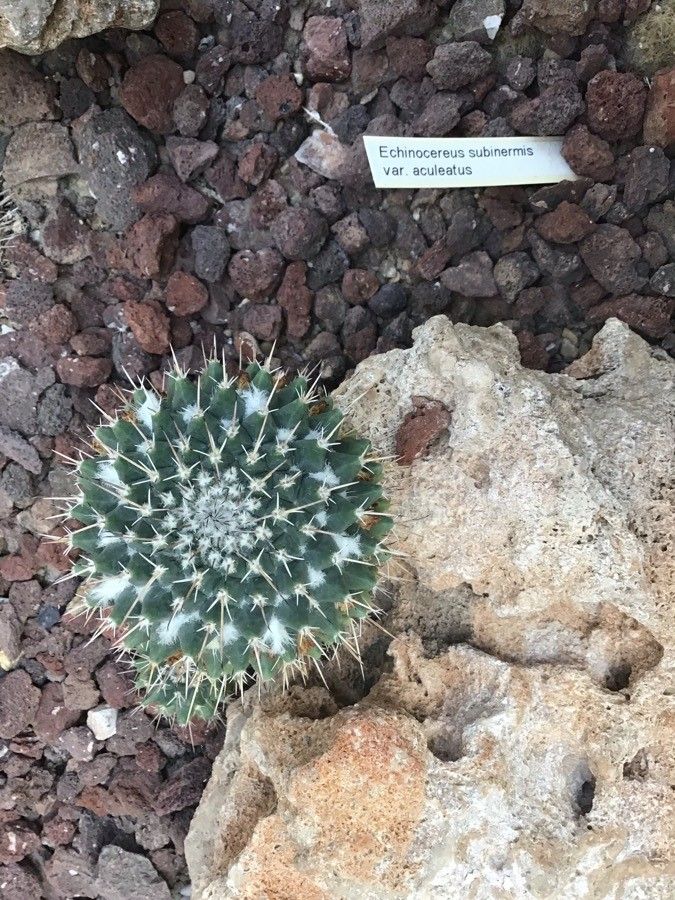
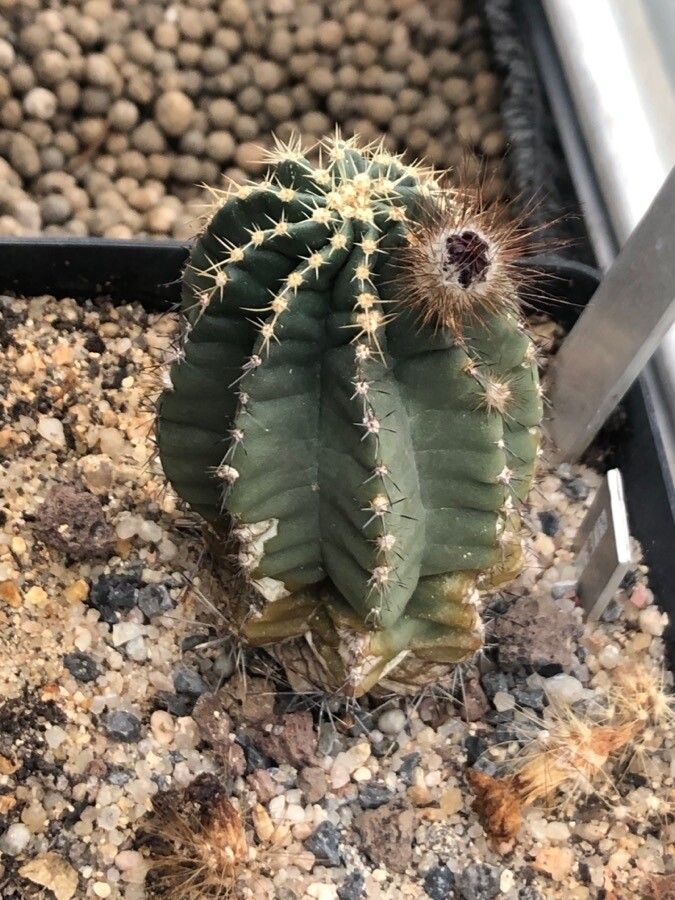
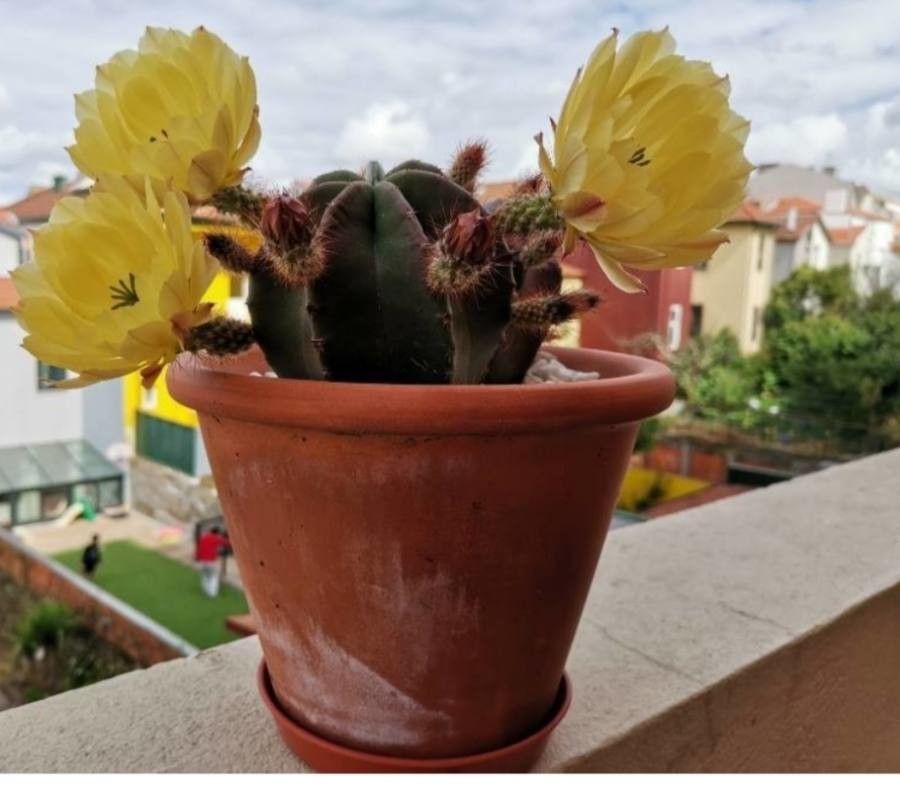
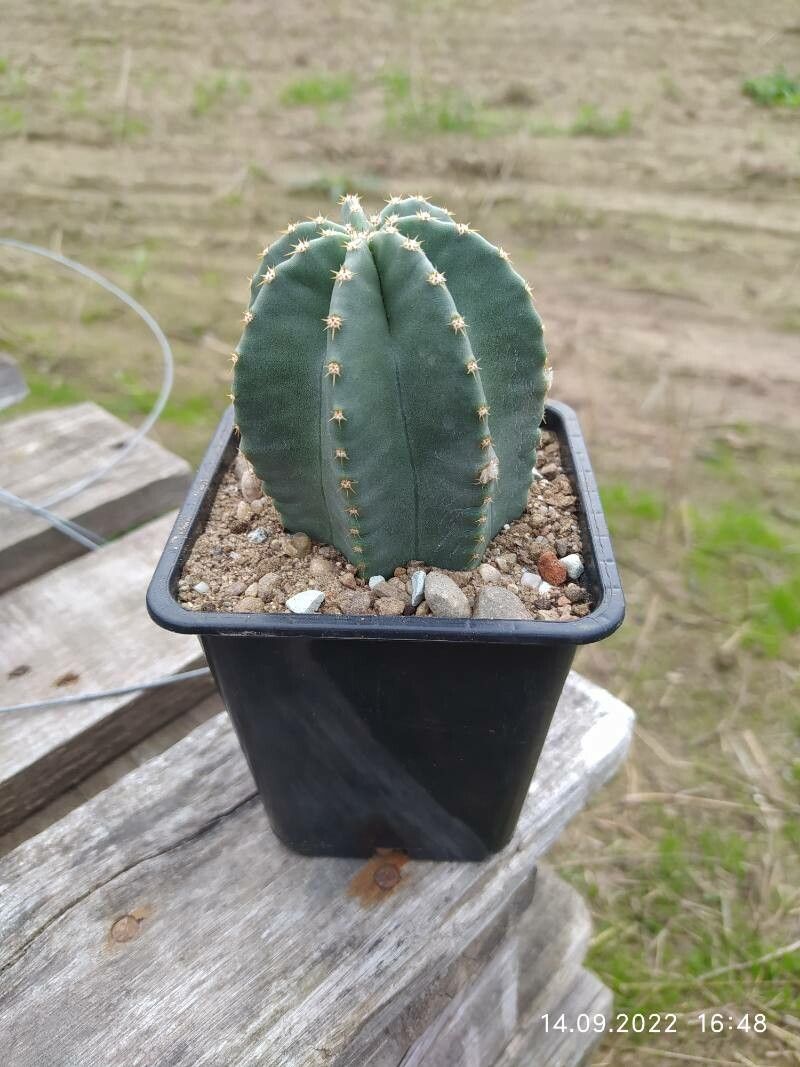
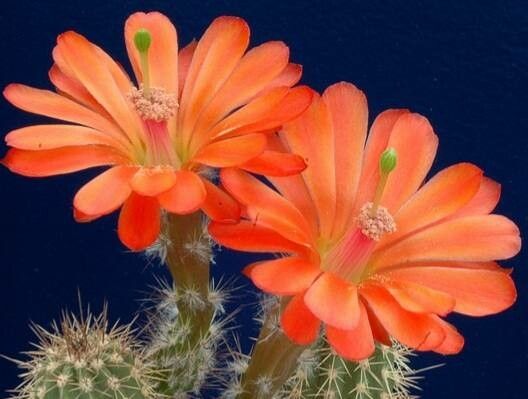
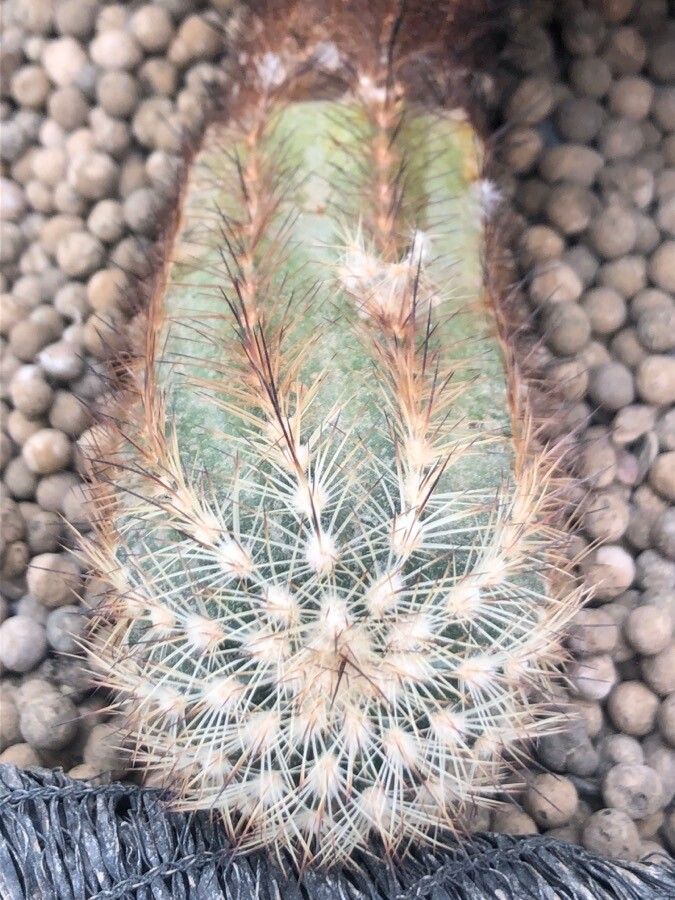
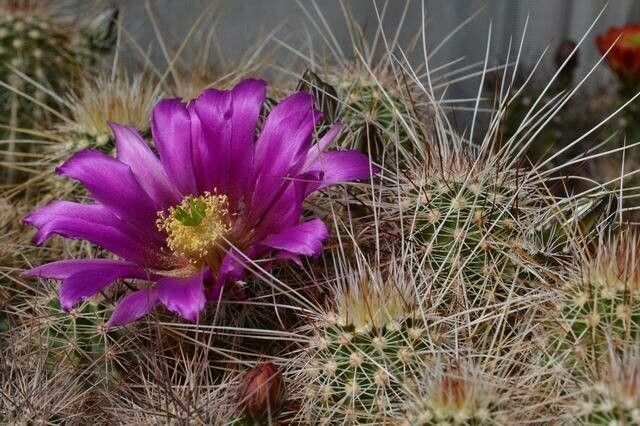
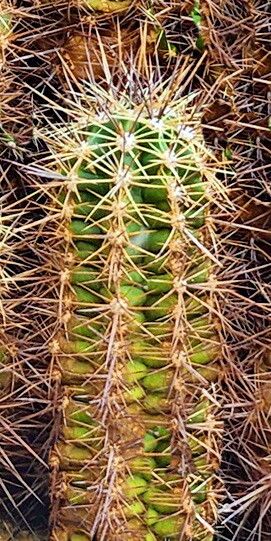
Echinocereus subinermis is a species of flowering plant in the cactus family Cactaceae, native to north, northwestern, and central Mexico. The stem is a ball with 5 to 8 prominent ribs, growing to a cylinder or cone 30 cm (12 in) tall and wide, and producing yellow flowers 8 cm (3 in) long in early summer.In cultivation in temperate regions it requires the protection of glass with heat. It has gained the Royal Horticultural Society's Award of Garden Merit.
Echinocereus subinermis shows good resistance to disease and tolerates normal care without becoming ill easily. It can, however, be vulnerable to mealybugs; these pests may cause some damage but are usually not a serious risk. Regarding care, Echinocereus subinermis is drought-tolerant and does not need frequent watering; it can withstand long periods without water and requires little fertilizer. That said, it is highly prone to root rot if kept in poor lighting and is overwatered. Overall, Echinocereus subinermis is suitable for people who prefer to spend less time on plant care, though it remains important to understand and meet its basic needs. It is particularly well suited to those who are away for extended periods and may forget to water their plants regularly.
How to keep Echinocereus Subinermis.
Light
Echinocereus subinermis does best where it receives ample sunlight, like in its native surroundings. It can tolerate somewhat lower light levels, but insufficient light will impair its health and growth. Its light requirements can change during different stages of development.
Water
Echinocereus subinermis is well-suited for arid climates, needing minimal watering, usually about once every four weeks. It thrives in well-draining soil, which helps prevent root rot. This plant is also adapted to intense sunlight and heat, storing moisture effectively to withstand prolonged dry spells.
Temperature
Echinocereus subinermis thrives at temperatures of 68 to 100 ℉ (20 to 38 ℃). Native to warm, arid areas, it can withstand high daytime heat. In cooler seasons, lowering nighttime temperatures is recommended to encourage flowering.
Fertilizer
Echinocereus subinermis only needs light fertilization once or twice a year during the growing season. Do not fertilize in winter or in summer when the plant is dormant. Cut back on fertilizer for plants that have been repotted and wait a couple of months after repotting before applying any fertilizer. Fertilizing helps maintain healthy growth and promotes flowering.
Pruning
Echinocereus subinermis needs very little pruning. However, it's important to remove withered flowers and branches so the plant can concentrate its nutrients on healthy growth.
Pot & Repot
Repot Echinocereus subinermis in spring or summer, picking a pot slightly larger than the current container with good drainage. Use a well-draining, sandy or gritty cactus mix. Handle the cactus carefully to avoid its spines. Allow the plant to dry out before repotting to help prevent root rot. After repotting, wait a week before watering so the roots can heal.
Botanical profile.
- Plant Type
- Succulent, Shrub
- Life Cycle
- Perennial
- Genus
- Echinocereus
- Family
- Cactaceae
- Hardiness Zone
- 9-12
- Mature Height
- 30 cm
- Mature Spread
- 30 cm
- Leaf Color
- Green
- Leaf Type
- Evergreen
- Flower Color
- Yellow
- Flower Size
- 5.08 cm to 12.70 cm
- Bloom Time
- Late spring, Early summer, Mid summer
- Planting Time
- Spring, Summer, Autumn
- Harvest Time
- Mid summer, Late summer, Early fall
Other names.
Reader questions.
What should I do if I give too much or too little water to my Echinocereus subinermis?
Echinocereus subinermis and other succulents can survive without water for long periods, so it's rare to find one suffering from underwatering. However, if you forget to water your plant for a month or more, you may notice it looking thirsty or with leaf damage. Signs of underwatering include shriveled, dry, and flat leaves, some of which may have dried up completely and turned brown. The soil will also be completely dried out. To remedy this, give your Echinocereus subinermis plenty of water by submerging the pot in water for 5-10 minutes until the soil feels moist. Remove dried out leaves to make way for new growth. Overwatering is dangerous for Echinocereus subinermis and can lead to root rot, which hinders the absorption of nutrients and water by the roots. Symptoms of overwatering are yellow, swollen, and translucent leaves that may burst open. If left untreated, leaves may turn brown or black and fall off easily. Check the soil to confirm if overwatering is the issue. To save an overwatered plant, act quickly before extensive damage occurs. Remove the plant from its pot and examine the roots and soil. If the roots are dark brown or black, soft, mushy, or slimy, root rot has set in. If most of the roots are affected, it may be impossible to save the plant. In this case, remove healthy leaves and use them to propagate a new plant. If only some roots are affected, there's a chance to save it. Remove unhealthy roots with a sterilized cutting tool and dip the remaining firm, pale roots in fungicide. Repot the plant in fresh, well-draining soil. While not guaranteed, the plant will likely recover and produce new growth in the next growing season.
Why should I put fertilizer on my Echinocereus subinermis?
Fertilizing Echinocereus subinermis during the growing season helps provide nutrients for healthy growth and blooming. Even though it stores water and nutrients, applying plant food supports its overall wellbeing.
How much sunlight does Echinocereus subinermis need to grow? How much sunlight does Echinocereus subinermis require for its growth?
To ensure the healthy growth of Echinocereus subinermis, it is recommended to provide it with a minimum of 6 hours of sunlight daily. However, the plant can tolerate longer hours of sunlight, up to 14 hours, without any adverse effects. The actual minimum hours may vary depending on sunlight intensity and environmental conditions, but excessive sunlight is generally not a concern for Echinocereus subinermis.
What temperature is best for your Echinocereus subinermis?
The Echinocereus subinermis thrives best in specific temperature conditions, ranging from 75-90℉ (25-32℃). It is important to ensure that the temperature does not drop below 75℉ (25℃) during early winter. In such cases, bringing the plant indoors can provide better protection from extreme temperatures. Although the Echinocereus subinermis can tolerate certain extremes, such as lows of 50℉ (15℃), it is not ideal. Therefore, it is advisable to bring it indoors if winter conditions are anticipated outside.
How frequently should I water my Echinocereus subinermis plant?
Determining how often to water Echinocereus subinermis is not governed by a strict rule. The best approach is to check the soil and only water when it is completely dry. You can use your finger or a moisture meter to assess the moisture level beneath the surface. If you have planted it in a deep pot, you can use a stick or chopstick for this purpose. If the soil feels slightly damp, it is advisable to wait a few days and check again. Generally, most individuals will need to water Echinocereus subinermis every two weeks during summer and once a month in winter. However, there are various factors that can influence the watering frequency. The following section provides some considerations to help you determine the appropriate watering schedule.
When should I fertilize my Echinocereus subinermis for best results?
Echinocereus subinermis, like all plants, benefits from nutrients. However, it only requires a small amount of fertilizer during the growing season. It is best to fertilize this plant 1-2 times a year, specifically in the spring and autumn. Avoid fertilizing it in the winter and summer when it is dormant. When repotting, be cautious and decrease the amount of fertilizer used. It is also advisable to wait a few months after repotting before applying fertilizer.
What kind of sunlight does Echinocereus subinermis require?
Echinocereus subinermis, a full-sun plant, requires ample bright sunlight to thrive. It can do well in direct light or bright indirect sun. While certain varieties may survive with partial sun exposure, they generally benefit from receiving more sunlight.
How do I change the temperature for my Echinocereus subinermis at different growth stages?
Echinocereus subinermis goes through different growing phases. First, the dormant seed sprouts and becomes a seedling. For the seeds to germinate, they require specific environmental conditions, such as a temperature ranging from 75-90℉ (25-32℃). The best time to promote vigorous growth is during the summer, when the optimal temperature is around 85℉ (30℃). During the hot summer months, you can move your Echinocereus subinermis from indoors to a sunny spot to ensure it receives enough sunlight.
What do I need to think about when watering my Echinocereus subinermis plant?
To properly water your Echinocereus subinermis, consider several environmental factors. The container size and soil type impact watering frequency and quantity. Use a container with drainage holes to prevent excess water accumulation. A small container holds less moisture, so it requires more frequent watering, while a larger pot retains moisture longer and needs less frequent watering. Avoid using an oversized container as this can lead to overwatering. Repotting should involve moving to a size slightly larger than the current container, preferably a shallow one since this plant has shallow root systems. The watering needs of Echinocereus subinermis vary depending on the season. In winter, growth slows down, and the plant requires less water since it is conserving energy. Cooler temperatures reduce evaporation, keeping the soil moist for longer periods. Your local climate also plays a role in watering frequency. Humid areas that receive more rainfall require less frequent watering compared to dry and arid environments. Remember that the same geographic location can experience significant variations due to seasonal changes and indoor heating or air conditioning use. For outdoor planting, once Echinocereus subinermis has established a root system in the ground, it typically doesn't need extra watering aside from natural precipitation and dew. However, during extended dry spells, occasional watering may be necessary. If growing in a container, you can move the plant outside in spring and summer when the temperature is suitable, ensuring sufficient sunlight exposure. However, be aware that potted Echinocereus subinermis kept outdoors generally requires more water than those kept indoors due to increased sun exposure, even if on a shaded porch.
When is the best time to not fertilize my Echinocereus subinermis plant?
Echinocereus subinermis, like other plants, goes into a dormant period. During this time, it is best to refrain from applying fertilizer. Both in the summer and winter, the plant stops growing, so it is important to avoid fertilizing. Additionally, it is recommended to wait a couple of months after repotting in the spring before resuming fertilization.
Should I keep Echinocereus subinermis out of the sun?
Echinocereus subinermis is a type of plant that thrives in extremely hot and sunny environments. Because of its adaptation to these conditions, it doesn't require protection from the sun. However, if you are planning to move your Echinocereus subinermis to a sunnier spot than it's used to, you need to be cautious. Plants need time to adjust to new conditions, so it's recommended to start by gradually exposing it to the sun for a couple of hours each day. As the plant adapts, you can increase the duration of sun exposure. Once fully adapted, most Echinocereus subinermis plants can handle full sun and won't require protection.
How do I make sure my Echinocereus subinermis stays warm during the cold seasons?
To help your Echinocereus subinermis survive the winter, it is recommended to bring it indoors. Some people choose to purchase grow lights to ensure the plant gets enough sunlight, but if your home is not very dark, you may not need to invest in these lights. Instead, place your plants where they will receive the most sunlight possible. This should be enough to keep the Echinocereus subinermis thriving in the winter. If you have multiple plants, rotate them so that they all receive sufficient sunlight. However, if you live in northern areas with cold weather, be cautious about placing the Echinocereus subinermis too close to the window, as the extreme cold could damage them.