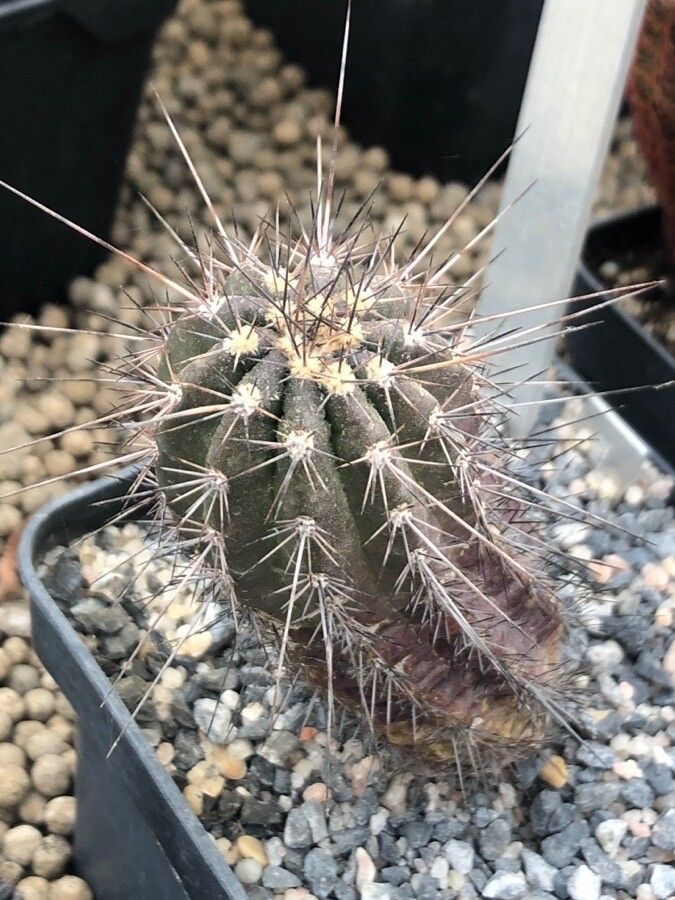
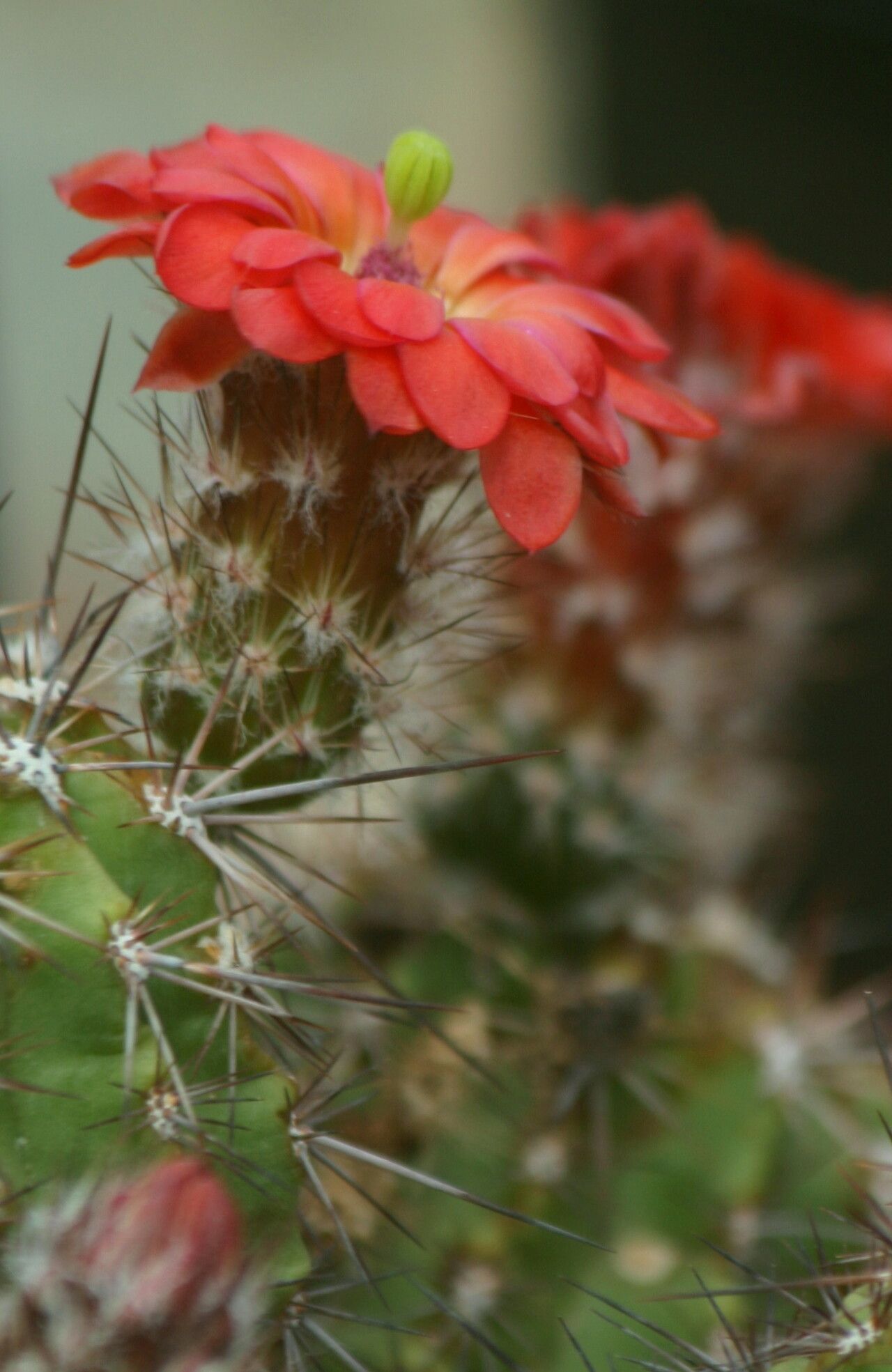
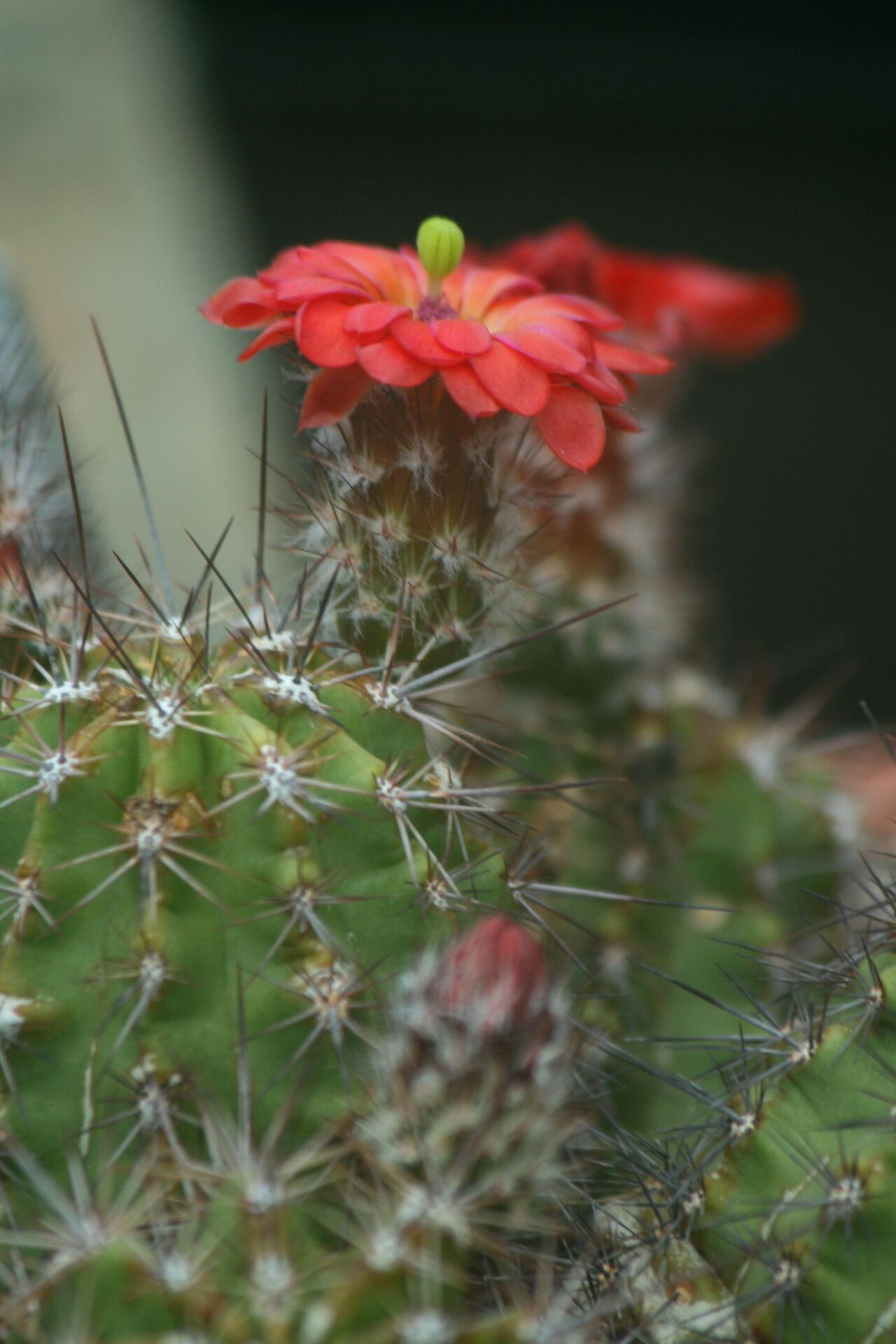
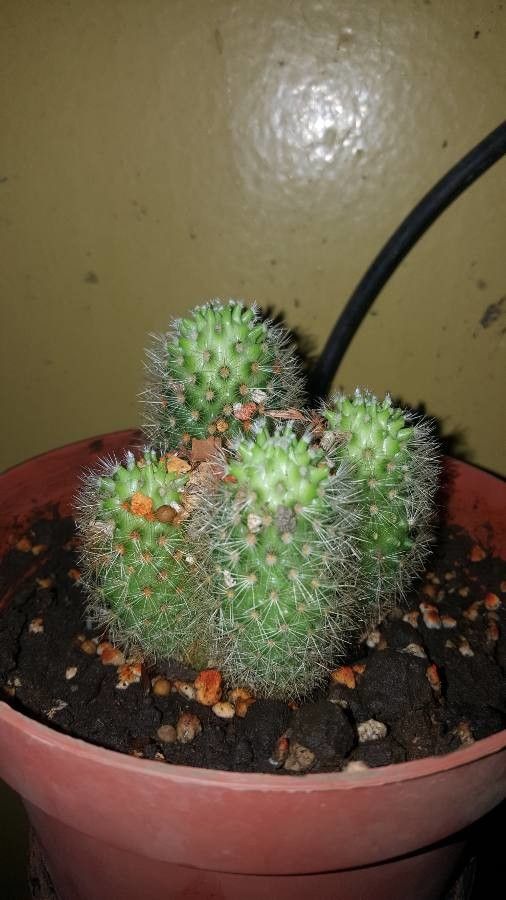
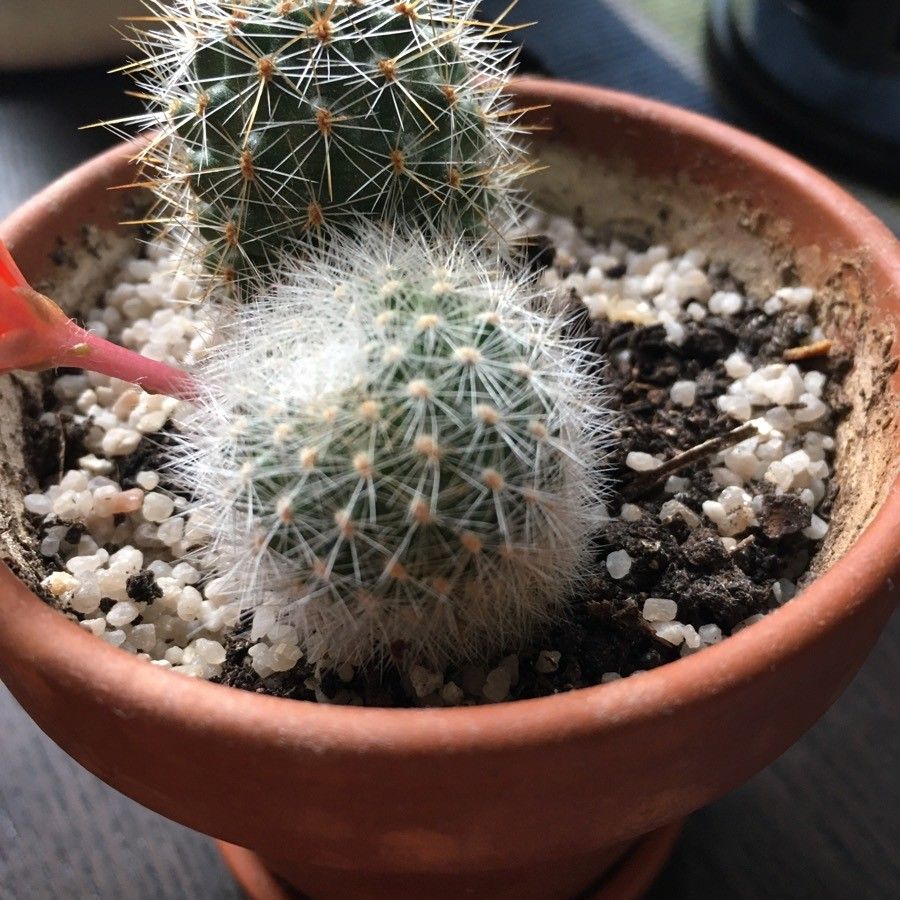
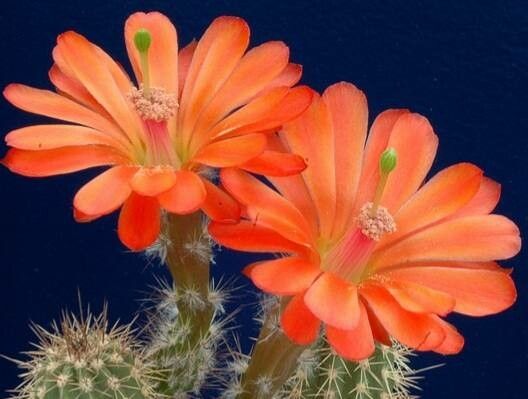
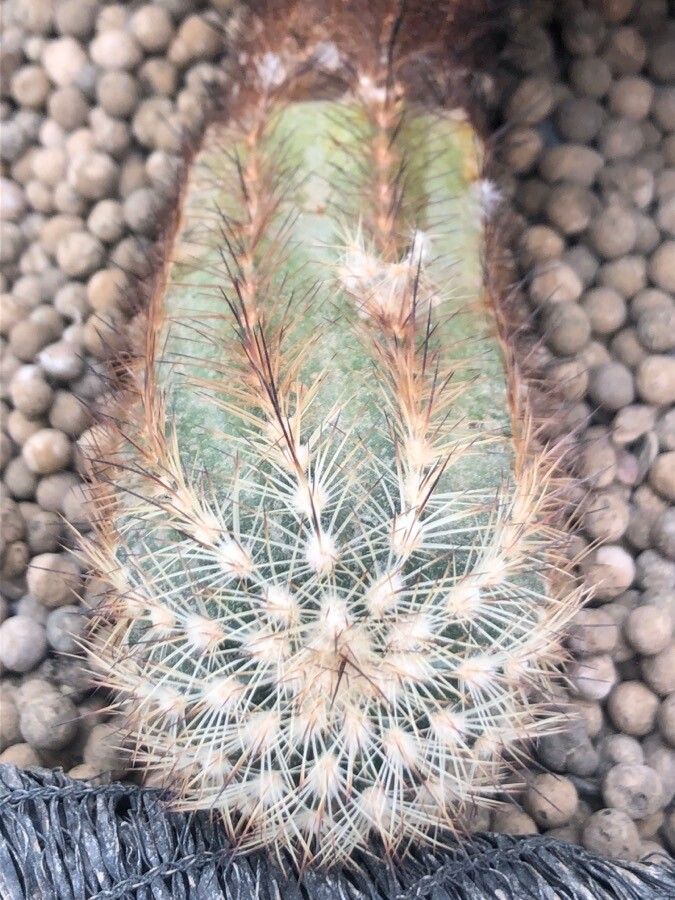
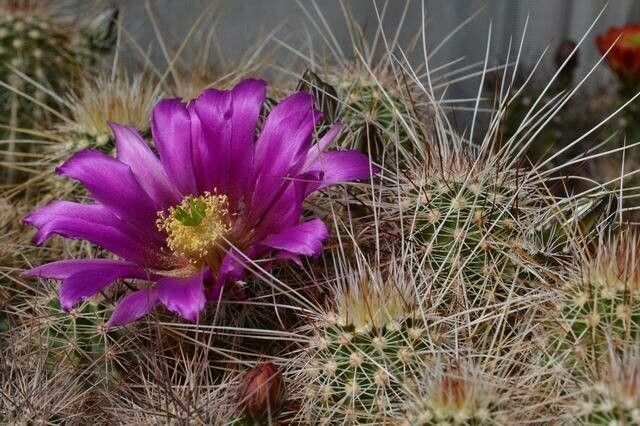
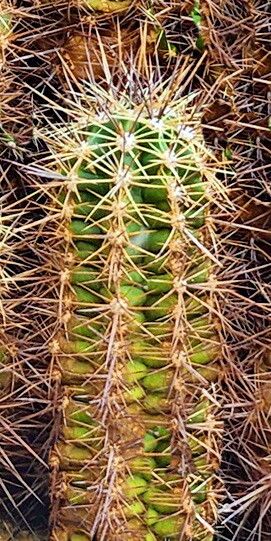
Echinocereus polyacanthus is a species of cactus native to the southwestern United States and northern Mexico. It typically thrives in rocky, arid environments and can grow up to 30 cm in height. The plant features a cylindrical stem covered in spines that range in color from yellow to brown. Its flowers, which are generally pink or purple, bloom from late spring through early summer.
This cactus species is often cultivated as an ornamental plant due to its appealing appearance and low maintenance needs. However, it's important to note that Echinocereus polyacanthus can be challenging to grow outside its natural habitat without proper care and attention.
The Mojave mound cactus is resistant to many diseases and tolerates normal care without getting sick easily. It can, however, be vulnerable to mealybugs; these pests may cause some damage but are generally not a serious threat. In terms of care, the Mojave mound cactus is drought-tolerant and does not need frequent watering. It can go long periods without water and requires little fertilizer. That said, if lighting is poor and the plant is overwatered, it is highly prone to root rot. Overall, the Mojave mound cactus is a good option for people who want a low-maintenance plant, but it’s important to understand and meet its basic needs. It is especially well-suited to those who are often away for long stretches and may forget to water regularly.
How to keep Echinocereus Polyacanthus.
Light
Native to dry regions, the Mojave mound cactus does best in full sun, since its natural habitat features intense sunlight and very little shade. It can also tolerate partial sun, providing some flexibility in its growth.
Water
The Mojave mound cactus is a drought-tolerant plant, requiring thorough watering only when the soil is completely dry. During the winter, water it once a week. In the growing seasons, water the cactus once or twice weekly. To prevent soil compaction caused by minerals in tap water, use rainwater or distilled water instead. Be careful to avoid getting water on the stem.
Temperature
The Mojave mound cactus prospers in warm conditions and needs higher temperatures during the growing season to encourage growth and metabolic processes. It prefers abundant sunlight, suitable moisture, and good air circulation. However, it can be harmed by overly low temperatures and by overwatering. It is also important to maintain balance and avoid excessively high heat and overly dry conditions.
Fertilizer
The Mojave mound cactus needs only light fertilizer applications once or twice a year during its growing season. Do not fertilize in winter or in summer when the plant is dormant. Cut back on fertilizer for repotted plants and wait a few months after repotting before applying fertilizer. Feeding helps maintain healthy growth and promotes flowering.
Pruning
The Mojave mound cactus needs very little pruning, which is best carried out in early spring to remove any dead stems. Be sure to use clean, sharp tools and avoid excessive pruning, as this can stress the plant. Taking off spent blooms encourages growth and improves air circulation, while proper pruning helps maintain the cactus's shape and health. Always wear gloves for protection.
Botanical profile.
- Plant Type
- Succulent
- Life Cycle
- Perennial
- Genus
- Echinocereus
- Family
- Cactaceae
- Hardiness Zone
- 5-10
- Mature Height
- 15 cm to 30 cm
- Mature Spread
- 10 cm to 20 cm
- Leaf Color
- Green
- Leaf Type
- Evergreen
- Flower Color
- Red
- Flower Size
- 5.08 cm to 6.35 cm
- Bloom Time
- Mid spring, Late spring
- Planting Time
- Summer, Autumn
- Harvest Time
- Early summer, Mid summer
- Native Area
- Mexico
Other names.