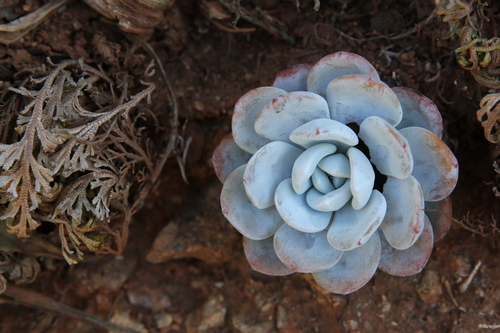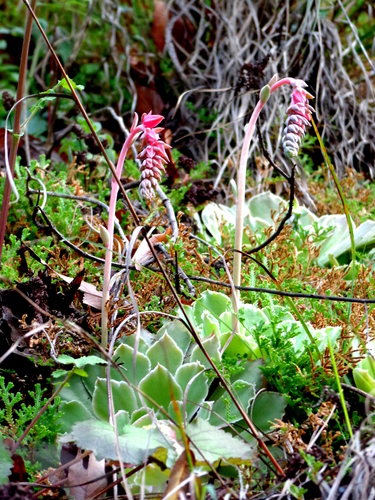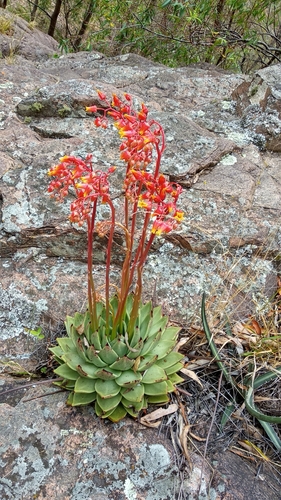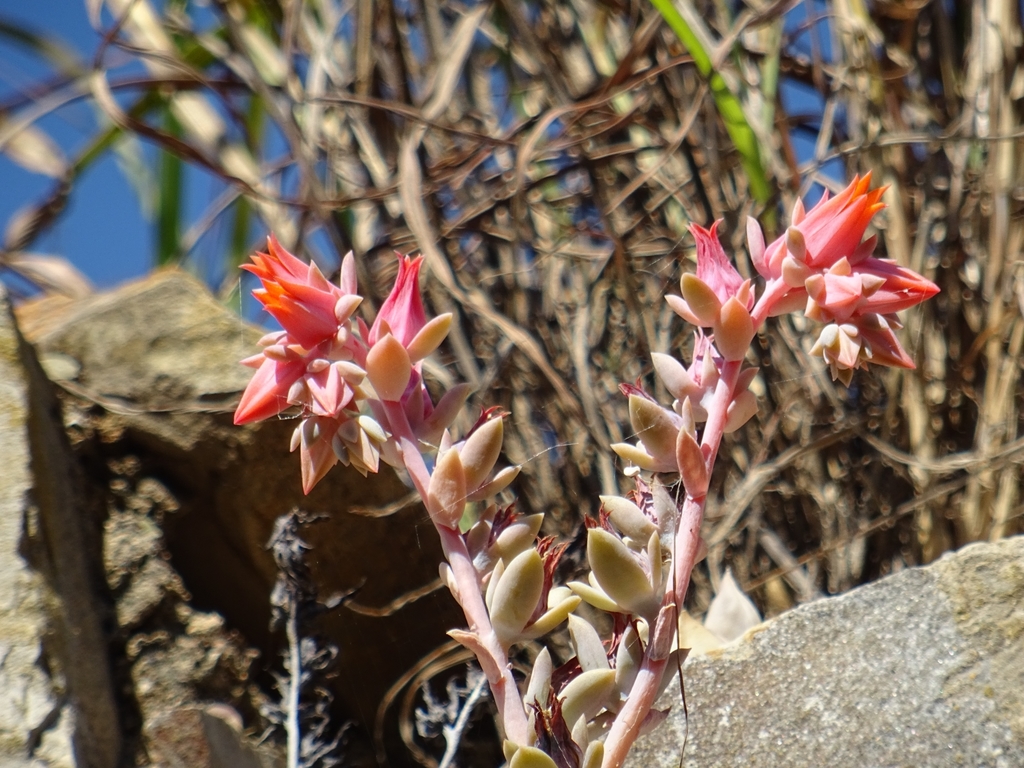
Echeveria runyonii is a succulent plant from the Crassulaceae family, native to Mexico. It has gained popularity as an ornamental plant due to its attractive rosette-shaped leaves and easy maintenance. The leaves are blue-green with pink or red tips, which become more pronounced under bright sunlight. During the summer, the plant produces small, bell-shaped flowers on tall stalks.
This succulent thrives in well-draining soil and bright, indirect sunlight. It can be grown both indoors and outdoors, provided it is protected from frost and extreme heat. Echeveria runyonii requires infrequent watering; however, when the soil has completely dried out, it should be watered deeply.
Propagation can be done through leaf cuttings or offsets produced by mature plants. With proper care, Echeveria runyonii can live for several years, adding a unique touch of beauty to any garden or indoor space.
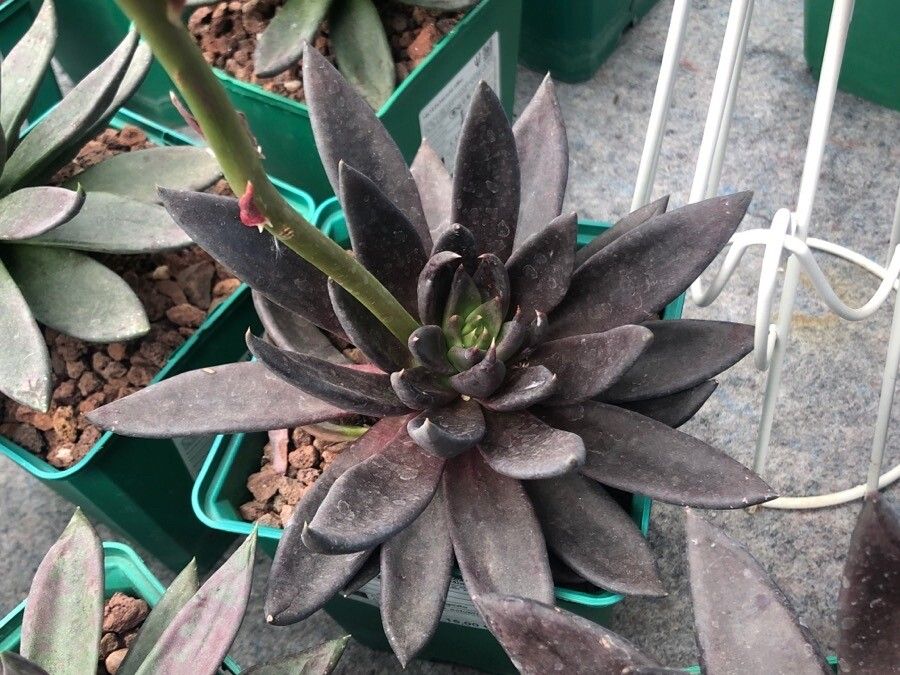
The Echeveria runyonii, a cultivar of Echeveria runyonii, resembles a large lotus flower. In addition to its striking appearance, this succulent also blooms. Its flowers take on an inverted bell shape, although they don't open very widely. Nonetheless, the flowers are quite beautiful. FUN FACT · FROM THE LIBRARY
The Echeveria runyonii, commonly known as "Topsy Turvy," earned its name due to the unique positioning and shape of its leaves. These leaves are so twisted and curl downwards that they appear to be upside down, which is why the plant is commonly referred to as Echeveria runyonii.
Echeveria runyonii has moderate disease resistance but is more sensitive to humidity. It becomes vulnerable to disease when humidity is high and is prone to root rot during dormancy. In terms of care, Echeveria runyonii tolerates drought but requires more frequent watering in the growing season. Watering should be greatly reduced or halted altogether during the dormant period. Echeveria runyonii is best for growers with some experience, since it can be difficult to care for, particularly while dormant. It is especially appropriate for people who can devote time to its care over the winter months.
How to keep Echeveria Runyonii.
Light
Echeveria runyonii originates from environments with steady, diffuse sunlight. Plenty of sun helps it thrive, though it can tolerate lower light levels. During its growth stages, exact differences in sunlight exposure aren't crucial. Excess sun can cause leaf scorch. A shortage of sun may make Echeveria runyonii become leggy as it reaches for more light.
Water
The Echeveria runyonii, native to arid regions, is a drought-tolerant plant that stores water in its succulent leaves. It thrives with minimal moisture and should be watered every 2-3 weeks. As an evergreen, the Echeveria runyonii keeps its foliage throughout the year and requires less water during the cooler months when evaporation rates are lower.
Humidity
This plant prefers dry conditions, so don't mist it. However, watering it less often can also thrive in higher humidity.
Temperature
Echeveria runyonii thrives at temperatures between 68 and 100 ℉ (20 and 38 ℃). This succulent is native to regions with mild temperatures and prefers bright, indirect sunlight. During the colder months, it's important to adjust watering and to protect it from frost if temperatures drop below 50℉ (10℃).
Fertilizer
Echeveria runyonii only needs light applications of fertilizer once or twice a year during the growing season. Do not fertilize in winter or in summer when the plant is dormant. Reduce fertilizer for plants that have been repotted, and wait a couple of months after repotting before applying any. Fertilizing supports healthy growth and encourages blooms.
Pruning
To help your Echeveria runyonii maintain its shape, prune it in the spring and fall by removing any excess or dense branches. If you want to propagate the plant, cut a sturdy stem with 5-6 leaves. Apply sulfur powder to the cut to protect it from infection, then allow it to heal. Once healed, plant the stem in slightly moist soil.
Pot & Repot
For repotting Echeveria runyonii, choose a pot slightly larger than the current one that provides good drainage. Use a gritty, well-draining succulent or cactus mix. Gently remove the plant from its old pot, brush off excess soil, and replant it at the same depth. Wait a few days before watering so any root damage can heal. Repot in spring or fall and place it in a brightly lit spot.
Toxicity
Echeveria Topsy Debbie is generally non-toxic to people and pets. This beautiful succulent is excellent, and completely safe, for any part of your home.
Further reading →
The toxicity and danger assessments provided are for reference only. We do not assure their accuracy, so it's crucial not to depend on them. Seek professional advice when necessary for accurate guidance.
Botanical profile.
- Plant Type
- Succulent, Herb
- Life Cycle
- Perennial
- Genus
- Echeveria
- Family
- Crassulaceae
- Hardiness Zone
- 9-12
- Mature Height
- 15 cm
- Mature Spread
- 20 cm
- Leaf Color
- Silver, Green, Gray
- Leaf Type
- Evergreen
- Flower Color
- Yellow, Orange
- Flower Size
- 1.02 cm
- Bloom Time
- Spring
- Planting Time
- Spring, Summer, Autumn
- Harvest Time
- Early summer, Mid summer
- Native Area
- Mexico
Other names.
Reader questions.
How should I water my Echeveria runyonii plant?
To properly water Echeveria runyonii, follow these steps: 1. Wait until spring when new leaves are growing before watering. 2. Only water when the soil is completely dry. 3. Use either tap water or distilled water. 4. Avoid watering from above, and instead water at the base of the plant. 5. Apply water slowly and evenly to moisten the entire soil surface. 6. This method helps keep the above-ground parts of the plant dry. 7. You can continue watering until you see excess water draining from the pot's hole.
Why is fertilizing my Echeveria runyonii necessary?
To support healthy growth, it is beneficial to fertilize Echeveria runyonii during the growing season. While it does store water and nutrients, applying plant food helps add nutrients to the growing medium. Additionally, fertilizing can also encourage mature specimens to produce blooms in the same season.
What are the sunlight requirements for Echeveria runyonii?
Echeveria runyonii needs an environment that closely mimics its natural habitat, which includes direct yet diffused sunlight exposure. Full sun, defined as more than 6 hours of sunlight daily, is essential for its thriving, while it can also tolerate partial sun, about 3-6 hours of sunlight. It’s crucial to observe the sunlight patterns in your garden or indoor space to ensure you're providing the right balance of light and shade. Overexposure to sunlight can cause leaf scorching, while insufficient light might make the plant grow leggy as it stretches towards the light source.
What are the ideal temperature conditions for Echeveria runyonii?
Echeveria runyonii thrives in a temperature range of 68 to 100°F (20 to 38°C). It is native to regions with mild temperatures and prefers bright, indirect sunlight. During winter, its growing season, it's crucial to keep the temperature above 20°C for optimal growth. If temperatures drop below 50°F (10°C) protection from frost is necessary, and when outdoor temperatures go below 0°C, the plant should be moved indoors to a well-lit area. Adjustments in watering are needed as the temperature changes, with increased watering in higher temperatures and reduced watering as it approaches 0°C. Outdoor plants in cold conditions should be sheltered and potentially placed in a temporary greenhouse to maintain adequate moisture.
What should I do if I give my Echeveria runyonii too much or too little water?
Overwatering is a more common problem with Echeveria runyonii than underwatering. It can cause the plant to die quickly, so it's important to avoid overwatering by allowing the soil to fully dry before watering. Many people mistakenly water their Echeveria runyonii too much, especially when it goes into dormancy. To fix the problem of overwatering, it's best to remove the plant from its pot and check the roots for signs of rot or other moisture-related issues. Some roots may need to be removed, while others can be cleaned and will recover. Then, repot the Echeveria runyonii in well-draining soil to prevent future overwatering. Although rare, underwatering can also occur. If this happens, simply water the plant slightly more often, being careful not to overcorrect and overwater.
When should I put fertilizer on my Echeveria runyonii plant?
Echeveria runyonii, like other plants, can benefit from added nutrients. However, it only requires a small amount of fertilizer during the growing season. For best results, fertilize your Echeveria runyonii 1-2 times a year. It is recommended to fertilize in the spring and autumn, but avoid doing so in the winter and summer when the plant is dormant. If you have recently repotted your plant, be cautious with fertilization and reduce the amount used. It is also wise to wait a couple of months after repotting before applying any fertilizer.
How can artificial lighting be used for Echeveria runyonii indoors?
In scenarios where natural sunlight is insufficient, especially during winter or in less sunny areas, artificial lighting becomes crucial for the growth of Echeveria runyonii. LED lights are preferred due to their ability to provide specific wavelengths required by the plants. The intensity needed varies: full sun plants require 30-50W/sq ft, partial sun plants 20-30W/sq ft, and full shade plants 10-20W/sq ft of artificial light. Positioning the light source 12-36 inches from the plant and ensuring it receives 8-12 hours of light per day mimics natural sunlight conditions best.
How does Echeveria runyonii respond to low temperatures?
Echeveria runyonii is sensitive to freezing temperatures and shows a preference for environments between 20°C and 38°C. Exposing the plant to temperatures below 0°C should be avoided as it can lead to water-soaked necrosis and wilting of the leaves. Winter temperatures should be kept above 0°C. If the temperature falls below -5°C, the plant may suffer from frost damage, leading to significant wilting and leaf drop after a week. In such cases, frostbitten areas should be trimmed off, and the plant should either be moved indoors to a warmer environment or placed in a makeshift greenhouse. Choosing a south-facing window when moving the plant indoors ensures it receives sufficient sunlight. In a greenhouse, proper ventilation is crucial to prevent decay due to poor airflow.
How often should I water my Echeveria runyonii? => How often should I give water to my Echeveria runyonii plant?
The water needs of Echeveria runyonii, a succulent plant, are low due to its origin in a hot and dry region. To care for this plant, allow the soil to completely dry out between waterings, which typically takes two weeks to a month. The frequency of watering depends on the season. During spring and summer, when the plant is growing, water every 2-3 weeks. In summer, the soil may dry out faster. However, when the temperature is below 60 degrees or above 85 degrees Fahrenheit, the plant will be dormant and does not require watering. Wait until the temperature is suitable for growth before watering again.
When is the best time to not fertilize my Echeveria runyonii?
Echeveria runyonii, like other plants, goes through a dormant period where you should avoid fertilizing. This happens during summer and winter, when the plant stops growing. It's also recommended to avoid fertilizing for a few months after repotting in the spring.
What are the symptoms of insufficient light in Echeveria runyonii?
Echeveria runyonii displays several symptoms when deprived of adequate sunlight. Some of these include lighter-colored new leaves, indicating a lack of chlorophyll and essential nutrients. The plant may exhibit leggy or sparse growth as it stretches thinly towards the light and experience slower or no new growth as it enters a survival mode. Symptoms like chlorosis (yellowing leaves), sunscald, leaf curling, wilting, and leaf scorching also manifest due to improper lighting, highlighting the plant's struggle in unfavorable light conditions.
How should I care for Echeveria runyonii in high temperatures?
When temperatures exceed the preferred maximum of 38°C, steps should be taken to protect Echeveria runyonii from heat stress. If temperatures rise above 43°C, the plant may enter a dormant state and become more susceptible to rot in high humidity. It is advisable to remove any dry and rotten parts and relocate the plant to a partially shaded spot, particularly shielded from the direct midday and afternoon sun. Additionally, watering should be halted until the weather cools down to help prevent the plant from rotting.