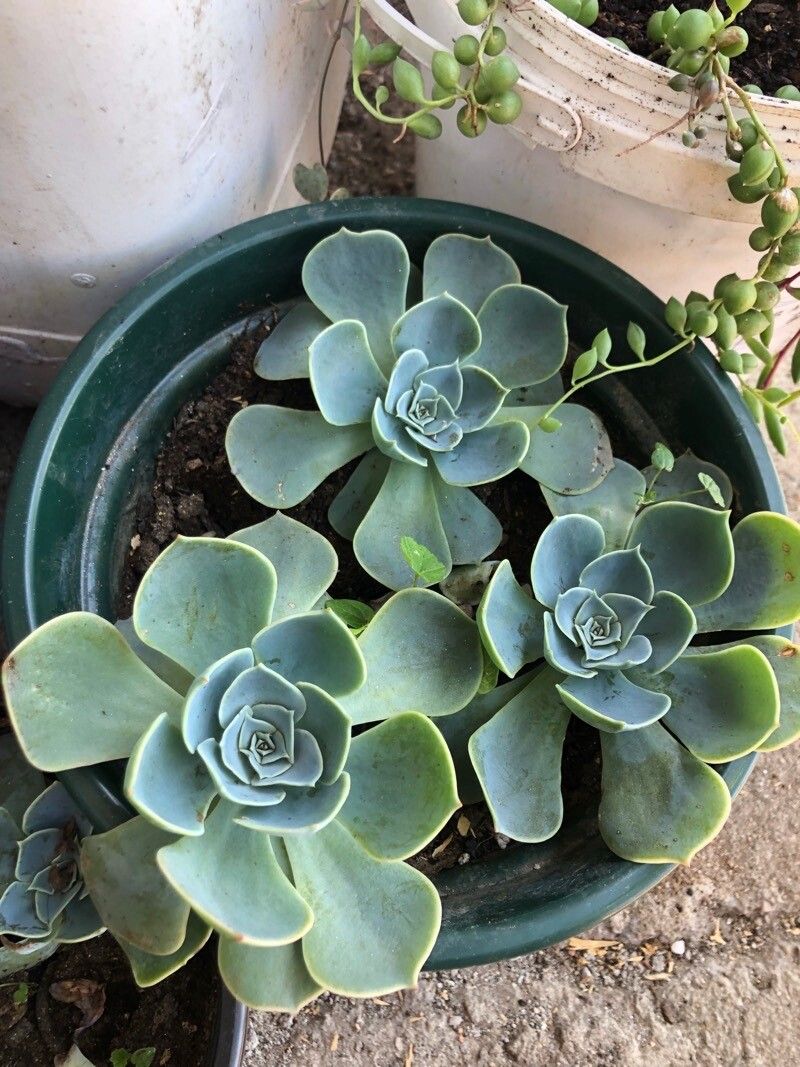
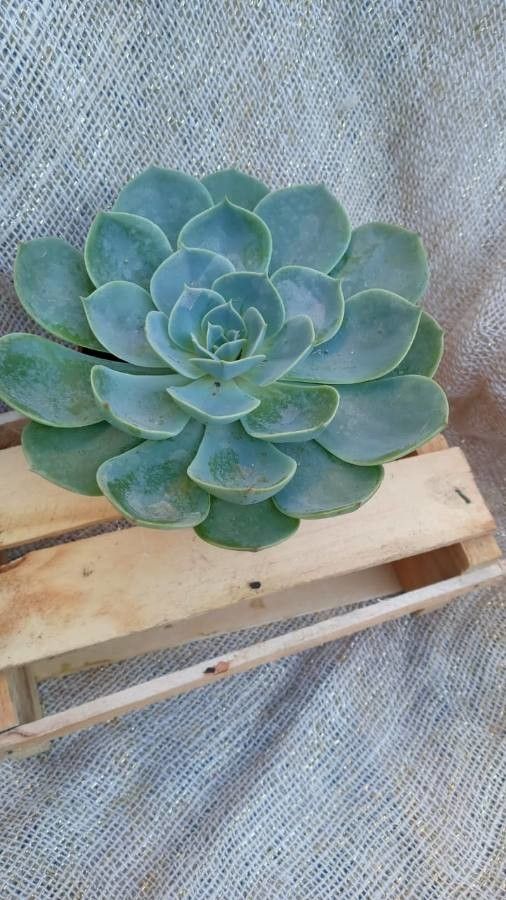
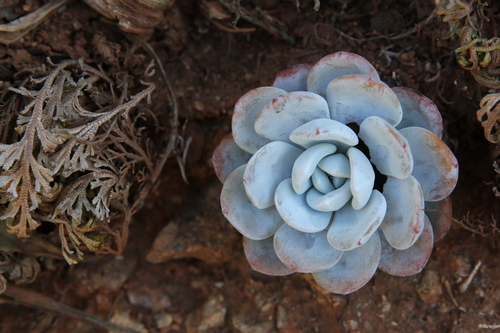
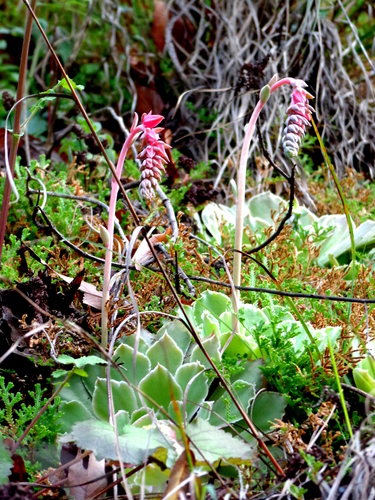
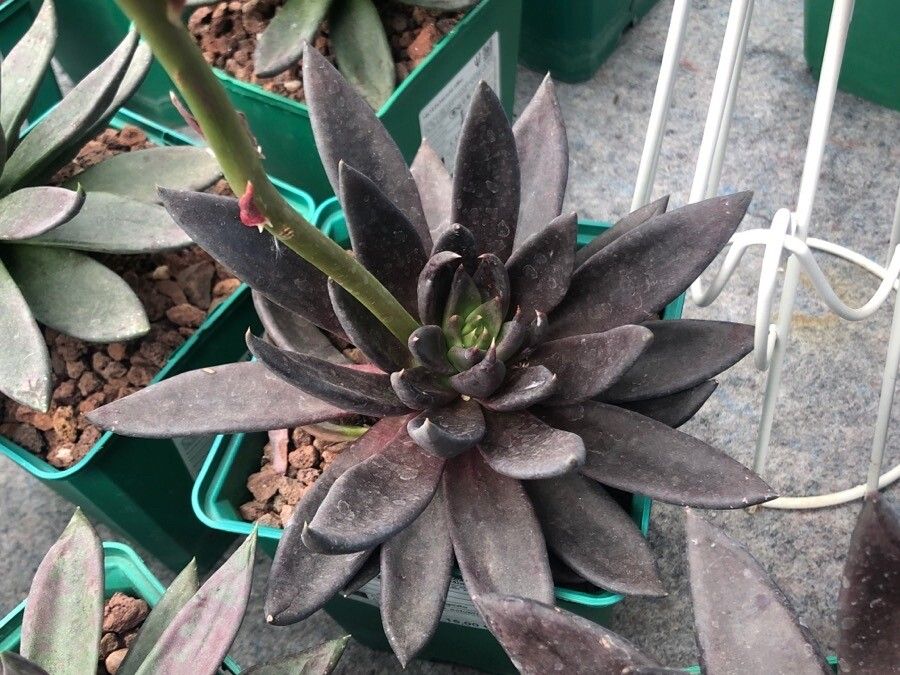
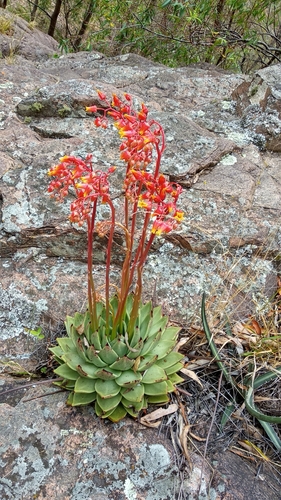
Echeveria secunda, called the glaucous echeveria, is a species of succulent flowering plant in the genus Echeveria, native to Mexico, and introduced to the Dominican Republic, New Zealand, and Vietnam. Its cultivar 'Compton Carousel' has gained the Royal Horticultural Society's Award of Garden Merit.
Blue echeveria has moderate disease resistance and is more sensitive to humidity. It is vulnerable to disease when humidity is high and is prone to root rot during dormancy. In terms of care, Blue echeveria is drought tolerant but requires more water during the growing season. Watering should be greatly reduced or stopped entirely during the dormant period. Blue echeveria is appropriate for people with some growing experience, but it can be difficult to care for, especially during dormancy. It is particularly suitable for people who can dedicate time to its care in the winter months.
How to keep Echeveria Pumila.
Light
Blue echeveria flourishes in areas where it is exposed to plenty of sunlight throughout the day, although it can also survive in locations where the sunlight is interspersed with shade. Too much or too little sunlight can cause stress or hinder growth, resulting in color loss or wilted leaves. The plant's native habitat provides it with substantial sunlight, aiding its resilience.
Temperature
Blue echeveria thrives in mild temperatures, ideally between 68 to 100 ℉ (20 to 38 ℃). It is indigenous to regions with hot, arid climates and can withstand changing temperatures across varied seasons. In the summertime, it could gain from some shade to prevent it from getting too hot.
Fertilizer
For Blue echeveria, light applications of fertilizer one to two times a year during the growing season are sufficient. Avoid fertilizing in winter and in summer when the plant is dormant. Reduce fertilizer for repotted plants and wait a couple of months after repotting before fertilizing. Fertilizing supports healthy growth and encourages blooms.
Pot & Repot
While rehousing Blue echeveria, choose a slightly bigger container than its current one, with excellent drainage. Opt for a succulent or cactus mixture that drains well and is gritty. Cautiously extract the plant from its former pot, brush off any additional dirt and re-plant it at the original depth. Delay watering the plant a few days to let any harm to the roots mend. Carry out the repotting in spring or fall and place it in a place that gets plenty of light.
Botanical profile.
- Plant Type
- Succulent, Herb
- Life Cycle
- Perennial
- Genus
- Echeveria
- Family
- Crassulaceae
- Hardiness Zone
- 9-12
- Mature Height
- 15 cm to 61 cm
- Mature Spread
- 6 cm to 20 cm
- Leaf Color
- Green, Gray, Silver
- Leaf Type
- Evergreen
- Flower Color
- Red
- Flower Size
- 1.02 cm to 1.52 cm
- Bloom Time
- Late spring, Early summer, Mid summer
- Planting Time
- Spring, Summer, Autumn, Winter
- Harvest Time
- Mid summer
- Native Area
- Mexico