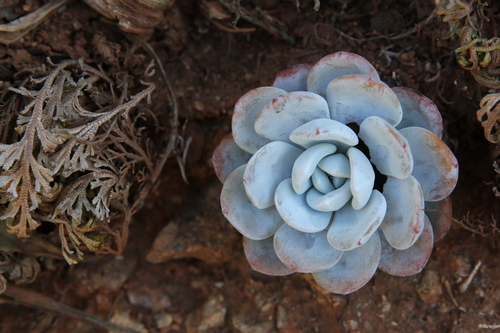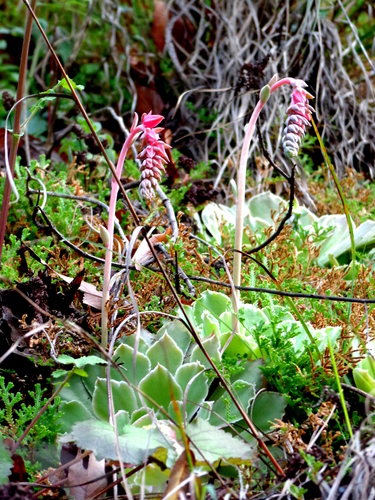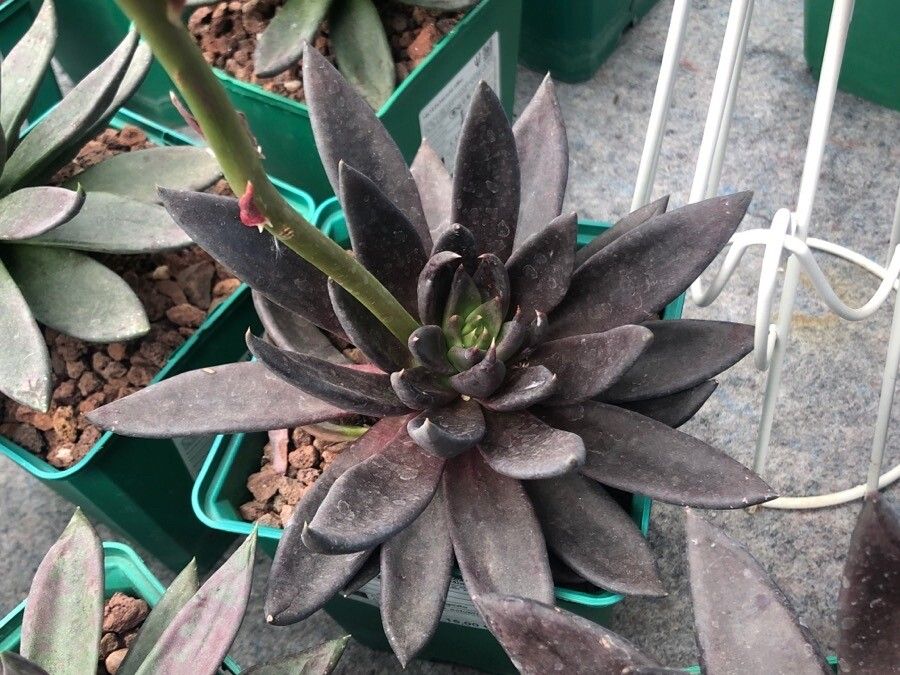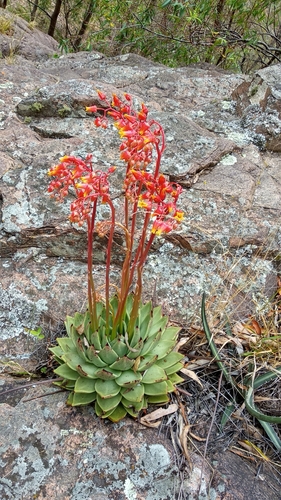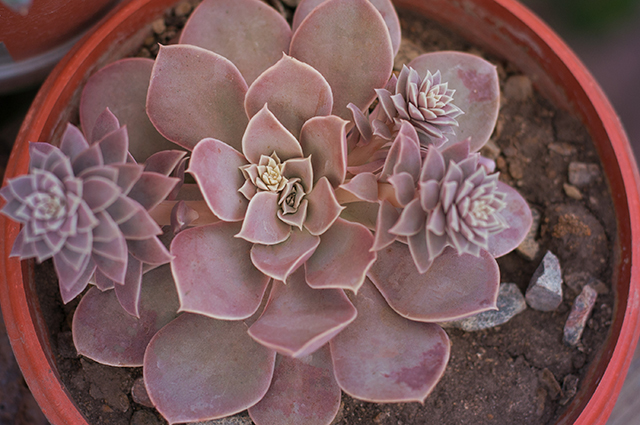
This plant has flattened rosettes that are only an inch to two tall and 4 inches wide with many broad, short, pale pinkish gray-violet leaves that have a light thin cream outline.
Echeveria diffractens has moderate disease resistance but is relatively sensitive to humidity. It becomes vulnerable to disease when humidity is high and is liable to develop root rot during dormancy. In terms of care, Echeveria diffractens tolerates drought but requires increased watering during the growing season. Watering should be sharply reduced or stopped entirely during the dormant period. Echeveria diffractens is appropriate for growers with some experience, though it can be challenging to care for, especially during dormancy. It is particularly well suited to those who can devote time to its care throughout the winter months.
How to keep Echeveria Diffractens.
Light
Echeveria diffractens, native to dry areas, does best in full sun—its natural habitat has strong light and scarce shade. It will also tolerate partial sun, providing some flexibility in its growth.
Water
Water during the summer and spring, making sure drainage is immaculate. Reduce water in the winter to monthly.
Temperature
Although Echeveria diffractens can tolerate some heat, it mainly performs and grows best in cooler seasons and goes dormant in summer. In very hot summer conditions, provide shade to avoid scorching from intense sun. Watering should be reduced or stopped during the hottest period to prevent root rot. Winter and spring are when Echeveria diffractens shows vigorous growth. If temperatures do not fall too low, it will continue to grow steadily.
Fertilizer
Echeveria diffractens requires only light applications of fertilizer once or twice a year during the growing season. Do not fertilize in winter or in summer when it is dormant. Reduce fertilizer for plants that have been repotted and wait a couple of months after repotting before fertilizing. Fertilizing helps support healthy growth and promotes blooms.
Pruning
Generally, Echeverias do not require regular pruning. However, if your Echeveria becomes leggy and elongated due to lack of sunlight it will require some pruning to keep the plant healthy and looking attractive.
Pot & Repot
When repotting Echeveria diffractens, choose a pot marginally larger than the current one with good drainage. Use a gritty, well-draining succulent or cactus mix. Gently remove the plant from its old pot, brush off excess soil, and plant it at the same depth. Wait a few days before watering so any root damage can heal. Repot in spring or fall and place it in a brightly lit location.
Botanical profile.
- Plant Type
- Succulent
- Life Cycle
- Perennial
- Genus
- Echeveria
- Family
- Crassulaceae
- Hardiness Zone
- 9-11
- Mature Height
- 15 cm
- Mature Spread
- 15 cm
- Leaf Color
- Light Green, Pale Green
- Leaf Type
- Evergreen
- Flower Size
- 1.02 cm to 1.52 cm
- Bloom Time
- Summer
- Planting Time
- Spring, Summer, Autumn
- Harvest Time
- Late summer, Early fall, Mid fall
- Native Area
- Mexico