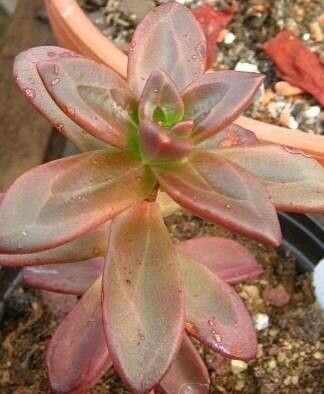
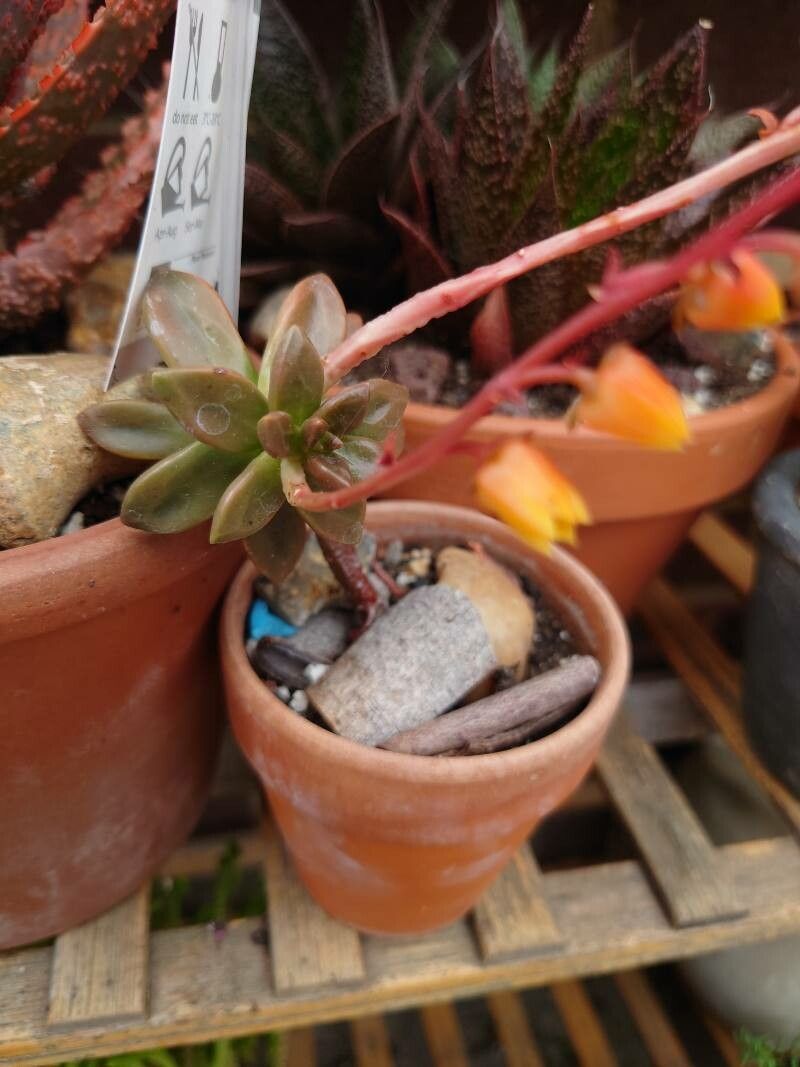
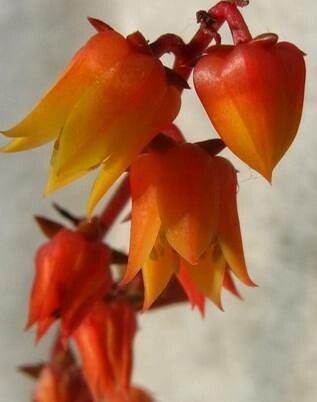
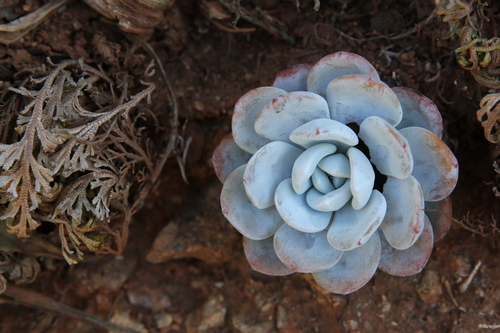
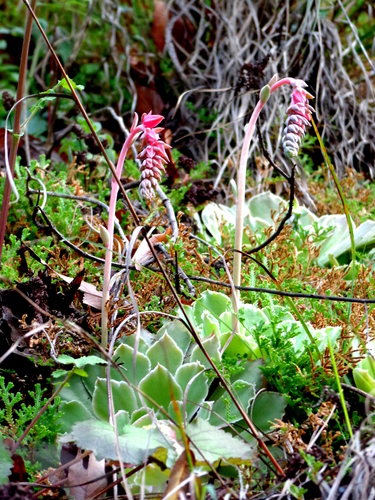
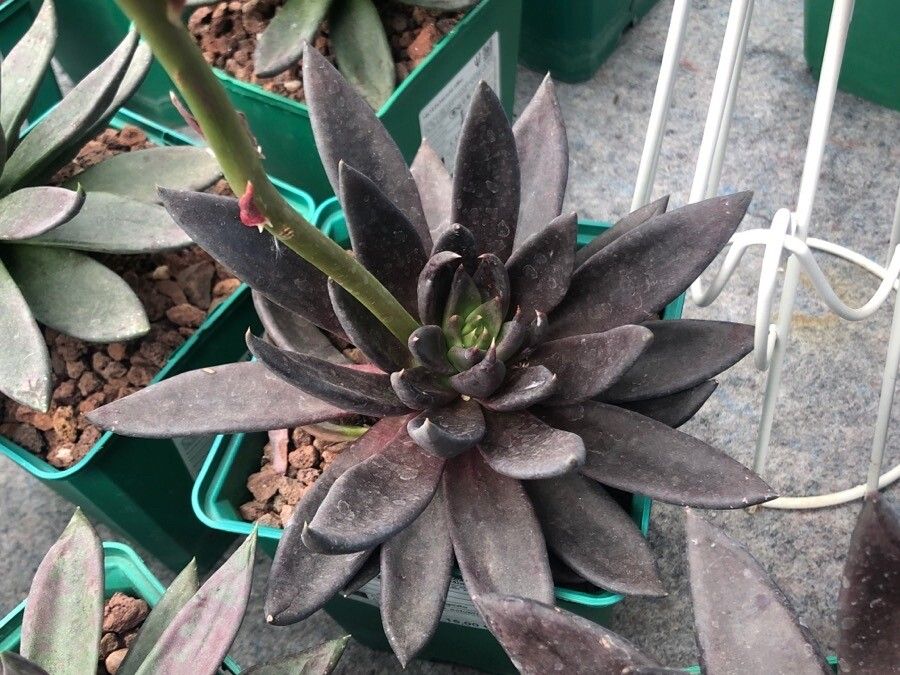
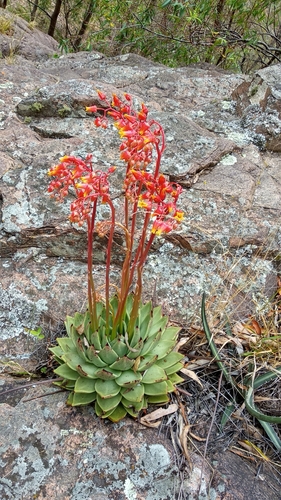
Echeveria compressicaulis has moderate resistance to disease and is more affected by humidity. It becomes vulnerable to illness when humidity is high and is likely to develop root rot while dormant. Regarding care, Echeveria compressicaulis tolerates drought but requires increased watering in the active growing season. Watering should be greatly reduced or stopped entirely during dormancy. Echeveria compressicaulis is best suited for growers with some experience, as it can be challenging to maintain, especially in its dormant phase. It is particularly appropriate for those who can dedicate time to its care over the winter months.
How to keep Echeveria Compressicaulis.
Light
Native to dry regions, Echeveria compressicaulis does best in full sun; its native habitat features intense sunlight and very little shade. It can also tolerate partial sun, giving it some flexibility in how it grows.
Water
Echeveria compressicaulis needs to be watered thoughtfully, taking into account the environmental conditions instead of following a rigid schedule. During dormancy, which can occur in either hot or cold weather, watering should be reduced to once every 1-2 weeks. Watch for signs that the plant is thirsty, such as leaf curling, and check the soil moisture regularly. Adjust the watering frequency according to the type of pot being used.
Temperature
Although Echeveria compressicaulis tolerates some heat, it does best in cooler seasons and becomes dormant in summer. In very hot summer conditions, provide shade to protect it from leaf scorch caused by strong sunlight. Reduce or pause watering during the hottest months to avoid root rot. It grows vigorously in winter and spring, and if temperatures do not fall too low, it will continue to grow steadily.
Fertilizer
For Echeveria compressicaulis, small doses of fertilizer once or twice a year during the growing season are sufficient. Do not fertilize in winter or in summer when it is dormant. Reduce fertilizing for plants that have been repotted and wait a couple of months after repotting before applying fertilizer. Fertilizing supports healthy growth and encourages blooming.
Pruning
Echeveria compressicaulis requires minimal pruning to thrive. The best time to prune is in early spring when you can remove dead leaves and improve air circulation. Avoid heavy pruning, and always use sterilized tools. Regular trimming helps maintain a compact and healthy appearance, optimizes sunlight exposure, and rejuvenates the plant for vibrant growth.
Pot & Repot
When repotting Echeveria compressicaulis, choose a pot slightly larger than the current one that has good drainage. Use a gritty, well-draining succulent or cactus potting mix. Gently take the plant out of its old pot, brush away excess soil, and set it in the new pot at the same depth. Wait a few days before watering so any root damage can heal. Repot in spring or fall and place the plant in a brightly lit spot.
Botanical profile.
- Plant Type
- Succulent
- Life Cycle
- Perennial
- Genus
- Echeveria
- Family
- Crassulaceae
- Hardiness Zone
- 8-10
- Mature Height
- 15 cm
- Mature Spread
- 15 cm
- Leaf Color
- Green, Purple
- Leaf Type
- Evergreen
- Flower Color
- Yellow, Orange
- Flower Size
- 1.02 cm to 1.52 cm
- Bloom Time
- Mid spring, Late spring, Early summer
- Planting Time
- Spring, Summer, Autumn, Winter
- Harvest Time
- Summer
- Native Area
- Venezuela