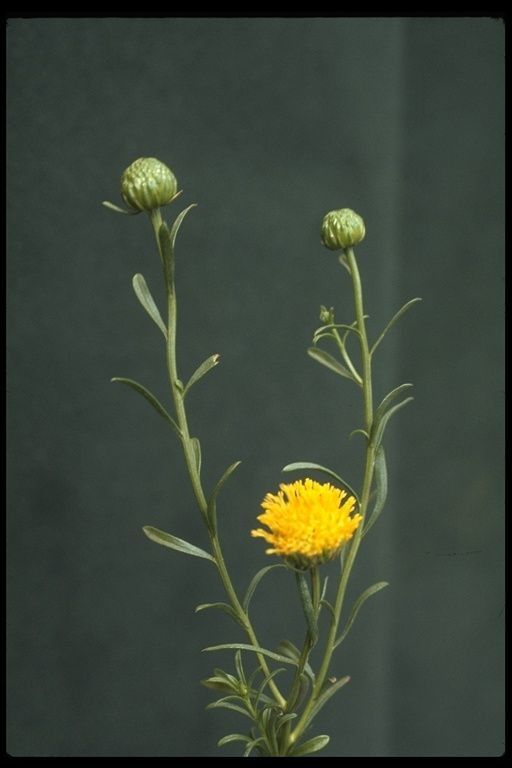
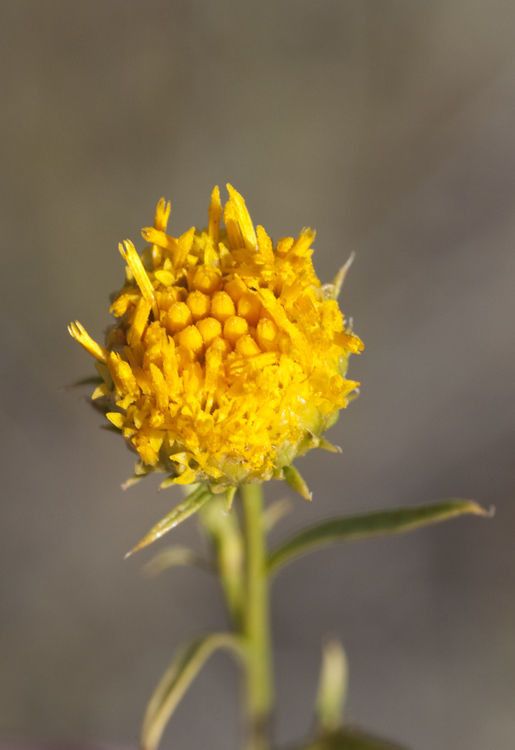
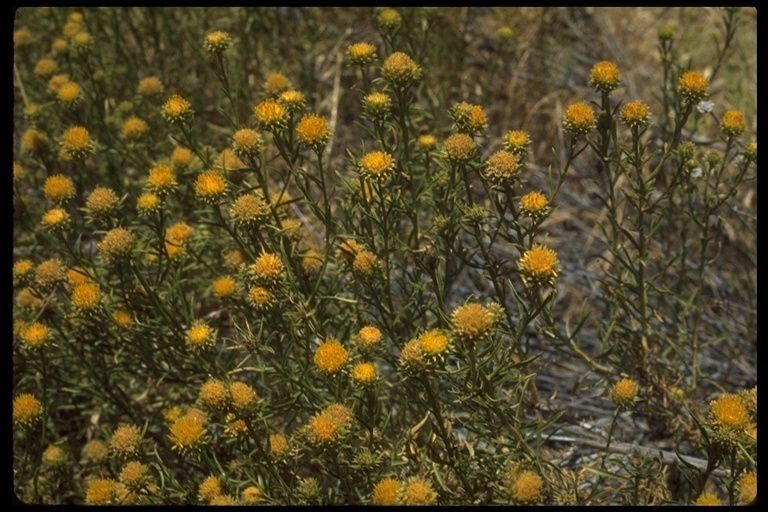
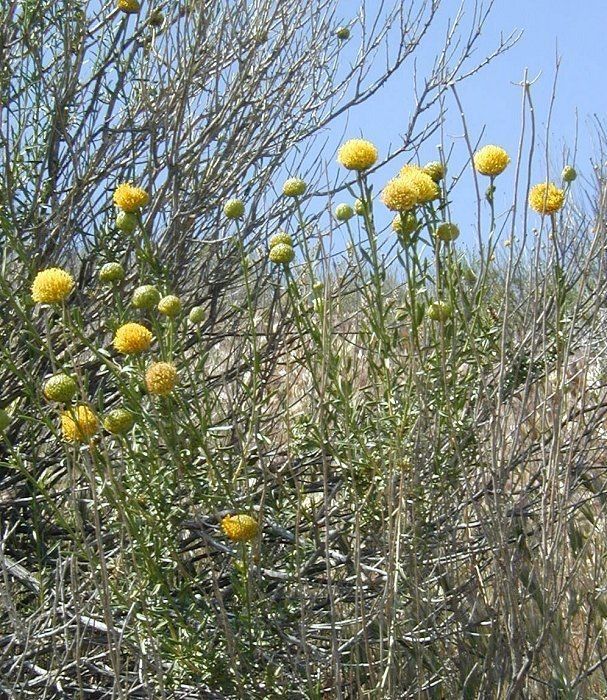
Eastwoodia is a North American genus of plants in the family Asteraceae. It contains the single species Eastwoodia elegans, a flower known by the common name yellow mock aster or yellow aster. It is endemic to California. This plant is found only on the grasslands and hillsides of central California, from the Bay Area south to the Tehachapis.Eastwoodia elegansis is a shrub which sends up several erect and branched stems up to 100 cm (40 inches) tall. One plant can produce several yellow flower heads, each containing as many as 40 disc florets but no ray florets. The stems have a shredding bark and small leaves rarely more than 5 cm (2 inches) long.The genus was named for the Canadian-American botanist Alice Eastwood, 1859–1953.
The yellow aster is highly disease-resistant and typically does not suffer from illnesses. In terms of care, this plant is fairly low-maintenance. When grown outdoors it needs little watering, and larger specimens usually do not require pruning; smaller plants, however, should be pruned after they finish blooming. The yellow aster is suitable for anyone with outdoor space, such as a garden or deck, and does not demand much care experience.
How to keep Eastwoodia Elegans.
Light
Yellow aster is native to open spaces like sunny fields and the perimeters of forests where there's an abundance of light. It flourishes in full sunlight but is also capable of enduring partial sunlight, showing excellent adaptation to different amounts of sunlight.
Temperature
Yellow aster has a robust adaptability to heat, capable of withstanding elevated temperatures and substantial temperature fluctuations. In situations of increased temperatures, careful attention should be given to hydrating it and creating suitable shade to avert any sun damage. Conversely, Yellow aster does not fare well under cooler conditions. Despite its ability to endure a certain level of chilliness, an extremely cold environment exposes it to the risk of frost damage.
Fertilizer
The timing of fertilizing Yellow aster is of significant importance. Fertilization should start in the early spring and continue on a monthly basis until the early summer. The fertilizer assists in the production of beautiful flowers and offers energy during both the dormant and active growth periods.
Pruning
The yellow aster boasts vibrant, daisy-like flowers. To encourage growth and blooming, it's beneficial to prune them in early spring. Removing dead branches also improves air circulation, while regular maintenance enhances the plant's appearance, leading to a healthier and more robust display.
Botanical profile.
- Plant Type
- Shrub
- Life Cycle
- Perennial
- Genus
- Eastwoodia
- Family
- Asteraceae
- Hardiness Zone
- 7-10
- Mature Height
- 30 cm to 61 cm
- Mature Spread
- 30 cm to 49 cm
- Leaf Color
- Green
- Leaf Type
- Deciduous
- Flower Color
- Yellow
- Flower Size
- 2.03 cm to 3.05 cm
- Bloom Time
- Late summer, Early fall
- Planting Time
- Spring, Summer, Autumn
- Harvest Time
- Mid fall, Late fall
Other names.