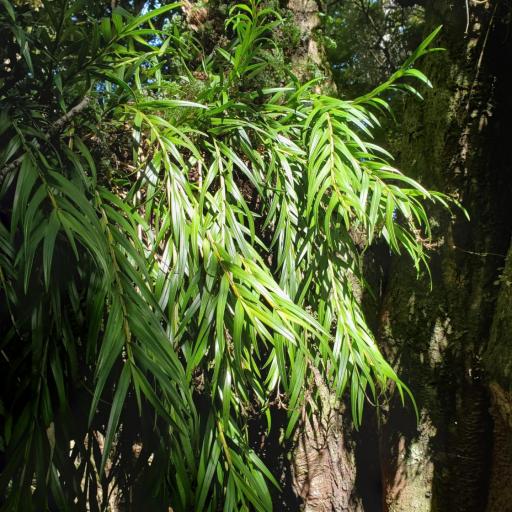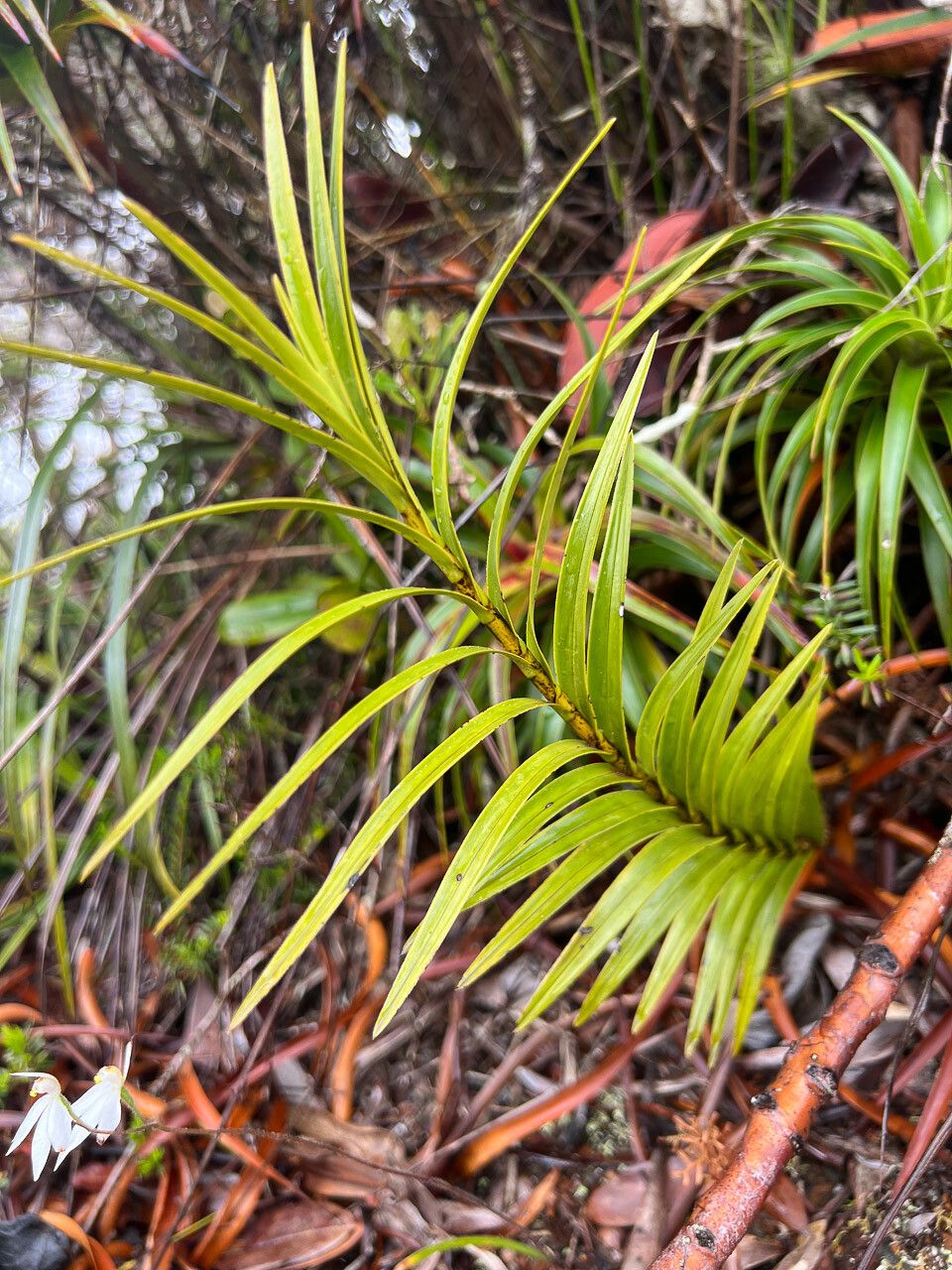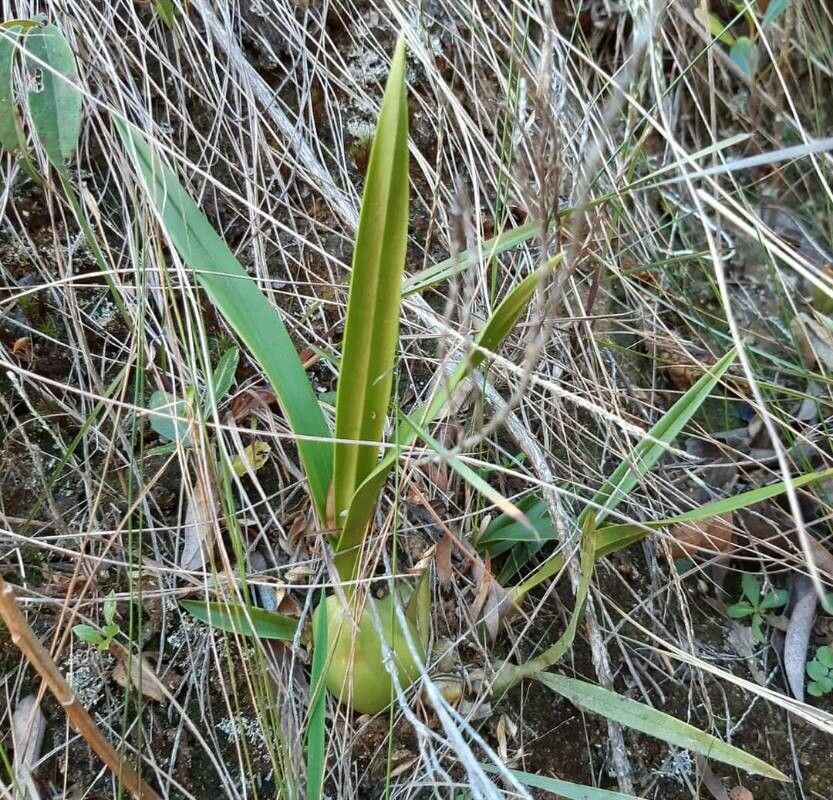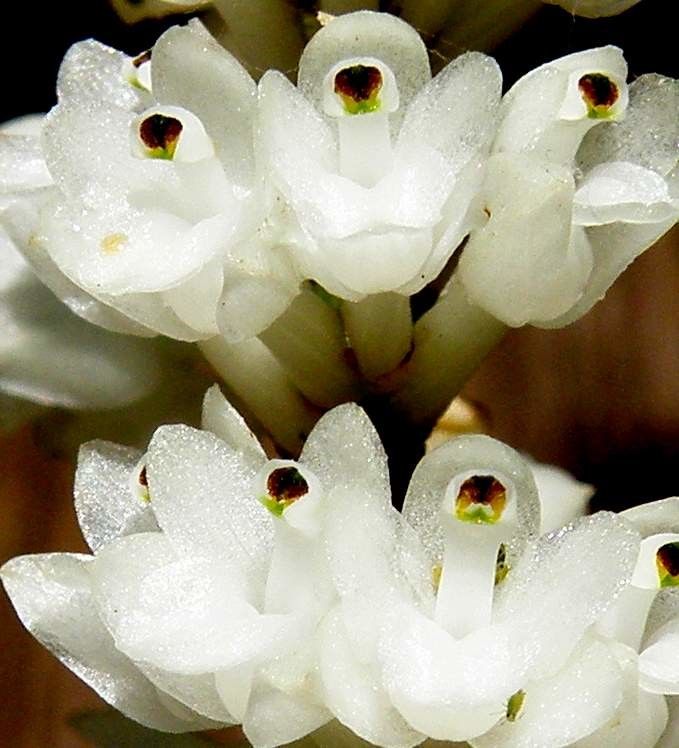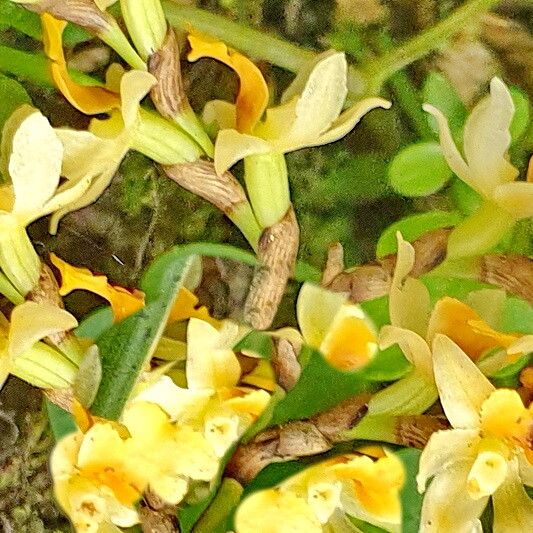
Earina mucronata is species of plant endemic to New Zealand. The specific epithet means "pointed" and refers to the shape of the tips of this orchid's very narrow leaves. The leaves are arranged alternately in one plane along a flattened, unbranched pseudobulb which can grow up to 1 m in length but which is generally shorter. As in most Monocotyledons the base of each leaf is extended into a leaf sheath which completely encircles the stem, in this species they are greatly elongated and extend the full length of the internode. The sheaths are 2 or 3 mm wide and in contrast to those of E. autumnalis they are difficult to pull off. Another key distinguishing feature of this species are the tiny, ubiquitous black spots which cover the leaf sheaths as well as many of the leaves themselves - these are notably absent in autumnalis.
Bamboo orchid typically shows strong resistance to disease and has relatively few insect pests. Its care is considered difficult because it needs high humidity while also being well ventilated and having few harmful pathogens. Too much watering can cause root rot. Although anyone can grow bamboo orchid, keeping it healthy and getting it to flower again requires more growing experience.
How to keep Earina Mucronata.
Light
The bamboo orchid comes from habitats such as forest understories and rocky locations where it grows in natural shade. It prefers partial sun but can adjust to both full sun and full shade, showing that it is adaptable and hardy.
Water
The bamboo orchid flourishes in humid environments and prefers well-balanced moisture. To keep it healthy, water it weekly and maintain consistent humidity levels, similar to those found in its native tropical rainforest habitat. Since it is an evergreen plant, it is often grown indoors, where it can benefit from these conditions.
Temperature
Bamboo orchid can tolerate a wide range of temperatures, but its distribution may still be limited by particular combinations of moisture and heat. It grows best in warm summer climates with adequate rainfall or watering. Extended periods of cloudy, rainy weather or prolonged high temperatures increase the likelihood of the Bamboo orchid dying. In winter, protecting the plant from cold can improve its survival rate.
Fertilizer
The best time to fertilize a Bamboo orchid is in early spring, when it is coming out of dormancy and entering active growth. Fertilization supplies essential nutrients for healthy development. Although a Bamboo orchid generally has low fertilizer requirements, feeding it annually can improve its survival and encourage better, longer-lasting flowers.
Pruning
To improve the health and appearance of your bamboo orchids, prune them from late winter to early spring. This process involves removing dead stems, thinning out overcrowded areas, and encouraging new growth. Proper pruning enhances air circulation and light penetration, which can reduce the risk of diseases. Be sure to use clean, sharp tools, as this will support healthier growth and result in more abundant blooms.
Pot & Repot
When repotting Bamboo orchid, pick a pot slightly larger with good drainage, preferably a clear orchid pot. Use a well-draining, orchid-specific mix that includes bark or moss. Carefully clean the roots and trim any that are dead or rotting. Repot after flowering, usually in spring or fall. Water thoroughly and place the plant in bright, indirect light. After repotting, avoid disturbing the roots.
Botanical profile.
- Plant Type
- Herb
- Life Cycle
- Perennial
- Genus
- Earina
- Family
- Orchidaceae
- Hardiness Zone
- 10-12
- Mature Height
- 30 cm
- Mature Spread
- 40 cm
- Leaf Color
- Dark Green
- Leaf Type
- Evergreen
- Flower Color
- White
- Flower Size
- 1.02 cm
- Bloom Time
- Early fall, Mid fall
- Planting Time
- Spring, Summer, Autumn
- Harvest Time
- Late fall, Early winter, Mid winter
- Native Area
- New Zealand