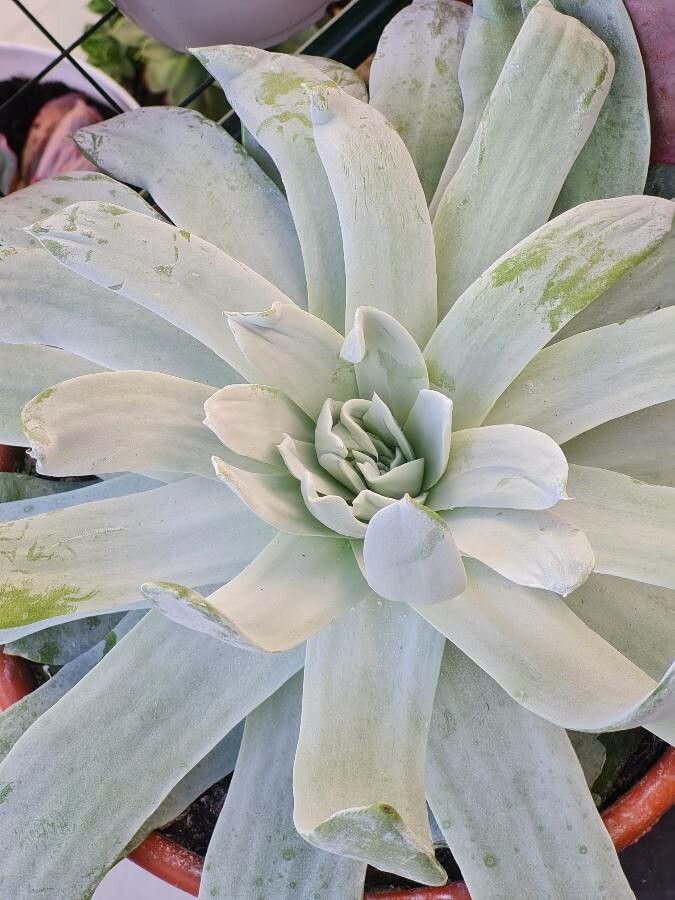
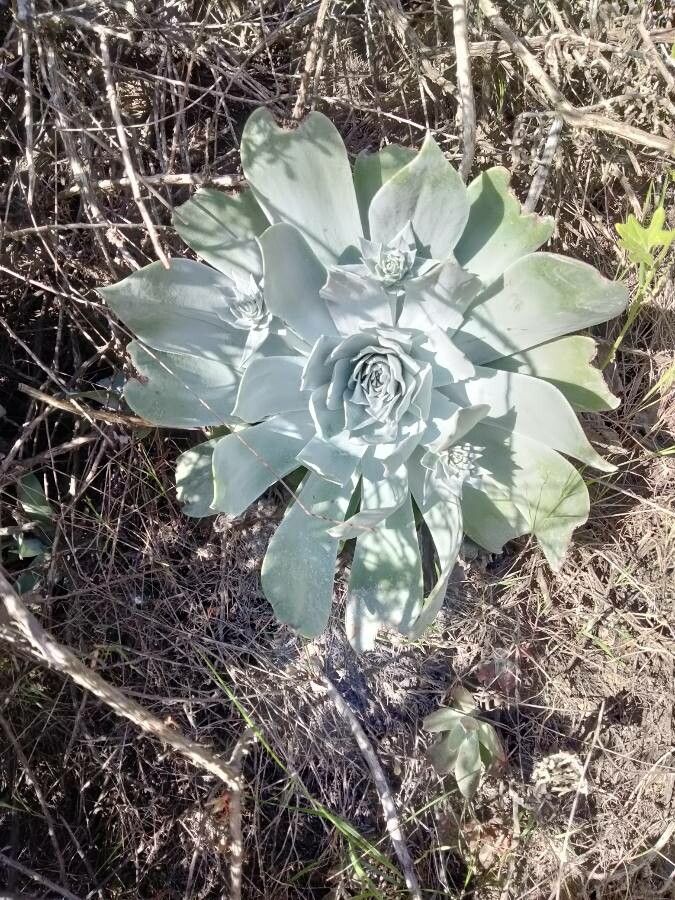
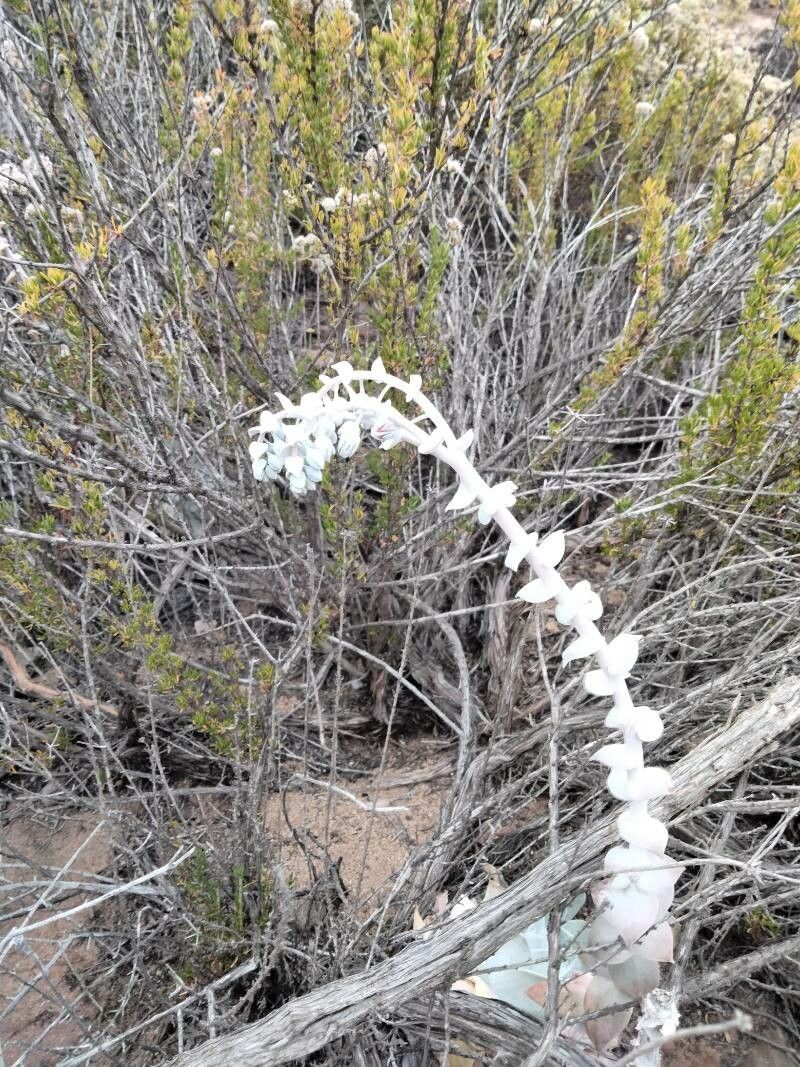
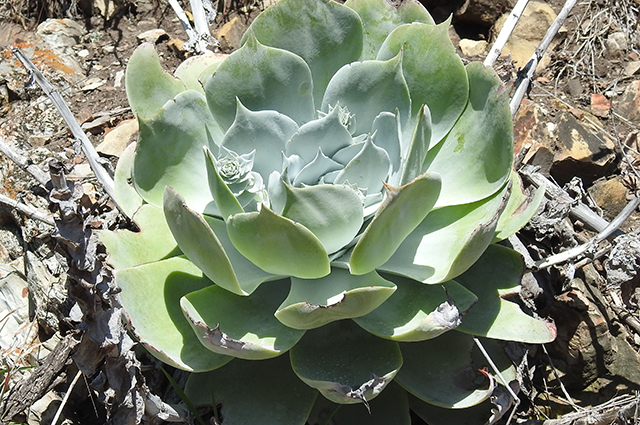
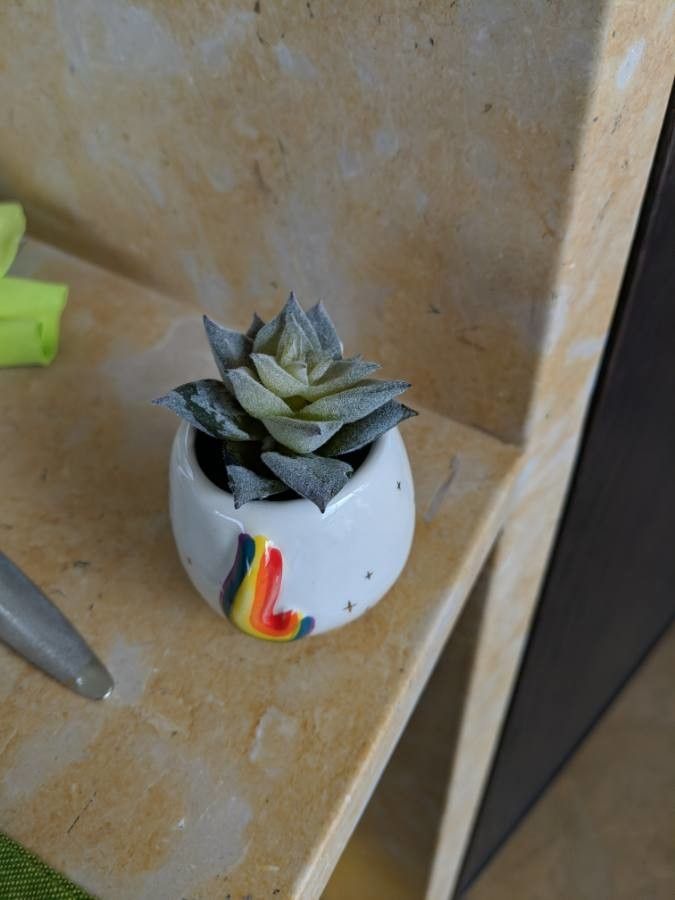
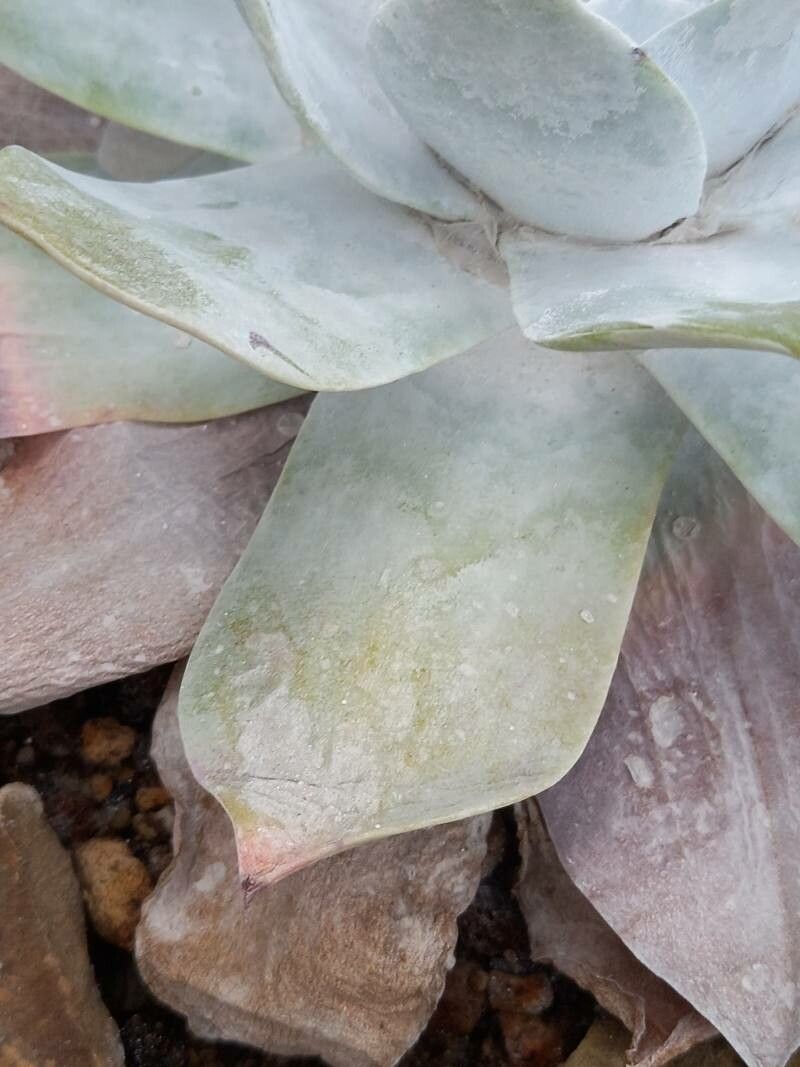
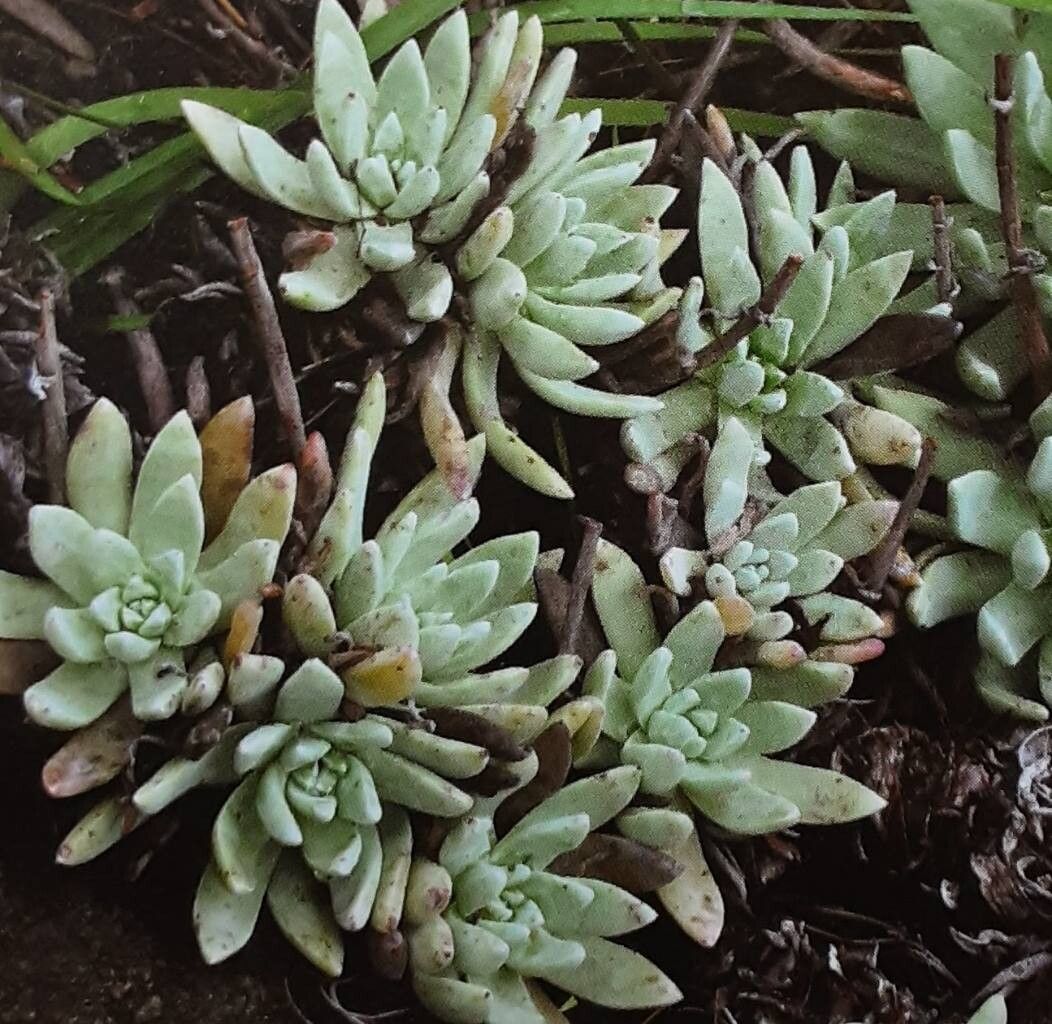
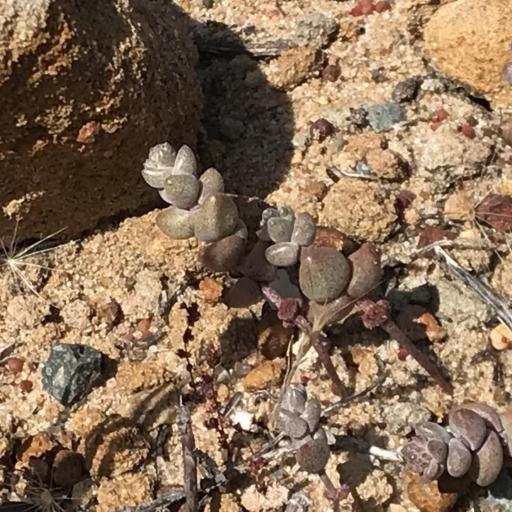
Dudleya pulverulenta, commonly known as chalk liveforever or chalk dudleya, is a succulent plant species native to California and Baja California. This small plant typically grows up to 6 inches tall and 8 inches wide. Its fleshy, powdery blue-gray leaves are arranged in rosettes at the base of the stem. During the summer months, it produces small yellow-green flowers with five petals that bloom on tall stalks. Adapted to thrive in rocky or sandy soils with good drainage, chalk liveforever prefers full sun exposure but can tolerate some shade. It is drought-tolerant but requires occasional watering during hot summer months. Dudleya pulverulenta has gained popularity among gardeners for its unique appearance and low maintenance requirements. However, it is threatened by habitat loss due to urbanization and over-collection from its natural habitat. Overall, Dudleya pulverulenta is an intriguing succulent species that enhances the beauty of any garden. It also serves as a reminder of the importance of preserving our natural ecosystems for future generations.
Chalk Lettuce has moderate disease resistance but is more sensitive to humidity. It becomes prone to disease under high humidity and is susceptible to root rot during its dormant period. For care, Chalk Lettuce tolerates drought yet requires increased watering in the growing season. Watering should be drastically reduced or stopped entirely while it is dormant. Chalk Lettuce is appropriate for growers with some experience, though it can be challenging to care for, especially during dormancy. It is particularly suitable for those who can dedicate time to its care in the winter months.
How to keep Dudleya Pulverulenta.
Light
Chalk Lettuce prefers a spot with abundant sunlight all day long, but it can still tolerate situations where sunlight is only persistent. Too little light can cause poor growth and unhealthy leaves, while too much sun can scorch the foliage.
Water
Chalk Lettuce thrives in dry conditions, demonstrating outstanding drought resistance. Its succulent leaves store water effectively, so it does well with watering every 2-3 weeks. This plant is often found on rocky surfaces and needs well-draining soil. During hot growth periods, it efficiently conserves moisture.
Humidity
This plant prefers dry conditions, so don't mist it. However, watering it less often can also thrive in higher humidity.
Temperature
Chalk Lettuce is a plant native to regions with moderate temperatures. It prefers a temperature range of 68 to 105.8 °F (20 to 41 ℃). In varied climates, seasonal adjustments may be needed to keep temperatures within this range.
Fertilizer
Chalk Lettuce needs light fertilizer applications once or twice a year during the growing season. Avoid fertilizing in winter and in summer, when it is dormant. Use less fertilizer for repotted plants and wait a couple of months after repotting before fertilizing. Fertilizing supports healthy growth and encourages blooms.
Pruning
To maintain the shape of chalk lettuce, it's important to prune regularly, particularly in the spring and fall when dense branches should be removed. For propagation, you should cut a sturdy stem with 5-6 leaves, treat the cut with sulfur powder, and plant it in slightly moist soil once it has healed.
Pot & Repot
To promote healthy growth, repot Chalk Lettuce every two years in early spring. This rosette-forming succulent can grow up to 18 inches tall. Choose a snug pot with good drainage, and place the plant in bright, indirect light. Water it sparingly after one week to encourage resilience and prevent root rot.
Botanical profile.
- Plant Type
- Herb
- Life Cycle
- Perennial
- Genus
- Dudleya
- Family
- Crassulaceae
- Hardiness Zone
- 10-13
- Mature Height
- 30 cm to 91 cm
- Mature Spread
- 40 cm
- Leaf Color
- Green, Blue, Bronze
- Leaf Type
- Evergreen
- Flower Color
- Red
- Flower Size
- 2.54 cm
- Bloom Time
- Late spring, Early summer, Mid summer
- Planting Time
- Spring
- Harvest Time
- Late summer, Early fall, Mid fall
- Native Area
- North America, Central America
Other names.
Reader questions.
What should I do if I give too much or too little water to my Chalk Lettuce?
Chalk Lettuce and other succulents can survive without water for long periods, so it's rare to see them suffering from underwatering. However, if you forget to water your Chalk Lettuce for a month or more, it may appear thirsty or damaged. Signs of underwatering include a lackluster and wrinkled appearance, dried up leaves, browning or crispy texture, and completely dried out soil. To remedy this, give your Chalk Lettuce plenty of water by submerging the pot in water for 5-10 minutes until the soil feels moist on the surface. Overwatering is dangerous for Chalk Lettuce and can lead to root rot, which hinders nutrient absorption and causes the roots to decay. Over time, wet conditions promote the growth of fungi and bacteria that feed on the roots. Symptoms of overwatering include yellow, swollen, and translucent organs that may burst open, turning the plant brown or black and causing the leaves to fall off easily. To address overwatering, improve air ventilation and adjust the frequency of watering. Saving an overwatered plant can be challenging, but catching the problem early is key. If you suspect overwatering, remove the plant from its pot and examine the roots and soil. Rinse the roots in room-temperature water to remove any fungus and assess their health. Dark brown or black, soft, mushy, or slimy roots indicate root rot. If most of the roots are affected, it may be impossible to save the plant. However, if only some roots are affected, you can remove the unhealthy ones with sterilized cutting tools. Dip the remaining firm, pale roots in a fungicide and repot the plant in fresh, well-draining soil. Although this may not always succeed, in most cases the Chalk Lettuce can recover and produce new growth in the following growing season.
Why should I use fertilizer for my Chalk Lettuce?
When you fertilize Chalk Lettuce, you supply it with essential nutrients for healthy growth. While it already has the ability to store water and nutrients, applying plant food during the growing season further supports its overall development. Additionally, fertilizing can also stimulate mature Chalk Lettuce plants to produce blooms during this time.
What are the sunlight requirements for Chalk Lettuce?
Chalk Lettuce thrives in conditions that receive ample sunlight throughout the day. It requires full sun, meaning above 6 hours of sunlight daily, to grow optimally. However, it can also tolerate partial sun, which is about 3-6 hours of sunlight. Monitoring the movement of sunlight in your garden can help in choosing the best spots that provide a balance of light and shade, ensuring the plants' health.
What is Chalk Lettuce and where does it originate from?
Chalk Lettuce, botanically known as Dudleya pulverulenta, is a plant that originates from climates with moderate temperatures. It thrives in a temperature range of 68 to 105.8 °F (20 to 41 °C), indicating its preference for warm conditions. Adaptations may be necessary to keep this temperature range in various climates, emphasizing the plant's heat-loving nature.
How frequently should I water my Chalk Lettuce?
Determining how often to water Chalk Lettuce can be a bit flexible. The general guideline is to water it only when the soil is completely dry. You can easily check this by sticking your finger or a moisture meter into the soil. If the soil feels slightly moist, wait a few more days before watering again. In summer, most people will need to water Chalk Lettuce every two weeks, while in winter, once a month is usually sufficient. However, there are some factors to consider like pot depth and other conditions that may affect the watering frequency, which will be explained further in the following section.
When should I fertilize my Chalk Lettuce?
Chalk Lettuce, like other plants, benefits from extra nutrients. However, it only requires a small amount of fertilizer during the growing season, which should be done 1-2 times a year. To optimize the growth, it is recommended to fertilize the Chalk Lettuce in spring and autumn, while avoiding winter and summer when it is dormant. If you have repotted plants, it is important to decrease the amount of fertilizer used. It is also advisable to wait a couple of months after repotting before applying any fertilizer.
How essential is sunlight for the growth of Chalk Lettuce?
Sunlight is crucial for the healthy growth of Chalk Lettuce. While it cherishes locations with plenty of sunlight, it possesses the resilience to grow even when the sun's rays are partially available. Limited exposure to sunlight may result in minimal growth and unhealthy foliage, whereas excessive exposure can cause leaf scorching. For indoor plants where natural sunlight may be insufficient, artificial lighting, like LED lights, becomes vital. These plants thrive under 30-50W/sq ft of light for full sun conditions, 20-30W/sq ft for partial sun, and 10-20W/sq ft for full shade plants. Proper placement and duration, replicating natural sunlight conditions, are needed for optimal growth.
How do I care for Chalk Lettuce in winter?
During winter, when temperatures fall below 5°C, it's crucial to move Chalk Lettuce indoors to continue its cultivation in a warm environment. Positioning the plant near a south-facing window can maximize sunlight exposure, which is beneficial for its growth. Should natural light be insufficient, supplemental lighting can be an alternative. Additionally, when the temperature drops below 20°C, it's advisable to reduce or halt watering to prevent potential root rot, underscoring the importance of seasonal care for maintaining this plant.
What do I need to think about when watering my Chalk Lettuce?
The watering needs of your Chalk Lettuce are influenced by various environmental factors such as container size, soil type, temperature, and humidity. When determining how often and how much to water, consider the size and drainage of the container. Containers with good drainage allow excess water to escape, while smaller pots hold less moisture and require more frequent watering. Avoid using oversized pots as they can lead to overwatering. When repotting, choose a container just one size larger than the current one, preferably shallow to accommodate the shallow root system of Chalk Lettuce. In terms of seasonal watering, Chalk Lettuce requires less frequent watering during winter when growth is slower and evaporation is lower. In contrast, the active growing seasons of spring and autumn call for more regular watering. The climate around your location also affects the watering schedule. Humid areas with ample rainfall require less watering compared to dry and arid climates. Keep in mind that conditions can vary within the same geographical location due to seasonal changes and indoor heating/cooling systems. For outdoor planting, once the Chalk Lettuce establishes its root system in the ground, it typically relies on natural precipitation and dew for water. However, during prolonged dry periods, occasional watering may be necessary. In areas where Chalk Lettuce can only be grown in containers, it can be moved outside during suitable spring and summer temperatures and brought indoors when it starts to get colder. Potted Chalk Lettuce kept outside generally requires more frequent watering due to increased sun exposure, even if it is placed on a shaded porch.
When is the best time to not fertilize my Chalk Lettuce?
Chalk Lettuce, like most plants, goes through a dormancy period. During this time, it is best to refrain from applying fertilizer. The plant stops growing in both the summer and winter, so it is important to not fertilize during these seasons. Additionally, it is advisable to avoid fertilizing for the first few months after repotting in the spring.
What are the symptoms of inadequate light for Chalk Lettuce?
Chalk Lettuce shows several symptoms when exposed to suboptimal lighting conditions. These include smaller new leaves, leggy or sparse growth, quicker leaf drop, slower or halted growth, and lighter-colored new leaves indicating a deficiency in chlorophyll and nutrients. Additionally, excessive sunlight can lead to chlorosis (yellowing of the leaves), sunscald, leaf curling, wilting, and leaf scorching. These symptoms signal the need for adjusting the plant's exposure to light for better health.
What should I do if the Chalk Lettuce is exposed to low temperatures?
If Chalk Lettuce is exposed to temperatures below its tolerance level, particularly under 1°C, it may exhibit weakness, wilting, and a risk of root rot. To manage mild frost damage or colder conditions, it's recommended to trim off affected areas and check for root rot, which if present, necessitates cutting off the rotted roots followed by propagation through cuttings. Relocating the plant to a warmer indoor setting near a south-facing window ensures it receives enough sunlight for recovery, supplemented by artificial lighting if needed.