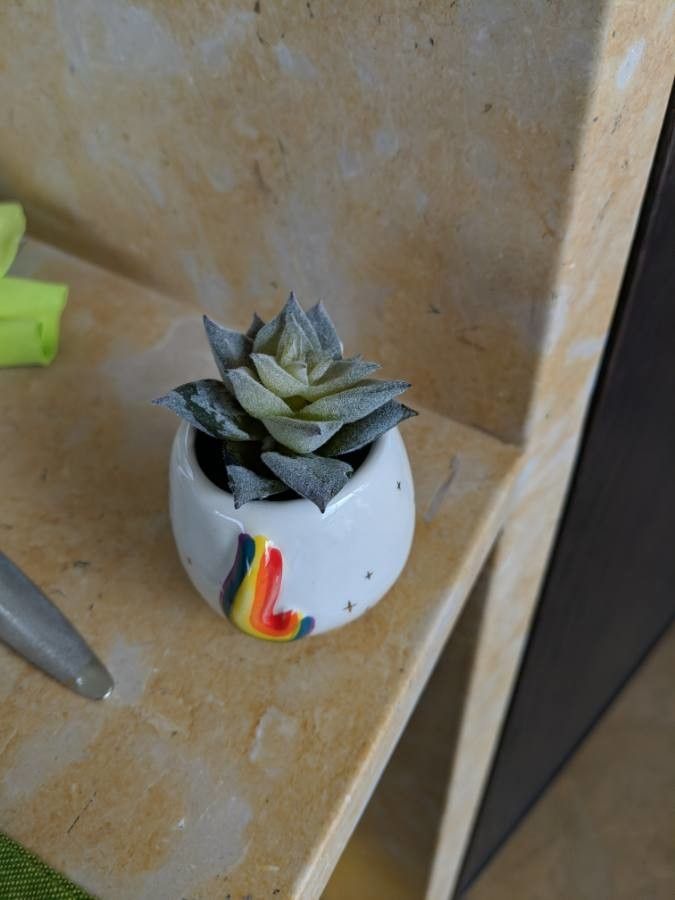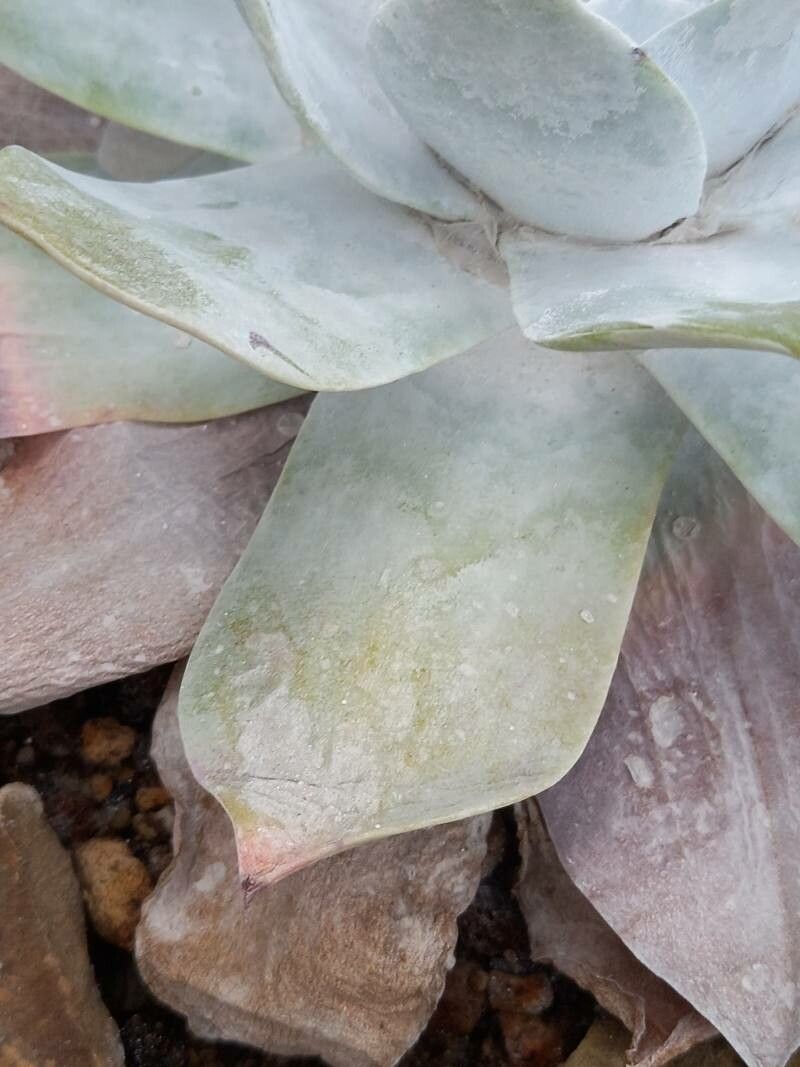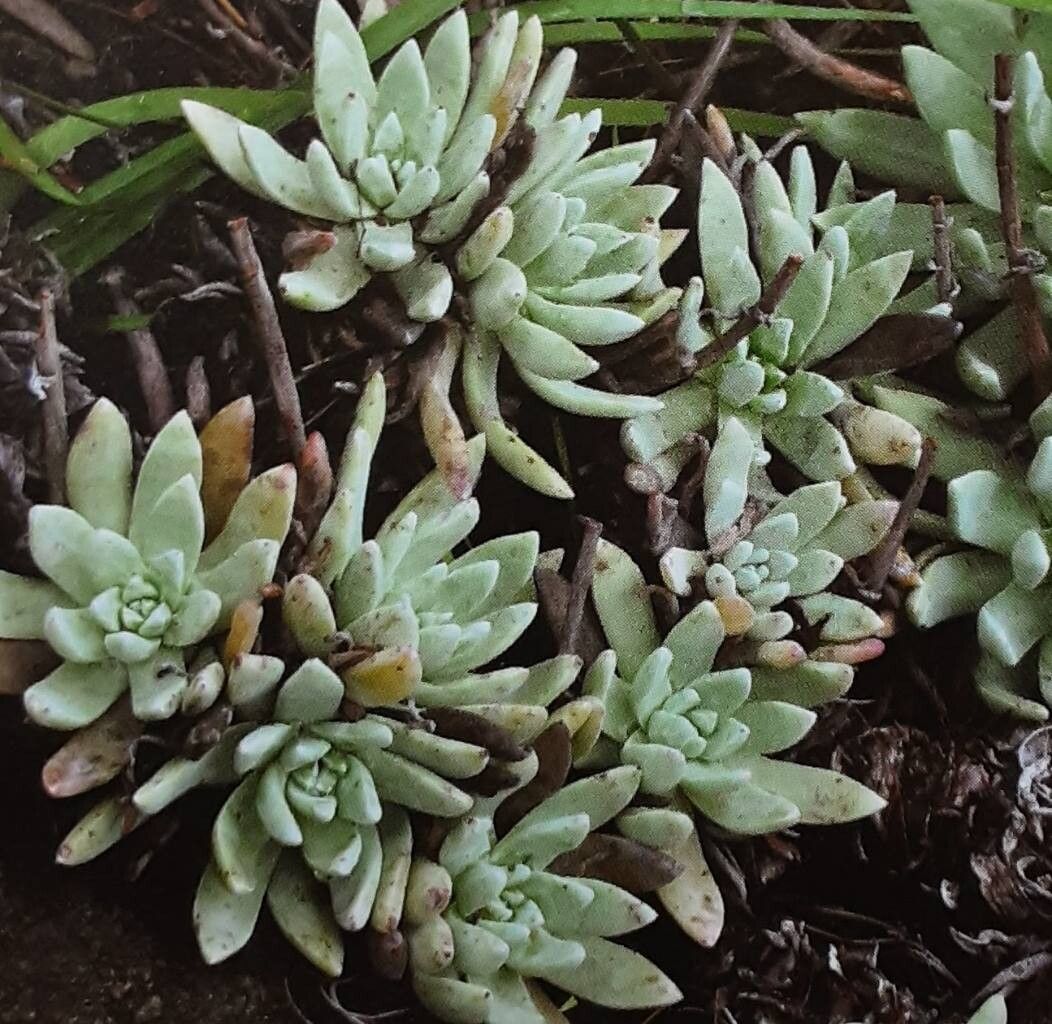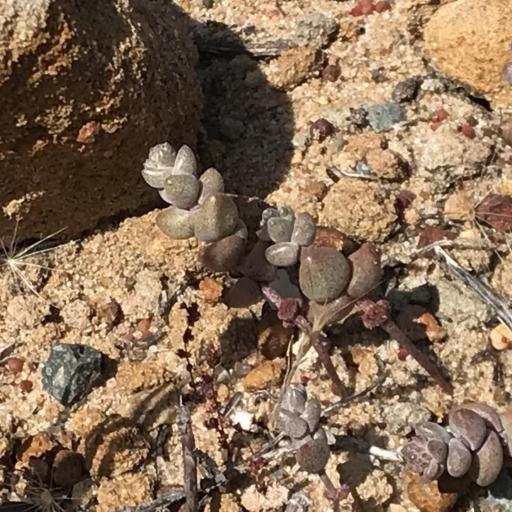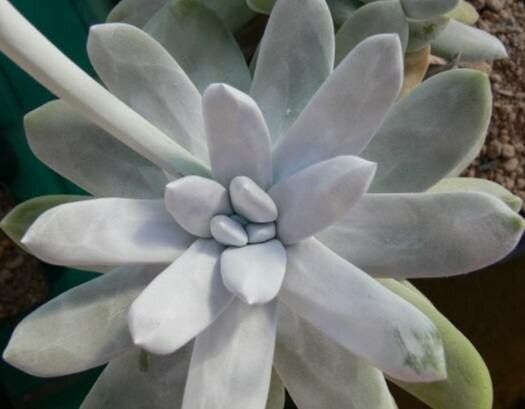
Dudleya pachyphytum is an insular succulent plant known by the common name Cedros Island liveforever. It is a member of the genus Dudleya, in the family Crassulaceae. Characterized by thick, blunt leaves covered in a white, powdery wax and adorned by white flowers in bloom, it is regarded as one of the most attractive and charismatic members of its genus. It is endemic to the foggy northern end of Mexico's Cedros Island, occupying an ecological niche shared with the Cedros Island Pine.
Cedros Liveforever has moderate disease resistance and is more sensitive to humidity. It becomes vulnerable to disease when humidity is high and is liable to develop root rot during dormancy. Regarding care, Cedros Liveforever tolerates drought but requires increased watering in the growing season. Watering should be greatly reduced or halted entirely during the dormant period. Cedros Liveforever is best suited to people with some growing experience, but it can be challenging to care for, especially during dormancy. It is particularly appropriate for those who can dedicate time to its care in the winter months.
How to keep Dudleya Pachyphytum.
Light
Cedros Liveforever comes from habitats with dappled light, such as the understory of forests or rocky areas that provide natural shade. It prefers partial sun but is also able to tolerate full sun.
Water
Dudleya pachyphytum is native to arid regions and is highly efficient at storing water, allowing it to thrive in dry climates with well-draining soil. To mimic its natural habitat, water it sparingly, ideally once every three weeks. Its growth cycle is supported by seasonal rains, which provide natural variations in water availability.
Temperature
Although Cedros Liveforever tolerates some heat, it mainly flourishes and grows in cooler seasons and becomes dormant in summer. In hot summer conditions, provide shade to avoid scorching from strong sunlight. Watering should be reduced or stopped during the hottest period to avoid root rot. Winter and spring are the times when Cedros Liveforever grows vigorously. Provided the temperature does not fall too low, it will keep growing steadily.
Fertilizer
For Cedros Liveforever, light applications of fertilizer once or twice a year during the growing season are sufficient. Avoid fertilizing in winter and summer when the plant is dormant. Reduce fertilizer for repotted plants and wait a couple of months after repotting before feeding. Fertilizing supports healthy growth and encourages blooms.
Pruning
To maintain the shape of a Dudleya pachyphytum, pruning is necessary, especially in the spring and fall. Use scissors or a knife to remove any excess or densely packed branches, and apply sulfur powder to treat the wounds. For propagation, cut a stem with 5 to 6 leaves, allow the wound to heal, then plant it in slightly moist soil.
Botanical profile.
- Plant Type
- Succulent
- Life Cycle
- Perennial
- Genus
- Dudleya
- Family
- Crassulaceae
- Hardiness Zone
- 9-11
- Mature Height
- 10 cm to 15 cm
- Mature Spread
- 15 cm to 20 cm
- Leaf Color
- Pale Green, Light Gray
- Leaf Type
- Evergreen
- Flower Color
- Yellow, Orange
- Flower Size
- 1.02 cm to 1.52 cm
- Bloom Time
- Mid spring, Late spring
- Planting Time
- Spring, Summer
- Harvest Time
- Early summer, Mid summer
- Native Area
- Mexico