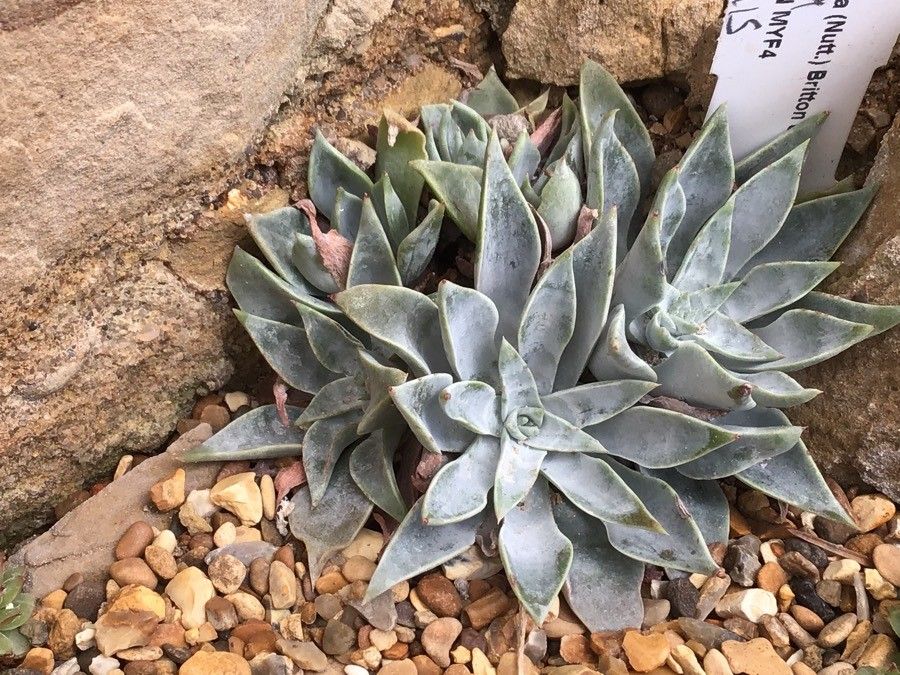
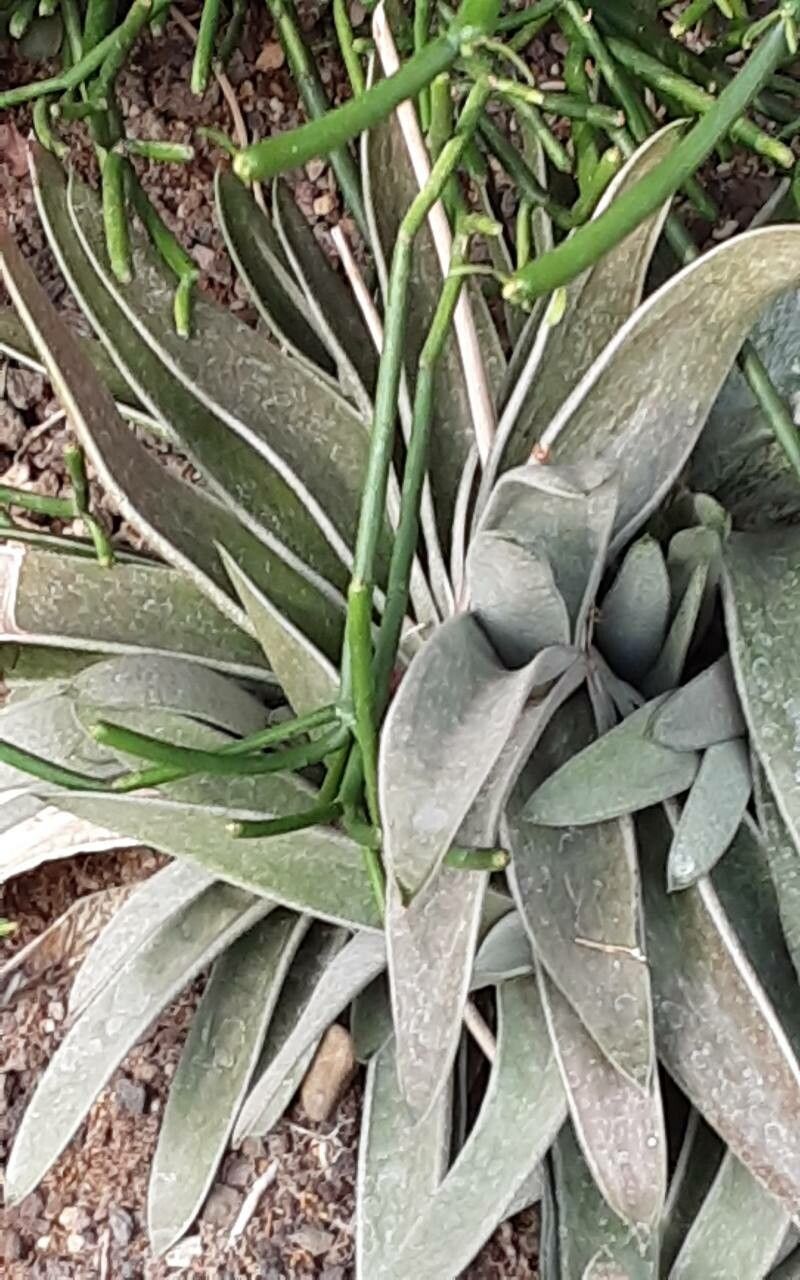
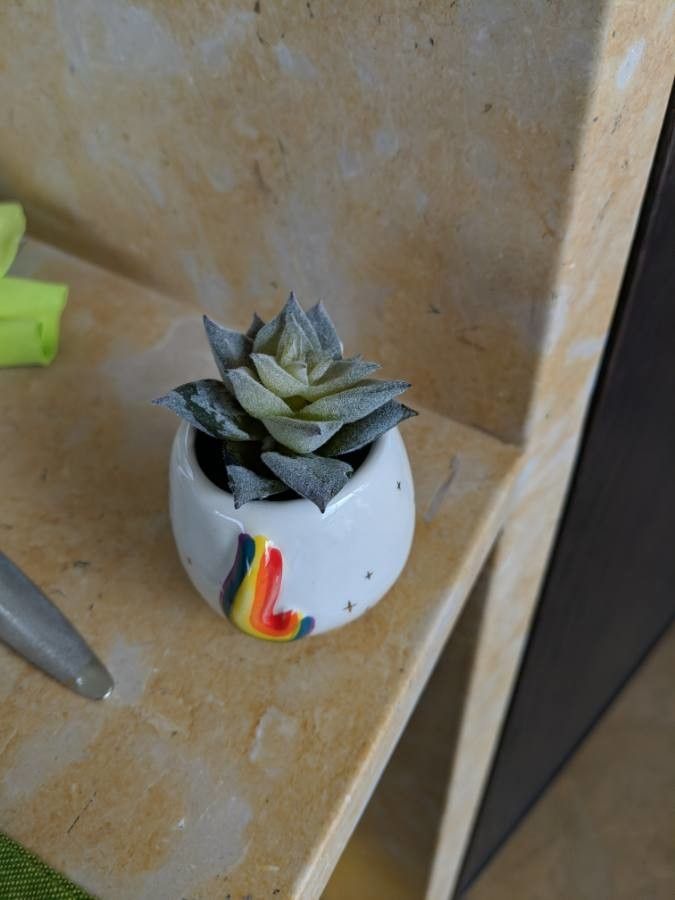
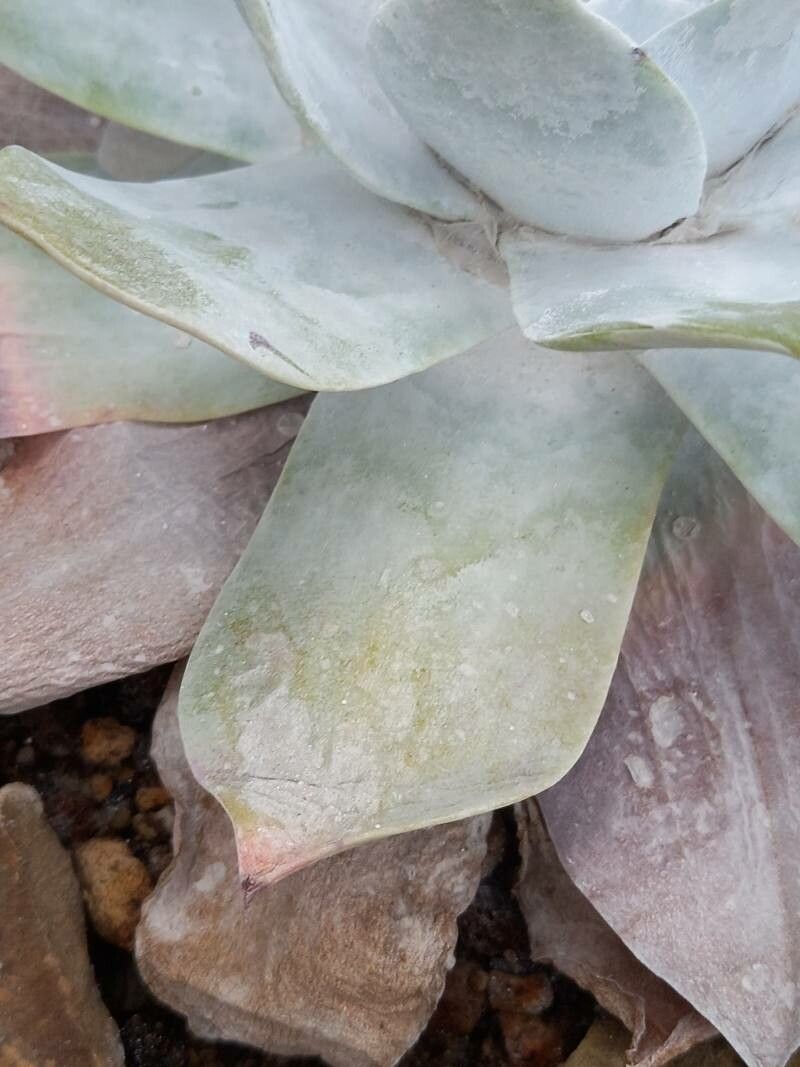
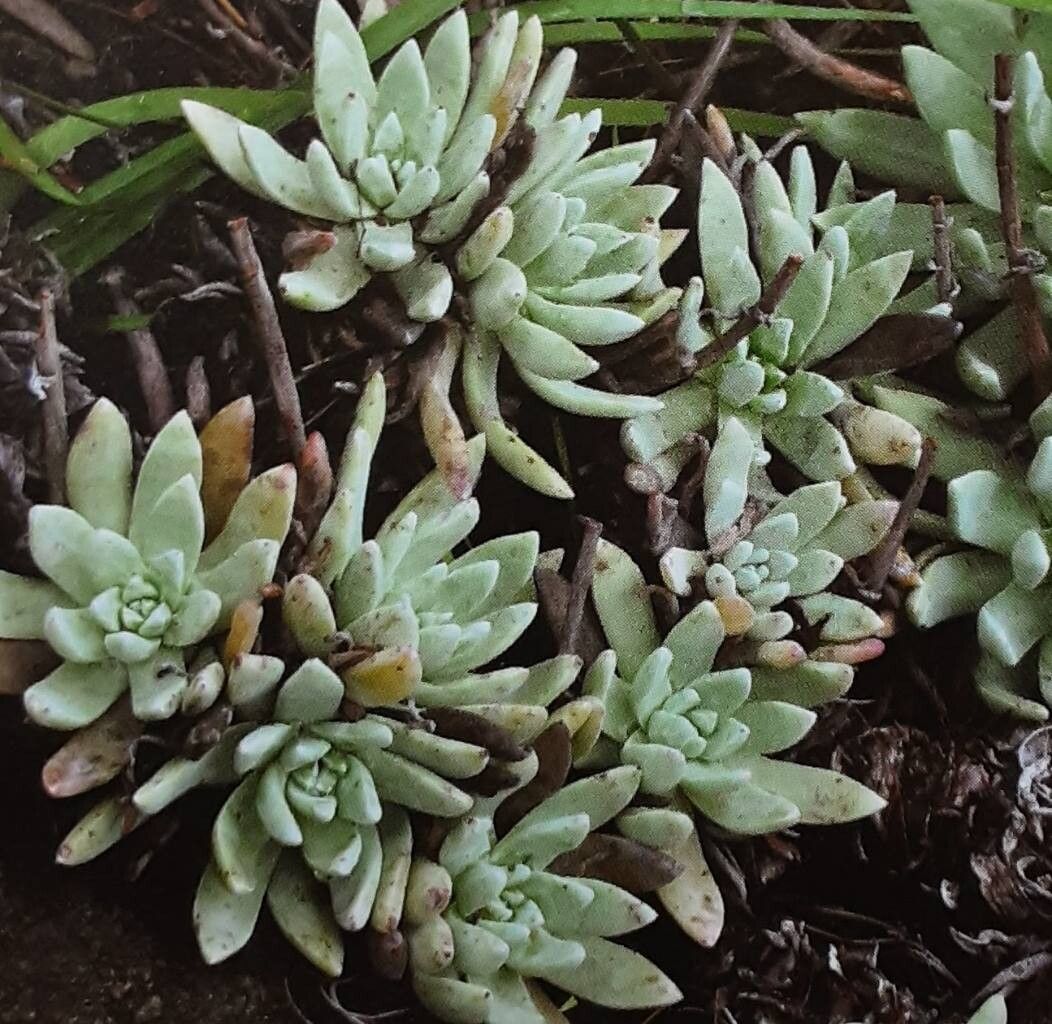
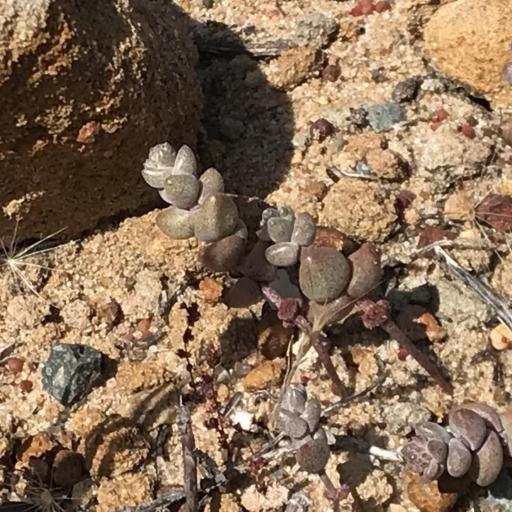
Dudleya lanceolata, commonly known as lanceleaf liveforever, is a succulent plant native to California and Baja California. Belonging to the Crassulaceae family, this species typically thrives in rocky areas or on cliffs. The plant forms rosettes of fleshy, pointed leaves that are green or bluish-green and can grow up to 6 inches long. In the spring, Dudleya lanceolata produces tall stalks adorned with clusters of small yellow flowers, which attract pollinators such as bees and butterflies.
Characteristically drought-tolerant, Dudleya lanceolata prefers well-draining soil with full sun exposure, making it a popular choice for xeriscaping and rock gardens due to its low maintenance needs and unique appearance. However, it's important to note that Dudleya species are protected by law in some regions because of over-harvesting for ornamental purposes. Therefore, if you wish to use this plant for landscaping, be sure to purchase it from reputable sources only.
Lanceleaf liveforever has moderate resistance to disease and is relatively sensitive to humidity. It becomes vulnerable to illness in high-humidity conditions and is prone to root rot during dormancy. Regarding care, Lanceleaf liveforever tolerates drought but requires more water during the growing season. Watering should be greatly reduced or stopped entirely while it is dormant. Lanceleaf liveforever is best for growers with some experience, though it can be difficult to maintain, particularly during the dormant period. It is especially appropriate for people who can dedicate time to its care throughout the winter months.
How to keep Dudleya Lanceolata.
Light
Lanceleaf liveforever performs best with plentiful sunlight and can still grow in locations that receive only a small portion of sun during the day. Coming from habitats where intense sunlight is typical, it tolerates some shade, but too little light can seriously impair its development and result in stunted growth.
Water
The lanceleaf liveforever is a drought-tolerant succulent that thrives with minimal watering, ideally every 2 to 3 weeks. It is well-suited for container gardening and flourishes in well-draining soil. This makes it an excellent choice for water-conscious gardeners who are familiar with its natural arid habitat.
Temperature
Lanceleaf liveforever comes from areas with mild to hot climates and thrives at temperatures between 68 and 100 °F (20 to 38 ℃). In certain seasons, you might need to modify temperatures to replicate those conditions.
Fertilizer
Lanceleaf liveforever needs only light fertilizer applications one to two times a year during the growing season. Do not fertilize in winter or in summer when the plant is dormant. Reduce fertilizer for plants that have been repotted, and wait a couple of months after repotting before fertilizing. Fertilizing supports healthy growth and encourages blooms.
Pruning
To keep your lanceleaf liveforever in good shape, prune any excess or densely packed branches in the spring and fall using tools such as knives or scissors. For propagation, take a sturdy stem with 5-6 leaves, treat the cut with sulfur powder, and once healed, plant it in slightly moist soil.
Pot & Repot
The Lanceleaf Liveforever is a succulent with slender leaves that should be repotted every two years, preferably in the spring. Use shallow pots to ensure good drainage and place the plant in bright, indirect light. After repotting, wait about a week before resuming watering. This helps promote healthy growth and prevents root rot.
Botanical profile.
- Plant Type
- Herb
- Life Cycle
- Perennial
- Genus
- Dudleya
- Family
- Crassulaceae
- Hardiness Zone
- 9-11
- Mature Height
- 30 cm
- Mature Spread
- 30 cm
- Leaf Color
- Green, Bronze
- Leaf Type
- Evergreen
- Flower Color
- Red, Orange, Yellow, Pink
- Flower Size
- 2.54 cm
- Bloom Time
- Mid spring, Late spring, Early summer
- Planting Time
- Spring, Summer, Autumn
- Harvest Time
- Summer
- Native Area
- Mexico
Other names.
Reader questions.
What do I do if I give my Lanceleaf liveforever plant too much or too little water?
Lanceleaf liveforever, like other succulents, can withstand long periods without water. However, if you neglect to water your Lanceleaf liveforever for an extended period, it may appear dehydrated or damaged. Underwatered plants will look lackluster, wrinkled, and some may have completely dried up or turned brown. The soil will be completely dried out. To remedy this, thoroughly water the plant by submerging the pot in water for 5-10 minutes until you feel moisture on the soil surface. Overwatering is dangerous for Lanceleaf liveforever and can cause root rot. Root rot occurs when wet conditions allow fungi and bacteria to thrive in the soil and damage the roots. Symptoms of overwatering include yellow, swollen, and translucent organs, which may burst open. If left untreated, the plant may turn brown or black and lose leaves easily. Check the soil to confirm overwatering as the cause. Saving an overwatered plant is challenging but not impossible. Remove the plant from its pot and gently remove wet soil from around the roots. Rinse the roots clean in room-temperature water to remove any fungus. If root rot is present, the roots will be dark brown or black, soft, mushy, or slimy. If most of the roots are affected, it may not be possible to save the plant. However, if some healthy roots remain, there is a chance of saving it. Trim any unhealthy roots with a sterilized cutting tool and dip the remaining firm, pale roots in a fungicide. Repot the plant in fresh, well-draining soil. While this doesn't always save a succulent with root rot, in most cases, it will recover and start growing again in the next season.
Why do I have to put fertilizer on my Lanceleaf liveforever plant?
When you fertilize Lanceleaf liveforever, you are adding nutrients to the growing medium. While it does store water and nutrients, applying plant food during the growing season is beneficial for healthy growth. Fertilizing can also stimulate mature specimens to produce blooms in the growing season.
How much sunlight does Lanceleaf liveforever require to grow?
To ensure the proper growth of Lanceleaf liveforever, it is recommended that they receive a minimum of 6 hours of sunlight daily. However, they can tolerate more sunlight, with up to 14 hours per day being beneficial. The specific amount may vary based on factors like sunlight intensity and environmental conditions, but it is unlikely for them to receive an excessive amount of sunlight.
What temperature is best for your Lanceleaf liveforever?
The Lanceleaf liveforever thrives when kept within a specific range of conditions. Ideally, temperatures should be between 75-90℉ (25-32℃). Throughout the early winter season, it is important to avoid temperatures dropping below 75℉ (25℃) for the Lanceleaf liveforever. If you bring it indoors during this time, it will be better protected from extreme temperatures. Although the plant can survive in some extreme temperatures, it is not recommended for it to endure lower temperatures like 50℉ (15℃). If you anticipate winter conditions outside, it is advisable to bring the plant indoors.
How often should I give water to my Lanceleaf liveforever plant?
When it comes to watering Lanceleaf liveforever, there is no set rule. The best approach is to check the soil and only water if it is completely dried out. To do this, you can stick your finger or a moisture meter into the pot and check the soil beneath the surface. If you have planted it in a deep pot, you can use a stick or chopstick for this purpose. If the soil feels slightly moist, it is best to wait a few days and check again. Generally, most people will need to water Lanceleaf liveforever every two weeks in summer and once a month in winter. However, there are various factors that can influence the frequency of watering, which are discussed in the section below.
When should I fertilize my Lanceleaf liveforever plant?
Lanceleaf liveforever plants only require a small amount of fertilizer during the growing season. It is recommended to fertilize them 1-2 times a year, specifically in the spring and autumn. Avoid fertilizing in winter and summer when the plant is dormant. If you have repotted the plant, be cautious and reduce the amount of fertilizer used. It's best to wait a few months after repotting before beginning to fertilize.
What kind of sunlight does Lanceleaf liveforever require?
Lanceleaf liveforever plants require abundant sunlight for optimal growth. They are considered full-sun plants and thrive when exposed to direct sunlight or bright indirect sun. While certain varieties may tolerate partial sun, they generally benefit from receiving more sunlight.
How do I change the temperature for my Lanceleaf liveforever as it grows?
The Lanceleaf liveforever goes through various growth phases. Firstly, the dormant seed develops into a seedling. For successful germination, these dormant seeds require specific environmental conditions, particularly a temperature range of 75-90℉ (25-32℃). To ensure vigorous growth, it's best to plant them in the summer when the ideal temperature is around 85℉ (30℃). During this time, you can move your Lanceleaf liveforever from indoors to a spot with ample sunlight.
What do I need to think about when watering my Lanceleaf liveforever?
To properly water your Lanceleaf liveforever, you need to consider a few factors such as container size, soil type, temperature, and humidity. The container and soil you choose will determine how often and how much water to use. Make sure the container has drainage holes so excess water can escape. Smaller containers hold less moisture, so they require more frequent watering, whereas larger pots retain moisture longer and need less frequent watering. Avoid using an oversized pot as it can easily lead to overwatering. When repotting, move to a slightly larger container. Shallow containers work better for Lanceleaf liveforever due to their shallow root systems. In terms of seasons, Lanceleaf liveforever needs less watering during winter when growth slows down, and there is less evaporation. On the other hand, active growing seasons in spring and autumn require more frequent watering. Keep in mind that your location's climate also plays a role. Humid areas with ample rainfall require less watering compared to dry and arid climates. Remember that local conditions can vary throughout the year and due to indoor heating and air conditioning. If you plant Lanceleaf liveforever in the ground, it generally does not require additional watering once its root system is established, relying on precipitation and dew. However, during prolonged dry periods, occasional watering may be necessary. In areas where Lanceleaf liveforever can only be grown in containers, you can move the plant outdoors during suitable spring and summer temperatures and bring it back inside when temperatures drop. Potted Lanceleaf liveforever kept outside typically needs more water due to increased sun exposure, even on shaded porches.
When is the best time to not fertilize my Lanceleaf liveforever?
Lanceleaf liveforever, like other plants, goes through a dormancy period that signals a time to stop fertilizing. During the summer and winter, the plant stops growing, making it an ideal time to halt fertilizer applications. Additionally, it is recommended to refrain from fertilizing for the first few months after repotting in the spring.
Should I shield Lanceleaf liveforever from the sun?
Lanceleaf liveforever thrives in hot, sunny environments and is well-suited to withstand sun exposure, so protection from the sun is unnecessary. However, it's important to be cautious when relocating your Lanceleaf liveforever to a sunnier location if it is not accustomed to it. Plants require time to adjust to different conditions, therefore, begin by gradually introducing the plant to a few hours of sunlight each day, then progressively increase the duration. Once acclimated, most varieties of Lanceleaf liveforever can thrive in full sun without any need for protection.
How can I make sure my Lanceleaf liveforever plant stays warm during cold seasons?
To protect your Lanceleaf liveforever during winter, it's recommended to bring it indoors. Some people choose to use grow lights to give the plant adequate sunlight, but if your home is not very dark, buying these lights may not be necessary. Instead, place your plants in an area where they can receive the most natural sunlight possible. This should provide enough light for the Lanceleaf liveforever to thrive in the winter. If you have multiple Lanceleaf liveforever plants, be sure to rotate them so that they all get sufficient sunlight. However, if you live in northern areas with extremely cold weather, avoid placing the plants too close to the window, as the cold temperature may damage them.