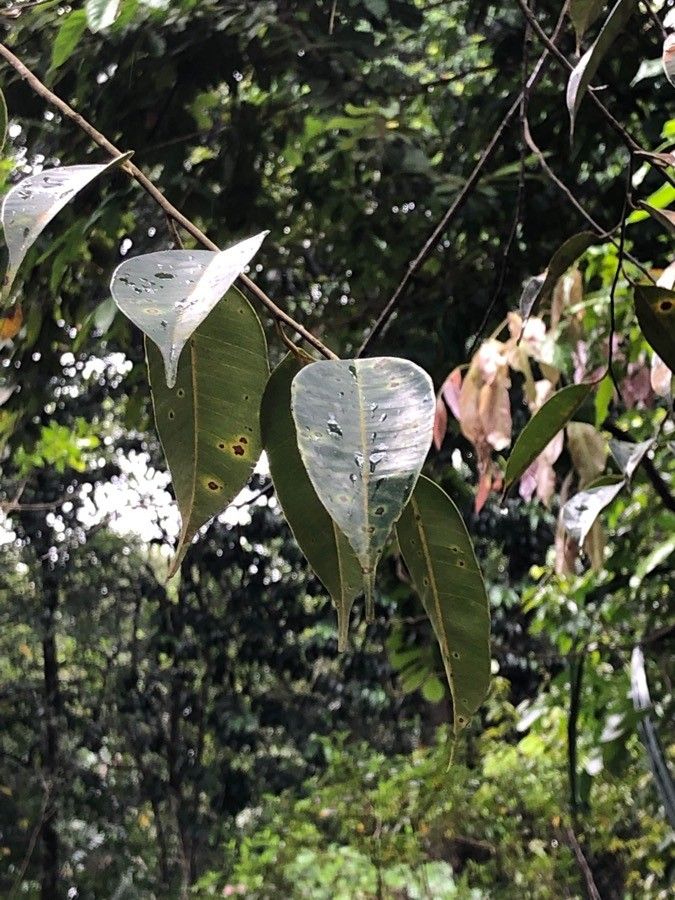
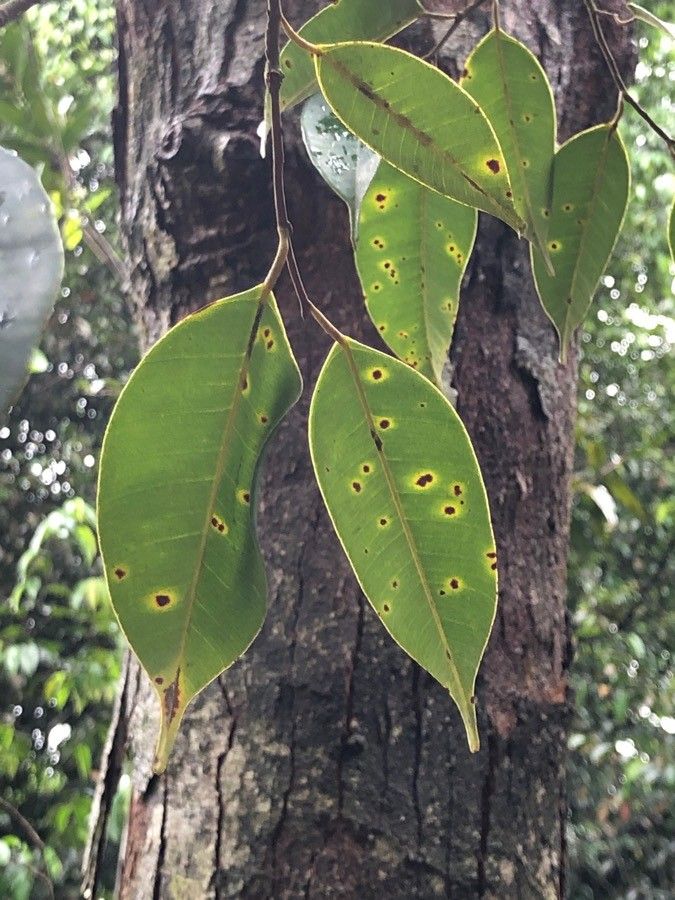
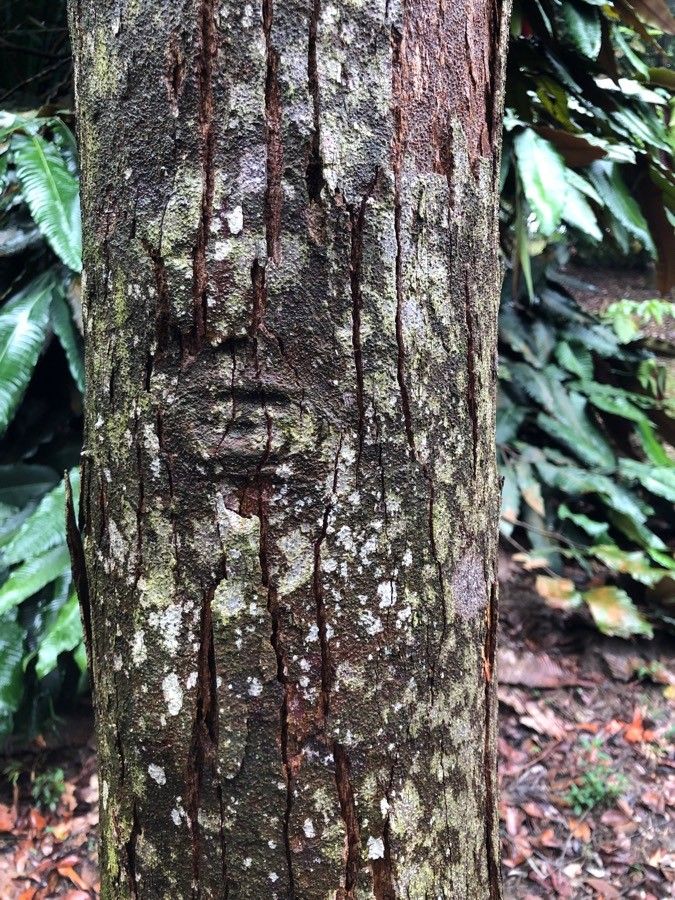
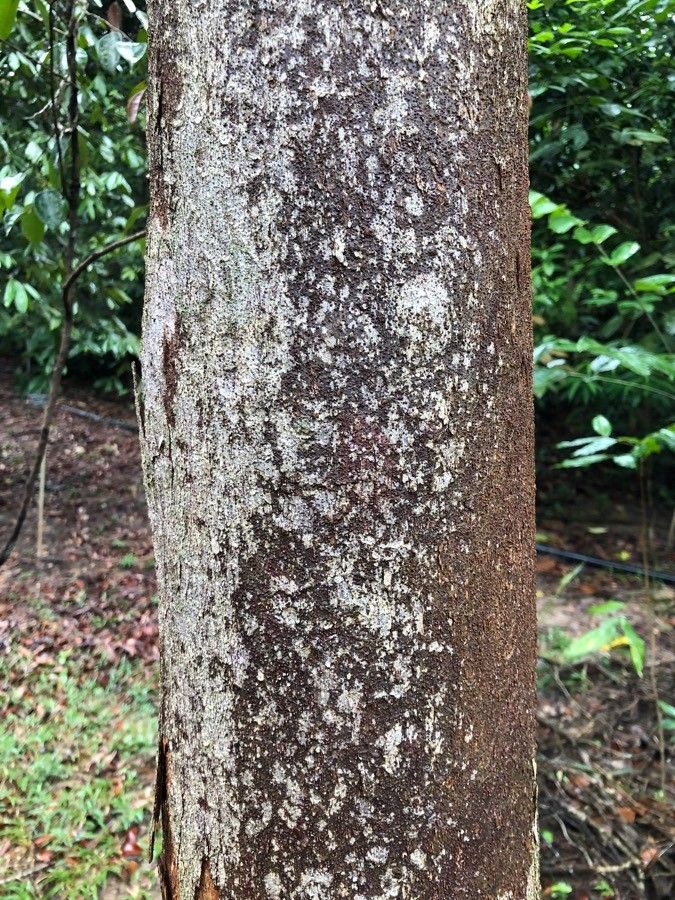
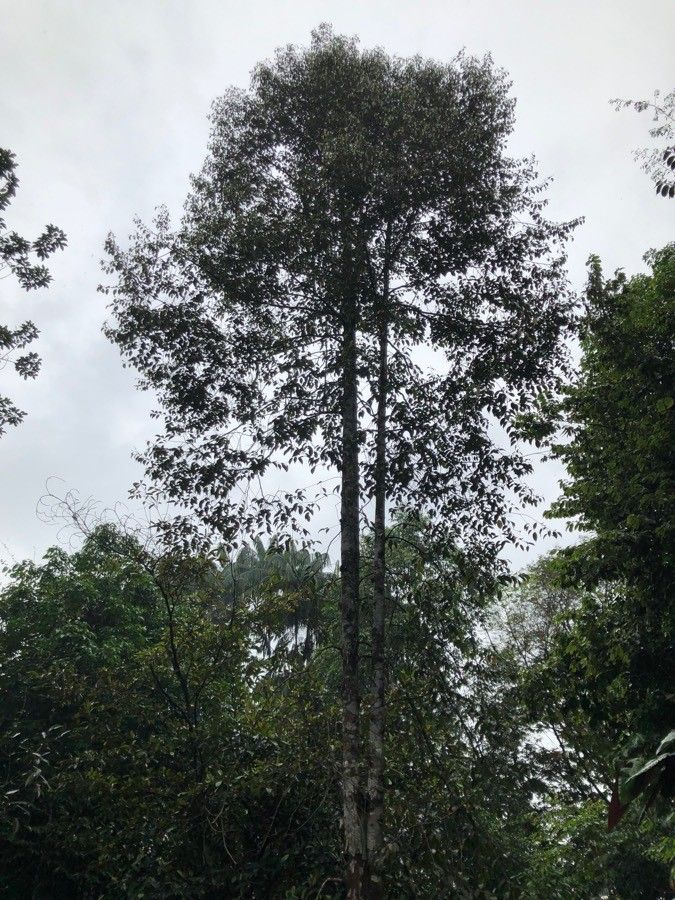
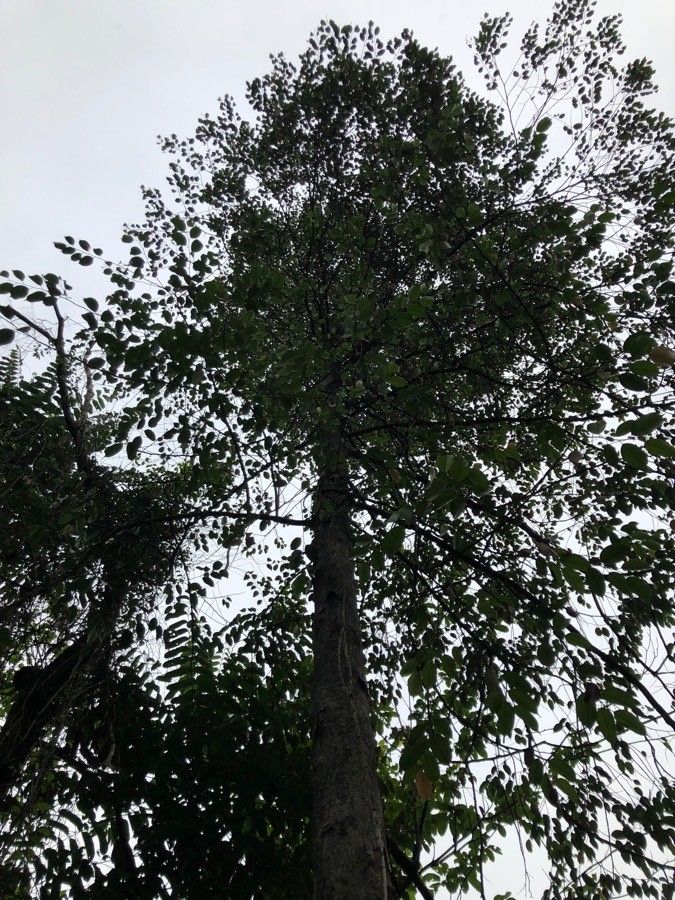
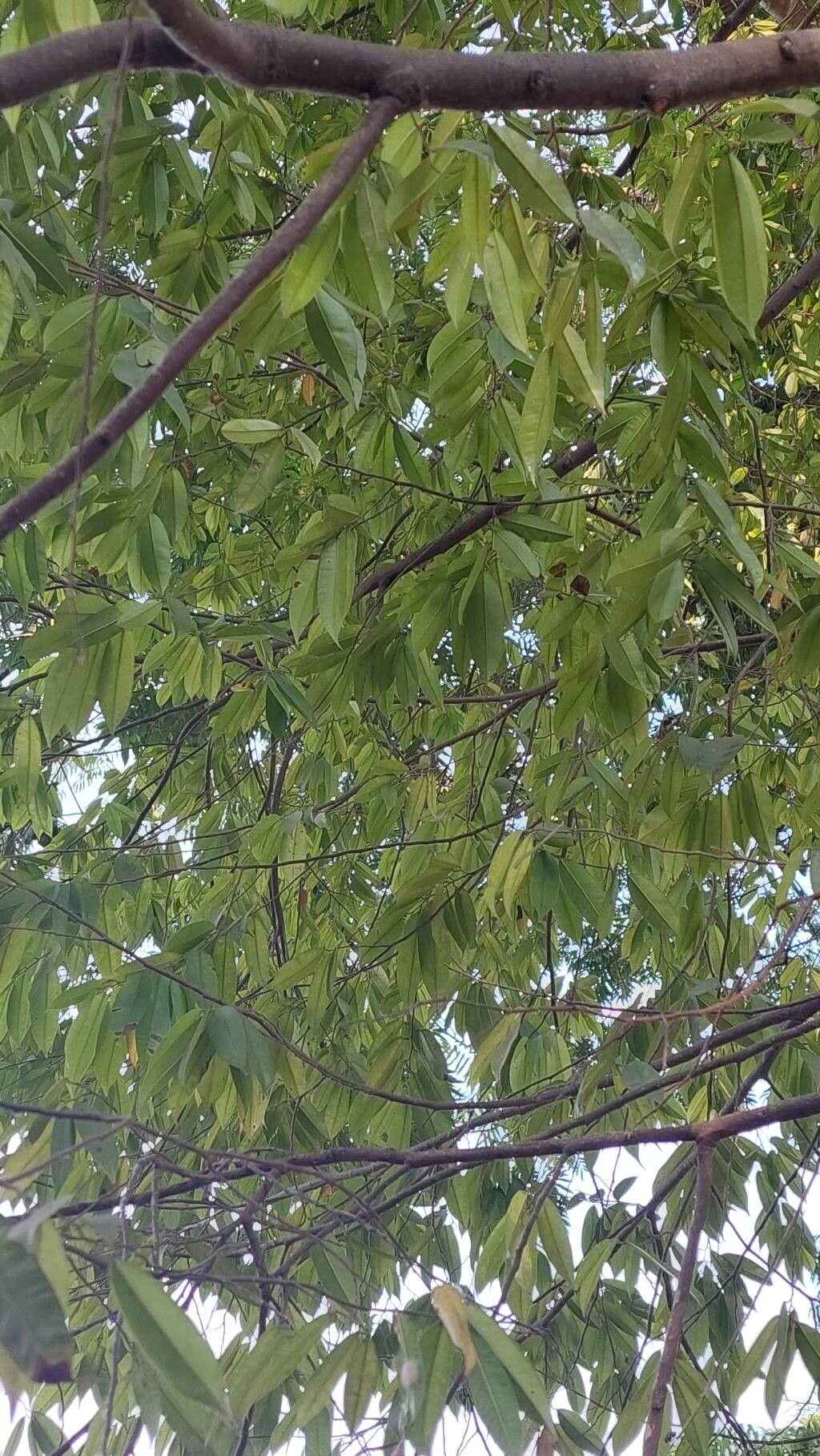
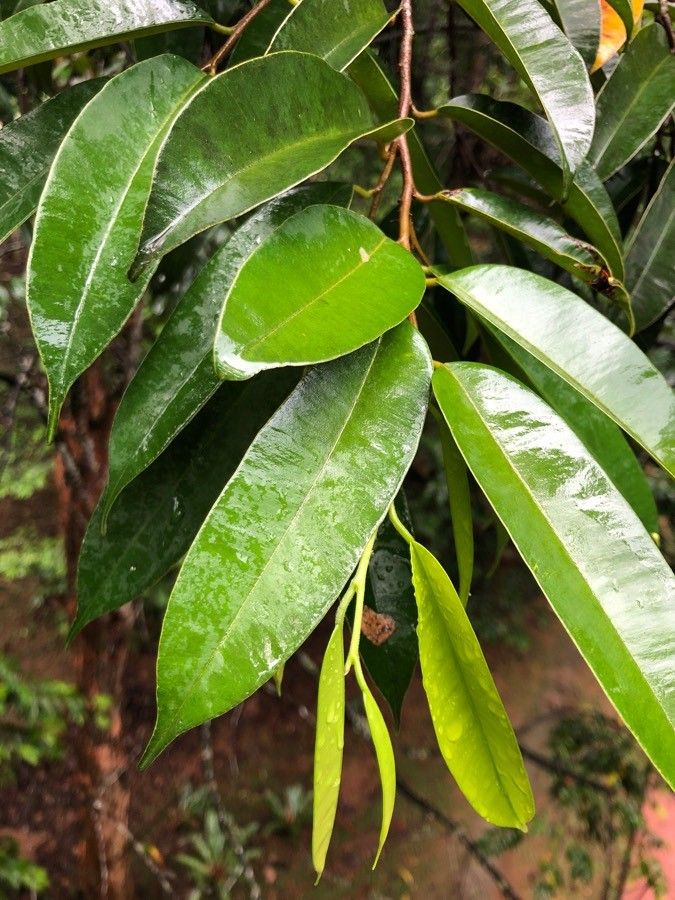
Dryobalanops aromatica, commonly known as Borneo camphor, camphor tree, Malay camphor, or Sumatran camphor, is a species of critically endangered plant in the family Dipterocarpaceae. The species name aromatica is derived from Latin (aromaticus meaning spice-like) and refers to the smell of the dammar (resin). This species was one of the main sources of camphor and attracted early Arab traders to Borneo, at that time being worth more than gold, and used for incense and perfumes.It is found in Sumatra, peninsular Malaysia, and Borneo. It is a large emergent tree, up to 65 m or even 75 m tall, found in mixed dipterocarp forests on deep humic yellow sandy soils. It is a heavy hardwood sold under the trade names of Kapur. It is recorded from at least two protected areas (Lambir and Gunung Mulu National Parks). Bergenin, malaysianol A, laevifonol, ampelopsin E, α-viniferin, ε-viniferin and diptoindonesin A can be isolated from the stem bark of D. aromatica.Dryobalanops aromatica is one of several tree species known to exhibit a behavior called crown shyness.
Borneo camphor shows strong disease resistance and is rarely susceptible to disease. Regarding care, this plant is fairly low-maintenance. When grown outdoors it needs little watering, and larger specimens usually do not require pruning. Smaller plants, however, should be pruned after they have bloomed. Borneo camphort is suitable for anyone with an outdoor area, such as a garden or a deck, and does not demand much gardening experience.
How to keep Dryobalanops Aromatica.
Light
Borneo camphor occurs naturally in habitats like forest understories and rocky areas, where it grows in natural shade. It prefers partial sun but can adapt to both full sun and full shade, illustrating its versatility and hardiness.
Water
Borneo camphor, native to the rainforests of Borneo, thrives in humid environments and prefers damp soil. It can tolerate brief periods of dryness. Water this evergreen plant every 2-3 weeks, allowing the soil to partially dry out between waterings. During the growing season, consistent watering is essential for maintaining healthy foliage.
Temperature
Borneo camphor comes from tropical areas where the climate is usually warm and humid. Therefore, it is well suited to high temperatures and humidity. It does not tolerate sudden temperature shifts and prefers a consistent temperature, so it is important to avoid indoor temperature fluctuations. It generally cannot endure cold and needs warmer conditions to grow. If the surrounding temperature becomes too low, the plant may stop growing or even die.
Fertilizer
Fertilization is essential for caring for Borneo camphor. Regular feeding during the growing season preserves the energy required for its showy foliage and supports overall growth. Skipping fertilization can cause unhealthy leaves, reduced ornamental appeal, and stunted or weak growth that is prone to breaking.
Pruning
To maintain the health and appearance of Borneo camphor, perform winter pruning to control its size and shape. Focus on removing dead branches and thinning crowded areas to improve airflow. Be careful to avoid heavy pruning, as it can stress the plant. Regular pruning helps promote both health and aesthetics. Always use sterilized tools to prevent disease, and consult guidelines for proper pruning techniques.
Botanical profile.
- Plant Type
- Tree
- Life Cycle
- Perennial
- Genus
- Dryobalanops
- Family
- Dipterocarpaceae
- Hardiness Zone
- 10-12
- Mature Height
- 39.93 m to 60.05 m
- Mature Spread
- 14.94 m to 20.12 m
- Leaf Color
- Dark Green
- Leaf Type
- Evergreen
- Flower Color
- White, Green
- Flower Size
- 2.03 cm to 3.05 cm
- Bloom Time
- Late spring, Early summer, Mid summer
- Planting Time
- Spring, Summer, Autumn
- Harvest Time
- Late summer, Early fall, Mid fall
- Native Area
- Indonesia, Brunei, Malaysia
Other names.