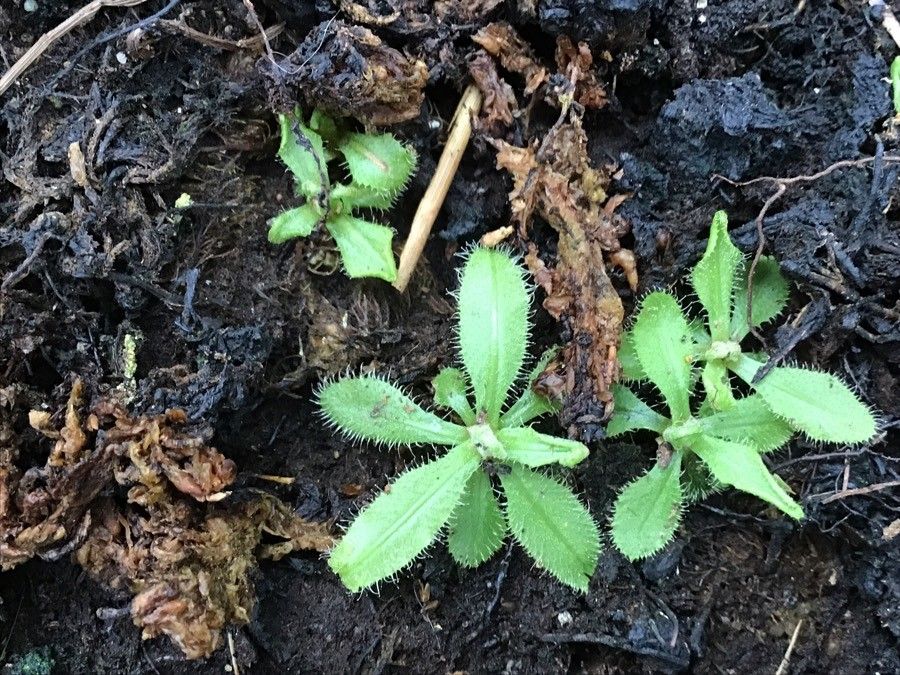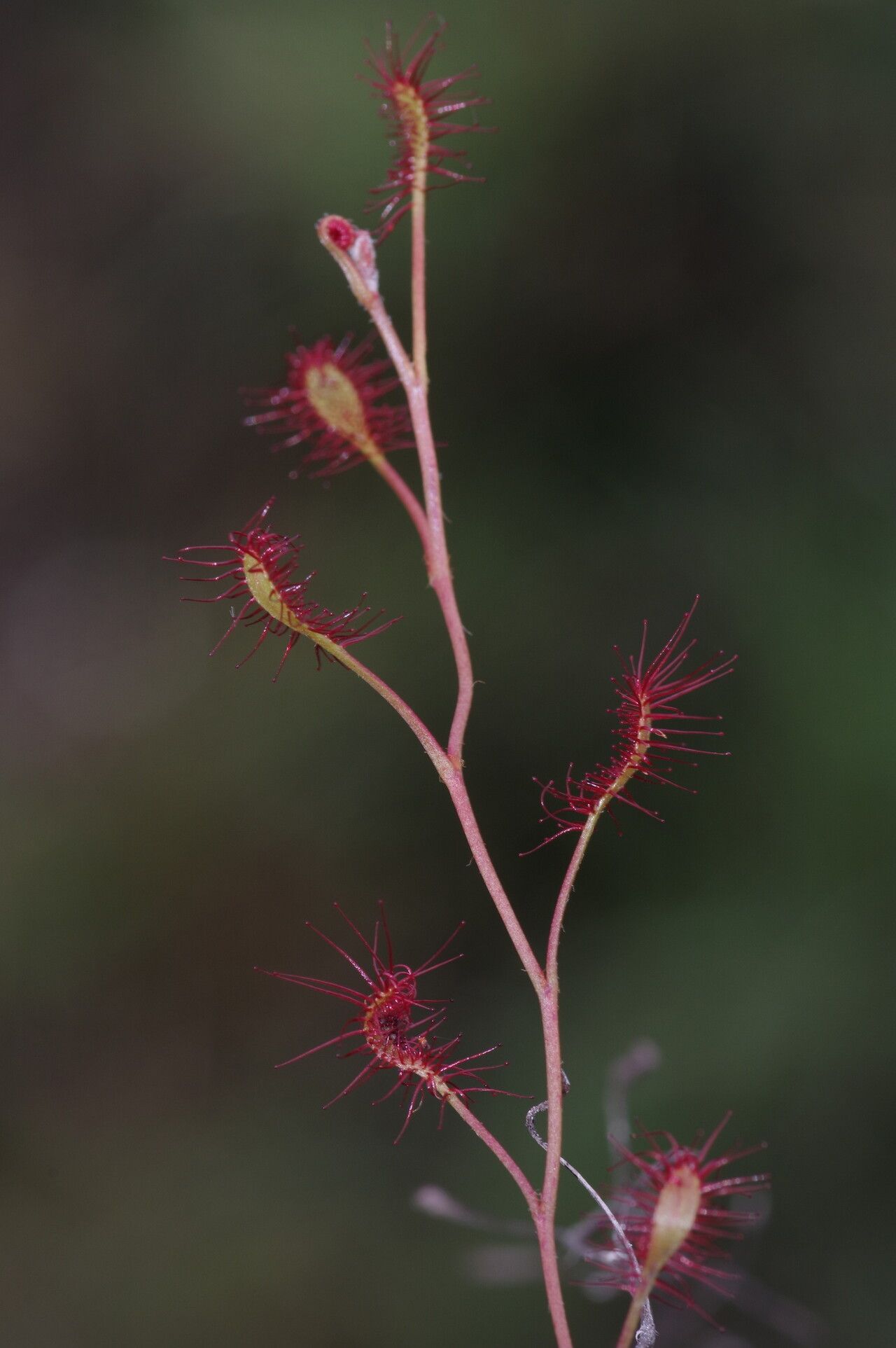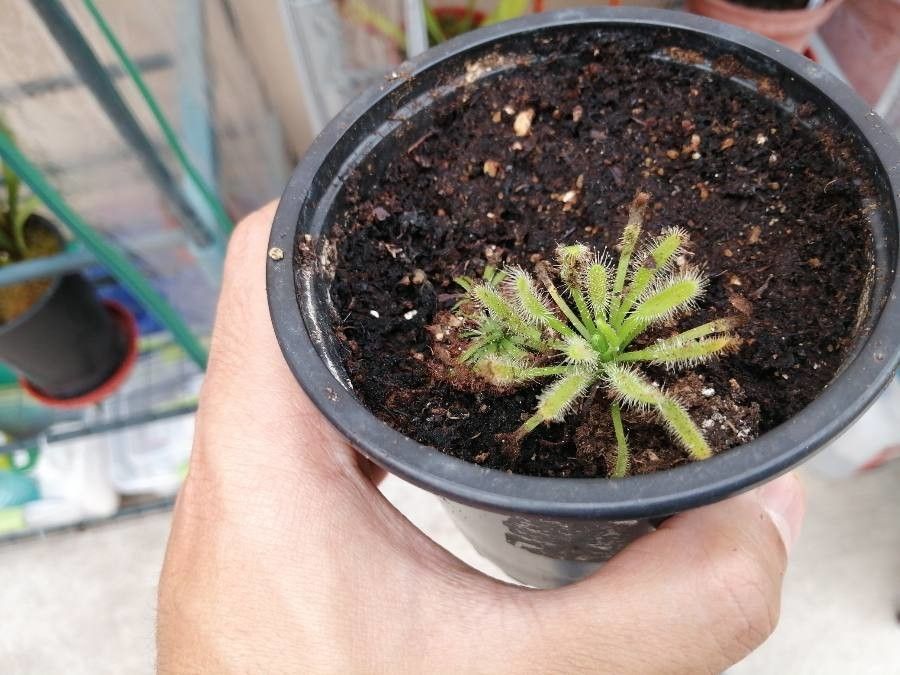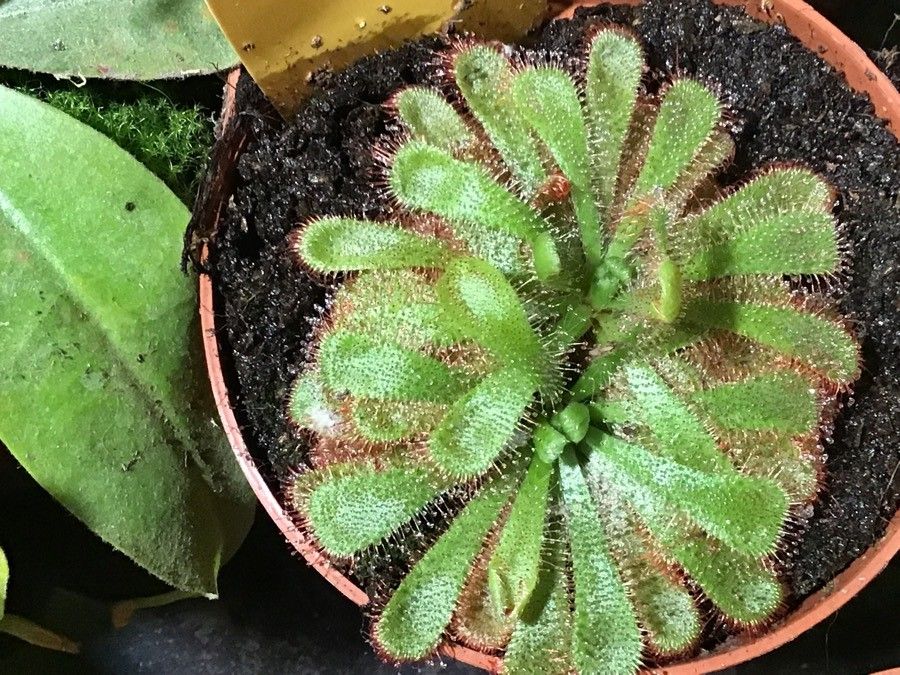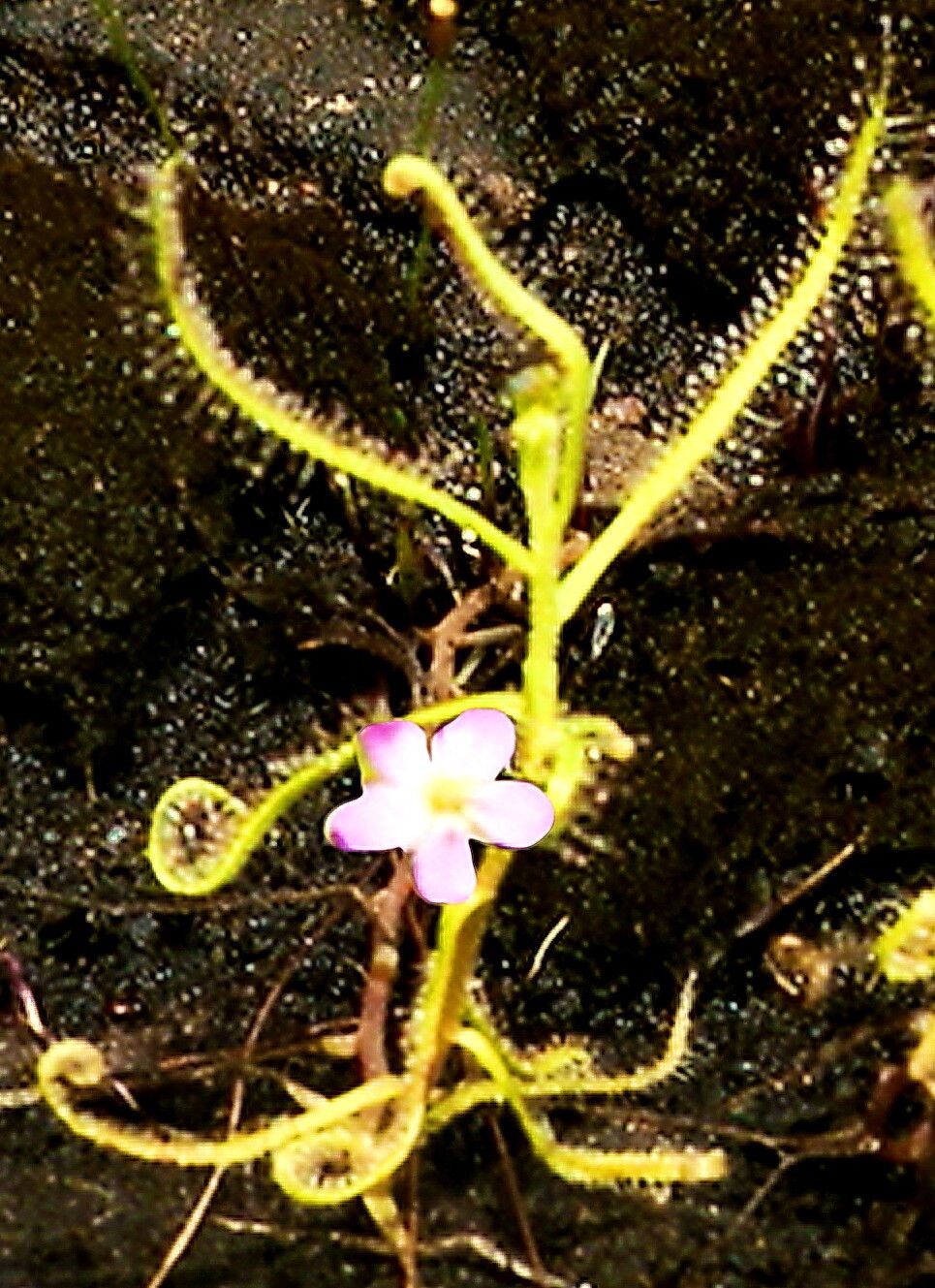
Drosera indica, sometimes known as the Indian sundew, is a species of sundew native to tropical and southern Africa, Madagascar and tropical and subtropical Asia. It was first described by Carl Linnaeus in his Species Plantarum in 1753. Until the early 21st century it was mostly considered a highly variable species with a wide distribution including Australia, but since 2000 several distinct species have been separated from D. indica within Drosera section Arachnopus, which is often referred to as the ‘Drosera indica complex’. Many of these species are endemic to Australia, but D. indica itself is now widely considered to be absent from that country.
Indian sundew has moderate resistance to disease and needs a high-humidity environment. However, if ventilation is poor it can become prone to rot. Its care is considered difficult because it requires constant humidification to keep humidity levels high. The plant is also highly vulnerable to rot when the environment is poorly ventilated and too warm. Indian sundew is more appropriate for growers with greater experience who can supply a suitable growing environment.
How to keep Drosera Indica.
Light
Indian sundew is native to habitats with abundant sunlight, such as exposed bogs and bright wetlands. It prefers full sun but can also tolerate partial sun.
Temperature
Indian sundew does best in moderate temperatures, roughly those people normally find comfortable. It prefers conditions that are not excessively hot or cold. High temperatures mainly pose a risk of sunburn, so providing some shade in summer is recommended to keep heat down. When temperatures fall, the Indian sundew goes into dormancy. If you want it to keep growing year-round, you must keep temperatures higher through the winter. Frost can harm the plant and should be avoided.
Pot & Repot
When rehousing the Indian sundew, select a container that is 1-2 inches (2.5–5 cm) larger and has sufficient drainage. Use a potting mix that drains well. Carry out the repotting during spring or autumn, making sure that the root ball is a bit lower than the lip of the pot. Saturate it well with water following the repotting and position it in a warm location with dispersed sunlight.
Botanical profile.
- Plant Type
- Herb
- Life Cycle
- Annual
- Genus
- Drosera
- Family
- Droseraceae
- Hardiness Zone
- 10-12
- Mature Height
- 5 cm to 49 cm
- Mature Spread
- 5 cm to 10 cm
- Leaf Color
- Green
- Leaf Type
- Semi-evergreen
- Flower Color
- Pink, White
- Flower Size
- 6.35 cm to 30.48 cm
- Bloom Time
- Summer, Early fall, Mid fall
- Planting Time
- Spring, Summer
- Harvest Time
- Late summer, Fall, Early winter
- Native Area
- Sri Lanka, Burkina Faso, India, Malaysia, Angola, Namibia, Madagascar, Nigeria, Guinea-Bissau, Niger, Uganda, Tanzania, Zimbabwe, Mali, Benin, Sierra Leone, Indonesia, Cambodia, Cameroon, Liberia, Mozambique, Central African Republic, South Africa, Zambia, Sudan, Philippines, Laos, Guinea, Chad, China, Vietnam, Myanmar, Japan, Togo, Côte d'Ivoire, Gambia, Congo (DRC), Thailand