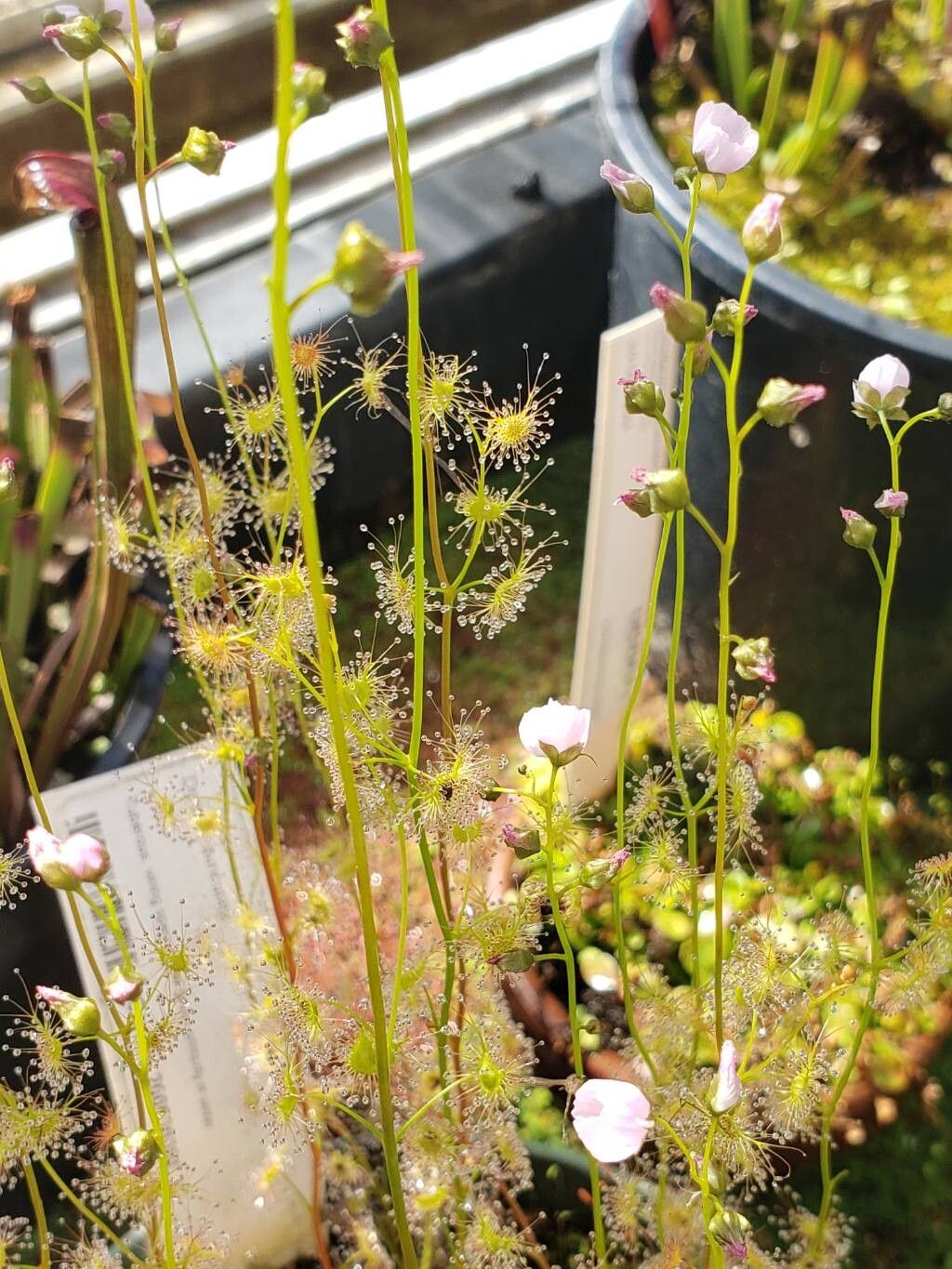
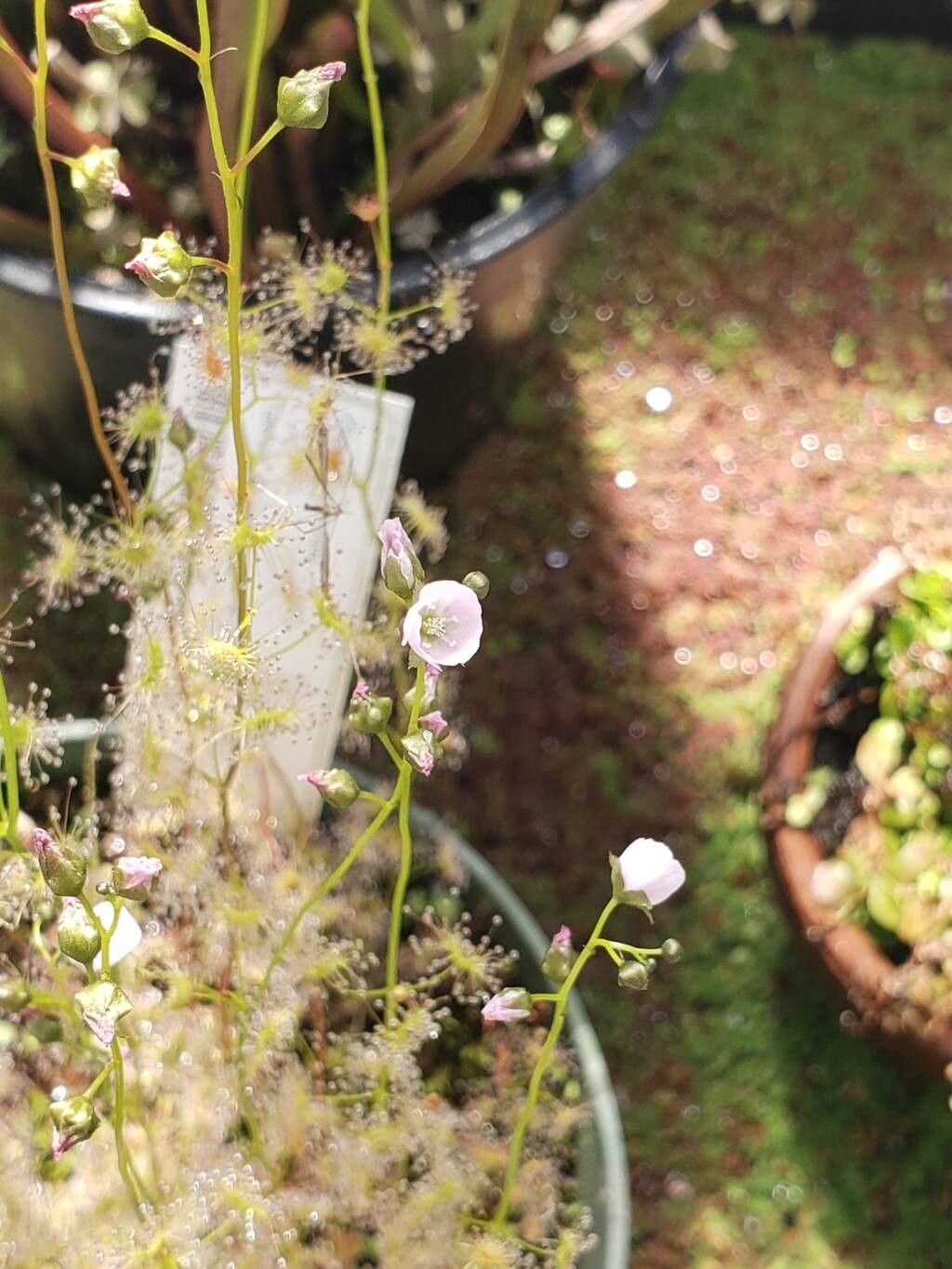
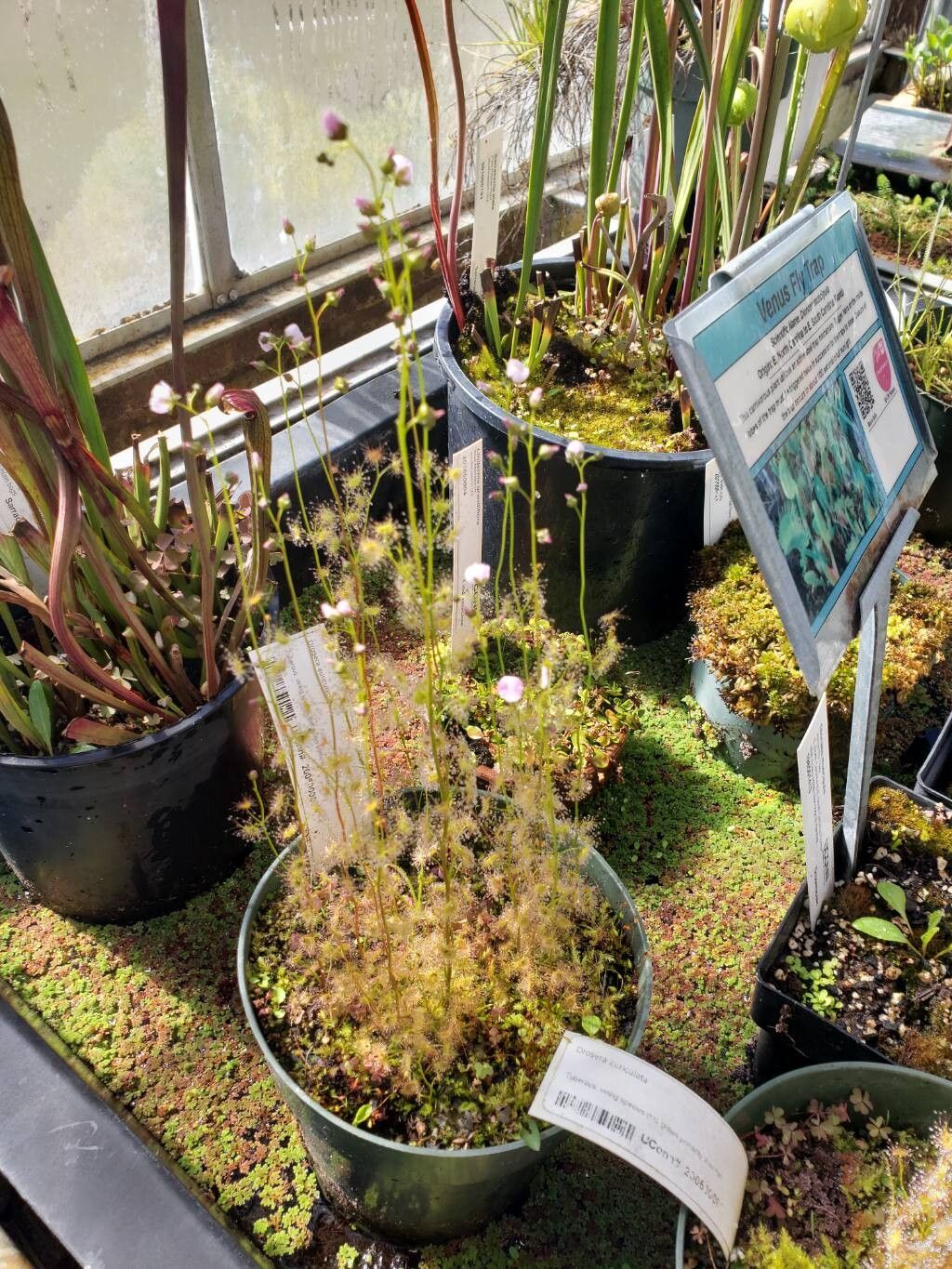
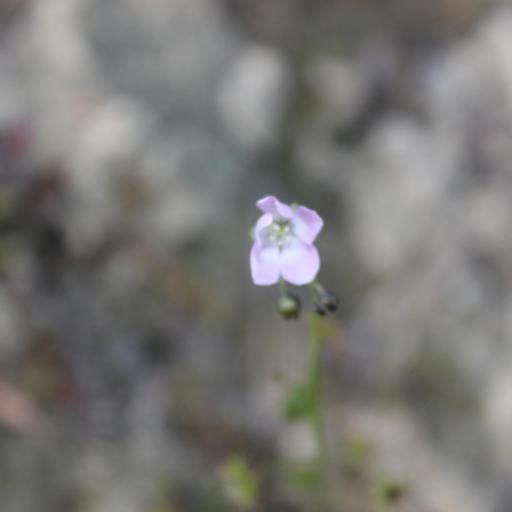
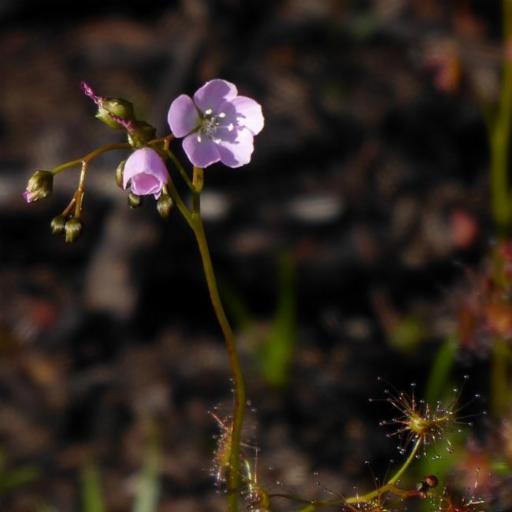
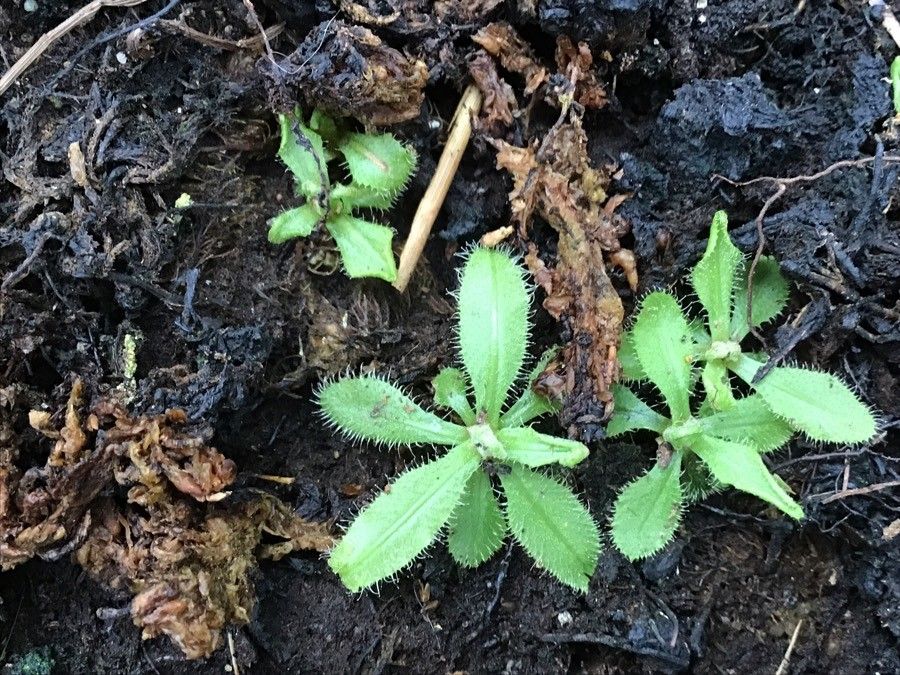
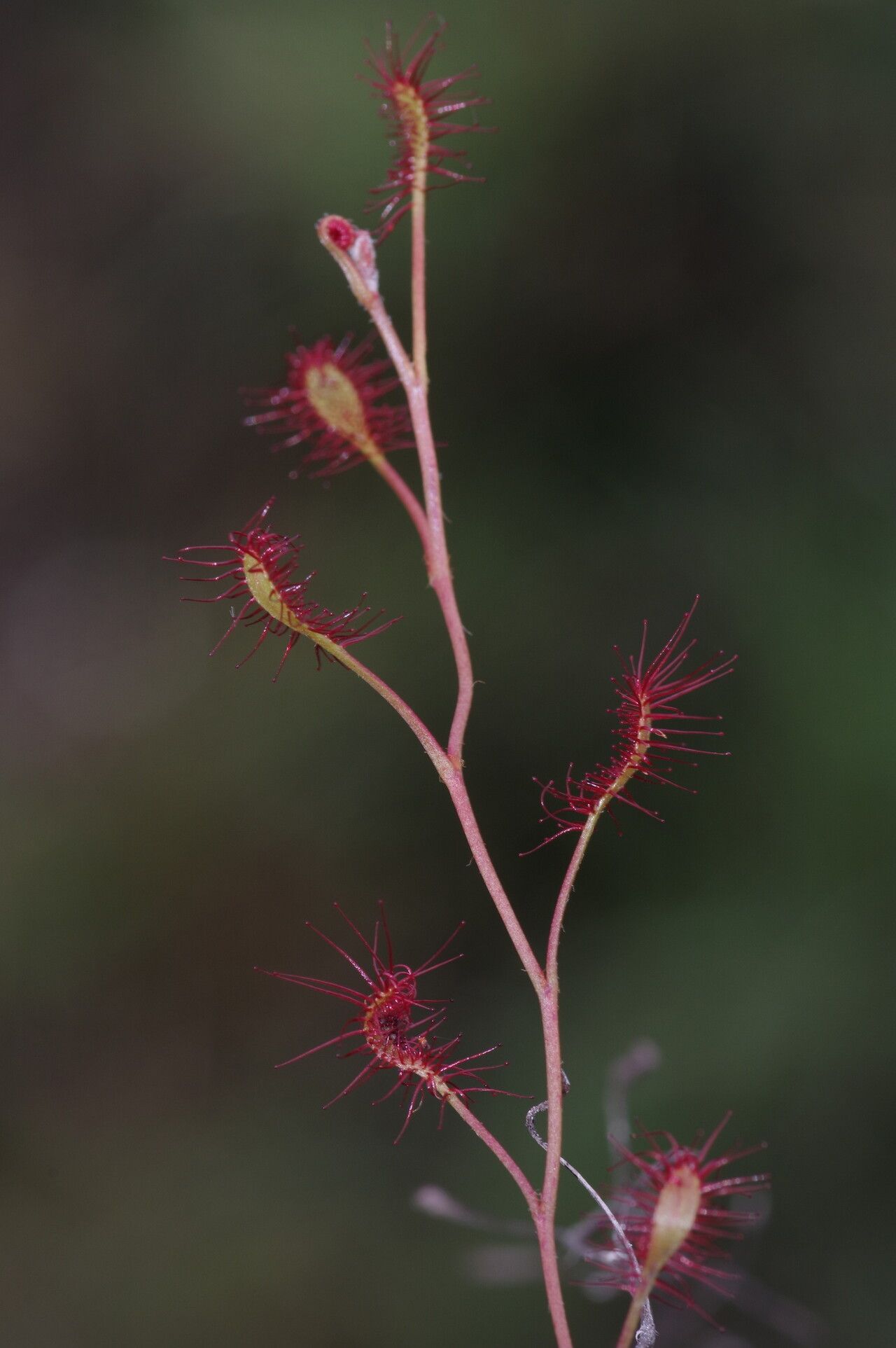
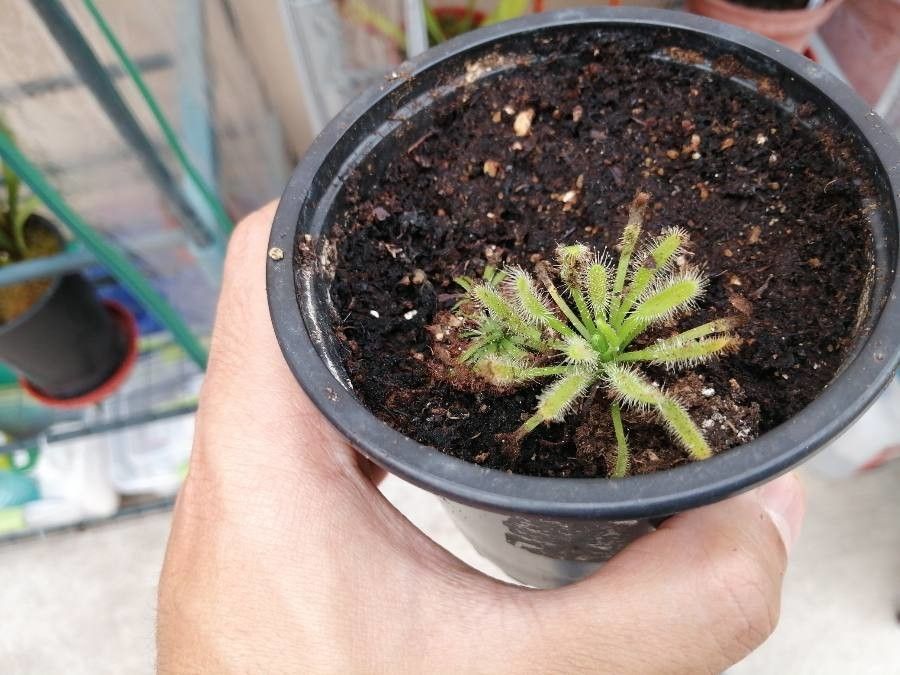
Drosera peltata, commonly called the shield sundew or pale sundew, is a climbing or scrambling perennial tuberous species in the carnivorous plant genus Drosera. Among the tuberous sundews, D. peltata has the largest distribution, which includes eastern and western Australia, New Zealand, India, and most of Southeast Asia including the Philippines. The specific epithet is Latin for "shield shaped", a reference to the shape of the cauline leaves. It is either a single extremely variable species, or a complex of several closely related species of uncertain taxonomic boundaries. In Australia at least four forms have had or still have specific taxonomic recognition: Drosera peltata subsp. peltata (an autonym), D. peltata subsp. auriculata, D. foliosa (also as D. peltata var. foliosa) and D. gracilis (also as D. peltata var. gracilis). Tuberous sundews are species of the genus Drosera that have evolved to live in summer drought conditions and aestivate as a dormant underground tuber. While many tuberous sundews are ground-hugging rosettes, D. peltata is an upright species with a simple or branching inflorescence.
Climbing sundew has moderate resistance to disease and needs a high-humidity environment. However, if ventilation is poor, it can be prone to rot. The plant’s care is considered difficult because it needs constant humidification to maintain those humidity levels. It is also highly prone to rotting when the environment is poorly ventilated and too hot. Climbing sundew is best suited to growers with more experience who can provide an appropriate growing environment.
How to keep Drosera Auriculata.
Light
The climbing sundew is native to habitats with plentiful sunlight, such as open bogs and sunny wetlands. It prefers full sun but can also tolerate partial sun.
Temperature
Climbing sundew prefers moderate temperatures, comparable to those most people find comfortable. It does best in conditions that are not excessively hot or cold. Excessive heat mainly increases the risk of sunburn, so providing some shade in summer is recommended to keep temperatures from becoming too high. When temperatures fall, the Climbing sundew goes dormant. If you want it to continue growing, you must keep temperatures warmer through the winter. Frost can harm the plant and should be prevented.
Pot & Repot
When repotting Climbing sundew, select a pot 1–2 inches (2.5–5.1 cm) larger with ample drainage. Use a well-draining potting mix. Repot in spring or fall, ensuring that the root ball is slightly lower than the rim of the flower pot. Water thoroughly after repotting and place in a warm spot with indirect sunlight.
Botanical profile.
- Plant Type
- Herb
- Life Cycle
- Perennial
- Genus
- Drosera
- Family
- Droseraceae
- Hardiness Zone
- 8-11
- Mature Height
- 49 cm
- Mature Spread
- 5 cm to 15 cm
- Leaf Color
- Green, Red
- Leaf Type
- Deciduous
- Flower Color
- White
- Flower Size
- 3.05 cm to 10.16 cm
- Bloom Time
- Mid spring, Late spring, Early summer
- Planting Time
- Spring, Summer
- Harvest Time
- Mid summer, Late summer, Early fall