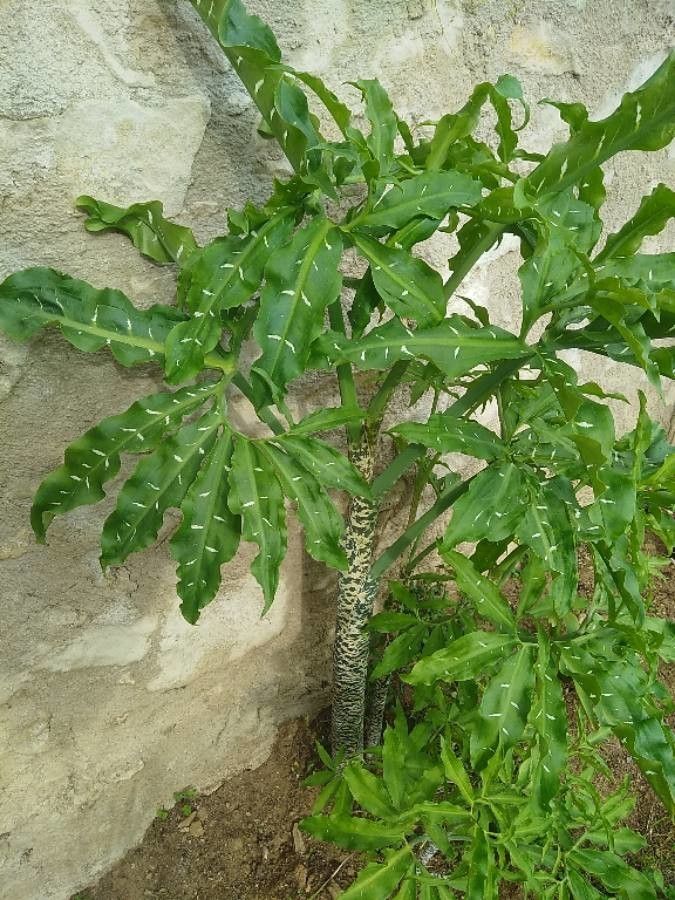
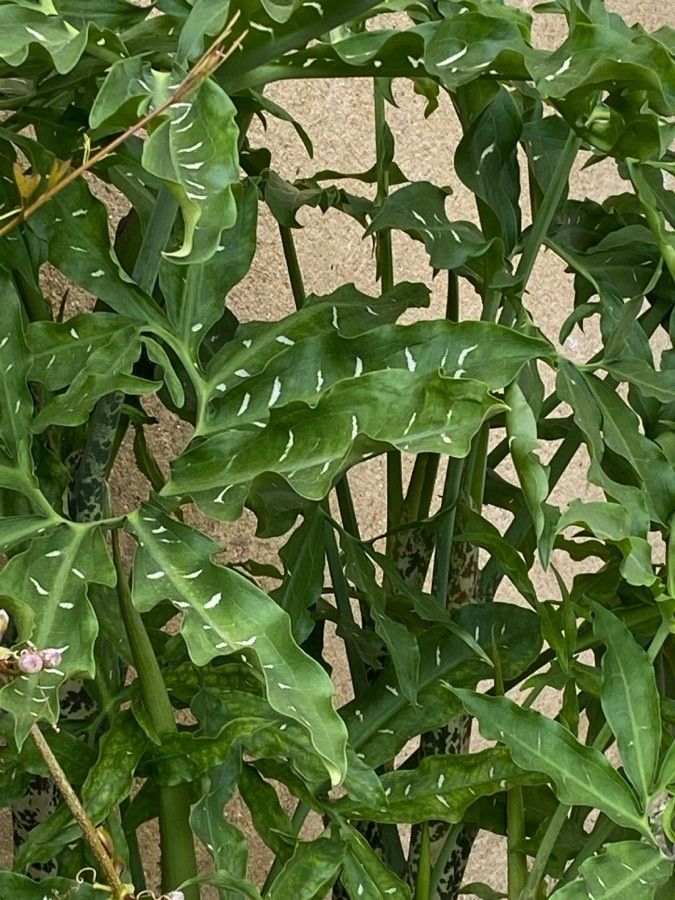
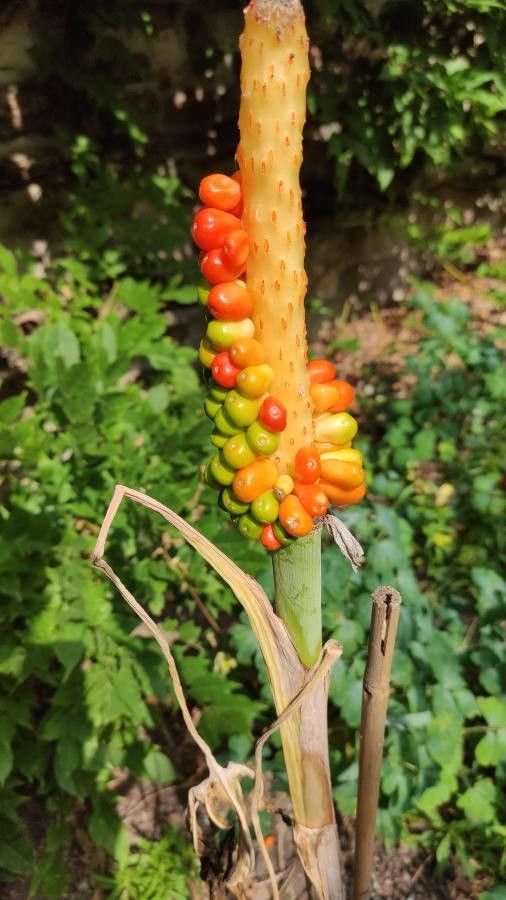
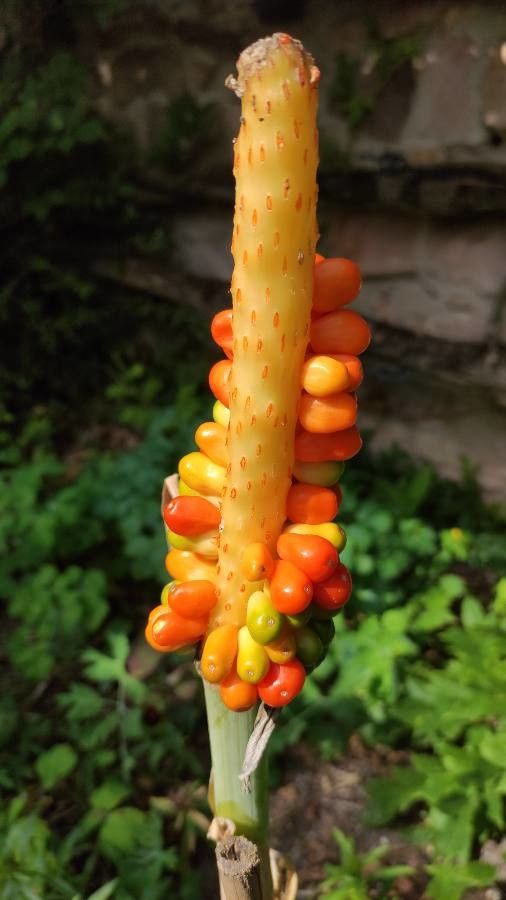
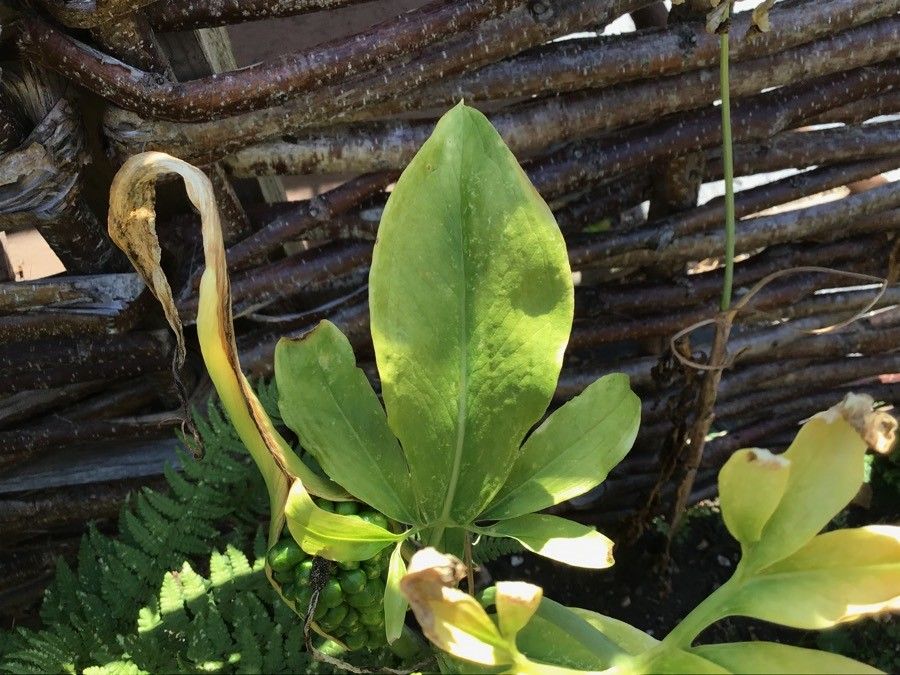
Dracunculus vulgaris, commonly known as the Dragon Arum or Voodoo Lily, is a unique and fascinating plant from the Araceae family. Native to the Mediterranean region, it thrives in rocky areas, woodlands, and along riverbanks.
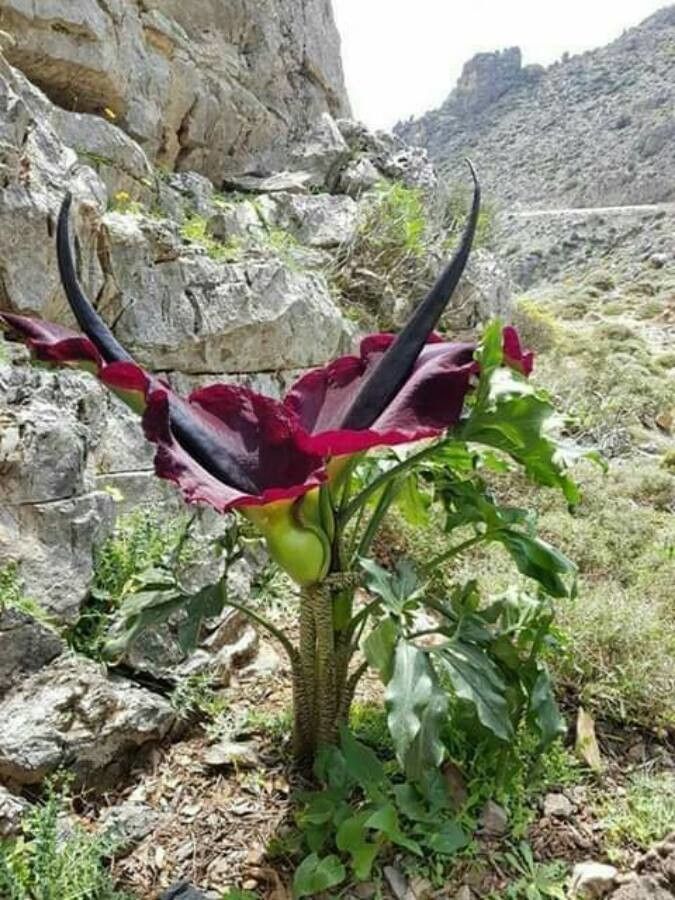
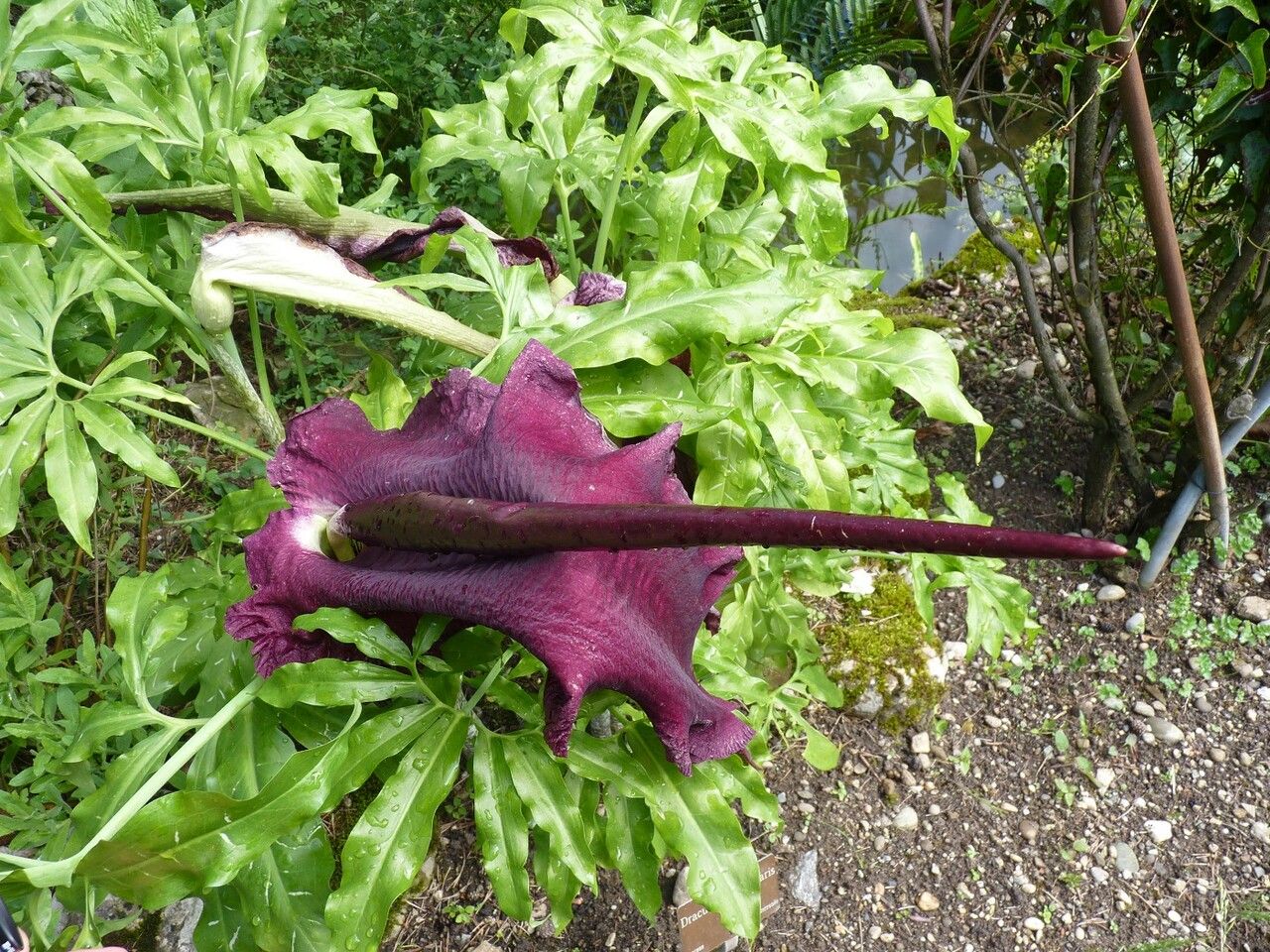
This plant boasts a distinctive appearance with its large green leaves, which can grow up to 3 feet long. Its flowers are particularly striking, with a deep purple hue and an impressive size of up to 2 feet tall. Notably, the flowers emit a strong odor, often compared to the smell of rotting meat or garbage. This scent attracts flies, which are essential for pollinating the plant.
One intriguing feature of the Dragon Arum is its ability to generate heat, aiding in the attraction of pollinators even in cooler temperatures. This heat generation occurs through a process called thermogenesis, where specialized cells within the flower produce heat through metabolic activities.
Although its strong odor may not appeal to everyone, Dracunculus vulgaris is a captivating choice for garden enthusiasts seeking something unique and exotic. To thrive, the plant requires well-draining soil rich in organic matter and prefers partial shade or filtered sunlight.
Dragon Arum: The spadix and spathe of this plant resemble the tongue of a fire-breathing dragon. The long spadix looks like a small dragon nestled within the spathe, which is why it's known as the Dragon Arum.
Dragon arum has strong resistance to disease and is typically not vulnerable to illnesses. Nevertheless, it can be affected by pests and diseases present in its environment. Such infections are generally mild. Care-wise, the plant needs moderate maintenance. It should be pruned regularly to preserve a good appearance and healthy growth, and fertilizing can encourage flowering. Dragon arum is appropriate for anyone with outdoor space, like a garden or patio, and does not demand extensive care experience. It may need more attention when cultivated indoors.
How to keep Dracunculus Vulgaris.
Light
Dragon arum strongly prefers a day of full sunlight and can tolerate periods of partial shade. Its native habitat is similar, which supports its growth and health. However, both too much and too little sunlight can adversely affect its growth.
Water
The Dragon Arum comes from the Mediterranean region and prefers moderate moisture without waterlogging. It's drought-tolerant and does best with weekly watering to maintain its health. During its growing season, this outdoor plant particularly thrives on rainwater, which helps enhance the appearance of its foliage and flowers.
Temperature
The dragon arum's native growing environment requires a moderate temperature range of about 59 to 86 °F (15 to 30 °C). It prefers temperatures of 59 to 95 °F (15 to 35 °C). For optimal growth in different seasons, maintain 50 to 77 °F (10 to 25 °C) in winter and 68 to 95 °F (20 to 35 °C) in summer.
Fertilizer
A single fertilizer application in spring is generally enough for Dragon arum, though multiple feedings can maximize growth. Fertilize every month to a month and a half. Fertilization improves the leaves’ appearance and function, helping maintain even color and a healthy texture. It also encourages root development and nutrient uptake, supporting long-term plant health.
Pruning
To help your dragon arum thrive, it requires careful pruning. Begin by removing any dead leaves in early spring. Then, in late spring, lightly trim the plant to manage its size. Be sure to use sterilized tools to prevent the spread of disease. Proper pruning not only enhances air circulation but also encourages strong flowering, improving the plant’s appearance and vibrancy.
Pot & Repot
Repot Dragon arum in spring or summer when it’s warm enough, picking a slightly larger pot with good drainage. Water thoroughly after repotting, and place it in a bright spot with indirect light. Consider using a moss pole for support as the plant grows.
Botanical profile.
- Plant Type
- Herb
- Life Cycle
- Perennial
- Genus
- Dracunculus
- Family
- Araceae
- Hardiness Zone
- 7-10
- Mature Height
- 61 cm to 91 cm
- Mature Spread
- 91 cm
- Leaf Color
- Green, Silver
- Leaf Type
- Deciduous
- Flower Color
- Purple, Red, Black
- Flower Size
- 30.48 cm
- Bloom Time
- Late spring, Early summer
- Planting Time
- Spring
- Harvest Time
- Early summer, Mid summer
- Native Area
- Turkey, Italy, Serbia, Montenegro, Bulgaria, Albania, Algeria, Greece, Croatia, Slovenia, France
Other names.
Reader questions.
How should I water my Dragon arum plant?
To ensure your Dragon arum gets enough water, there are several options available. If you have a small potted plant indoors, you can easily bring it to your kitchen sink and use the faucet to add water. Simply hold the pot and stop watering when you see the water running through the drainage holes. However, avoid doing this during the winter or in cold climates as it can harm the plant's roots. In most cases, using tap water is fine, but if your local tap water has high levels of fluorine, chlorine, or salts, it's best to consider using rainwater or lake water instead. Additionally, overhead watering or watering directly into the soil with a watering can, hose, or any other tool can also work well for the Dragon arum.
Why is it necessary to fertilize my Dragon arum?
The Dragon arum relies on its leaves for its main structure. Fertilization plays a crucial role in maintaining the health and appearance of these leaves. By properly fertilizing, you can ensure that the Dragon arum has vibrant, consistent color and a healthy texture. Additionally, fertilization benefits the plant below the soil's surface by promoting the growth of new roots and sustaining existing ones. This not only keeps the plant healthy in the present, but also improves its ability to absorb soil nutrients in the future.
What are the sunlight requirements for Dragon arum?
Dragon arum thrives best in environments that replicate its native habitat, which involves being exposed to full sun for more than 6 hours a day but can also tolerate partial sun, approximately 3-6 hours of sunlight daily. It's essential to observe the movement of sunlight through your garden to find the ideal balance of light and shade that ensures the wellbeing of your Dragon arum.
What are the ideal growing conditions for Dragon Arum?
The Dragon Arum, or Dracunculus vulgaris, thrives in a moderate temperature range, ideally between 59 to 86°F (15 to 30°C), but it can tolerate temperatures from 59 to 95°F (15 to 35°C). Seasonally, it's recommended to maintain temperatures of 50 to 77°F (10 to 25°C) in winter and 68 to 95°F (20 to 35°C) in summer for optimal growth. Dragon arum has strong cold resistance, therefore special frost protection measures are not generally needed. However, if temperatures are expected to drop below the plant's cold tolerance, providing protection by covering the plant with soil or straw is advisable. To prepare for winter, watering the plant abundantly before the first freeze, ensuring the soil remains moist, is recommended. This practice helps prevent drought and water scarcity for the plant during the colder seasons.
What do I do if I give my Dragon arum plant too much or too little water?
If you realize that your Dragon arum is not getting enough water, the first thing you should do is give it some water. Make sure to water it deeply until water starts coming out of the drainage hole if it's in a container, or until the soil is completely moist if it's growing outside. On the other hand, if your Dragon arum is getting too much water, start by watering it less frequently. Additionally, you should take a look at the soil and container it is in. If the soil doesn't drain well or the container doesn't have proper drainage, your plant will likely be overwatered again. To fix this, consider using looser soil or a container with bigger drainage holes or a more porous material. Also, check the plant's location. If it's in a corner, it's recommended to move it to a place with better ventilation, like near a window or around a door. Ensuring good air circulation can help prevent overwatering to some extent.
When should I fertilize my Dragon arum plant?
To maximize the growth of your Dragon arum, you can fertilize it multiple times throughout the spring and early summer. When the leaves begin to emerge in early spring, it's a sign that it's time to start fertilizing for the year. While a single application of fertilizer is usually enough for the plant to thrive, you can feed your Dragon arum about once every month to a month and a half if you want to optimize its growth.
How does insufficient or excessive sunlight affect Dragon arum?
Experiencing either too much or too little sunlight can adversely affect Dragon arum's growth. Symptoms of light deficiency include smaller new leaves, leggy or sparse growth, faster leaf drop, slower or no new growth, lighter-colored new leaves, chlorosis, sunscald, leaf curling, wilting, and leaf scorching. These indicate the plant is not receiving the optimal sunlight it needs for photosynthesis and overall health.
How does low temperature affect the Dragon Arum and what are the solutions?
Dragon Arum is cold-tolerant and performs best at temperatures above its minimum suitable growth temperature. In winter, it is vital to keep it above its tolerable growing minimum temperature. If temperatures fall below its growth limit, there won't be visible changes during the winter, but there might be a decreased sprouting or no sprouting at all come spring. In such cases, the solution is to remove any parts of the plant that have failed to sprout in the spring.
How often do I need to water my Dragon arum?
The Dragon arum does not need constantly moist soil. It is actually better to let the soil dry out between waterings. If you are growing Dragon arums in containers, you can tell when to water by checking the dryness of the soil in the container. If about half of the soil is dry, it is time to water. You can check by feeling the soil with your fingers or using a soil moisture meter. For those growing the Dragon arum outside, you can plan to water it about once every other week, unless it has rained recently.
When is it best to not give fertilizers to my Dragon arum?
During the late fall and winter, your Dragon arum goes into a dormant phase and stops producing new growth. During this time, it's best to avoid fertilizing it. In the spring and summer, if you choose to fertilize, start decreasing the amount as summer approaches because the growth rate of your Dragon arum will also slow down. Avoid fertilizing your Dragon arum when the weather is unusually hot or the soil is very dry as it can cause stress and lead to premature death.
How can artificial lighting be utilized for Dragon arum indoors?
When natural sunlight is insufficient, especially during winter or in less sunny indoor spaces, artificial lighting provides an essential alternative for Dragon arum. It's recommended to use LED lights that can be customized to the specific light wavelengths needed by the plant. Full sun plants require 30-50W/sq ft, partial sun plants 20-30W/sq ft, and full shade plants 10-20W/sq ft of artificial light. The lights should be placed 12-36 inches above the plant and kept on for 8-12 hours per day to mimic natural daylight conditions and promote healthy growth.
What should I do if the Dragon Arum experiences high temperatures?
During the summer months, it's essential to ensure that the Dragon Arum's surrounding temperature does not exceed its maximum suitable growth temperature. If the temperature climbs beyond its tolerable maximum, the plant may exhibit signs of stress such as leaves becoming lighter in color, curling, being prone to sunburn, and in severe cases, the entire plant might wilt and dry out. To mitigate these impacts, trim away the sunburned and dried-up parts. Relocate the plant to an area with more shade, especially from the midday and afternoon sun, or use a shade cloth to protect it. Additionally, watering the plant in the morning and evening can help keep the soil moist, which is crucial in preventing heat stress.