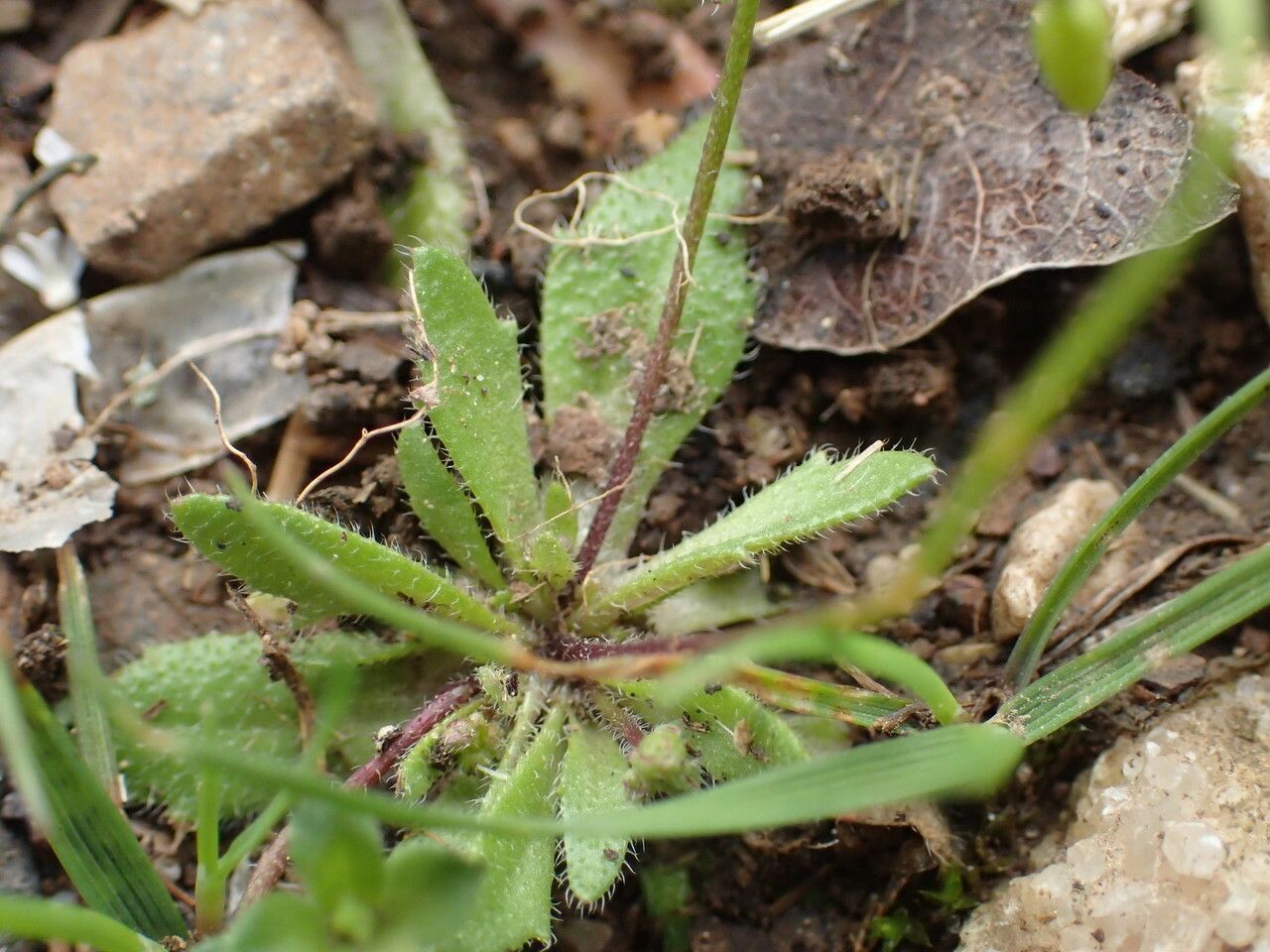
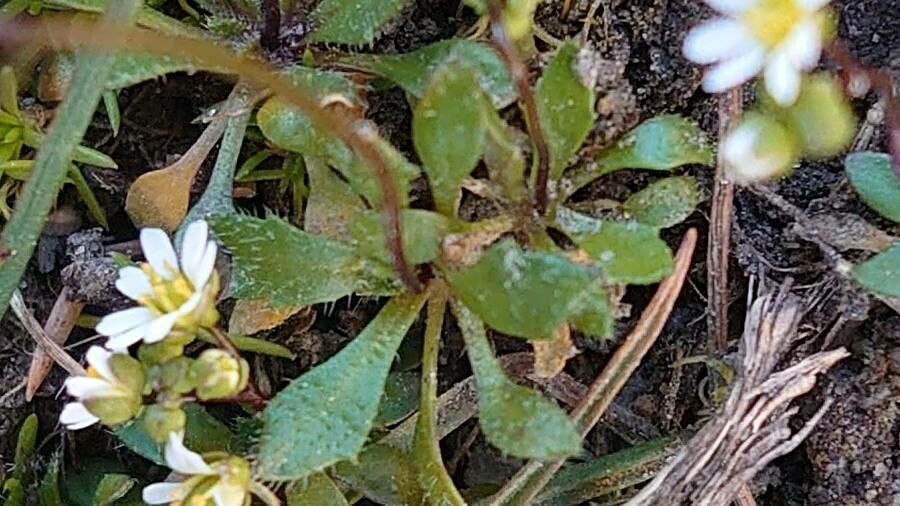
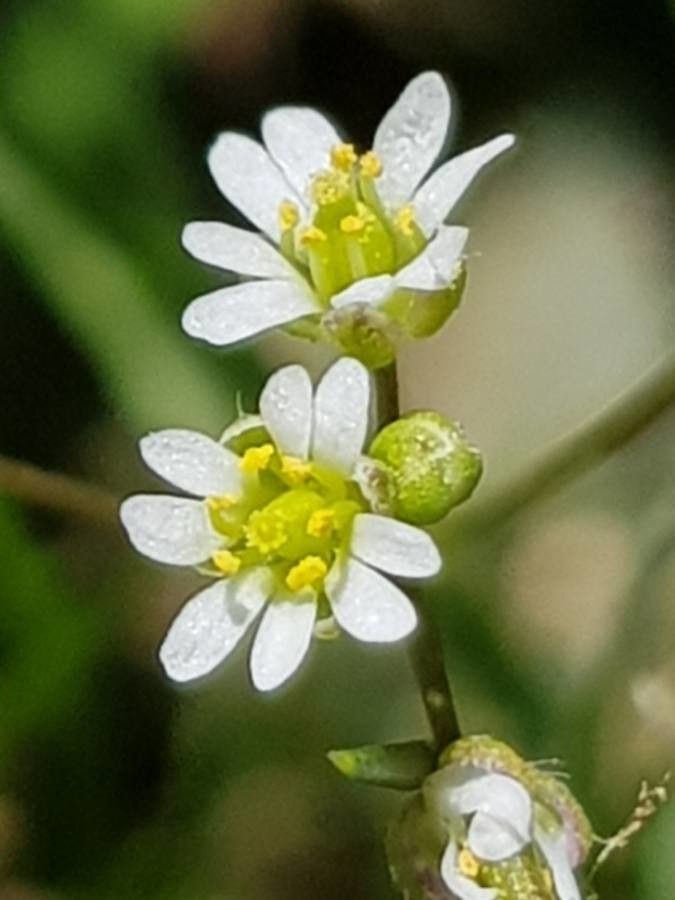
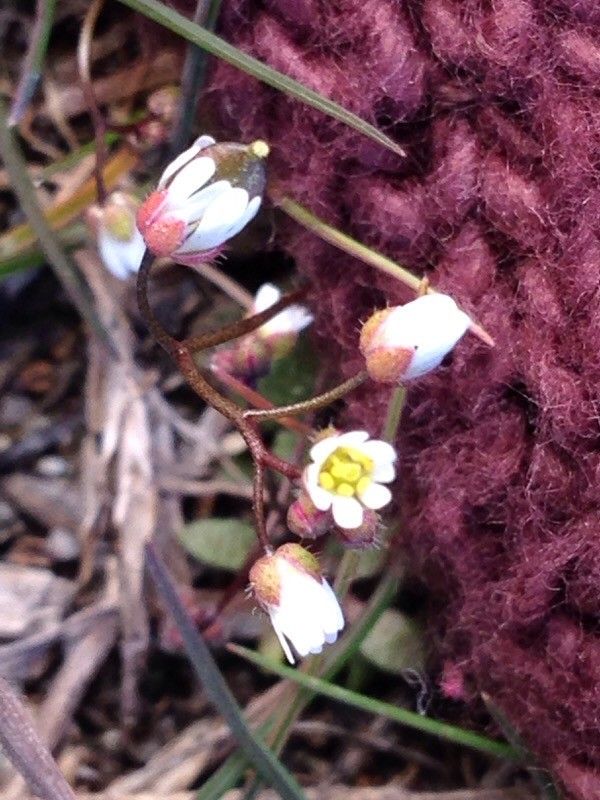
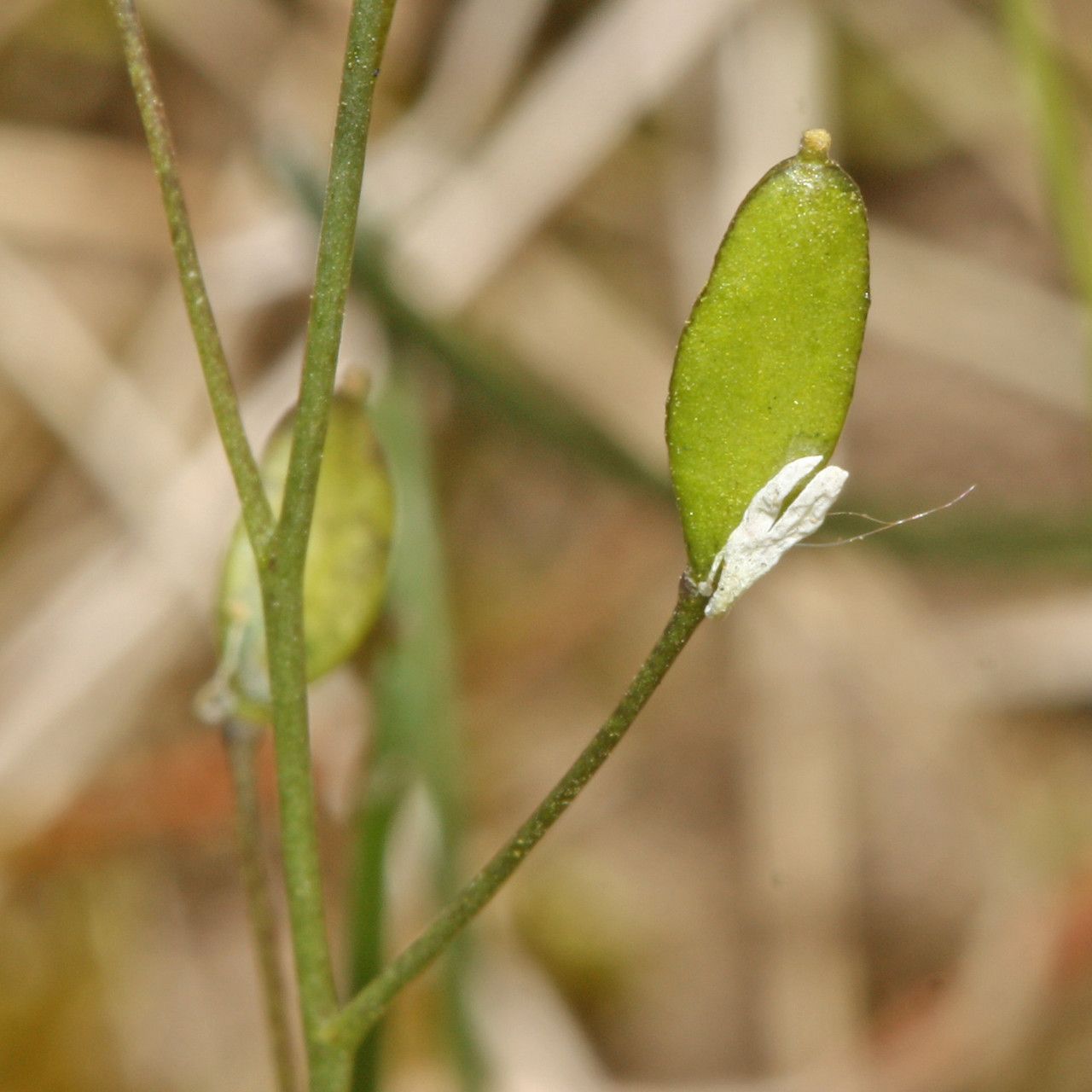
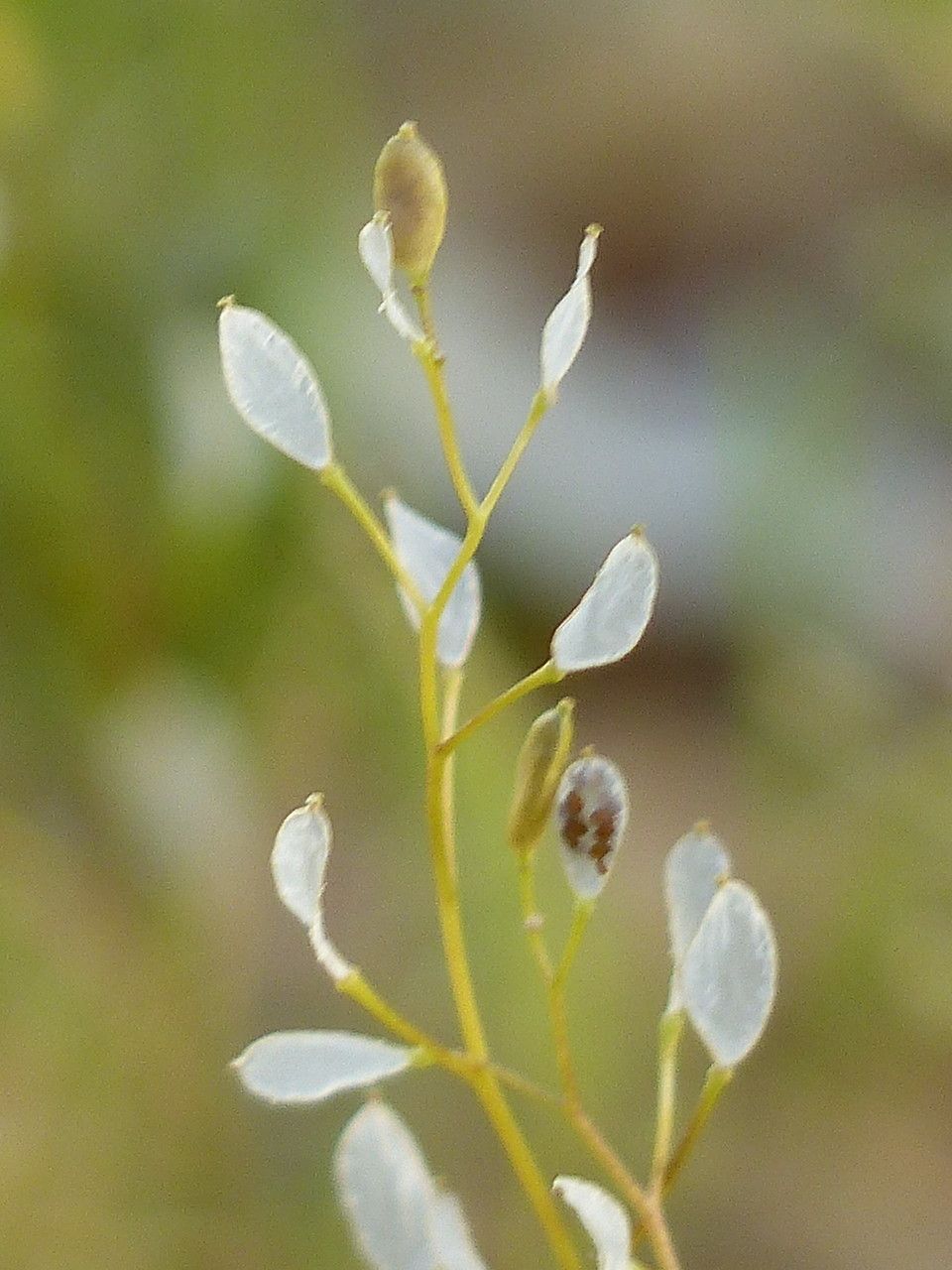
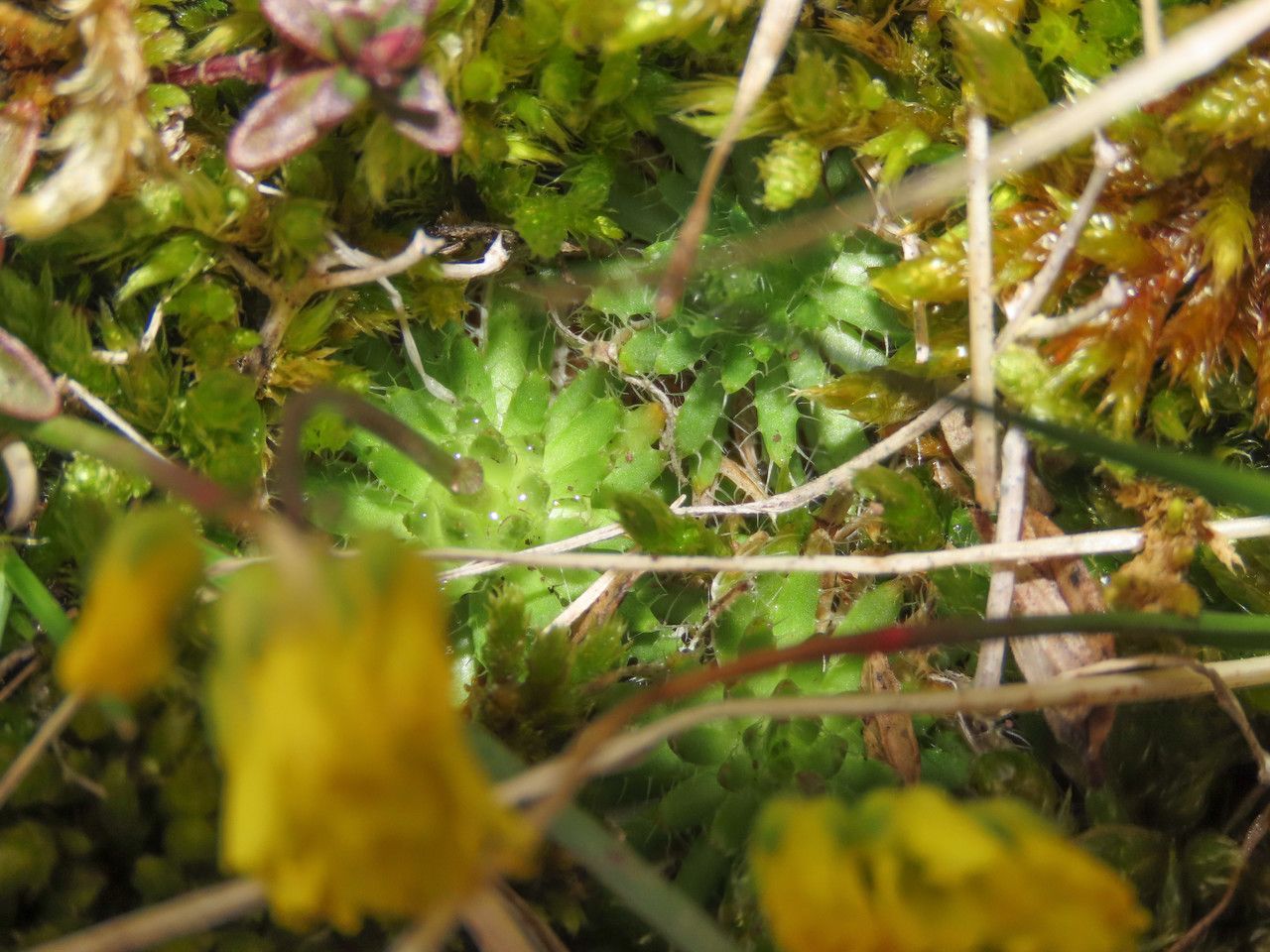
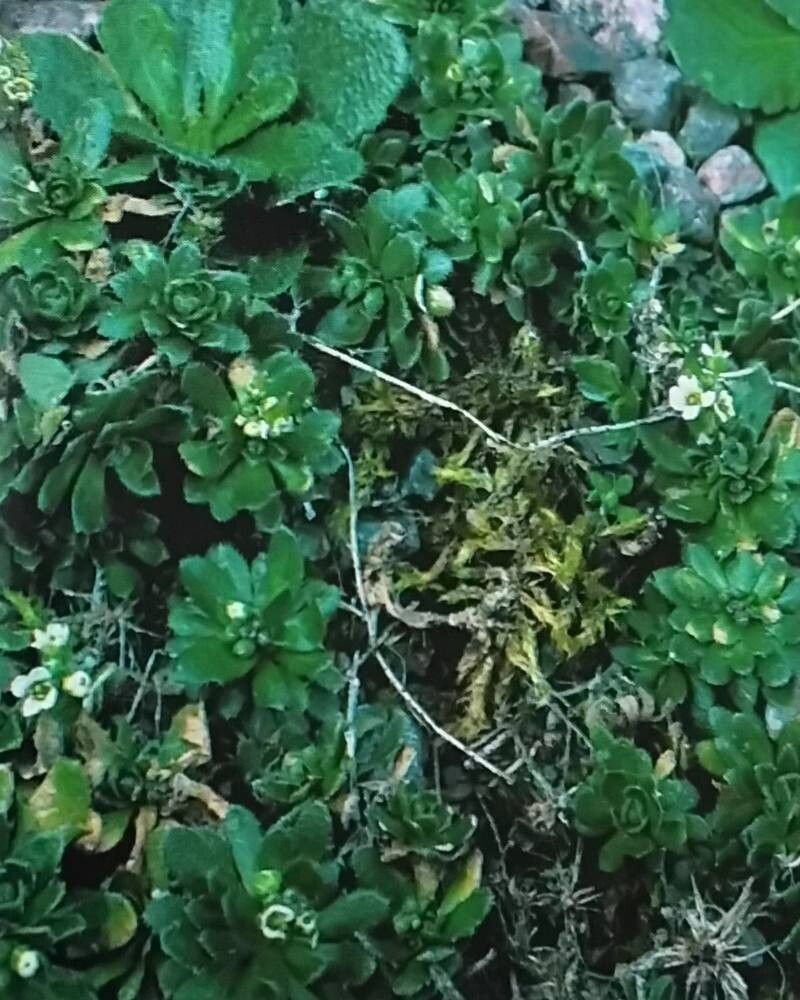
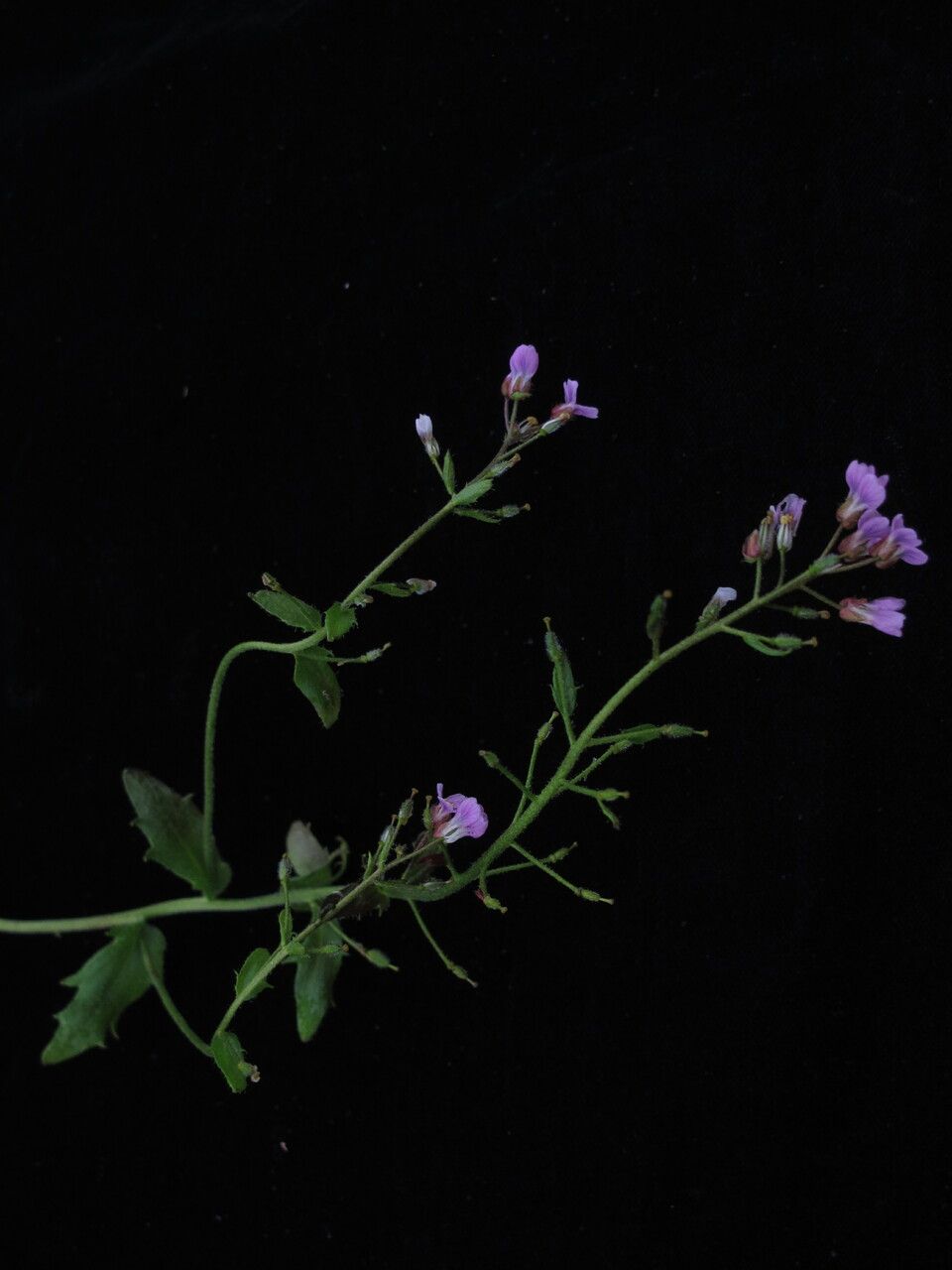
Draba verna (syn. Erophila verna) the spring draba, shadflower, nailwort, common whitlowgrass, vernal whitlow grass, early witlow grass or whitlow-grass is a species of plant in the mustard family, Brassicaceae. D. verna has the unique trait of bifid petals, not found anywhere else in the genus Draba. The plant consists of a few flowers with branching stems and the leaves are focused around the base of the plant. The seeds are located in the flower but are not equipped with any sort of wind dispersal adaptation.
Spring draba is fairly disease-resistant and generally not prone to illness. Still, it can be affected by pests and diseases present in its environment. Such infections tend to be mild. For care, the plant needs moderate maintenance. It should be pruned regularly to maintain a tidy appearance and healthy growth. Fertilizing can also help encourage flowering. Spring draba is well suited to anyone with outdoor space, like a garden or patio, and does not require extensive experience in care. It may demand more attention when grown indoors.
How to keep Draba Verna.
Light
Spring draba typically performs best with plenty of sunlight, though it can endure mildly shaded conditions. Coming from a sunny habitat, abundant sun encourages vigorous growth and health. Conversely, insufficient light can cause stunted development, while too much sun may induce strain.
Water
Spring draba, a plant native to temperate regions, thrives in conditions where the soil is moderately moist but not waterlogged. To support its growth when cultivated outdoors, it is important to mimic its natural environment by watering it weekly during its active growing season. Ensuring a balance between adequate hydration and proper drainage is essential for maintaining the plant's health.
Temperature
Spring draba is native to temperate climatic zones. Its optimal temperature range for growth is 68 to 95 °F (20 to 35 ℃). Seasonal temperature adjustments may be crucial for reproducing its native environment, particularly if it is located in an extreme climate.
Fertilizer
Spring draba responds well to regular, light fertilizing to encourage healthy leaf development. Fertilize Spring draba about once a month during the summer. Nitrogen is important for foliage, and supplying nitrogen-rich fertilizers helps Spring draba prosper.
Botanical profile.
- Plant Type
- Herb
- Life Cycle
- Annual
- Genus
- Draba
- Family
- Brassicaceae
- Hardiness Zone
- 4
- Mature Height
- 5 cm to 15 cm
- Mature Spread
- 3 cm to 8 cm
- Leaf Color
- Green, Dark Green
- Leaf Type
- Evergreen
- Flower Color
- White
- Flower Size
- 0.76 cm to 0.76 cm
- Bloom Time
- Spring
- Planting Time
- Summer, Spring
- Harvest Time
- Late spring, Early summer, Mid summer
- Native Area
- Libya, India, Austria, Turkey, Sweden, Slovakia, Montenegro, Pakistan, Croatia, Slovenia, Morocco, Belarus, Uzbekistan, Russia, Iraq, Germany, Iceland, Estonia, Ethiopia, Romania, Latvia, Belgium, Portugal, Netherlands, France, Tajikistan, Tunisia, Czech Republic, Cyprus, Bulgaria, Poland, Armenia, Greece, Ukraine, Serbia, Lebanon, Lithuania, Norway, Afghanistan, Syria, Kyrgyzstan, Kazakhstan, Italy, Spain, Switzerland, Denmark, Finland, Iran, Albania, Ireland, United Kingdom, Hungary, Algeria, Azerbaijan, Turkmenistan
Other names.
Reader questions.
How should I water my Spring draba plant?
When watering Spring draba, you have several options. You can use a garden hose with a spray nozzle, a watering can, or any other common watering tool. This plant is not too particular about the type of water it receives, whether it's rainwater, tap water, or filtered water. However, it's best not to water it from above as this can harm the leaves and flowers and potentially cause disease. Instead, a drip irrigation system is often recommended as it evenly and directly waters the soil. When watering a container-grown Spring draba, you can use a cup, watering can, or tap to apply water directly to the soil.
What are the sunlight requirements for Spring draba?
Spring draba thrives best under full sun conditions, requiring above 6 hours of sunlight to flourish. It can also tolerate partial sun, which means about 3-6 hours of sunlight. However, it's important to observe the movement of sunlight in your garden to find a spot that provides a good balance of light and shade, ensuring the plants grow happy and healthy. While Spring draba enjoys ample sunlight, originating from brightly lit environments, it can survive in slightly shadowy areas. An under or overexposure to sunlight may lead to growth issues or strain.
What is the native climate for Spring draba, and what are its temperature requirements?
Spring draba, botanically known as Draba verna, thrives in temperate climatic zones. Its growth is optimal within a temperature range of 68 to 95 °F (20 to 35 °C). To replicate its native environment, especially in extreme climates, seasonal temperature adjustments may be crucial. Spring draba is also highly cold-tolerant, not requiring additional frost protection. However, to prepare for winter, it's recommended to water the plant generously before the first freeze in autumn to keep the soil moist and prevent drought and water scarcity during the colder months.
If I give my Spring draba plant too much water or too little water, what should I do?
To avoid underwatering your Spring draba, simply water it regularly when you notice it lacks moisture. Overwatering, on the other hand, can be more serious. It can lead to diseases and ultimately, the decline and death of your plant. To prevent overwatering, choose a sunny location with good soil drainage. If your Spring draba is in a pot and you overwatered it, consider repotting it in a container with better drainage. Use loose soils and a pot that drains efficiently to help fix the situation.
What are the effects of insufficient light on Spring draba and how can it be addressed indoors?
Insufficient light can cause Spring draba to exhibit symptoms such as smaller new leaves, leggy or sparse growth, faster leaf drop, delayed or stopped growth, paler new leaves, chlorosis, sunscald, leaf curling, wilting, and leaf scorching. To mitigate these effects indoors, ensure the plant receives at least 6 hours of direct sunlight daily, preferably through a south-facing window. If the plant is large or not easily movable, artificial lighting can be used. Keep a desk or ceiling lamp on for at least 8 hours daily or consider investing in grow lights for better support.
How does Spring draba react to low temperatures?
Spring draba demonstrates remarkable cold tolerance, with the ability to withstand winter temperatures down to -30°C without needing special protection. Despite its resilience, temperatures falling below this threshold can affect the plant's vitality. There might not be noticeable changes during the winter, but you could see a decrease in sprouting or even no sprouting at all come springtime. To address this, it's recommended to remove any parts of the plant that have failed to sprout in the spring.
How frequently should I water my Spring draba plant?
To ensure the health of your Spring draba plant, it needs regular watering throughout the growing season. In spring, water once per week, but as the season progresses and becomes warmer, you may need to water two to three times per week. However, be cautious not to exceed this rate as it can harm the plant. Regardless of how frequently you water, make sure the soil remains moist but not overly wet. When it comes to potted Spring draba, the watering needs are slightly different. Due to the soil in pots heating up and drying faster, you should increase the watering frequency. In most cases, plan to water a potted Spring draba a few times per week, compared to just once per week for an in-ground plant.
How can I use artificial lighting effectively for my indoor plants?
When natural sunlight is insufficient, especially during winter or in less sunny spaces, artificial lighting can be a great solution for indoor plants. LED lights are recommended because they provide the specific wavelengths needed by the plants. The intensity of light required varies: full sun plants need 30-50W per square foot, partial sun plants 20-30W, and full shade plants 10-20W. The light source should be placed 12-36 inches above the plant, mimicking natural sunlight. Most plants require about 8-12 hours of light per day to mimic natural daylight hours.
What should I do if Spring draba is exposed to high temperatures?
Spring draba's tolerance to cold does not extend to high temperatures. Exposure to temperatures above 35°C can halt its growth and increase susceptibility to rot. To mitigate damage from excessive heat, it's advisable to trim away any sunburned or dried-up parts. Relocating the plant to a shaded area during the midday and afternoon sun or employing a shade cloth can help protect it. Ensuring the soil stays moist by watering in the morning and evening is also beneficial for the plant's well-being in high temperatures.
How much water does my Spring draba plant need?
Determining how much water to give to your Spring draba can be done in a few different ways. Some gardeners prefer to gauge the soil's moisture by feeling it with their hands. If you choose this method, aim to water until the top six inches of soil feels sufficiently moist. Another option is to use a specific measurement to guide your watering. As a general rule, giving your Spring draba about two gallons of water per week should suffice, but be mindful of factors like temperature and how quickly the soil dries out. However, strictly adhering to these guidelines could result in overwatering if your plant requires less than two gallons per week. For container-grown Spring draba, a different approach is necessary. In this case, your goal is to moisten all the layers of dry soil. You can test this by inserting your finger into the soil to check for moisture, or by watering until you see a little bit of excess water draining out of the pot's drainage holes.
What strategies can be employed outdoors to ensure Spring draba receives adequate sunlight?
For outdoor plants, gradually acclimatizing them to sunlight is key to avoiding sunburn. Gradually move plants to sunnier locations each week. If sunlight is obstructed, identify and reduce obstructions, such as pruning branches and leaves from trees that block sunlight. For smaller plants, consider transplanting them during their dormant period to a location with more sunlight and good drainage, usually late winter or early spring. Remember, parts of the plant that have suffered from insufficient sunlight may not recover, but increasing light exposure can promote healthy new growth.
How do I know if I am watering my Spring draba plant enough?
Avoiding overwatering your Spring draba can be somewhat difficult. Despite having deep roots that require weekly watering, these plants are highly susceptible to root rot and may experience browning. Underwatering is less likely to occur, as Spring draba can survive without supplemental watering for a while. However, if you wait too long to water them, they may wilt and develop dry leaves.