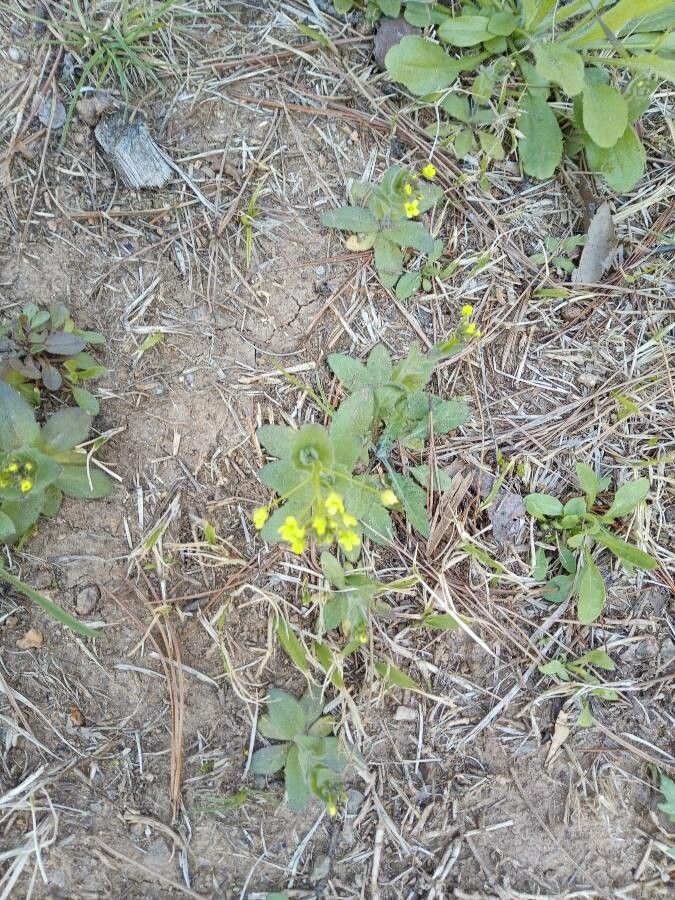
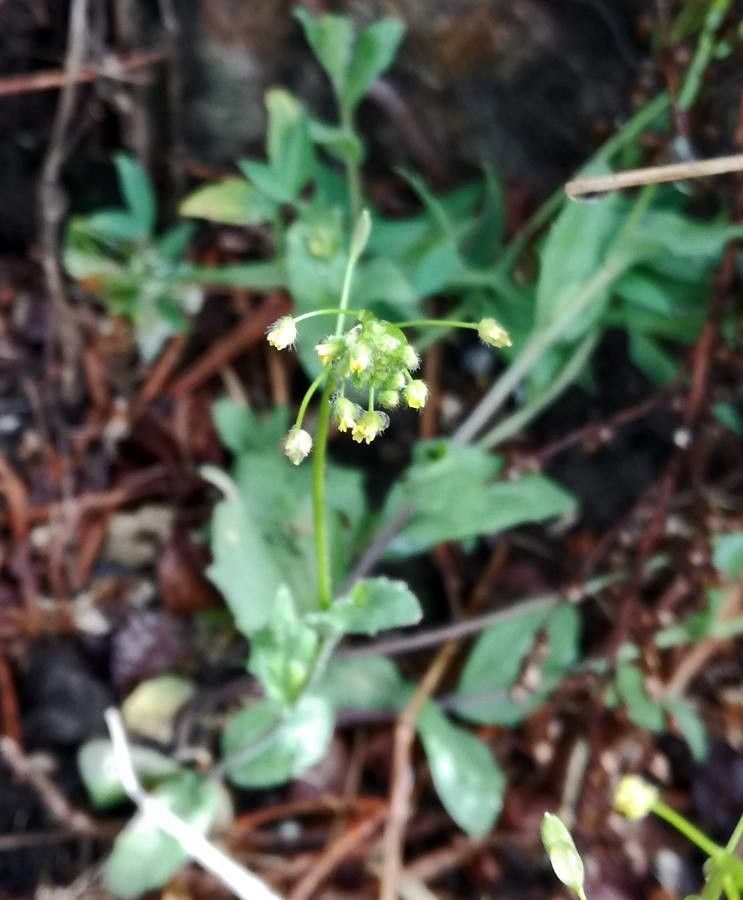
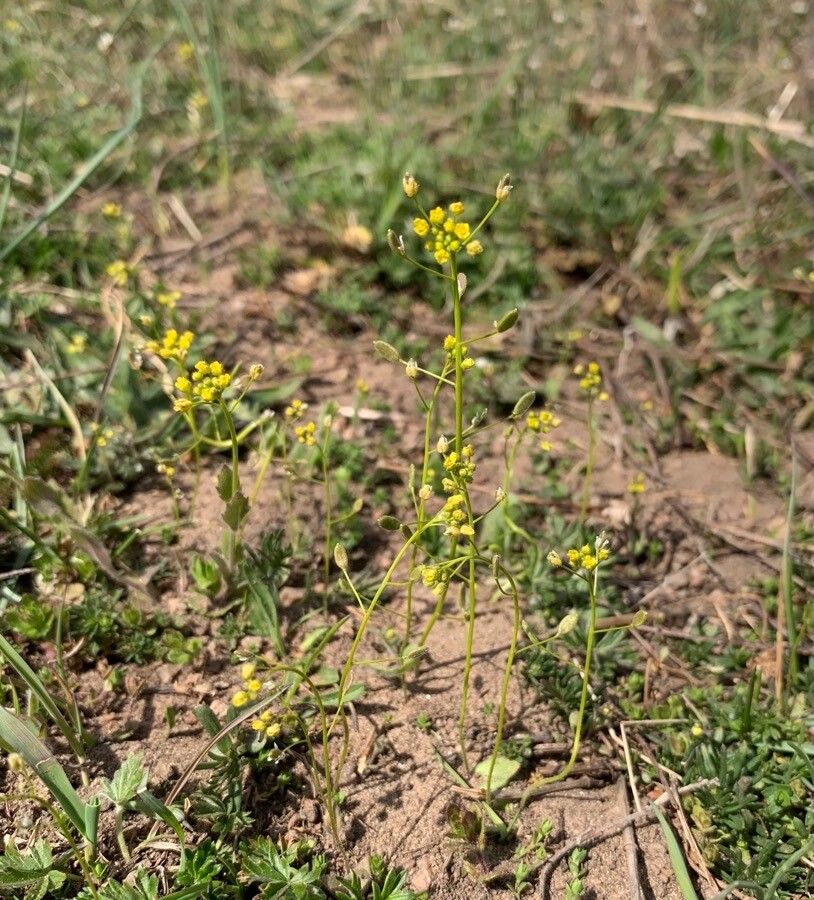
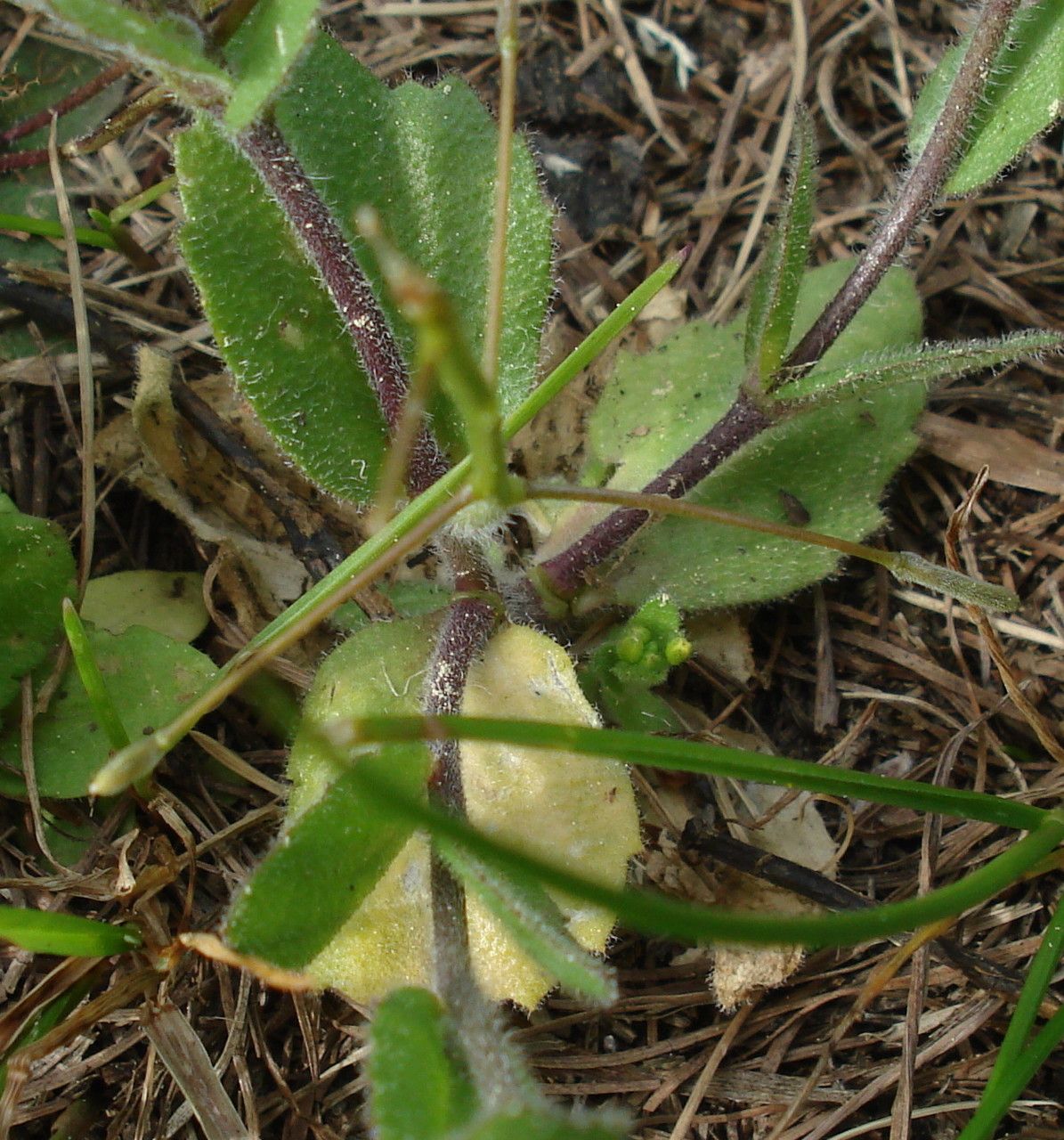
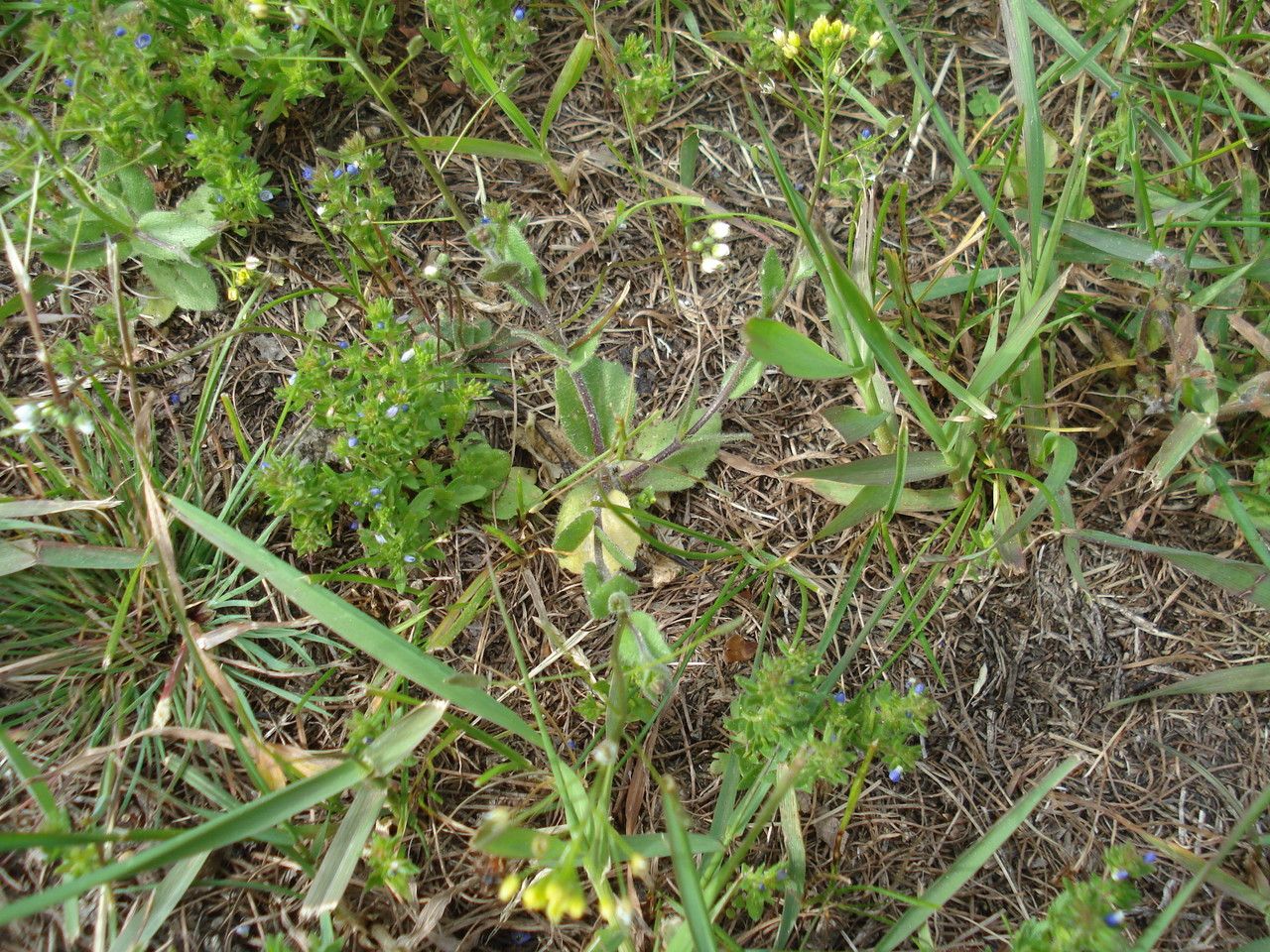
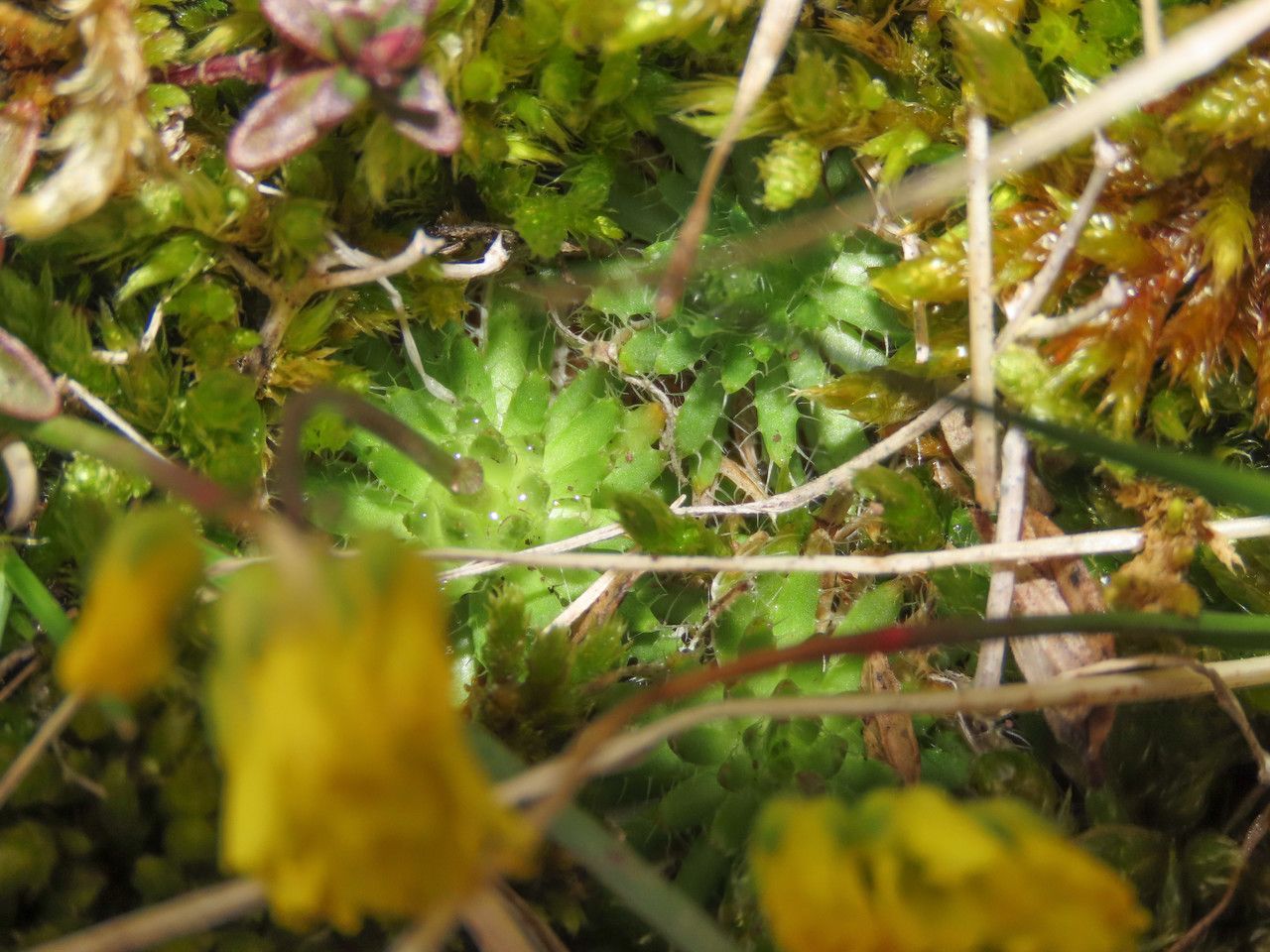
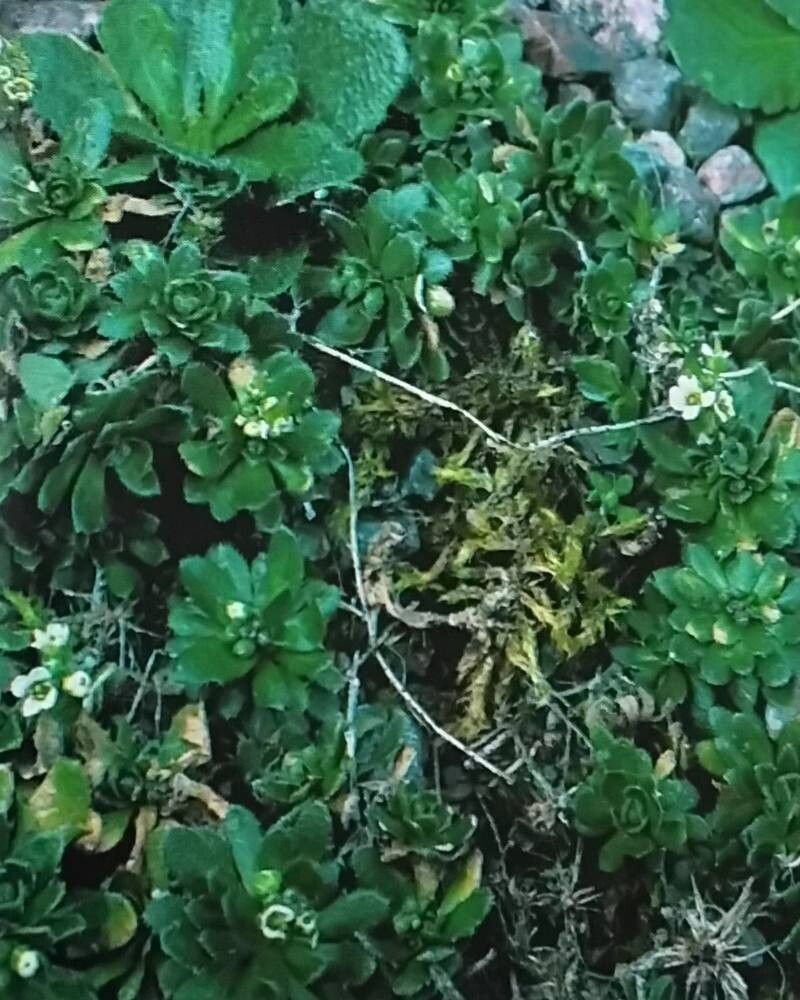
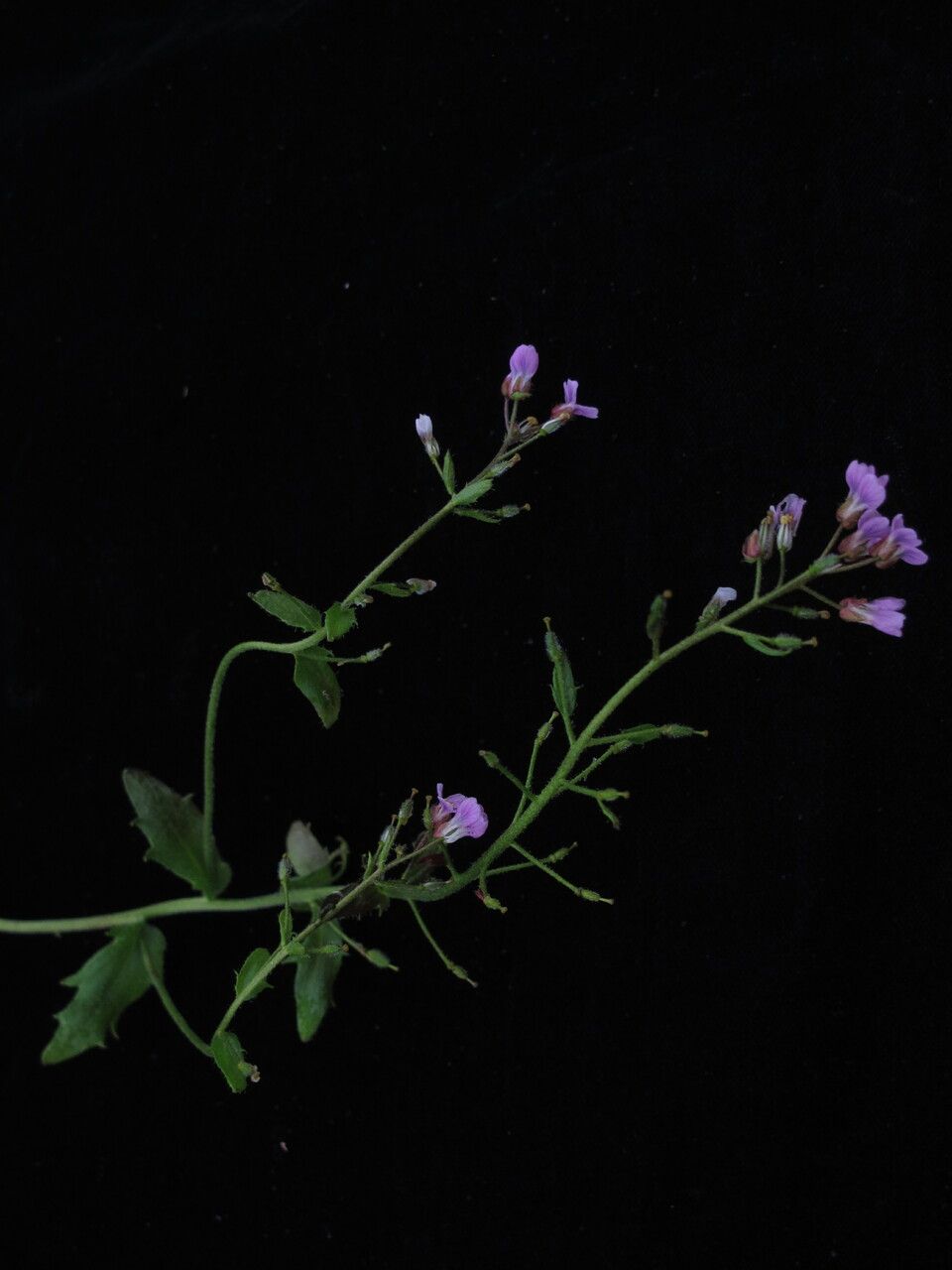
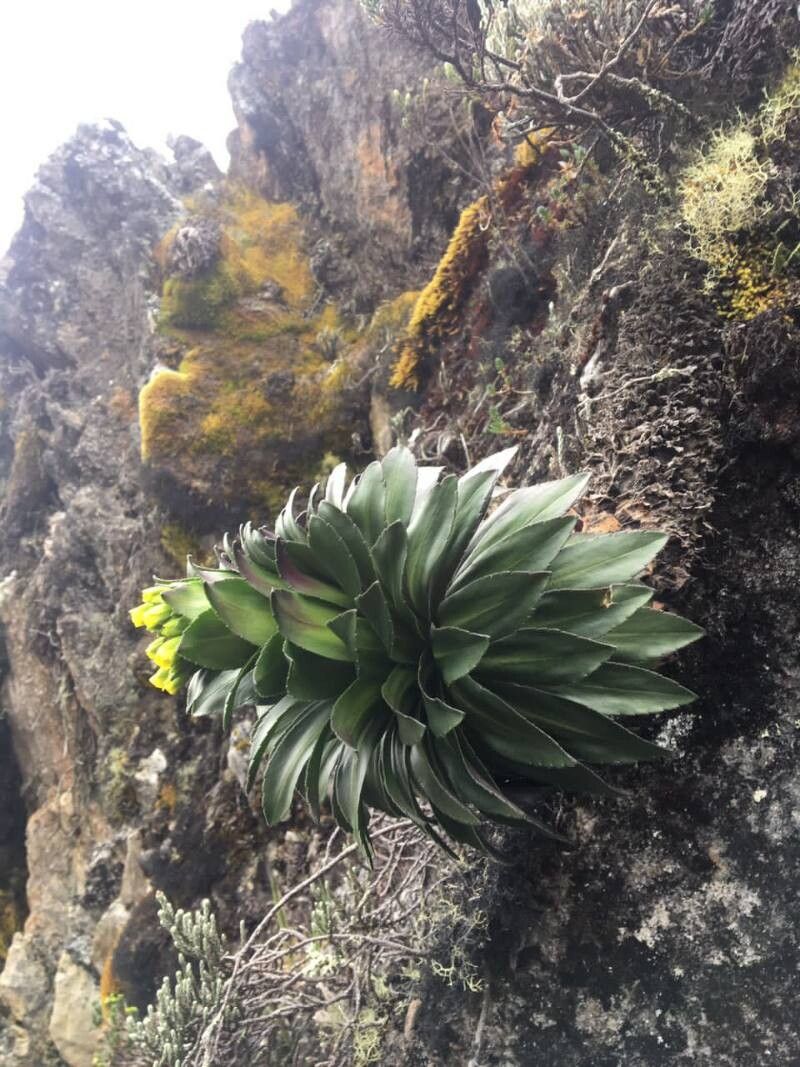
Draba nemorosa, commonly known as woodland draba, is a small perennial plant in the Brassicaceae family. Native to Europe and Asia, it thrives in rocky areas, meadows, and forests. The plant typically reaches a height of up to 10 cm and features a basal rosette of hairy, oblong leaves. The flowers of Draba nemorosa are small and white, forming a cross shape with their four petals. These blooms appear from April to June on short stems above the basal rosette. The fruit is a long, narrow pod that contains numerous seeds. Woodland draba prefers well-drained soils in full sun or partial shade, yet can tolerate some drought conditions once established. Its low-growing habit makes it an excellent choice for rock gardens or as ground cover. Some cultures have used Draba nemorosa for its diuretic properties, but it should not be consumed without proper medical supervision due to potential toxicity. Overall, Draba nemorosa is an attractive, low-maintenance perennial that enhances any garden setting. It also offers ecological benefits such as attracting pollinators like bees and butterflies.
Woodland draba is fairly resistant to disease and is usually not prone to illnesses. That said, it can be vulnerable to pests and diseases present in its environment. These issues are typically not serious. As for care, this plant needs moderate maintenance. It should be pruned regularly to keep a neat appearance and support healthy growth. Fertilizing can also help encourage flowering. Woodland draba is a good choice for anyone with outdoor space, like a garden or patio, and does not demand much care experience. It may need additional attention when grown indoors.
How to keep Draba Nemorosa.
Light
The woodland draba performs best in full sun and grows vigorously when given abundant light. Native to areas with plentiful daylight, it can also grow in locations where sunlight is somewhat reduced. However, both excessive and insufficient light can harm its health.
Water
Woodland draba thrives best in temperate regions, needing consistently moist and well-draining soil that avoids waterlogging. To ensure optimal health, it is recommended to water the plant weekly. While the species demonstrates moderate drought tolerance once it is established, it reaches its peak growth during seasons with plenty of rainfall.
Temperature
Woodland draba originates from temperate regions where conditions typically range from 68 to 95 °F (20 to 35 ℃). It favors that temperature band, so gardeners growing it at home should try to reproduce those temperatures and modify them with seasonal changes.
Fertilizer
Woodland draba benefits from regular, light applications of fertilizer to encourage healthy leaf growth. You should fertilize Woodland draba about once a month during the summer. Nitrogen is essential for foliage, and supplying nitrogen-rich sources helps Woodland draba thrive.
Pruning
Woodland draba is a wonderful ground cover with its small, vibrant flowers. To keep it in good shape and ensure it remains dense, prune it in early to mid-spring. After it blooms, give it a trim to maintain its shape. Avoid heavy pruning in late summer or fall, as this can lead to winter stress. By following these steps, you'll help keep your woodland draba compact and lush.
Botanical profile.
- Plant Type
- Herb
- Life Cycle
- Annual, Biennial
- Genus
- Draba
- Family
- Brassicaceae
- Hardiness Zone
- 3
- Mature Height
- 15 cm to 30 cm
- Mature Spread
- 5 cm to 15 cm
- Leaf Color
- Green, Dark Green
- Leaf Type
- Semi-evergreen
- Flower Color
- Yellow
- Flower Size
- 0.51 cm to 0.51 cm
- Bloom Time
- Early spring, Mid spring
- Planting Time
- Autumn, Winter
- Harvest Time
- Late spring, Early summer
- Native Area
- India, Austria, Turkey, Sweden, Slovakia, Slovenia, Belarus, Uzbekistan, Russia, Estonia, Koppen, Romania, Latvia, South Korea, France, Tajikistan, Czech Republic, Armenia, Poland, Ukraine, Serbia, China, Lithuania, Norway, Afghanistan, Kyrgyzstan, Kazakhstan, Italy, Spain, Switzerland, Japan, Mongolia, Finland, Iran, Azerbaijan, Hungary, Turkmenistan
Other names.
Reader questions.
How should I water my Woodland draba?
There are a few different ways you can water Woodland draba. You can use a garden hose with a spray nozzle, a watering can, or any other common watering tool. The plant is not too particular about where the water comes from - it can survive on rainwater, tap water, or filtered water. It's generally best to avoid watering from overhead to prevent damage to the leaves and flowers, as well as potential disease. A drip irrigation system is a good option for watering this plant because it distributes water evenly and directly to the soil. If you have a container-grown Woodland draba, you can use a cup, watering can, or tap water to water it directly at the soil.
How many hours of sunlight does Woodland draba need each day to grow well?
To ensure the health and survival of the plants, it is important to provide them with a minimum of 6 to 8 hours of sunlight each day. Ideally, they should receive the majority of their sunlight exposure in the morning, especially during the summer. The Woodland draba, in particular, benefits from being exposed to full sun and as much sunlight as possible. Increased light availability allows these plants to produce more food, display stunning blooms, and thrive in their environment.
What is the best temperature for Woodland draba?
Woodland draba thrives in cooler weather and has an ideal temperature range for optimal growth. To ensure its health, it is best to maintain temperatures between 65-75℉(18-25℃). While Woodland draba can tolerate higher and lower temperatures, it is recommended to keep the growing area within a few degrees of the preferred range. If precise temperature control is not possible, the plants will still continue to grow, although they may be affected. Woodland draba can withstand higher temperatures between 75-85℉(25-30℃), but exceeding this range may result in reduced growth or even plant death. On the lower end, Woodland draba can tolerate temperatures as low as 5℉(-15℃). However, it is important to prioritize keeping the temperature on the lower side, as Woodland draba prefers cooler environments. Excessive heat above 85℉(30℃) can cause significant growth slowdown or lead to the death of the plant.
What should I do if I give my Woodland draba too much or too little water?
To remedy underwatering of Woodland draba, simply water it more regularly when you notice it lacks moisture. Overwatering, on the other hand, can be a serious problem that can lead to diseases and death of the plant. To prevent this, choose a sunny location with good drainage to help dry the soil and prevent waterlogging. If your potted Woodland draba is overwatered, consider changing to a new pot with better drainage. Use loose soils and ensure the pot drains efficiently during repotting.
What kind of sunlight does Woodland draba require?
The Woodland draba thrives in full sunlight, but it's important to avoid overcrowding them so that they can receive even sun exposure. Make sure the leaves aren't deprived of sunlight. If you have planted them in pots, position them in windows with direct sunlight to ensure they get the full amount of sunlight throughout the year. Partial or filtered light is not ideal for them, as it results in weak stems and unhealthy flowers. Ideally, the Woodland draba should always be exposed to the sun.
Does Woodland draba need different temperatures for different stages of growth?
To ensure the healthy growth of Woodland draba, it is crucial to maintain a temperature range between 65~75℉(18~25℃) in your growing space. It is recommended to stay on the cooler side of this range, but avoid dropping below -5℉(-20℃). While extremely cold temperatures can slow down the growth of Woodland draba, they are not as harmful as excessively hot temperatures. Additionally, if the temperature is too high during the budding stage, Woodland draba may not flower at all.
How frequently should I water my Woodland draba?
Woodland draba requires regular watering throughout the growing season. In the spring, it is recommended to water the plant once a week. As the season progresses and temperatures rise, watering two to three times a week may be necessary. It is important not to exceed this watering rate, as it can harm the Woodland draba. Additionally, it is crucial to maintain relatively moist soil for the plant, without it being overly wet, regardless of the frequency of watering. When it comes to potted Woodland draba, watering should be done more frequently since potting soil can dry out faster than ground soil. In most cases, watering a container-grown Woodland draba a few times a week is recommended, compared to just once a week for an in-ground plant.
Does too much sunlight harm plants? How can we shield Woodland draba from damage caused by the sun and heat?
When the temperature rises above 90℉(32℃), the Woodland draba can be damaged by extreme temperatures, especially if exposed to prolonged sunlight. It's best to provide some shade in the afternoon during summer when the sunlight is stronger and longer compared to winter. If the Woodland draba is stressed from sunlight, ensure they are well hydrated by watering them when the top of the soil is about 2 inches dry and consider moving them indoors if it's too hot outside, especially if they are in containers. While it's normal for the plant leaves to wilt during the day, they should recover at night. However, if the Woodland draba is still drooping, it means the plant is losing water quickly and needs to be watered.
Here are three ways to make sure Woodland draba stays at the right temperature.
Here are some tips for growing Woodland draba indoors: 1. Choose the coldest room of your home: When growing Woodland draba indoors, it's best to select a room that doesn't get too hot during the day. This room should still receive a good amount of sunlight, as zero sunlight can hinder the growth of Woodland draba. 2. Watch out for high temperatures: During the growing season of Woodland draba (spring and early summer), it's important to keep the temperature between 65-75℉ (18-25℃). High temperatures can cause the flower buds to transform into non-flowering buds, affecting the plant's aesthetic quality. 3. Protect it from frost: While Woodland draba can tolerate temperatures as low as -5℉ (-20℃), significant frost can harm the plant. Signs of frost damage include wilting, discoloration, and eventually the affected parts turning brown or black. It's important to prune these damaged parts to keep the plant alive.
How much water does the Woodland draba plant require?
Determining how much water to give your Woodland draba can be done in a few different ways. Some gardeners prefer to gauge water volume by feeling the soil for moisture. This method suggests watering until the top six inches of soil feels moist. Another option is to use a set measurement, such as about two gallons per week, depending on the temperature and soil dryness. However, sticking rigidly to these guidelines may result in overwatering if your plant requires less. When growing Woodland draba in a container, a different method is needed. In this case, you should water until all layers of dry soil are moistened. To check, simply put your finger in the soil to feel for moisture or water until you see excess water draining from the pot's holes.
Is it important to shield Woodland draba from the sun?
The Woodland draba thrives in sunlight and actually loves it. Some species are heliotropic, meaning they will follow the sun. If you're planting them in south-facing gardens, they should be exposed to the sun from morning to afternoon. However, it's important to note that too much sun can cause sunburn for some draba plants. To protect them, provide shade in the afternoon and midday, whether it's from a tree or a wall. Growing the Woodland draba in shady areas won't work well because the larger flowers require a lot of energy to grow and produce. For the best results, always provide full sun lighting conditions when setting them up.
Does Woodland draba require varying temperatures for each season?
In order to provide the optimal growing conditions for Woodland draba, it is important to maintain a steady temperature in your growing area throughout the year. If you live in a region with extreme winters or hot summers, it might be best to bring your plants indoors. By doing so, you can ensure they are in a cool room where they can thrive. If you choose to keep your plants outside, it is essential to closely monitor the temperature. In particular, if your climate experiences particularly hot summers, it is crucial that the temperature does not exceed 85℉ (30℃). Exposure to such high temperatures can quickly dehydrate and damage Woodland draba, ultimately leading to their demise.