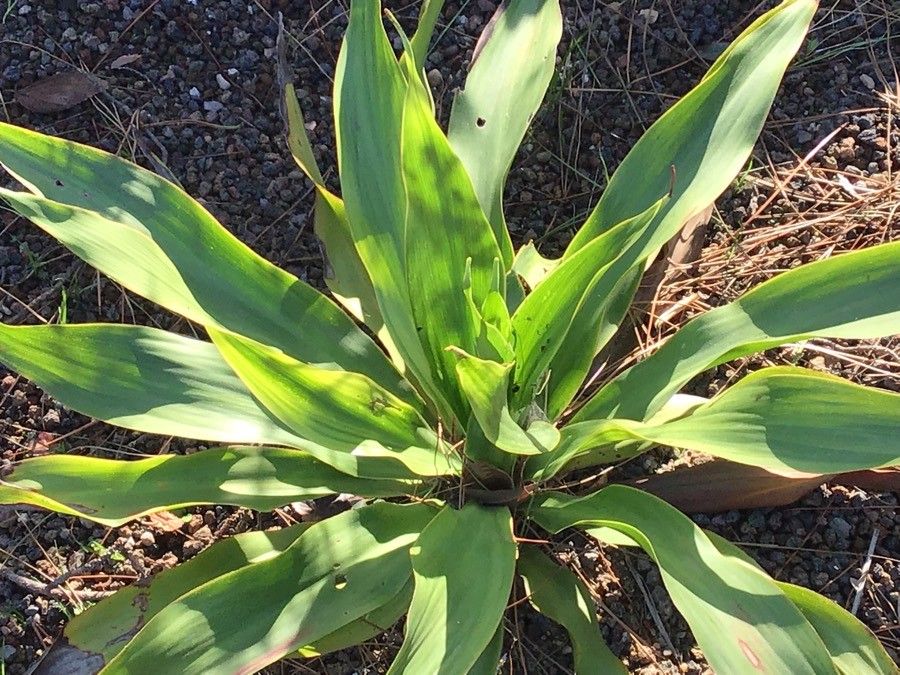
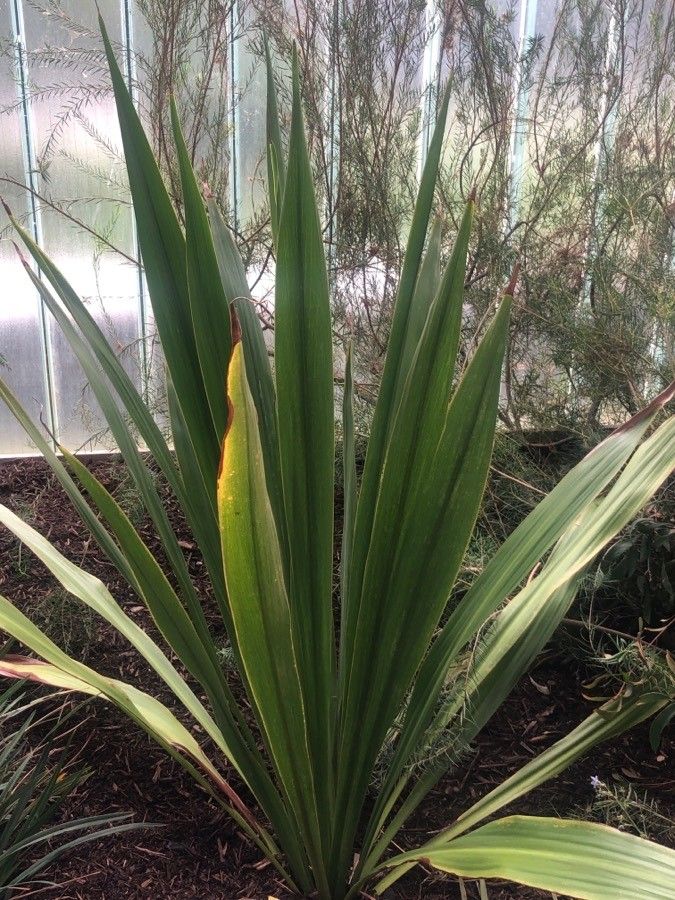
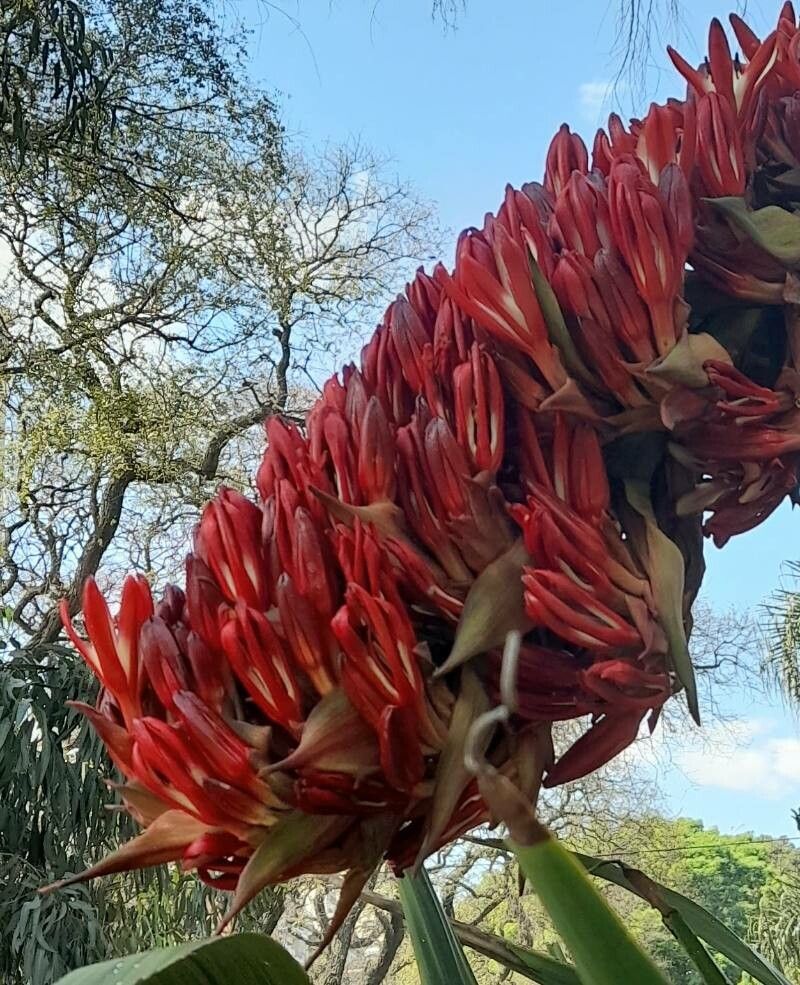
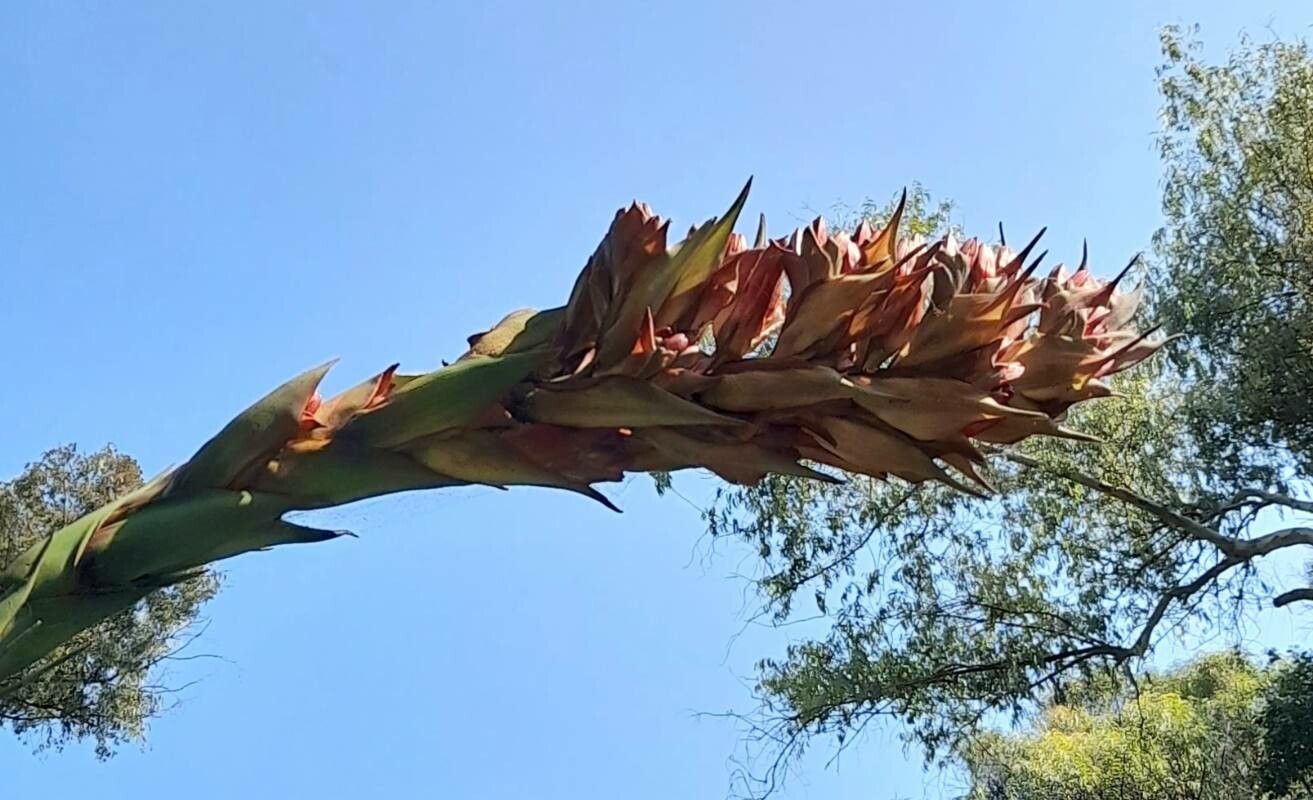
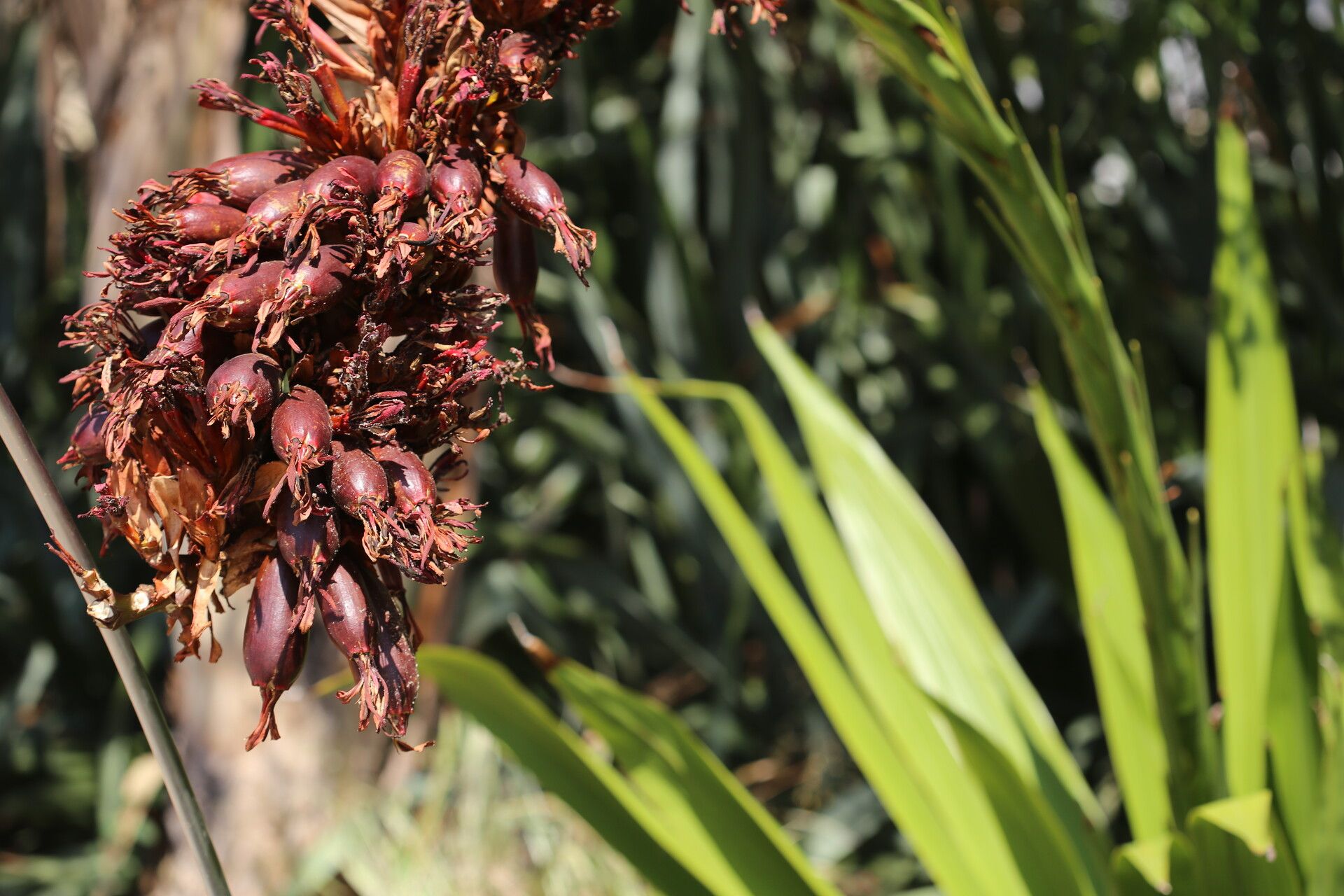
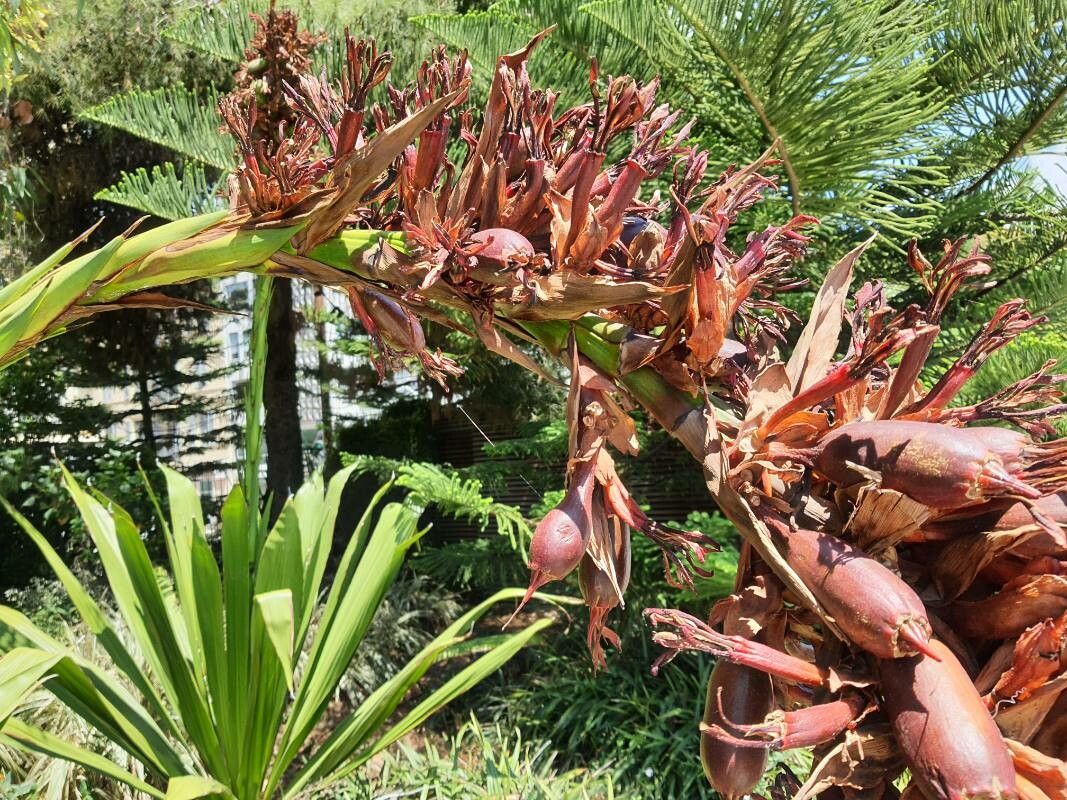
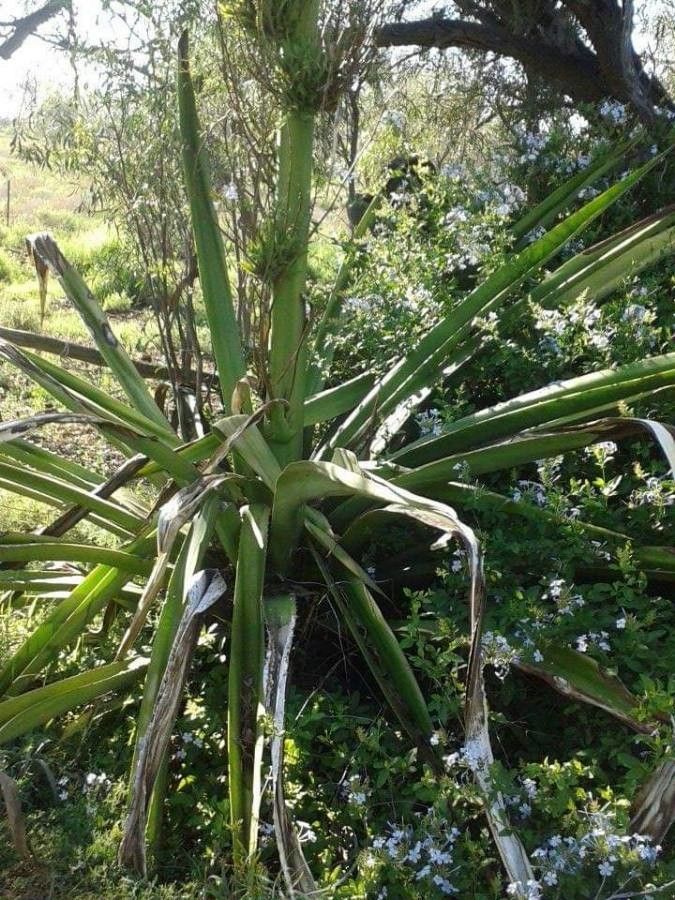
Doryanthes palmeri, also known as the giant spear lily, is one of only two species of plant in the genus Doryanthes and the family Doryanthaceae, both being endemic to eastern Australia. It grows in a rosette and the leaves can reach the length of about 3 m (10 ft). The flowers arise in springtime on a stalk which may reach 5 m (16 ft) in height. A succulent perennial, its leaves are hairless and grow in the shape of a sword. The giant spear lily is listed as Vulnerable under the New South Wales Threatened Species Act (1995).Doryanthes palmeri is grown as an ornamental plant. It does not tolerate frosts, so in temperate zones it requires protection during the winter months. It requires a sheltered position in full sun.
Giant spear lily has moderate disease resistance but is more sensitive to humidity and excess watering. It is also more likely to develop disease if it is kept in low light and overwatered. Regarding care, the Giant spear lily is drought-tolerant and can go long periods without being watered. It requires little fertilizer and only needs pruning occasionally. For these reasons, it is appropriate for people at any experience level, particularly those who prefer to spend less time on plant care or who may be away from home for extended periods. It is a suitable option for people who do not want to devote much time to upkeep yet still want a plant that is easy to maintain.
How to keep Doryanthes Palmeri.
Light
Giant spear lily comes from habitats with dappled light, like the understory of forests or rocky areas that offer natural shade. It favors partial sun but can also tolerate full sun.
Water
The giant spear lily, native to Australia, flourishes in subtropical climates with moderate humidity and well-drained soil. To maintain optimal moisture levels, water it weekly, but be careful not to overwater and saturate the roots. This evergreen plant benefits from rainfall that matches its growth cycles, resulting in lush foliage throughout the year.
Temperature
The giant spear lily performs best in warm conditions and needs higher temperatures during the growing season to support growth and metabolic processes. It favors abundant sunlight, suitable moisture, and good air circulation. However, it is vulnerable to harm from very low temperatures and excessive watering. A balance is therefore crucial, avoiding both overly high heat and excessively dry conditions.
Fertilizer
Give Giant spear lily light fertilizer once or twice a year during the growing season. Do not fertilize in winter or summer while the plant is dormant. Use less fertilizer for repotted plants, and wait a couple of months after repotting before applying fertilizer. Fertilizing helps maintain healthy growth and encourages blooming.
Pruning
The giant spear lily is known for its tall flower spikes and sword-shaped leaves. To ensure healthy growth and prevent disease, it's important to prune spent stalks and any damaged foliage in early spring. Sharp, clean tools should be used to enhance the plant's appearance and encourage vigorous blooming. This aligns with the giant spear lily's growth cycle for optimal development.
Botanical profile.
- Plant Type
- Herb, Succulent
- Life Cycle
- Perennial
- Genus
- Doryanthes
- Family
- Doryanthaceae
- Hardiness Zone
- 9-11
- Mature Height
- 2.13 m to 3.96 m
- Mature Spread
- 3.05 m to 4.88 m
- Leaf Color
- Green
- Leaf Type
- Evergreen
- Flower Color
- Red
- Flower Size
- 10.16 cm to 15.24 cm
- Bloom Time
- Late spring, Early summer
- Planting Time
- Summer, Autumn
- Harvest Time
- Mid summer, Late summer, Early fall
Other names.