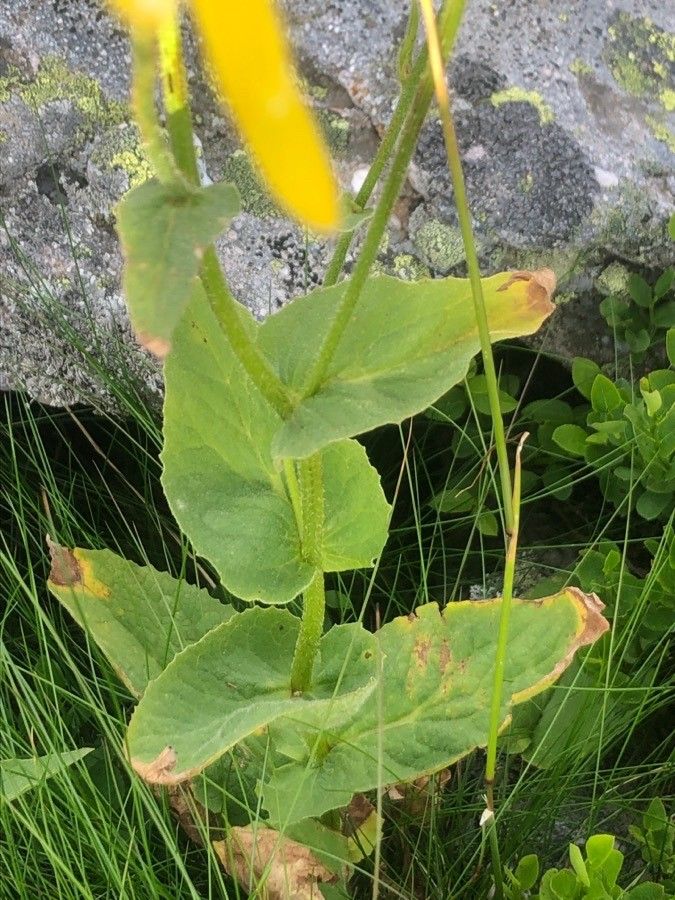
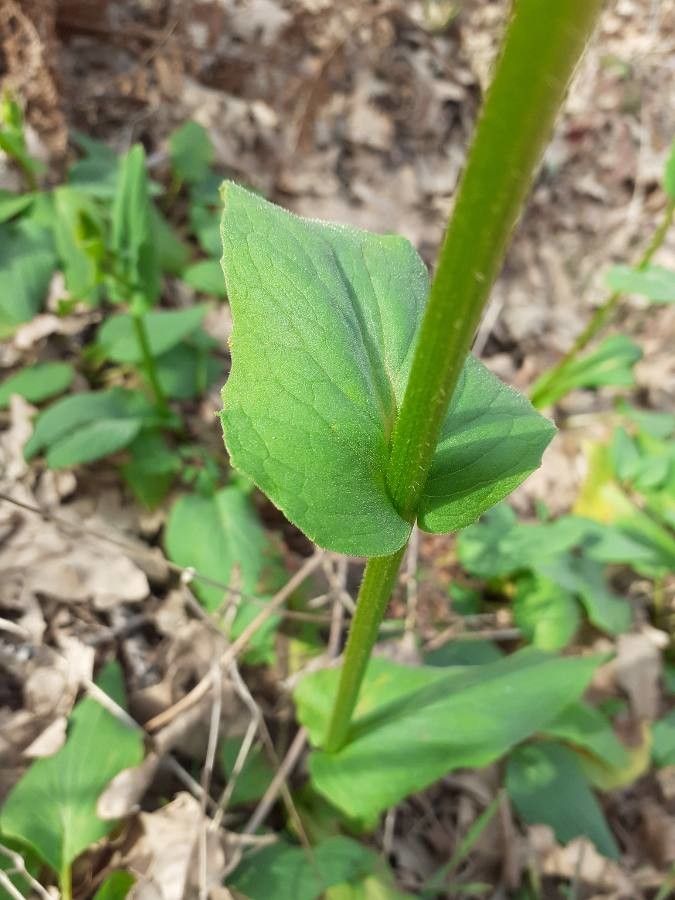
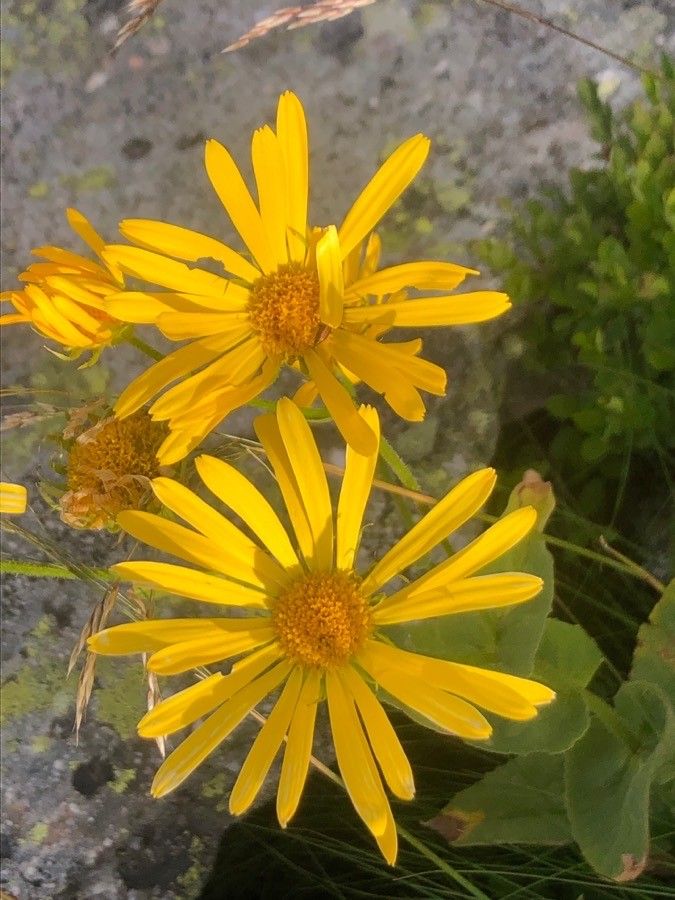
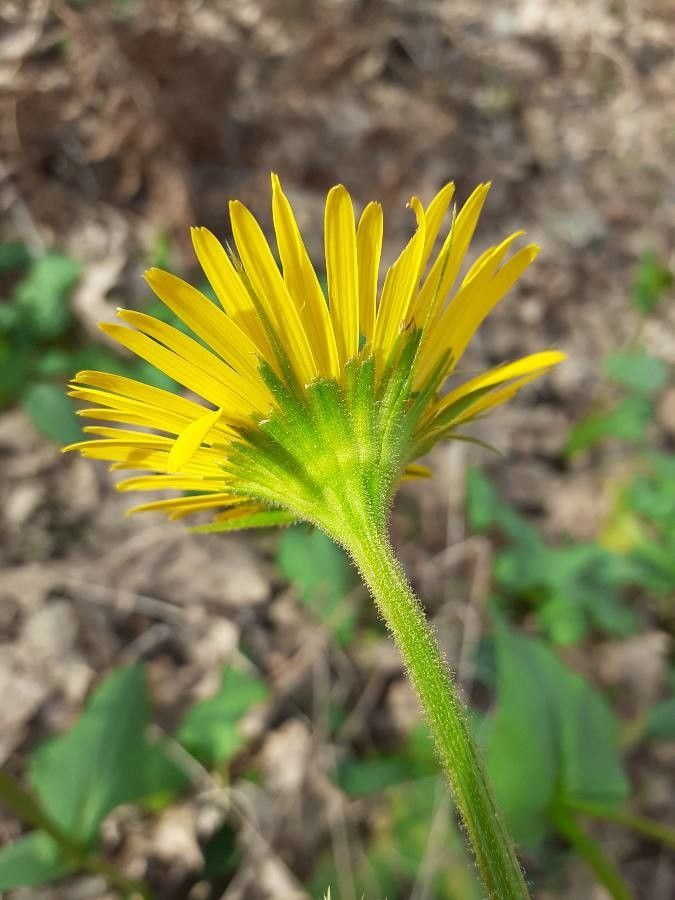
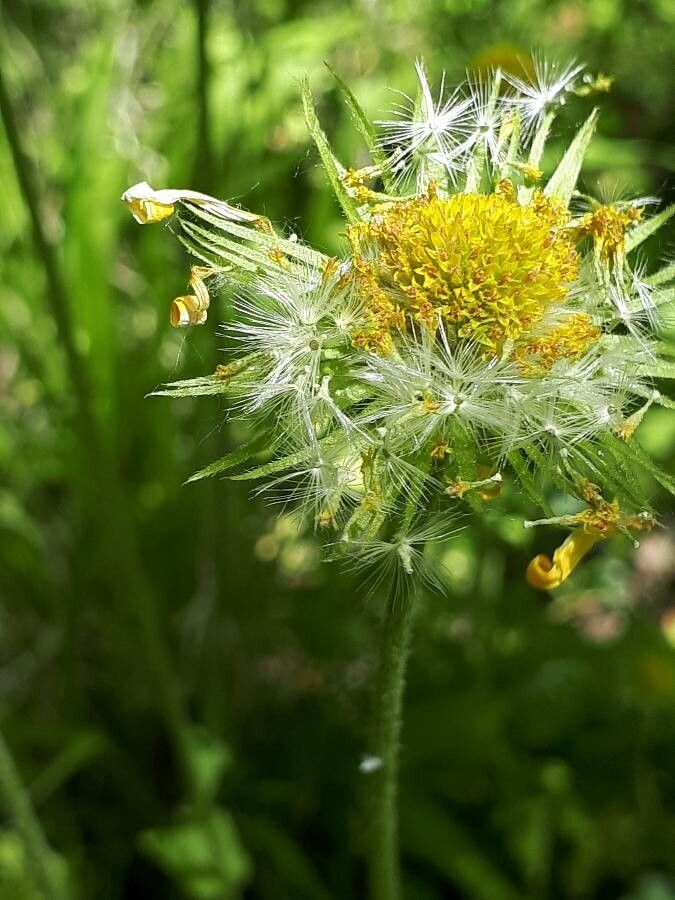
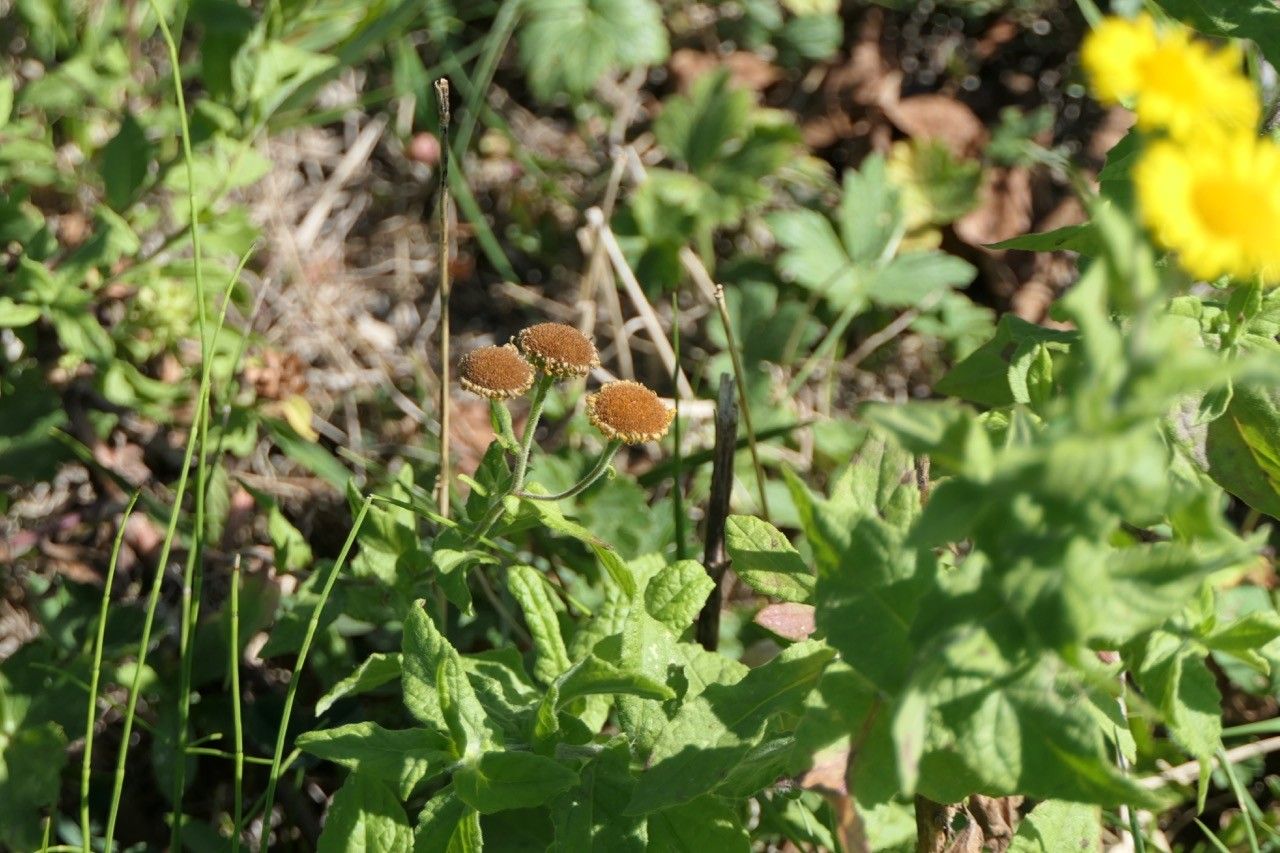
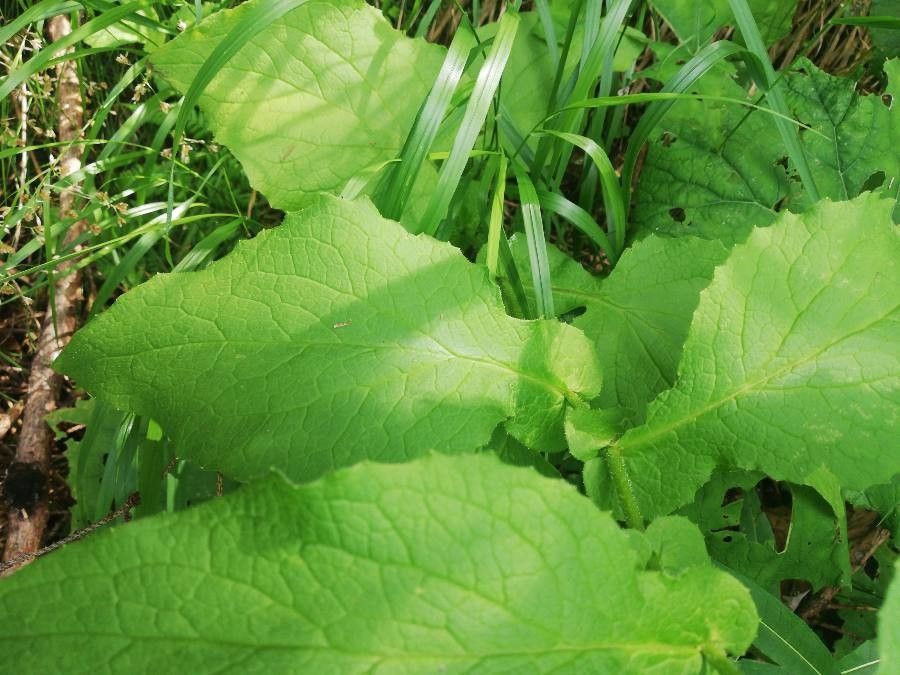
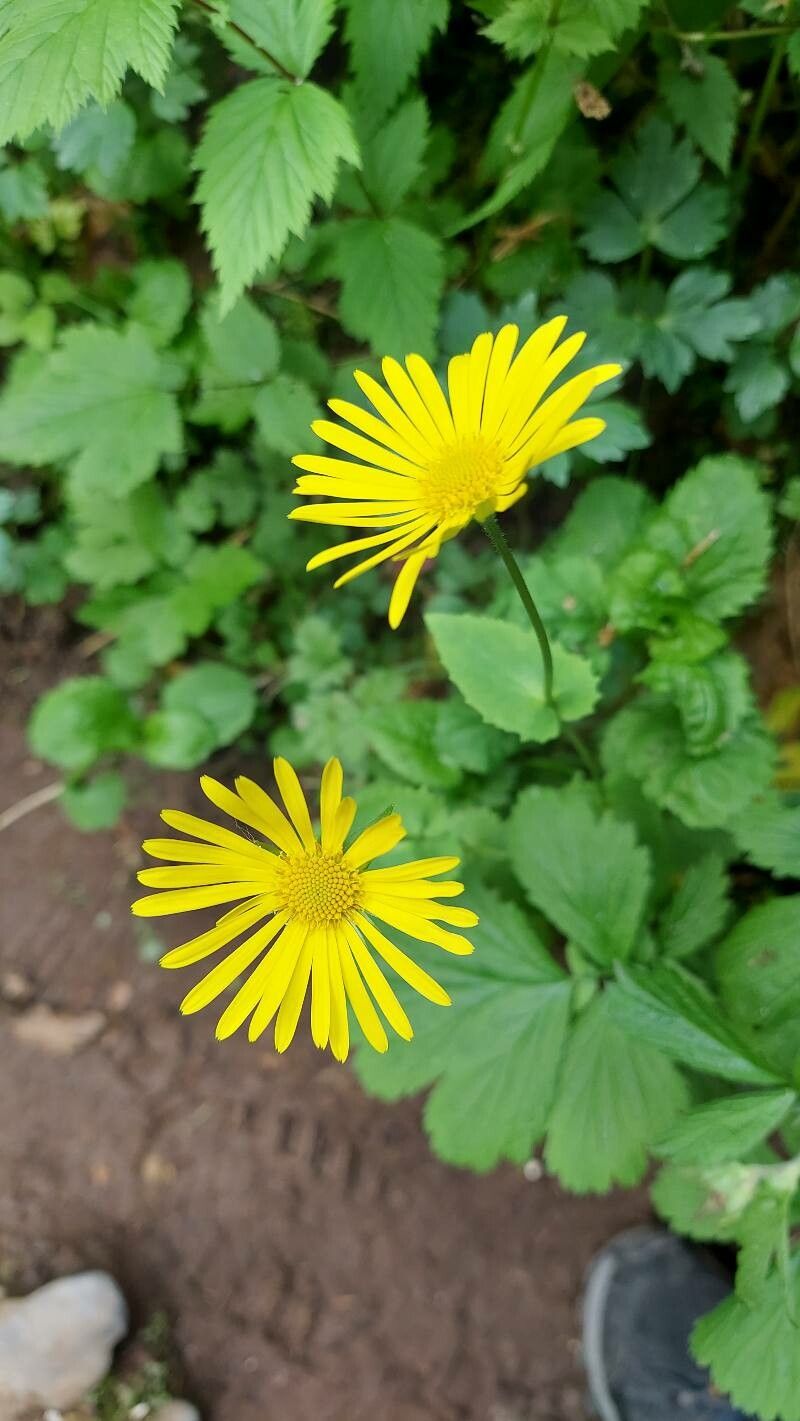
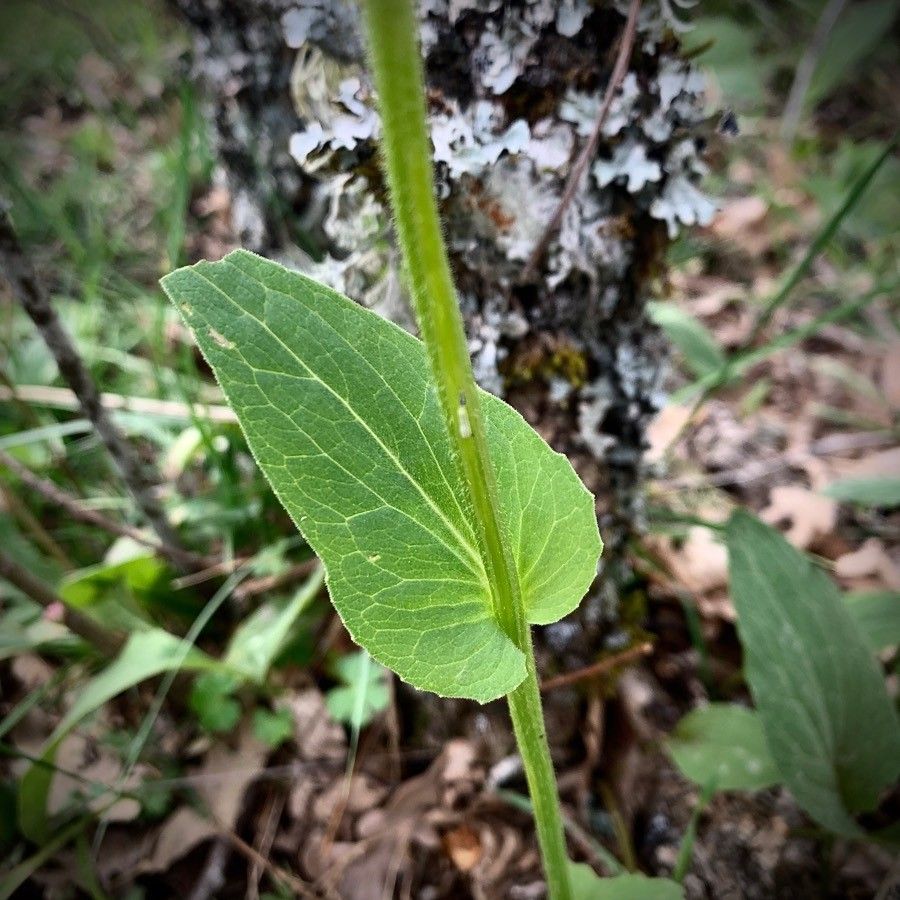
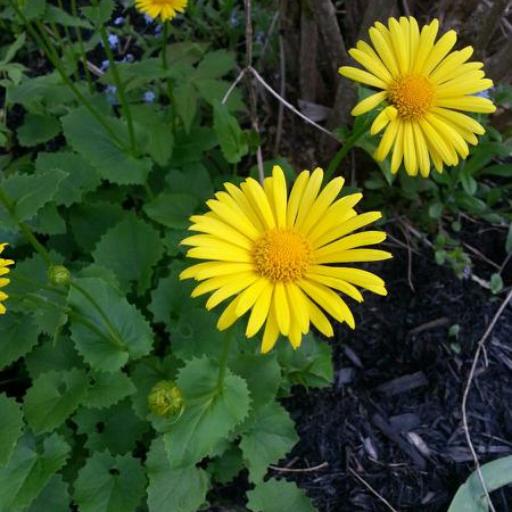
Doronicum plantagineum, the plantain-leaved leopard's-bane or plantain false leopardbane, is a European plant species in the sunflower family. It is native to southeastern Europe from Greece and Italy to Ukraine and the Czech Republic. There are reports of the species being naturalized in the State of Oregon in the northwestern United States.Doronicum plantagineum is a perennial herb up to 80 cm (2 feet) tall. Leaves are roundish, up to 11 cm (4.4 inches) long. The plant creates yellow flower heads one at a time, each up to 5 cm (2 inches) in diameter and containing both fay florets and disc florets. SubspeciesDoronicum plantagineum subsp. atlanticum (Rouy) Greuter Doronicum plantagineum subsp. emarginatum (H.J.Coste) P.Fourn. Doronicum plantagineum subsp. plantagineum Doronicum plantagineum subsp. tournefortii (Rouy) Cout.The Latin specific epithet plantagineum refers to the leaves of the plant which are similar to those of a plantain.
Plantain-leaved leopard's-bane is fairly resistant to disease and usually does not suffer from them. Nevertheless, it can be affected by pests and diseases present in its environment. Such issues are typically mild. For care, this plant needs a moderate amount of upkeep. It should be pruned regularly to keep a neat appearance and support healthy growth. Fertilizing can also help encourage flowering. Plantain-leaved leopard's-bane is well suited for anyone with outdoor space, like a garden or patio, and does not demand extensive care experience. It may call for more attention when grown indoors.
How to keep Doronicum Plantagineum.
Light
Plantain-leaved leopard's-bane occurs naturally in habitats like forest understories and rocky areas, where it typically grows in natural shade. It prefers partial sun but will tolerate full sun or full shade, reflecting its versatile and hardy nature.
Water
The plantain-leaved leopard's-bane thrives in moist environments with stable soil hydration. Watering it weekly helps maintain lush foliage and fulfills its water requirements. As an herbaceous perennial, it benefits from consistent moisture during the growing season, which enhances flowering and overall vitality.
Temperature
Plantain-leaved leopard's-bane is native to habitats where temperatures range from 41 to 95 °F (5 to 35 ℃). It grows best within that temperature range. Adjusting the local temperature to match seasonal changes is necessary to promote its growth.
Fertilizer
The best time to fertilize a Plantain-leaved leopard's-bane is in early spring, as it comes out of dormancy and begins active growth. Fertilizing supplies the essential nutrients needed for healthy development. Although this species has fairly low fertilizer requirements, applying fertilizer once a year can improve its survival and encourage stronger, longer-lasting flowers.
Pruning
The plantain-leaved leopard's-bane is a hardy perennial known for its bright yellow flowers and oval leaves. To maintain its health and compact shape, prune the plant from early to late spring by trimming the spent flowers and removing any damaged stems. Make sure to use clean cuts and take care not to over-prune to encourage optimal growth.
Botanical profile.
- Plant Type
- Herb
- Life Cycle
- Perennial
- Genus
- Doronicum
- Family
- Asteraceae
- Hardiness Zone
- 4-9
- Mature Height
- 76 cm
- Mature Spread
- 30 cm to 49 cm
- Leaf Color
- Green, Blue
- Leaf Type
- Semi-evergreen
- Flower Color
- Yellow
- Flower Size
- 5.08 cm
- Bloom Time
- Spring
- Planting Time
- Spring, Autumn
- Harvest Time
- Late spring, Early summer, Mid summer
- Native Area
- Tunisia, Italy, Spain, France, Algeria, Morocco, Portugal
Other names.
Reader questions.
What should I do if I give my Plantain-leaved leopard's-bane plant too much or too little water?
Both overwatering and underwatering can harm your Plantain-leaved leopard's-bane, but overwatering is more common. Too much water can cause wilting and yellowing of the stems and leaves, as well as diseases like root rot, mold, and mildew that can kill the plant. Underwatering is less likely, as this plant is somewhat drought-tolerant, but it can still happen, resulting in brittle and brown leaves. It's important to recognize the signs of overwatering early and take action promptly. Some diseases caused by overwatering, like root rot, may be irreversible if left unaddressed for too long. If you notice early signs of overwatering, reduce your watering schedule and consider the soil drainage. If the soil is poorly draining, replace it with a loose, well-draining potting mix. If you detect signs of underwatering, simply water more regularly until the signs disappear.
Why should I put fertilizer on my Plantain-leaved leopard's-bane?
To keep your Plantain-leaved leopard's-bane in great shape, focus on fertilization. It's crucial for maintaining the leaves' appearance and function. Proper fertilization ensures consistent leaf color and a healthy texture. Moreover, it also promotes root growth and maintenance, so your plant can absorb nutrients more effectively over time. Fertilization benefits both current and future plant health.
What amount of sunlight is required for Plantain-leaved leopard's-bane?
Plantain-leaved leopard's-bane thrives in partial sun conditions, requiring about 3-6 hours of sunlight daily. This perennial herbaceous plant is native to forest understories and rocky areas, which naturally provides it with shade. While its preference is partial sun, it is adaptable and can also tolerate full shade, making it a versatile addition to various garden spots. It's essential to observe the sunlight movement in your garden to select locations that offer a suitable balance of light and shade, ensuring the plant's well-being.
What is the optimal temperature range for Plantain-leaved leopard's-bane?
Plantain-leaved leopard's-bane, also known as Doronicum plantagineum, thrives in temperatures ranging from 41 to 95 °F (5 to 35 °C). This temperature range is ideal for its growth and should be maintained by adjusting the surrounding temperature according to the changing seasons. The plant exhibits strong cold resistance, meaning special frost protection measures are typically unnecessary. However, if temperatures are expected to fall below -30°C, protective measures like covering the plant with soil or straw are recommended. Additionally, watering the plant abundantly before the first freeze in autumn helps in keeping the soil moist, preventing drought and water scarcity during winter and early spring.
How much water does my Plantain-leaved leopard's-bane need?
If your plant is in a pot, the most exact way to check if your Plantain-leaved leopard's-bane needs watering is by sticking your finger into the soil. When the top two to three inches of soil are dry, it's time to water. For plants growing in the ground outdoors, you can use the same method to test the soil. Once the top few inches of soil have dried out, it's time to water. In spring and early fall, this usually means watering about once a week. During extremely hot weather, you may need to water twice a week or more. However, mature and well-established Plantain-leaved leopard's-bane plants can endure drought exceptionally well.
When should I fertilize my Plantain-leaved leopard's-bane?
If you grow your Plantain-leaved leopard's-bane outdoors each year, watch for new growth in early spring. This signals the time to start fertilizing. Usually, one application of fertilizer is enough. But if you want to promote maximum growth, you can fertilize multiple times during spring and early summer. In this case, feed your Plantain-leaved leopard's-bane every month to a month and a half.
How can artificial lighting support the growth of indoor Plantain-leaved leopard's-bane?
When natural sunlight is insufficient, especially during winter or in less sunny locations, artificial lighting becomes crucial for the growth of indoor Plantain-leaved leopard's-bane. Adequate lighting is essential for promoting healthier and faster plant growth. LED lights are recommended due to their ability to emulate specific light wavelengths necessary for the plant. The requirements vary based on the plant type: 30-50W/sq ft for full sun plants, 20-30W/sq ft for partial sun plants, and 10-20W/sq ft for full shade plants. The light source should be placed 12-36 inches above the plant, mimicking natural sunlight distances, and the lighting duration should reflect the natural daylight hours, typically 8-12 hours daily.
How does Plantain-leaved leopard's-bane react to low temperatures?
Plantain-leaved leopard's-bane is remarkably cold-tolerant and ideally should be maintained above 5°C during the winter months. It can survive temperatures down to -25°C, but when the mercury dips below -30°C, the plant may not show immediate damage. However, these extreme conditions may lead to a decrease in sprouting or no sprouting at all come spring. To mitigate any potential damage, it's advisable to remove any parts of the plant that have failed to sprout as spring arrives.
How much water does my Plantain-leaved leopard's-bane plant need?
To properly water your Plantain-leaved leopard's-bane, don't hold back on the amount of water you give. Make sure the top two to three inches of soil are dry before watering, and when you do water, make sure the soil is thoroughly soaked. Add enough water so that it flows through the drainage holes in the pot. If you don't see any excess water draining out, you may not have given enough water. However, be cautious not to let water accumulate in the soil, as this can harm the plant. If water is not draining properly, it could be due to poorly draining soil, which is harmful to the plant's health and should be avoided. If the plant is outside, it should receive about 1 inch of rain per week, which is sufficient.
When is it not a good idea to add fertilizer to my Plantain-leaved leopard's-bane?
During the late fall and winter, your Plantain-leaved leopard's-bane enters a dormant phase, meaning it stops producing new growth. Hence, it's best not to fertilize it at this time. In the spring and summer, if you choose to fertilize, gradually reduce the amount as summer approaches because the growth rate of your Plantain-leaved leopard's-bane will slow down too. It's important to note that it's never a good idea to fertilize when the weather is excessively hot or the soil is extremely dry, as this can stress your plant and lead to its premature death.
What are the symptoms of insufficient light in Plantain-leaved leopard's-bane?
When Plantain-leaved leopard's-bane receives inadequate light, several symptoms may arise indicating light deficiency. These symptoms include smaller new leaves compared to their predecessors, leggy or sparse growth with increased space between leaves or stems, premature leaf drop as the plant conserves resources, stalled growth due to the plant entering survival mode, lighter-colored or pale new leaves signifying a chlorophyll shortage, chlorosis leading to green color loss and yellowing leaves, sunscald causing pale, bleached, or necrotic spots on foliage or stems, leaf curling as a defense against excessive light exposure, wilting from increased water loss, and leaf scorching marked by brown, dry edges on leaves.
What should I do if Plantain-leaved leopard's-bane experiences high temperatures?
During the summer, it's crucial to keep Plantain-leaved leopard's-bane below 35°C. When temperatures exceed 38°C, the plant may show signs of stress, such as leaves becoming lighter, curling, becoming susceptible to sunburn, or in severe cases, the entire plant may wilt and dry out. To counteract these effects, trim away any sunburned or dried-up parts and relocate the plant to a shaded area during the midday and afternoon sun. Utilizing a shade cloth can also be effective. Ensure the soil remains moist by watering the plant in the morning and evening.