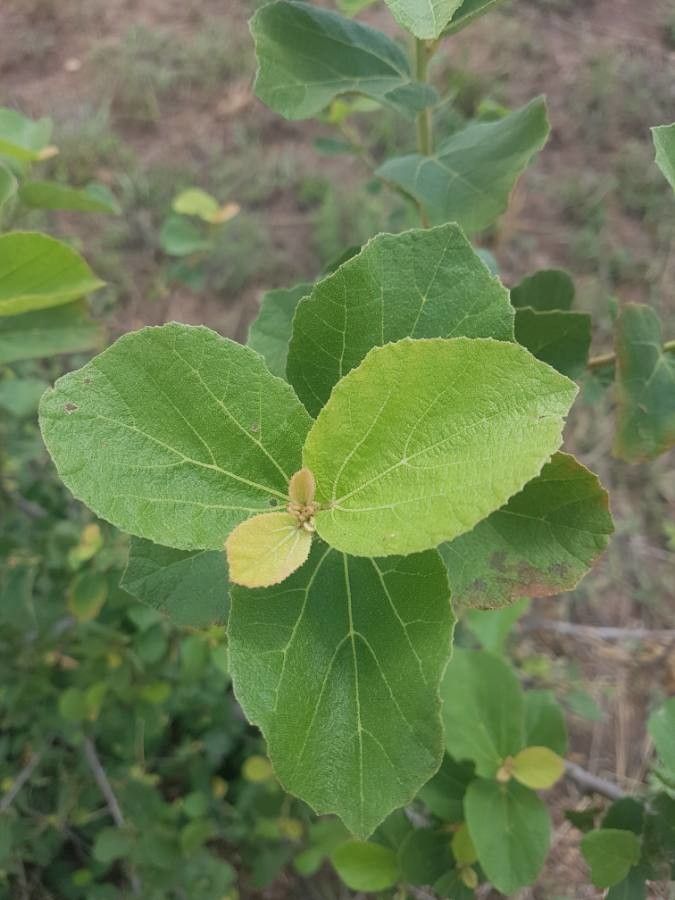
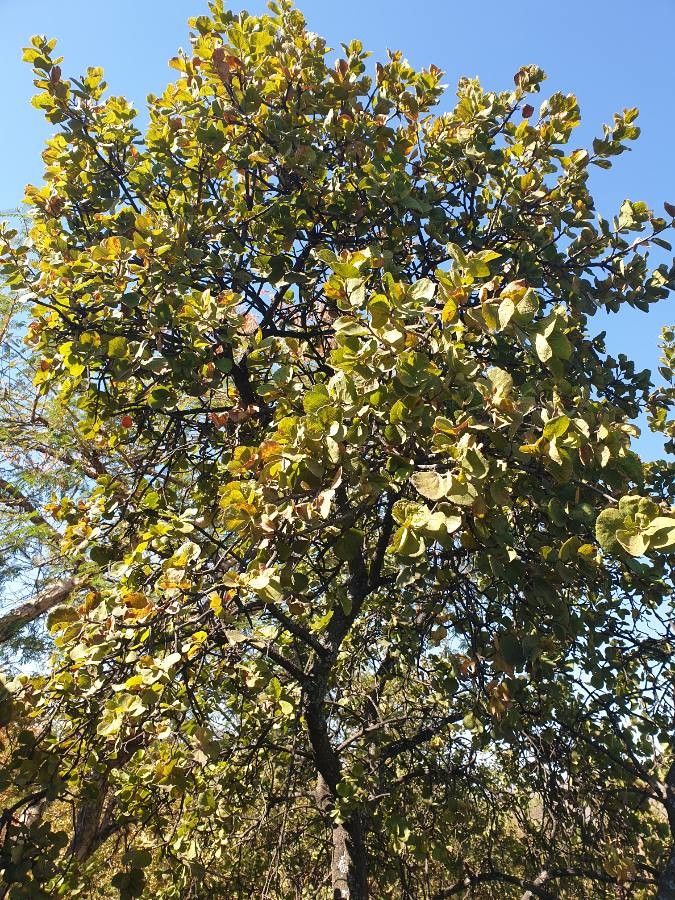
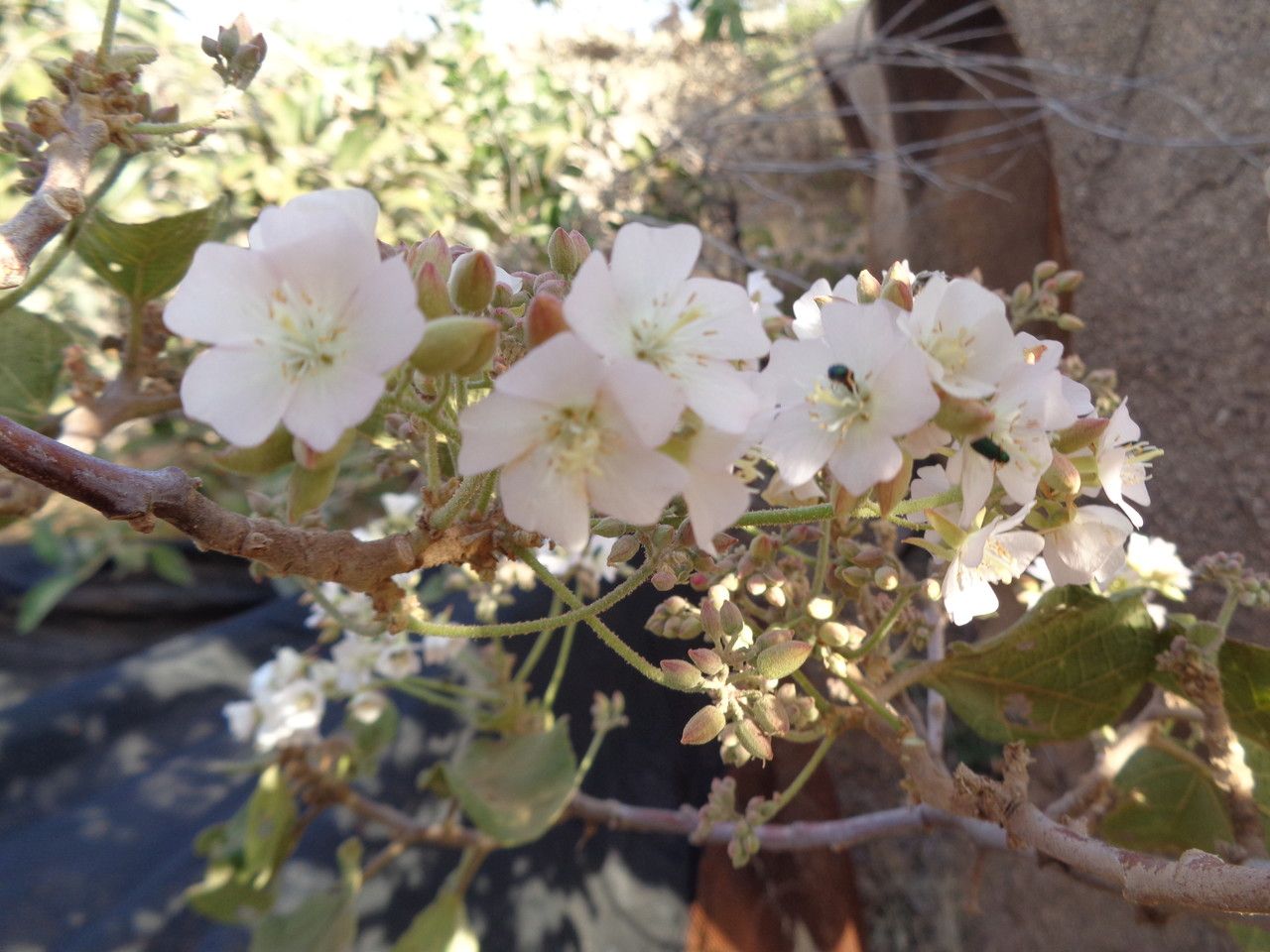
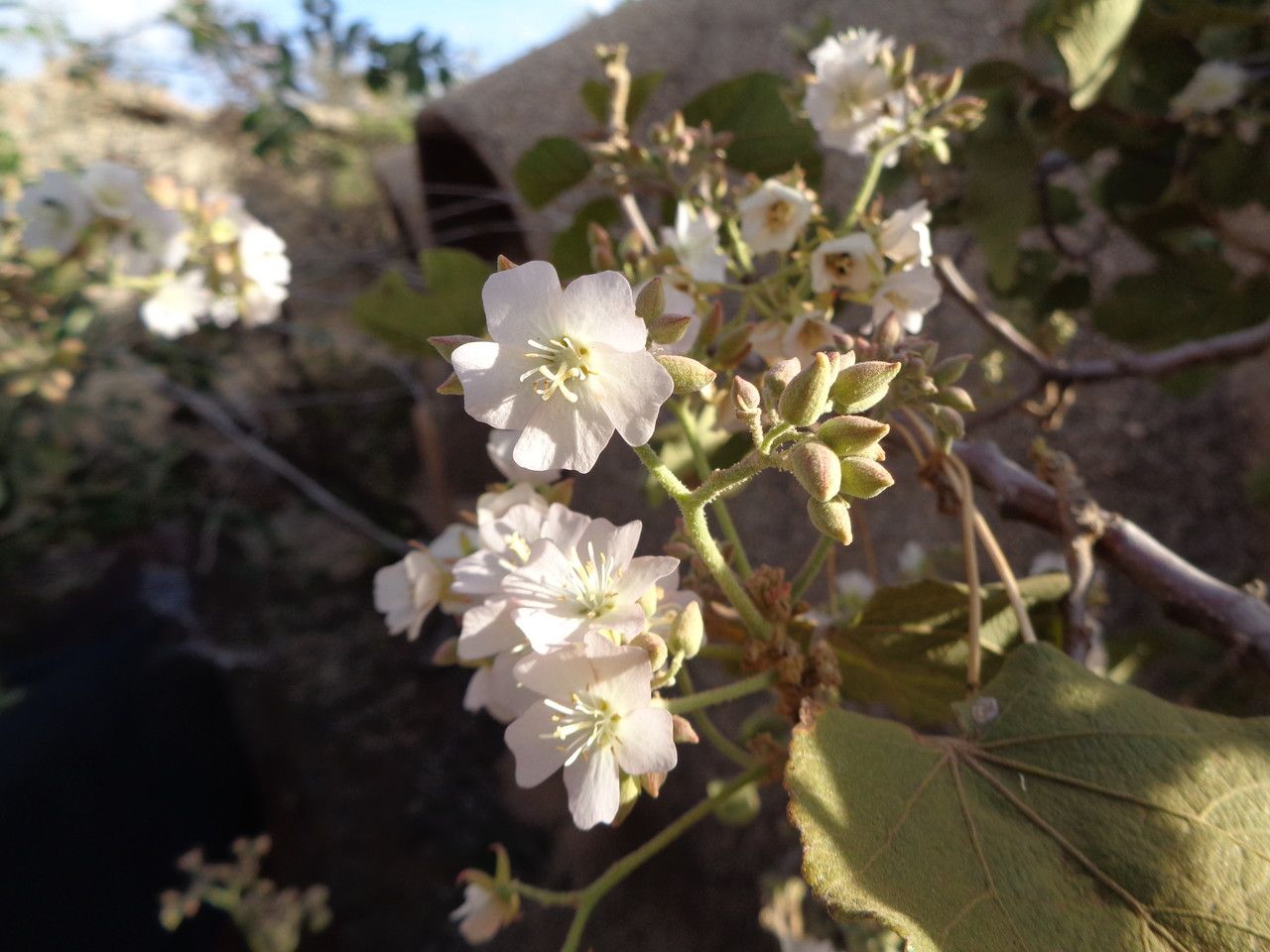
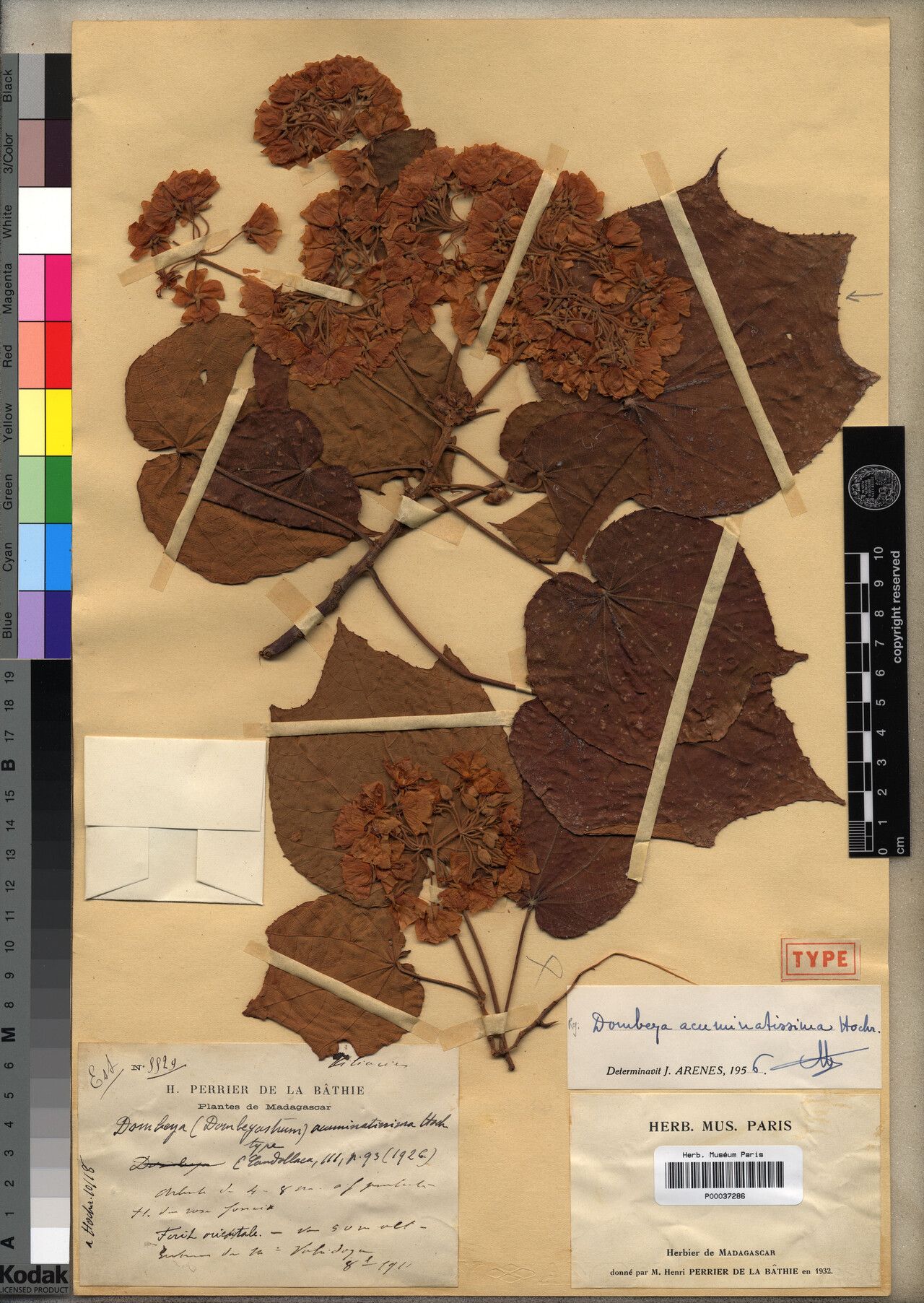
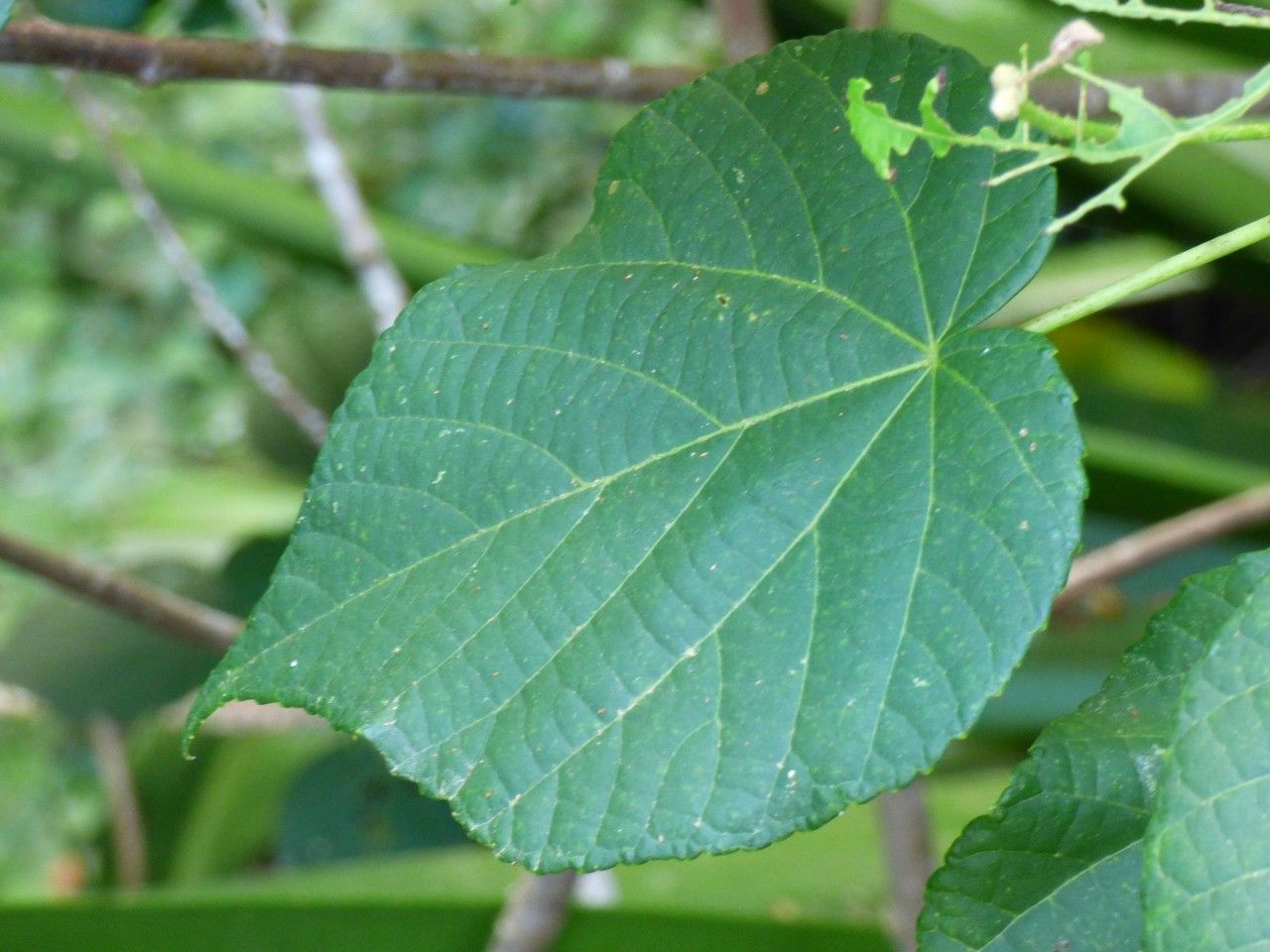
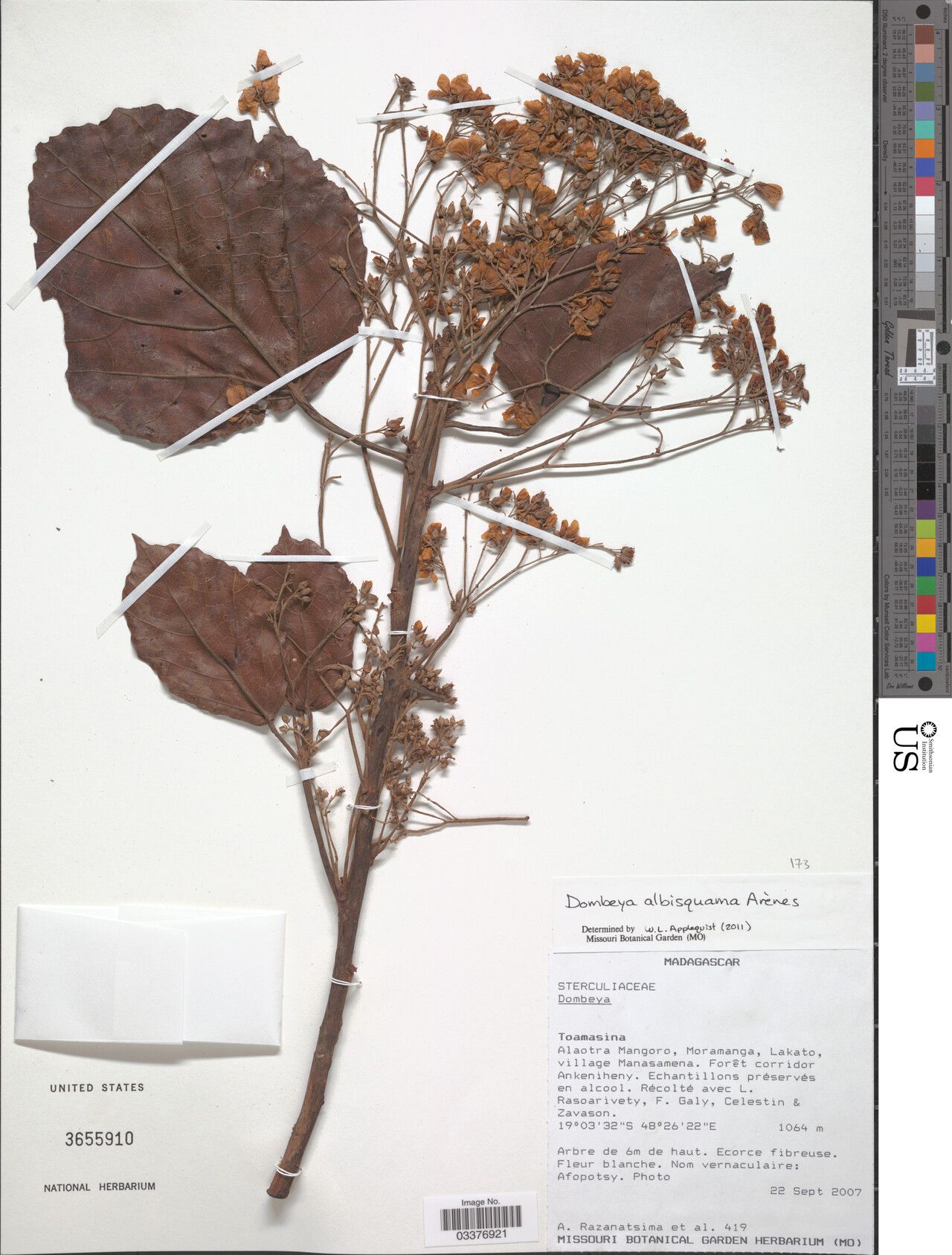
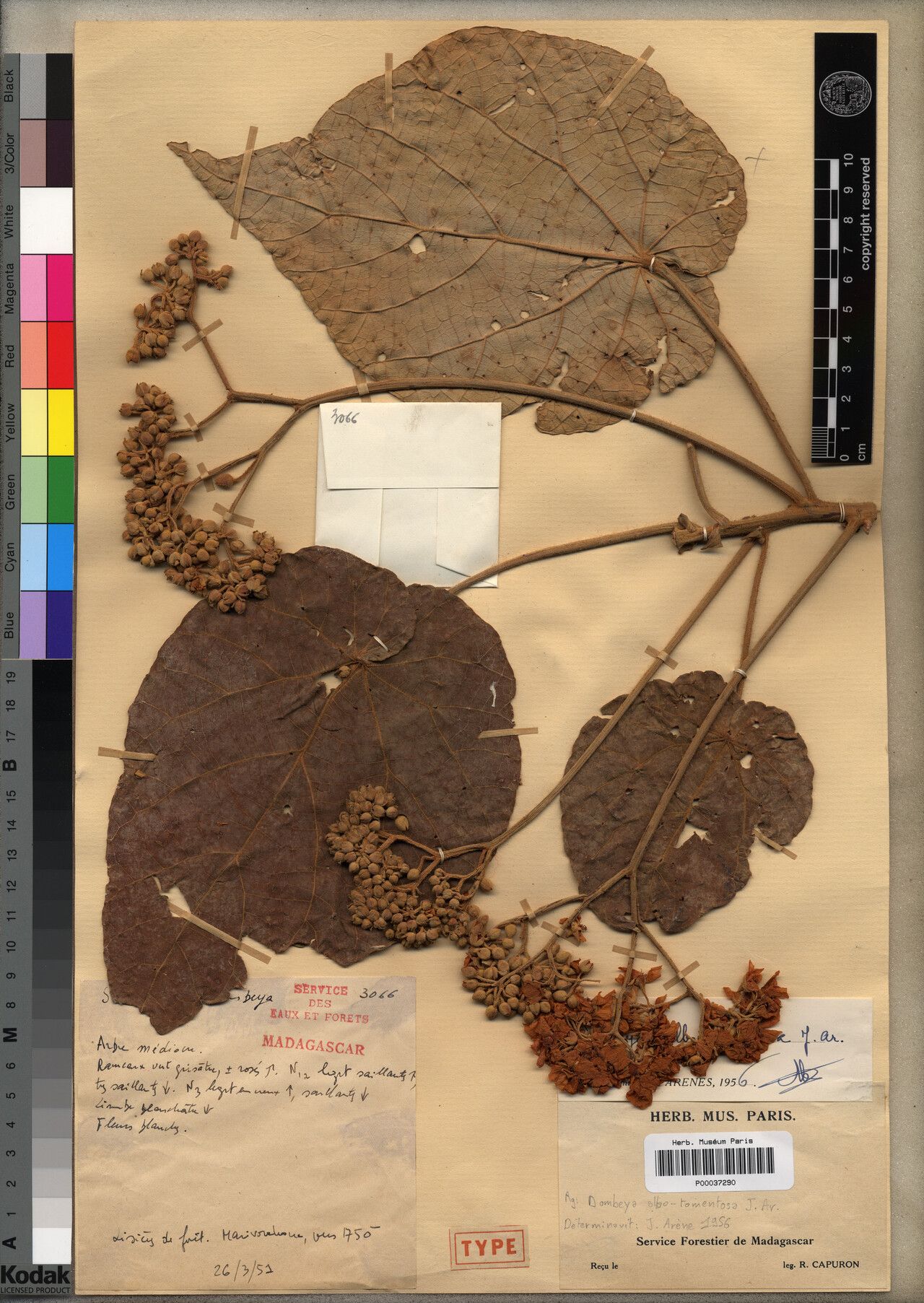
Dombeya rotundifolia, commonly known as the Wild Pear or Pink Ball Tree, is a flowering plant native to Madagascar and other parts of Africa. This small to medium-sized tree can grow up to 10 meters tall and boasts a rounded crown with spreading branches. The large, round leaves are dark green and have serrated edges. The plant is notable for its large clusters of pink or white, ball-shaped flowers, which bloom from late winter through early spring. These highly fragrant flowers attract bees and other pollinators. Dombeya rotundifolia thrives in well-drained soil and can be planted in full sun or partial shade. While it is drought-tolerant once established, regular watering during dry periods is beneficial. The tree has several uses: it is grown as an ornamental plant for its stunning flowers, the bark can be used to make rope, and the wood is suitable for furniture making. Additionally, its fruit is edible, although it is not commonly consumed due to its sour taste. Overall, Dombeya rotundifolia is an attractive flowering tree that enhances any landscape while providing practical benefits such as shade and wood products.
The South African wild pear has good resistance to disease and is generally not susceptible to illnesses. Regarding care, this plant is fairly low-maintenance. When grown outdoors it needs little watering, and larger specimens usually do not require pruning. Smaller plants, however, should be pruned after they have finished blooming. The South African wild pear is suitable for anyone with an outdoor area, such as a garden or a deck, and does not demand extensive gardening experience.
How to keep Dombeya Rotundifolia.
Light
South african wild pear originates in open habitats, such as sunny meadows and the edges of forests, which provide abundant light. It performs best in Full Sun but will tolerate Partial Sun, showing good adaptability to various light conditions.
Water
The South African wild pear is a resilient plant that thrives in arid regions due to its remarkable drought tolerance. This robust species only needs to be watered once every 2 to 3 weeks. Being deciduous, it sheds its leaves during dry seasons to conserve water, illustrating nature's incredible adaptation strategies.
Temperature
South African wild pear is fairly adaptable to temperature, tolerating higher heat and wide temperature fluctuations. In hot weather, you should make sure it receives enough water and some shade to prevent sunburn. Its tolerance of low temperatures is relatively poor; while it can handle a certain amount of cold, extreme cold can cause frost damage.
Fertilizer
The timing of fertilizing the South african wild pear is important. Start fertilizing in early spring and continue monthly until early summer. Fertilizer helps produce attractive blooms and supplies energy during both dormant and active growth phases.
Pruning
The South African wild pear is known for its beautiful white blossoms. To keep it healthy and ensure vibrant blooming, it's best to prune the tree in early spring. Focus on removing dead branches and thinning crowded areas to improve light and air circulation, which helps reduce the risk of disease. This practice maintains the tree's natural shape, promotes healthy growth, and encourages vigorous development.
Botanical profile.
- Plant Type
- Tree
- Life Cycle
- Perennial
- Genus
- Dombeya
- Family
- Malvaceae
- Hardiness Zone
- 9-11
- Mature Height
- 4.88 m to 6.1 m
- Mature Spread
- 3.05 m to 4.88 m
- Leaf Color
- Green
- Leaf Type
- Semi-evergreen
- Flower Color
- White
- Flower Size
- 1.52 cm to 2.03 cm
- Bloom Time
- Winter
- Planting Time
- Summer, Autumn
- Harvest Time
- Spring
- Native Area
- Malawi, Angola, South Africa, Zambia, Namibia, Rwanda, Kenya, Uganda, Tanzania, Zimbabwe, Burundi, Mozambique, Eswatini, Ethiopia, Congo (DRC), Botswana
Other names.
Reader questions.
How should I water my South African wild pear tree in the best way?
To ensure excellent root development, consider using a garden hose placed at the base of your plants. Avoid spraying the leaves directly, especially if they are exposed to direct sunlight. Instead, focus on watering the roots. You can also use bubblers or soaker hoses to keep the roots moist, covering the entire garden or bed. When adding or removing plants, make sure to water them deeply to help the roots grow. Remember to drain any excess water and wait for the soil to dry before watering again. To prevent diseases, water at ground level rather than spraying the leaves. On sunny days, you may choose to spray the entire bush with water. Whether your plants are in pots or planted in the ground, it is important to prioritize deep watering rather than light sprinkling for South African wild pears.
Why should I add fertilizer to my South African wild pear plant?
No matter the type of South African wild pear you have, regular fertilization is key to ensuring the plant's overall health. By providing the proper nutrients, you can promote stronger growth and enhance the plant's ability to withstand difficult conditions and resist diseases and pests. The foliage of the South African wild pear is particularly attractive, so it is important to maintain its quality. This involves following a fertilization schedule tailored to your specific plant, which will result in vibrant and lush leaves.
What are the sunlight requirements for South African Wild Pear?
The South African Wild Pear, or Dombeya rotundifolia, thrives best in full sun conditions, requiring more than 6 hours of sunlight daily. However, it can also adapt to partial sun, which means about 3-6 hours of sunlight. Observing how sunlight moves through your garden is vital to find spots that offer a balance of light and shade, ensuring the plants' wellbeing.
What should I do if I give South African wild pear tree too much or too little water?
An overwatered South African wild pear can show signs such as yellowing, dropping, and wilting leaves. The plant may also look unhealthy with mushy stems. In such cases, it's best to adjust your watering schedule. Wilting can also indicate under watering, with leaves becoming crispy and dry. If the soil is dry and watering alone is not enough, give the plant a thorough watering. However, after a few days, the damaged root system may cause the plant to still appear dry with yellow leaves. Once the plant recovers, the yellowing leaves will stop. When keeping the South African wild pear indoors, always check the moisture levels of the pot. Avoid overwatering and watch out for signs of black spots. If present, allow the soil to dry in the pot for a few days before watering again. Overwatering can lead to root rot, so consider transferring the plant to a different pot if you see discolored and slimy roots. Preventing root rot is crucial, so don't let the soil become overly soggy. When planting the South African wild pear outdoors, make sure to dig a little deeper. If the soil feels too dry when you check with your fingers, it may indicate underwatering. Adequate watering is necessary to help the plant recover.
When should I fertilize my South African wild pear tree?
To ensure healthy growth, fertilize your South African wild pear for the first time in late winter or early spring. This provides the necessary nutrients for the tree to thrive once the weather warms up. Additionally, if you live in a warm climate region, it is beneficial to fertilize your tree again in early fall. This helps the tree absorb extra nutrients for the following growing season and increases its resilience in colder temperatures. Fertilizing earlier in the season also allows ample time for new branches to grow and withstand the winter cold without damage.
Where does the South African Wild Pear naturally grow, and what are its lighting needs?
Naturally originating from open environments such as sunny meadows and forest edges, the South African Wild Pear is accustomed to ample light. These environments provide it with full sunlight, although it is capable of tolerating partial sun, making it adaptable to a variety of sunlight conditions.
How frequently do I need to water my South African wild pear plant?
The South African wild pear prefers deep, infrequent watering, especially when planted in pots. Since the soil in pots dries out faster, it is important to soak them in a gallon of water each time. In cold regions, watering is needed every 3 to 5 days and it's best to do it early in the morning when the soil is dry. One way to determine if watering is necessary is by checking the soil inside. If the top 2-3 inches of soil is dry, it's time for a full watering. On hot days, it's important to check the moisture daily as the heat can quickly dry out the soil in the pot. For a garden, irrigation of the soil is necessary. In hot climates, watering once a week is recommended. Only water when the top 2-3 inches of soil become too dry. It's also important to consider the amount of rainfall and avoid watering if there has been sufficient rain to prevent root rot. The South African wild pear primarily grows during spring and fall. When planted outdoors, adding about 3 to 4 inches of mulch helps conserve water. Sandy soil needs more frequent watering due to its fast-draining nature, while clay soil requires less frequent watering to avoid root rot. It's helpful to mark the date on the calendar for watering and pay attention to drooping leaves, which could indicate a slight delay in watering.
When should I not put fertilizer on my South African wild pear plant?
To properly care for your South African wild pear, there are a few specific times throughout the year when you should avoid fertilizing it. One such time is during the early and mid-winter months when the plant is in a dormant state and does not require any additional nutrients. Similarly, it is not advisable to fertilize the plant during the late spring and summer when the weather is typically hotter and dryer. Fertilizing during this period may have adverse effects on your South African wild pear. To prevent any problems, it is recommended to establish a fertilization routine that focuses on feeding the plant only during early spring and early fall.
How can artificial lighting be used for indoor South African Wild Pear plants?
For indoor South African Wild Pear plants, when natural sunlight is not enough, especially during winter or in less sunny areas, artificial lighting provides an essential alternative. Adequate LED lighting can be customized to fulfill specific light wavelength needs of plants. Full sun plants require 30-50W/square foot, partial sun plants 20-30W/square foot, and full shade plants 10-20W/square foot. The light source should be placed 12-36 inches above the plant to mimic natural sunlight, and most plants will need 8-12 hours of light daily.
How much water should I give my South African wild pear plant?
The South African wild pear generally requires about a gallon of water on a regular schedule. For potted plants, water them deeply until you see water dripping from the bottom of the pot. Then, wait for the soil to dry before watering again. Use a water calculator or moisture meter to track the amount of water given to the plant each week. During the flowering period, provide plenty of water but let the moisture evaporate afterward to avoid root rot. If the South African wild pear is planted outdoors and receives adequate rainfall, it may not need additional watering. For young or newly planted trees, ensure they receive 1-2 inches of rain per week. As the South African wild pear grows, it can rely solely on rainfall. Only when the weather is extremely hot or there is no rainfall for 2-3 weeks, consider giving the plant a full watering during cooler times of the day to prevent damage from high heat. Additional watering is necessary during prolonged dry periods.
What kind of fertilizer should I use for my South African wild pear tree?
A South African wild pear primarily requires nitrogen as its most important nutrient, but phosphorus and potassium should not be overlooked either. These three main nutrients are vital for the proper growth of your South African wild pear, so it is recommended to use a balanced fertilizer like a 10-10-10. However, a more tailored ratio of nutrients is usually more beneficial for optimal growth. Generally, fertilizers with a slightly higher nitrogen content, such as a 10-6-4 ratio, tend to yield better results. You have the option to choose between granular or liquid-based fertilizers when applying them to your plant.
What are some symptoms of light deficiency in South African Wild Pear?
When South African Wild Pear does not receive adequate sunlight, it may show various symptoms such as smaller new leaves, leggy or sparse growth, premature leaf drop, halted or nonexistent new growth, paler new leaves, and conditions like chlorosis, sunscald, leaf curling, wilting, and leaf scorching. These are signs of stress due to insufficient light, indicating the plant's need for better light conditions.