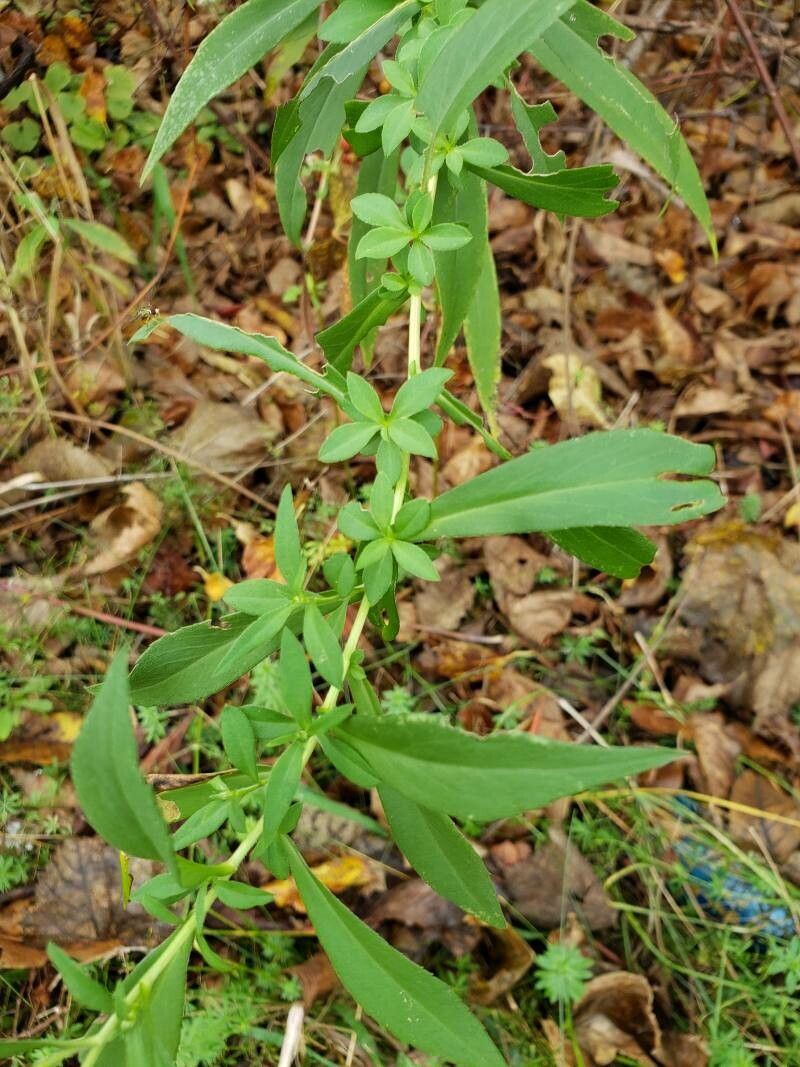
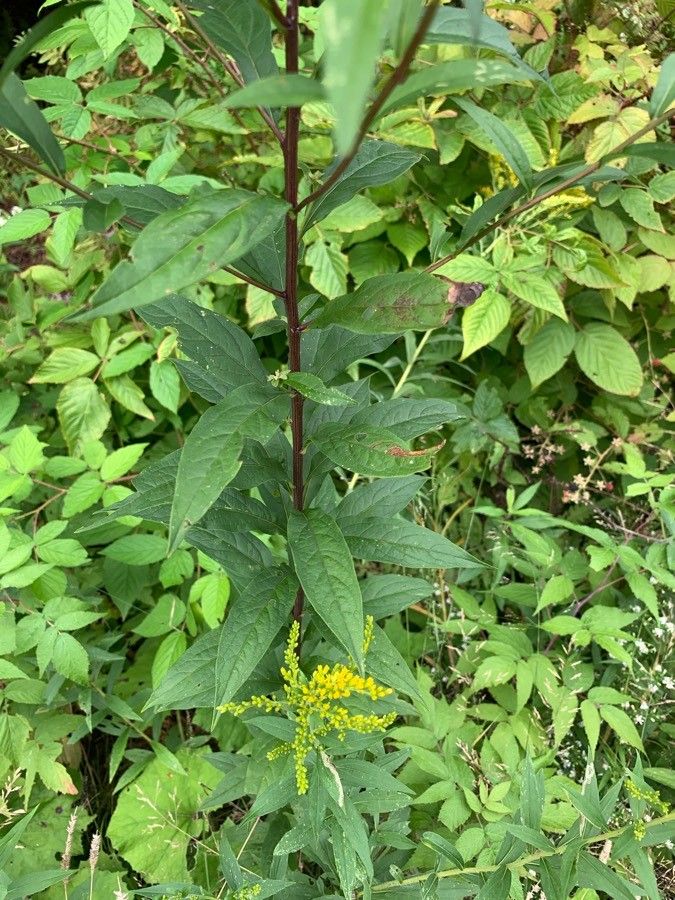
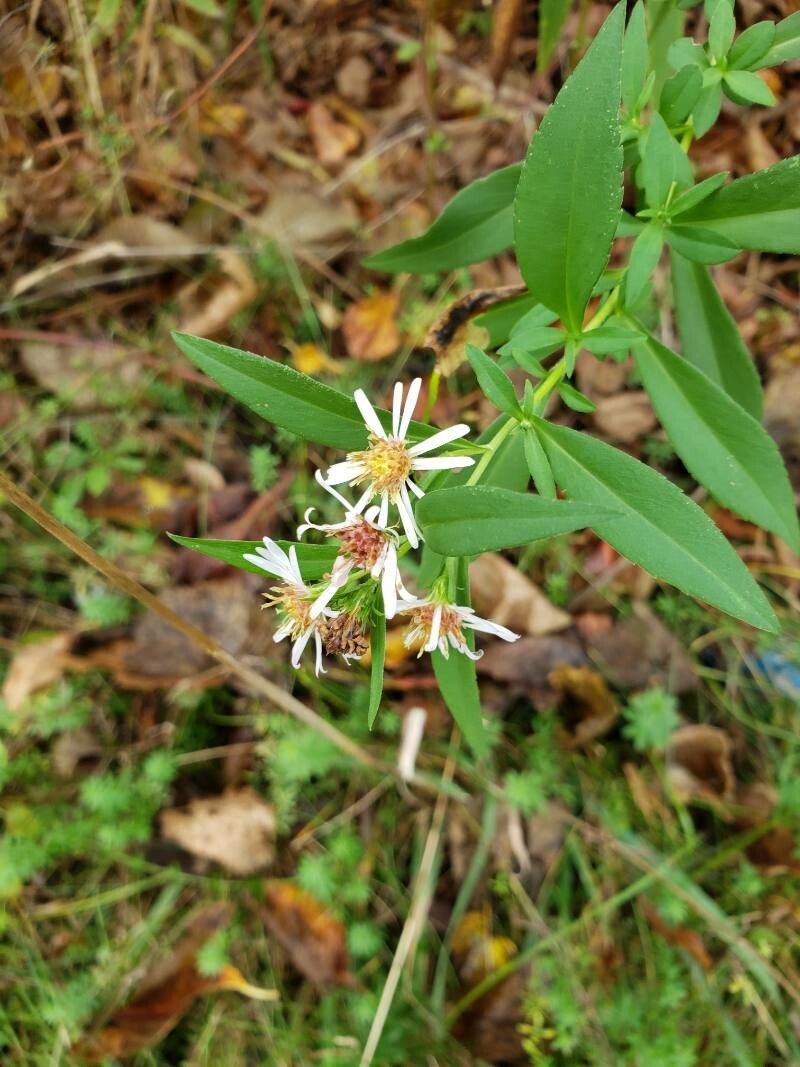
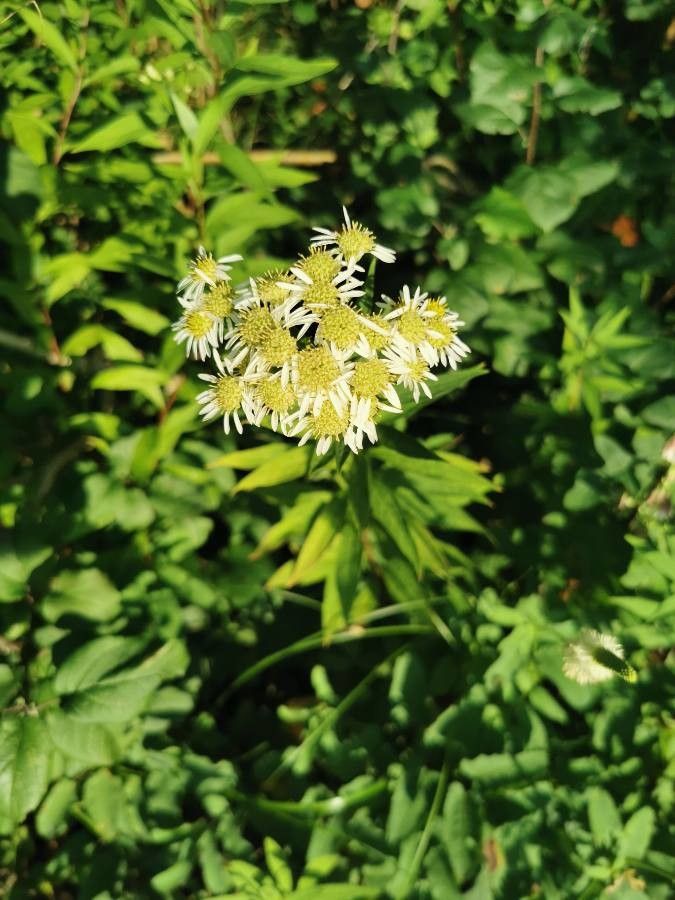
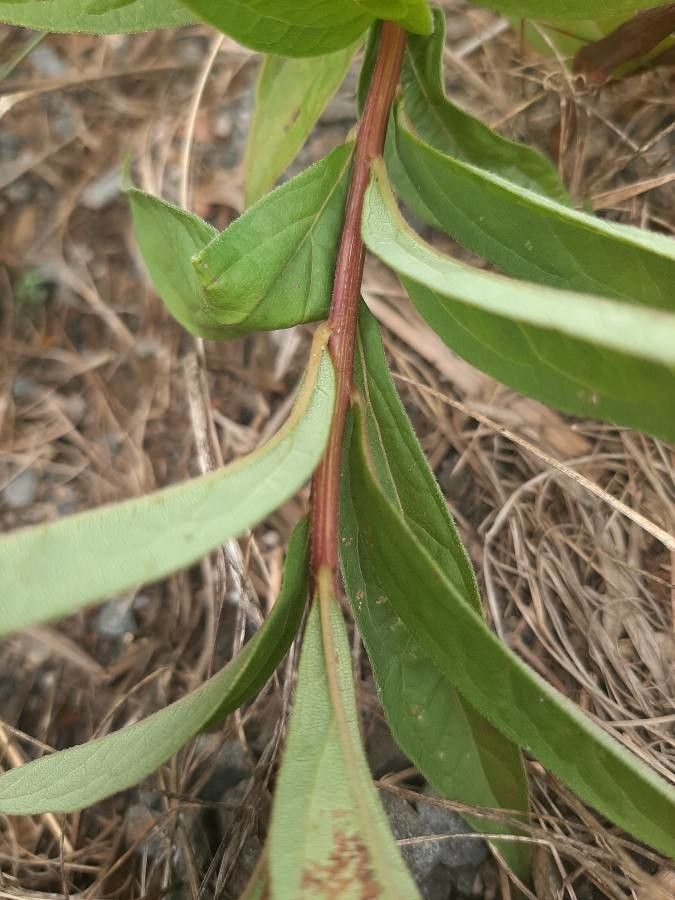
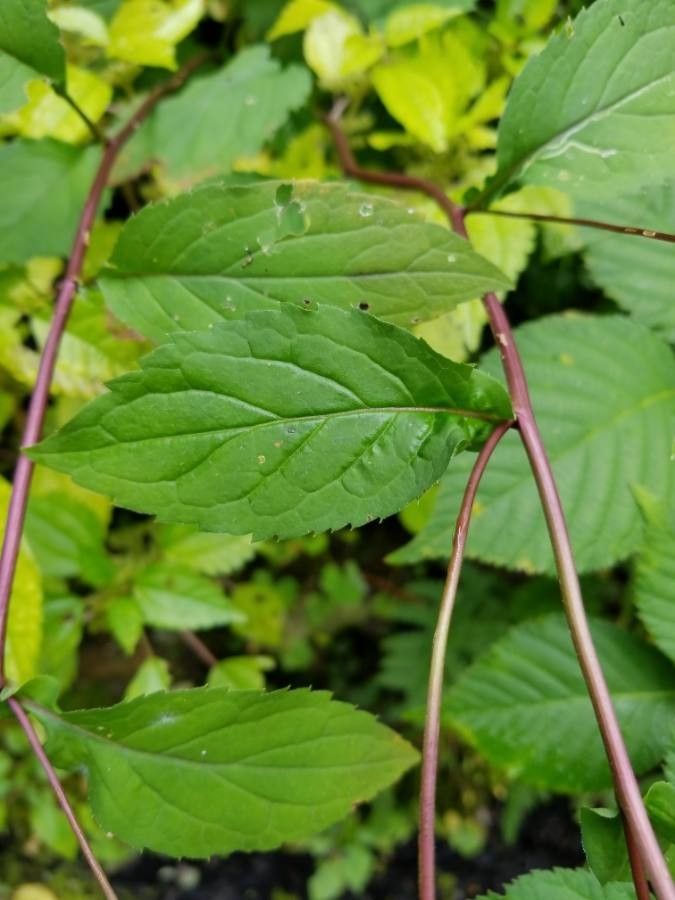
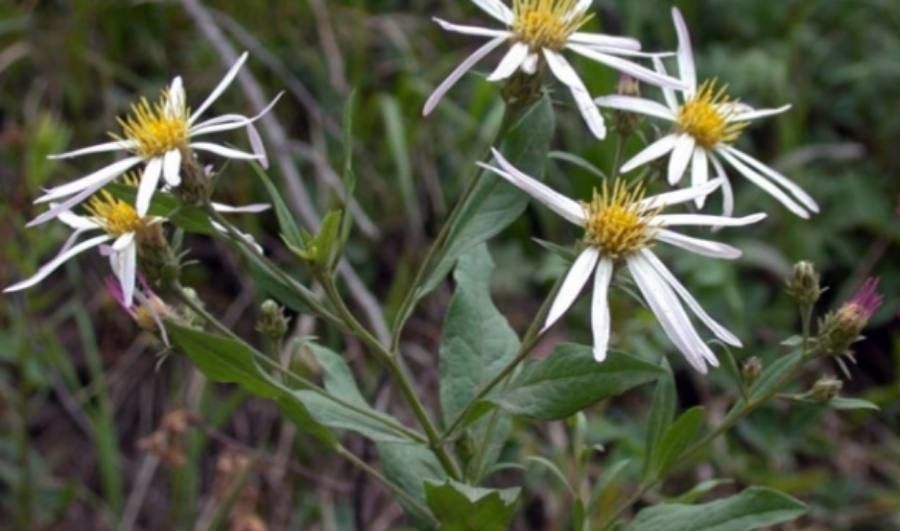
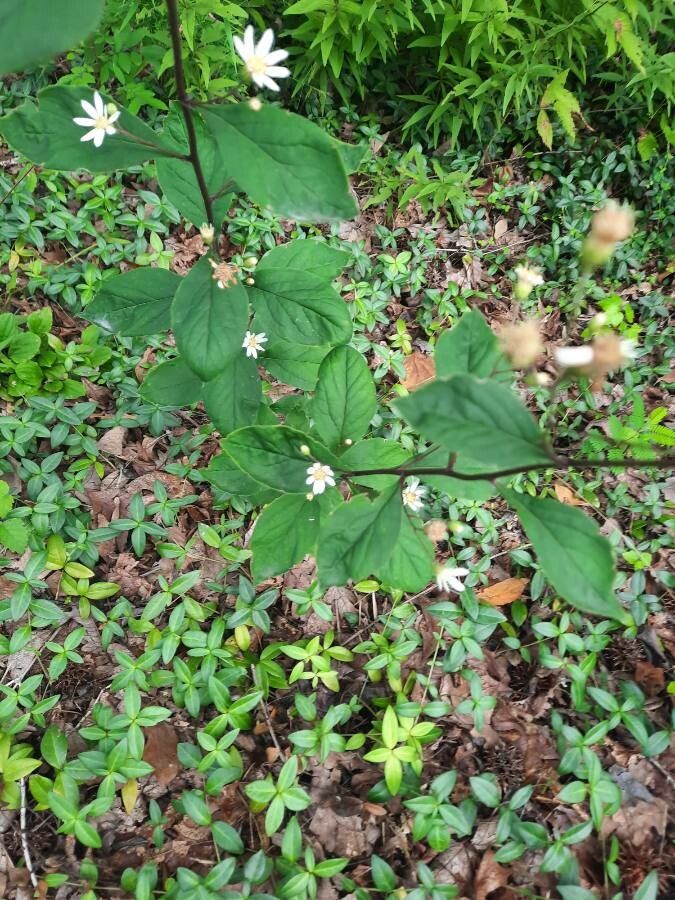
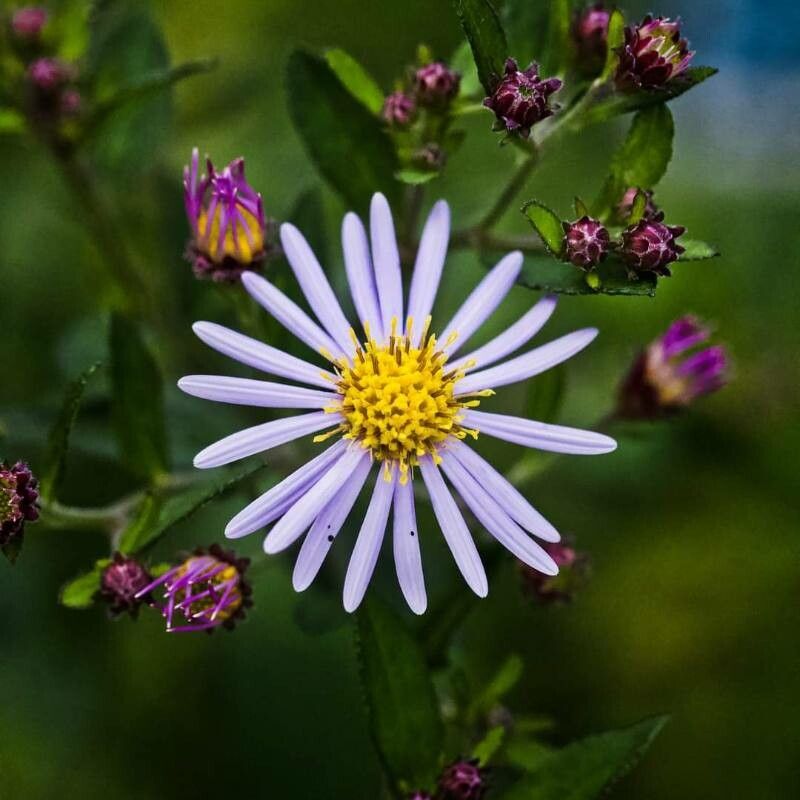
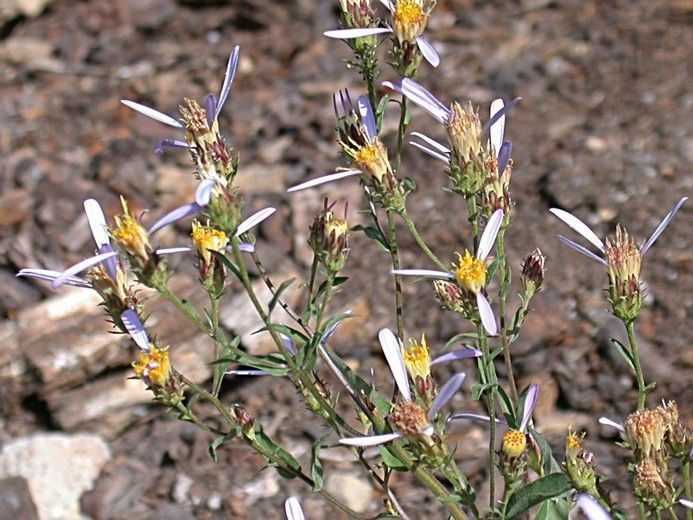
Doellingeria umbellata, commonly known as flat-topped aster or parasol whitetop, is a perennial herbaceous plant belonging to the Asteraceae family. Native to North America, it thrives in diverse habitats such as meadows, prairies, and open woods. This plant typically reaches a height of 3-4 feet and has a bushy appearance with numerous branches. The alternate, lance-shaped leaves feature serrated edges. The small flowers grow in large clusters at the top of the stem, forming a flat-topped inflorescence, which lends the plant its common name. Doellingeria umbellata blooms from late summer through fall, producing white or pinkish-purple ray florets surrounding yellow disk florets at their center. These flowers attract various pollinators, including bees and butterflies. This plant plays a vital role in the ecosystem, providing food for many bird species such as finches, sparrows, and juncos, and serving as a habitat for insects like butterflies. Overall, Doellingeria umbellata is a beautiful native wildflower that enhances natural landscapes and offers significant ecological benefits, making it an excellent choice for gardens or natural area restoration projects.
Parasol whitetop is fairly disease-resistant and typically does not suffer from many illnesses. However, it can be affected by pests and diseases present in its surroundings. Such infections are generally mild. Regarding care, this plant needs moderate maintenance. It should be pruned regularly to keep a neat appearance and encourage healthy growth. Applying fertilizer can also help encourage flowering. Parasol whitetop is suitable for those with outdoor areas like a garden or patio and doesn't demand extensive care experience. It may need extra attention when grown indoors.
How to keep Doellingeria Umbellata.
Light
Parasol whitetop typically does best when it can get sun all day, though it will also grow in places with moderate light. For strong growth, it needs conditions like its native, brightly sunlit habitat. Still, too much or too little sunlight can harm its development.
Water
Parasol whitetop thrives in moist meadows, preferring well-hydrated soil. To maintain the right moisture balance, it should be watered weekly. Its perennial nature allows it to take advantage of rainfall, thus requiring less irrigation during the active growing season.
Temperature
The parasol whitetop does best in temperatures of 32 to 95 ℉ (0 to 35 ℃), so it is well suited to temperate regions. Its native habitat features a moderate temperature span and stable humidity. In summer, it’s advisable to give it some shade and water it more to help it cope with higher temperatures.
Fertilizer
A single spring application of fertilizer is generally enough for Parasol whitetop, though repeated feedings can further encourage growth. Feed every month to a month and a half. Fertilizing improves the appearance and function of the leaves, helping them maintain even color and a healthy texture. It also encourages root development and nutrient uptake for sustained plant health.
Pruning
To keep Parasol whitetop healthy and attractive, prune it from early to late spring. This encourages blooming and prevents the plant from becoming leggy. Begin by removing any dead stems, trimming off spent blooms, and cutting back the plant by one-third to promote bushiness. Regular pruning also improves airflow, reducing the risk of disease.
Botanical profile.
- Plant Type
- Herb
- Life Cycle
- Perennial
- Genus
- Doellingeria
- Family
- Asteraceae
- Hardiness Zone
- 3-9
- Mature Height
- 0.61 m to 2.13 m
- Mature Spread
- 91 cm
- Leaf Color
- Green
- Leaf Type
- Deciduous
- Flower Color
- White
- Flower Size
- 2.54 cm
- Bloom Time
- Mid summer
- Planting Time
- Spring, Summer
- Harvest Time
- Mid summer, Late summer
Other names.
Reader questions.
How should I water my Parasol whitetop plant?
To ensure the health of the Parasol whitetop plant, follow these guidelines for watering. It is best to use filtered water at room temperature, as tap water may contain harmful particles. The plant is accustomed to warm environments, so avoid using cold water, which can be a shock to its system. Additionally, do not water from above as this can cause issues with the foliage. Instead, apply the filtered room temperature water directly to the soil until it is fully soaked. This helps moisten the roots and promotes nutrient absorption.
Why do I have to put fertilizer on my Parasol whitetop plant?
The main structure of the Parasol whitetop is composed of its leaves. Fertilization is an important way to ensure that the leaves not only look great but also function properly. Proper fertilization will result in consistent leaf color and a healthy texture. Additionally, fertilization benefits the plant below the soil's surface by promoting the growth of new roots and maintaining existing roots. This not only keeps the plant healthy in the present, but also enhances its ability to absorb nutrients from the soil in the future.
What are the sunlight requirements for growing Parasol whitetop?
Parasol whitetop needs full sun, which is above 6 hours of sunlight, or partial sun, about 3-6 hours of sunlight, to thrive. It is important to watch how sunlight moves through your garden to ensure you choose spots that provide the perfect balance of light and shade for your plants. This ensures their optimal growth and happiness.
What are the ideal temperature conditions for parasol whitetop plants?
Parasol whitetop plants prefer temperatures between 32°F (0°C) and 95°F (35°C), adapting them well to temperate climates. They thrive in environments with moderate temperature ranges and consistent humidity levels. During summer, it's advisable to provide shade and increase watering to help them cope with high temperatures. These plants have a strong resistance to cold, making special frost protection measures unnecessary in winter. However, if temperatures are expected to drop below -35°C, it's important to protect them by covering them with soil or straw. Additionally, abundant watering before the first freeze of autumn helps keep the soil moist and prevents drought stress during winter and early spring.
What should I do if I give my Parasol whitetop plant too much water or too little water?
Both overwatering and underwatering can harm your Parasol whitetop. However, overwatering is a more common issue. When overwatered, the stems and leaves may wilt and turn yellow, and it can also cause diseases like root rot, mold, and mildew that can be fatal to the plant. Underwatering is less likely for the Parasol whitetop, as it is somewhat drought-tolerant. But it is still possible, and in such cases, the leaves may become brittle and brown. It is crucial to promptly notice signs of overwatering to prevent irreversible damage. If you observe these signs, reduce watering immediately and check the soil's drainage. Replace poorly-draining soil with a loose, well-draining potting mix. Conversely, if you notice signs of underwatering, increase watering until the symptoms improve.
When should I fertilize my Parasol whitetop to get the best results?
If you grow your Parasol whitetop outdoors, it will send out new growth in early spring. This is when you should start fertilizing it for the year. Usually, one application of fertilizer is enough for the Parasol whitetop to thrive. However, if you want to maximize its growth, you can fertilize it multiple times throughout spring and early summer. In this case, you can feed it about once every month to a month and a half.
How essential is sunlight for the growth of Parasol whitetop?
Sunlight is crucial for the robust growth of Parasol whitetop, as it thrives in conditions where it can absorb the sun's rays throughout the day. It also manages to grow in areas with moderate light exposure. However, overexposure to sunlight or inadequate sunlight can adversely affect its growth. To aid in situations where natural sunlight is insufficient, especially indoor, artificial lighting can be used to promote healthier growth. LED lights are recommended for their ability to be customized to the specific wavelengths needed by plants, and they should be placed 12-36 inches above the plant for 8-12 hours per day.
How does parasol whitetop react to low temperatures, and what are the solutions if it is affected?
Parasol whitetop is cold-tolerant, performing best above 0°C, and should be maintained above -30°C during winter. When temperatures fall below -35°C, the plant may not show changes in winter but could experience decreased sprouting or fail to sprout in spring. If affected, it's recommended to remove any parts that have failed to sprout in spring as a solution to this issue.
How frequently do I need to water my Parasol whitetop?
If your Parasol whitetop plant is in a pot, the best way to determine if it needs water is by checking the soil. Simply stick your finger into the soil and if the top two to three inches feel dry, it's time to water. If you have your Parasol whitetop planted outdoors in the ground, you can use a similar method to test the soil. Once again, if the top few inches of soil are dry, it's time to water. Typically, you'll need to water this plant about once a week during the spring and early fall. However, during extremely hot weather, you may need to increase watering to twice or even more times a week. It's worth mentioning that mature, well-established Parasol whitetop plants can handle drought well.
When is it not a good idea to fertilize my Parasol whitetop plant?
During the late fall and winter, your Parasol whitetop enters a dormant phase and stops producing new growth. Therefore, it is advisable not to fertilize it during this time. In spring and summer, if you opt for multiple fertilizations, gradually reduce the rate as summer approaches because the growth rate of your Parasol whitetop will decrease as well. In general, it is not recommended to fertilize your Parasol whitetop during extremely hot weather or when the soil is unusually dry. Doing so can put stress on the plant and result in premature death.
What are the symptoms of inadequate sunlight exposure in Parasol whitetop?
Symptoms of inadequate sunlight exposure in Parasol whitetop include smaller new leaves, leggy or sparse growth, faster leaf drop, slower or no new growth, lighter-colored new leaves, chlorosis, sunscald, leaf curling, wilting, and leaf scorching. These symptoms indicate the plant is not receiving its required amount of sunlight to maintain healthy growth and photosynthesis.
What should be done if parasol whitetop is affected by high temperatures?
During summer, it's crucial to keep parasol whitetop below 35°C, as exceeding 38°C can cause leaves to lighten in color, curl, become prone to sunburn, and in severe cases, the entire plant may wilt and dry out. To mitigate high temperature effects, trim away sunburned and dried parts, move the plant to a shaded location, particularly from midday and afternoon sun, or use a shade cloth. Also, watering the plant in the morning and evening helps maintain soil moisture and protect the plant.