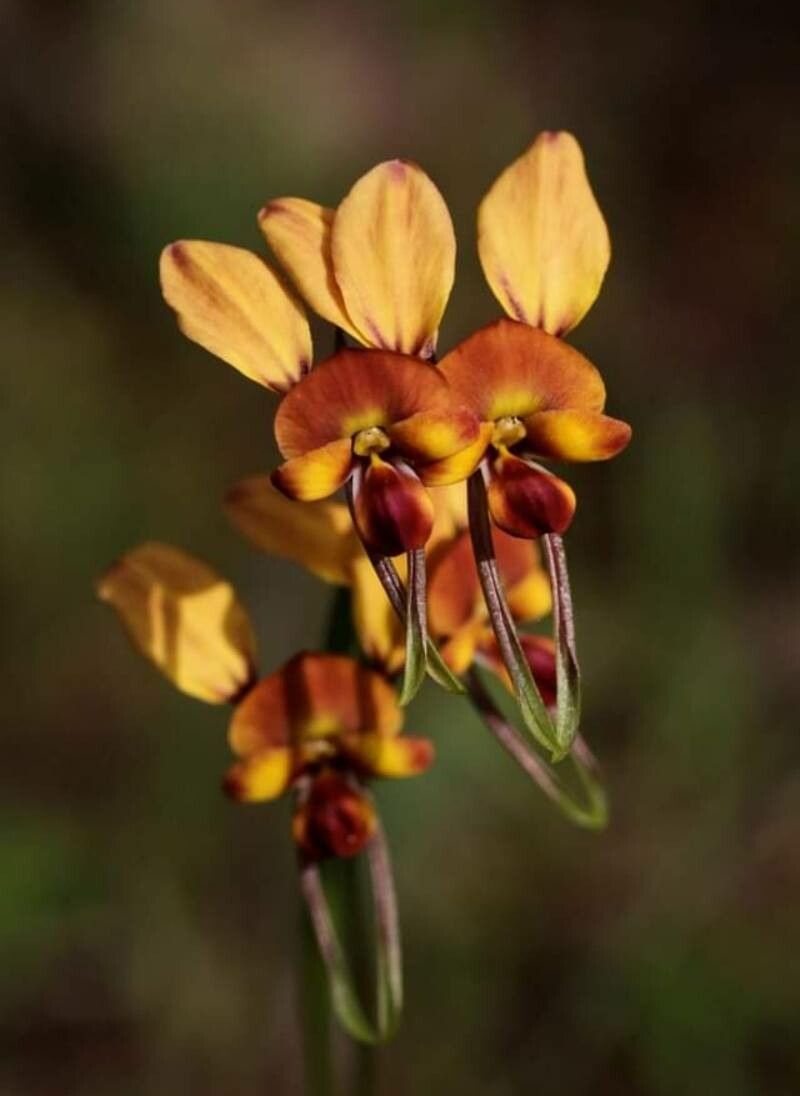
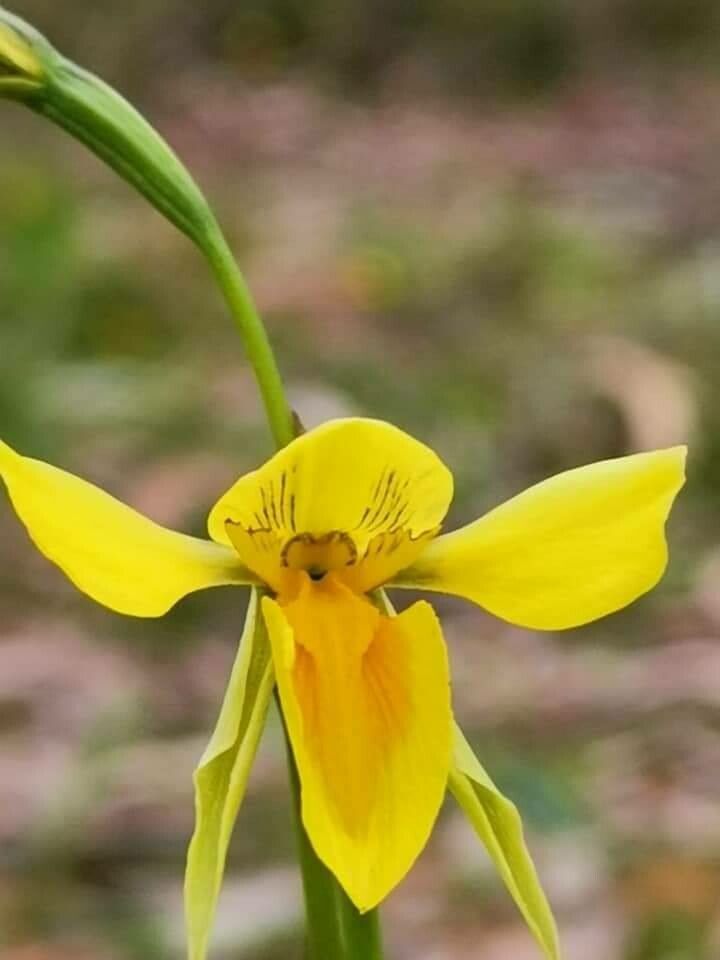
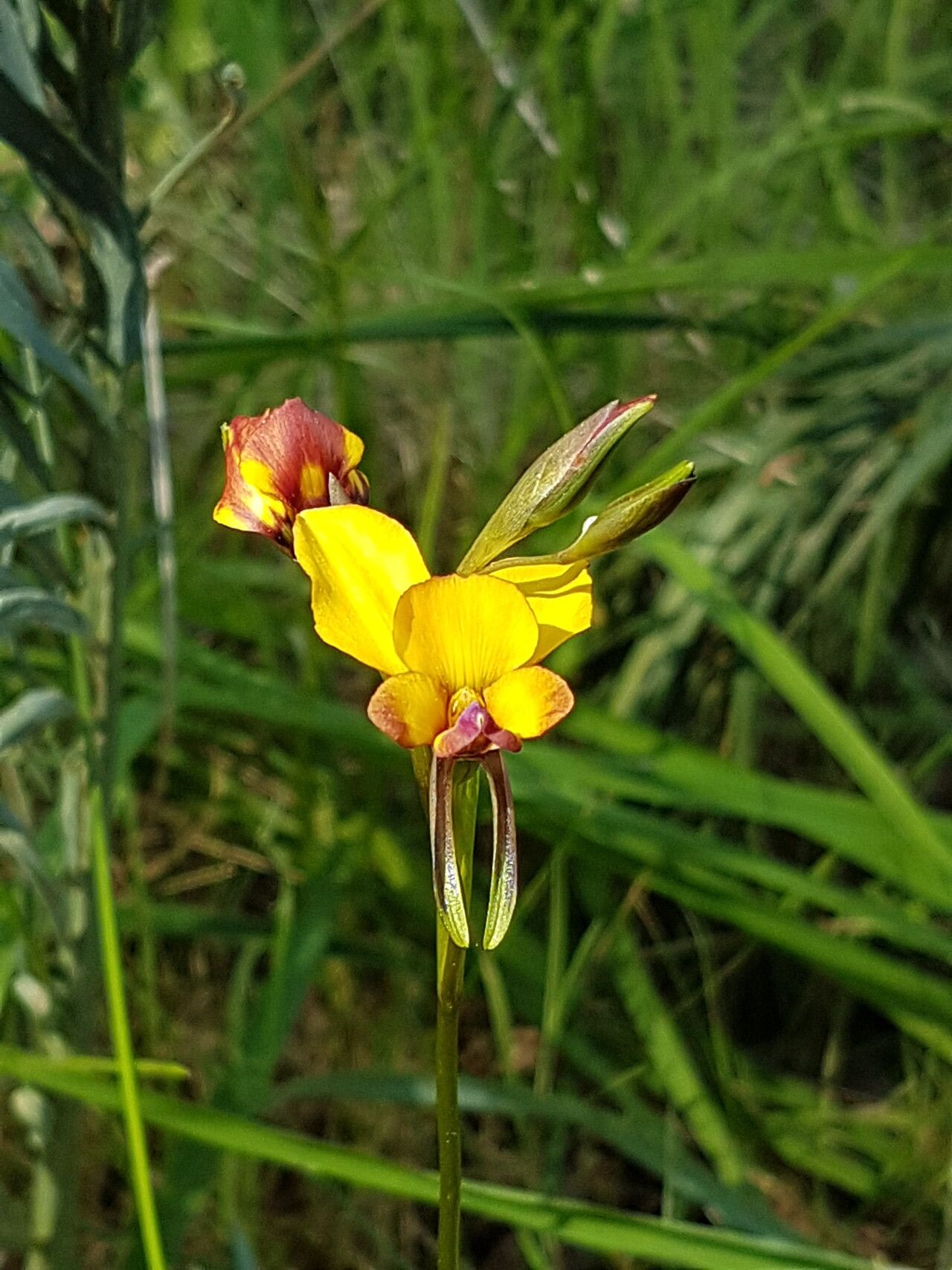
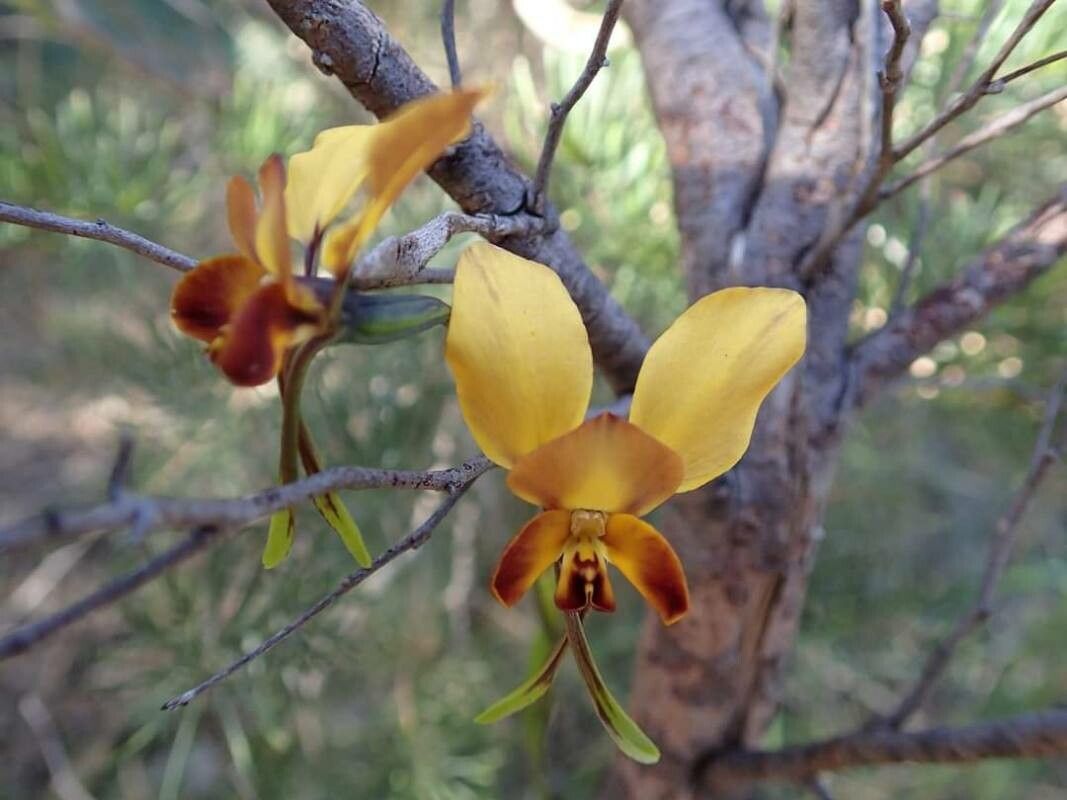
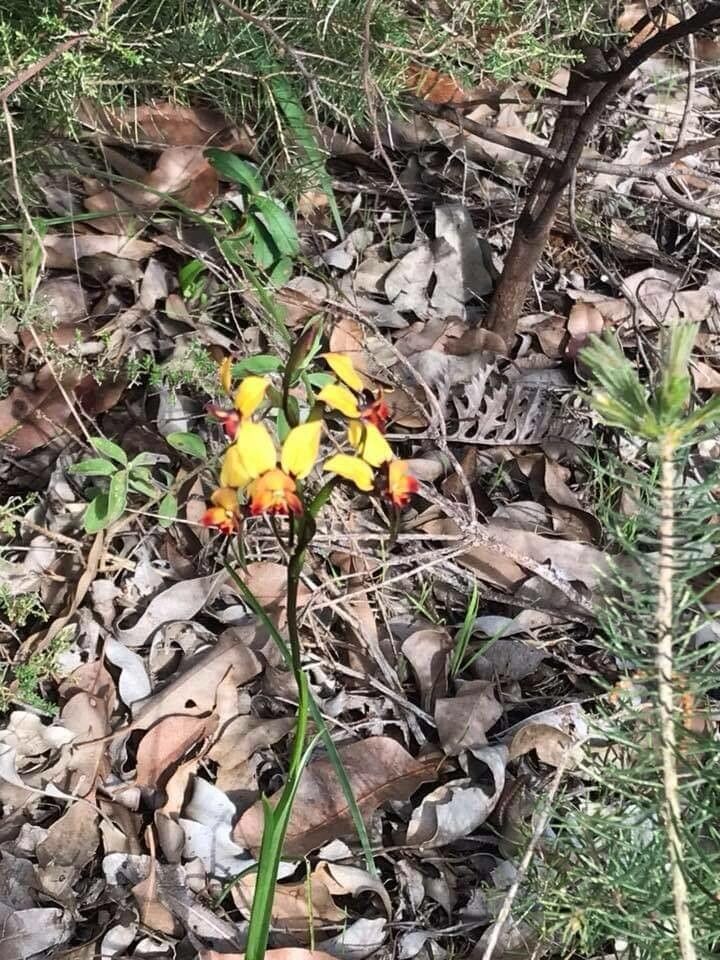
Diuris orientis, commonly called the wallflower orchid or eastern wallflower orchid, is a species of orchid which is endemic to eastern Australia. Like others in the genus Diuris, it has two ear-like petals and is similar to the common donkey orchid (Diuris corymbosa) of Western Australia with which it has been confused. This species is found in New South Wales, Victoria, South Australia and Tasmania and its stalk-like petal "claw" is shorter in than those of D. corymbosa.
Wallflower orchid typically shows strong resistance to disease and is affected by relatively few insect pests. Its care is regarded as challenging, since it needs a high-humidity yet well-ventilated environment with few harmful pathogens. Too much watering can cause root rot. Although anyone can grow Wallflower orchid, keeping it healthy and inducing it to flower again requires greater growing experience.
How to keep Diuris Orientis.
Light
The wallflower orchid is native to the understory of tropical forests or to rocky sites that provide natural shade. It prefers partial sun but can withstand full sun, adapting well to different light conditions.
Water
The wallflower orchid, which comes from areas with distinct seasons, thrives best with a consistent cycle of watering and drying. It should be watered weekly. During its active growth phase, the plant benefits from higher humidity levels, which boost its health and enhance its floral display.
Temperature
Wallflower orchid is naturally suited to warmer climates, growing best in temperatures from 68 to 100 °F (20 to 38 ℃). For indoor winter care, using heat lamps and placing the plant near sunny windows is helpful.
Fertilizer
Proper fertilization is essential for the health and appearance of the Wallflower orchid. Fertilize the Wallflower orchid in summer, repeating the treatment monthly throughout the season. Nutrients provide the energy for growth and help maintain the plant's structures. Fertilization improves the Wallflower orchid’s floral display, ensuring optimal blooms.
Pruning
The Wallflower Orchid benefits from pruning between early and late spring. Focus on removing dead or damaged leaves and spent flowers to promote optimal growth and nutrient distribution. Prune after flowering to enhance blooming potential and maintain the plant's health. For detailed care instructions, consult horticultural guides tailored to this plant.
Botanical profile.
- Plant Type
- Herb
- Life Cycle
- Perennial
- Genus
- Diuris
- Family
- Orchidaceae
- Hardiness Zone
- 9-11
- Mature Height
- 11 cm to 34 cm
- Mature Spread
- 10 cm to 20 cm
- Leaf Color
- Green, Blue
- Leaf Type
- Deciduous
- Flower Color
- Yellow, Red, Brown
- Flower Size
- 5.08 cm
- Bloom Time
- Mid spring, Late spring
- Planting Time
- Spring, Summer
- Harvest Time
- Early summer, Mid summer
Other names.
Reader questions.
What are the sunlight requirements for Wallflower Orchid?
Wallflower Orchid, also known by its botanical name Diuris orientis, thrives in partial sunlight, requiring about 3-6 hours of sunlight daily. It is adapted to grow in the understory of tropical forests or amongst rocks, providing it natural shade. However, it can also tolerate full sun, adapting well to varying light conditions. It's important to observe the movement of sunlight through your garden to choose the best spots that offer the right balance of light and shade, ensuring the plant's health and happiness.
What is the natural habitat requirement for Wallflower orchid?
Wallflower orchid, scientifically known as Diuris orientis, is naturally adapted to warmer climates and thrives best in temperatures ranging from 68 to 100 °F (20 to 38 °C). This tropical plant requires ample sunlight and high humidity levels, making it essential to position it near sunny windows, particularly south-facing ones, and maintain adequate humidity by misting the plant regularly or using a humidifier. During winter, if the temperature drops below 32°F (0°C), it's recommended to bring the Wallflower orchid indoors and ensure indoor temperatures are kept above 68°F (20°C) for optimal growth.
How can artificial lighting be used for Wallflower Orchid indoors?
When natural sunlight is insufficient, especially during winter or in less sunny spaces, artificial lighting serves as a vital alternative to promote healthy growth in Wallflower Orchids. LED lights are recommended as they can be tailored to provide specific wavelengths needed by the plants. For full sun plants, 30-50W/sq ft of light is necessary; partial sun plants require 20-30W/sq ft, and full shade plants need 10-20W/sq ft. The light source should be placed 12-36 inches above the plant, simulating natural sunlight, and plants typically need 8-12 hours of light per day to mimic the duration of natural daylight.
How do I protect my Wallflower orchid from low temperatures?
To protect your Wallflower orchid from low temperatures, it's crucial to keep the plant in environments above 68°F (20°C) because it does not tolerate cold well. In winter, ensure the temperature remains above 32°F (0°C). If temperatures are predicted to fall below 23°F (-5°C), the leaves may suffer from water-soaked necrosis, leading to wilting and drooping. In such cases, trim off the frostbitten areas and move the plant indoors to a warm location, ideally near a south-facing window for ample sunlight. Avoid placing the plant near heaters or air conditioning vents to prevent the air from becoming too dry.
What symptoms indicate insufficient light for Wallflower Orchid?
Symptoms of light deficiency in Wallflower Orchids include small and lighter-colored new leaves, leggy or sparse growth, faster leaf drop, and slower or no new growth. These symptoms indicate the plant is struggling with light conditions and entering a survival mode, halting leaf production. In excessive sunlight, symptoms like chlorosis, sunscald, leaf curling, wilting, and leaf scorching can occur, affecting the plant's ability to photosynthesize and overall health.
What should I do if my Wallflower orchid is exposed to high temperatures?
During the summer, when temperatures soar above 100°F (38°C), Wallflower orchid's growth may cease, and its leaves can wilt or become sunburned, especially if temperatures exceed 109°F (43°C). The plant also becomes more prone to root rot under these conditions. To mitigate these issues, trim away the sunburned and dried parts of the plant. Move it to a location that receives shade during the midday and afternoon sun to protect it from excessive heat. Additionally, water the orchid in the morning and evening to maintain a moist environment around the plant, which helps in cooling.
What are the solutions for light-related issues in Wallflower Orchid?
To optimize Wallflower Orchid's growth indoors, it's beneficial to gradually move the plants to sunnier spots each week until they receive 3-6 hours of sunlight daily. If the plant is large or not easily movable, consider providing additional light through a desk or ceiling lamp for at least 8 hours daily or invest in professional plant grow lights. Outdoors, the gradual relocation of plants to sunnier locations each week can help them adapt without the risk of sunburn. Removing obstructions like trees that block sunlight and transplanting smaller plants during their dormant period to a sunnier location with good drainage are also effective strategies. Note that parts of the plant affected by insufficient sunlight may not recover, but new growth will be healthy after increasing light exposure.