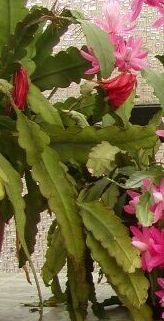
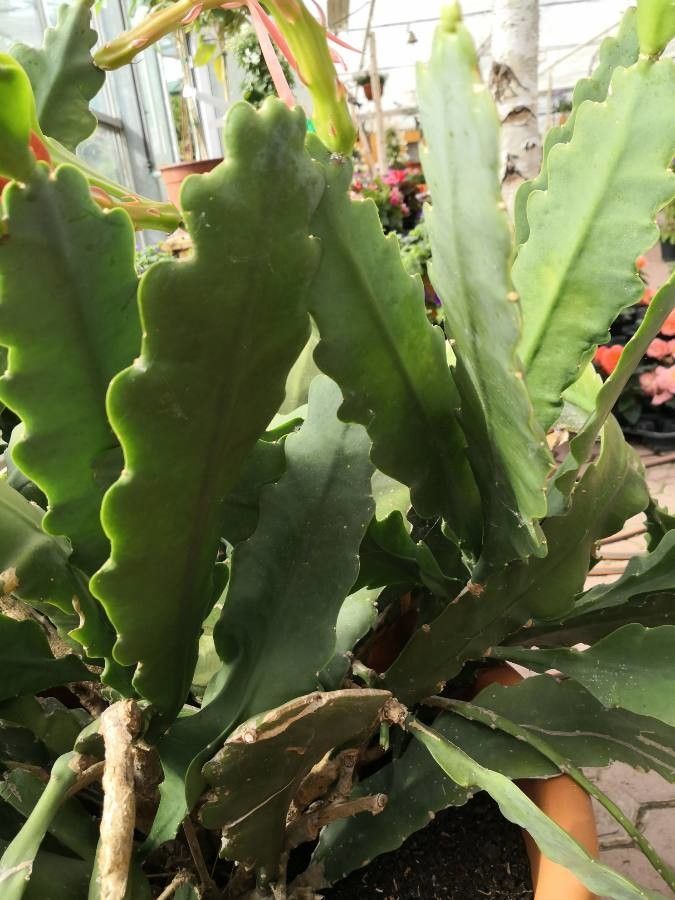
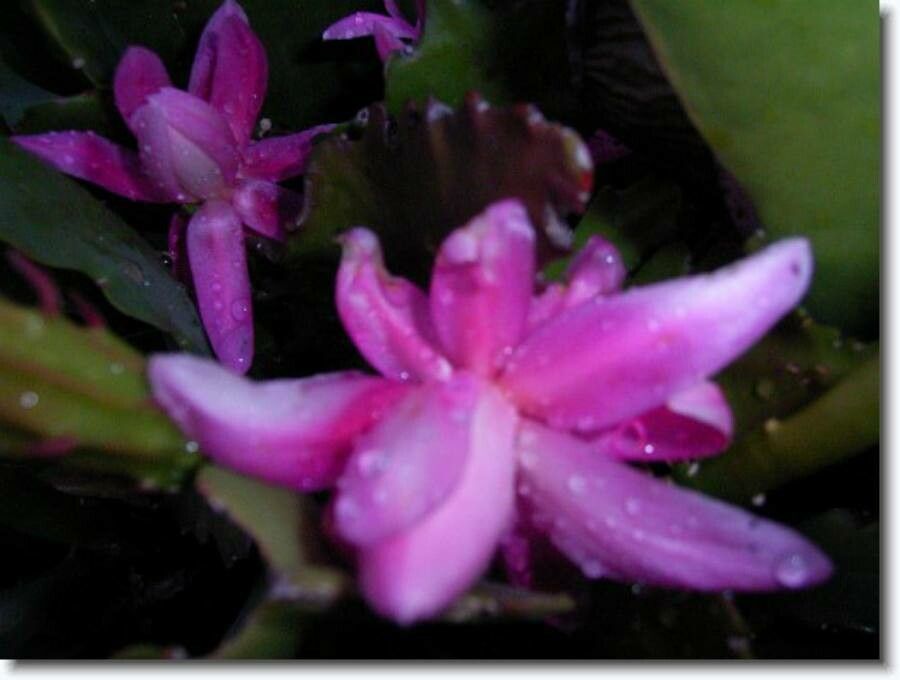
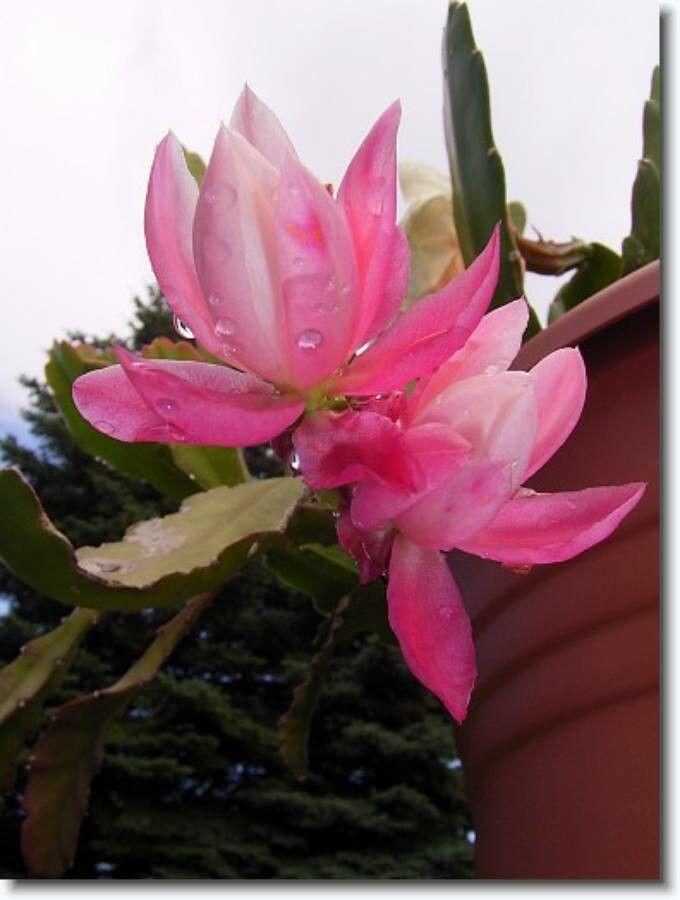
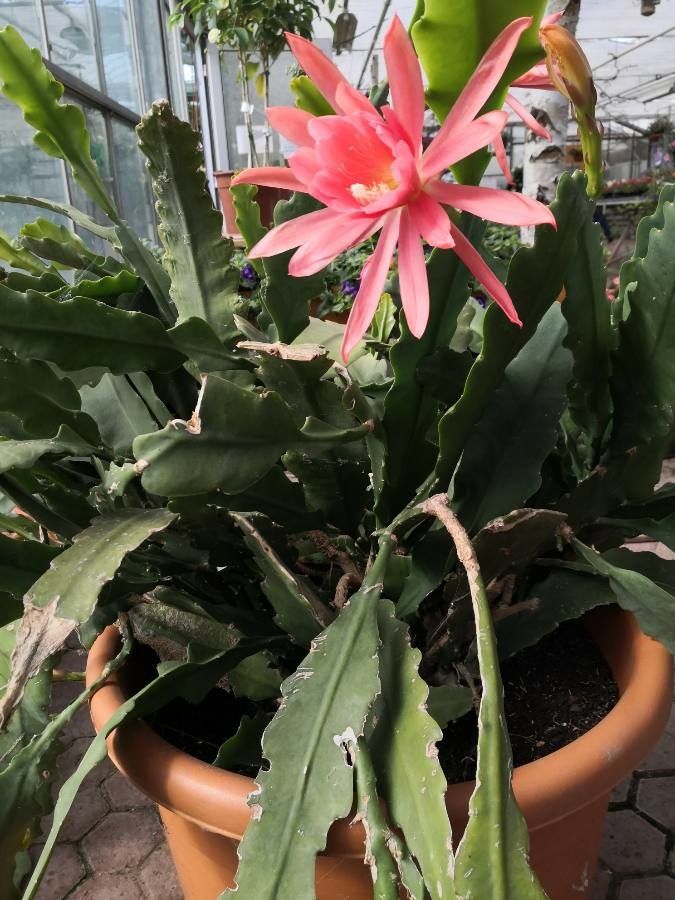
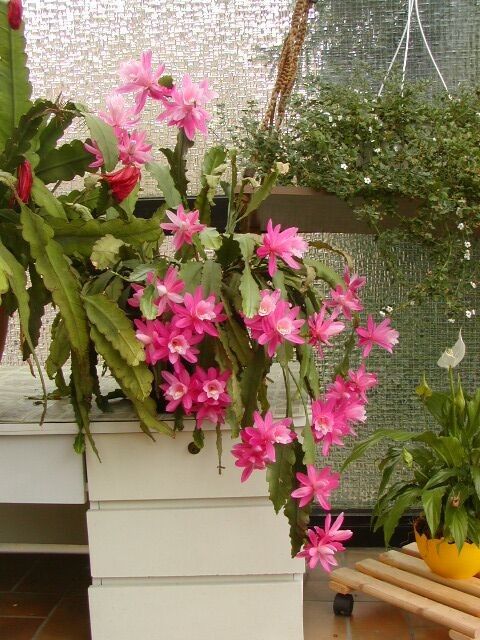
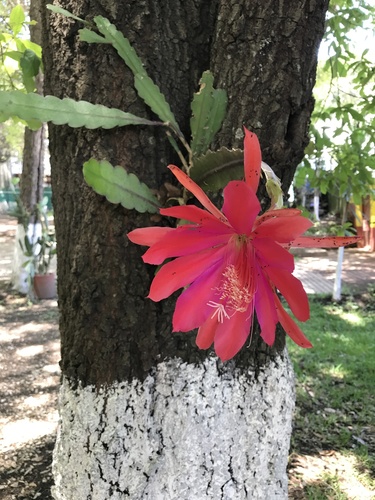
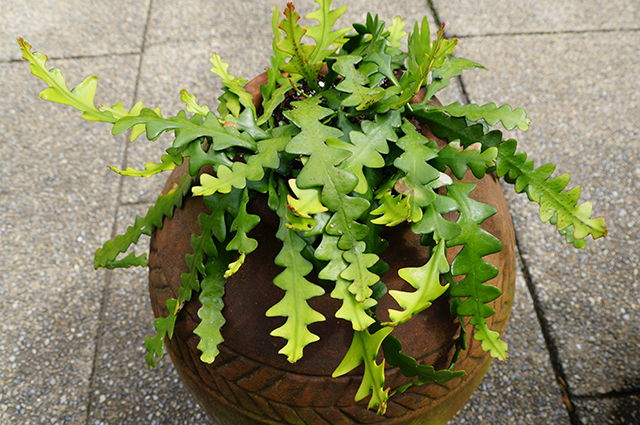
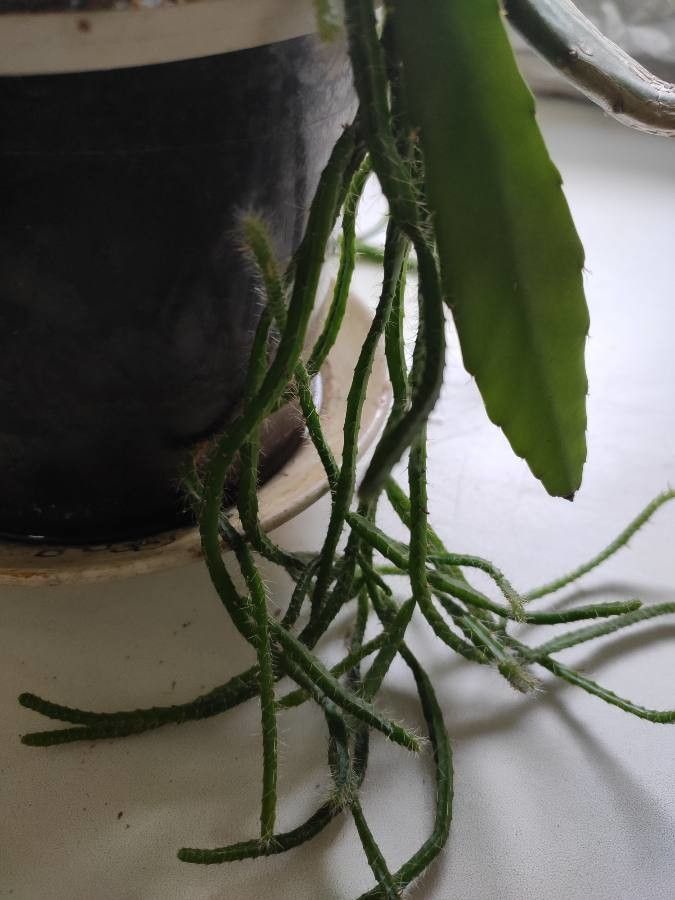
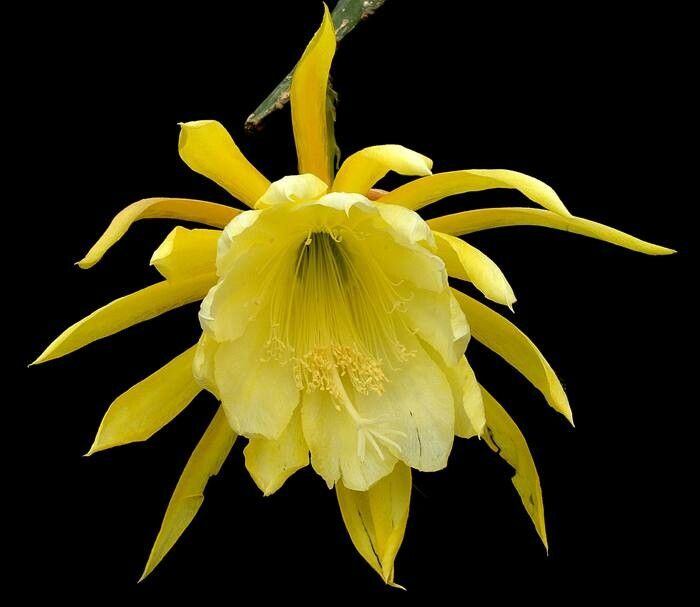
Disocactus phyllanthoides, the nopalxochitl or German empress, is a species of flowering plant in the cactus family Cactaceae. It is commonly grown as an ornamental houseplant. It is one of the three major species involved in creating the widely grown epiphyllum hybrids or "epis". The others are Disocactus speciosus and Disocactus crenatus.
Nopalxochitl has strong resistance to disease and generally remains healthy under normal care without becoming ill easily. That said, it can be vulnerable to mealybugs; these pests may cause some harm but are typically not a major risk. Regarding care, Nopalxochitl tolerates drought and does not require frequent watering. It can go for extended periods without water and needs little fertilizer. On the other hand, it is very prone to root rot if kept in poor light and given too much water. In summary, Nopalxochitl is a good choice for people who prefer low-maintenance plants, but its basic needs should still be met. It is especially appropriate for those who are away for long stretches and might forget to water their plants regularly.
How to keep Disocactus Phyllanthoides.
Light
Native to arid regions, Nopalxochitl prospers in full sun, its original habitat defined by intense sunlight and scarce shade. It will also tolerate partial sun, providing some flexibility in its growth.
Water
Nopalxochitl thrives in moist environments and prefers to be watered once a week. It can tolerate short dry spells, but benefits from regular misting. This misting mimics its tropical habitat, promoting lush growth and enhancing its flowering potential, making it well-suited for indoor conditions.
Temperature
Nopalxochitl does best in warm conditions and needs relatively high temperatures during the growing season to stimulate growth and metabolism. It prefers plenty of sunlight, proper moisture, and good air circulation. However, it can be damaged by very low temperatures and by overwatering. It is also important to maintain a balance and avoid temperatures that are too high or conditions that are too dry.
Fertilizer
Nopalxochitl needs light fertilizer applications once or twice a year during the growing season. Do not fertilize in winter or summer when it is dormant. Use less fertilizer for plants that have been repotted and wait a couple of months after repotting before feeding. Fertilizing helps maintain healthy growth and promotes blooming.
Pruning
Nopalxochitl is known for its vibrant pink flowers and flat green stems. To keep the plant healthy, it's best to prune it in early spring. This will improve air circulation and encourage more blooms. When pruning, use sterilized tools to make clean cuts just above the nodes. This will help rejuvenate the plant and prevent diseases.
Pot & Repot
Repot the Nopalxochitl in spring or summer, selecting a pot slightly larger than the current one that provides good drainage. Use a fast-draining, sandy or gritty cactus mix. Handle the plant carefully to avoid its spines. Allow the cactus to dry out before repotting to help prevent root rot. After repotting, wait one week before watering so the roots can heal.
Botanical profile.
- Plant Type
- Succulent
- Life Cycle
- Perennial
- Genus
- Disocactus
- Family
- Cactaceae
- Hardiness Zone
- 9-11
- Mature Height
- 91 cm
- Mature Spread
- 61 cm
- Leaf Color
- Dark Green
- Leaf Type
- Evergreen
- Flower Color
- Pink
- Flower Size
- 7.62 cm to 10.16 cm
- Bloom Time
- Mid spring, Late spring, Early summer
- Planting Time
- Spring, Summer, Autumn
- Harvest Time
- Summer
- Native Area
- Mexico
Other names.
Reader questions.
How should I water my Nopalxochitl plant to keep it healthy?
To properly water the Nopalxochitl, it's crucial to understand the different approaches. Many may wonder if they should water from top to bottom or vice versa. According to experts, the recommended method is to begin watering from the bottom. This approach guarantees adequate water supply reaches the plant's roots. Starting from the top leads to insufficient saturation, resulting in water trickling and evaporating rather than nourishing the roots.
What is the common name and botanic name of the plant being discussed?
The plant being discussed is commonly known as Nopalxochitl and its botanic name is Disocactus phyllanthoides.
What is Nopalxochitl?
Nopalxochitl, known botanically as Disocactus phyllanthoides, is a plant species without further detailed information provided in the given data.
What should I do if my Nopalxochitl doesn't get enough water?
If you find that your flowers are drying out despite watering them regularly, the issue may be with the container they are planted in. In this case, choose a larger container with good drainage. It's important to use the right potting soil and clean sand mixture to help the plant absorb more water easily. This species is an epiphyte and cannot handle soggy roots, as it obtains water and nutrients from the air. Therefore, proper drainage is necessary to prevent fungal infections. If your cactus becomes limp, you can transfer it to fresh soil. Gently remove as much of the old soil as possible and keep the new soil evenly moist. Mist the cactus frequently if possible. After the flowers have finished blooming, reduce watering until new buds appear. Be careful not to let the soil dry out too much, as this can cause the buds to drop. Underwatering followed by overwatering is a common mistake made by many owners of these succulent cacti. The lack of water may not be noticeable until it's too late, so it's important to pay attention to signs of wilting or withering. While it is tempting to overcompensate with excessive watering, this can lead to desiccated roots that cannot take in any more water. This can result in waterlogged plants and rotting roots. If you notice signs of underwatering, you can try to revive the cactus by providing regular and frequent, yet controlled, watering. Give the cactus a chance to regenerate and recover its roots without overdoing it.
What are the sunlight requirements for Nopalxochitl?
Nopalxochitl requires full sun, which means it needs more than 6 hours of sunlight daily. It can also tolerate partial sun, receiving about 3-6 hours of sunlight daily. It's important to observe the way sunlight moves through your garden to find the perfect spots that offer a balance of light and shade, ensuring the plants' thriving conditions.
How much water does my Nopalxochitl need?
To keep the Nopalxochitl healthy throughout the year, it's important to properly water it and use well-draining soil. The amount of water needed may vary, but a good rule of thumb is to water when about 1/3 of the topsoil is dry. Nopalxochitls are thirstier than other succulents, so watering once a week should be sufficient. Check the soil by using your fingers to see if it is about two inches dry. If the top layer of soil is very dry, water until it drains through the pot's drainage holes, with a tray underneath to catch any excess water. After about 10 to 15 minutes, discard the excess water. During the flowering stage, water sparingly, especially when you notice the leaves drooping. Adding pebbles to the saucer of the pots and adding water to the pebbles can increase humidity for the Nopalxochitl. Avoid letting the pot sit in water, especially during winter when the soil takes longer to dry and can lead to root rot. Consider the climate and adjust watering accordingly. In dry and hot climates, watering twice a week may be necessary, while in humid areas, once a week may be sufficient. Water less frequently in fall and winter to encourage flower blooming. Higher sunlight exposure increases moisture evaporation, so more watering may be needed in these conditions. On the other hand, if the plant is in a cool or humid place, watering should be less frequent.
What will happen if I give too much water to my Nopalxochitl?
Sometimes, if you give your Nopalxochitl too much water, it may start looking limp or wilted. So, if you have neglected it for too long, water it a little bit. Keep watering it sparingly until you notice that the soil is slightly moist. It is important to avoid overwatering because it can cause a fungal infection called white rot. This can make the leaves droop and result in wilting. However, it is also important to not underwater the cactus because they do not tolerate dry soil. If the soil is too dry, the flowers may start falling off, which is not ideal.
Is it necessary to change how often I water my Nopalxochitl plant based on the seasons?
The cold months and hot months differ in temperature and soil moisture. During winter and fall, temperatures drop and the soil takes longer to dry. As a result, succulents do not require frequent watering. These seasons are ideal for the Nopalxochitl to display its beautiful blooms. To maintain the plant's health, water sparingly. In October, refrain from watering when the soil is already saturated. Resume watering in November, but keep the moisture levels light while temperatures are still cool. When the blooms start to emerge, avoid watering for a few weeks to allow the plants to recover from excess moisture. These plants are prone to damage, so once you notice new growth, you can resume watering once a week if necessary.
Should I water my Nopalxochitl differently when I plant it inside compared to outside?
Considering the location of your plant is important for determining its watering needs. If the plant is near a window or outdoors, the air may be dry and temperatures high, requiring watering approximately twice a week. On the other hand, if the plant is growing indoors in a humid and cool environment, it will need less frequent watering. The amount of indirect sunlight the plant receives also affects its watering needs, as soil tends to dry out more slowly. In this case, a succulent would typically be fine with watering once a week. However, it is still important to regularly check the soil's moisture level with a moisture meter to ensure the plant is receiving the appropriate amount of water.