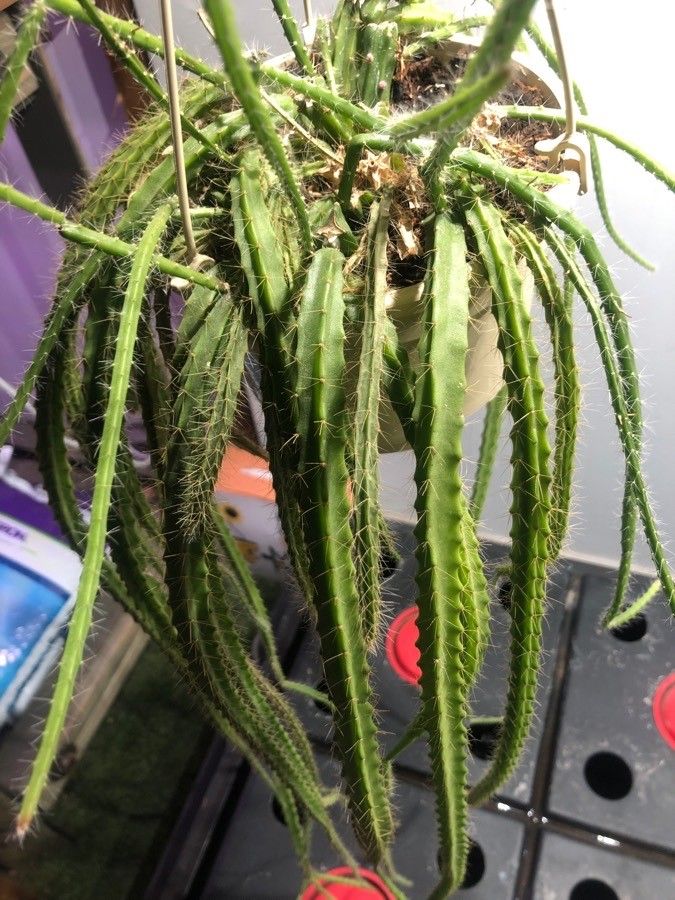
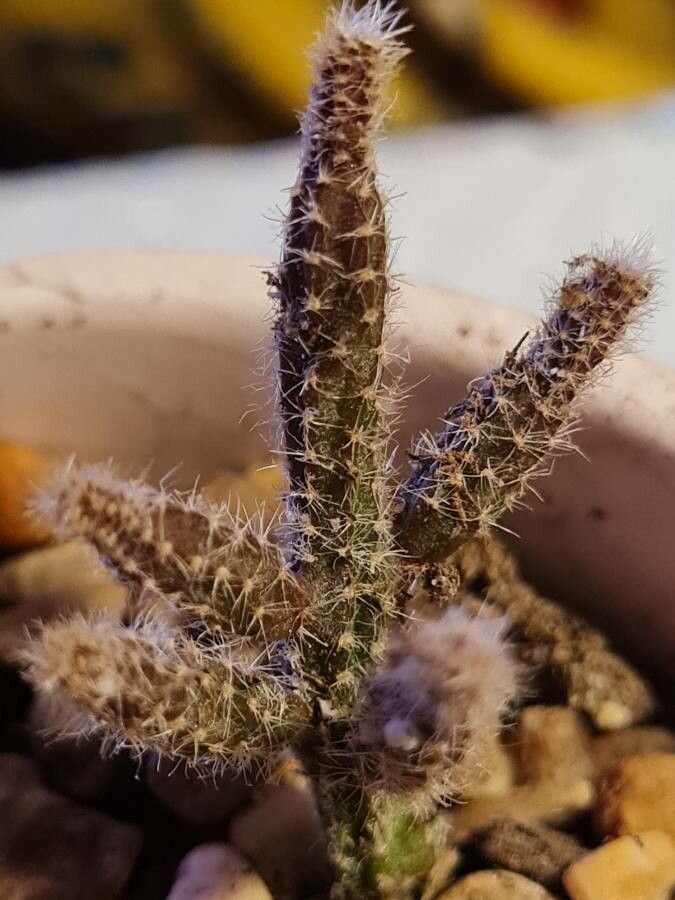
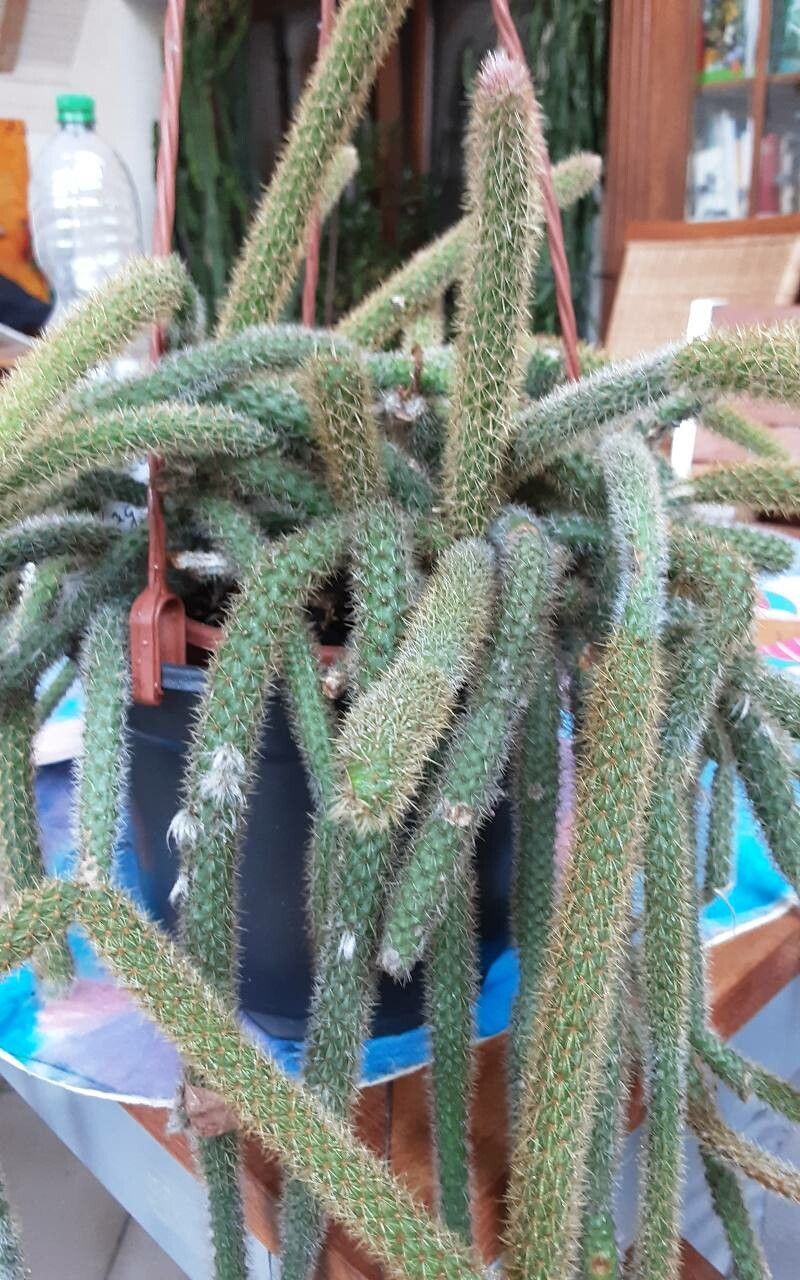
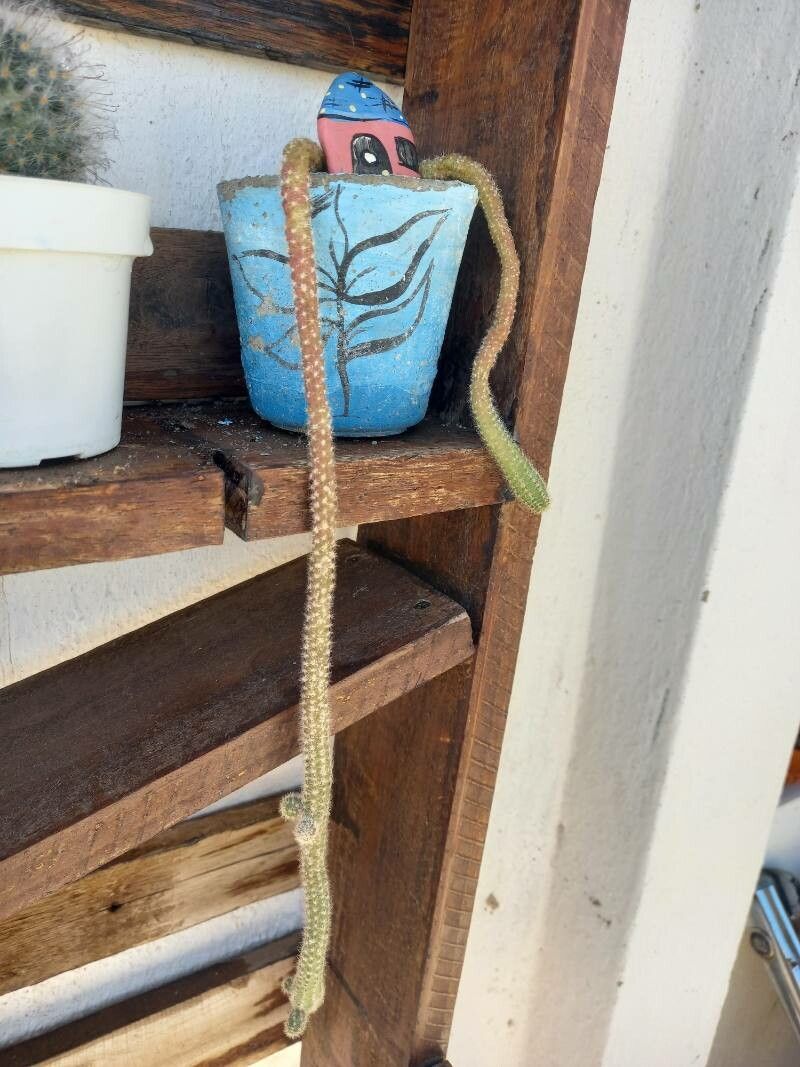
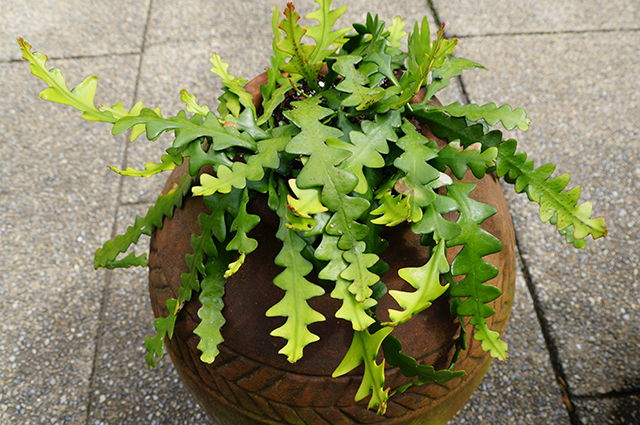
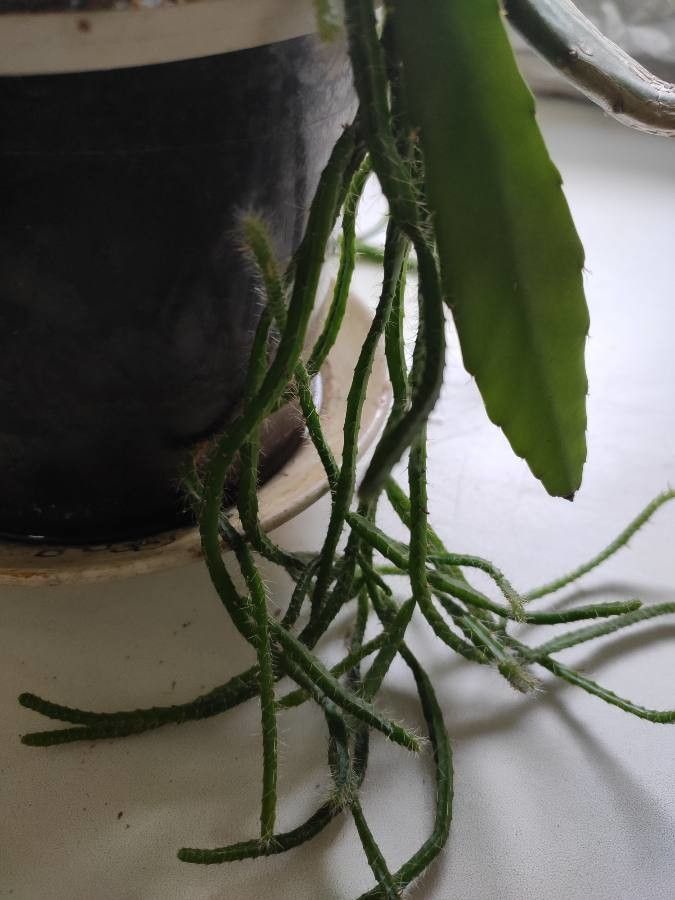
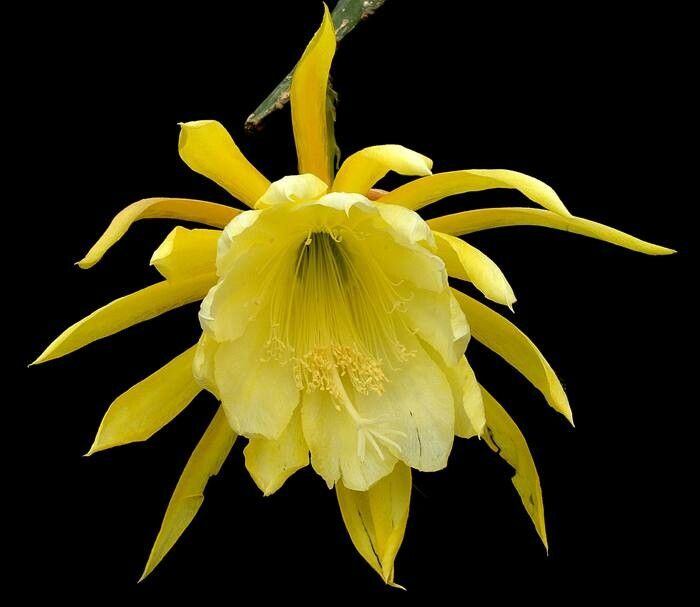
Disocactus flagelliformis, commonly known as the rat tail cactus, is a distinctive and fascinating plant from the Cactaceae family. Native to Mexico and Central America, it is often kept as a houseplant due to its striking appearance.
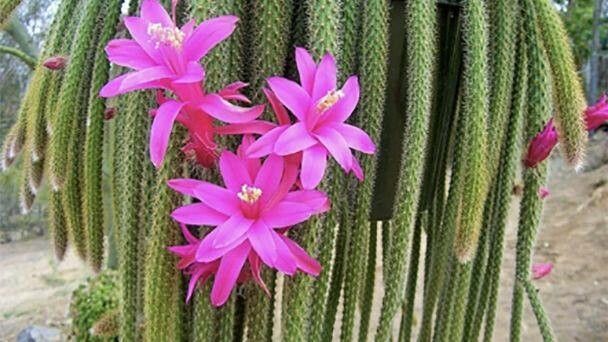
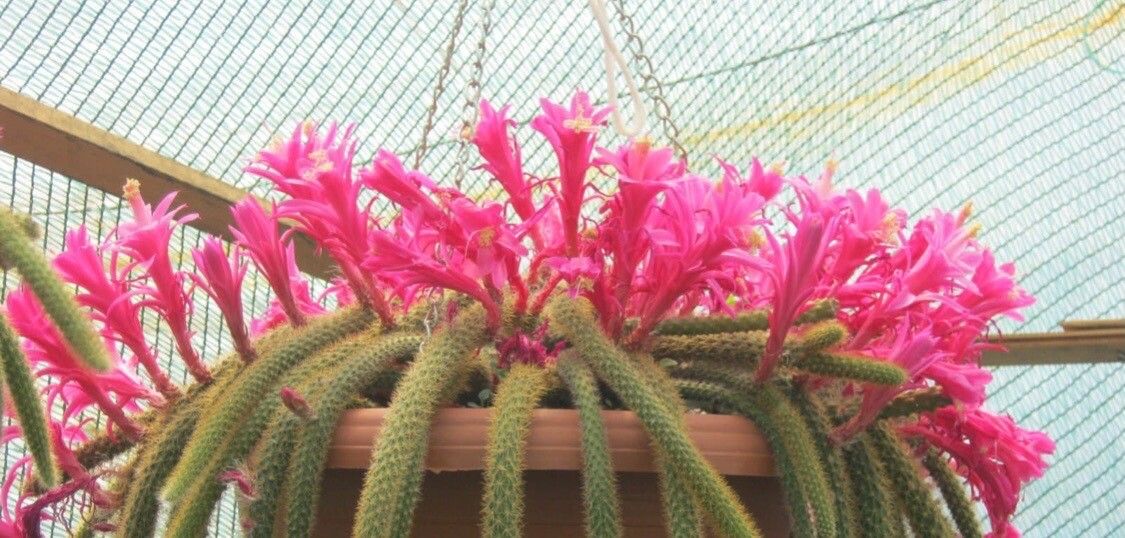
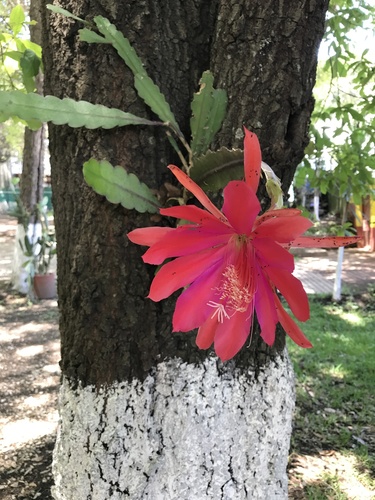
This plant features long, thin stems that can reach several feet in length. These segmented stems are lined with small spines along their edges. In the spring or summer, Disocactus flagelliformis produces bright pink or red flowers, adding to its allure.
The rat tail cactus thrives in bright but indirect sunlight and well-draining soil. It requires moderate watering during its growing season. Propagation is straightforward, as it easily roots from stem cuttings.
Overall, Disocactus flagelliformis is a low-maintenance plant that brings a unique touch of greenery to any indoor space with its trailing stems and vibrant flowers.
Rattail cactus is fairly disease-resistant and can handle typical care without becoming sick easily. That said, it can be vulnerable to mealybugs; these pests can cause some harm but are usually not a major danger. Regarding care, Rattail cactus tolerates drought and does not need frequent watering. It can go long stretches without water and requires little fertilizer. However, if light is poor and it is overwatered, it is very prone to root rot. In general, Rattail cactus is a good choice for people who prefer to spend less time on plant care, though it remains important to know and meet its basic needs. It is especially appropriate for those who are away for long periods and may forget to water regularly.
How to keep Disocactus Flagelliformis.
Light
The rattail cactus grows best with ample sunlight, though it can also cope in places with moderate light. Its origin in habitats that receive abundant daily sunshine indicates a natural reliance on those conditions for healthy development. Excessive or insufficient light can stunt its growth or even harm the plant.
Humidity
This plant prefers dry conditions, so don't mist it. However, watering it less often can also thrive in higher humidity.
Temperature
The rattail cactus does well in its natural growing environment when temperatures are between 60℉ (15.5℃) and 90℉ (32℃). Its preferred temperature range is 68℉ (20℃) to 100℉ (38℃). In colder seasons, it is advisable to place the rattail cactus cactus in bright, indirect light at temperatures of 50℉ (10℃) to 60℉ (15.5℃). During warmer seasons, the cactus requires a well-ventilated location to prevent overheating.
Fertilizer
For Rattail cactus, light applications of fertilizer once or twice a year during the growing season are sufficient. Avoid fertilizing in winter and in summer when it's dormant. Cut back on fertilizer for repotted plants and wait a couple of months after repotting before you fertilize. Fertilizing promotes healthy growth and helps produce blooms.
Pot & Repot
Repot a rattail cactus in spring or summer, selecting a pot slightly larger than the current one that has good drainage. Use a sandy or gritty cactus mix that drains well. Handle it carefully to avoid its spines. Let the cactus dry out before repotting to help prevent root rot. After repotting, wait one week before watering to allow the roots to heal.
Botanical profile.
- Plant Type
- Succulent, Shrub, Vine
- Life Cycle
- Perennial
- Genus
- Disocactus
- Family
- Cactaceae
- Hardiness Zone
- 10-12
- Mature Height
- 0.91 m to 2.13 m
- Mature Spread
- 10 cm
- Leaf Color
- Green
- Leaf Type
- Evergreen
- Flower Color
- Purple, Red
- Flower Size
- 2.03 cm to 4.06 cm
- Bloom Time
- Late spring, Early summer
- Planting Time
- Spring, Summer, Autumn
- Harvest Time
- Early summer, Mid summer
Other names.