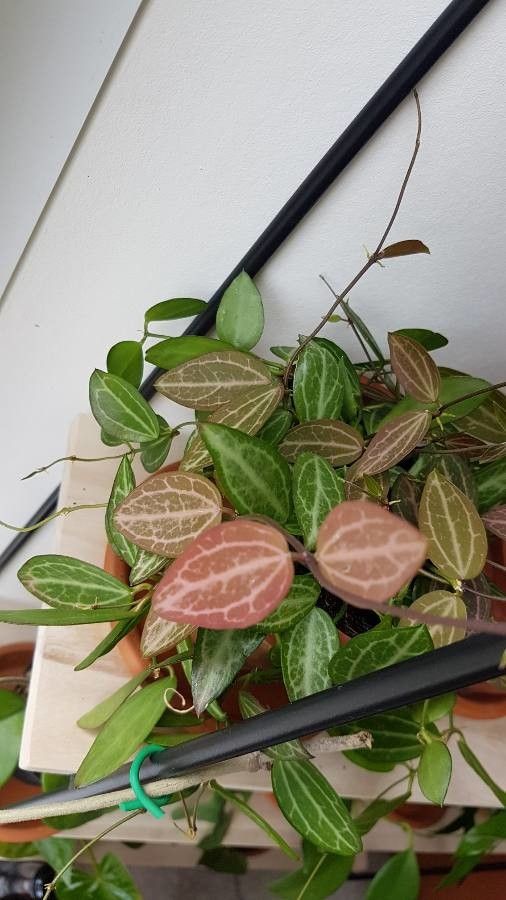
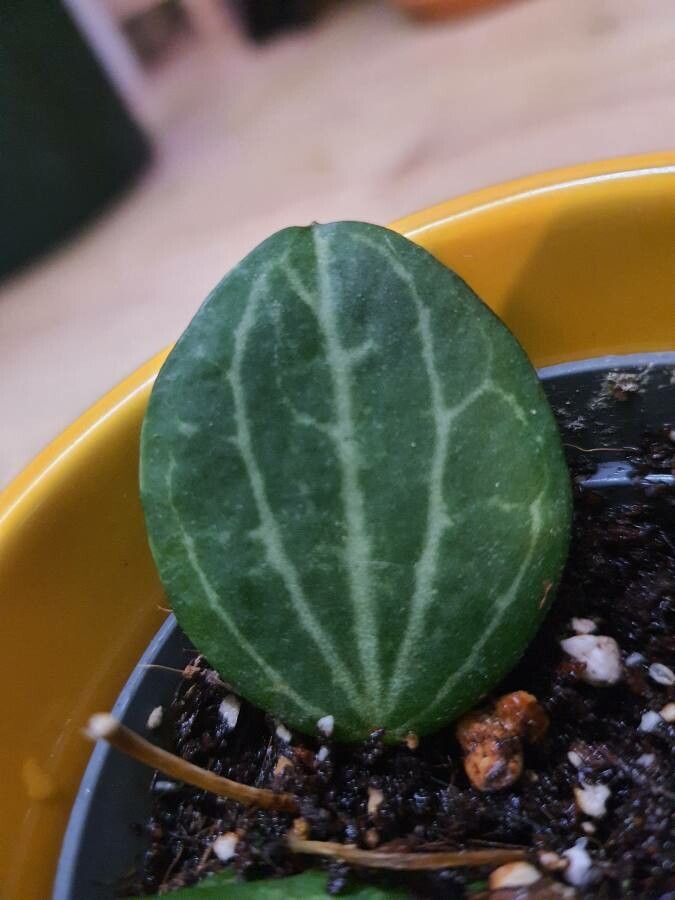
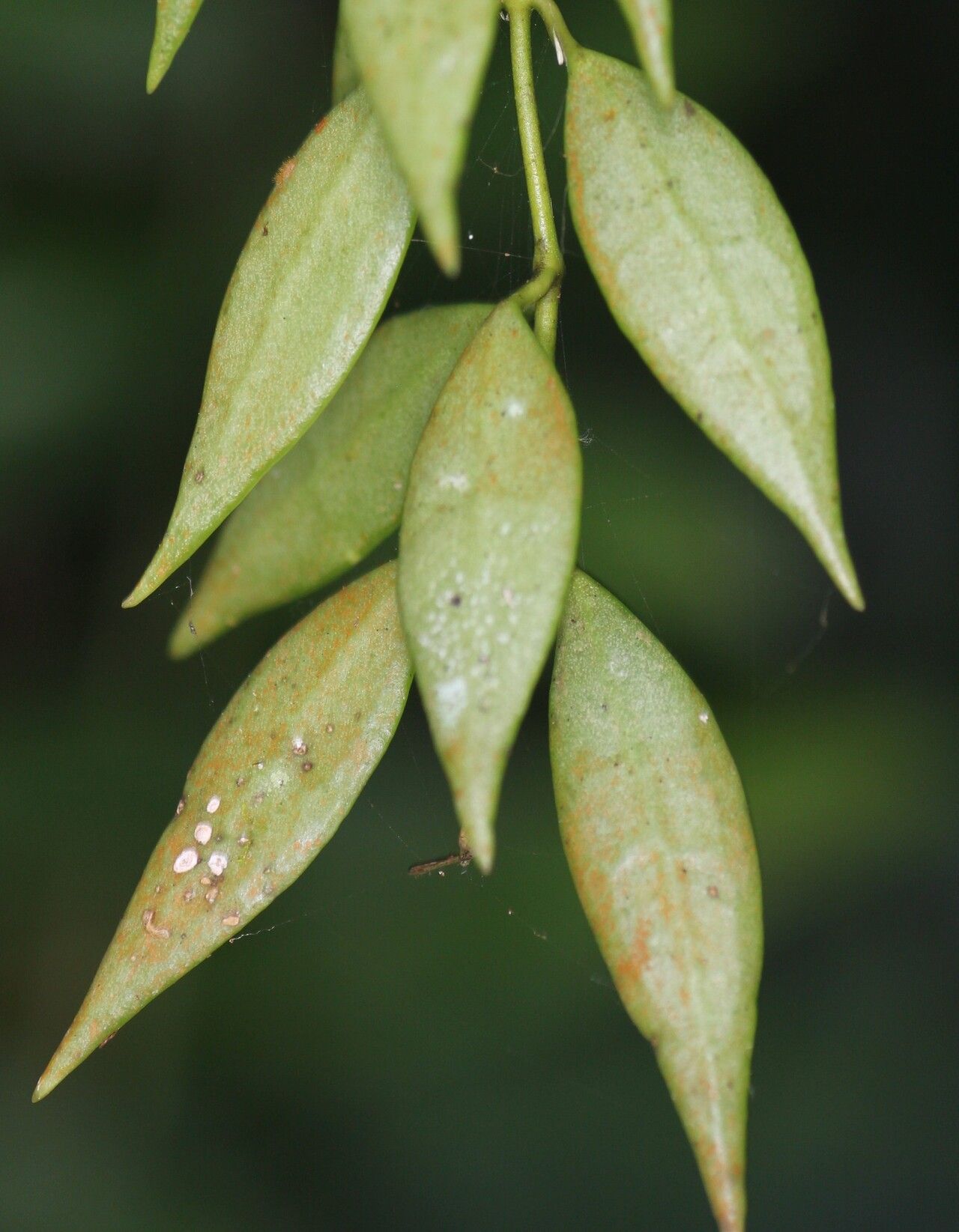
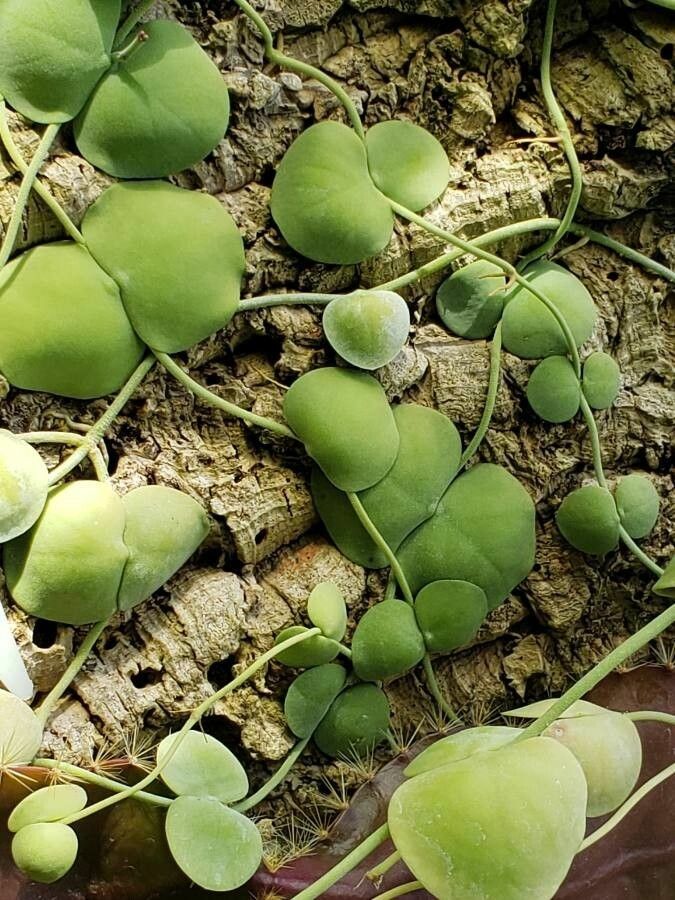
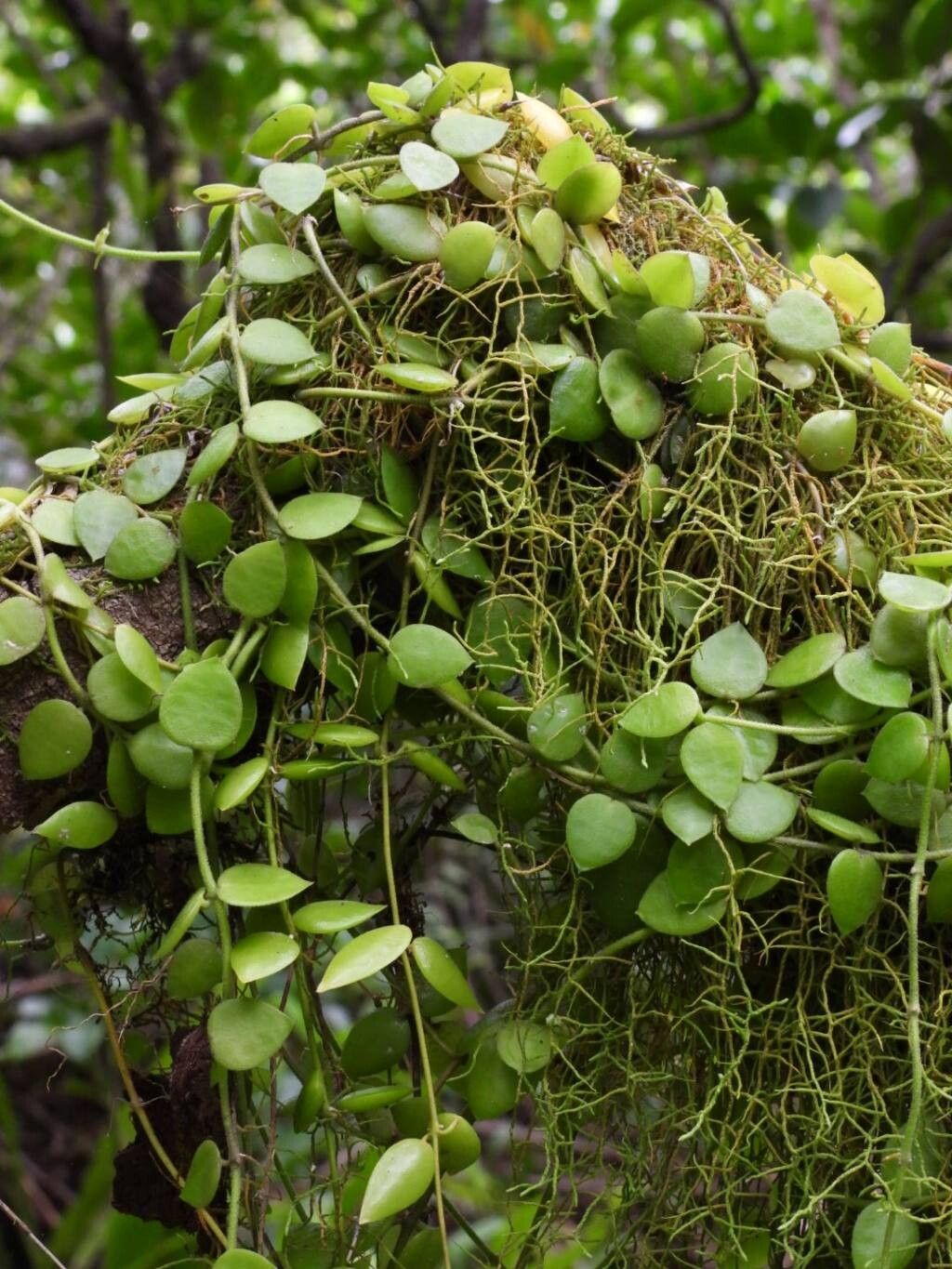
Dischidia ovata (sometimes commonly called watermelon dischidia) is a plant in the genus Dischidia native to New Guinea and North Queensland. Named scientifically for its ovate leaves, its common name refers to the leaf venation that resembles a watermelon, similarly to unrelated plants like Peperomia argyreia. The species is succulent and grows as an epiphytic or lithophytic vine in a variety of habitats.
Watermelon dischidia is highly resistant to disease and generally not prone to illness. However, it can develop leaf spots if light and ventilation are poor or if it is overwatered. The plant is considered easy to care for, as it mainly needs regular watering and little else. Watermelon dischidia is a good choice for people who lack the time and energy for regular maintenance.
How to keep Dischidia Ovata.
Light
Watermelon dischidia originates from habitats like forest understories or rocky areas where it grows in natural shade. It prefers partial sun but can acclimate to full sun or full shade, showing a versatile and hardy nature.
Water
The Watermelon Dischidia thrives in humid environments and needs consistent moisture, requiring weekly watering to stay hydrated. As an indoor ornamental plant, it benefits from the stable conditions typically found in homes, which help reduce the drought stress that is uncommon in its natural tropical habitat.
Humidity
This plant will thrive in moderate humidity, which is probably the level in your home. However, misting it a few times a week can be very beneficial. Make sure the room has good ventilation.
Temperature
Watermelon dischidia comes from tropical areas, where the weather is generally warm and humid. Consequently, it is well adapted to high temperatures and moisture. It does not tolerate sudden temperature shifts and prefers a stable thermal environment, so avoiding indoor temperature fluctuations is important. It usually cannot withstand cold conditions and needs warmer temperatures to grow. If the surrounding temperature falls too low, the plant may stop growing or even die.
Fertilizer
Proper fertilization is essential for Watermelon dischidia's health and appearance. Fertilize Watermelon dischidia in summer, applying fertilizer monthly throughout the season. Nutrients fuel growth and maintain the plant's structures. Fertilization enhances Watermelon dischidia's flower display, helping ensure the best blooms.
Pot & Repot
Repot Watermelon dischidia in early spring, using a pot only slightly larger than the current one and with good drainage. Use a well-draining potting mix, making sure the root ball sits at the same level as before. Gently loosen any root-bound roots. After repotting, water thoroughly and place in a warm, shady spot. Regular pruning helps keep size in check and encourages new growth.
Botanical profile.
- Plant Type
- Herb, Vine
- Life Cycle
- Perennial
- Genus
- Dischidia
- Family
- Apocynaceae
- Hardiness Zone
- 9-11
- Mature Height
- 5 cm
- Mature Spread
- 30 cm to 49 cm
- Leaf Color
- White, Green, Red
- Leaf Type
- Evergreen
- Flower Color
- White
- Flower Size
- 0.25 cm to 0.51 cm
- Bloom Time
- Late spring, Summer, Early fall, Mid fall
- Planting Time
- Spring, Summer, Autumn
- Harvest Time
- Late summer, Fall, Early winter, Mid winter
- Native Area
- New Guinea and North Queensland
Other names.