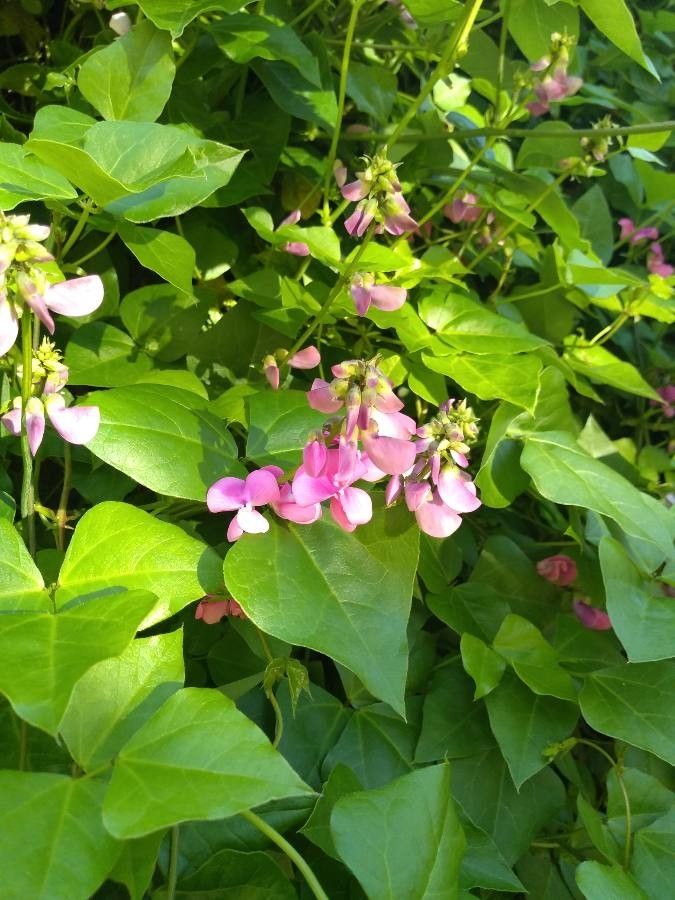
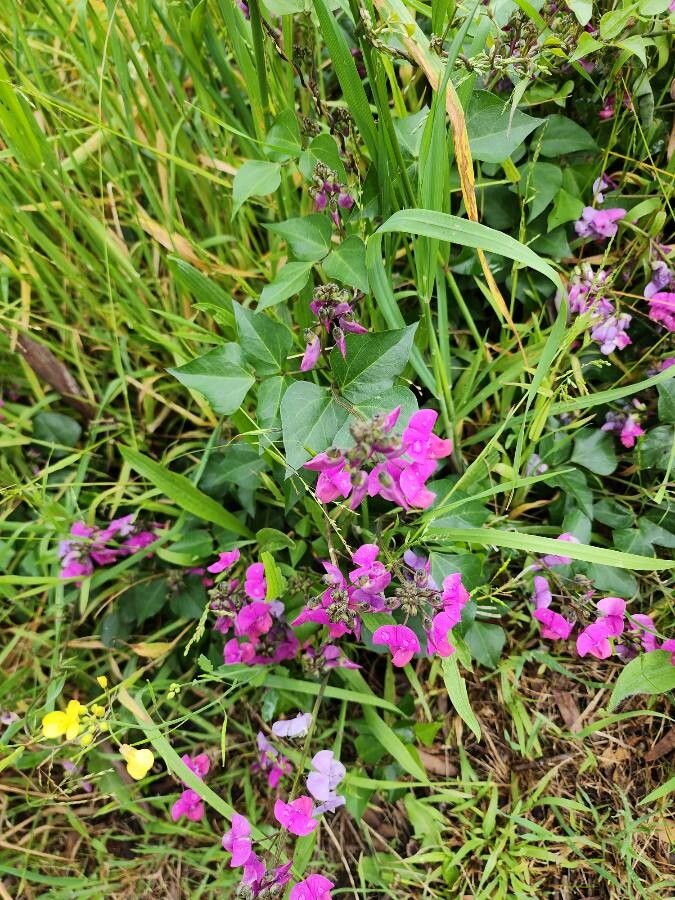
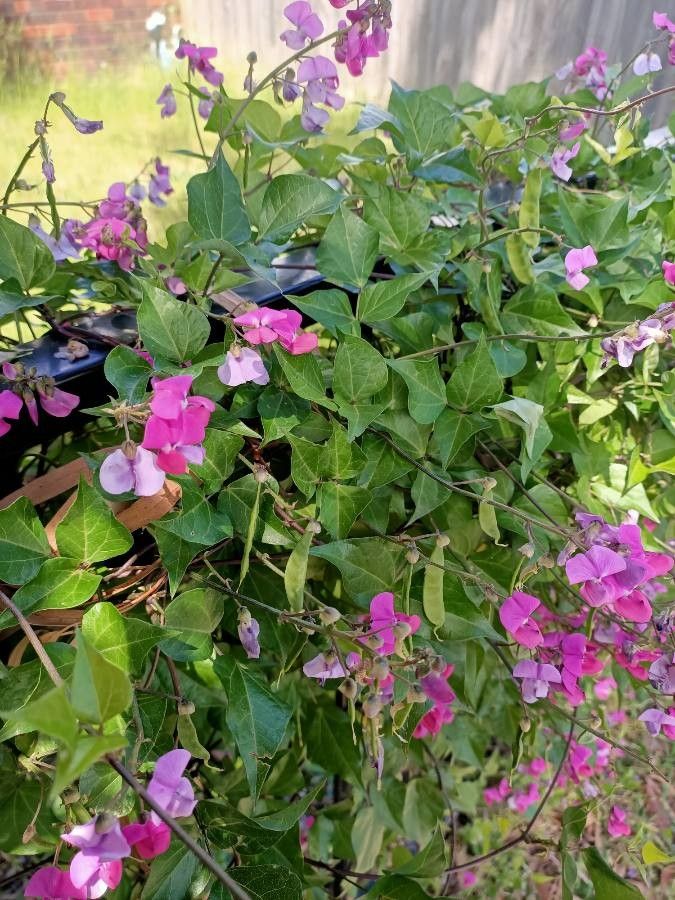
Dipogon lignosus, commonly known as Bush Wisteria, is a climbing plant native to South Africa. As a member of the Fabaceae family, it is prized as an ornamental plant for its stunning purple flowers that bloom in spring and summer. These flowers grow in long clusters that can extend up to 30 cm in length.
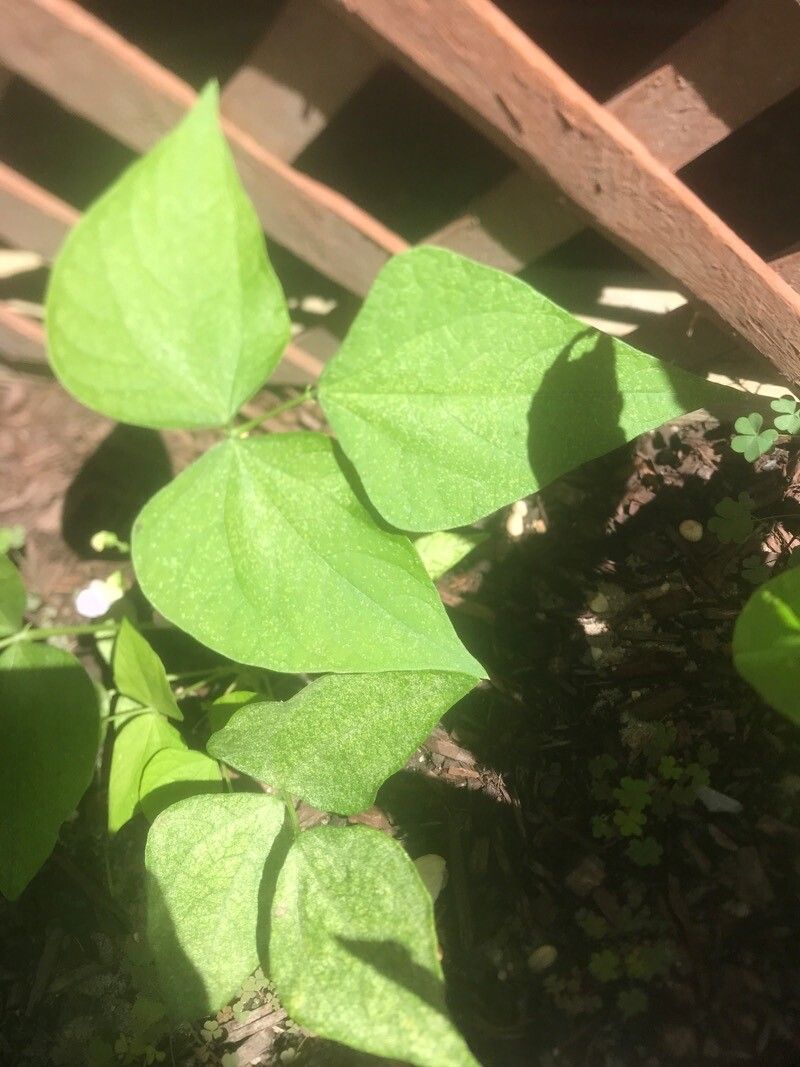
Bush Wisteria can reach heights of up to 6 meters. It has woody stems with twining tendrils that aid in climbing. Its leaves are pinnate, composed of small leaflets arranged along the stem.
This plant thrives in full sun or partial shade and prefers well-drained soil. Although it is drought-tolerant once established, Bush Wisteria benefits from regular watering during dry periods.
The nectar-rich flowers of Bush Wisteria attract bees, butterflies, and other pollinators. Additionally, it provides shelter for birds, who often use the plant as a nesting site.
Overall, Dipogon lignosus is an attractive climbing plant that adds color and interest to any garden or landscape. It also offers important ecological benefits for local wildlife.
Okie bean is fairly disease-resistant and generally not prone to illnesses. However, it can be affected by pests and diseases present in its surroundings. These problems are usually minor. For care, this plant needs moderate maintenance. It should be pruned regularly to maintain a good appearance and healthy growth. Fertilizing can also help encourage flowering. Okie bean is appropriate for anyone with outdoor space, such as a garden or patio, and does not demand extensive care experience. It may need more attention when grown indoors.
How to keep Dipogon Lignosus.
Light
Okie bean is native to habitats with filtered light, such as the understory of tropical forests or rocky sites that offer natural shade. It favors partial sun but can also tolerate full shade.
Water
The Okie bean thrives in subtropical climates and requires consistent moisture. Ideally, it should be watered once a week. Being an evergreen, it keeps its foliage throughout the year and benefits from regular watering, especially when exposed to full or partial sunlight outdoors.
Temperature
Okie bean originates from a region where temperatures range from 68 to 100.4°F (20 to 38℃). It performs best within that temperature range. Adjustments may be needed during seasonal changes to meet its requirements.
Fertilizer
Proper fertilization is essential for the Okie bean's health and appearance. Feed the Okie bean during the summer, repeating the application monthly throughout the season. Nutrients support growth and help maintain the plant's parts. Fertilizing improves the Okie bean's floral display, ensuring the best blooms.
Pruning
The Okie bean flourishes with regular pruning from early to late spring to remove dead stems and manage its growth. Thinning helps improve air circulation and shapes the plant. Using clean, sharp tools ensures precise cuts, promoting healthier growth and preventing disease, which contributes to a vigorous garden.
Botanical profile.
- Plant Type
- Herb, Vine
- Life Cycle
- Perennial
- Genus
- Dipogon
- Family
- Fabaceae
- Hardiness Zone
- 9-11
- Mature Height
- 2.13 m
- Mature Spread
- 61 cm
- Leaf Color
- Green, Dark Green
- Leaf Type
- Semi-evergreen
- Flower Color
- Purple, Pink, White
- Flower Size
- 25.40 cm
- Bloom Time
- Late spring, Summer, Early fall
- Planting Time
- Spring, Summer
- Harvest Time
- Late summer, Fall
Other names.
Reader questions.
How should I water my Okie bean plant?
To properly water the Okie bean, it is advisable to use filtered water at room temperature. Tap water may contain harmful particles, so using filtered water is preferable. Additionally, the water should be at room temperature or slightly warmer since the Okie bean is accustomed to warm environments, and cold water may shock it. Instead of watering from above, which can cause issues with the foliage, it is recommended to apply the filtered room temperature water directly to the soil until it is fully soaked. This will benefit the plant by moistening the roots and aiding in their spread through the soil to collect the necessary nutrients.
Why is it important to put fertilizer on my Okie bean plant?
All plants, including the Okie bean, need soil nutrients to grow. However, it's not always guaranteed that the soil will have all the necessary nutrients. To address this, fertilization and soil amendments can be used to provide both the basic nutrients and the specific ones needed for the plants in your garden. In the case of the Okie bean, fertilization is important for healthy root and stem development throughout the growing season. It also helps the plant produce beautiful leaves, which are its main ornamental feature.
What temperature is best for growing Okie bean?
To help your tropical plants thrive, it's best to maintain a temperature range of 75℉ to 90℉ (25-32℃). While different species can tolerate temperatures outside this range, sticking within a few degrees of these limits will ensure optimal growth. However, there are extreme temperature limits to be aware of. Anything below 50℉ (10℃) or above 95℉ (35℃) can hinder growth and cause issues with the leaves and stems. Low temperatures are particularly damaging, as even a light frost can lead to the death of your tropical plants. In fact, cellular death can occur rapidly, with some species dying within 12 to 24 hours.
What should I do if I give my Okie bean too much or too little water?
Overwatering poses a greater risk to the health of your Okie bean compared to underwatering. When overwatered, the plant's stems and leaves may wilt and turn yellow, and prolonged overwatering can result in diseases like root rot, mold, and mildew that can be fatal. Underwatering is less common for the Okie bean due to its drought tolerance, but it is still a possibility. In such cases, the leaves become brittle and brown. It is important to promptly identify signs of overwatering to avoid irreversible damage. If you notice early signs, reduce watering immediately and assess the soil quality. If the soil drains poorly, replace it with a loose, well-draining potting mix. On the other hand, if you see signs of underwatering, increase watering until the signs disappear.
When should I fertilize my Okie bean for the best results?
During the active growth phase of an Okie bean, which usually spans from spring to early fall, it will require the highest amount of fertilizer. After winter ends, you should feed your Okie bean every two to four weeks. Maintain this feeding schedule until fall, when you can gradually reduce the amount of fertilizer given. Eventually, stop feeding the Okie bean altogether in preparation for winter, as it will experience less active growth during this time.
Does Okie bean need different temperatures for different stages of growth?
Okie bean can go through different growing phases without needing temperature changes, but it's important to be consistent. Fluctuating temperatures, even if it's not during a phase change, can slow down its growth, so it's best to keep it in a controlled environment. The optimal temperature range for Okie bean is between 75℉ and 90℉ (25-32℃), and it's important to stay above the lower limit. It's not ideal to go above 90℉ (32℃), but as a tropical plant, it can tolerate it to some extent. However, going below 50℉ (10℃), and especially 40℉ (5℃), will start to cause direct damage to this heat-loving plant species.
How regularly do I need to water my Okie bean?
If your Okie bean plant is in a pot, the most precise way to determine if it needs water is to check the soil by sticking your finger into it. If the top two to three inches of soil are dry, it's time to water it. The same method can be used for Okie beans grown outdoors in the ground. Once the top few inches of soil have dried out, it's time to water them. During spring and early fall, you'll typically need to water this plant about once a week using this method. However, during extremely hot weather, you may need to increase watering to twice or more per week. Nevertheless, mature and well-established Okie bean plants can actually tolerate drought quite well.
When is the best time to not fertilize my Okie bean plant?
To ensure proper growth, feed your Okie bean regularly throughout most of the year, except during winter. This includes spring, summer, and most of the fall. However, be cautious not to over-fertilize or fertilize incorrectly, as this can lead to fertilizer burn or other issues. If your Okie bean has experienced these problems, address them before resuming regular feeding. Remember, during the winter, when the plant enters a dormant phase, fertilizer is unnecessary and can cause fertilizer burn, especially if you are growing the plant indoors in a cold winter area.
Does the Okie bean require varying temperatures for each season?
Okie bean does not require different temperatures for different growing seasons. The most crucial aspect of seasonal care for Okie bean is maintaining the optimal temperature range. Therefore, it is recommended to keep this plant indoors as it allows you to control the temperature regardless of the outside climate. In addition, proper lighting is important for tropical species like Okie bean. These plants prefer partial side-level sun exposure, meaning the light they receive should be dappled or filtered. Bright but indirect light is the best option when growing Okie bean indoors. Excessive direct sunlight can harm the plant's leaves and limit its growth potential.
How much water does my Okie bean plant need?
To water your Okie bean effectively, don't hold back on the amount of water you provide. Wait until the top two to three inches of soil are dry, and then give the plant a thorough watering. Make sure to soak the soil completely, allowing excess water to drain out from the bottom of the pot. If there is no drainage, it means you haven't watered enough, but be cautious not to let water accumulate inside the soil, as this can harm the plant. Conversely, if water isn't draining properly, it suggests the soil doesn't drain well, which is harmful to the plant's health and should be avoided. If the plant is situated outside, about 1 inch of rainfall per week should be sufficient.
What kind of fertilizer does my Okie bean plant need?
The fertilizer for an Okie bean contains a specific blend of nutrients, but each nutrient is present in relatively low amounts. The ideal fertilizer has an N-P-K ratio of 3-1-2, but a general-purpose fertilizer with an even nutrient blend can also work well. However, even with a balanced fertilizer, the volume of each nutrient should be at 10 or lower. You can choose between a granular or liquid-based fertilizer. If you opt for liquid, it's best to dilute it by half. While granular fertilizer has little downside, using liquid fertilizer is often more practical, especially if you water your Okie bean at the same time.
What temperatures are best for keeping your Okie bean plant healthy?
Here are three tips to help you take care of your plants: 1. Keep your plants away from windows during colder months: Cold air can leak into your home through cracks in the windows, and any plants placed near them will be affected. Move tropical plants to an area with bright but indirect light, while avoiding potential drafts. 2. Watch out for dry patches, which may indicate too much sunlight or heat: If you notice white or scorched leaves, your plant may be getting too much heat or sunlight. This can lead to dehydration and hinder growth. Dry spots can spread and eventually cause your plants to die if left unaddressed. 3. Be cautious of frost: Colder temperatures and frost can damage plants by disrupting their water circulation. This can lead to a lack of moisture in the stems and leaves. Look out for signs of hydrosis (a water-soaked appearance) and if the issue persists, the plant may shrivel and turn dark brown or black, eventually leading to death.