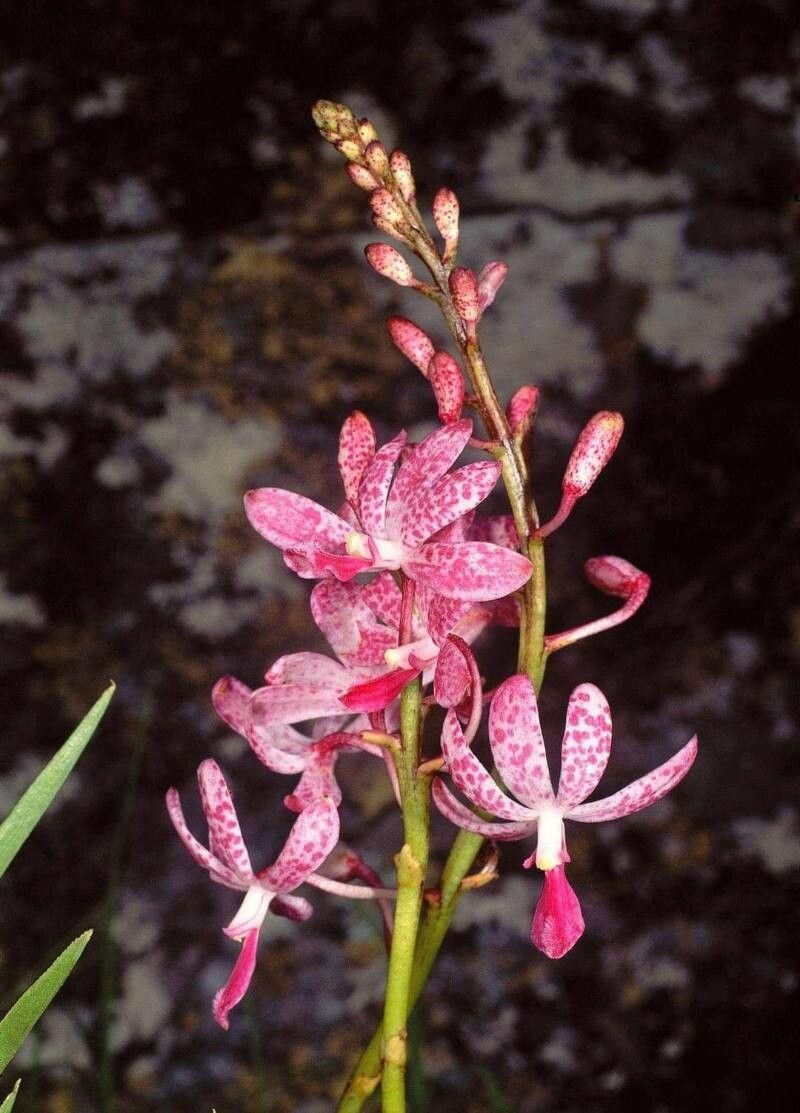
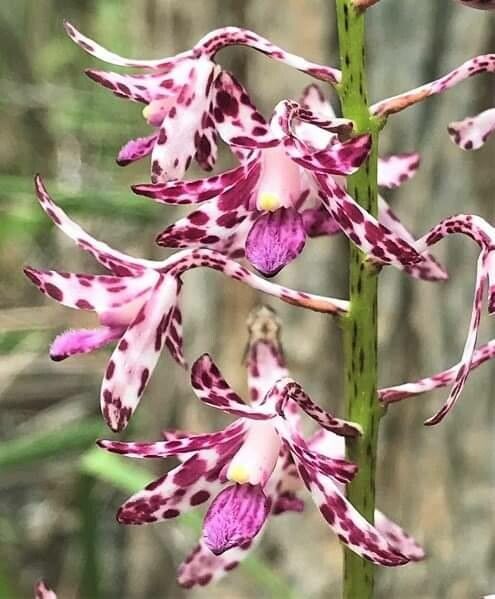
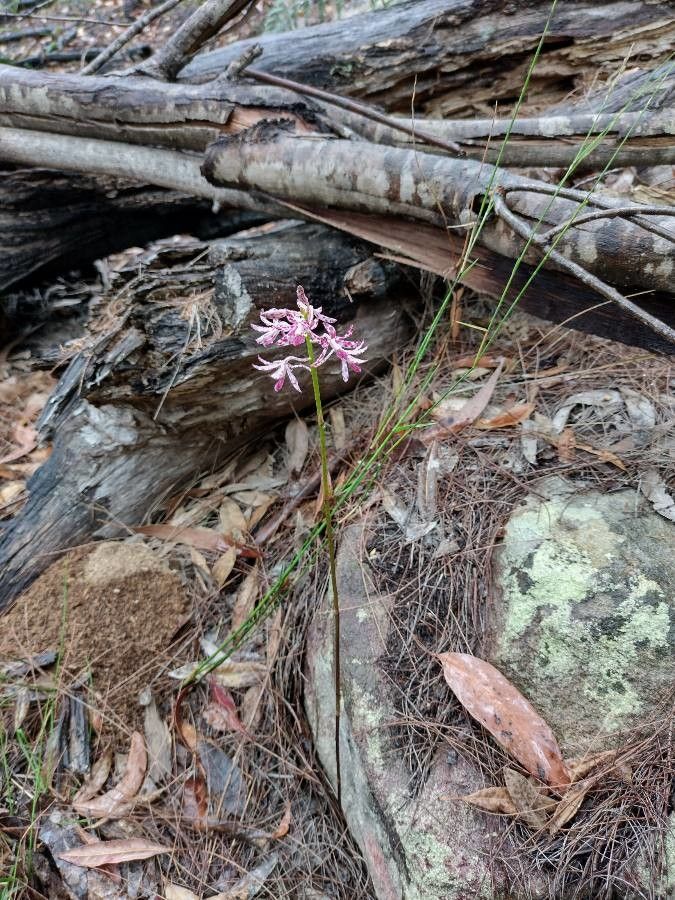
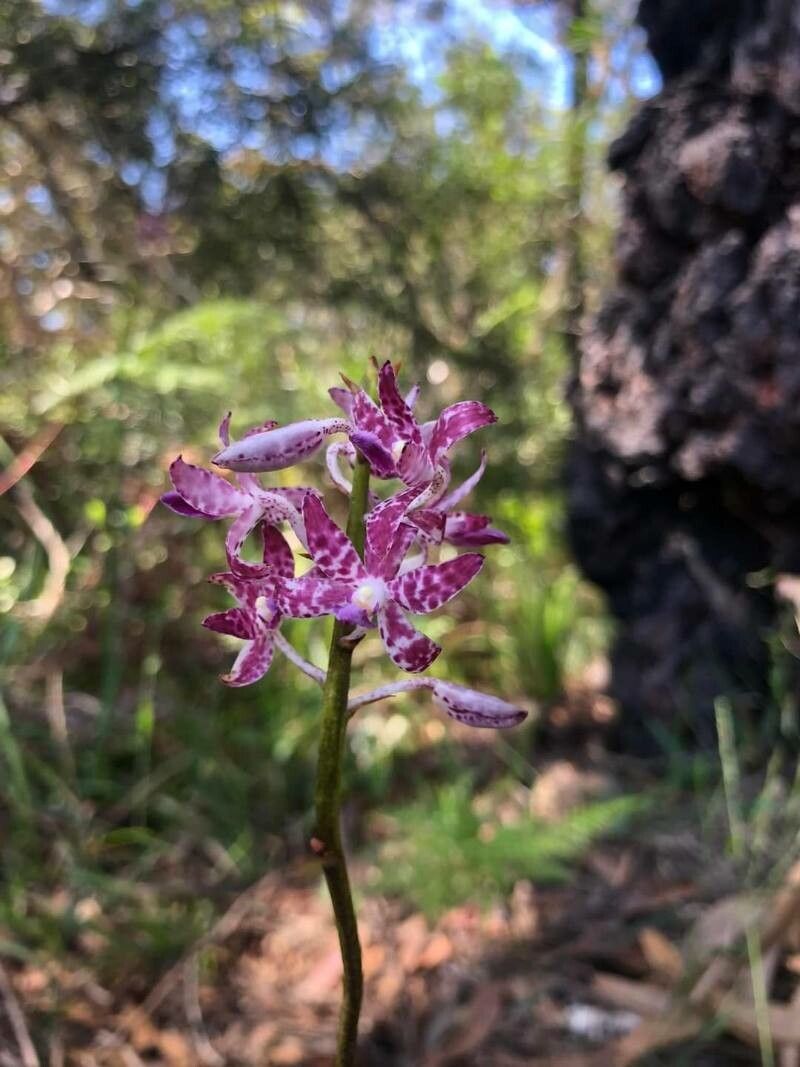
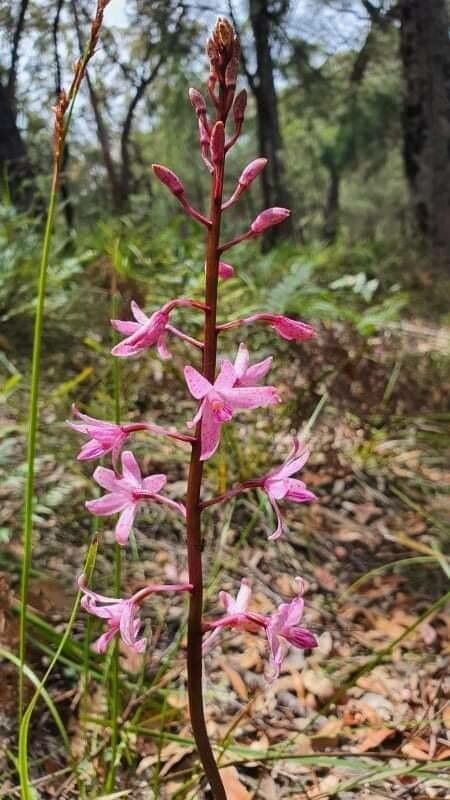
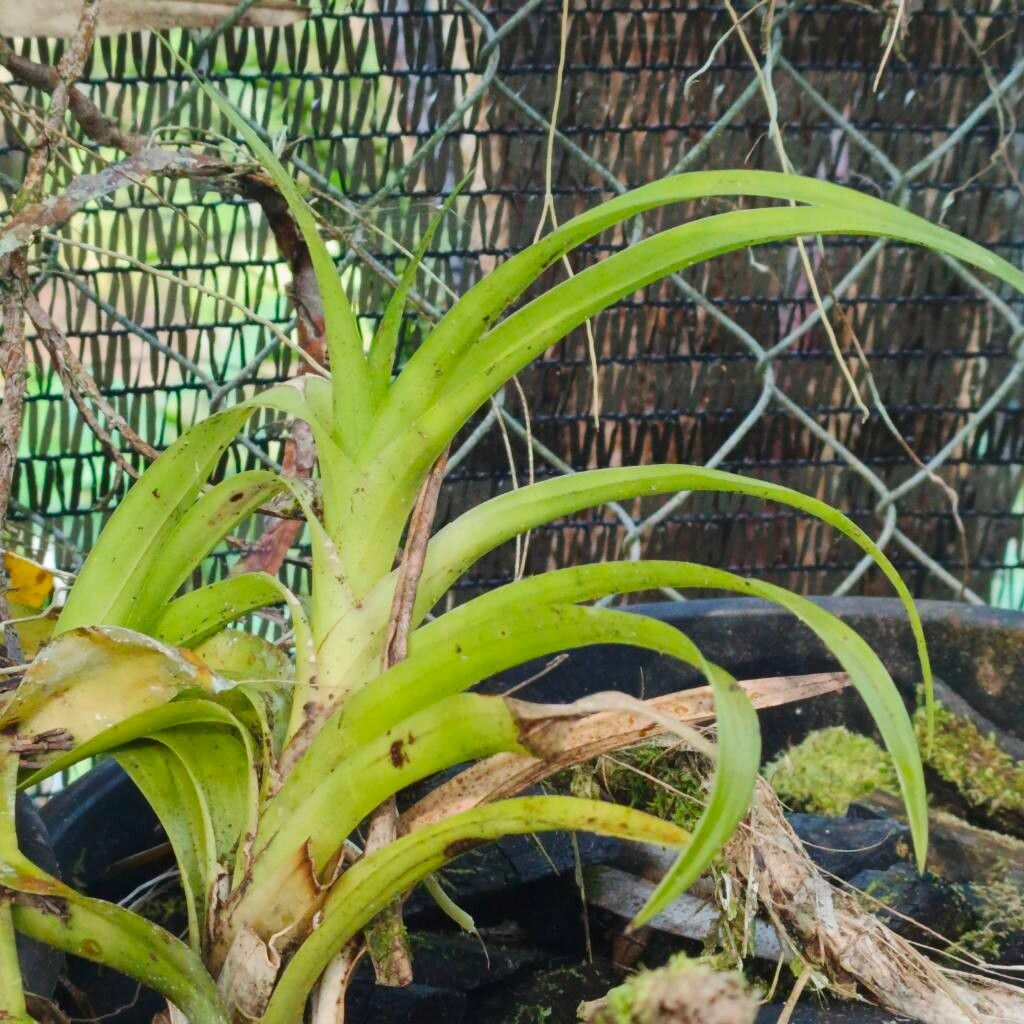
Dipodium variegatum, commonly known as the slender hyacinth-orchid, or blotched hyacinth-orchid, is a leafless mycoheterotrophic orchid that is endemic to south-eastern Australia. It forms mycorrhizal relationships with fungi of the genus Russula.
Hyacinth orchid generally shows good disease resistance and has relatively few insect pests. Its care is considered difficult because it needs high humidity while also being well ventilated and free of many harmful pathogens. Too much watering can cause root rot. Although anyone can grow a Hyacinth orchid, keeping it healthy and getting it to bloom again requires more growing experience.
How to keep Dipodium Variegatum.
Light
Hyacinth orchid naturally occurs in habitats like forest understories and rocky areas, where it typically grows in shade. It prefers partial sun but can tolerate both full sun and full shade, underscoring its versatile, hardy nature.
Water
The Hyacinth orchid thrives with adequate moisture, although it can tolerate periods of drought. During the summer, water it once a week, and in the fall and winter, extend the interval to every 10 days. To maintain humidity, especially in dry conditions, regularly mist the plant. Use water with a neutral pH, and let tap or rainwater sit for a while to allow any dissolved substances to dissipate.
Temperature
Hyacinth orchid is quite adaptable to temperature, capable of withstanding higher heat and broader temperature fluctuations. During hot periods, attention should be paid to watering and appropriate shading should be provided to avoid sunburn. Conversely, Hyacinth orchid is relatively sensitive to low temperatures; it can tolerate some cold, but excessively cold conditions can cause frost damage.
Fertilizer
One fertilizer application in spring is generally enough for the Hyacinth orchid, although several feedings can maximize its growth. Feed every month to every month and a half. Fertilization improves the leaves' appearance and function, promoting uniform color and a healthy texture. It also encourages root development and nutrient uptake for the plant's long-term health.
Pruning
The Hyacinth Orchid is known for its striking variegated foliage and vibrant flowers. To encourage growth and blooms, it is best to prune the plant in early spring. Be careful not to over-prune, as this orchid is sensitive. Proper pruning helps improve air circulation, reduces the risk of disease, and promotes healthy, lush growth.
Botanical profile.
- Plant Type
- Herb
- Life Cycle
- Perennial
- Genus
- Dipodium
- Family
- Orchidaceae
- Hardiness Zone
- 10-12
- Mature Height
- 30 cm to 76 cm
- Mature Spread
- 20 cm to 40 cm
- Leaf Color
- Dark Green
- Leaf Type
- Deciduous
- Flower Size
- 2.03 cm to 3.05 cm
- Bloom Time
- Summer
- Planting Time
- Spring, Summer, Autumn
- Harvest Time
- Late summer, Early fall, Mid fall
Other names.
Reader questions.
What is the Hyacinth Orchid?
The Hyacinth Orchid, known botanically as Dipodium variegatum, is a plant species. Unfortunately, there's no detailed information provided about its characteristics, essential care, or symptoms of distress. Additional details regarding its care, habitat, or specific attributes might require further research or consultation with botanical resources.