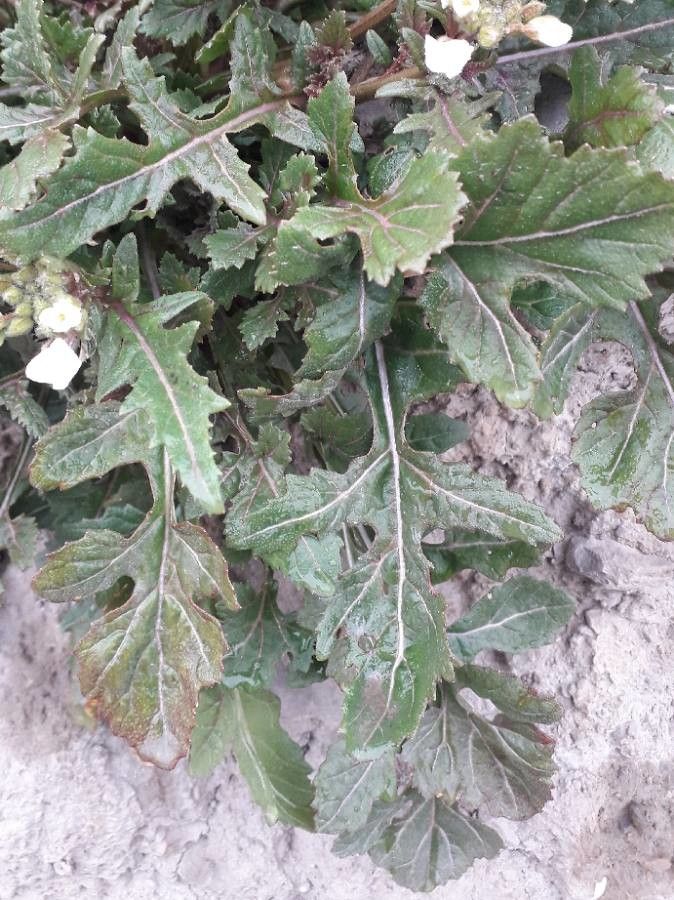
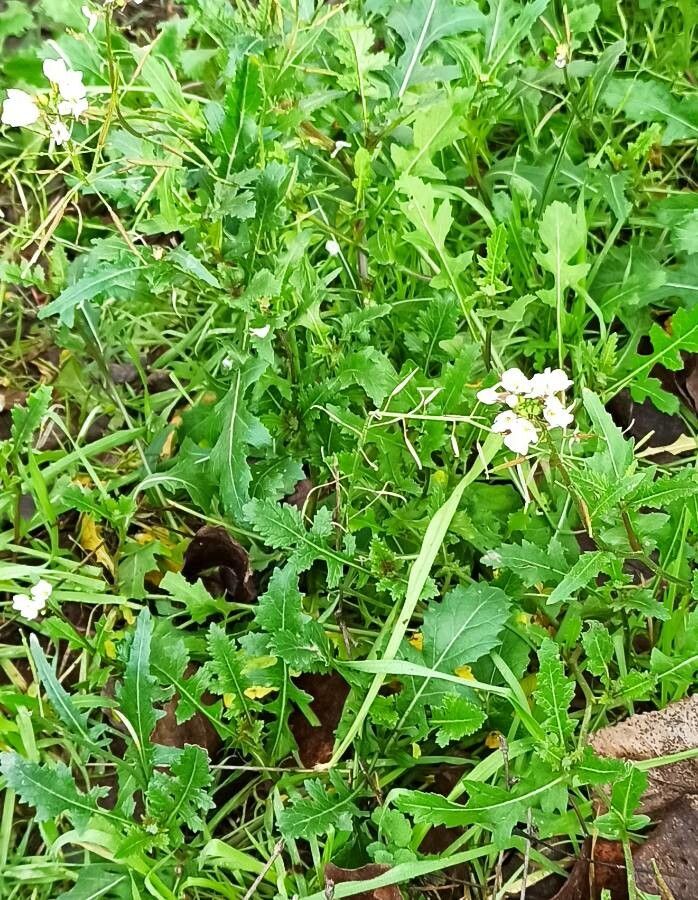
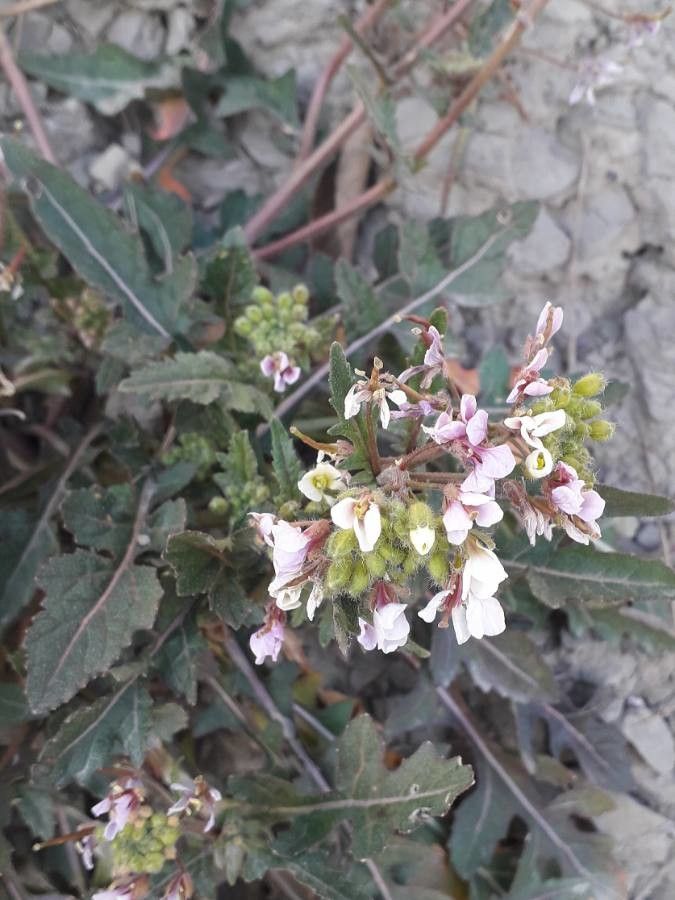
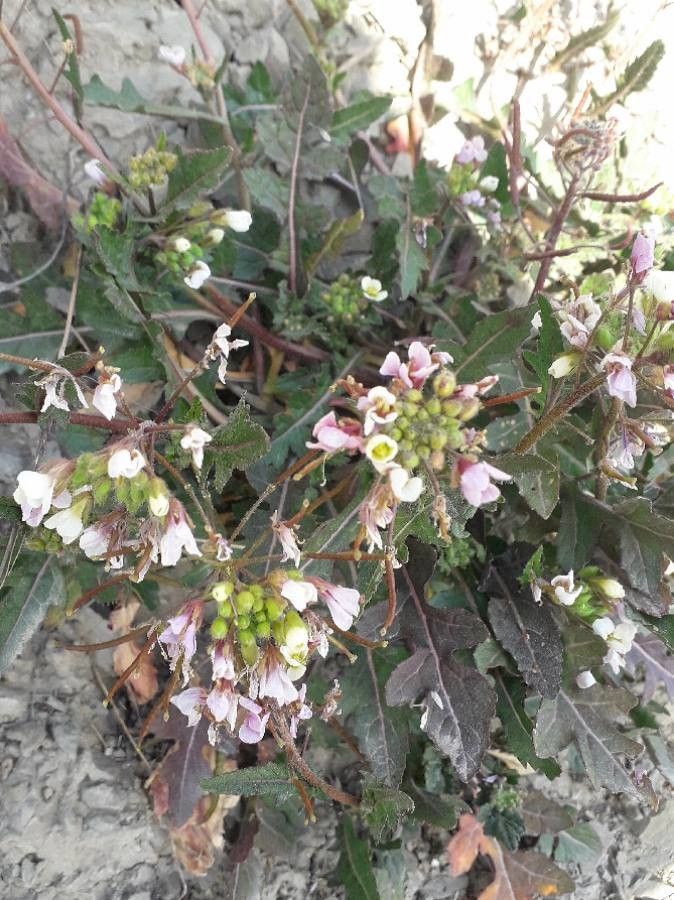
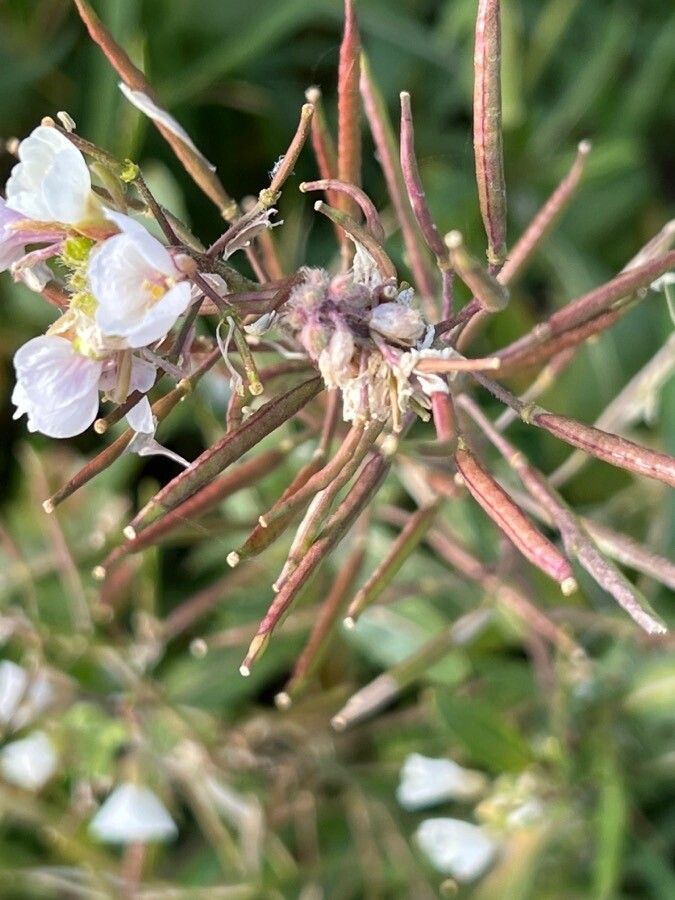
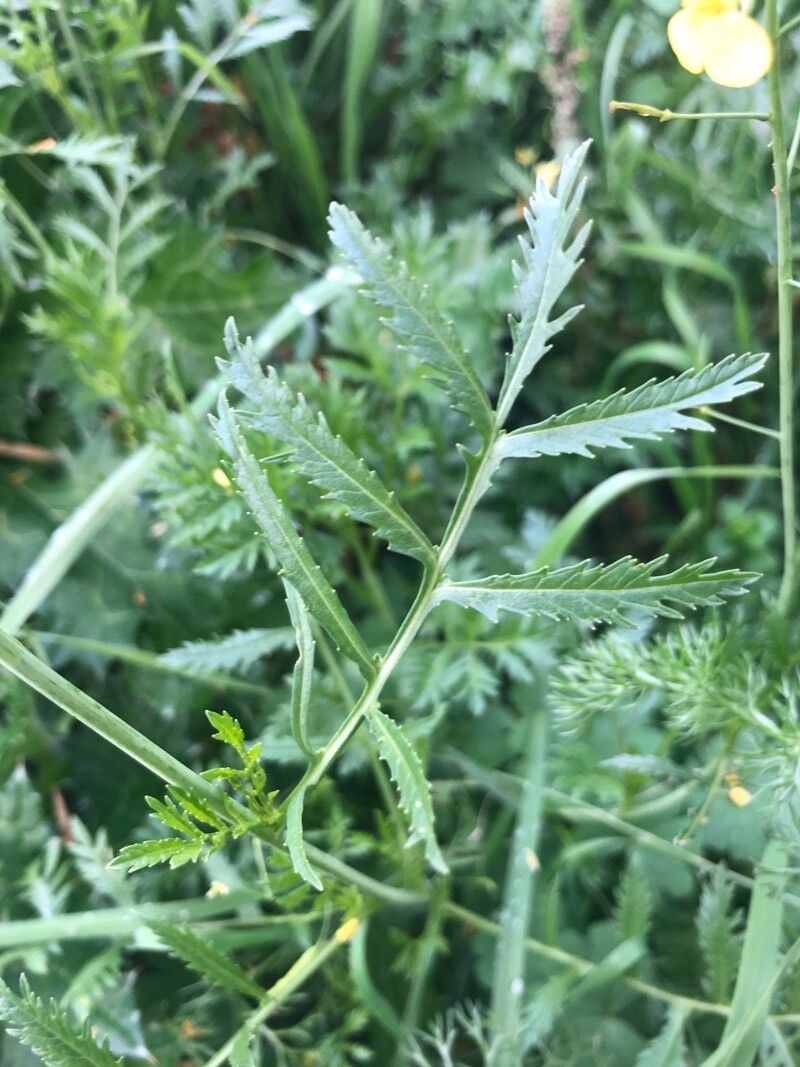
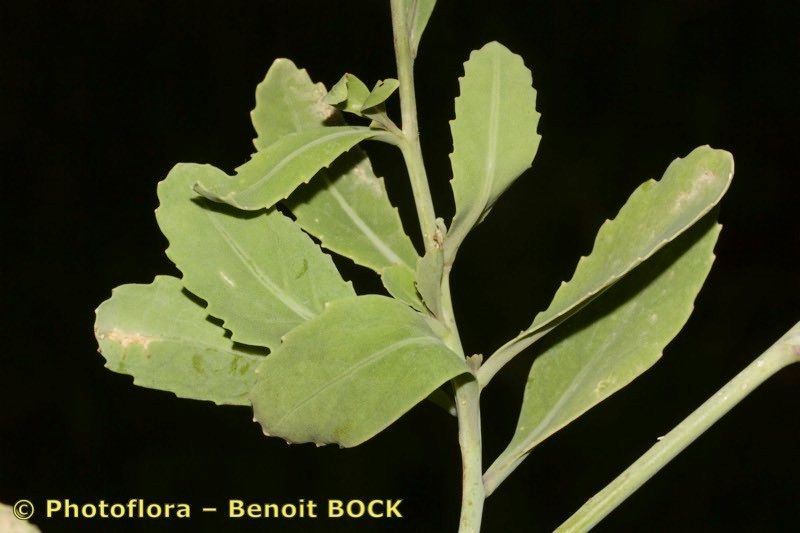
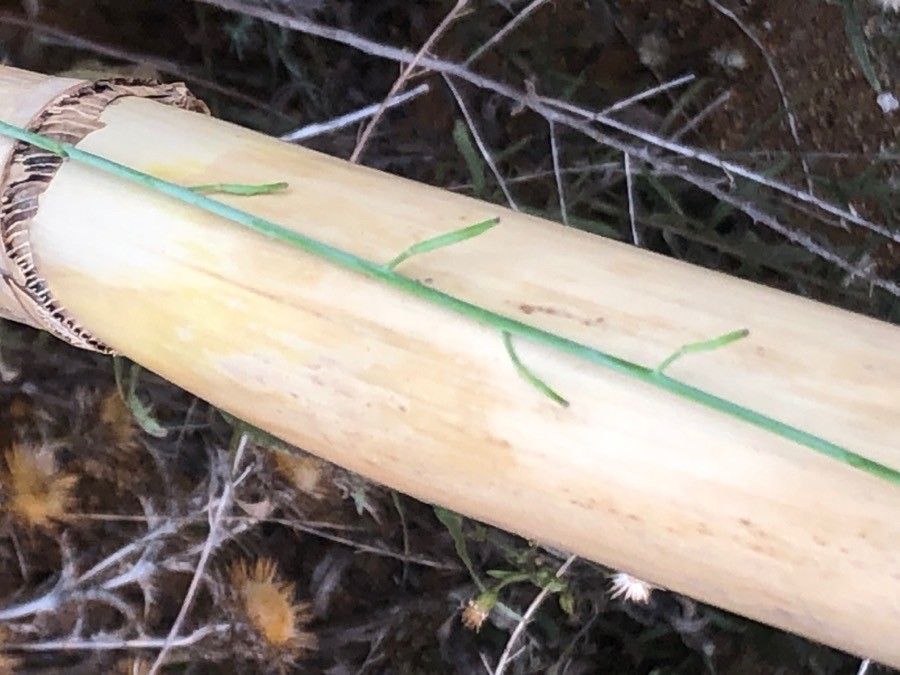
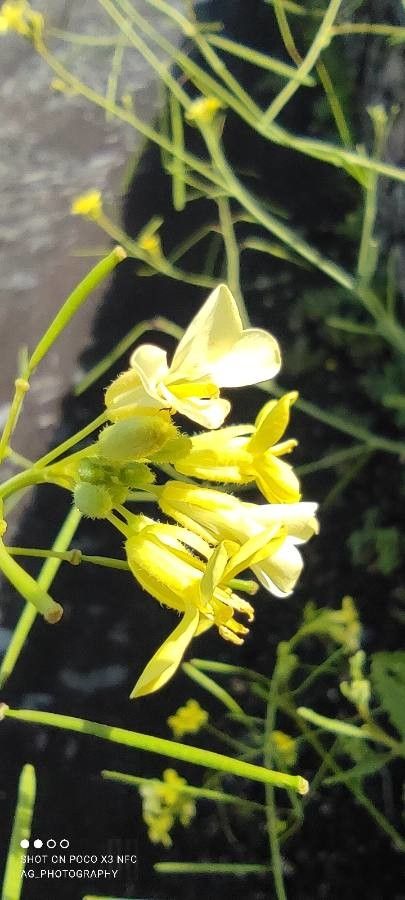
Diplotaxis erucoides, commonly known as the white wall rocket, is a species of flowering plant in the Brassicaceae family. Native to Europe and Western Asia, it has also been introduced to North America. The plant typically grows up to 60 cm tall and features a basal rosette of deeply lobed leaves with toothed margins. The stem leaves are smaller and have fewer lobes.
The white wall rocket produces small, four-petaled flowers that are either white or pale yellow. These flowers bloom from May to September, attracting bees and other pollinators.
Preferring well-drained soils in full sun or partial shade, the plant can tolerate a wide range of soil types. It is commonly found growing on walls, rocks, cliffsides, roadsides, waste grounds, and other disturbed areas.
Diplotaxis erucoides has been used for medicinal purposes for centuries due to its anti-inflammatory properties and its ability to aid digestion and treat respiratory ailments such as asthma.
Overall, this hardy perennial herb makes an attractive addition to rock gardens or borders. Its appealing foliage can be harvested throughout the growing season for use in salads, providing a peppery flavor that is similar, but milder, than arugula (Eruca sativa).
White wallrocket is fairly resistant to disease and typically does not suffer from many illnesses. Nonetheless, it can be affected by pests and diseases present in its surroundings. These infections tend to be mild. In terms of care, the plant requires moderate maintenance. Regular pruning is needed to keep a neat appearance and support healthy growth. Fertilizing can also help encourage flowering. White wallrocket is suitable for anyone with outdoor space, such as a garden or patio, and does not demand a lot of gardening experience. It may need more attention when grown indoors.
How to keep Diplotaxis Erucoides.
Light
White wallrocket flourishes with direct, unobstructed sunlight, harvesting energy for optimal growth. It is adaptable and can tolerate lower-intensity sun, provided the light is consistent. Its native environments featured constant sun exposure. Too much or too little light can impair its health and disrupt its normal growth processes.
Water
White wallrocket thrives in conditions similar to those found in the Mediterranean. It prefers moderate water availability and grows best in drier soil. To prevent root rot, it should be watered weekly. This plant flourishes outdoors when soil moisture is carefully monitored and allowed to dry slightly between waterings, demonstrating both resilience and drought tolerance.
Temperature
White wallrocket is native to regions with moderate temperatures, preferably between 68 and 95°F (20 to 35℃). It thrives in warmer climates. For optimal growth, keep these temperature conditions consistent through changing seasons.
Fertilizer
When most of White wallrocket's blooms have fully opened, resume fertilizing. Around the time the flowers reach peak output, begin fertilizing again every three to four weeks, as weather permits. Then, when White wallrocket starts producing fewer new blooms, stop fertilizing—there's no need to feed the plant when it can no longer produce more blooms.
Pruning
The white wallrocket is known for its delicate white flowers and fast growth. To support new growth and maintain its shape, it's best to prune the plant from early to late spring. Be sure to remove any dead stems, and always use clean, sharp tools to minimize the risk of disease. This approach will promote healthier foliage and blooms, ensuring the plant remains vibrant and attractive.
Toxicity
Diplotaxis erucoides has no toxic effects reported.
Further reading →
The toxicity and danger assessments provided are for reference only. We do not assure their accuracy, so it's crucial not to depend on them. Seek professional advice when necessary for accurate guidance.
Botanical profile.
- Plant Type
- Herb
- Life Cycle
- Annual, Biennial
- Genus
- Diplotaxis
- Family
- Brassicaceae
- Hardiness Zone
- 10
- Mature Height
- 20 cm to 61 cm
- Mature Spread
- 30 cm
- Leaf Color
- Green
- Leaf Type
- Deciduous
- Flower Color
- White
- Flower Size
- 0.51 cm to 0.76 cm
- Bloom Time
- Mid spring, Late spring, Early summer
- Planting Time
- Spring
- Harvest Time
- Early summer, Mid summer
Other names.
Reader questions.
How should I water my White wallrocket plant?
To water White wallrocket, you have various options – a garden hose with a spray nozzle, a watering can, or any common watering tool would work just fine. This plant isn't too particular about the type of water it receives; it can thrive with rainwater, tap water, or filtered water. However, it's generally better to avoid watering from overhead as it can harm the leaves, flowers, and potentially create diseases. For optimal watering, consider using a drip irrigation system. These systems are advantageous for White wallrocket as they ensure the water is applied evenly and directly to the soil. When dealing with a container-grown White wallrocket, you can implement a similar watering technique but with different tools. You may use a cup, watering can, or even your tap to directly water the soil of the container-grown plant.
Why should I add fertilizer to my White wallrocket?
All plants require nutrients to grow, but some can obtain these nutrients naturally without the need for fertilizers. White wallrocket, like other plants, relies on nutrients for growth and internal processes. The main nutrients that plants use - nitrogen, phosphorus, and potassium - play different roles in supporting essential functions. For foliage growth in particular, nitrogen is crucial. However, White wallrocket often struggles to acquire enough nitrogen from the soil alone, leading many gardeners to opt for supplemental nitrogen feedings.
What are the sunlight requirements for White wallrocket?
White wallrocket thrives best under full sun, requiring more than 6 hours of sunlight daily, but it can also manage with partial sun, about 3-6 hours of sunlight. Its native environments were characterized by significant exposure to sunlight, making unobstructed light essential for its optimal growth. However, it's capable of adjusting to less intense sunlight, though consistency in lighting is key. When planning your garden, observe the movement of sunlight to provide your plants with ideal light and shade balance, promoting their well-being.
What is the ideal temperature range for growing White wallrocket?
White wallrocket thrives in moderate temperatures, ideally within the range of 68 to 95°F (20 to 35°C). It requires warmer climates for optimal growth and is extremely heat-loving. During colder seasons, it is beneficial to maintain temperatures above 20°C, especially in winter, to ensure the plant's health. However, it is important to avoid cold temperatures, as they can harm the plant. Should the temperature approach 5°C, it could be detrimental to the White wallrocket.
What should I do if I give my White wallrocket plant too much water or too little water?
The solution for underwatering White wallrocket is simple: water it more consistently when you notice it lacks moisture. However, overwatering can be a more serious problem, especially if not detected early. If your White wallrocket is overwatered, it can develop diseases that cause it to deteriorate and die. To prevent this, choose a suitable location with ample sunlight to dry out the soil and ensure good drainage to avoid waterlogged soil. If your potted White wallrocket is overwatered, consider transferring it to a new pot with proper drainage. When repotting, use loose soil and a pot that drains effectively.
When should I fertilize my White wallrocket?
White wallrocket generally grows well and can be given a boost with fertilizer applied once a month during active growth. Fertilization should only be done in the spring and summer months, as the plant is less active during fall and winter. Look for signs of new growth to determine when to start fertilizing. Whether the plant is grown outdoors or indoors in a container, the fertilization schedule remains the same. However, if the plant is in a container, fertilization may not be necessary for the first one to two months. Container plants typically have enough nutrients in their potting soil, so fertilization should begin after the plant has been in the same soil for a while.
How can artificial lighting be used for indoor White wallrocket plants?
Indoor White wallrocket plants benefit from adequate lighting, especially when natural sunlight is insufficient, such as during winter or in less sunny locations. Artificial lights, like LED lights, are effective as they can be tuned to emit specific light wavelengths needed by plants. For full sun plants, 30-50W/sq ft of artificial light is recommended, while partial sun plants need 20-30W/sq ft, and full shade plants require 10-20W/sq ft. The light source should be placed 12-36 inches above the plant, simulating natural sunlight. Moreover, mimicking natural daylight hours is crucial, with most plants needing 8-12 hours of light per day.
How should White wallrocket be cared for during autumn and winter?
In the autumn, to protect the White wallrocket from cold temperatures, it is recommended to bring outdoor-grown plants indoors and place them near a bright window while keeping a certain distance from heaters to avoid excessive dryness. During winter, maintaining the temperature above 20°C is crucial for the plant's growth. This helps in avoiding the negative impacts of cold weather on the plant.
How much should I water my White wallrocket?
White wallrocket requires regular watering throughout the growing season. In spring, water the plant once a week. As the season progresses and temperatures rise, you may need to increase watering to two to three times per week. It is important not to exceed this rate as it can harm the plant. Additionally, make sure the soil remains moist but not wet. When watering White wallrocket in a pot, increase the frequency as the soil tends to dry out faster. Typically, water container-grown White wallrocket a few times per week compared to once a week for plants in the ground.
When is the best time to not add fertilizer to my White wallrocket?
To ensure healthy growth, avoid fertilizing your White wallrocket if it is unhealthy due to disease or insect pests. Similarly, refrain from fertilizing a dehydrated plant, as this can worsen the problem. Only apply fertilizer to healthy plants. When watering, be cautious not to splash fertilizer onto the leaves or stem, as it can cause burned spots. Unless using a specific foliage fertilizer, avoid direct contact between the plant and the fertilizer.
What symptoms indicate inadequate light for an indoor White wallrocket?
White wallrocket shows several symptoms when exposed to insufficient light. These include smaller new leaves compared to older ones, leggy or sparse growth as the space between leaves or stems increases, premature leaf shedding to conserve resources, halted or delayed growth, lighter-colored or yellowing new leaves (chlorosis), and physical damage like sunscald, leaf curling, wilting, and leaf scorching from excessive sunlight. Each symptom signifies the plant's struggle with the current lighting conditions.
What are the symptoms and solutions for White wallrocket experiencing low temperatures?
When White wallrocket is exposed to low temperatures, signs such as a lightening of the leaf color may appear, especially when the temperature drops below 1°C. After frost damage, the leaves may turn brown or black, and symptoms like wilting and drooping can occur. To counteract frost damage, it's advised to trim off the frost-damaged parts and move the plant to a warm indoor environment, placing it near a south-facing window for enough sunlight, while also ensuring it's not placed near heaters or air conditioning vents to prevent dry air.