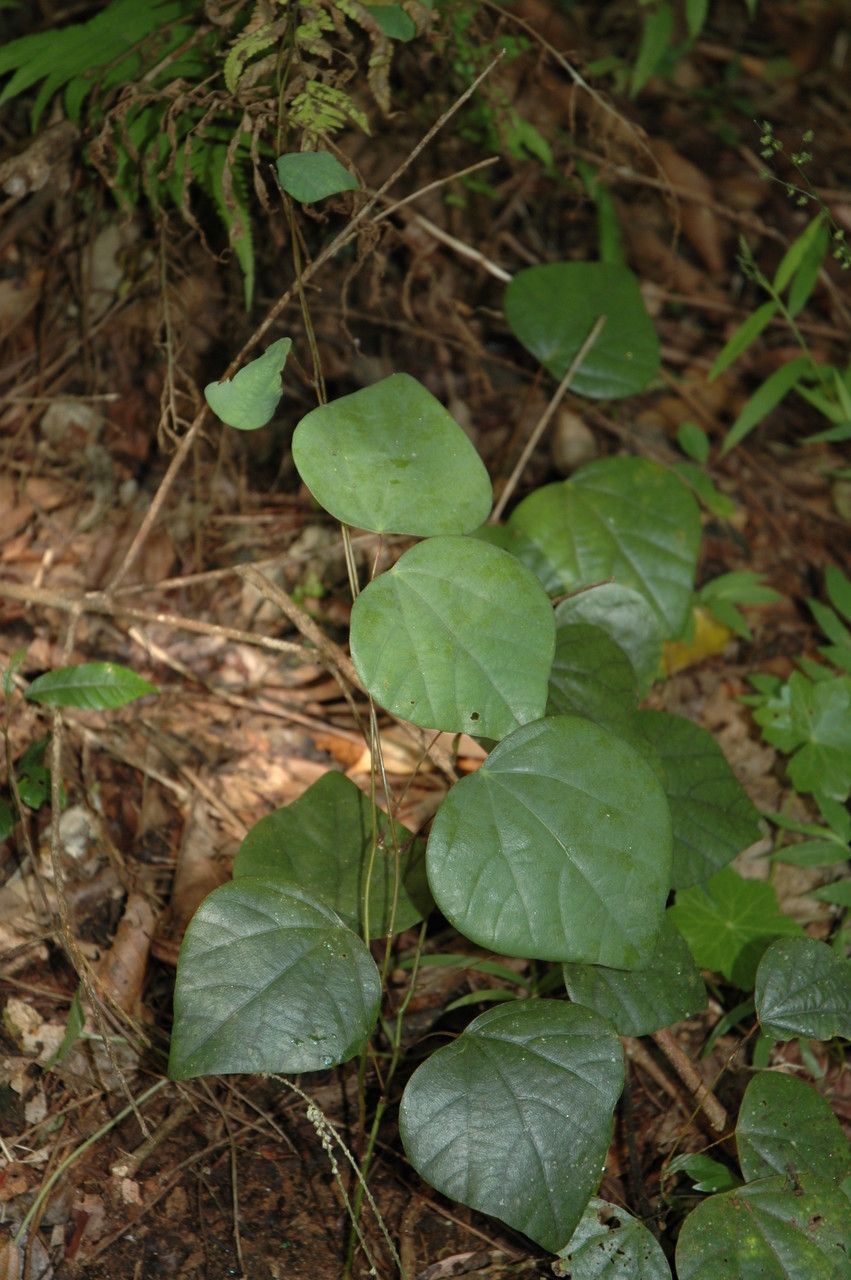
Diploclisia glaucescens is an extensively spreading climber found in South Asia, Southeast Asia, China, Indonesia and the Philippines.
Glaucous diploclisia demonstrates strong disease resistance and is usually not susceptible to illnesses. In terms of care, the plant is fairly low-maintenance. When grown outdoors it needs little watering, and larger specimens typically do not require pruning. Smaller specimens, however, should be trimmed after they finish blooming. Glaucous diploclisia is appropriate for anyone with an outdoor area, such as a garden or deck, and does not demand much gardening experience.
How to keep Diploclisia Glaucescens.
Light
Glaucous diploclisia is indigenous to habitats like forest understories and rocky sites, where it occurs in natural shade. It favors partial sun but can also grow in full sun or full shade, illustrating its hardy and adaptable nature.
Water
Glaucous diploclisia flourishes in humid and consistently moist environments, requiring optimal watering every three weeks. Although it can withstand short periods of dryness, regular misting helps mimic its native tropical conditions, encouraging healthy and lush foliage throughout the year.
Temperature
Glaucous diploclisia comes from tropical areas, which are generally warm and humid. Consequently, it is adapted to high temperatures and humidity. It does not tolerate sudden temperature shifts and prefers a steady temperature, so indoor temperature fluctuations should be avoided. It typically cannot withstand cold and requires warmer conditions to grow. If the surrounding temperature falls too low, the plant may stop growing or even die.
Fertilizer
Fertilizing is essential for the care of Glaucous diploclisia. Regular feeding during the growing season preserves the energy needed for its showy leaves and supports overall growth. Failing to fertilize can lead to unhealthy foliage, reduced ornamental value, and stunted or weak growth that is more likely to break.
Pruning
Glaucous diploclisia is a climbing plant characterized by its vibrant green leaves and woody stems. To encourage dense growth and improve flowering, prune the plant in early spring using clean, sharp tools. Avoid heavy pruning in late summer and autumn, as this can disrupt the plant's growth cycle.
Botanical profile.
- Plant Type
- Vine
- Life Cycle
- Perennial
- Genus
- Diploclisia
- Family
- Menispermaceae
- Hardiness Zone
- 9-11
- Mature Height
- 20.12 m
- Mature Spread
- 3.05 m to 4.88 m
- Leaf Color
- Green, Blue
- Leaf Type
- Semi-evergreen
- Flower Color
- White
- Flower Size
- 0.51 cm to 0.76 cm
- Bloom Time
- Late spring, Early summer
- Planting Time
- Spring, Summer, Autumn
- Harvest Time
- Late summer, Early fall
- Native Area
- Sri Lanka, India, Malaysia, Indonesia, Cambodia, Vietnam, Myanmar, Philippines, Bangladesh, Thailand, China
Reader questions.
What are the sunlight requirements for Glaucous diploclisia?
Glaucous diploclisia thrives in environments that mimic its native habitat, such as forest understories or rocky areas, which usually receive partial sun to full shade. It prefers about 3-6 hours of sunlight per day but can adapt to less sunny conditions. It's important to observe the movement of sunlight in your garden to find spots that offer a balance of light and shade suitable for the plant's well-being.
How can indoor plants like Glaucous diploclisia benefit from artificial lighting?
When natural sunlight is insufficient, especially during winter or in spaces that don't receive enough sunlight, artificial lights can be a lifesaver for indoor plants like Glaucous diploclisia. For optimal growth, it's suggested to use LED lights as they can provide specific wavelengths needed by the plants. Depending on the plant's sunlight needs, you should adjust the wattage per square foot: 30-50W for full sun plants, 20-30W for partial sun plants, and 10-20W for full shade plants. The proper distance between the light source and the plant is 12-36 inches, and the ideal duration of light exposure is 8-12 hours per day.
What are the symptoms of insufficient light in Glaucous diploclisia?
When Glaucous diploclisia doesn't receive enough light, several symptoms may appear, indicating light deficiency. These include smaller new leaves, longer spaces between leaves or stems (leggy or sparse growth), faster leaf drop, slower or halted growth, lighter-colored new leaves, chlorosis (leaves turning yellow), sunscald, leaf curling, wilting, and leaf scorching. These symptoms suggest that the plant is struggling with the light conditions and needs more exposure to thrive.
What solutions can help Glaucous diploclisia adapt to its light environment?
To help Glaucous diploclisia adapt to varying light conditions, gradually increase its sun exposure by moving it to sunnier spots each week until it receives its optimal sunlight. For indoor plants that are large or difficult to move, consider using artificial lighting, such as desk lamps or professional grow lights, for at least 8 hours a day. Outdoors, avoid sudden changes in light intensity by gradually shifting the plant's location. Additionally, you can improve sunlight access by reducing obstructions like overhanging branches, or by transplanting smaller plants during their dormant period to areas with better light and drainage. Note that parts of the plant already affected by low light may not recover, but new growth should be healthy with appropriate light management.